“Unveiling Untold Valor: The Remarkable Journey of Captain Gaston Ward Callum, the Hero Known as ‘Killer'”

I recently made a trip to Greensboro North Carolina. Here I discovered the final resting place of Captain Gaston Ward “Killer” Callum. He was born in Asheville North Carolina to William and Elsie Callum, on June 27th, 1917. Capt. Callum was five feet nine inches tall with blond hair, grey eyes and a light complexion. By 1930 the family moved to Greensboro where Gaston attended Greensboro High School. He would eventually become a student at U.N.C.
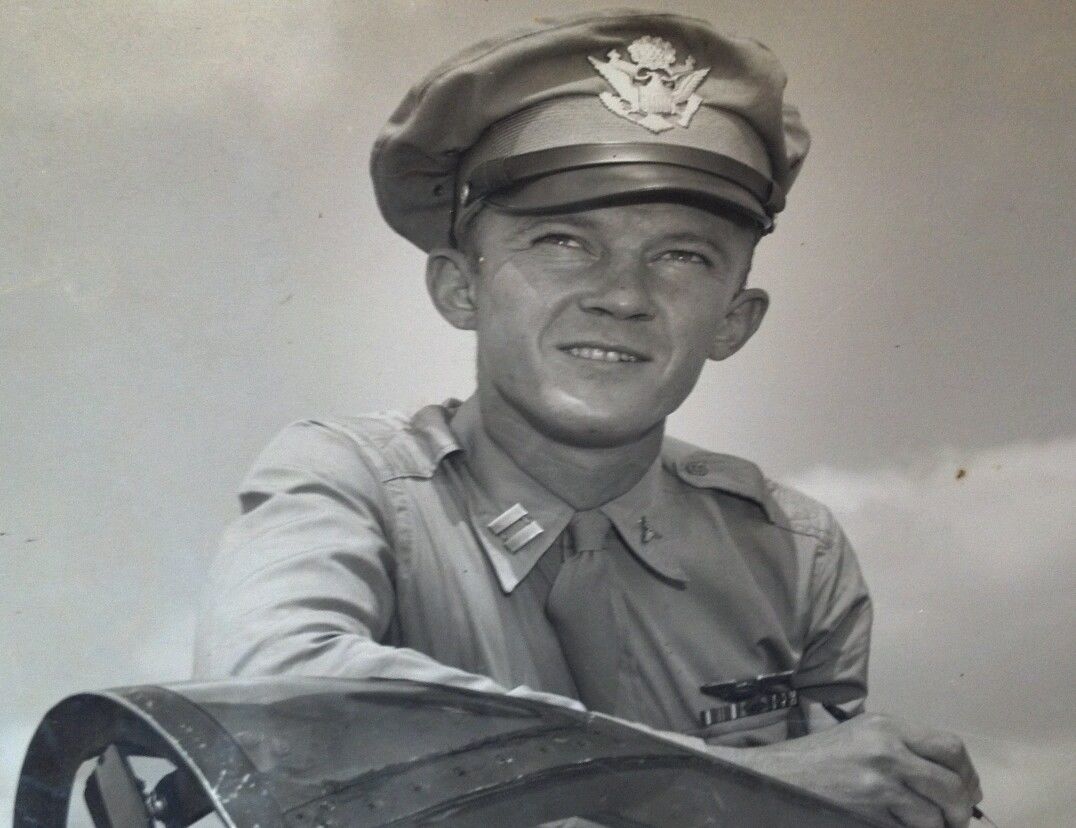
Capt.Gaston Ward Callum, of the 79th Fighter-Bomber Group… By  Michel Beckers 

A family friend related a story. Stating that in late 1939 or early 1940, Gaston and a friend went to New York City to enlist in the French Ambulance Corp. However, in May of 1940 France became over run dashing their hopes.[1] On October 16th Callum registered for the draft. He was living in Wilmington NC at the time, He listed his employer as General Motors Acceptance Corporation. Capt. Cullum would enter the United States Army Air Corps on February 25th, 1942. He would earn his wings and fly P-40s and P-47s, with the 79th Fighter Group. Callum would serve in North Africa, Sicily and Italy. Capt. Cullum would go on to fly 110 combat missions in 13 months. He would earn the name “killer” when he was flying cover for the Anzio landings. Callum would shoot down two aircraft in four days. During this same time period Capt. Callum would lead his squadron of six fighters against 15 German Messerschmitt’s scoring one of his kills. “According to Walt Brown, Callum followed one of the Luftwaffe fighters all the way to Rome before he was able to complete the kill.”[2]

79TH-FG-P-47S-During Aerial Parade Over Udine Italy On The 28th of May-1945. From the Robert Kelley Collection

 While in Italy Callum was shot down and crashed in enemy territory. With his plane destroyed, and suffering injuries the Captain crawled towards friendly ground. He would eventually be picked up by a U.S. patrol then returned to his unit. Capt. Callum would later register a direct hit on a German tank in what he recalled as his closest call. “When we went in on them, we discovered it was a convoy of heavy tanks and every one of them started shooting back at us!” Said Harry Thetford a member of the 79th. [3] Capt. Callum would receive many awards. These included the Distinguished Flying Cross (for the aforementioned action), The Silver Star, and an Air Medal, with as he described “more oak leaf clusters than I can recall,”.[4] His Silver Star was earned for “Meritorious achievement in a bombing mission over Italy”.[5]
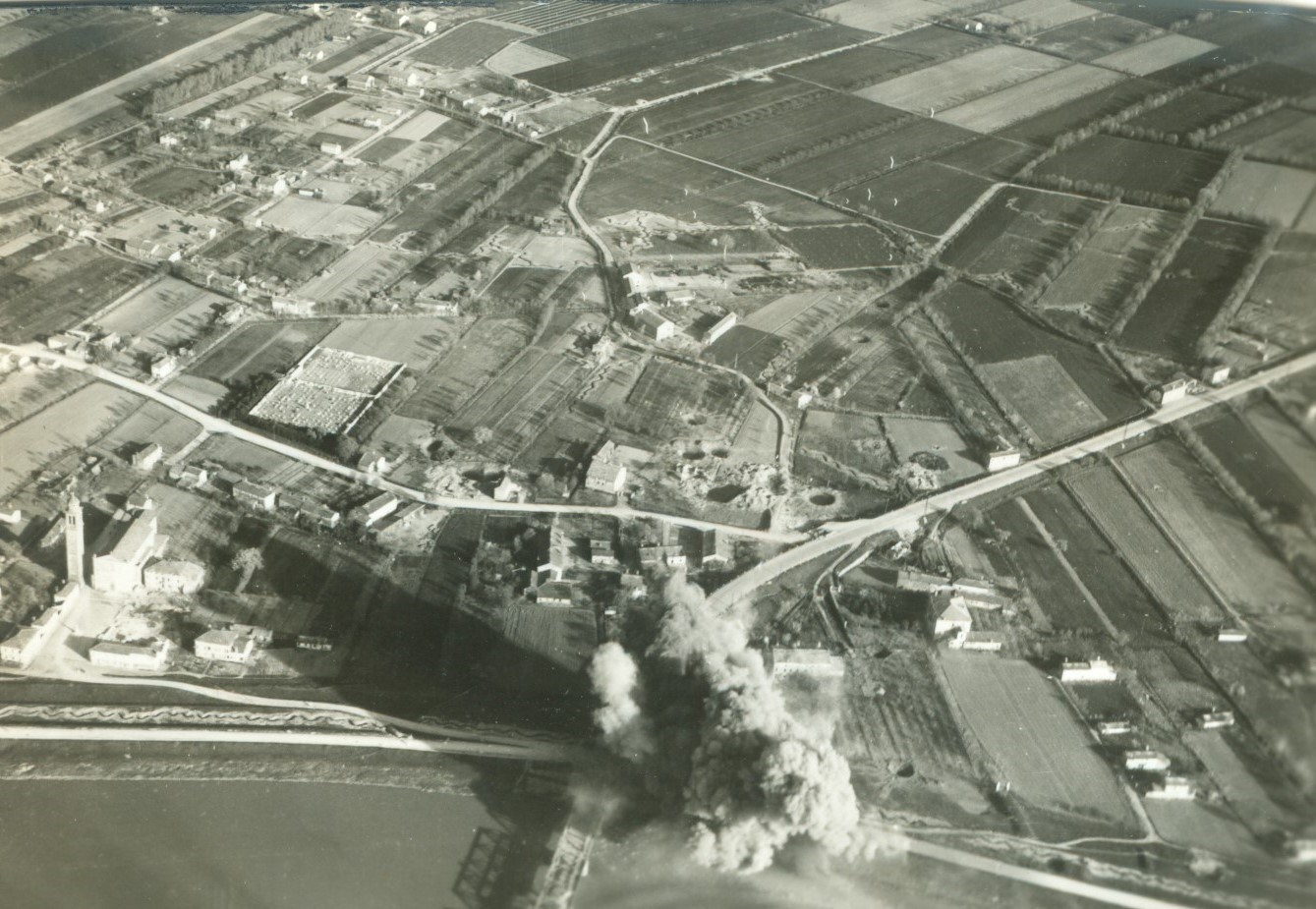
79th Fighter group hits a bridge Roy A. Larson Collection

Capt. Callum is reported to have made a direct hit on a bridge destroying it in a low level attack. Even though his aircraft was heavily damaged the Capt. would make repeated attacks on multiple targets These included an ammunition dump. In the Spring of 1944 Capt. Callum would be sent stateside to be a flight instructor, He was stationed at Moore Field in Texas. Here he would marry Kyte Trice. “Killer” Callum would later be sent to the USAAF Airfield at Linz, Austria. Here he became the provost. Tragically this is where he met his fate. The Captain was flying a P-47 with a history of maintenance issues. He was waved off his first landing attempt, and on his second Capt. Callum’s engine stalled. He crashed and his aircraft exploded killing him instantly.[6] His remains were sent home, and a graveside service was performed at Green Hill Cemetery on January 26th, 1949. Let us never forget his sacrifice for our freedom.
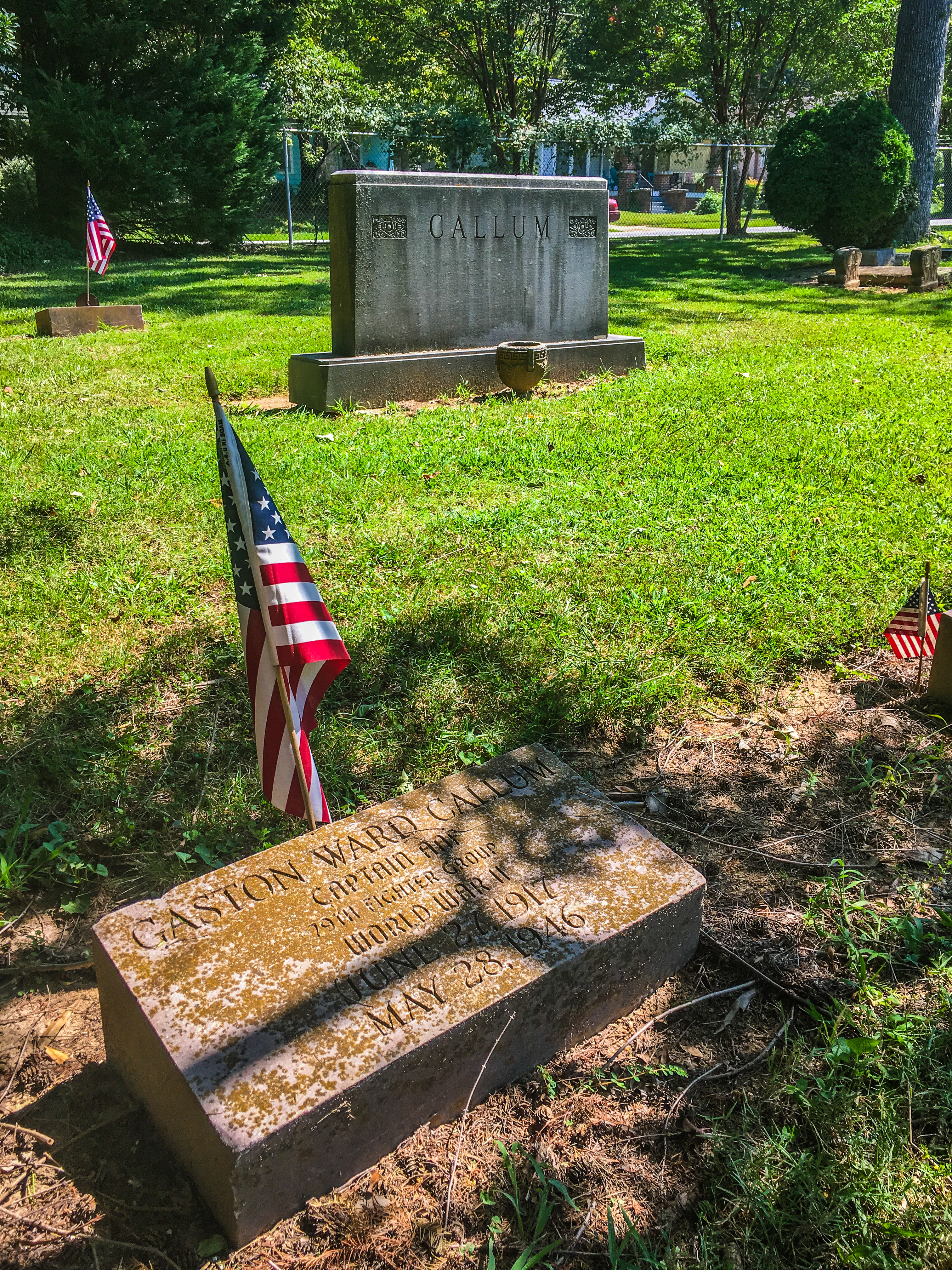
Grave of Captain Gaston Ward “Killer” Callum at Green Hill Cemetery, Greensboro North Carolina. Photo By @firefightinirish

[1] Thetford, Harry. “Remembered” . Harry Thetford, 2019. Pg.371

[2]  Ibid. Pg. 372

[3] Ibid. Pg. 373

[4] Ibid.

[5] Ibid.

[6] Ibid. Pg. 375

Captain Joseph Kerin: An Inspiring Tale of Irish American Valor

Captain Joseph Kerin was born in County Claire Ireland around 1822. He was described as five feet seven inches tall with, brown hair, blue eyes and a fair complexion.[1]

Carte de visite of Captain Joseph Kerin. Courtesy of  The American Military Heritage Museum Of North Carolina

Kerin was employed as a laborer; and living in New York at the time of his enlistment. He was mustered into Company B, 2nd U.S. Dragoons on January 3rd, 1853.[2]   The next month Kerin joined the company in Texas. He would serve with the company during its involvement with the Border War in Kansas, as well as going with them on the Mormon expedition to Utah in 1857.[3]  

                Before the outbreak of the American Civil War, Kerin would serve in the General Mounted Service at Carlisle Barracks, Pennsylvania. He would eventually be promoted to first sergeant, and serve as drill instructor. Kerin was Later appointed a second lieutenant, of the 6th U.S. Cavalry on October 26, 1861.[4]  He was assigned to “H” Company a month later. He accompanied them to the Peninsula in March 1862.[5] During the siege of Yorktown then second lieutenant Kerin captured a Confederate Captain during a charge of the enemies works.[6]

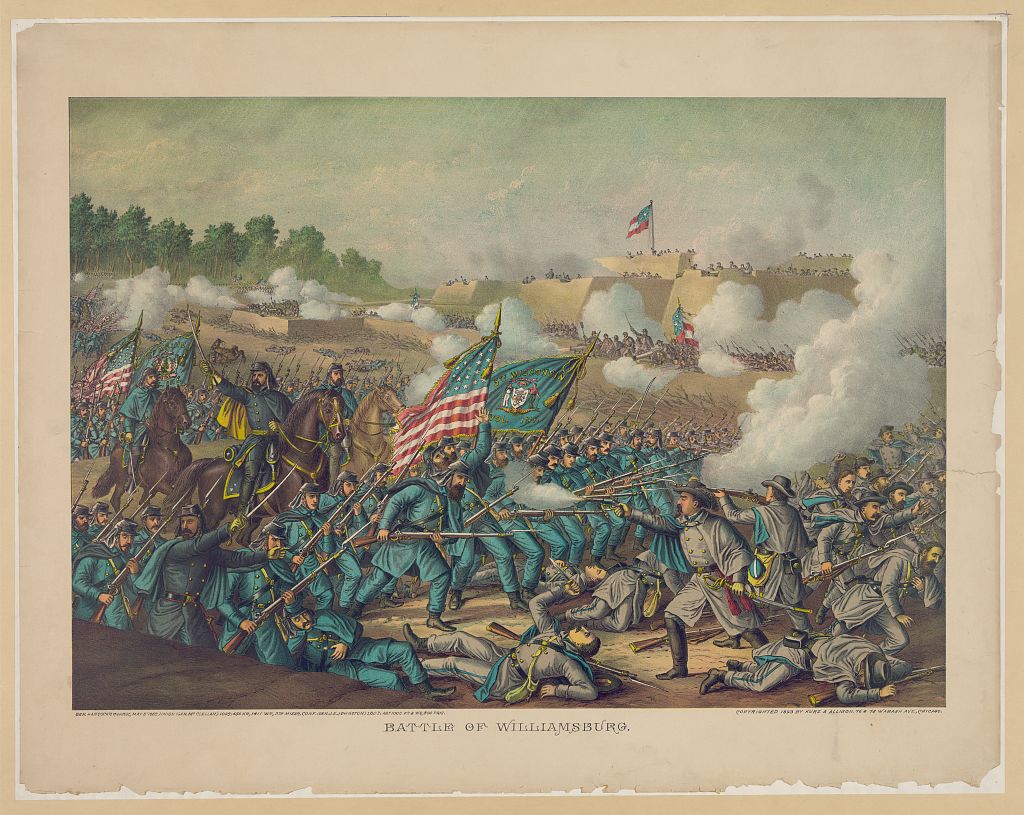
Kurz & Allison. Battle of Williamsburg–Gen. Hancock’s charge, May 5, . Union Gen. McClellan … Conf. Gen. J.E. Johnston
. Williamsburg Virginia, ca. 1893. Photograph. https://www.loc.gov/item/91482054/.


During the battle of Williamsburg Kerin “behaved with such fearlessness and gallantry as to call forth a special report to the brigade commander.”[7]  He also commanded two platoons in successful missions to destroy bridges over the South Anna River.

                Kerin later served as an acting assistant general for the brigade of regular cavalry. He assisted in the pursuit of Stuart during Stuart’s first ride around the Army of the Potomac. Kerin also acted in this capacity during the first three days of the Seven Days Battles.[8]              

Kerin would command “H” Co. from September 1862 to April 1863.[9] During this time he would be engaged in the Maryland Campaign. He would see action at Sugarloaf Mountain, Antietam, and Charlestown, as well as pursuing General Stuart a second time. Kerin was promoted to Provost Marshall of the Cavalry Division, Army of the Potomac.

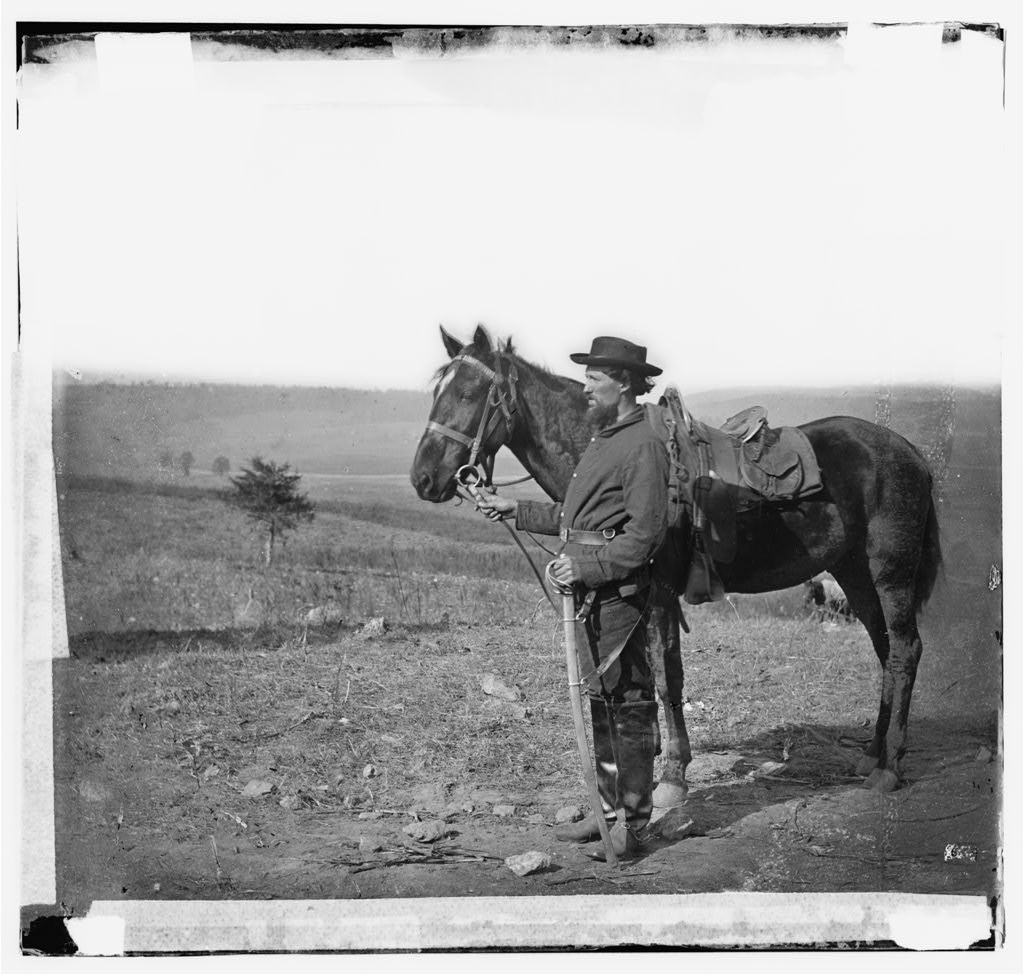
Gardner, Alexander, photographer. Antietam, Md. A cavalry orderly
. United States Maryland Antietam, 1862. October. Photograph. https://www.loc.gov/item/2018666258/.

He would serve in this position during action at Philomont, Unionville, Upperville, Barbour’s Crossroads, Amissville, and the battle of Fredericksburg.[10]  

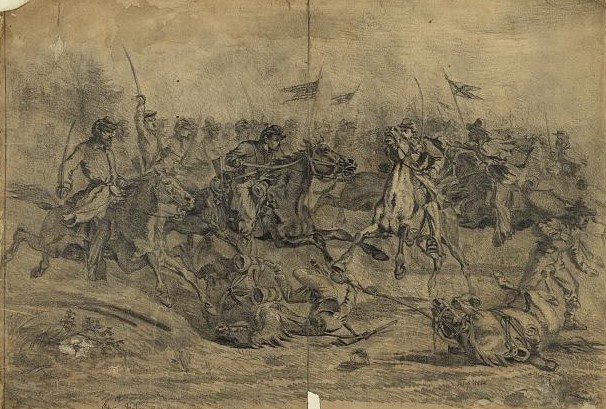
Kerin would be promoted to first lieutenant, 6th Cavalry on December 23, 1862.[11] He would rejoin his regiment in that capacity  in March 1863.[12] First lieutenant Kerin would be with his regiment during the Stoneman Raid. He would be taken prisoner during the Battle of Brady Station, “while gallantly assisting him (the commanding officer) to reform the command after the charge.”[13]

Forbes, Edwin, Artist. Cavalry charge near Brandy Station, Va
. United States Virginia Brandy Station, 1864. Photograph. https://www.loc.gov/item/2004661456/.

Kerin would spend the rest of the war in confederate prisons. He would be sent to Libby prison where he would escape via a tunnel, but would be recaptured.[14] He was then moved to Macon George, before being moved again to Charleston South Carolina. It was during this move Kerin tried to escape by jumping from a moving train, however he was recaptured. Kerin would try and escape again while imprisoned at Colombia only to be recaptured by dogs.[15] He would remain a prisoner till his exchange in March 1865.[16]

“In the Libby prison sadly.” By John Ross Dix
. Image. https://www.loc.gov/item/amss-hc00009d/.

                After the war Kerin would serve as a mustering officer before returning to Texas and being promoted to Captain in July 1866.[17] Captain Kerin would serve as a recruiting officer in command of the Permanent Troop at the Carlisle Barracks. He even served as Treasurer and an Instructor of Tactics.[18]

Kerin would later serve with his regiment at Fort Richardson, Texas before being put in charge of the Shreveport Arsenal and grounds, until November 1869.[19] Captain Kerin would retire from the army on June 28, 1878.[20]

He would move to the Chestnut Hill section of Philadelphia, where he would die on September 24, 1890.[21]

Captain Joseph Kerin would be buried with full military honors provided by the George G. Meade post of the G.A.R, at Laurel Hill cemetery in Philadelphia.[22]


[1] “U.S. Army, Register of Enlistments, 1798-1914.” Ancestry.com. Accessed January 25, 2020. https://tinyurl.com/uxqvoyu.

[2] Ibid

[3] Dccaughey. “Fiddler’s Green: Joseph Kerin.” Regular Cavalry in the Civil War, April 8, 2008. https://regularcavalryincivilwar.wordpress.com/2008/04/08/fiddlers-green-joseph-kerin/.

[4] Ibid

[5] Ibid

[6] Carter, General William Harding. From Yorktown to Santiago with the Sixth u. s. Cavalry. Baltimore, MD: The Lord Baltimore Press, 1900. Pg. 26

[7] Ibid, Pg. 32

[8] Dccaughey. “Fiddler’s Green: Joseph Kerin.” Regular Cavalry in the Civil War, April 8, 2008. https://regularcavalryincivilwar.wordpress.com/2008/04/08/fiddlers-green-joseph-kerin/.

[9] Ibid

[10] Ibid

[11] Ibid

[12] Ibid

[13] Carter, General William Harding. From Yorktown to Santiago with the Sixth u. s. Cavalry. Baltimore, MD: The Lord Baltimore Press, 1900. Pg. 85

[14] Caughey, Donald C., and Jimmy J. Jones. The 6th United States Cavalry in the Civil War: A History and Roster. Jefferson , NC: McFarland & Company Incorporated, 2013.

[15] Ibid

[16] Ibid

[17] Dccaughey. “Fiddler’s Green: Joseph Kerin.” Regular Cavalry in the Civil War, April 8, 2008. https://regularcavalryincivilwar.wordpress.com/2008/04/08/fiddlers-green-joseph-kerin/.

[18] Ibid

[19] Ibid

[20] Ibid

[21] Ibid

[22] The Internal Revenue Record and Customs Journal. Vol. 37. P. V. Van Wyck and Company, 1891.