Captain Joseph Kerin was born in County Claire Ireland around 1822. He was described as five feet seven inches tall with, brown hair, blue eyes and a fair complexion.[1]

Kerin was employed as a laborer; and living in New York at the time of his enlistment. He was mustered into Company B, 2nd U.S. Dragoons on January 3rd, 1853.[2] The next month Kerin joined the company in Texas. He would serve with the company during its involvement with the Border War in Kansas, as well as going with them on the Mormon expedition to Utah in 1857.[3]
Before the outbreak of the American Civil War, Kerin would serve in the General Mounted Service at Carlisle Barracks, Pennsylvania. He would eventually be promoted to first sergeant, and serve as drill instructor. Kerin was Later appointed a second lieutenant, of the 6th U.S. Cavalry on October 26, 1861.[4] He was assigned to “H” Company a month later. He accompanied them to the Peninsula in March 1862.[5] During the siege of Yorktown then second lieutenant Kerin captured a Confederate Captain during a charge of the enemies works.[6]
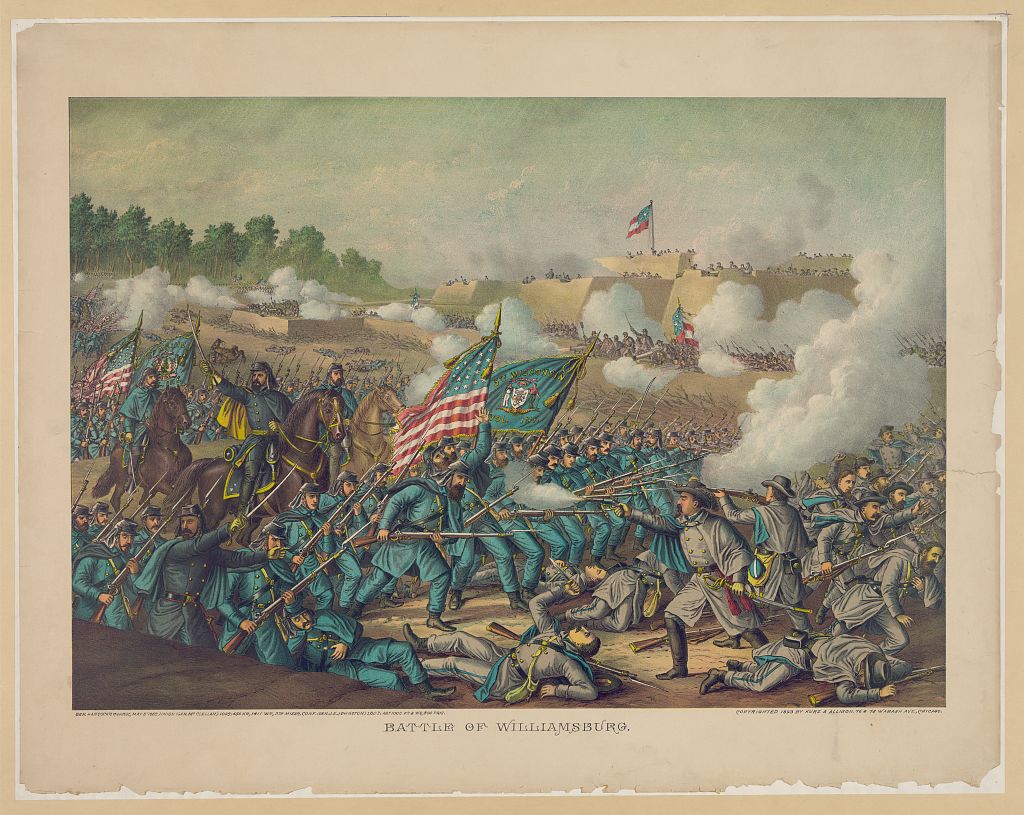
. Williamsburg Virginia, ca. 1893. Photograph. https://www.loc.gov/item/91482054/.
During the battle of Williamsburg Kerin “behaved with such fearlessness and gallantry as to call forth a special report to the brigade commander.”[7] He also commanded two platoons in successful missions to destroy bridges over the South Anna River.
Kerin later served as an acting assistant general for the brigade of regular cavalry. He assisted in the pursuit of Stuart during Stuart’s first ride around the Army of the Potomac. Kerin also acted in this capacity during the first three days of the Seven Days Battles.[8]
Kerin would command “H” Co. from September 1862 to April 1863.[9] During this time he would be engaged in the Maryland Campaign. He would see action at Sugarloaf Mountain, Antietam, and Charlestown, as well as pursuing General Stuart a second time. Kerin was promoted to Provost Marshall of the Cavalry Division, Army of the Potomac.
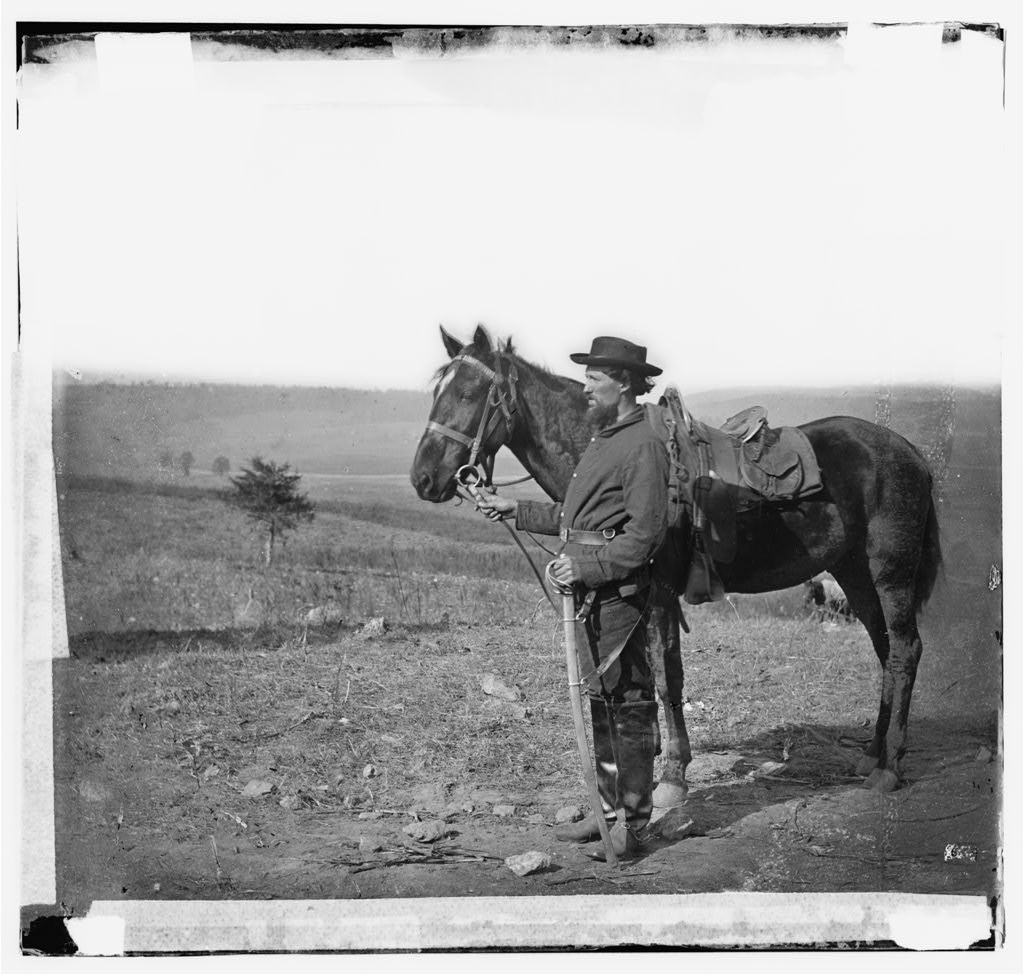
. United States Maryland Antietam, 1862. October. Photograph. https://www.loc.gov/item/2018666258/.
He would serve in this position during action at Philomont, Unionville, Upperville, Barbour’s Crossroads, Amissville, and the battle of Fredericksburg.[10]
Kerin would be promoted to first lieutenant, 6th Cavalry on December 23, 1862.[11] He would rejoin his regiment in that capacity in March 1863.[12] First lieutenant Kerin would be with his regiment during the Stoneman Raid. He would be taken prisoner during the Battle of Brady Station, “while gallantly assisting him (the commanding officer) to reform the command after the charge.”[13]
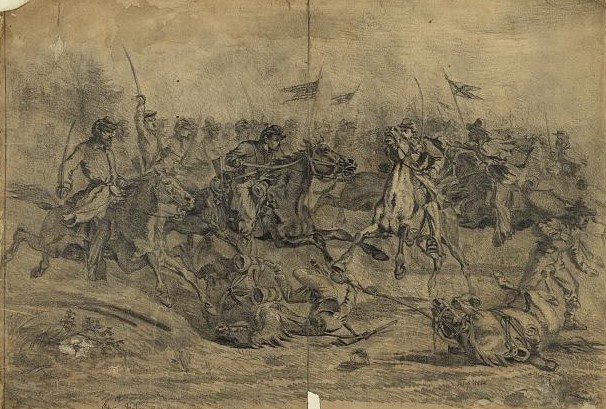
. United States Virginia Brandy Station, 1864. Photograph. https://www.loc.gov/item/2004661456/.
Kerin would spend the rest of the war in confederate prisons. He would be sent to Libby prison where he would escape via a tunnel, but would be recaptured.[14] He was then moved to Macon George, before being moved again to Charleston South Carolina. It was during this move Kerin tried to escape by jumping from a moving train, however he was recaptured. Kerin would try and escape again while imprisoned at Colombia only to be recaptured by dogs.[15] He would remain a prisoner till his exchange in March 1865.[16]

. Image. https://www.loc.gov/item/amss-hc00009d/.
After the war Kerin would serve as a mustering officer before returning to Texas and being promoted to Captain in July 1866.[17] Captain Kerin would serve as a recruiting officer in command of the Permanent Troop at the Carlisle Barracks. He even served as Treasurer and an Instructor of Tactics.[18]
Kerin would later serve with his regiment at Fort Richardson, Texas before being put in charge of the Shreveport Arsenal and grounds, until November 1869.[19] Captain Kerin would retire from the army on June 28, 1878.[20]
He would move to the Chestnut Hill section of Philadelphia, where he would die on September 24, 1890.[21]
Captain Joseph Kerin would be buried with full military honors provided by the George G. Meade post of the G.A.R, at Laurel Hill cemetery in Philadelphia.[22]
[1] “U.S. Army, Register of Enlistments, 1798-1914.” Ancestry.com. Accessed January 25, 2020. https://tinyurl.com/uxqvoyu.
[2] Ibid
[3] Dccaughey. “Fiddler’s Green: Joseph Kerin.” Regular Cavalry in the Civil War, April 8, 2008. https://regularcavalryincivilwar.wordpress.com/2008/04/08/fiddlers-green-joseph-kerin/.
[4] Ibid
[5] Ibid
[6] Carter, General William Harding. From Yorktown to Santiago with the Sixth u. s. Cavalry. Baltimore, MD: The Lord Baltimore Press, 1900. Pg. 26
[7] Ibid, Pg. 32
[8] Dccaughey. “Fiddler’s Green: Joseph Kerin.” Regular Cavalry in the Civil War, April 8, 2008. https://regularcavalryincivilwar.wordpress.com/2008/04/08/fiddlers-green-joseph-kerin/.
[9] Ibid
[10] Ibid
[11] Ibid
[12] Ibid
[13] Carter, General William Harding. From Yorktown to Santiago with the Sixth u. s. Cavalry. Baltimore, MD: The Lord Baltimore Press, 1900. Pg. 85
[14] Caughey, Donald C., and Jimmy J. Jones. The 6th United States Cavalry in the Civil War: A History and Roster. Jefferson , NC: McFarland & Company Incorporated, 2013.
[15] Ibid
[16] Ibid
[17] Dccaughey. “Fiddler’s Green: Joseph Kerin.” Regular Cavalry in the Civil War, April 8, 2008. https://regularcavalryincivilwar.wordpress.com/2008/04/08/fiddlers-green-joseph-kerin/.
[18] Ibid
[19] Ibid
[20] Ibid
[21] Ibid
[22] The Internal Revenue Record and Customs Journal. Vol. 37. P. V. Van Wyck and Company, 1891.
 The Military History Traveler