In the annals of American Civil War history, the contributions of Irish regiments are both profound and poignant. Among those who served with distinction was Captain Michael Doran, a man whose journey through three of the significant Irish regiments—the 37th New York “Irish Rifles,” the 69th New York Company K “Irish Zouaves,” and the illustrious 155th New York “Corcoran’s Irish Legion”—weaves a tale of valor, camaraderie, and the harsh realities of war. From his initial enlistment in 1861 amid controversy to his gallant but perilous charge at the Battle of Cold Harbor, Doran’s story is an emblem of the courage and resilience of countless soldiers. Join us as we delve into the remarkable life of Captain Michael Doran, exploring the challenges he faced, the battles he fought, and the indelible mark he left on the legacy of the Irish in the American Civil War.
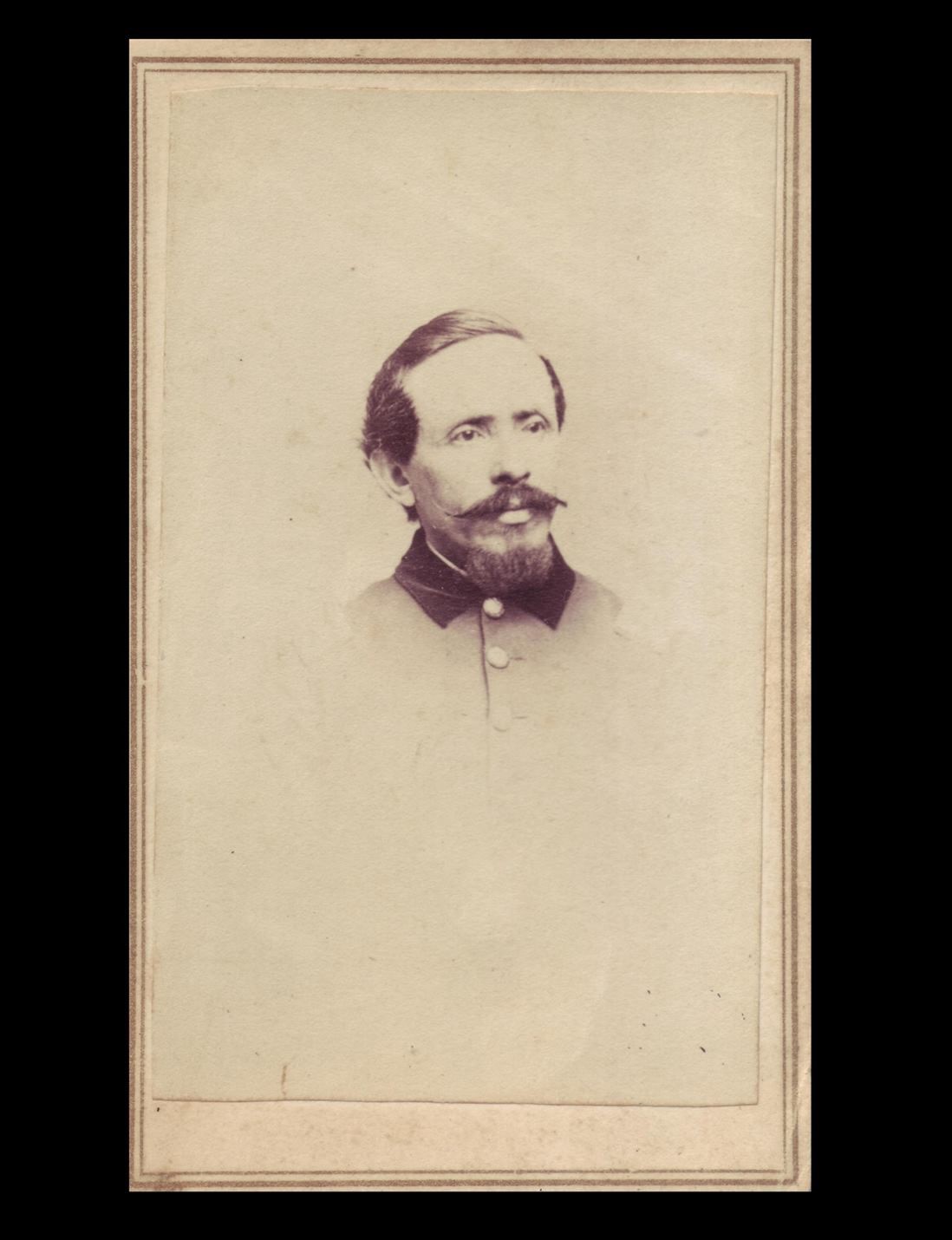
Michal Doran was born in County Cork, Ireland, sometime around 1826[1].Doran immigrated to the United States before 1850 and worked as a tanner in Hurley, New York.[2] Doran joined the Army in 1857 and was assigned to the ordnance department. When he enlisted, The Army described him as five feet six inches tall, with grey eyes, brown hair, and a dark complexion.[3] On May 11, 1861, the secretary of war ordered his discharge.[4] Michael Doran enlisted in the 37th New York “Irish Rifles” four days later. Due to his prior service, they promoted Doran to Captain of “C” Company on July 7, 1861.[5]
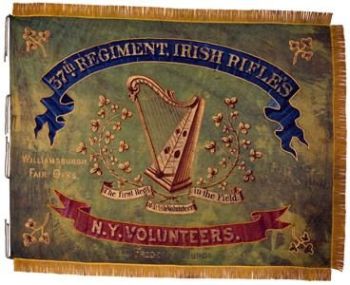
On July 23rd, Capt. Doran and the 37th New York left to help defend Washington, DC. By August, Doran’s company became attached to Hunter’s Brigade, Division of the Potomac. In October, they served with Richardson’s Brigade, Heintzelman’s Division, Army of the Potomac. In this capacity, they would conduct reconnaissance at Pohick Church and Occoquan. On November 4th, Captain Doran would submit false payrolls, leading to his dismissal. An issue of the New York Times reported the incident on September 2, 1861.
“At the request of Gov. Morgan, Col. McCunn remains in temporary command of the New York Thirty-seventh, though his resignation was accepted by the authorities. Five of the ten Captains of the Thirty-seventh are now on trial before a court-martial, presided over by Col. Green, of the Fifteenth Massachusetts Volunteers. They are Capts. Reardon, Company A; Doran, Company C; Cavanaugh, Company E; McHugh, and Michael Murphy. They are charged with making out false payrolls, by which pay has been received for from ten to twenty-two more men than they had in their respective commands. In three cases, the evidence has been closed with but a meager defense to the charges. Witnesses from the ranks have testified that at the command of their officers, they had answered to false names. Col. McCunn is charged with purging the regiment of such offenders.”[6]
Doran later enlisted on May 26, 1862,[7] In New York City, New York. On the same day, they commissioned him as a Second Lieutenant in the “K” company of the 69th New York State Militia, also known as the Irish Zouaves.
Second Lieutenant Doran and the 69th New York State Militia, under the command of Colonel James Bagley, were once more assigned to Washington; they departed the state on May 29, 1862, and provided support for the defenses of Washington until being mustered out on September 3, 1862, in New York City
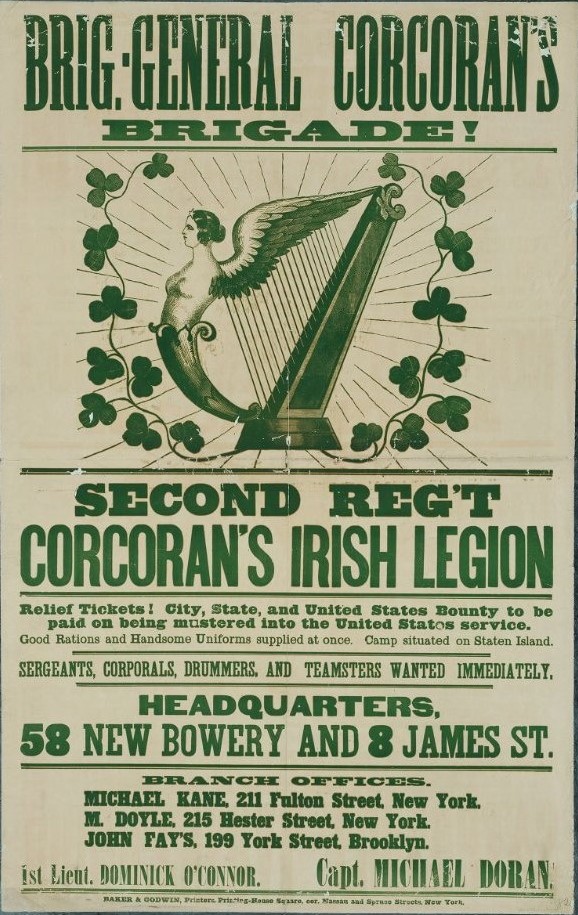
Doran would enlist again on September 8th, 1862. “B” Company 155th New York Infantry Corcoran’s Irish Legion commissioned him a Captain on November 18th, 1862.[8] Captain Doran and the 155th New York fought at Deserted House, The Siege of Suffolk, Dix’s Peninsula Campaign, Sangster’s Station, Spotsylvania Court House, North Anna River, Totopotomoy, and Cold Harbor, where Captain Doran led a courageous yet reckless charge against a Confederate stronghold. This event is noted in “Cold Harbor: Grant and Lee, May 26-June 3, 1864,” by Gordon C. Rhea.
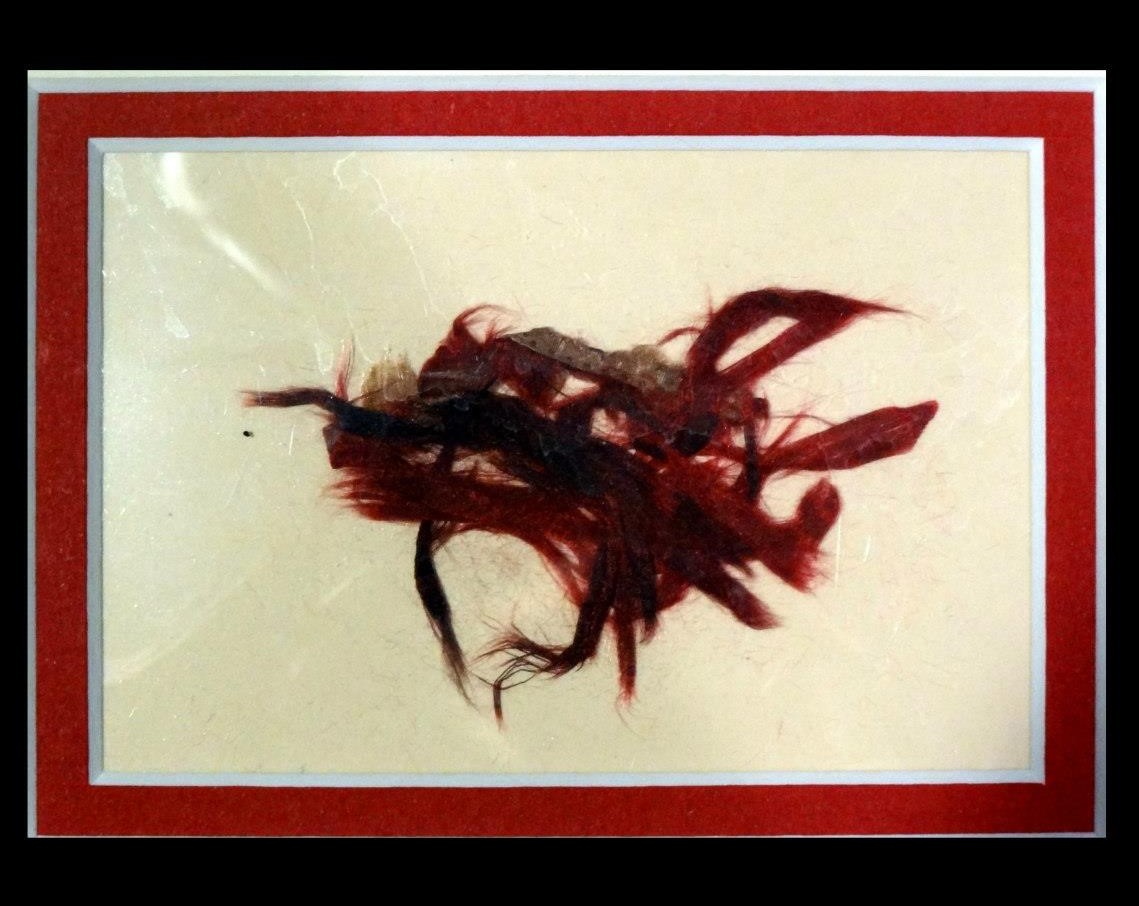
“Tyler’s remaining regiments had advanced simultaneously with the 8th New York Heavy Artillery. The 155th and 182nd New York, next to Bates’s battalion, ended up in the same morass as the Heavies to their right. Captain Michael Doran, commanding the 155th New York, dressed the regiment behind the protective cover of a ridge and sent it forward. Cresting a small rise, the New Yorkers came into sight of the main rebel line about 150 yards away. “Balls commenced literally to mow us down,” the 155th’s adjutant, 1st Lieutenant John Russell Winterbotham, wrote home the next day. Doran’s soldiers found themselves under devastating fire in front of a muddy ravine carved by a feeder to Boatswain Creek. “There was a marsh in front of our regiment,” a man in the 155th reported, “and I doubt if we could have reached the enemy works even if they had not been there to oppose us.” Soldiers attempted to return fire, reported Winterbotham, but “they were no match for the entrenched rebels, and the supports failed to come up but they would not fly but stood like heroes” The 155th took devastating casualties some 130 men, about half the soldiers who made the charge but was unable to advance. Realizing the hopelessness of his situation, after thirty minutes of fruitlessly trading fire with the Confederates from a distance of only 50 yards, Captain Doran pulled his regiment’s remnants back behind a slight ridge 150 yards from the rebel line, where the troops began digging. The 182nd New York, on Doran’s left, also dropped behind the ridge, losing 94 soldiers in the process. “We felt it was murder, not war,” Private Newell Smith of the 155th New York reported. “or that at best a very serious mistake had been made.” Adjutant Winterbotham concluded likewise: “The idea of our charging the enemy’s line with the number we had was preposterous.”[9]
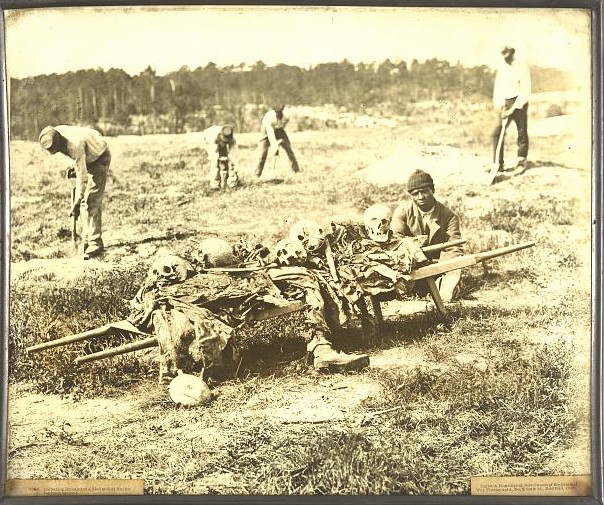
Captain Doran would lead his company until his discharge for disability on February 16, 1865. The Army gave him the rank of Major on November 17, 1864. However, the 155th never mustered Captain Doran into that rank.[10]
After the war, Doran was very active in The Society of The Army of The Potomac. He attended many of their reunions till his death from heart disease on October 27th, 1890[11]. Surviving members of the 155th New York interred his remains at Calvary Cemetery in Queens in the Irish Fighting 69th Monument plot. The Monument commemorates the Civil War service of two brigades that grew out of the old 69th N.Y.S.M, the Irish Brigade and Corcoran’s Legion, of which the 155th New York was a part.
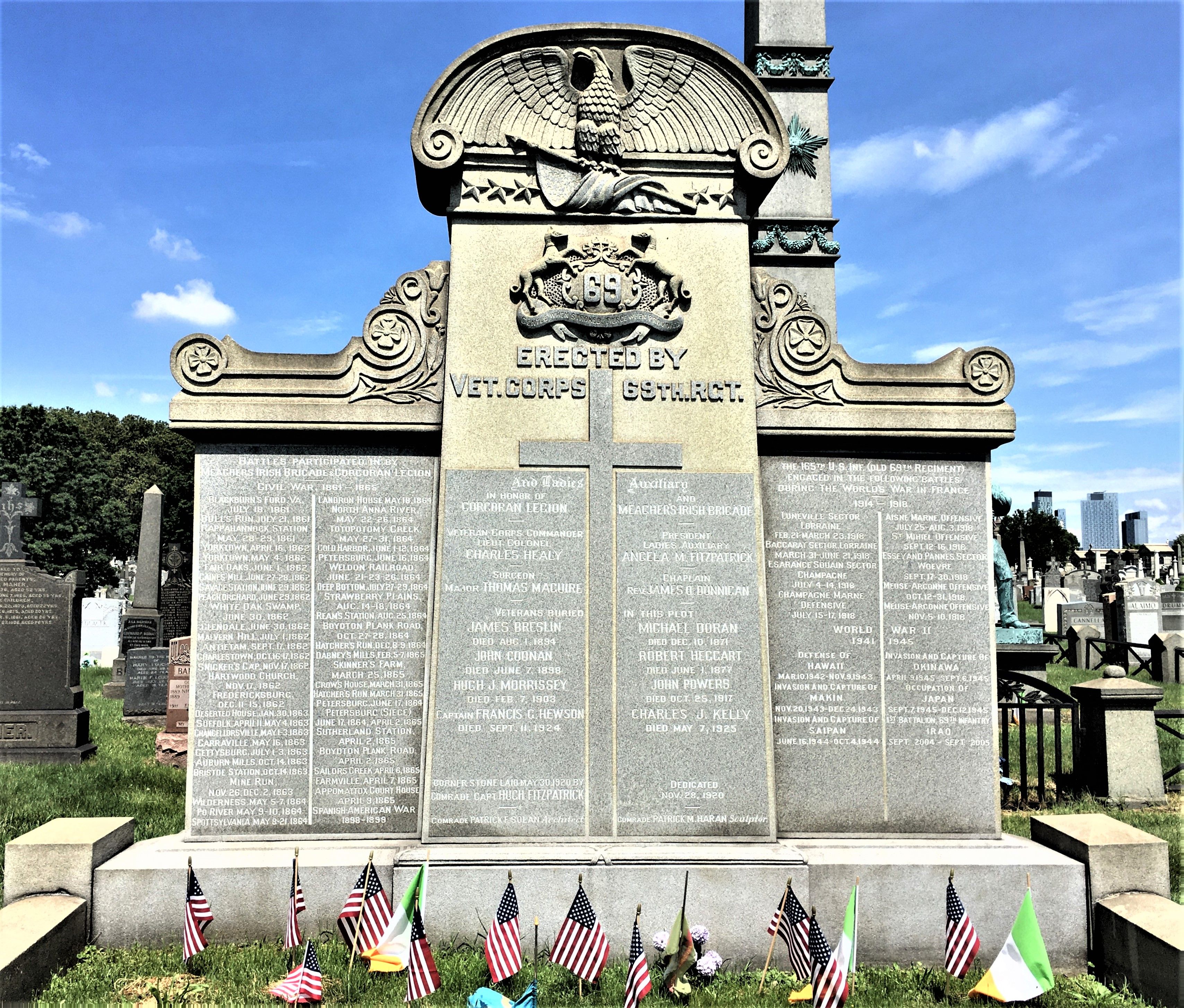
Captain Michael Doran’s military service during the American Civil War exemplifies the bravery and dedication of Irish regiments as he navigated significant battles and challenges while leaving a lasting legacy within the Irish community. His journey from enlistment to leadership in multiple regiments highlights the profound impact of immigrant soldiers on the war’s history.
[1] “U.S., Army, Register of Enlistments, 1798-1914 1855 Jan – 1857 Sep A-Z,” Ancestry.com, 2007, accessed January 28, 2025, https://tinyurl.com/ypyavp8c.
[2] “Michael Doran in the 1850 United States Federal Census,” Ancestry.com, 2009, accessed January 28, 2025, https://tinyurl.com/mrxhxzd6.
[3] “U.S., Army, Register of Enlistments, 1798-1914 1855 Jan – 1857 Sep A-Z,” Ancestry.com, 2007, accessed January 28, 2025, https://tinyurl.com/ypyavp8c.
[4] Ibid
[5] “Page 1 – US, New York Civil War Muster Roll Abstracts, 1861-1900,” Fold3, n.d., https://www.fold3.com/image/316116418/doran-michael-page-1-us-new-york-civil-war-muster-roll-abstracts-1861-1900.
[6] 37th Regiment, New York Volunteers Civil War Newspaper Clippings; retrieved from http://dmna.ny.gov/…/civil/infantry/37thInf/37thInfCWN.htm
[7] “Soldier History Michael Doran,” Historical Data Systems, Inc, 2025, accessed January 29, 2025, https://www.civilwardata.com/personnel/usa/1865371.
[8] “US, New York Civil War Muster Roll Abstracts, 1861-1900,” Fold3, 2014, accessed January 29, 2025, https://www.fold3.com/image/316181601/doran-michael-page-1-us-new-york-civil-war-muster-roll-abstracts-1861-1900.
[9] Rhea, Gordon C. Cold Harbor: Grant and Lee, May 26-June 3, 1864. Baton Rouge: Louisiana State University Press, 2002. Pg. 521
[10] “US, New York Civil War Muster Roll Abstracts, 1861-1900,” Fold3, 2014, accessed January 29, 2025, https://www.fold3.com/image/316181601/doran-michael-page-1-us-new-york-civil-war-muster-roll-abstracts-1861-1900.
[11] “Michael Doran in the New York, New York, U.S., Index to Death Certificates, 1862-1948,” Ancestry.com, 2020, accessed January 31, 2025, https://tinyurl.com/ycjtrk6b.
 The Military History Traveler
What an amazing history!
LikeLike