In the somber shadows of war, letters often serve as poignant reminders of both sacrifice and duty. This letter, penned by 1st Lieutenant and Acting Adjutant John C. Foley of the 88th New York Volunteer Infantry, bears the heavy news of loss amidst the chaos of the Battle of Fredericksburg. This correspondence was addressed to Mr. Joseph Cahill and reveals the personal toll of conflict. It informs him of the premature death of Private John Healey, a brave soldier whose life ended on the battlefield. Through Foley’s heartfelt words, we glimpse the profound grief and camaraderie that defines the soldier’s experience, as well as the enduring impact of such tragedies on families and communities back home.
Letter written by 1st Lieutenant and Acting Adjutant John C. Foley of the 88th New York Volunteer Infantry. Courtesy of The American Military Heritage Museum Of North Carolina.
The author of this letter, John C. Foley, was born in Tipperary, Ireland, around 1836.[1] At thirteen, he immigrated to America aboard The Alice Wilson and lived with his family in Brooklyn, New York.[2] According to the 1860 United States Census, Foley worked as a clerk. He enlisted on September 1, 1861, after the outbreak of the American Civil War. By October, they commissioned him as a 1st Lieutenant of Company “D”, 88th New York Volunteers.[3]. 1st Lieutenant Foley and the 88th would leave New York on December 16.[4] The 88th arrived in Washington, D.C, where they performed duty in the city’s defenses at Camp California near Alexandria. They were later attached to Meagher’s Brigade, Sumner’s Division, Army of the Potomac. In April 1862, the command ordered 1st Lieutenant Foley and the 88th to the Peninsula, Virginia. Later that month, Foley and his men would engage in their first action during The Siege of Yorktown. In the next few months, they would be engaged in The Battles of Fair Oaks, Gaines Mill, Savage Station, White Oak Swamp Bridge, and Glendale. During the Battle of White Oak Swamp Bridge, 1st Lieutenant Foley’s company took heavy artillery fire. David Power Conyngham described the scene in The Irish Brigade and Its Campaigns: With Some Account of the Corcoran Legion and Sketches of the Principal Officers.
Waud, Alfred R., Artist. Battle at White Oak Swamp Bridge. Virginia United States White Oak Swamp, 1862. [June] Photograph. https://www.loc.gov/item/2004660885/.
“Each part of the field and each portion of the day has its incidents. Around-shot ricochets strikes with a dull, heavy sound the body of a fine brave fellow in the front rank and bounds over him. He is stone dead; the two men on each side of him, touching him as they lay, rise up, lift the stiff corpse, lay it down under a tree in the rear, cover his face with his blanket, come back to the old place, lie down on the same old fatal spot, grasp the musket again without saying a word. How brave, how cool, how dauntless these men are! A hundred thousand of these Celts would- but no matter: what is speculation here? That shell came very near-scattered a portion of it strikes Lieutenant Foley, of the Eighty-eighth, stuns him for a time; he recovers, will recover.”[5]
The 88th would continue to fight at Malvern Hill and the Battle of Antietam. In the after-action report referencing Antietam, Lieutenant-Colonel Patrick Kelly, Commanding Officer of Eighty-eighth New York, states the following.
Lumley, Arthur, Approximately, Artist. The fight in the cornfield; The Irish Brigade driving the rebels out, on the right wing. United States Maryland Antietam, 1862. Photograph. https://www.loc.gov/item/2004661348/.
“the Irish Brigade, of which my regiment formed a part, crossed the Antietam Creek, and advanced in column until within sight almost of the enemy. The brigade then formed line of battle, and, after tearing down a fence, got into action at once. Shortly after this, General Meagher rode up along the line, encouraging the men, until his horse was killed and he got a severe fall….I know not exactly how long we were in action, but we were long enough there to lose, in killed and wounded, one-third of our men (bringing in 302 and losing 104). When relieved by the Fifth New Hampshire, I reported to General Richardson by order of one of his aides. On approaching the general, he said, “Bravo, Eighty-eighth; I shall never forget you.” The rank and file responded by giving him three hearty cheers.He (the general) then placed me in command of the One hundred and eighth New York and ordered us to support a battery a little in advance of where we were previously engaged and remained there during the night and next day.With regard to the conduct of the officers of the Eighty-eighth on that occasion, I must say that they acted to my entire satisfaction – so much so that I cannot say one is braver than another. I have the same to say of the rank and file.”[6]
The next test for 1st Lieutenant Foley and the 88th was the Battle of Fredericksburg. Sadly, this action ended the life of the subject of this letter, Private Thomas Healey. Healey was born in Ireland around 1836 and, by the time of the American Civil War, lived in Brooklyn, New York, and worked as a painter.[7] Healey joined the military on November 30, 1861, following the onset of the American Civil War. He officially enrolled in “D” Company of the 88th New York State Volunteers on the same day.[8] Private Healey was as battle-tested as the rest of the 88th New York before the Battle of Fredericksburg.
On the morning of December 12, “D” Company of the 88th New York crossed the pontoon bridge and arrived in Fredericksburg. They would stay in the town for the night before advancing to the front lines. In his report, Colonel Patrick Kelly of the Eighty-Eighth New York Infantry details the following day’s combat events.
Currier & Ives. Battle of Fredericksburg, Va. Dec 13th. United States, 1862. [New York: Currier & Ives] Photograph. https://www.loc.gov/item/90709058/.
“Again, on Saturday morning, the men were under arms and marched about a half a mile to the right of the position they occupied the night previous, where they formed line of battle in connection with the other regiments of the brigade, between the hours of 10 and 11 a.m., as near as I can judge. We marched by the right flank, crossing the mill-race on a single bridge, where we filed to the right and reformed line of battle under a terrific enfilading artillery fire from the enemy. We then advanced in line of battle under a most galling and destructive infantry fire, crossed two fences, and proceeded as far as the third fence, where my men maintained their position until their ammunition was exhausted and more than one-half of the regiment killed and wounded. At this fence Colonel Byrnes, of the Twenty-eighth Massachusetts Volunteers, and myself agreed to go over the field and collect the remnants of our regiments, which we did, meeting in the valley near the mill-race. Marching from thence to the street from which we started, we reported with our regiments and colors to Brigadier-General Meagher. He (General Meagher), being under the impression he had permission to remove his wounded to the other side of the river so as to avoid the fire of the enemy, ordered those men of his brigade who were still unhurt to convey their wounded comrades over, which they did, and bivouacked there for the night.Early next morning, in accordance with orders from General Hancock, we recrossed the river and took up the position we occupied the night previous, holding the same until the night of December 15, when we recrossed the river and proceeded to the camp which we left Thursday, December 11, where we now are.I cannot close this report without saying a few words with regard to the officers and men of my regiment. That the officers did their duty is fully evident from their loss, having 4 killed and 8 wounded. The gallantry and bravery of the men is too plainly visible in their now shattered and broken ranks, having lost on that day about 111 killed and wounded. * [9]
Private Patrick Healey, who now rests in Fredericksburg National Cemetery, was one of the soldiers who lost their lives that day. 1st Lieutenant Foley, although emerging from the battle unharmed, carried substantial emotional burdens as he buried his friend Lieutenant Richard P. King, who lost his life during the fight.[10]
Foley also had the heartbreaking task of informing the families of the fallen, an example of which is in the aforementioned letter to Mr. Cahill it reads.
“Headquarters 88th New York Volunteers Meagher’s Irish Brigade In Camp near Falmouth, Virginia January 10th, 1863
Mr. Joseph Cahill
Dear Sir, I am in receipt of your letter 9th (unreadable). In reply, the painful duty devolves on me of informing you that Thomas Healey of my company was killed in action at Fredericksburg December 13. A brave and fearless soldier, a sterling, honest man. He died, deeply regretted by his few surviving comrades and bynow more so than any. Your obedient servant, Jno. C. Foley 1st Lieutenant and Acting Adjutant P.S. The poor fellow was buried on the battlefield
Foley participated in the Battle of Chancellorsville before being promoted to Captain and transferred to “F” Company 69th New York State Volunteers in March 1863.[11]
The newly minted Captain Foley would next lead his men into the fray at Gettysburg—the official report of the battle written by Lieut. James J. Smith, 69th New York Infantry states.
“After the line was formed, we moved forward until we met the enemy, who were posted behind large bowlders of rock, with which the place abounded; but after our line delivered one or two volleys, the enemy were noticed to waver, and upon the advance of our line (firing) the enemy fell back, contesting the ground doggedly. One charge to the front brought us in a lot of prisoners, who were immediately sent to the rear. Our line moved forward (still firing), I should judge, not less than 200 yards, all the time preserving a good line and occupying the most advanced part of the line of battle, when we came suddenly under a very severe fire from the front, most probably another line of battle of the enemy; we also about this time got orders to fall back. We had scarcely got this order when we were attacked by the enemy on our right flank in strong force and extending some distance to the rear, evidently with the intention of surrounding us. It was impossible after falling back to rally the men, as the enemy’s line extended down to the corn-field that we had to cross; also, there was no line immediately in rear of us to rally on; also in consequence of the small number of men in our regiment falling back in double-quick time, and the great confusion that prevailed at the time we crossed the corn-field. I collected about one dozen of our men together and was informed that the division was reforming on the ground that we occupied in the morning. Arriving on the ground where the division was forming, I reported to Colonel Brooke, Fifty-third Pennsylvania Volunteers, then commanding division.”[12]
Captain Foley participated in all subsequent engagements of the 69th, including The Bristoe Campaign and The Mine Run Campaign, where he sustained wounds. He also fought in the battles of the Wilderness, Spotsylvania Court House, Cold Harbor, and Appomattox Court House, among others.
He would participate in the famed Grand Review before being mustered out with his company on June 30, 1865, at Alexandria, Virginia.
E. Sachse & Co., Lithographer. The grand review at Washington May 23thThe glorious Army of the Potomac passing the headstand / / Lith. by E. Sachse & Co., Boston. United States Washington D.C, ca. 1865. Washington, D.C.: Published by C. Bohn. Photograph. https://www.loc.gov/item/93504421/.
Captain Foley settled in Brooklyn, where he worked as a clerk. He would meet Mary Julia Morris, whom he married in 1873.[13] A year later, they welcomed a son named William. Foley also became involved in local politics. In February 1904, at sixty-three, he passed away from apoplexy at the Argyle Hotel in Charleston, South Carolina.
The emotional letter written by 1st Lieutenant John C. Foley of the 88th New York Volunteer Infantry is a striking reminder of the personal consequences of conflict and the valor of soldiers like Private John Healey. Foley’s sincere expressions offer insight into the deep sorrow and bonds of friendship that characterized the soldiers’ experiences while emphasizing the lasting effects of such losses on families and communities at home. Foley’s experiences, from battle to his later leadership in various engagements, illustrate the bravery and sacrifices of those who fought in the American Civil War.
[10] Conyngham, David Power. The Irish Brigade and Its Campaigns: With Some Account of the Corcoran Legion, and Sketches of the Principal Officers. United Kingdom: W. McSorley & Company, 1867. Pg 20
In July 1863, the peaceful town of Gettysburg, Pennsylvania enjoyed a beautiful day, with little excitement in the town. The residents went about their business in a calm and friendly manner, content with their way of life. However, their tranquility was shattered when a fierce battle erupted, which later became known as the Battle of Gettysburg. This three-day conflict was a significant event in American history, playing a crucial role in shaping the identity and future of the nation.
This battle has become the focus of historians, both amateur and professional. Every major decision made during the Battle of Gettysburg has been scrutinized. Blame for the Southern loss has been passed on to Generals Robert E. Lee, George Pickett, and James Ewell Brown Stuart.
General’s Robert E. Lee, George Pickett, & James Ewell Brown Stuart. Pictures from the Library Of Congress
This leads us to the question – did the Confederates have a chance of winning this battle? They most certainly did not. The South was destined to lose the battle before those three days in July took place. This was due to the following reasons: overconfidence, the loss of critical leadership, the lack of available fighting men, the deficiency of an industrial complex, southern culture itself, and the fact that the Union forces, especially those from Pennsylvania who were defending their land for the first time during the American Civil War.
To demonstrate the above points concerning the Confederate’s chance of winning the Battle of Gettysburg, one has to start at the beginning of the war. On April 12, 1861, Confederate guns fired on Fort Sumter in Charleston, South Carolina, signaling the beginning of the American Civil War. This was the first in a series of Southern victories, each one bolstering their confidence. During the Battle of Fredericksburg on December 13, 1862, in Virginia, the Union Army made a grand charge at the stone wall upon Marye’s Heights, only to suffer 12,600 casualties, whereas the Confederates suffered only 5,000.[1]
Currier & Ives. Battle of Fredericksburg, Va. Dec 13th United States, 1862. [New York: Currier & Ives] Photograph. https://www.loc.gov/item/90709058/.
Then, at the Battle of Chancellorsville during the spring of 1863, another 17,000 Union soldiers fell. Forcing Abraham Lincoln to say, “My God My God, What Will The Country Say.”[2] Riding on the moral boosts of those two victories, Confederate General Lee felt his army was unstoppable and encouraged an invasion of the North. However, high morale is a double-edged sword. Military historian Lieutenant-Colonel Sir John Baynes speaks of the importance of a soldier’s morale in his work Morale – A Study of Men and Courage. He says,
“At its highest peak, it is seen as an individual’s readiness to accept his fate willingly even to the point of death, and to refuse all roads that lead to safety at the price of conscience.”[3]
Baynes’s statement speaks to the foolhardiness that overconfident men in battle have. This was shown time and time again by the Southern forces during the Battle of Gettysburg.
One example of Southern overconfidence occurred on July 1, 1863, by Company B of the 26th North Carolina. They were led by Colonel Henry King Burgwyn Jr., a promising young officer and a graduate of the Virginia Military Institute. The 26th was in a desperate fight on McPherson’s Ridge, where they performed repeated charges against the Union forces, which held the high ground. Out of 800 men reported before the day’s fight, only 216 remained; one of the fallen was Colonel Buygwyn himself. [4] Third Colonel John Randolph Lane of the 26th North Carolina later wrote of Buygwyn’s death and the charge, describing it as,
“At this time the colors have been cut down ten times, the color guard, all killed and wounded….The gallant Burgwyn leaps forward, takes them up (the colors), and again the line moves forward; at that instant, he falls with a bullet through both lungs.” [5]
Colonel Henry King Burgwyn Jr. leads the 26th North Carolina at the battle of Gettysburg, July 1, 1863. By Don Troiani.
The reckless repeated attacks on well-fortified high ground had cost the southern forces one of their boldest and most promising leaders.
Another example of Southern overconfidence occurred on July 2, 1863. After studying the Federal’s position, the Confederate commanders had a briefing to discuss their future actions at Gettysburg. Feeling his army was unstoppable, General Lee thought this was the time and place to destroy the Federal Army. However, General James Longstreet strongly disagreed and advised General Lee to march south and pick better ground to fight to force an attack. General Lee disregarded Longstreet’s objections and ordered him to attack the left side of the Federal position on Cemetery Ridge and Culp’s Hill. One of the reasons these hills were so important was that artillery could be placed upon them, thus increasing its range. This can be illustrated using the battle at Cemetery Hill.
O’Sullivan, Timothy H, photographer. View of Gettysburg from Cemetery Hill . Pennsylvania Gettysburg United States, None. [Photographed 1863, july, printed between 1880 and 1889] Photograph. https://www.loc.gov/item/2014646001/.
Atop the heights of Cemetery Hill, three batteries could be placed to provide a clear view of any force coming from the north or the east. Cemetery Hill had an elevation of 150 feet, which made it the ideal height for firing shots at troops approaching from as far away as six hundred feet. [6]
This had devastating effects on the Confederate forces that tried to attack those heights. These guns commanded the field for all three days of the battle. Major Robert Stiles of the Virginia Light Artillery described the destruction of his artillery by the guns of Cemetery Hill on the second day of the fight by stating:
“Never, before or after, did I see fifteen or twenty guns in such a condition of wreck and destruction as this battalion was. It had been hurled back, as it were, by the very weight and impact of metal from the position it had occupied on the crest of the little ridge, into a saucer-shaped depression behind it, and such a scene as it presented.” [7]
Confederate General Richard Stoddert Ewell’s decision to make a late attack on Cemetery Hill with his whole force indicates Southern overconfidence. This attack, with about 3,500 men, was repulsed by the heavily fortified position, and the Southern force suffered substantial casualties.[8]
Perhaps the most famous example of the audaciousness of the Southern command at Gettysburg is that of the Pickett, Pettigrew, and Trimble assault on July 3, 1863. After the first two days of fighting at Gettysburg, General Lee decided that his best option was to mass his force and attack the center of the Union line with fresh troops from General Pickett’s division. This attack would entail a 592-yard march under direct enemy fire across open ground. Lee felt his army of northern Virginia was up to the task because he thought they were invincible.[9] After an hour of an artillery barrage, 13,000 Confederate troops stepped out of the woods to begin what would be the last charge for many of them.[10] First Lieutenant John T. James of Company D, 11th Virginia, wrote about his experience in this action. He said:
“After terrible loss to the regiment, brigade, and division, we reached and actually captured the breastworks. Some of them had taken possession of the cannon when we saw the enemy advancing heavy reinforcements. We looked back for ours, but in vain; we were compelled to fall back and had again to run as targets to their balls. Oh, it was hard, too hard to be compelled to give way for the want of men after having fought as hard as we had that day. The unwounded…soon got back to the place where we started from. We gained nothing but glory and lost our bravest men.” [11]
Forbes, Edwin, Artist. Pickett’s charge from a position on the enemy’s line looking toward the Union lines, Zeigler’s grove on the left, a clump of trees on the right / Edwin Forbes. Pennsylvania Gettysburg United States, None. [Between 1865 and 1895] Photograph. https://www.loc.gov/item/2004661944/.
The aftermath of this charge was devastating. Two of the three brigade commanders in Pickett’s division were killed, and the third was severely wounded. In addition, only half of the men who participated in the charge returned to the Confederate lines. [12] This tactical decision by General Lee, based on his men’s high morale and almost unblemished battle record, was beyond disastrous for the Confederate Army and the Confederate States as a whole.
Another aspect that led to the defeat of the Confederate forces during the Battle of Gettysburg was the loss of crucial leadership before the battle. None was more important than the death of Thomas Jonathan “Stonewall” Jackson. Jackson was born in Virginia in 1824. As a teenager, he was appointed to the United States Military Academy at West Point, where he graduated in 1846. Jackson was then sent to Mexico, where he was involved in the Mexican-American War. He was brevetted twice for “good conduct” during the battles of Churubusco and Chapultepec. [13] After the war, Jackson became a professor of Philosophy and Artillery at the Virginia Military Institute.
Thomas Jonathan Jackson is a full-length portrait on horseback, facing left, holding up a hat in his right hand. , ca. 1913. Photograph. https://www.loc.gov/item/92514006/.
At the American Civil War outbreak, Jackson was appointed to Brigade Commander. During the first battle of Bull Run, the Confederate forces began to break, except General Jackson’s Brigade. When trying to rally his men, Confederate General Bernard E. Bee saw Jackson calmly upon his horse amongst the fray of battle and said, “See there, Jackson, standing like a stonewall, rally on the Virginians!”[14] This is how General Jackson earned the name “Stonewall.” His bravery in the face of danger turned the tide of battle, making it a Confederate victory. Jackson’s subsequent success was during the First Battle of Winchester on May 25, 1862. Using unique tactics, he deployed 5,000 men to delay and distract a much larger force. Author Walton Rawls describes Jacksons actions during this campaign as such,
“Silent as a sphinx, brave as a lion, his unexpected disappearances, and mysterious descents upon the enemy at its weakest points inspired something akin to terror in the breast of the federal soldier.”[15]
These tactics resulted in an overwhelming victory for the Confederate Army at Winchester. Repeatedly, Jackson successfully guided his troops to triumph. At Cedar Run, Jackson drove the Federal Army back with force, and later, in 1862, Jackson captured Harper’s Ferry with 13,000 men and 70 cannons.[16]
In 1863, during the Wilderness Campaign, General Jackson was out scouting the area at dusk when he came upon a picket made up of General William Dorsey Pender’s North Carolinians. He was mistaken for the enemy and shot three times in the left arm, resulting in its amputation.
Above, artist Mark Churms captures the moment the night of May 2, 1863 during the Battle of Chancellorsville when Lt. Gen. Thomas J. “Stonewall” Jackson below was felled by a volley fired by his own men, members of the 26th North Carolina of Lane’s Brigade of A. P. Hill’s Division.
Upon hearing the news, General Lee remarked, “He has lost his left arm, but I have lost my right arm.”[17] These wounds led to General Jackson catching pneumonia, which he succumbed to on May 10, 1863. It was less than three months before the Battle of Gettysburg.[18]
As one can see, General Jackson was a valued commander who General Lee highly trusted. General James Longstreet replaced Jackson. Like Jackson, he graduated from the United States Military Academy at West Point and was brevetted during the Mexican War.[19] However, that is where their similarities end. Whereas Jackson was a more aggressive commander, Longstreet tended to err on the side of caution, as seen during the Battle of Gettysburg. At Gettysburg, General Longstreet insisted that the Confederate force leave after the first day and regroup before heading to Washington. However, General Lee wanted to keep up the fight and take on the Union forces while they had them in their sights.
Lee hoped to strike what he thought would be one final blow and end the war. This point of contention was hotly discussed between the two commanders and is still debated today. Another big question historians ask is, what, if anything, would Jackson have done differently if still alive? Perhaps he would have deployed the same maneuvers he did at Winchester and used his brigade to strike the Union army at will, striking fear into them and thus avoiding the fated meeting on the fields of Pennsylvania. Or if they did meet at Gettysburg, would Jackson and Lee devise a joint plan that would have destroyed the Union and ended the war? We will never know the answer to that question.
Another general who was a severe loss to the Confederacy before the Battle of Gettysburg was Brigadier-General George Burgwyn Anderson. Anderson was a North Carolina native and graduated 10th in his class at The United States Military Academy at West Point in 1852. After graduation, he had a successful career as a Cavalry officer. He resigned his commission in 1861 to serve the Confederate States of America.[20] Anderson’s most prominent and boldest display of leadership took place during the Battle of Williamsburg, Virginia, in 1862, where
Brigadier General George B. Anderson Library of Congress via National Park Service
“out of 520 rank and file which the regiment carried into action, 462 were killed or wounded, and out of 27 commissioned officers, all but one were killed or wounded. This was not a foredoomed forlorn hope or a charge of a ‘Light Brigade,’ but surpassed any such recorded in history, both in loss and achievement, for they went in to win and did win. During this fight, Colonel Anderson seized the colors of the Twenty-seventh Georgia and dashed forward, leading the charge. Though his men, cheering wildly as they followed, losing scores at every step, their courage was irresistible, and Anderson planted the colors on the stubbornly defended breastworks. This was witnessed by President Davis, who at once promoted Anderson to brigadier-general.”[21]
As this quote shows, Brigadier-General Anderson was a brave and inspirational leader to his men. However, this was not his only attribute which benefited the Confederacy. During the Seven Days Battle in the summer of 1862, “He was conspicuous for skill in detecting the weak points of the enemy and boldness and persistence in attack.”[22] Later, in 1862, Brigadier-General Anderson led another bold charge during the battle of Malvern Hill, where he was wounded. During the Battle of South Mountain in the fall of 1862, his division was outnumbered and held off half of General McClellan’s Union force.[23] A few days later, during the Battle of Sharpsburg, also known as The Battle of Antietam, Anderson again gallantly led his men in a charge at what was to be known as the “Bloody Lane.” He was wounded in the ankle and died of infection a month later in Raleigh, North Carolina.[24]
Upon his death, Brigadier-General Anderson was replaced by Major-General Stephen Dodson Ramseur. Ramseur was also a United States Military Academy graduate at West Point. However, he was only 14th in his class. [25] The Battle of Fredericksburg, in December of 1862, was General Ramseur’s first chance at commanding his new brigade. He did so with success. He was also victorious in the spring of 1863 at the Battle of Chancellorsville. Before The Battle of Gettysburg, these were the only two battles in which he served as a Brigade Commander. Thus making him one of the least experienced officers in the field.
On July 1, 1863, the first day of the Battle of Gettysburg, Brigadier General Ramseur’s brigade successfully pushed back the Union line before the Federals completely routed the Confederate forces. When reviewing July 2 in his after-action report, Ramseur said:
“Remained in line of battle all day, with very heavy skirmishing in front. At dark, I received an order from Major-General Rodes to move by the right flank until Brigadier-General Doles’ troops cleared the town and then to advance in line of battle on the enemy’s position on the Cemetery Hill. I was told that the remaining brigades of the division would be governed by my movements. I obeyed this order until within 200 yards of the enemy’s position, where batteries were discovered in position to pour upon our lines direct, cross, and enfilade fires. Two lines of infantry behind stone walls and breastworks were supporting these batteries. The strength and position of the enemy’s batteries and their supports induced me to halt and confer with General Doles, and, with him, to make representation of the character of the enemy’s position, and ask further instruction. In answer, received an order to retire quietly to a deep road some 300 yards in the rear and be in readiness to attack at daylight; withdrew accordingly.”[26]
Major General Stephen Dodson Ramseur. The North Carolina Collection Photographic Archives (NCCPA); Folder 3779: Ramseur, Stephen Dodson (1837-1864): Scan 1
This over-cautiousness would not have been shown by his predecessor, Brigadier General Anderson, who, as mentioned before, had an eye for finding the weakness in the enemy and exploiting it to his advantage and ultimate victory. Ramseur’s lack of skill, knowledge, and ambition cost his brigade dearly on the third day of battle at Gettysburg. Ramseur wrote in his after-action report, about July 3rd saying,
“remained in line all day, with severe and damaging skirmishing in front, exposed to the artillery of the enemy and our own short-range guns, by the careless use or imperfect ammunition of which I lost seven men killed and wounded. Withdrew at night and formed line of battle near Gettysburg, where we remained on July 4.”[27]
Not only did this cost Brigadier General Ramseur’s brigade the lack of gaining the high ground, but it also cost the Confederate Army. This is because the high ground commanded the field by being able to pour fire down at the enemy from a long range. The loss of Brigadier General Anderson at Antietam proved costly at the time as well as months later at Gettysburg.
Confederate General Nathan Bedford Forrest once said, “The key to victory is to get there first with the most.”[28] The southern forces had little issue with the former. However, the latter part of General Forrest’s statement was nearly impossible for the South, since they had less than one-third of the available manpower of the North.[29] This issue would get worse as the war went on. The southern forces would lose 2,000 men killed and another 9,000 wounded at Antietam. [30] At Fredericksburg, a Confederate victory resulted in about 5,000 Southern casualties.[31] At Chancellorsville, they lost 13,000 killed, wounded, and missing again in what is to be considered a Confederate victory.[32]
Confederate dead behind stone wall. The 6th. Maine Inf. penetrated the Confederate lines at this point. Fredericksburg, VA, 1863. (National Archives Identifier 524930)
The Union also suffered heavy losses in all of these battles, but the difference was they could replace them. This was because the northern states were more populated. The Northern states were also receiving a continuous influx of immigrants from Europe, who were provided with weapons a uniform, and instructed to participate in the fighting for their adopted nation.
Before the Battle of Gettysburg, the Union had greater numbers of troops compared to the Confederate forces. Approximately 95,000 men made up the Union’s troop strength, while the Confederacy had just 67,000 soldiers present on the battlefield. [33] During the first two days at Gettysburg, the numbers for the Confederacy would diminish even more. During the fight for Cemetery Hill, on the first day, the 26th, North Carolina alone lost 549 out of its 843 men.[34] After the engagement at Little Round Top on the second day, the Confederate forces lost 1,200 men as opposed to only 500 Union troops.[35] During the fight for the Wheatfield, an Ohio regiment reported that the Confederate bodies were stacked so high and thick they could not avoid trampling upon them in their pursuit of the retreating Louisiana Tigers.[36] All of these examples are losses that the Confederacy could not afford.
General Lee opted to concentrate his forces and launch an attack on the Union line in the middle, partly as a result of numerous Confederate losses. This conclusion would result in the infamous Pickett, Pettigrew, and Trimble charge on the third day of Gettysburg. General Lee would outnumber the Union by massing his forces and having 13,000 men attack 7,000.[37] Lee didn’t fully comprehend the strength of the entrenched force with heavily fortified positions, similar to his own force at Fredericksburg on Marye’s Heights. That led to the Union line being cut down during that engagement. The Pickett,Pettigrew, Trimble assault had the same result, with Pickett’s division loosening forty percent of its strength. The Confederate army also lost many commanders, including Generals Armistead, Garnett, and Kemper.[38]
After this disastrous maneuver, General Lee told Major General Pickett, “You and your man have covered yourself with glory.” Pickett replied, “Not all the glory in the world, General Lee can atone for the widows and orphans this day has made.”[39] This response to Lee by Pickett shows the waste of misutilized manpower that resulted from this decision, an operation based on General Lee’s use of the available forces. Lee went into the battle with the numbers working against him.
Harper’s Weekly Sept. 21, 1861 illustration of musket making at Springfield Armory.
The southern states not only had a shortage of able-bodied men for combat but also lacked the industrial capability of the North. Unlike the northern states, which had numerous factories like the Springfield Armory, the South struggled to produce arms and munitions. The northern states produced 32 times more firearms than the southern states. This is to say that the North produced 3,200 firearms for every 100 made in the South.[40] This was a problem for the southern states because it forced them to obtain many of their armaments from outside the country. Any loss of munitions or a means to produce them was disastrous to the Confederacy’s efforts.
The effects of lack of munitions can be seen during the Battle of Gettysburg. During the artillery barrage that took place before the Pickett, Pettigrew, and Trimble assault on July 3, 1863, one hundred and forty-three guns opened fire in an effort to soften the Union line. The intended effect however was not achieved by the aforementioned actions. Several weeks earlier, the Richmond arsenal, a major producer of fuses for cannon projectiles, had exploded and been obliterated. As a result, the Confederacy had to resort to using untested fuses with longer burn times from Charleston, South Carolina. These fuses led to the artillery pieces overshooting the Union line, resulting in less damage and compelling the courageous Southern soldiers to march into inevitable doom and eternal glory.[41]
Ruins of arsenal, Richmond, Virginia Gardner, Alexander, photographer. Ruins of arsenal, Richmond, Virginia / Alex. Gardner, photographer. Richmond United States Virginia, ca. 1866. [1863 April printed later] Photograph. https://www.loc.gov/item/2002713098/.
War materials were not the only thing lacking in the Southern ranks. They also missed the comforts of home, such as buttons for their uniforms and cotton to repair them. Additionally, they missed spices, food items, and fresh water. The North had sutlers who followed them around and provided them with all sorts of provisions, and the South did not. Instead, the Confederate troops could purchase these items or find them in the towns they came upon in their invasion of the North.[42]
The Gettysburg campaign exacerbated the South’s need for such items. The long forced marches drew them further away from their limited supply train. These maneuvers made by the Confederate Army were an exercise in misery, as they marched 30 miles or so a day with pounds of equipment, including their packs, blanket roll, and weapons. A soldier describes the men after such a march as “footsore, weary, supperless, and half-sick…. {They} lay down in their wet clothes and grimy condition to sustain the same ordeal tomorrow.”[43] As a result, the town of Gettysburg looked like an oasis for the men and their commanders. This is one of the reasons the town was chosen to be occupied. Perhaps if the Southern forces had been better supplied, they may have made it to Washington D.C. and avoided the battle of Gettysburg altogether.
Another aspect that negatively affected the Southern forces during the Battle of Gettysburg was their own culture. In his work, Organizational Culture and Leadership, Professor Edgar Henry Schein defines culture as “A here and now dynamic and phenomenon and coercive background that influences us in multiple ways.”[44] One aspect of Southern culture that influenced them was the idea of aristocratic chivalry created by slave-owning. Many Southerners believed they were descended from the Cavaliers of old. Professor of history Rollin G. Osterweis describes this belief in his work, Romanticism and Nationalism in the Old South. He states,
Prince Rupert of the Rhine is frequently regarded as a quintessential Cavalier Portrait of Prince Rupert, Count Palatine (1619-1682)by Sir Anthony van Dyck
“Persons belonging to the blood and race of the reigning family recognized as Cavaliers directly descended from the Norman-Barrons of William the Conqueror, a race distinguished in its earliest history for its warlike and fearless character, a race in all times since renowned for its gallantry, chivalry, honor, gentleness, and intellect…The Southern people came from that race.”[45]
General James Ewell Brown Stuart, also known as JEB, fully embraced this philosophy. In 1854, he graduated from the United States Military Academy at West Point. He had a successful career as an Indian fighter. As a member of a U.S. Military detachment, he also accompanied General Lee in halting John Brown’s raid on the arsenal at Harpers Ferry. His daring, cavalier attitude and thirst for adventure, coupled with his heroic actions in battle and composure under fire, earned him the admiration of his men. [46]
The crucial role of cavalry in the American Civil War encompassed not only serving as a swift strike force capable of altering the course of battle, but also as scouts with the ability to ride undetected around the enemy, tally troop numbers, and provide intelligence on enemy movements. An infantry commander would be left in a perilous situation without this vital service, rendering them blind to the battlefield. General Lee relied on this intelligence very much. American historian Douglas Southall Freeman says, “Lee’s strategy was built, in large part, on his….intelligence reports…facilitated more by Stuart and Stuarts’ scouts than anything else.”[47]
On June 22, 1863, General Lee issued orders to General Stuart, stating that he was to guard General Ewell’s right flank, “keep him informed of all enemy movements, and, if possible, ride across the Potomac to go east or west of the Blue Ridge Mountains.”[48]General Stuart saw these orders as an opportunity to head northward on a search for glory, rather than just crossing the Potomac as instructed. His bold and cavalier attitude, as well as his desire for combat action, fueled his decision. During Stuart’s raid, General Lee had no contact with him, leaving Lee unaware of General Hooker’s Federal forces’ movements and troop numbers. This lack of communication also left Lee in the dark during the initial day of the Battle at Gettysburg on July 1, 1863. When the Confederate forces first met the Union Army, Lee thought this was just a small detachment of Union forces. He fought them with uncertainty by not fully committing his entire force, which at the time outnumbered his enemy. He told General Longstreet, “Without Stuart, I do not know what to do.”[49] Perhaps, if Lee was more confident and had his numbers verified by Stuart’s Cavalry, he would have brought up all his force and pushed the Federals back on that first day. This may have changed the result of the battle.
Furthermore, the lack of reconnaissance hurt Confederate General Heath as he marched blindly into an ensnarement perpetrated by Union General Buford on the first day of battle. Health kept pushing men up front, thinking that Buford would engage them and retreat.
Major General Henry Heth (Left) Major General John Buford (Right) Library Of Congress
However, the famed Union Iron Brigade came up and laid waste to the Confederate troops, who suffered heavy casualties that they could not afford.[50] General Stuart arrived at Gettysburg mid afternoon on July 2nd with a few captured wagons to show for his poor decision.[51] By then, it was too late; the Union had the high ground, and the Battle of Gettysburg was all but lost for the Confederacy.
Their defeat at Gettysburg was also influenced by Southern culture through their tendency to use indirect language and their preference for politeness when giving orders. The New Encyclopedia of Southern Culture: Volume 5: Language describes this phenomenon by saying,
“A slightly different dimension of politeness is the degree to which one communicates in a ‘direct’ fashion. Southerners are notoriously indirect, a classic negative politeness strategy. Such indirectness can appear in the overall interaction structure, as in the time spent before getting to the main business of a conversation. A negative politeness strategy is probably most clearly demonstrated as “indirect speech acts.”[52]
This failure to communicate can be seen in General Lee’s orders to General Ewell to take Cemetery Hill “if practicable.”[53] This ambiguous order left General Ewell to decide what to do. In the end, Ewell chose not to take the hill, leaving it open for the Union to occupy and thus setting them up on the high ground for the rest of the battle. Perhaps the outcome would have been different if General Lee had been more direct and had ordered Ewell to take the hill instead of being polite. As one can see, the very core of the Southern soldier and their culture affected the battle in a way that hurt their cause and resulted in defeat.
Before Lee invaded the North, the Confederate forces had enjoyed the benefit of fighting in their backyard and defending their land; this gave them a home-field advantage that had many benefits, none more important than a strong sense of pride and urgency to defend what was theirs. Southern Politician John Slidell wrote of this benefit, saying,
“We shall have the enormous advantage of fighting on our territory and for our very existence . . . All the world over, are not one million men defending themselves at home against invasion stronger in a mere military point of view than five million [invading] a foreign country?”[54]
During the Battle of Gettysburg, their advantage was lost, and the North gained it as the situation was reversed. Historian Bell Irvin Wiley, in his work The Life of Billy Yank: The Common Soldier of the Union, quotes a Union surgeon who noticed this dramatic shift in the Federal’s fighting spirit:
“Our men are three times as enthusiastic as they have been in Virginia, The idea that Pennsylvania is invaded and that we are fighting on our own soil, proper, influences them strongly. They are more determined than I have ever before seen them.”[55]
Colonel Roy Stone’s brigade of around 1,300 Pennsylvanians provides the best illustration of the Federals defending their homes, particularly with their actions in and around McPherson Woods on the initial day of the battle.[56] In his report, he writes about how his brigade faced overwhelming odds and held the Confederate forces at bay, saying,
“No language can do justice to the conduct of my officers and men on the bloody” first day; “to the coolness with which they watched and awaited, under a fierce storm of shot and shell, the approach of the enemy’s overwhelming masses; their ready obedience to orders, and the prompt and perfect execution, under fire, of all the tactics of the battle-field; to the fierceness of their repeated attacks, on to the desperate tenacity of their resistance. They fought as if each man felt that upon his own arm hung the fate of the day and the nation.”[57]
In holding their position, the men of Stone’s brigade suffered a considerable loss as 853 men were killed, wounded, or missing, but they were willing to give their last full measure because their blood would be spilled on the soil of their native state.[58] This action held the Confederates in check, keeping them from attaining the high ground that would be so crucial to the Union’s success during the second day of battle and the entire Battle of Gettysburg,
The Battle of Gettysburg cost the Confederacy deeply. After the three-day engagement, they had lost 24,000 men. This was about one-third of the troop strength Lee’s Army of Northern Virginia brought into battle,[59] An irrecoverable loss that led to their inevitable end. After the battle, General Lee spoke to his generals, saying that it was all his fault. However, this was not the case, as the mistakes and circumstances before the battle led to their defeat. Their overconfidence led to imprudent decisions and needless casualties. Crucial leadership’s absence led to commanders lacking experience, causing them to hesitate. General Longstreet’s lack of trust from General Lee resulted in his alternate plan falling on deaf ears. The lack of available fighting men caused Lee to perform a mass charge with most of his available forces on what he thought was the weakest point of the Union line. This resulted in a desperate charge, costing him almost his entire army.
O’Sullivan, Timothy H, photographer. Gettysburg, Pa. Confederate dead gathered for burial at the southwestern edge of the Rose woods, July 5. Gettysburg United States Pennsylvania, 1863. [July 5] Photograph. https://www.loc.gov/item/2018666308/.
The South’s lack of an industrial complex caused them to use inferior munitions and adopt a forage strategy, making Gettysburg an attractive place to stage and regroup.
Lastly the South was influenced by southern culture. The concept of the Cavalier was deeply embedded, resulting in their top cavalry leader, James Ewell Brown Stuart, participating in a raid for his own benefit, which resulted in General Lee being deprived of intelligence reports.Furthermore, this culture was based on polite speech, leading to misinterpreted orders, which left the Southern forces vulnerable on the second day of battle. For these reasons, the South lost the Battle of Gettysburg and, ultimately, the war.
What started as a lovely day in July 1863 in the small town of Gettysburg, Pennsylvania, ended up as three days that fulfilled the fate of the South and changed the nation.
[1] McPherson, James. Ordeal By Fire: The Civil War and Reconstruction. New York: McGraw-Hill, 1992. 303
[3] Baynes, John Christopher. Morale : a Study of Men and Courage. Garden City N.Y: Avery, 1988. 87
[4] Wilson, Clyde Norman. The Most Promising Young Man of the South : James Johnston Pettigrew and His Men at Gettysburg. Abilene, Tex.: McWhiney Foundation Press, 1998. 63
[5] Davis, Archie K. Boy Colonel of the Confederacy : the Life and Times of Henry King Burgwyn, Jr. Chapel Hill: University of North Carolina Press, 1985. 329
[6] Guelzo, Allen C. Gettysburg : the Last Invasion. First ed. New York: Alfred A. Knopf, 2013. ?
[7] Stiles, Robert. Four Years Under Marse Robert. 3d ed., 8th thousand. New York: Neale, 1904., 34
[8] Nofi, Albert A. The Gettysburg Campaign, June-July 1863. 3rd ed. Conshocken, PA: Combined Books, 1997. 136
[20] Evans, Clement A. Confederate Military History, a library of Confederate States Military History: Volume 4, North Carolina Atlanta, GA: Confederate Publishing Company, 1899. 289
[25] Evans, Clement A. Confederate Military History, a library of Confederate States Military History: Volume 4, North Carolina Atlanta, GA: Confederate Publishing Company, 1899. 341
[52] Montgomery, Michael & Johnson, Ellen. The New Encyclopedia of Southern Culture: Volume 5: Language. Chapel Hill, NC : The University of North Carolina Press , 2007. 172
[53] Cole, Phillip M. Command and Communication Frictions in the Gettysburg Campaign. Orrtanna, PA: Colecraft Industries , 2006. 69
[54] McPherson, James. Ordeal By Fire: The Civil War and Reconstruction. New York: McGraw-Hill, 1992. 187
[55] Wiley, Bell Irvin. The Life of Billy Yank: The Common Soldier of the Union. Baton Rouge, LA : Louisiana State University Press, 2008. 283
[56] Vanderslice, John M. Gettysburg, then and now, the field of American valor; where and how the regiments fought, and the troops they encountered; an account of the battle, giving movements, positions, and losses of the commands engaged;. Philadelphia, PA: G. W. Dillingham co, 1897. 57
[57] Stone, Roy Col. “Report of Col. Roy Stone, One hundred and forty-ninth Pennsylvania Infantry, commanding Second Brigade.” Gettysburg Order of Battle. 1863. http://www.civilwarhome.com/stonegettysburgor.htm (accessed 5 17, 2014).
[58] Vanderslice, John M. Gettysburg, then and now, the field of American valor; where and how the regiments fought, and the troops they encountered; an account of the battle, giving movements, positions, and losses of the commands engaged;. Philadelphia, PA: G. W. Dillingham co, 1897. 57
[59] McPherson, James. Ordeal By Fire: The Civil War and Reconstruction. New York: McGraw-Hill, 1992. 329
As I strolled through the serene grounds of Oakwood Cemetery in Gastonia, North Carolina, I couldn’t help but pause at the grave of Private James Daniel Moore, whose epitaph seemed to beckon me to delve deeper. Born to the hardworking farming couple of Carroll and Sarah Moore on January 5, 1846 [1], in the rural expanse of Caldwell County, young James, affectionately known as “Jimmie,” [2]had a modest upbringing and limited formal education. However, he more than made up for what he lacked in academic pursuits with his exceptional proficiency in the art of farming, honed through years of toiling alongside his parents in the fields.
Private James Daniel Moore’s grave at Oakwood Cemetery in Gastonia, North Carolina.Photo by @firefightinirish
Jimmie’s boyhood days were a tapestry of joyous outdoor adventures as he reveled in the simple pleasures of swimming, hunting, and fishing, immersing himself in the beauty of nature surrounding his family’s homestead. However the tranquility of his youth was soon shattered by the ominous rumblings of the American Civil War. This conflict would abruptly curtail his carefree pastimes and thrust him into the harsh realities of the battlefield. On July 15, 1861[3], the young Jimmie, driven by a sense of duty and patriotism, enlisted and was mustered into the “F” Company of the 26th North Carolina regiment as a private. He then embarked on a journey that would test his mettle and indelibly shape the course of his life.
Amid the chaos and carnage of the Seven Days Battles, Private Moore stood his ground, his youthful resilience and unwavering resolve on full display. At the pivotal Battle of Gettysburg, where the 26th North Carolina played a crucial role, Jimmie’s bravery and sacrifice would be etched into the annals of history. As part of the Color Guard on the first day’s fight, he found himself among the 85[4] men wounded, his body bearing the scars of the relentless struggle, a testament to his unwavering dedication to the cause he had sworn to defend. He recounted his story in an 1897 interview for the “The Morning Post” (of Raleigh, NC.):
“I was wounded at the top of the hill (Cemetery Ridge) from which the last line of the enemy had been driven. At that time there was only three of us left, and I was congratulating myself that I was safe, when I was knocked insensible (senseless) by a piece of a shell striking me on the neck, and at the same time a ball passed through my leg.” [5]
He would lay there in the hot July sun for hours, losing blood and suffering from thirst before being rescued by his comrades.
Colonel Henry King Burgwyn Jr. leads the 26th North Carolina at the battle of Gettysburg, July 1, 1863. By Don Troiani.
Moore would recover in the hospital before being sent home on a furlough. While at home, he had to “fight off “bushwhackers,” northern sympathizers, who “prowled like wolves around those loyal valley homes, ready whenever they could rush in to kill and rob the unprotected.” [6] He would return to the 26th in time to join them for the Battle of the Wilderness. Here, he was with Lieutenant Colonel Jones when Jones was mortally wounded. Private Moore attended to Lieutenant-Colonel Jones and watched him draw his last breath. Due to the pain of his leg wound, Private Moore was declared unfit for infantry duty and was transferred to Company D, 1st North Carolina Cavalry. He joined them near Petersburg in September 1864.[7]
A friend and fellow member of the 1st wrote:
“he (Pvt. Moore) came to the regiment splendidly mounted on a beautiful dark mare, and from that time till the close of the war was with the regiment in the various cavalry battles and skirmishes in which it was engaged, including, among others, Boisseau’s farm. Gravelly Run, Wilson’s farm, Hampton’s cattle raid, and Bellfield.” With this cavalry troop, he served as General Wade Hampton’s courier until the close of the war, doing his full part in the exploits by which Hampton’s cavalry won imperishable fame for Southern arms.” [8]
After the war, Moore moved to Winamac, Indiana, to avoid further trouble with the bushwhackers. Here, he would be employed as a store clerk, and he believes he met the man who shot him at Gettysburg.
“One evening, while talking to several Union veterans in the store, one, whose name was Hayes, remarked that he was in the Battle of Gettysburg, and from his account of himself and his location and command, I satisfied myself that he was with the troops we fought at Gettysburg on the first day.” [9]
They would remain friends during Moore’s time in Indiana. Moore would move back home to North Carolina in February of 1868[10]. Once at home, he would reconnect with Martha Lewis, they would marry on September 25th, 1870; [11] together, they would have eight children. Moore worked for his brother-in-law in Dallas, North Carolina, then moved to Gastonia to establish a cotton mill. He would become the secretary and treasurer of the Modena Cotton Mills. Moore would become one of the most successful businessmen in the county. He would die on August 6, 1905[12], after suffering from a brief illness. Businesses across the county closed, and hundreds attended his funeral. He was laid to rest at Oakwood Cemetery; his epitaph reads,
“And I Heard A Voice From Heaven Saying Unto Me, Write Blessed Are The Dead Which Die In The Lord From Henceforth: Yea, Saith The Spirit, That They May Rest From Their Labours; And Their Works Do Follow Them.” [13]
During an adventure at Green-Wood Cemetery in Brooklyn, I discovered the grave of Captain Alfred A. Donalds. He was born to David and Susan Donalds in Columbia County, New York, around 1835[1]. Captain Donalds was listed as a ship carpenter during the 1860 census. He was also the foreman of East River Engine Co. 17 part of The Fire Department of New York.
Torchlight Procession of the New York Firemen – from original sketch, The Illustrated London News, January 23, 1858, page 93. From The Rona and Martin Schneider Collection of Late 19th and Early 20th Century American Fine Art Prints
Soon after the outbreak of the American Civil War, Col. Elmer Ellsworth put out the following call:
“I want the New York firemen, for there are no more effective men in the country, and none with whom I can do so much. They are sleeping on a volcano at Washington, and I want men who are ready at any moment to plunge into the thickest of the fight.”[2]
On April 20th, 1861, Donalds answered that call, enlisting as a 1st Sergeant. He mustered into “I” Co. NY 11th Infantry (First Fire Zouaves) a few weeks later. On April 29th, 1861, Under the command of Col. Elmer Ellsworth, then Sgt. Donalds and the 11th New York infantry left for Washington, D.C.
The Departure of Ellsworth’s Zouaves escorted by the New York fire Dept. Illus. in: Frank Leslie’s Illustrated Newspaper, 1861 May 11, p. 404
In Washington, the regiment showcased their unique Zouave characteristics and effectiveness as firefighters when a severe fire erupted close to Willard’s hotel. Col. Ellsworth took up the task. Upon receiving the order, ten men from each company quickly hurried to the engine house, forced the door open, and swiftly arrived at the scene with the firefighting equipment. They were soon joined by most of their fellow soldiers, with Col. Ellsworth taking charge and, after strenuous effort, successfully extinguishing the flames. General Mansfield publicly thanked them for their assistance, and the citizens enthusiastically cheered for them. J. Frank Kernan’s book Reminiscences of the Old Fire Laddies and Volunteer Fire Departments of New York and Brooklyn describes one of the most heroic scenes of the incident.
“It was necessary to get the hose to the roof of the hotel, but the ladders were not long enough While in dilemma, Mr. Alfred Smith, one of the Zouaves…suggested that if his comrades would hold him suspended, by the legs he would reach down to the man on the ladder below and make a coupling of the hose Corporal Keese and a companion grasped the daring Smith by the feet and held head downward he made a connection to the butt. The water was then turned on, and Willard’s was saved.”[3]
Waud, Alfred R. , Artist. Gallant conduct of Ellsworth’s Zouaves, in their successful endeavor to save Willard’s Hotel, Washington / sketch by A. Waud Washington D.C, 1861. Photograph. https://www.loc.gov/item/2006677587/.
On May 24th, 1861, Sgt. Donalds and the 11th New York boarded boats. They arrived in Alexandria and seized control of the dock and the city. At this point, Colonel Ellsworth
Currier & Ives. Death of Col. Ellsworth After hauling down the rebel flag, at the taking of Alexandria, Va., May 24th/ / Brownell ; Jackson. United States, ca. 1861. N.Y.: Pub. by Currier & Ives. Photograph. https://www.loc.gov/item/2001696141/.
proceeded to the top of the Marshall House, removing the secession flag that had been flying there for several days. While descending the stairs with the flag, he was shot in the chest by a rebel named Jackson and died immediately. Private Brownell of Co. A quickly shot the assassin. The death of their faithful leader shook the regiment; however, they continued.
On June 21st, 1861, during the battle of First Bull Run, Sgt. Donalds and the 11th regiment effectively engaged in close combat with the renowned Black Horse cavalry. The rallying cry of “Ellsworth! Remember Ellsworth!”[4] accompanied each engagement, resulting in the fall of enemy horsemen. Amidst the chaos and fervor of battle, each soldier fought independently as the tumultuous conflict drowned out the officers’ commands. After failing to gain ground with their cavalry, the opposing forces unleashed their elite infantry and favored “Louisiana Zouaves” in overwhelming numbers upon the regiment. The opposing new force was pushed back three times, and only after two hours of fighting did it finally give up the ground. Before the 11th retired from the field, they ran to help other units in trouble. One of those units was the famed 69th N.Y.S.M.
“New York’s Bravest” . The 69th New York and the 11th New York (1st Fire Zouaves) defend the 69th’s Green Irish flag at the Battle of First Manassas. By Don Troiani Historical Artist
The 69th were beaten back, and both their flag and a high-ranking officer had been captured. Men of the 11th, led by Captain John Wildey, rushed in to help the beleaguered 69th. This is an account of what transpired:
“At the fight at Bull Run, when the flag of the glorious Sixty-ninth Regiment was wrested from them by a superior force of the enemy, John Wildey rushed forward at the head of his brave men, and after a bloody contest, in which he killed two men,–one a rebel officer, whose sword he took from him as a trophy,–recaptured the flag, and after marching four miles he restored it to the gallant corps from whom it had been taken.”[5]
During this engagement, the 11th suffered twenty-four fatalities and forty-six injuries, and fifty-two soldiers went missing, with many of them being captured as prisoners.[6]
On August 1st, 1862, Donalds was discharged for promotion. He was commissioned into “F” Co. NY 73rd Infantry (Second Fire Zouaves) the same day[7]. Captain Donalds and the 73rd were involved in the following engagements: The Siege of Yorktown, The Battle of Williamsburg, and The Battle of Fair Oaks. After the battle of Fair Oaks, Commander of the 73rd NY, William R. Brewster, recognized him and other captains for their aid “…in urging forward the men when exposed to a galling fire and obliged to advance through a thick entanglement of brush and felled timber. Most of my men were shot while climbing over felled trees.”[8]
The 73rd and Captain Donald were also heavily engaged during the Seven Days Battles. After the battle of Malvern Hill, General Daniel Sickles wrote,
“I must especially commend the admirable conduct of Captain Alfred A. Donalds in commanding Fourth Excelsior. He was not assisted by a single officer above the rank of lieutenant, and of these, only four were on duty. Notwithstanding every embarrassment, the fragment of his brave command was most effectively and gallantly led by him throughout the day.”[9].
Currier & Ives. The battle of Malvern Hill, Va. July 1st. , 1861. [New York: Currier & Ives, ?] Photograph. https://www.loc.gov/item/90709064/.
Brigadier General Joseph Hooker mentioned Donalds after the fight at Harrison’s Landing. He commended Captain Donalds for his admirable service, acknowledging that his “heroic conduct was conspicuous throughout the day.”[10]
On August 27th, 1862, Captain Donalds was killed in action as acting commander of the 73rd New York during a skirmish at Kettle Run near Bristoe Station, VA. On September 8th of that same year, in his field report from Fort Lyon, Virginia, Brigadier General Nelson Taylor of the United States Army saluted Captain Donalds by saying,
“In closing this report, I shall avail myself of the opportunity to express my admiration of the gallant conduct on the field of the officers and men who so nobly followed the fortunes of the brigade during the time which this report covers, particularly to the lamented Captain Alfred A. Donalds, of the Fourth Excelsior Regiment, who fell early in the action at Bristoe Station.…”[11]
The captain’s mortal remains were retrieved from Washington, D.C., and returned to New York. Here, Chief Engineer John Decker of the Fire Department of New York ordered to “call out the Department to attend the funeral. The various companies will wear their respective badges of mourning, the Chief and Assistants act as marshals, and the fire alarm bells will be tolled during the solemnities.” [12]
The Fire Department of New York passed the following resolution on the day of his funeral:
“Whereas It is with feelings of pain and regret we have heard of the death of our late brother, associate, and member, Captain Alfred A. Donalds of the Second Regiment Fire Zouaves, who fell while gallantly and nobly fighting in the cause of the Union; therefore, be it Resolved, That in the death of Captain Alfred A. Donalds, the country has lost the services of a brave and efficient officer, the Department an esteemed and faithful member, and his associates a true and devoted friend. Resolved, that we deeply deplore the death of our late friend and companion and beg to leave to tender our heartfelt sympathies to his relatives, recommending them for consolation to the mercy of Him who doeth all things for the best.” [13]
The commanding officer of the 73rd New York Infantry, Col. William R. Brewster, wrote the following letter to the Foreman of Engine Company No. 17:
“This week, the remains of the late Capt. Donalds of your company wounded at the battle of Bristol will be sent to New York for appropriate burial.Capt. Donalds had, by his gallant conduct in action, his courage and zeal, conspicuous among so many brave comrades, attracted the attention of his brigade and division Commanders and had been frequently noticed in their official reports in the most flattering terms.
During a long period of sickness and imprisonment under which I suffered, completely unfitting me for any service in the field, the command of my regiment devolved upon Capt. Donalds, and, by his close attention to the arduous duties required of a commanding officer through the Peninsular campaign and cheerfulness of disposition under the most trying circumstances, he had endeared himself to all. By the death of Capt. Donalds, the service loses a brave and gallant officer, while to myself, the loss is that of a true and tried friend upon whom I could at all times rely
The regiment which I have the honor to command was raised under the auspices of the Fire Department of the City of New York and composed almost entirely of members of that Organization. The courage they have shown in the many bloody contests which, as a portion of the celebrated Excelsior Brigade and Hooker’s (now Sickles’) Division, silences the clamor of those who say that firemen do not make good soldiers.The battle of Bristol, in which Capt. Donalds fell, was of short duration, but one of the most severely contested during the present war. The regiment went into action with but ninety men and eight officers, and in one hour and ten minutes, forty-eight men and five officers lay killed upon the field. It was while urging the reinforcements, both by voice and example, that Capt. Donalds fell, mortally wounded. The name of Capt. Alfred A. Donalds should always be held in fond remembrance, not only by all your company but by every member of the Fire Department of New York. So long as the memory of her brave soldiers is cherished by a grateful people, so long will Capt. Donalds be remembered with gratitude and affection While we mourn his untimely death, let us never forget that he fell while nobly defending his country’s flag, with his back to his friends and his face to the foe. I am, Sir, Very respectfully yours,
WM. R. BREWSTER,
Colonel Commanding Fourth Regiment.” [14]
Photo of Captain Donalds grave next to the 73rd New York Monument at Gettysburg. Photo by @firefightinirish
Captain Donalds was interred with full military and firematic services at Green Wood cemetery on November 23rd, 1862.
Captain Alfred A. Donalds, a prominent figure, in the Fire Department of New York demonstrated exceptional bravery and leadership during the American Civil War. His legacy lives on through his gallant actions on the battlefield, where he ultimately sacrificed his life in service to his country.
[3] Kernan, J. Frank. Reminiscences of the old fire laddies and volunteer fire departments of New York and Brooklyn: Together with a complete history of paid departments of both cities. New York, NY: M. Crane, 1885.
Eighty years ago today, the town of Bedford Virginia suffered perhaps the greatest single tragedy of the second world war. Twenty of its sons were killed in a matter of hours while storming the beaches of Normandy. To put this in perspective the total population of Bedford was four thousand, had this catastrophic event happened in New York City, the number would be the equivalent of forty-five thousand young men killed. (1)
A few weeks ago, I paid my respect to a portion of those young men. The ones whose bodies were repatriated or had cenotaphs in local cemeteries in the area. stories. Let us celebrate their lives as well as their sacrifice upon the altar of freedom.
1) Astor, Gerald. JUNE 6, 1944 (THE VOICES OF D DAY). New York, NY: Dell Publishing, 1994. Pg. 7
Photo of Staff Sergeant Leslie C. “Dickie” Abbott and his grave. Image created by @firefightinirish
Staff Sergeant Leslie C. “Dickie” Abbott was born on October 7th, 1921 in Bedford Virginia. At the age of seventeen Abbott convinced his father to sign papers, so young Dickie could join the National Guard early. In the meantime, according to author Alex Kershaw “he (“Dickie”) rode around town on horseback, rolled his own cigarettes from tobacco he grew himself, kept an elaborate scrapbook, and was utterly devoted to his large God-fearing family.
There was nothing he enjoyed more than sitting down with them after a long day in the fields and feasting on fresh buttermilk, cornbread, and fried chicken.” (1) Before the war he was working in a textile plant and living with his grandmother who had raised him. It is said that he got his sense of humor from her “He loved to laugh. You could tell him anything and he’d just laugh.” His cousin Morris Scott would say years later. (2)
Eventually war would come, and Leslie C. “Dickie” Abbott would be assigned to “A” Co. 116th Infantry along with many other boys from Bedford. The 116th was attached to the 29th Division and sent to train in England. They boarded the Queen Mary with an escort of five destroyers and a British cruiser, HMS Curacoa. As the Queen Mary approached Scotland it was the Curacoa that guided her to the Forth of Clyde. It was a routine operation but at 2.12pm on October 2, 1942, disaster struck. The Queen Mary collided with the Curacoa. The Queen Mary suffered minimal damage but the Curacoa sank almost immediately from the impact of the huge ocean liner 338 lives were lost. Shaken, but safely on dry land in Scotland, the 29th moved by train to London and from there to Tidworth Barracks just ten miles from Stonehenge.
Dickie would write home often to his grandma he wrote, “he would like to work on the farm with Uncle Jerry.” But in (his last) letter, he was “sad, blue and all down in the dumps.” His grandmother wrote back expressing so many other grandparents’ hopes: “I pray our Dear Lord to be with you, protect and help you and bring you safely home. God bless and be with you, and each dear child in the service of our country. Dear God, be with dear little Dickie is the prayer of Grandmother and all the folks back home.” (3) On June 6th, 1944, Staff Sergeant Abbott was most likely assigned to LCA 910, their mission storm Omaha beach.
Sub-Lieutenant Jimmy Green witnessed the men exit LCA 910 and hit the beaches of Normandy, his account is as follows. “They didn’t need to be ushered out and about they knew what they had to do.” It took over a minute for the other two rows to get out of the boat. The enemy still held their machine-gun fire. Green watched as (the) men waded, guns above their heads, through the water, snaking onto the beach in a long line. Green examined the bluffs above the D-1 draw. “They looked menacing, dark. You knew the Germans were there. It was creepy, especially because of the silence. We’d been expecting the Germans to open up as soon as we arrived. But they didn’t. It was the calm before the storm.” Green saw (the) men lie down on a slight incline. Green went back to work, ordering his coxswain to pull off the beach” (4) Kershaw describes the next moments of battle “(The) men started to advance, German officers finally ordered their men to fire. Above the Vierville draw, the (Germans) opened up with at least three MG-42 machine guns, firing over a thousand rounds per minute, and several mortars. Two dozen snipers lurked in nearby trenches. The slaughter was fast and merciless. (Abbott) and the twenty-nine men in his boat died in a matter of minutes, riddled by machine-gun bullets from several directions. “(5) Staff Sergeant Abbott’s remains were the first to return to Bedford. His flag draped coffin was displayed on the courthouse steps on December 7th, 1947, the sixth anniversary of Pearl Harbor. Over two thousand people gathered to pay their respects, as the Bedford Fireman’s Band played “Nearer My God to Thee.” (6) He now rests at Oakwood Cemetery in Bedford Virginia, his duty complete.
1) Kershaw, Alex. The Bedford Boys: One American Towns Ultimate D-Day Sacrifice. Cambridge, MA: Da Capo Press, 2003. Pg. 25
2) Ibid, Pg. 26
3) Ibid, Pg. 66
4) Ibid, Pg. 86
5) Ibid, Pg. 87
6) Ibid, Pg. 194
Photo of Captain Taylor N. Fellers and his grave. Image created by @firefightinirish
Captain Taylor N. Fellers was born on June 10th, 1914 in Goode’s Township, Bedford County Virginia. “Fellers was tall and thin, with a prominent chin and rolling gait”. (1) He was a natural leader and a great athlete throughout High School. In fact his prowess on the track team earned him the nickname “Tail Feathers”. (2) After High School Fellers got a job immediately with the highway department. His leadership ability would earn him a position as foreman. His income was extremely good for the depression allowing him to buy his sister piano lessons, and himself a Buick coupe. He used to driver her to Sunday school at the local Nazareth Methodist Church. In 1932, Fellers joined the National Guard. He was promoted to sergeant in 1935 and then took military correspondence courses to qualify for officer training. In 1940 Fellers married his sweetheart “a striking blonde named Naomi Newman.” (3)
When the war came Fellers was a Captain and made commanding officer of “A” Co. 116th Infantry. The 116th was attached to the 29th Division and sent to England on the Queen Mary to train for D-Day.
On June 2nd Captain Fellers took ill and was ordered to a military hospital. Fellers refused the order. He marched with his men to board the trucks that would take them to the shore. Once they arrived, they boarded the British troopship, the Empire Javelin.
Just after Breakfast on June 6th, 1944 Captain Fellers went for a walk and stopped to look off the deck of the Empire Javelin. He looked out at the dark waters thinking about what they were about to do. Despite telling his men “Company A would come back alive.”, (4) he knew the odds “having studied the Allied intelligence and countless aerial shots and concluded that Company A was being sent to face certain slaughter.” (5) Then “An anti-aircraft gun broke the silence, tracer bullets spitting through the sky, and then a searchlight caught the blaze of an exploding plane.” (6) This was it!
The Captain was put in charge of the men in LCA 910, and suffered the fate referenced in Staff Sergeant Abbott’s story.
The Fellers family found out about Taylor’s fate on July 10th Kershaw sets the scene…
“That afternoon, they (The Fellers family) sat in the shade of a tree in front of their home in the foothills of the Blue Ridge Mountains. Taylor’s youngest sister, Bertie, suddenly saw a car pull up in the dusty driveway. The local mailman, a Mr. McCauley, his wife, and dark-haired teenage daughter, Ellen, got out of the car. “The whole family had decided to bring a letter to us,” recalled Bertie, “because they knew we were so anxious to hear the news.” 18 Bertie had sent her brother a card for his thirtieth birthday on June 10 but it had been returned to sender. She knew her mother and father had begun to suspect the worst. McCauley handed Taylor’s mother a letter postmarked from England. She couldn’t bear to open it, so she handed it to Ellen and asked her to read it. The letter was from Taylor’s friend in England, Mrs. Lunscomb. “Taylor had been to her home (shortly before D-Day),” recalled Bertie. “Several of the other Bedford boys went by her place too. She had kept in touch with my mother, sending her news.” 19 According to Mrs. Lunscomb, Taylor had died on D-Day. Ellen stopped reading. Bertie ran to her mother as she started to cry: “It was a long time before anybody could say anything.” (6)
“On Saturday, July 15, the Bedford Bulletin contained the following lines: I mourn for you in silence No eyes can see me weep But many a silent tear is shed While others are asleep. Never did I know that the gift that I sent Would mean so little to you on your birthday, June tenth; It will always break my heart and will cause many a tear Just to know your burial day would have been your thirtieth year.” (7) The poem was written by Naomi Newman, Taylor Fellers’s wife.
On June 6, 1954, in front of a sobbing crowd, Taylor Fellers’s mother unveiled the memorial of polished granite. It was carved from the very cave near Vierville sur Mer that served as the first command post of Major General Charles H. Gerhardt. It seemed to gleam in the sunshine.
Captain Fellers now rests in Greenwood Cemetery along with some of the men in his command.
1) Kershaw, Alex. The Bedford Boys: One American Towns Ultimate D-Day Sacrifice. Cambridge, MA: Da Capo Press, 2003. Pg. 12
2) Ibid, Pg. 23
3) Ibid, Pg. 24
4) Ibid, Pg. 12
5) Ibid, Pg. 12
6) Ibid, Pg. 179-180
7) Ibid, Pg. 180
Photo of Technical Sergeant Frank P. Draper Jr. and his grave. Image created by @firefightinirish
Technical Sergeant Frank P. Draper Jr. was born on September 16th, 1918. His family was poor even for Bedford standards. As a child Frank would grab coal that fell off the railroad cars running near his home to help keep his family warm. He was a star athlete in baseball, basketball, football and track at Bedford High School. Frank worked in the spinning department at Hampton Looms. He was the centerfielder and lead-off batter for the company team; he also played for Mud Alley a tough neighborhood team. Draper, like many of the local young men, was also a member of the National Guard. He was enticed by the promise of a dollar every Monday night after marching practice at the Bedford Armory. (1)
As war loomed in 1940, the United States began to strengthen its military. In October, it was declared that Bedford’s National Guard Company “A” would be mobilized into the federal Army for a period of one year.
Four months later, on February 3, 1941, Draper and the other members of Company “A” reported to the Bedford Armory where they were issued new uniforms and sworn in. They were sent to Fort Meade, Maryland, home of the 29th Infantry Division where they were taught to be soldiers.
After their training was complete, they were ordered to England to prepare for the invasion. Before leaving Draper would get engaged to his sweetheart Nellie McKinney. While in England Draper put his baseball skills to use. He played for the 116th Infantry Regiment Yankees in a four-day tournament in London. The 116th team was an underdog, but Tech Sergeant Draper with his three hits, including two triples in the 6-3 final against 8th Air Force Fighter Command, gave the 116th team the ETO championship. (2) This was the last time Draper would play ball before the invasion.
“At 0400 on June 6th “the Bedford boys stood on deck ready to climb into the British LCAs that hung over the sides of the Empire Javelin suspended from davits. For a few moments, they stood in silence. It seemed that whatever each man was thinking formed part of some communal prayer. The silence was broken as an officer read Eisenhower’s final words of encouragement over the Javelin ’s public address system: Soldiers, sailors and airmen of the Allied Expeditionary Force! You are about to embark upon the Great Crusade, toward which we have striven these many months. The eyes of the world are upon you. The hopes and prayers of liberty-loving people everywhere march with you. In company with our brave allies and brothers in arms on the other fronts, you will bring about the destruction of the German war machine, the elimination of Nazi tyranny over the oppressed peoples of Europe, and security for ourselves in a free world.” (3)
Shortly after the words of encouragement from the Supreme Allied Commander, Tech Sgt. Draper boarded his LCA. As the LCA approached its objective it was struck with an antitank rifle bullet, Draper was hit, and his upper arm was torn off. Company A’s Private Russell Pickett recalls “Draper was still alive but unconscious (The) antitank rifle bullet had gone through his left shoulder and upper arm. You could see his heart beating.” (4) Drapers sister Verona was told that the men on the LCA urged Draper to lay down as he was covered in blood, but he refused. After much blood loss Drapers body gave out falling to the wet vomit covered deck, he would die a few hours later.
Draper’s mother was at work when she got the news, she ran out and never came back. His sister Verona recalls ““By the time I got home, one of the neighbors had brought the message to my mother that my brother Frank was dead. He was her first born. . . . There was no conversation, just a lot of crying and carrying on. My mother [Mary Draper] was in bed. She had just given up.” (4) Franks brother David was serving as a Navy Seabee in the Pacific Theater when he got the news David recalls, “He was cleaning his eating utensils when his lieutenant commander took him aside and told him that his brother Frank was dead. “He said I could take two days off. I said: ‘No, I don’t want to.’ I had a job to do beating the Japanese. . . . They weren’t like us. They were brutal. But we got to be just like ’em in the end. Just like animals. That’s what it took to win.” (5)
To mark Franks twenty sixth birthday his mother wrote a poem that was featured in the Bedford Bulletin it reads,
“I can’t even see your grave except in a dream. Now my mind wanders thousands of miles across the mighty deep. To a lonely little mound in a foreign land where the body of my dear soldier boy might be lain away. This tired, homesick soldier boy who attended church in Bedford all his life. He was not buried in a nice casket, flowers and funeral procession. His dear body was laid to rest in a blood-soaked uniform. Maybe it was draped in an American flag. There will not be any more cruel wars where you have gone, dear Frank. . . . The old rugged cross has a two-fold meaning for me, for my own dear boy shed his precious blood like Jesus on the cross at Calvary. For our religious freedom, they say. A dear price to pay.” (6)
Franks body was returned to the United States in 1947. His family met the train at night and Frank’s coffin was draped in a flag surrounded by an honor guard. Draper’s mother wanted the casket to be brought back to the house so that Frank could be at home. The undertaker had to squeeze the casket through the window to fulfill this request. A few days later as the family gathered at the funeral parlor. Frank’s mother wanted to see her son one last time, they opened the coffin to see Frank still in his uniform. Verona remembers that “His face looked like if you blew on it the skin would just float away.” (7)
Tech. Sgt. Draper now rests in Greenwood Cemetery Bedford Virginia. His head stone reads…..
“Erected In Sad But Loving Memory Of Our Dear Son And Brother, Technical Sergeant Frank Draper Jr. Co. A 116TH, Inf. Reg. Va. National Guard 29TH Division, Who Was Killed In The Invasion Of Normandy, France, June 6, 1944, Aged 26 Years.
Our Precious Son From Us Is Gone, His Voice We Loved is Still, His Place Is Vacant In Our Home Which Never Can Be Filled, We loved You, Juney. Dearly Loved you. But God Loved You Best. He Took You Home To Heaven Where All Is Peace And Rest. Our Loss Is Heaven Gain. Father, Mother, Brother, And Sister.”
1) Kershaw, Alex. The Bedford Boys: One American Towns Ultimate D-Day Sacrifice. Cambridge, MA: Da Capo Press, 2003. Pg.14 2) Stars and Stripes, October 1, 1943 3) Kershaw, Alex. The Bedford Boys: One American Towns Ultimate D-Day Sacrifice. Cambridge, MA: Da Capo Press, 2003. Pg.79 4) Ibid, Pg. 185 5) Ibid, Pg. 186 6) Ibid Pg. 189 7) Ibid, 195
Photo of Private John D. Clifton and his grave. Image created by @firefightinirish
Private John D. Clifton Was born on June 18th, 1923 in Bedford Virginia. Like many young boys John had a job delivering newspapers. He attended Bedford High School and was a known as a “quiet, trustworthy pupil with a gentle sprite”. (1) An example of his spirit, is the story his mother told about when J.D. (as he was known) ignored the harassment he received for dating a Jewish girl and continued to see her through High School. After High School J.D. Joined National Guard. On February 3rd, 1941 the unit was activated, and like the others he was assigned to “A” Co. 116th Infantry. The 116th was attached to the 29th Division and sent to England on the Queen Mary to train for D-Day. While in England Clifton established himself as quite the ladies’ man. This was due to “an unbeatable combination of Southern charm, penetrating brown eyes, courtesy of his Cherokee Indian ancestry, and a slim but muscular build.” (2)
He would eventually stop tomcatting when he met an English girl at a dance, and they became engaged. Private Clifton was made a radio operator, and on D-Day as his LCA was approaching the beach the antenna broke off his radio set. Clifton asked if he should abandon it and was told to take it with him as radio communications were vital for a successful mission. Private Clifton shouldered his set, and after a slight ramp malfunction he hit the beach. As this was the second wave of the attack the first site J.D. would have seen were the bodies of his dead and wounded comrades scattered about the shore. Private Clifton was last seen alive by Lt. Nance the squad leader, who witnessed Clifton “crawling, his radio still on his back. The radio was useless, and it made him a sitting target. He should dump it fast, thought Nance. “Keep moving, keep moving,” shouted Nance. “I’m hit,” cried Clifton. “Can you move?” asked Nance. Clifton didn’t answer. Nance ducked and then looked up again. Clifton had disappeared.” (3)
Private Clifton’s body was returned to Bedford in 1947, and the arrangements were taken care by J.D.’s father. Clifton now rests in Greenwood Cemetery.
1. Kershaw, Alex. The Bedford Boys: One American Towns Ultimate D-Day Sacrifice. Cambridge, MA: Da Capo Press, 2003. Pg. 46 2. Ibid, Pg. 46 3. Ibid, Pg. 90
Photo of Private John F. Reynolds and his grave. Image created by @firefightinirish
Private John F. Reynolds was born in Bedford Virginia on November 22nd, 1922. Throughout High School Reynolds worked on the family farm. He was very close to his family especially, his mother whom he convinced to let him join the National Guard. On February 3rd, 1941 the unit was activated, and like the others he was assigned to “A” Co. 116th Infantry. The 116th was attached to the 29th Division and sent to England on the Queen Mary to train for D-Day. While in England Reynolds got a reputation for being wild guy, a friend recalls “He drank so much one night he came back to the barracks and peed in John Clifton’s bed. He was like a lot of those boys. Most of them didn’t have much chance here in Bedford but they were good-looking, and over there they put that uniform on and they were something.” (1)
Reynolds sure was something he soon met and fell in love with Kathleen Bradshaw, a nurse from Quinby, Virginia. According to family they were head over heels and where to be married as the end of the war. Private Reynolds was made a runner for Co. “A”. His job was to run messages from Captain Fellers to HQ. Reynolds was assigned the same LCA as Private Clifton, he reached the beach as a swarm of bullets surrounded the men. Lt. Nance saw a member of Co. A running to avoid the machine gun fire and recognized him as Reynolds.
Lt. Nance describes Pvt. Reynolds last moments as such “Reynolds stopped, knelt down and raised his rifle to return fire. He never got to pull the trigger. Nance saw him fall dead.” (2)
Pvt. Reynolds sister remembers when the telegram informing the family of his death was delivered. Her mom read it and immediately sat down and cried. She also has memories of her mother reading Pvt. Reynolds letters on Sunday afternoons for years later.
His sweetheart Kathleen Bradshaw sent a poem to the Bedford Bulletin in order to remember her lost love it reads….
“How sad I was that lonely day When I heard that you’d been called away . . . I can’t forget your smiling face, Full of love, friendship and grace; God called you on that other shore,” (3)
He now rests in Greenwood Cemetery, Bedford Virginia.
1) Kershaw, Alex. The Bedford Boys: One American Towns Ultimate D-Day Sacrifice. Cambridge, MA: Da Capo Press, 2003. Pg. 55 2) Ibid, Pg. 90 3) Ibid, Pg. 189
Photo of Master Sergeant John L Wilkes and his grave. Image created by @firefightinirish
Master Sergeant John L Wilkes was born in North Fork Virginia on July 20th, 1919. He grew up on a 149-acre farm. His father was a miner in West Virginia who was seldom home but would send money back for the family. The Wilkes’s were poor, but they never were in need. John left High School at 16 and started work as part-time mining feldspar on a local farm. Wilkes joined the National Guard to make some extra money. He rapidly showed himself to be as robust a soldier as Company “A” had ever seen. Because of his honesty and immense self-control, both inherited from his father, he was soon promoted to master sergeant. He wanted things done by the book, the army way, or not at all.
John Wilkes would meet Bettie Peters Krantz at a football game at her high school, the New London Academy, just outside Bedford. She said that what she saw in John was a romantic, sensitive, passionate man. She described their relationship as such “John and I were probably typical of most young people growing up in the prewar America of the late 1930s,” she recalled. “[We] had not traveled far beyond the confines of the farm or village, but there were things like the jitterbug to be learned at local dances, songs like “Deep Purple” to be sung, money to be saved to see Gone with the Wind , a movie which was an unheard-of four hours long! A time to be envied in most respects, safe and carefree.” (1)
However, the carefree times would soon come to an end. A few months after their marriage the Japanese would bomb Pearl Harbor, thrusting the United States into war. On September 22nd, 1942 the Bedford Boys of “A” Co. 116th Infantry would be leaving their base in Florida to head north and then overseas. Bettie would travel down too see her husband off she recalls the scene in Kershaw’s book “I’m coming back, you can believe that,” John Wilkes told Bettie. There was time for one last kiss. Then Master Sergeant Wilkes stepped away. “Well, looks like time we got to shove off,” he said. Wilkes turned towards Company A. “All right, men!” he shouted. “Fall in!” The men snapped into perfect formation. Not a head turned towards the women. “Forward, march!” Wilkes ordered. “Hut, two, three, four! Hut . . . ” Bettie and the other Bedford girls waved goodbye. “Oh my, they looked very fine,” recalled Bettie. “They made us feel proud.” (2) Msg. Wilkes was a hard disciplinarian while in the England. He had put on some weight and was an imposing figure when angry, one solder from New York said of the Master Sergeant that “he looked like a huge “wall” about to fall on him.” (3) Wilkes had good reason to be hard on his men he was preparing them for combat.
That combat came on June 6th, Msg, Wilkes LCA approached the beach and the British bowman, shouted ““We’re going to drop this ramp and as soon as we do, we’re going to back out, so you guys better be ready.” (4) Then the ramp crashed into the ground and the doors flung open Wilkes ran out into a burst of machine gun fire men were falling all around him. Msg. Wilkes was one of the ones who made it onto the shore. He and another soldier started firing, when Wilkes asked the solder what they were firing at neither knew. Master Sergeant John L Wilkes was last seen firing his M-1 Garand rifle at the defensive installations when he was shot and killed. The man next to him was cut in two by machinegun fire.
Bettie was on her way home from work. She made a quick stop to pick up one last item for a care package she was sending to John, when she first found out Johns fate. “Bettie stared in disbelief and shock. She managed somehow to make her way back to the rooms she shared with her sister at Ramsey Apartments, the first new building in Bedford since the war started. The next few days were a blur. but within a week, she recalled, “Family and friends had just about convinced me that the letter could not be true, and that I would have been notified by the government first. They insisted I wait until I got official word before I gave up hope. They kept telling me it was probably a mistake even though no letters or news was yet received from John. So I decided to go back to work and wait for official word.” (5) Official word came on July 17th while Bettie was at work she broke down in tears and immediately thought “the love of my life is dead” (6) She would write ““Life seems so useless without you darling, There is only one hope left now, to meet you up there where there is no night but eternal rest and peace.” (7)
Msg. Wilkes now rests at Greenwood Cemetery in Bedford, Virginia.
1) Kershaw, Alex. The Bedford Boys: One American Towns Ultimate D-Day Sacrifice. Cambridge, MA: Da Capo Press, 2003. Pg. 24 2) Ibid, Pg. 28-29 3) Ibid, Pg. 55 4) Ibid, Pg. 87 5) Ibid, Pg. 179 6) Ibid, Pg. 184 7) Ibid, Pg. 187
Photo of Master Sergeant Private Jack Powers and his grave. Image created by @firefightinirish
Private Jack Powers was born on April 18th, 1920, In Bedford Virginia. He was an imposing man standing six feet tall and weighing two hundred pounds “all of in muscle”. (1) Jacks sister Eloise remembers Jack as being “handsome, bighearted man who loved to dance and play the guitar.” (2) Private Powers could jitterbug to Tommy Dorsey tunes and many a Bedford girl enjoyed a spin around the dance floor with him. Jack had a job in a rubber plant before joining the National Guard. Like most of the Bedford boys Jack was assigned to “A” Co. 116th Infantry. When the war came Jack marched out of Bedford with the men of the 116th while his sister played clarinet in the Fireman’s Band.
While in England Jack was selected for the Ranger program and took part in specialized training for several weeks. During this time Jack was promoted to Sergeant, however this group of rangers was disbanded. Jack although happy to be back with his friends from Bedford, was also upset at losing an opportunity to be a member of such an elite force. This anger lead Jack to go AWOL and be reduced in rank back to private. By all other accounts Jack was a great soldier, he even developed games for the men that helped to inspire trust amongst them.
On the early morning hours of June 6th one of the Bedford Boys Sgt. Roy Stevens had a run in with Private Powers “He was just carrying on, all nervous. Things were very tense. Everybody was ready to go, ready to do something at last.” Stevens looked around. It seemed that the men fell into two groups. Those who had already decided they were “going to die,” and those who hoped “to make it through.” (3) Private Powers would not survive the Invasion.
On June 11th Sgt. Roy Stevens and Jacks Brother Clyde (also a member of “A” Co.) decided to walk through a makeshift cemetery. Here is where they found Jack’s dog tags affixed to a cross. Beneath the cross was Jacks body wrapped in a bed roll as coffins were not available. Private Jack Powers body remains in France at the Normandy American Cemetery and Memorial. This cenotaph was place in Greenwood cemetery Bedford Virginia so his family could honor his memory.
1) Kershaw, Alex. The Bedford Boys: One American Towns Ultimate D-Day Sacrifice. Cambridge, MA: Da Capo Press, 2003. Pg. 19 2) Ibid 3) Ibid, Pg. 79
Photo of Master Staff Sergeant Earl L. Parker and his grave. Image created by @firefightinirish
Staff Sergeant Earl L. Parker was born on January 22nd, 1914 in Bedford Virginia. He was known for being lighthearted and having a great sense of humor. Parker enjoyed baseball and hunting, in fact Earl was also a great shot recalled his brother Billy “(Earl Was) Able to hit a dime at thirty-five yards with a .22 rifle,”. (1) After High School Earl worked at the Piedmont Label Company, which printed labels for canned goods. He also joined the National Guard for the extra money. Earl would be assigned to “A” Co. 116th infantry.
On January 26th, 1942 Earl would marry Annie Viola Shrader. Viola would say that Earl was the love of her life. Later that year the boys of the 116th would move out. Viola would see Earl off at the train station and informed him she was pregnant. Viola would give birth to their daughter while Earl was in England. He was convinced they were going to have a boy so before Earl left, he and Viola agreed on the name Danny, Viola named their daughter just that. While in England Earl missed his family, especially around Christmas he wrote Danny saying “I sure hope I will be there next Christmas. I don’t suppose you will know your Daddy when he comes home. I don’t believe it will take us long to get acquainted. Don’t tell mother that I said this, but I love her a lot and think she is real sweet. I wish I could be there with you and Mother tonight. With all my love, Daddy.” (2)
On June 4th the time came to board the troop ship to begin the invasion, Earl entertained the men by walking down some stairs with his hands to break the tension. Later in the evening the mood darkened, Sergeant Roy Stevens recalled SSG. Parker pulling out a picture of his daughter and saying, “If I could just see her once,” Parker said, “I wouldn’t mind dying.” (3) When Staff Sergeant Earl Parker hit the beach, he was struck by a mortar and killed instantly. His body was then washed out to sea. On June 17th Earl’s parents received a telegram that informed them that he was missing. A few weeks later Viola still hopefully that Earl was alive received a package containing the letters she had sent to him in England, she still refused to believe the worst. Viola later got a telegram confirming her fears in an interview recalling that day she stated, “You’re so hit that you don’t cry, you don’t do anything,”. (4) Later that day she thought that she needed to dust and ended up dusting the entire house. She than picked up Danny and went for a walk. When she stopped at Earl and her favorite spot Viola told Danny “Well, Danny,” we’re going to make it . . . we’re going to make it.” (5) They did.
Earls parents were hit particularly hard, Earl would die on the 6th of June 1944, their other son Joseph would be KIA on August 27th, and Billie would be a POW for a year. When Billie came home in 1945, he was not aware of his brothers’ deaths his father had to break the news to him.
Staff Sergeant Earl L. Parker’s body was never recovered. He is memorialized on two cenotaphs one at the Wall of the Missing at Normandy American Cemetery in France, and the other at Oakwood Cemetery in Bedford Virginia.
1) Kershaw, Alex. The Bedford Boys: One American Towns Ultimate D-Day Sacrifice. Cambridge, MA: Da Capo Press, 2003. Pg. 25 2) Ibid, Pg. 52 3) Ibid, Pg. 77 4) Ibid, Pg. 184
Photo of Sergeant Gordon H. White and his grave. Image created by @firefightinirish
Sergeant Gordon H. White, Jr was born on December 31st in Forest Virginia. He was quiet, religious, and loved to farm. His sister recalls “As a young boy, he had raced home from school every afternoon, changed into work clothes and stuffed apples into his pockets to snack on as he labored until nightfall on (the) family’s farm. He liked to plow, he just liked to be out on the farm, He just liked the dirt.” (1) After High School White found a job on a farm, and in 1939 he joined the National Guard. He too was assigned to “A” Co. of the 116th Infantry.
White and the Bedford Boys shipped out to England in 1942. While in England White longed for his mother’s cooking, as he was not a fan of Army or English food. On the morning of June 6th SSG. White was most likely assigned to LCA 910. He suffered the same fate as Capt. Fellers, and SSG. Abbott.
His body was returned to the United States on February 19th ,1948. Whites mother would have a massive stroke the next day. Gordon’s father postponed the funeral as long as he could, but it took place while White’s mother was still in a coma. She would die in 1958. SSG. White’s father had to run the household and never got over his sons’ death. The elder White held on to his grief, and all his sons’ possessions. Going so far as to not put down Gordon’s favorite horse Major. even though it was old an infirm.
Staff Sergeant Gordon H. White, Jr now rests at Forest Baptist Church Cemetery in Forest Virginia.
1) Kershaw, Alex. The Bedford Boys: One American Towns Ultimate D-Day Sacrifice. Cambridge, MA: Da Capo Press, 2003. Pg. 17
Photo of Tech. Sergeant Ray Stevens and his grave. Image created by@firefightinirish
Tech. Sergeant Ray Stevens was born on August 19th, 1919. Ray was one of fourteen children; he went to school in a one room schoolhouse before finding a job to help his family with the depression. Ray and his twin brother Roy would also stage boxing matches, at the local gas station for extra money. However, their brother would usually take it all and visit his girlfriend. Ray and Roy were thick as thieves, they went out together all the time and even dated sisters. In 1938 the twins purchased a 136-acer farm so that their parents would have a place to live, and as a place they can work once the depression was over. While the Stevens brothers waited for crop prices to rise, they made ends meet by working day jobs, and joining the National Guard. They were assigned to “A” Co. 116th Infantry.
In September of 1942 the men of “A” Co. were sent to New York before embarking to England. While in New York The Stevens twins were issued a 24hr pass, they decided to go to Washington D.C. While in D.C. they went out and visited some friends, after a few drinks Ray opened up about his thoughts on the war saying, “if I go over, I won’t be coming back.” (1) The day came to ship off and the 116th climbed aboard the Queen Mary. While on the deck the twins watched the New York City Skyline fade away “I feel scared,” Ray told Roy, voicing many of the men’s feelings. “I never felt scared like this before.” (2)
During the trip Ray spent time below decks reading the Bible. When they got to England Ray was assigned to lead a mortar squad. He became the most proficient man with a mortar in the company and was put in charge of training others.
After 4am on June 6th aboard the troop ship the Bedford Boys went to their assigned boat stations. Roy and Ray had different assignments; Roy found Ray to wish him luck. In an interview Roy recalled the scene “Ray stuck out his hand for Roy to shake. Roy refused it. “I’ll shake your hand in Vierville sur Mer,” he said, “up at the crossroads above the beach, later this morning sometime.” Ray bowed his head and held out his hand again. “I’m not gonna make it.” Of course, he would (Roy thought). Roy still refused to shake Ray’s hand. He’d do it later . . . after they’d crossed Omaha Beach.” (3) They would never get that chance. Ray’s prediction came true, he was killed trying to take Omaha Beach.
On June 11th Sgt. Roy Stevens and Jack Powers Brother Clyde (also a member of “A” Co.) decided to walk through a makeshift cemetery. Roy went to the section marked S and started to scrape the mud off some dog tags they were his brother Rays.
Roy wrote a poem to his mother about the loss of Ray….
“I’ll never forget that morning. It was the 6th day of June. I said farewell to brother. Didn’t think it would be so soon. I had prayed for our future. That wonderful place called home, but a sinner’s prayer wasn’t answered. Now I would have to go there alone . . . Oh brother, I think of you all through this sleepless night. Dear Lord, he took you from me and I can’t believe it was right. This world is so unfriendly. To kill now is a sin. To walk that long narrow road. It can’t be done without him. Dear Mother, I know your worries. This is an awful fight. To lose my only twin brother and suffer the rest of my life. Now, fellas, take my warning. Believe it from start to end. If you ever have a twin brother, don’t go to the battle with him.” (4)
When the telegram got to the Stevens residence in Bedford it had said Roy was listed as missing on June 6th. The Stevens family was confused having received a letter from Roy post marked after the 6th. For a time, they thought both sons may have been killed. When Roy returned home, he met his parents on the front they were crying. Their father was really shaken by Ray’s death since they were very close and would work on the farm together often. Roy too was deeply affected he took to drinking “I tried to forget, wash the memories away,” he said. “But you can’t. As soon as that whiskey dries out it all comes right back.” (5) Roy said in an interview.
On the 50th Anniversary of the invasion Roy Stevens would return to Normandy. When he crossroads in Vierville sur Mer, the promised rendezvous with his brother. Roy stuck his hand out as if to shake his brother hand like they agreed to do 50 years prior. Ray Stevens now rests in Greenwood Cemetery in Bedford Virginia.
1) Kershaw, Alex. The Bedford Boys: One American Towns Ultimate D-Day Sacrifice. Cambridge, MA: Da Capo Press, 2003. Pg. 30 2) Ibid, Pg. 34 3) Ibid, Pg. 80 4) Ibid, Pg. 175 5) Ibid, Pg. 193
Photo of Tech. Private Wallace R. Carter and his grave. Image created by@firefightinirish
Private Wallace R. Carter Was Born on January 23rd, 1923 in Bedford Virginia. Wallace was known as a fun-loving guy. He grew up poor in the same neighborhood as Technical Sergeant Frank P. Draper, Jr. Like Draper, Carter played for the Mud Alley Wildcats Baseball Team. Wallace worked at the Bedford Pool Hall where he hustled extra money by playing eight ball. Private Carter also had an emotional side according to Roy Stevens “(Carter) jumped off a bridge after falling out with a girlfriend. Fortunately, his fall was broken by a bank and he was only slightly injured.” (1) When Carter turned eighteen, he would join the National Guard and be assigned to “A” Co. 116th infantry.
While on the Queen Mary Carter occupied his time by playing cards and dice, earning the name “Snake-Eyes”. When they reached England, Private Carter would begin to drink heavily. At one point he even brought a canteen full of black-market whisky with him when they switched camps and “took a good swig every few miles.” (2)
On the morning of June 6th, Private Wallace R. Carter was assigned to LCA 910, and was killed as soon as the gangplank was lowered to storm the beach.
Private Carters mother applied for the military headstone he lies beneath, at Greenwood Cemetery in Bedford Virginia.
1) Kershaw, Alex. The Bedford Boys: One American Towns Ultimate D-Day Sacrifice. Cambridge, MA: Da Capo Press, 2003. Pg. 19 2) Ibid, Pg. 42
FRANCE. Normandy. Omaha Beach. June, 1944. French fishermen looking at corpses on the beach after the D-Day landing. Robert Capa
These men are just a mere fraction of the at least 10,000 allied casualties that gave their last full measure of devotion on the beaches and cliffs of Normandy on June 6th 1944. Let us never forget their sacrifice that was given to make other people free.
I recently made a trip to Greensboro North Carolina. Here I discovered the final resting place of Captain Gaston Ward “Killer” Callum. He was born in Asheville North Carolina to William and Elsie Callum, on June 27th, 1917. Capt. Callum was five feet nine inches tall with blond hair, grey eyes and a light complexion. By 1930 the family moved to Greensboro where Gaston attended Greensboro High School. He would eventually become a student at U.N.C.
Capt.Gaston Ward Callum, of the 79th Fighter-Bomber Group… By Michel Beckers
A family friend related a story. Stating that in late 1939 or early 1940, Gaston and a friend went to New York City to enlist in the French Ambulance Corp. However, in May of 1940 France became over run dashing their hopes.[1] On October 16th Callum registered for the draft. He was living in Wilmington NC at the time, He listed his employer as General Motors Acceptance Corporation. Capt. Cullum would enter the United States Army Air Corps on February 25th, 1942. He would earn his wings and fly P-40s and P-47s, with the 79th Fighter Group. Callum would serve in North Africa, Sicily and Italy. Capt. Cullum would go on to fly 110 combat missions in 13 months. He would earn the name “killer” when he was flying cover for the Anzio landings. Callum would shoot down two aircraft in four days. During this same time period Capt. Callum would lead his squadron of six fighters against 15 German Messerschmitt’s scoring one of his kills. “According to Walt Brown, Callum followed one of the Luftwaffe fighters all the way to Rome before he was able to complete the kill.”[2]
79TH-FG-P-47S-During Aerial Parade Over Udine Italy On The 28th of May-1945. From the Robert Kelley Collection
While in Italy Callum was shot down and crashed in enemy territory. With his plane destroyed, and suffering injuries the Captain crawled towards friendly ground. He would eventually be picked up by a U.S. patrol then returned to his unit. Capt. Callum would later register a direct hit on a German tank in what he recalled as his closest call. “When we went in on them, we discovered it was a convoy of heavy tanks and every one of them started shooting back at us!” Said Harry Thetford a member of the 79th. [3] Capt. Callum would receive many awards. These included the Distinguished Flying Cross (for the aforementioned action), The Silver Star, and an Air Medal, with as he described “more oak leaf clusters than I can recall,”.[4] His Silver Star was earned for “Meritorious achievement in a bombing mission over Italy”.[5]
79th Fighter group hits a bridge Roy A. Larson Collection
Capt. Callum is reported to have made a direct hit on a bridge destroying it in a low level attack. Even though his aircraft was heavily damaged the Capt. would make repeated attacks on multiple targets These included an ammunition dump. In the Spring of 1944 Capt. Callum would be sent stateside to be a flight instructor, He was stationed at Moore Field in Texas. Here he would marry Kyte Trice. “Killer” Callum would later be sent to the USAAF Airfield at Linz, Austria. Here he became the provost. Tragically this is where he met his fate. The Captain was flying a P-47 with a history of maintenance issues. He was waved off his first landing attempt, and on his second Capt. Callum’s engine stalled. He crashed and his aircraft exploded killing him instantly.[6] His remains were sent home, and a graveside service was performed at Green Hill Cemetery on January 26th, 1949. Let us never forget his sacrifice for our freedom.
Grave of Captain Gaston Ward “Killer” Callum at Green Hill Cemetery, Greensboro North Carolina. Photo By @firefightinirish
[1] Thetford, Harry. “Remembered” . Harry Thetford, 2019. Pg.371
I took a trip to Troy North Carolina earlier in the week. Why Troy you ask? Answer; It is the final resting place of Corporal Henry F. Warner; this is his story.
Henry was born to Earnest and Minnie Warner on August 23rd, 1923 in Troy North Carolina.[1] Sadly, Henry’s father would be a homicide victim when Warner was only five.[2] Henry would attend the local schools, and took a job as a machine operator in the Troy Textile Mill after graduation. He entered the army on January 11th, 1943.[3]
Corporal Warner was listed on his draft card as being six feet tall, 135 pounds, with red hair, and a light complexion. He would be assigned as a 57mm anti tank gunner with the 2nd battalion of 26th Infantry regiment, in the 1st Division (The Big Red One).[4] He would accompany them during the D-day landings, as well as fighting through France and Belgium.
On December 16th, 1944, the German army launched a large offensive into Belgium known as “Battle of the Bulge”. By the 20th of December the allies were practically surrounded and under constant attack, the 26th Infantry was no exception. Early that morning 20 German tanks broke through their line with almost complete surprise due to a dense fog.[5], this is when Corporal Henry Warner sprung into action. Staff Sergeant Stanley Oldenski, witnessed Warner’s actions and describes them as such,
“Two (tanks) headed straight toward Corporal Warner’s position, firing tank cannon and machineguns, He answered the fire and his first round hit the lead tank and set it afire. Four more shots set it afire and destroyed it. “The second tank was firing and coming right at him, but he carefully placed four rounds into it and silenced its cannon and machineguns, “‘then he saw the third Mark V was bearing down on him he didn’t seem to pay any attention. He was working at the breach lock of his weapon and didn’t stop trying to make it work until the tank was within five yards of him. “Then, jumping to the side of the gun pit, he fired his pistol at the tank as it came on and the tank commander fired back with a pistol. Corporal Warner kept firing until the German tank commander threw up his hands and slumped over the side of the tank. The tank retreated. “On the following day, the Jerries threw in a very heavy barrage and again the tanks broke through the battalion line and started machinegunning our riflemen in an attempt to drive them out of their foxholes so the German riflemen could break through. A German Mark IV appeared in front of Corporal Warner’s position and he fired, setting the motor on fire. But its machineguns got off a burst that killed Corporal Warner.”[6]
For his actions those two days Corporal Warner was posthumously awarded the Medal of Honor. The decoration was presented to his mother by General John T. Kennedy in a ceremony at Fort Bragg on July 6th, 1945.[7]
His official citation reads; “Serving as 57-mm. antitank gunner with the 2d Battalion, he was a major factor in stopping enemy tanks during heavy attacks against the battalion position near Dom Butgenbach, Belgium, on 20-21 December 1944. In the first attack, launched in the early morning of the 20th, enemy tanks succeeded in penetrating parts of the line. Cpl. Warner, disregarding the concentrated cannon and machine gun fire from 2 tanks bearing down on him, and ignoring the imminent danger of being overrun by the infantry moving under tank cover, destroyed the first tank and scored a direct and deadly hit upon the second. A third tank approached to within 5 yards of his position while he was attempting to clear a jammed breach lock. Jumping from his gun pit, he engaged in a pistol duel with the tank commander standing in the turret, killing him and forcing the tank to withdraw.
Grave of Corporal Henry F. Warner at Southside Cemetery in Troy North Carolina. Photo By @firefightinirish
Following a day and night during which our forces were subjected to constant shelling, mortar barrages, and numerous unsuccessful infantry attacks, the enemy struck in great force on the early morning of the 21st. Seeing a Mark IV tank looming out of the mist and heading toward his position, Cpl. Warner scored a direct hit.
Grave of Corporal Henry F. Warner at Southside Cemetery in Troy North Carolina. Photo By @firefightinirish
Disregarding his injuries, he endeavored to finish the loading and again fire at the tank whose motor was now aflame, when a second machine gun burst killed him. Cpl. Warner’s gallantry and intrepidity at the risk of life above and beyond the call of duty contributed materially to the successful defense against the enemy attacks.”[8]
Corporal Warner’s body was repatriated in November of 1947,[9] and he was interred at Southside Cemetery in Troy North Carolina. He was survived by his mother, brother, and sister.[10]
Grave of Corporal Henry F. Warner at Southside Cemetery in Troy, North Carolina. Photo By @firefightinirish
[1] “Henry Fred Warner U.S. WWII Draft Cards Young Men, 1940-1947.” Search. Accessed December 29, 2019. https://tinyurl.com/rh8lrgq.
The other day I ended up in Goldsboro. So, I decided to pay my respects to PFC. Dan Bullock, the youngest American casualty of the Vietnam War. Dan was born to James and Alma Bullock in Goldsboro North Carolina on December 21st, 1953.[1]
As a child Dan and his young nephew Nathan Bullock would play soldier and have other “childhood escapades”. [2] Dan’s Father would also fuel his desire for adventure by telling him stories of the Tuskegee Airmen and Buffalo Soldiers.[3] Sadly PFC Bullocks mother would die when he was just 11. This prompted his father to move the family to Brooklyn in order to find work.[4] Even with the move, the Bullock family was still struggling finically. This, along with Dan’s sense adventure, are possible motivations for him to join the United States Marine Corp. He enlisted on December 10, 1968 at the age of 14.[5] Dan changed his birth certificate to read December 21, 1949, instead of December 21, 1953 in order to join the Marines.[6] That combined with the fact that Dan was five feet nine inches tall, and 160 pounds fooled the recruiters.[7] His father was against Dan’s enlistment at first but due to PFC. Bullocks enthusiasm elder Bullock relented.[8] Dan was sent to Paris Island South Carolina, where according to Franklin McArthur his “Boot Camp Buddy” Dan almost washed out.[9] PCF Bullock would complete his basic training and be assigned as a rifleman to Fox Company, Second Battalion, Fifth Marine Regiment. He was sent to Vietnam on May 8, 1969 and was stationed at An Hoa Combat Base in Quang Nam Province.[10] According to his nephew Nathan Dan would right home and he once reported “I had a buddy who got shot, but I don’t have no holes in me yet.”[11] Even in his last letter home Dan added a post script “I don’t have no holes in me yet. “tragically his good fortune would change. On June 7th, 1969 PCF Bullock was at first assigned cleanup duties that night at the base, he was reassigned to take over a wounded Marine’s assignment, guarding a Delta Airship. At 1am a group of North Vietnamese Army attacked the base, PFC Bullock “constantly exposed himself to the enemy fire in order to keep the company supplied with the ammunition needed to hold off the attack, As the attack pressed on, Dan again went to get more ammunition when he was mortally wounded by a burst of enemy small arms and died instantly.” wrote Capt. R.H. Kingrey his commanding officer.[12] PFC Bullock was just 15 years old. His body was returned to Goldsboro, where he was laid to rest wearing his dress blues.
There was little fanfare as the casket was lowered into an unmarked grave at Elmwood Cemetery. Dan would be survived by his sister Gloria and his father. Thirty-one years later, talk show host Sally Jessy Raphael heard PFC Bullock’s story and was touched. She donated a headstone, and a memorial service for Bullock in Goldsboro to dedicate the stone was held.[13] The New York Rolling Thunder and the North Carolina Rolling Thunder motorcycle clubs took part in a procession through the town in his honor. In 2003, a portion of Lee Avenue in Brooklyn where he had lived as a child, was renamed after him. In 2017, a highway marker was installed in Goldsboro in his honor, commemorating his service to the United States.[14]
Green Hill Cemetery in Greensboro North Carolina, is a beautiful place with many interesting stories. One such story is that of Sir Douglas F. Dickerson. He was born to Raymond and Blanche Dickerson in Greenville South Carolina on March 5th, 1920.[1] Douglas was described as 6’ tall, 165 pounds, with brown hair, brown eyes, and a light complexion. He would attend college at North Carolina State College of Agriculture and Engineering (now North Carolina State University) in Raleigh, N.C.. Here he would play quarterback for the football team and outfield in baseball. Dickerson registered for the draft on July 1st, 1941.[2]
Douglas F. Dickerson 82nd Airborne.
During his Junior year at State the Japanese bombed Pearl Harbor, and Douglas’s number was called. Dickerson was given a deferment to finish out the semester and would become part of the 302nd Ordnance Co. made up of local boys. He was with them at Fort Jackson, and Fort Lewis. While Douglass was at Fort Lewis his brother who was an officer in the 82nd Airborne, personally recommend Douglass for the outfit to then Col. James Gavin. Gavin would call Douglass personally to ask him to join the Paratroopers. Dickerson agreed and his orders would arrive in a week. As Douglass would say later in an interview “he (Gavin) didn’t mess around.”[3] Dickerson would take a train from DC to Fort Benning Georgia and reported for Airborne training. He would later be sent to Camp Claiborne, LA. for commando training. Dickerson would finish his Airborne training at Fort Bragg. Here he was made part of a thirty man “hit squad”, they would be split up in teams of three and placed in each company of the 505th Parachute Infantry Regiment 82nd Airborne. The men of the hit squad were sworn to secrecy and finished their training as “ordinary” paratroopers. Before being sent oversees Douglas would don his jumpsuit and marry Edna Lee Kearns.
His first oversees station was in Tunisia. Douglas’s hit squad would be the first men to jump into Sicily and he was the first man out the door. Their objective was to take an airfield. They killed 108 men, destroyed the barracks, and all German aircraft on the field.[4] Douglass and the hit squad would later meet up with the rest of the 82nd. They would become engaged at Biazza Ridge, where he was almost run down by a German tank. During Dickerson’s 14th day of combat in Sicily he was wounded when a sniper’s bullet hit a grenade in his pocket. The grenade exploded outward embedding the top half in his leg. Dickerson pulled it out by the pin with a pen taking a large chink of skin with it. He bandaged the wound and remained on the line for three more days before being evacuated. Fifty years later a Doctor would find that Dickerson still had that sniper’s bullet in his leg. Returning to action Dickerson and his commandos would jump into Italy again, this time he would land on a cow. Their mission was to destroy a group of German trucks, they would only find a single vehicle and promptly blew up its engine. On the way to extraction they encountered two German patrols of 25 men each and killed them all.[5]
His next combat jump was during the Normandy invasion where he was first out the door as well, this time he landed on an outhouse. Their objective was a major communications unit near Cherbourg. They would destroy it in forty minutes and head to Sainte-Mère-Église. He reached Sainte-Mère-Église in time to see the famous Paratrooper on the church steeple and the town ablaze.[6] Dickerson would be wounded again in the leg, he patched it up and spent 33 straight days on the line during the Normandy Campaign.
Dickerson would then jump into Holland as part of Operation Market Garden. Their objective was Groesbeek where they went house to house to root out the Germans. They then went to Nijmegen to support the other men of the 82nd in taking the bridge. He would spend two months on the line in Holland. Dickerson was then sent to France to a little R & R, however this would only last three days as the Bulge had begun. He and his commando unit were loaded into trucks and sent to St. Vith in order to help free surrounded allied troops. They would use bazookas to hold off German armor, and successfully rescued their beleaguered comrades.
Dickerson would be sent to the Siegfried Line. It was shortly after crossing that he had his most traumatic experience of the war. Dickerson was showing a young replacement where to position his gun when a mortar round exploded near them. The round blew off the young replacements legs, the young man was screaming, and Dickerson held him till the medics had to pry them apart. Douglass then went behind a tree and wept.[7] According to a 1999 interview he still had flashbacks to this incident.
After the fighting around the Siegfried Line Dickerson, and the four remaining original members of the “hit squad” met with General Gavin. Gavin would send them to the rear for a physical and mental checkup. During the exam the Doctors fund that Dickerson had a bleeding ulcer. He would receive a medical discharge in March of 1945.
Dickerson would spend 371 days in combat receiving two Bronze Stars, two Purple Hearts, the Expert Infantry Badge, Triple Combat Infantryman Badge, and the Presidential Unit Citation. He would also receive Croix de Guerre medals from both France and Belgium.
Grave of Sir Douglas F. Dickerson at Green Hill Cemetery. Photo By @firefightinirish
After the war Dickerson would return to Greensboro and resume his education at his education at Guilford College and then High Point College. He graduated in 1949 with a teaching certificate in Social Studies and Physical Education.[8] He was briefly employed as a teacher before working for the United States Postal Service. Dickerson would also coach High School football ant Little League Baseball. He would enjoy showing people his memorabilia gathered during his time overseas as well as items donated by other veterans and their families. The items were displayed in a “mini museum” in his pool house. In 1998 Dickerson published his wartime memoirs, “Doing My Duty”, in which he vividly described his wartime exploits.
In 2006 The French Legion of Honor gave Dickerson the rank of “Chevalier” or “Knight”. Douglas F. Dickerson died
Grave of Sir Douglas F. Dickerson at Green Hill Cemetery. Photo By @firefightinirish
on May 25, 2011 in Greensboro, N.C., and was buried in Green Hill Cemetery in the same city.
[3] Harrington, Sion, and John Durham. “Douglas F. Dickerson Interview, 1999-12-20 [MilColl OH 228] : Free Borrow & Streaming.” Internet Archive, December 20, 1999. https://archive.org/details/MilCollOH228Dickerson.
Sometimes one finds an artifact that connects so much history. This letter composed by Captain James McKay Rorty to Colonel Mathew Murphy, is one such artifact. Both men were of Irish birth, and dedicated to the cause of Irish freedom. Sadly they would also share the same fate of being killed in battle during the American Civil War. Here are their stories…..
James McKay Rorty was one of the most active members of the Fenian Brotherhood in the Army of the Potomac.
Engraving of Captain James McKay Rorty. From Brian Pohanka: James McKay Rorty, An Appreciation
He was born in Donegal town on 11 June 1837, but immigrated to New York in 1857′ settling in Brooklyn, where he worked as a book canvasser, and then later in dry goods. He was an enlisted man in the Phoenix Brigade, serving in ‘D’ Co, O’Mahony Guards, commanded by Captain Patrick Phelan. In April 1861, Rorty enlisted as a private in ‘G’ Co., 69th N.Y.S.M and was captured on 21 July 1861 at the first battle of Bull Run, his service record notes him as ‘wounded’.
Together with two Irish companions from the 69th, Rorty escaped from Richmond, Virginia, returning to Union lines, on 28 September 1861.
Engraving of Rorty’s Escape from Richmond as featured in Frank Leslie’s Pictorial History of The War of 1861. The Caption reads “JAMES M’RORTY AND PETER KELLY, OF THE 69TH REGIMENT N. Y. S. M. (CAPTURED AT BUIL RUN), CROSSING THE POTOMAC RIVER ON A RAFT WHILE ESCAPING FROM RICHMOND. ~FROM A SKETCH BY OUR SPECIAL ARTIST ATTACHED TO GENERAL M’CLELLAN’S COMMAND.“ From The American Military Heritage Museum Of North Carolina
Back in New York City, Rorty accepted a lieutenant’s commission in the stillborn 5th Regiment, Irish Brigade. Trained as an artillery officer, Rorty became attached to the 2nd Battalion, New York Light Artillery, but was detached as a divisional staff officer in the Second Corps. He was shot in the arm at the battle of Fredericksburg, 13 December 1862, and his wound was treated by Surgeon Larry Reynolds, 63rd N.Y.
Rorty was promoted to Acting Ordnance Officer and Ordnance Officer, Second Corps, Army of the Potomac. On the 24 June 1863 he was promoted to captain, 14th Independent Battery, N.Y. Light Artillery. On 3 July 1863 during Pickett’s Charge at the battle of Gettysburg, Rorty was KIA while commanding Battery ‘B’ First N.Y. Light Artillery (14th N.Y.1.B. attached), Second Corps Artillery Reserve. (Near the end of the Confederate barrage, Rorty was observed by men of the 19th Massachusetts, stripped of his hat and tunic, rammer in hand, operating a piece alone, with his gun crew all dead or disabled). (1)
Front of Rorty’s headstone at Calvary Cemetery New York. Photo By @firefightinirish
Later that day James McKay Rorty was buried just north of the place he was killed. With him were buried his Fenian dreams of someday marching through Dublin as a free Irishmen. (2)
Back of Rorty’s headstone at Calvary Cemetery New York. Photo By @firefightinirish
Two weeks after the battle Richard Rorty, James’ brother, came to Gettysburg and returned his body to New York, where it was laid to rest among many other Irish heroes of the Civil War in Calvary Cemetery. (3)
The Irish Brigade monument at Gettysburg has a bronze relief dedicated to Rorty and his men it reads….
Photo of the Irish Brigade Monument At Gettysburg With The Rorty Letter. Image By @firefightinirish
“14th New York Ind’pt Battery. In memory of Capt. James Mc.K. Rorty and four men who fell at the bloody angle July 3, 1863. The battery was mustered in December 9, 1861, as part of the Irish Brigade. it was detached therefrom and at Gettysburg was consolidated with Battery B, 1st N. Y. Artillery.”
Rorty Letter with the monument to Battery “B” 1st New York Artillery. The Spot where Capt. Rorty fell on July 3rd 1863. Photo By @firefightinirish
Colonel Mathew Murphy was born in 1840 at Ballysodare, Co. Sligo, and arrived in New York with his parents while still an infant.
In civilian life he was a public school principal at P.S. 24, in New York City. He entered the First Regiment, Phoenix Brigade as a private. By 1860, he was captain, ‘A’ Co., Wolfe Tone Guards, Phoenix Brigade, and was promoted to major in 1860. In April 1861, Murphy enlisted as a private in the 69th N.Y.S.M. and served as a lieutenant in ‘G’ Co., 69th N.Y.S.M. at the first battle of Bull Run. During the organization of the Irish Brigade, Colonel Corcoran proposed Murphy as colonel of the 29th Massachusetts, but the unit was never completed. In 1862, during the formation of Corcoran’s Irish Legion, Murphy was elected colonel of the first regiment, later consolidated into the 182nd N.Y. Murphy was head center, Nansemond Circle, the military circle of Corcoran’s Irish Legion. In 1863 at the first national convention of the Fenian Brotherhood, Murphy was named to the central council of five. He was wounded in the arm at Spottslvania Courthouse, Va. and mortally wounded at the battle of Hatcher’s Run, Va. He died on 16 April 1864. (4)
Transcription of the letter,
New York Oct 12th ‘61
Col. Murphy.
Sir,
Allow me to congratulate you upon the attainment of the very honorable and distinguished position you now hold, and which I know you to be so well qualified to fill with advantage to the National Cause and honor to the Irish race.
I am aware that in making this latter assertion, I am saying a great deal. I know that from an Irish Brigade much is expected. I know that to preserve the heritage of fame, unimpaired, left to our exiled race by one Irish Brigade – to preserve its laurels, unwithered – much less to add new fields of fame to the former, or fresh wreaths to the latter – is an onerous and trying task.
To hold the same position – to stand as it were in the shoes of the Dillons – the Bur__, the Mountcashels – the Lallys and all those war bred chieftains, who on every battle-field “from Dunkirk to Belgrade” proved that before the headlong valor of our race, the scimitar of the Saracen “the lances of gay bastele” and the stubborn courage of the English Cavalier, were alike helpless and impotent. To wear the crest and bear the banners of such predecessors is – I repeat, such an arduous position, so trying a test, that I fear our Irish Brigade will be forced to exclaim with the great Irish tragedian – Kean – when after having outstripped every living competitor in his delineation of Richard the Third, still being below his father in that difficult character, he remarked, “Oh what a misfortune to have a great man for a father.”
Still, without coming up to its illustrious namesake, the New Brigade, will have ample room to distinguish itself on the fields where Sullivan and Morgan, and Montgomery and Jackson found the paths to honor and glory.
Original Etching From Harper’s Weekly Dated August 10th 1861 Depicting The “Gallant Charge Of The Sixty-Ninth Regiment New York State Militia, Upon A Rebel Battery At The Battle Of Bull Run” From The American Military Heritage Museum Of North Carolina
But I have digressed somewhat, my Dear Colonel, from the main business of this letter, and I now come to the point. I wish to serve under your command. There are two reasons which induce me to give you the preference in choosing a leader. Firstly, I know you are fit to lead, secondly, you know whether I am fit and willing to follow in any path where duty calls.
I am not ignorant, nor do I pretend thru a false modesty to be ignorant, that when panic seized our ranks, brave as our men were, I felt none and joined in no stampede. I cannot help reminding you that when only a dozen of our men could be rallied by our colonel, before the enemy’s horse, I was one of them, though lightly wounded and deprived nearly of my left arm, for the time and I assure you honestly, Sir, that when I followed our colors to that painful scene, which I would gladly wipe out of my memory, I never dreamed of peacefully surrendering them, nor thought that anything but a desperate resistance – hopeless as it was, would end the affair. But men whose bravery is above suspicion decided otherwise, among them your friend Cap. McIvor. It was with some feelings of relief I saw our captors move us away without taking the green flag, which was within the house, and which they did not know to be there. I do not state these things in the spirit of boasting, but to let you, Sir, know I was captured trying to do my duty, not trying to escape.
Letter at Manassas National Battlefield Park Near Where The Aforementioned Action Took Place, Photo By @firefightinirish
The latter I tried successfully, when it was neither cowardly nor undutiful to do so. I escaped in disguise from Richmond and after traversing North Eastern Va., with two comrades at night, got aboard the Potomac fleet on the 29th inst, left Richmond on the 18th ult. I regret to say Cap. McIvor who intended to accompany us, was suspected and put in irons. He has since been taken to New Orleans.
Should you have any vacancy that you would entrust me with you will find me “semper et ubiqus fidelis.” I have the honor to be, Sir, your sincere friend and comrade,
James M. Rorty
PS Address 160, 3rd Ave N. York
1) Kane, Michael H. 2002. ‘American Soldiers in Ireland, 1865-67’ in The Irish Sword: The Journal of the Military History Society of Ireland, Vol. 23, No. 91, pp. 136-137
4) Kane, Michael H. 2002. ‘American Soldiers in Ireland, 1865-67’ in The Irish Sword: The Journal of the Military History Society of Ireland, Vol. 23, No. 91, pp. 135-136
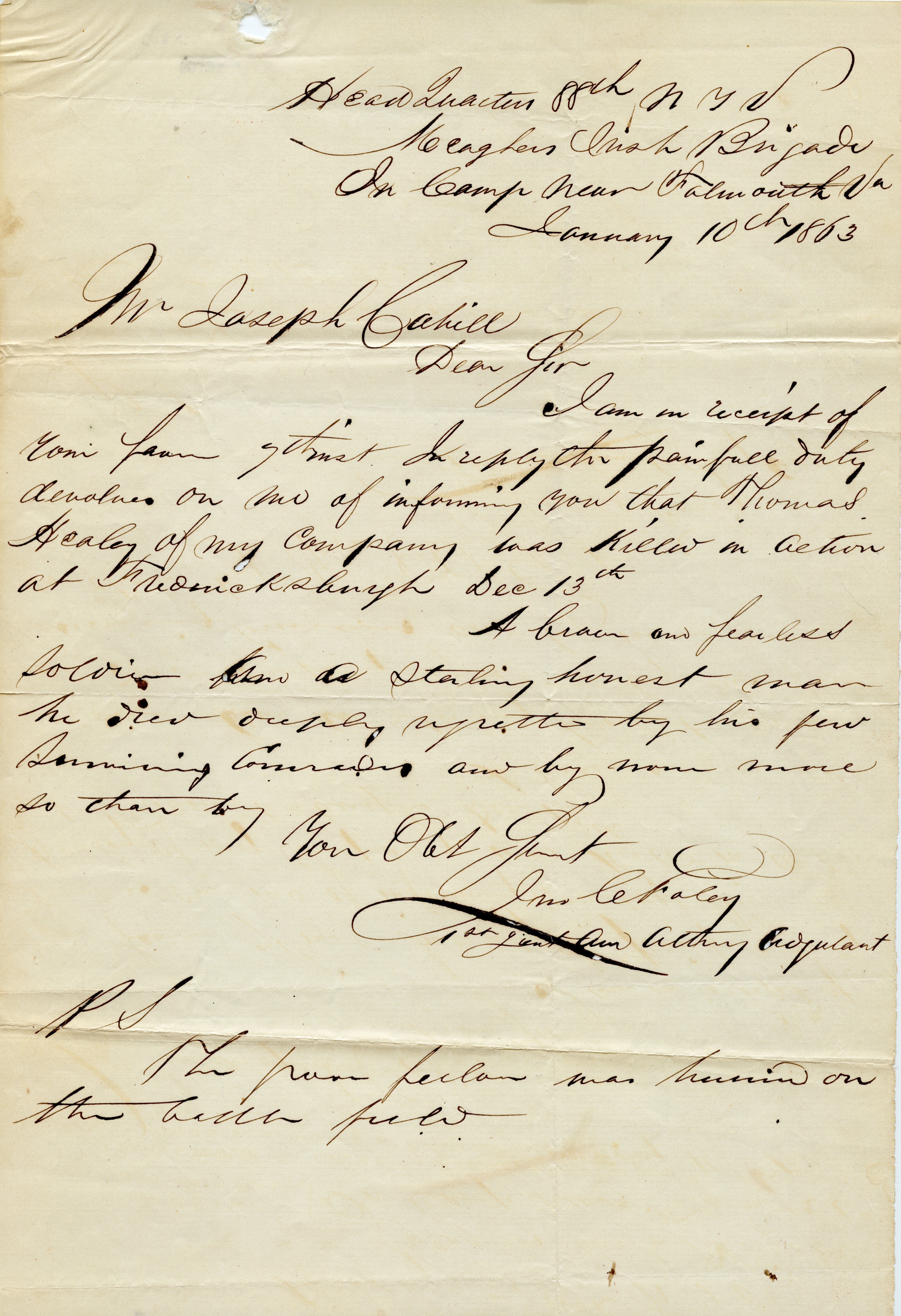
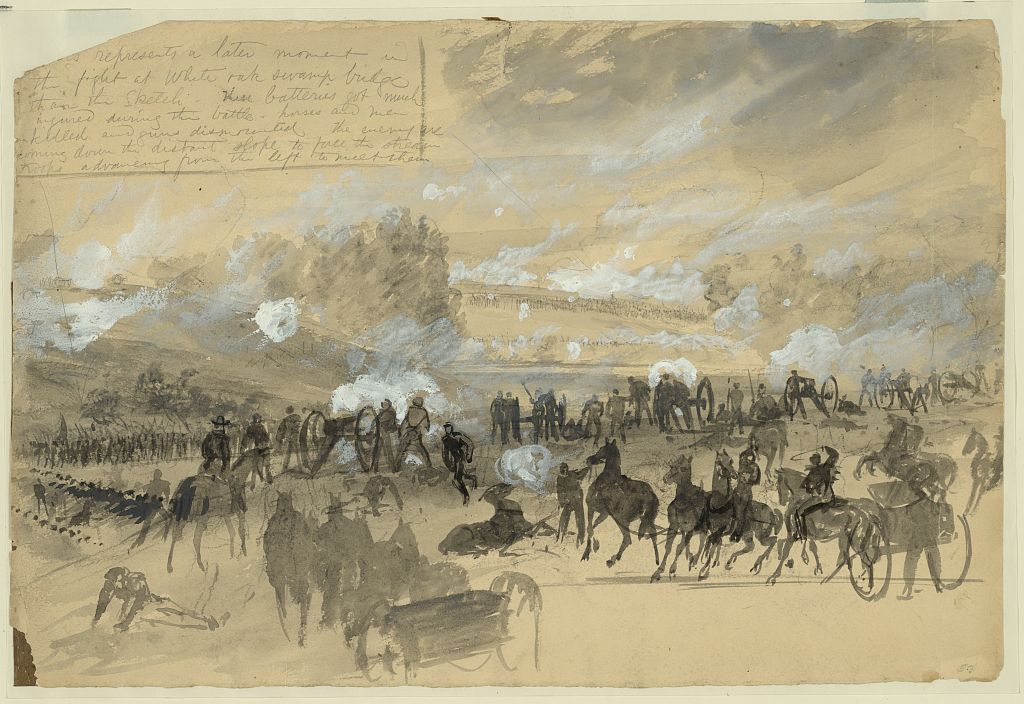
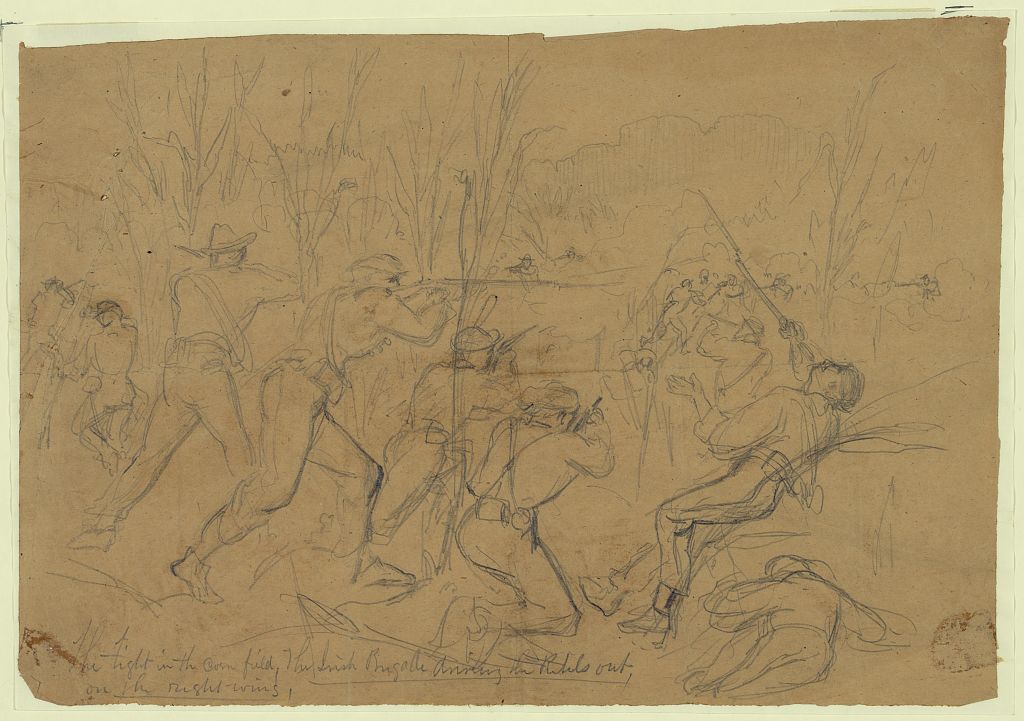
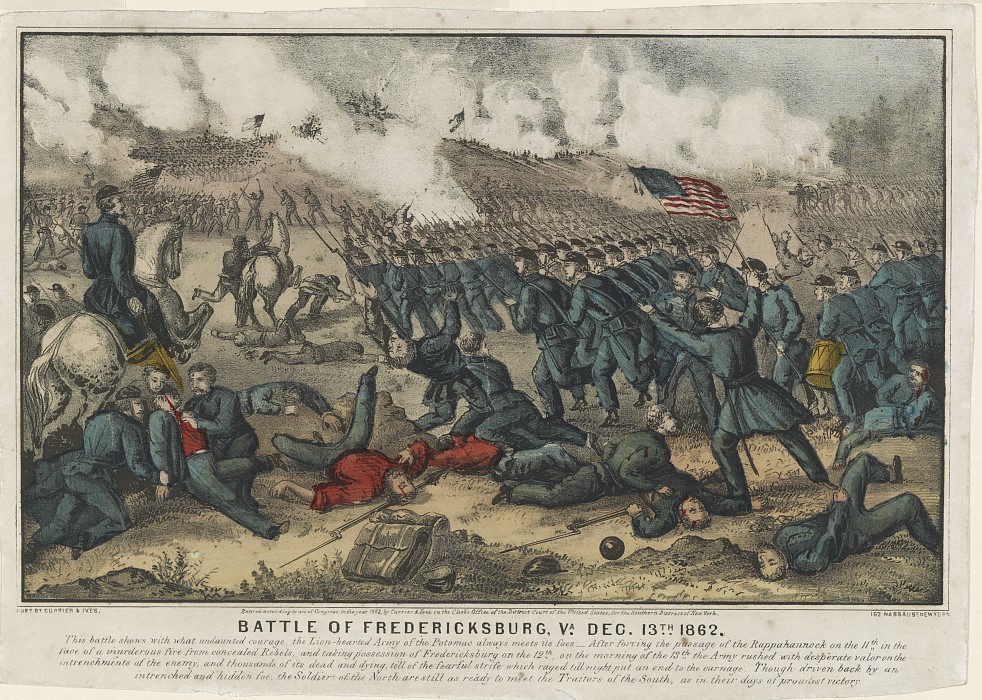
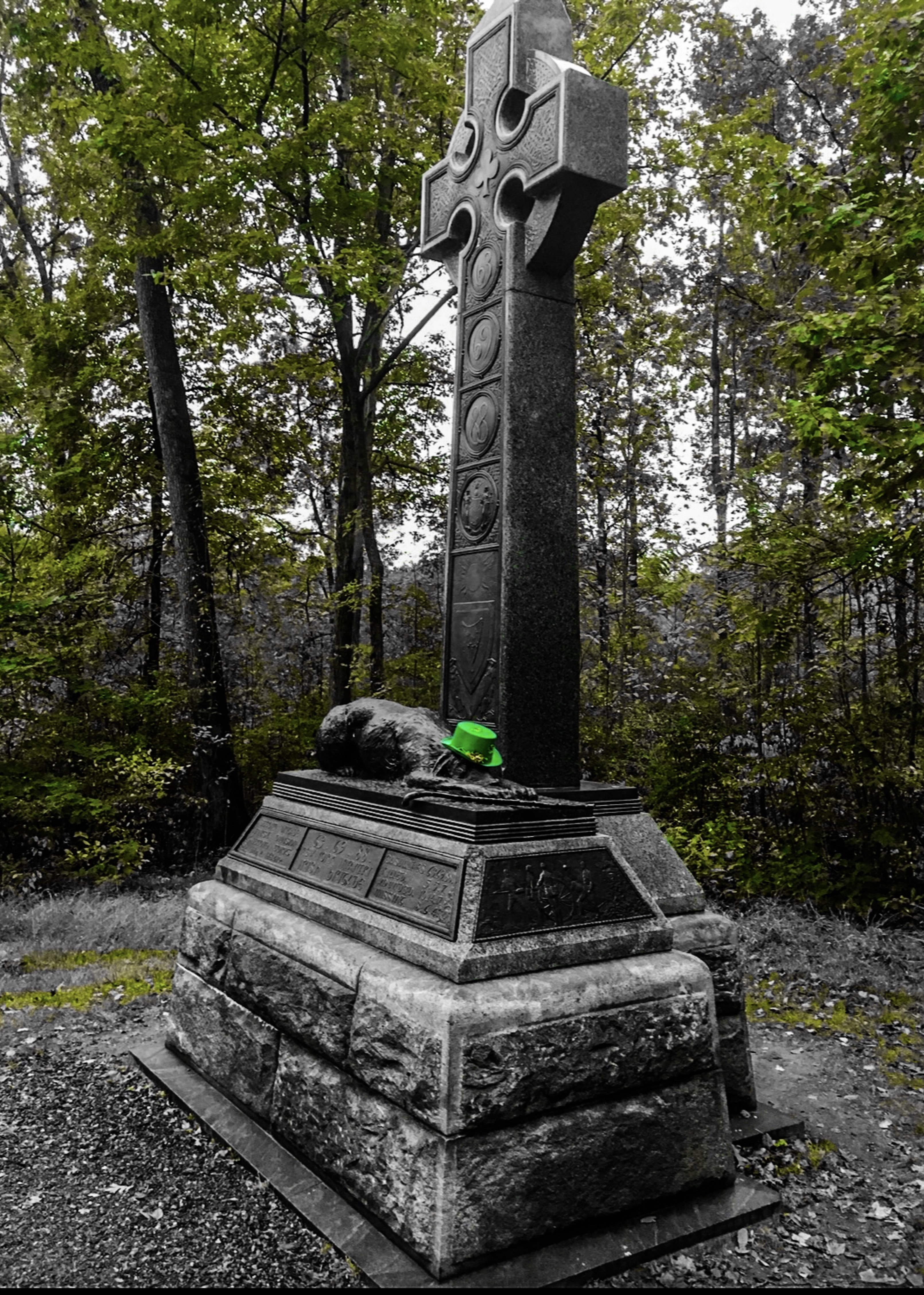


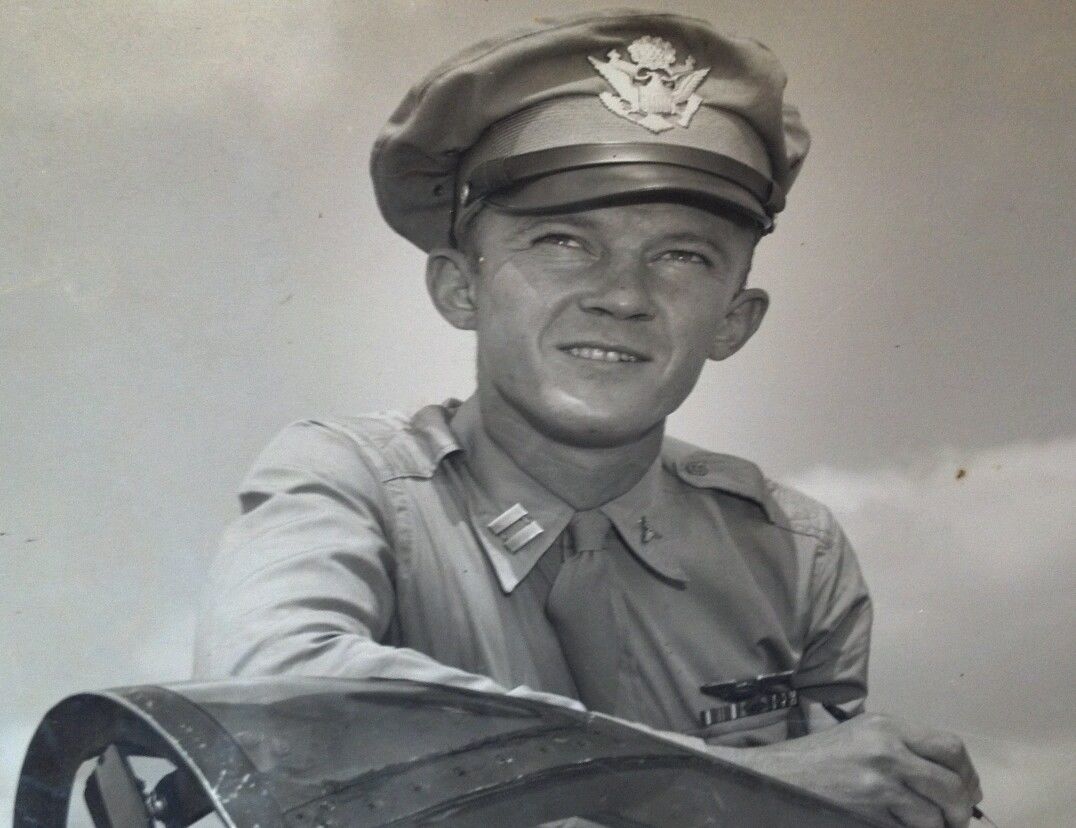

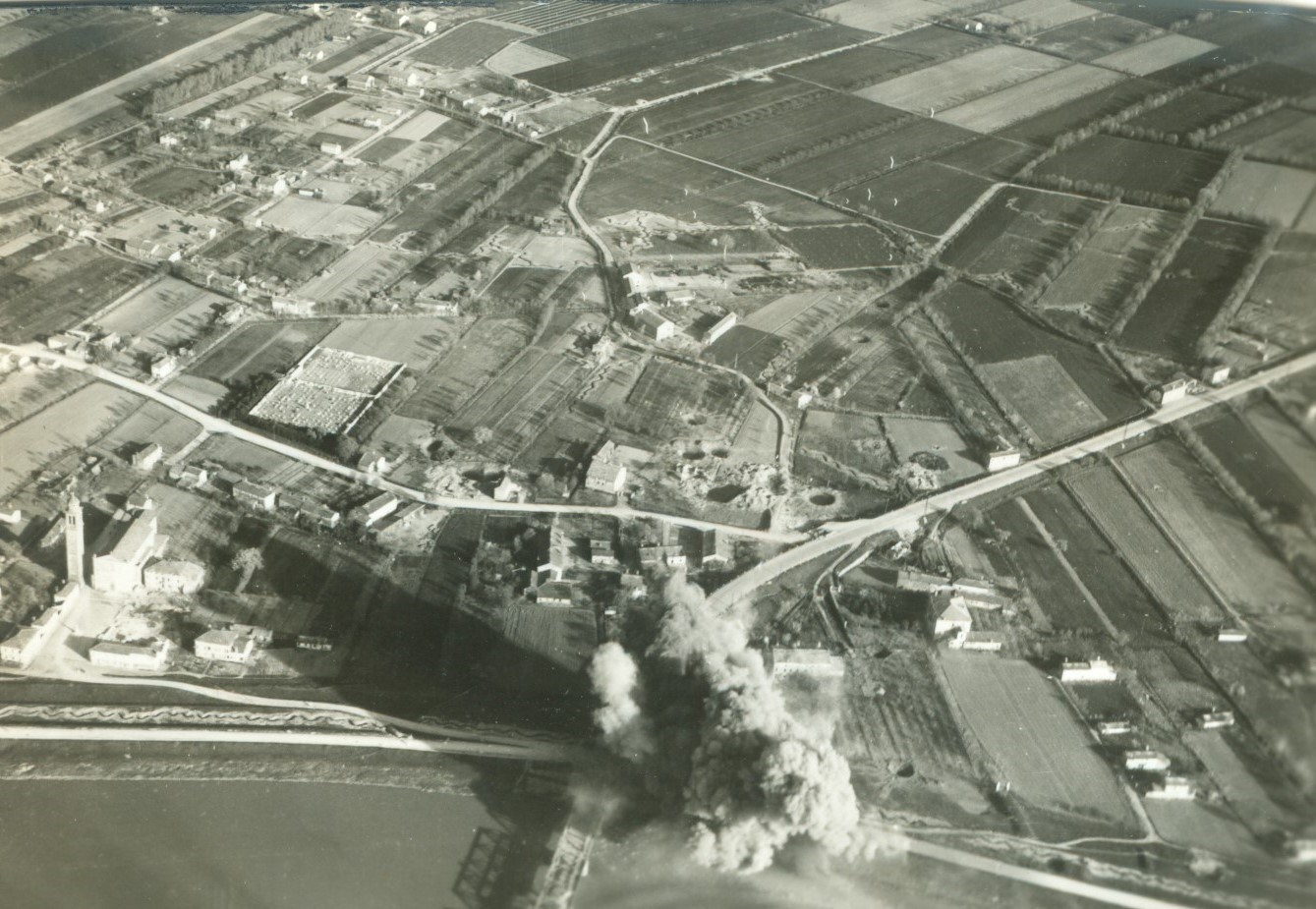
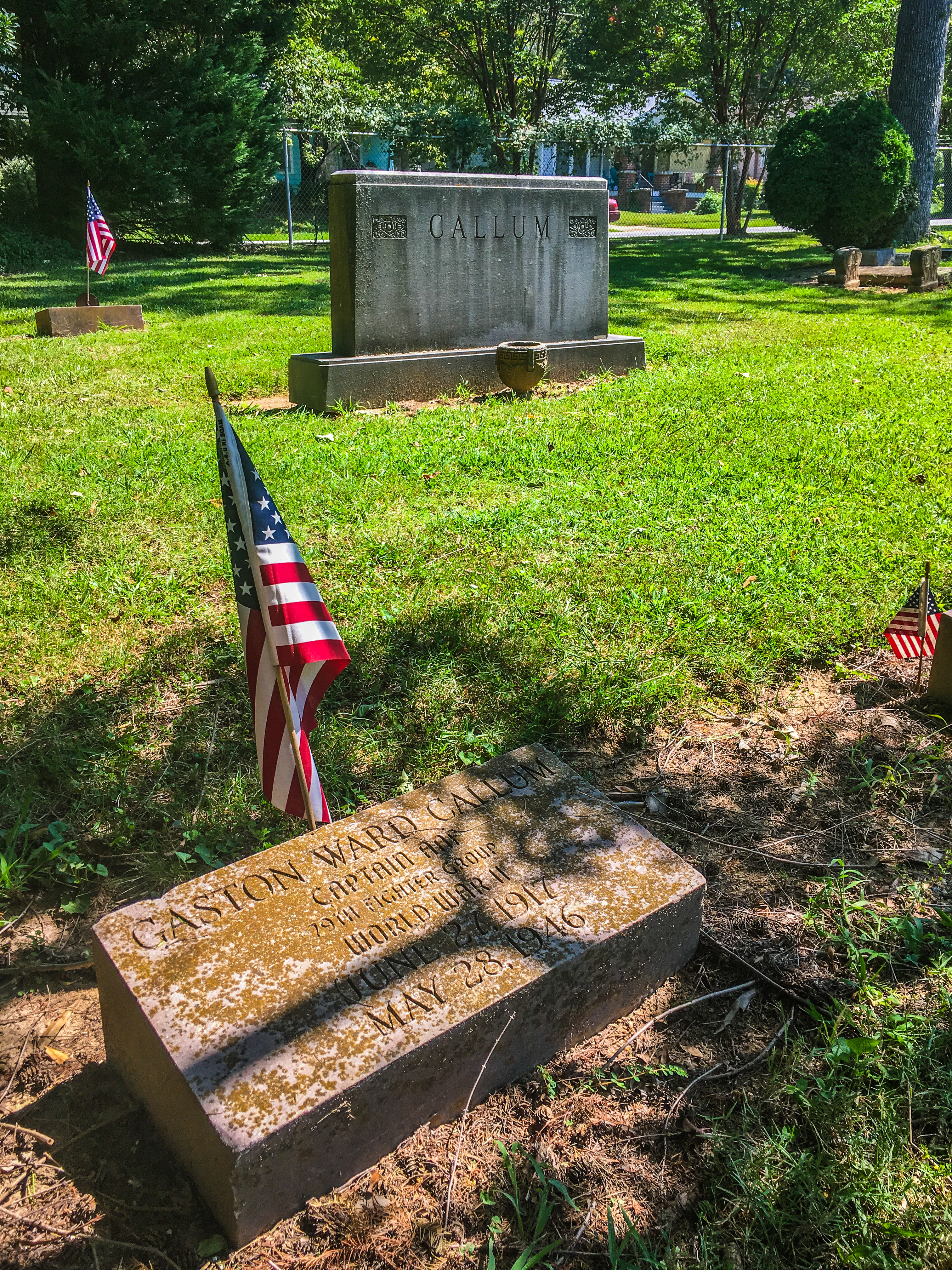
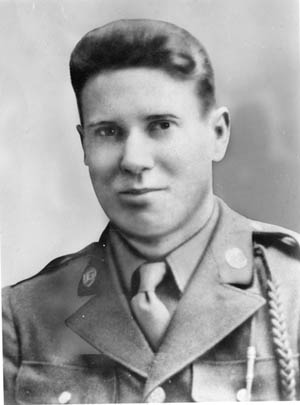
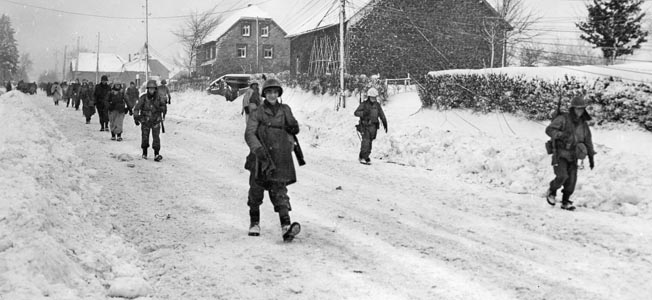
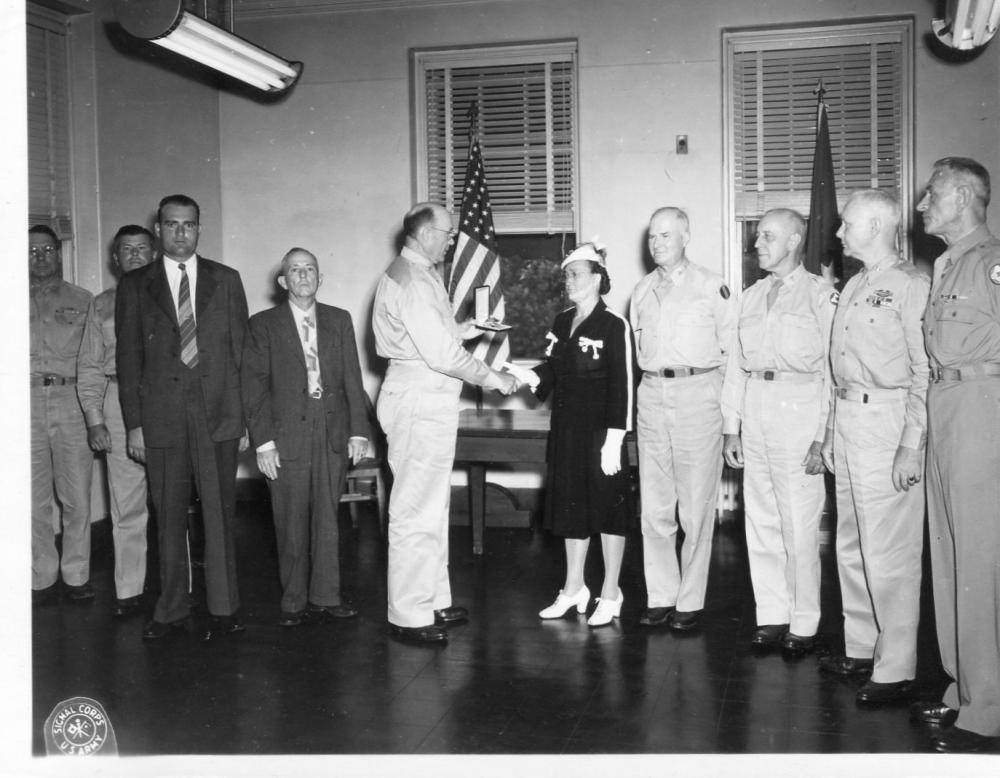
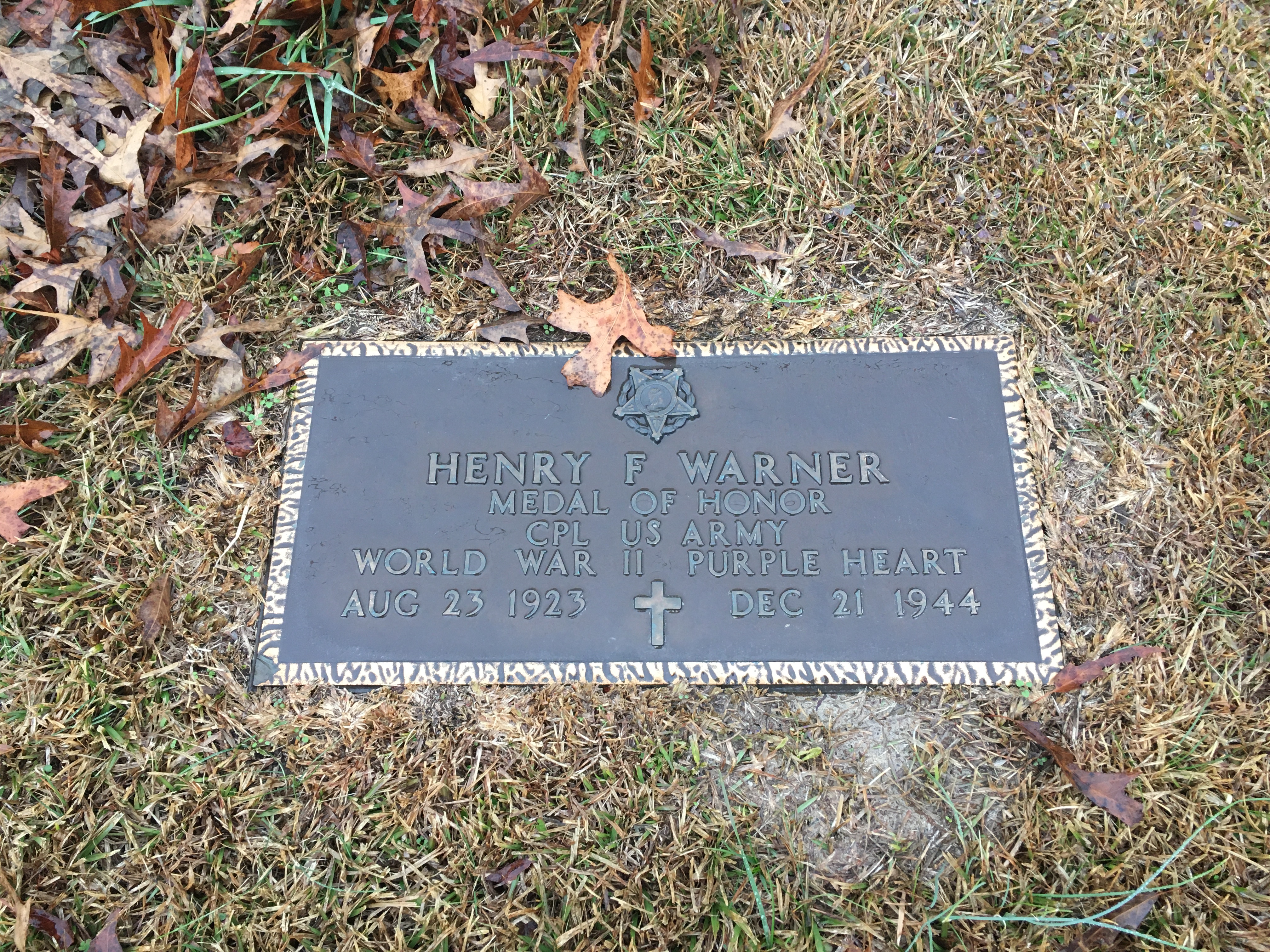
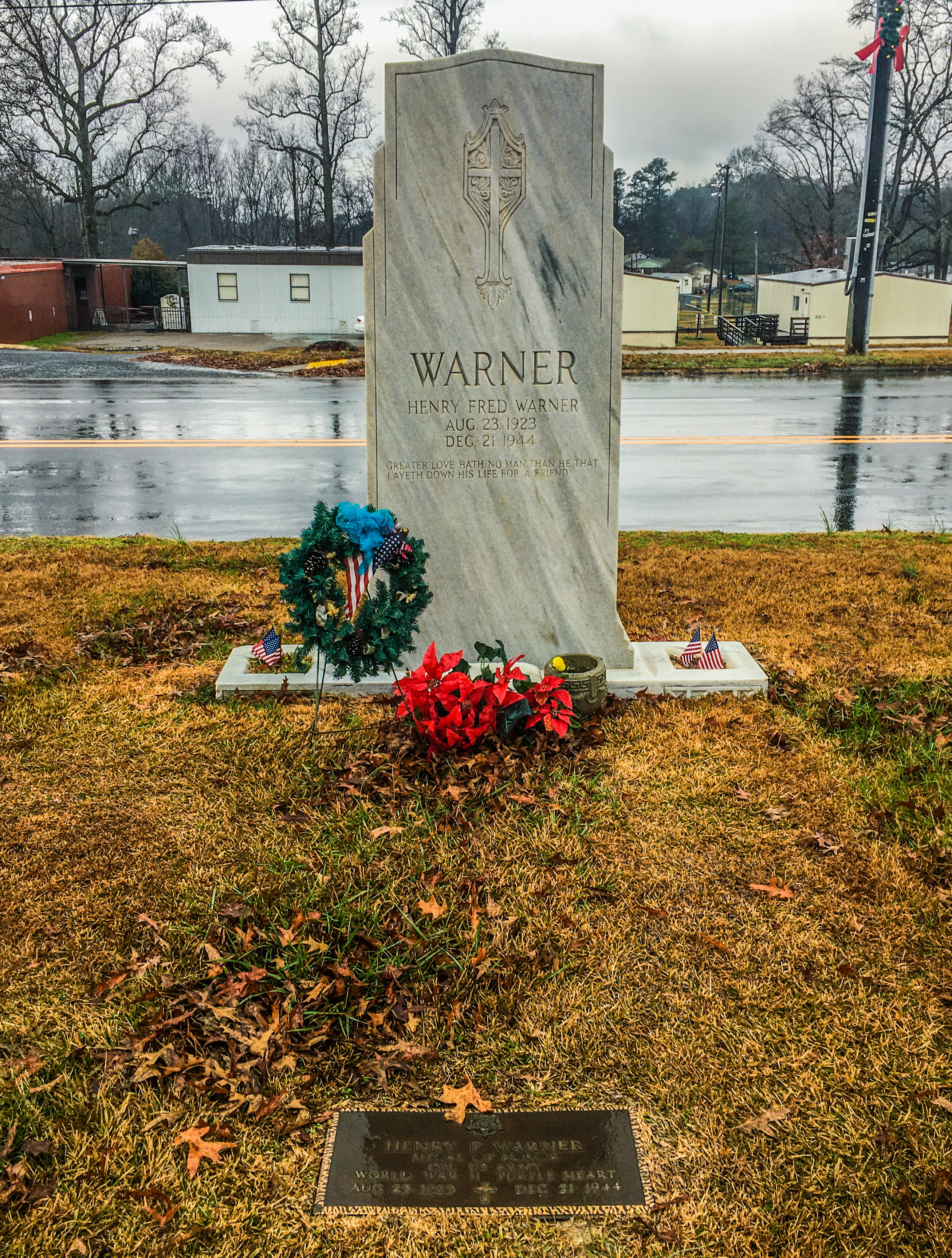

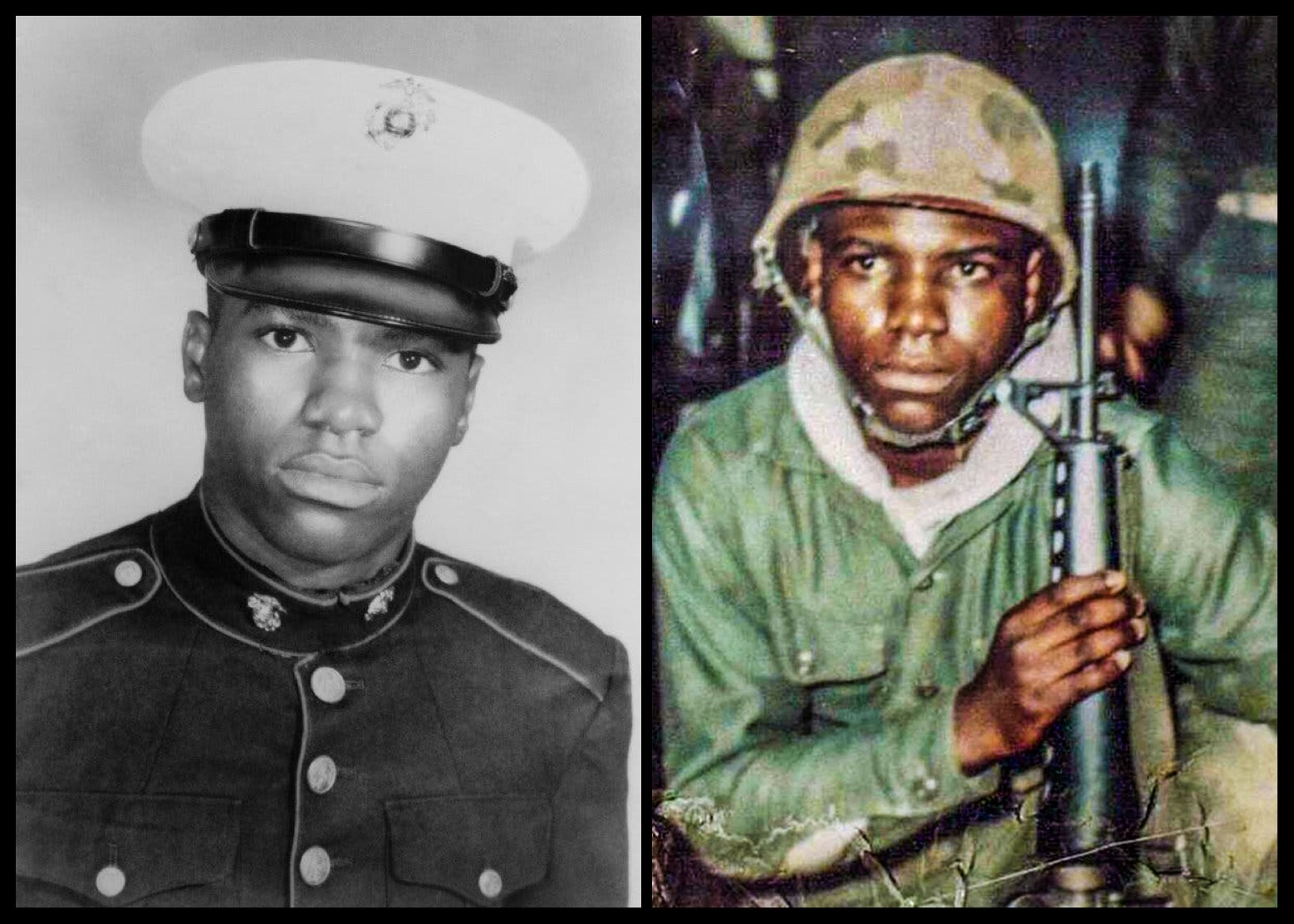
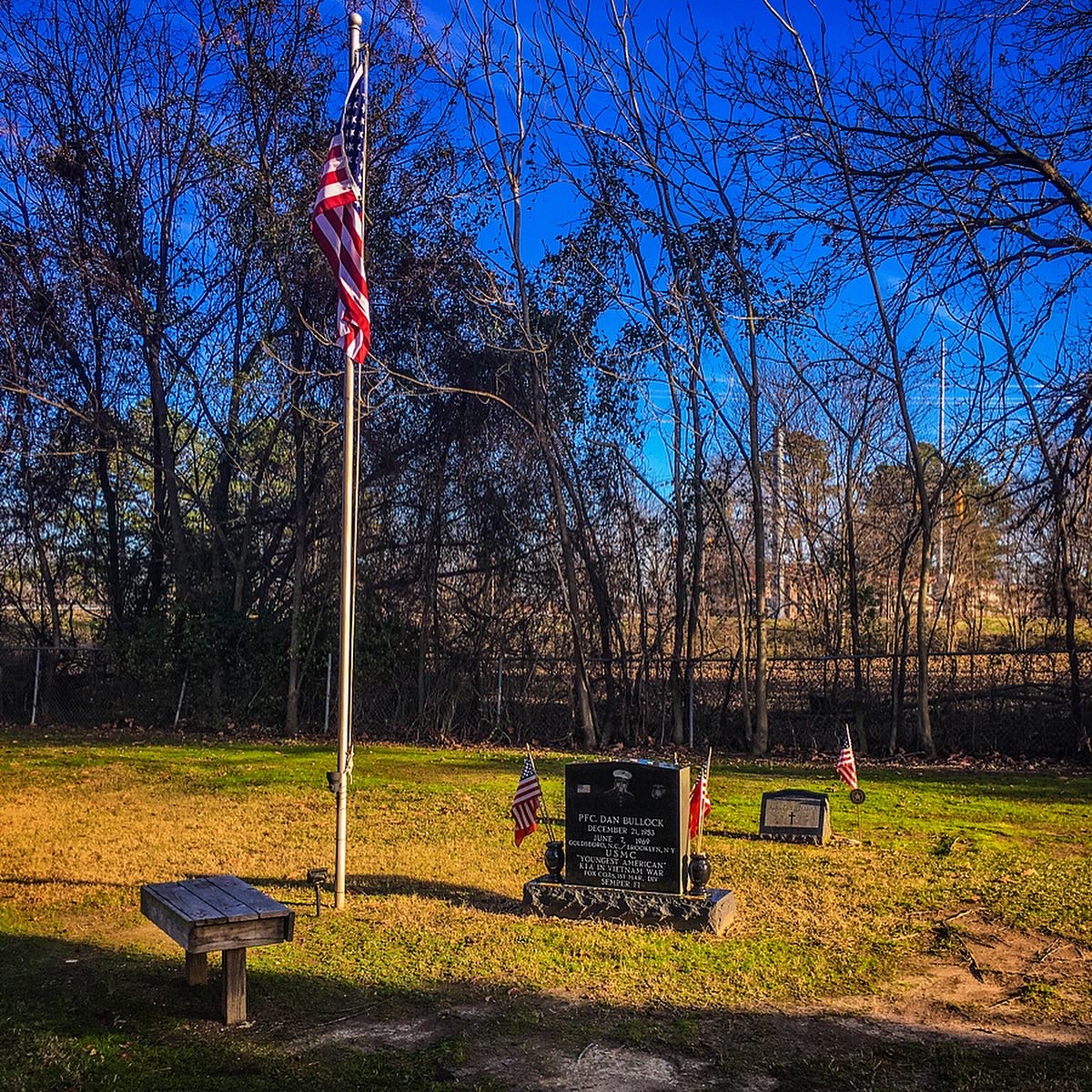
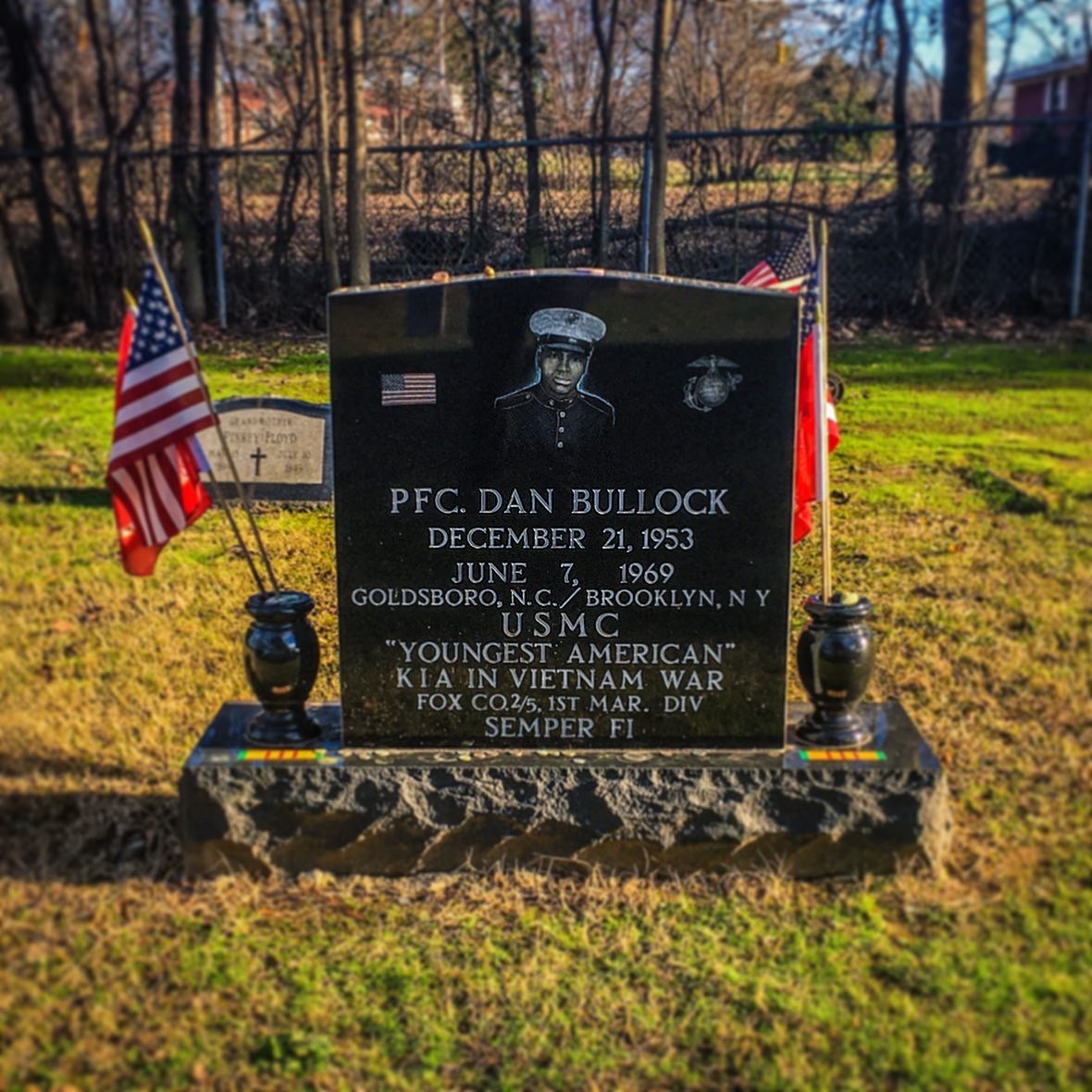
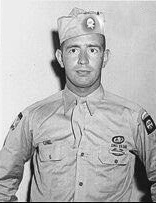
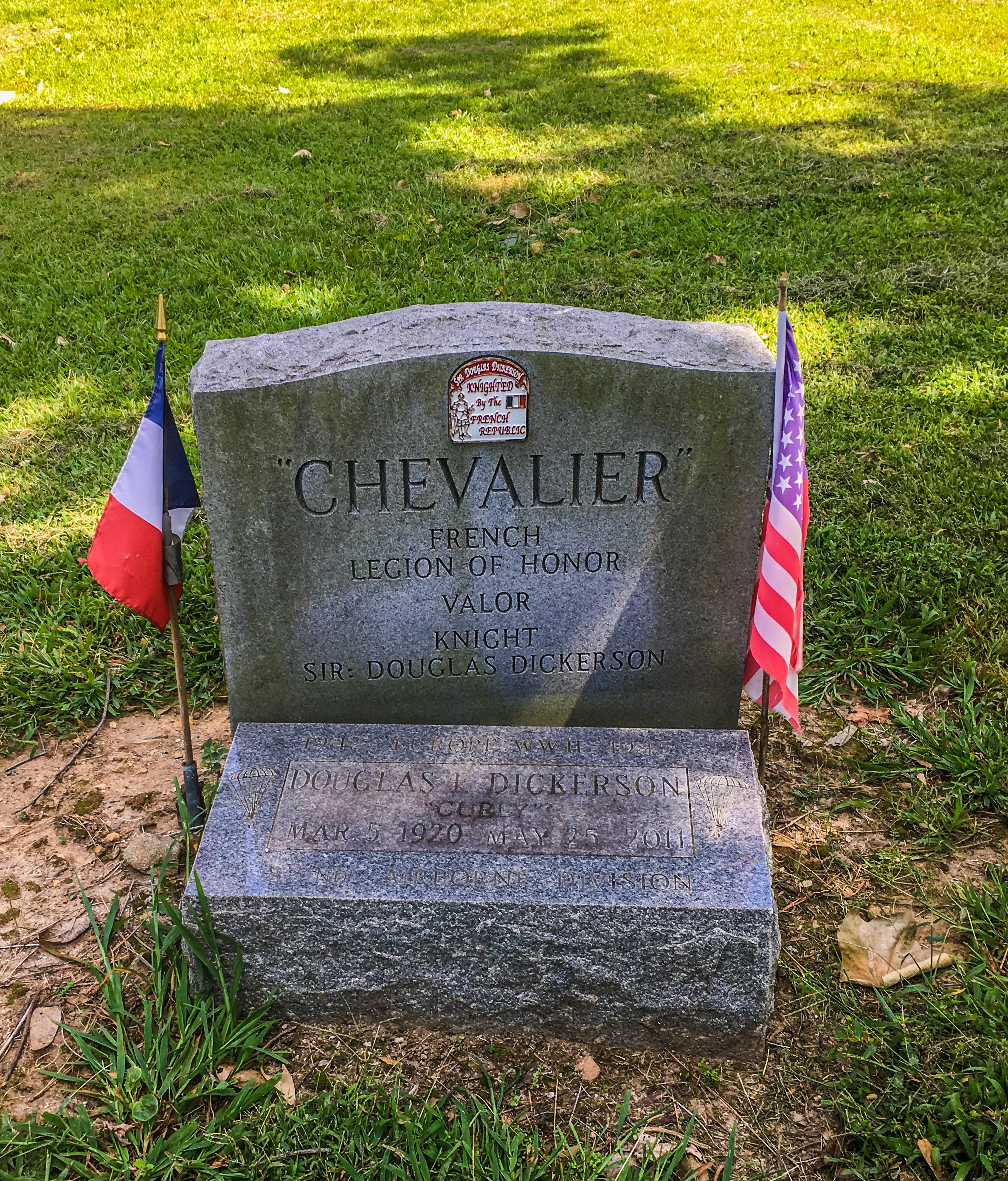

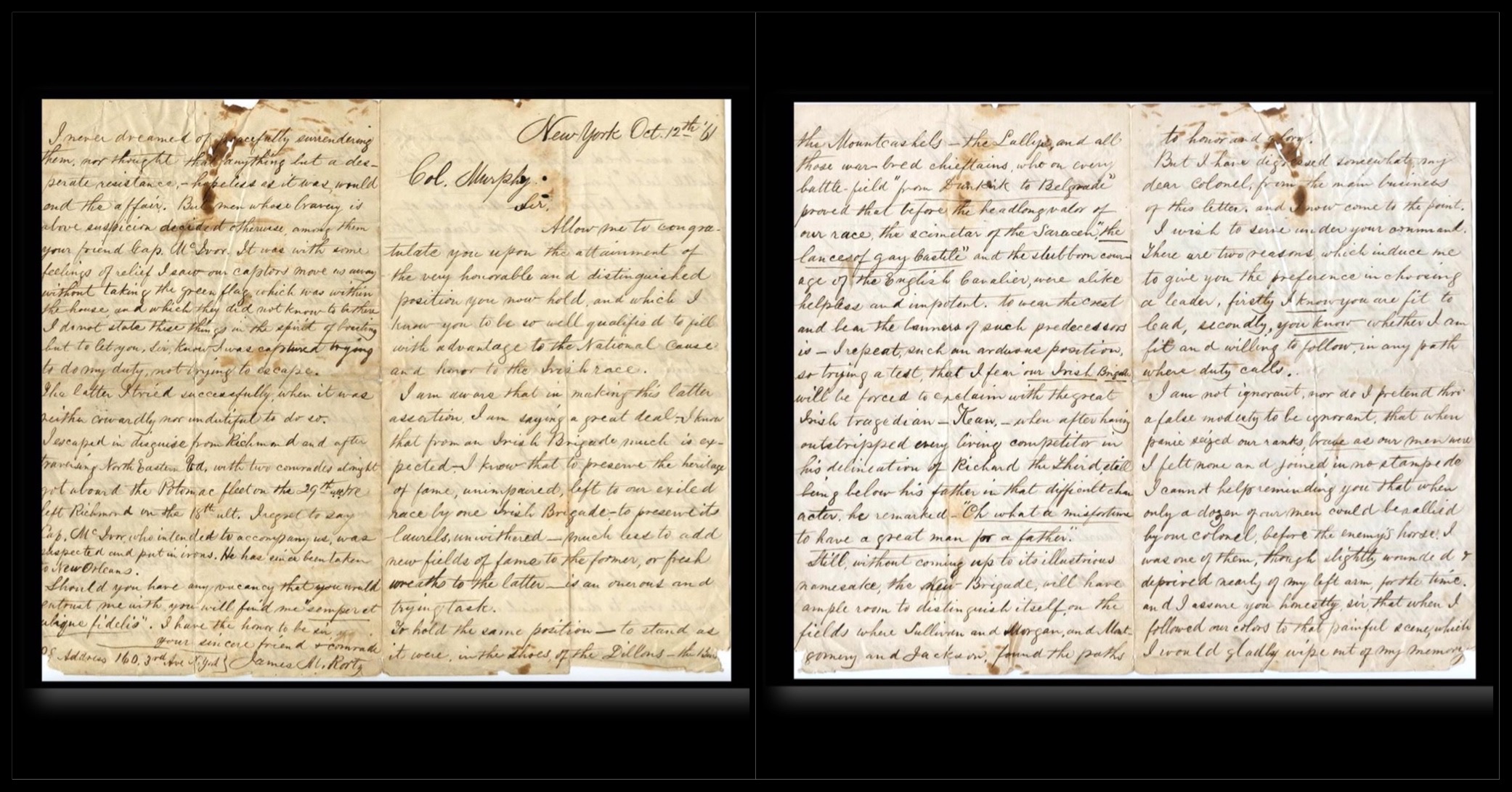
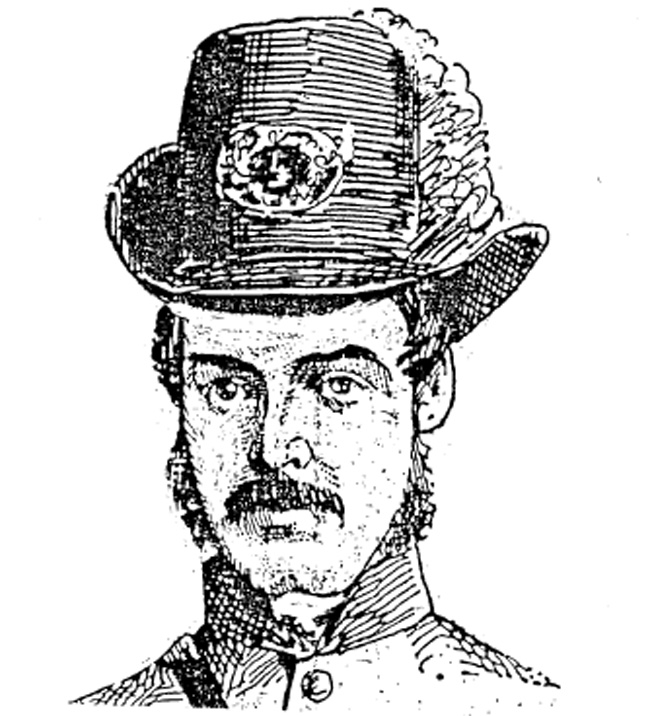
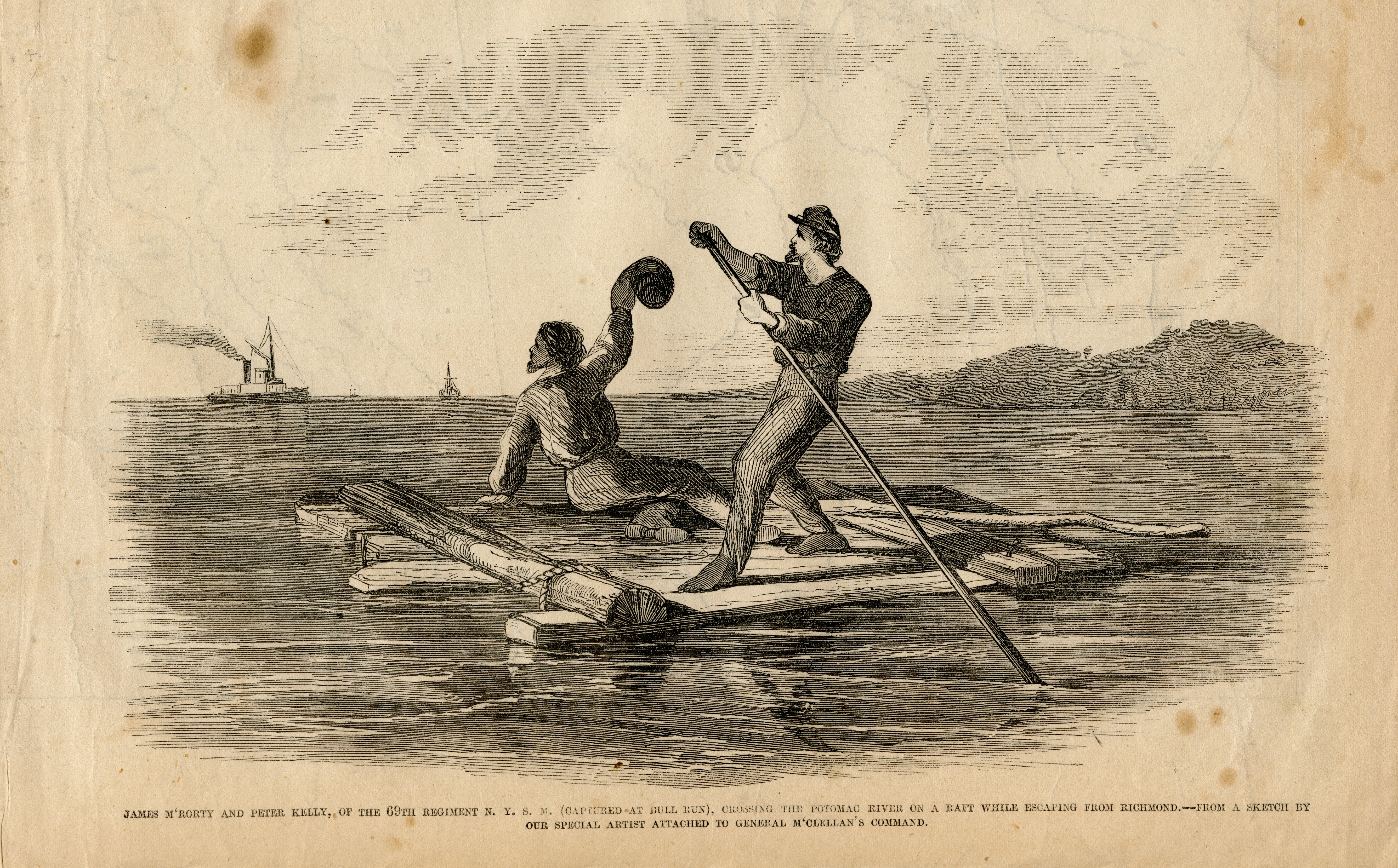
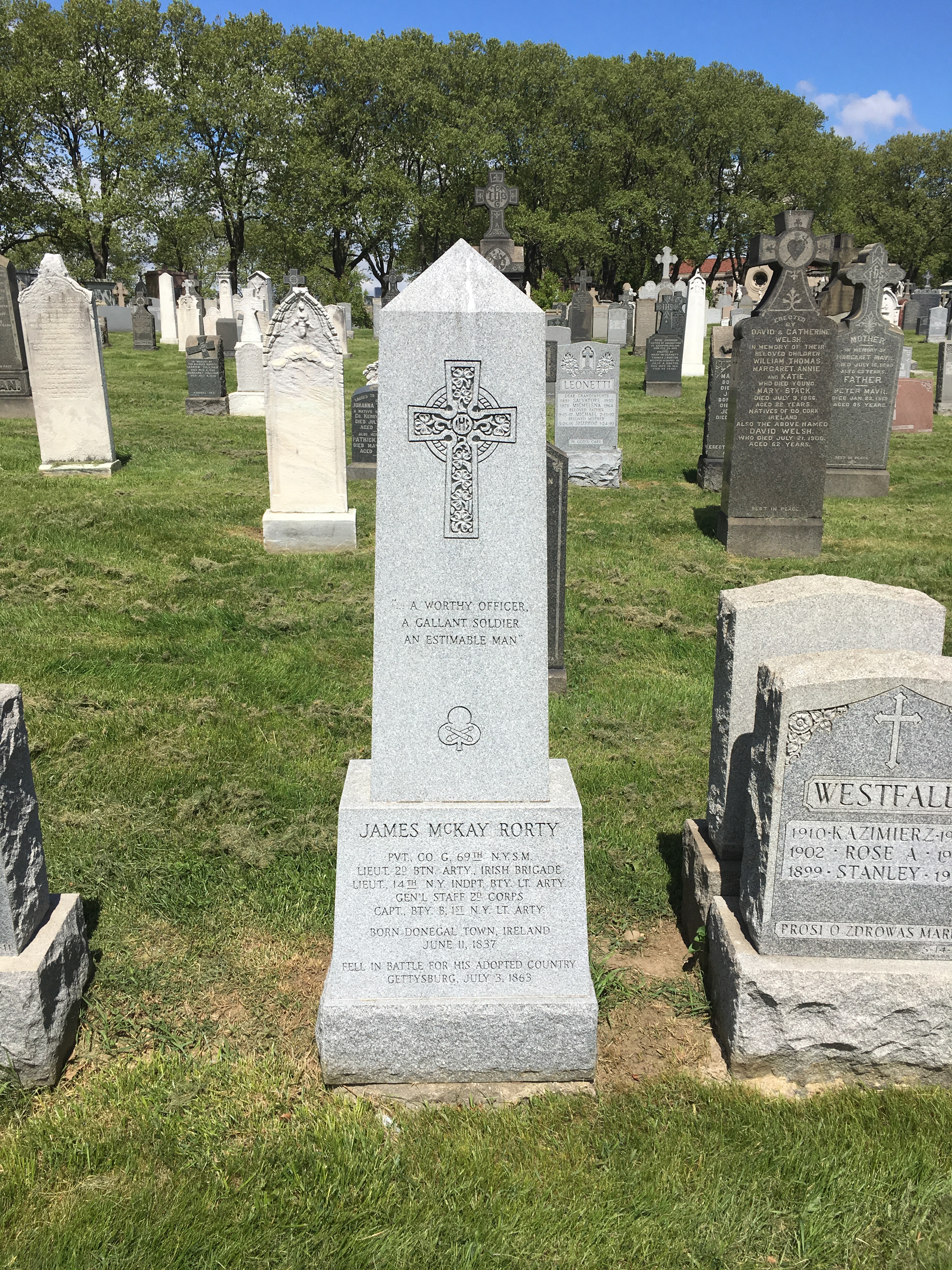
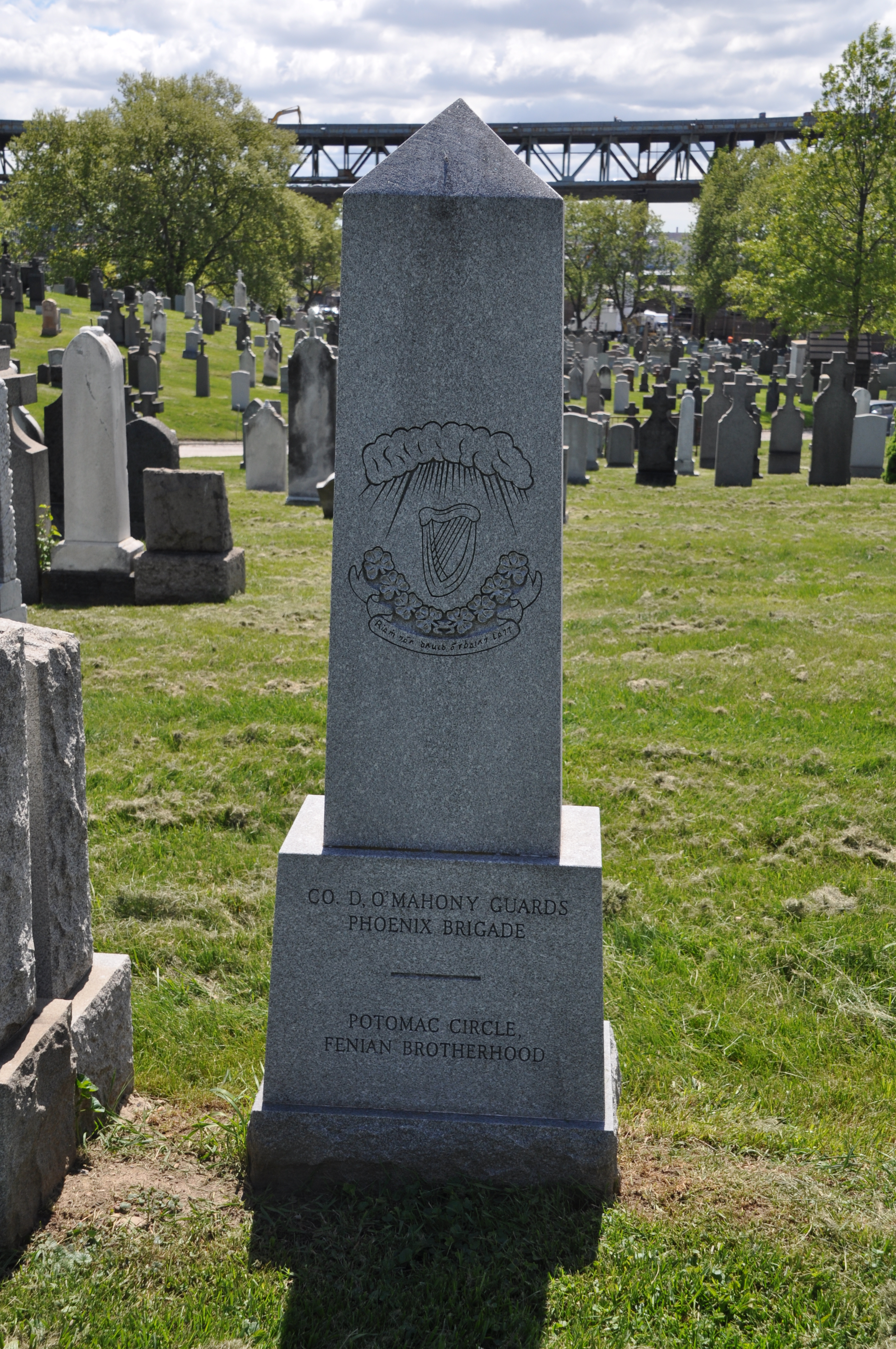
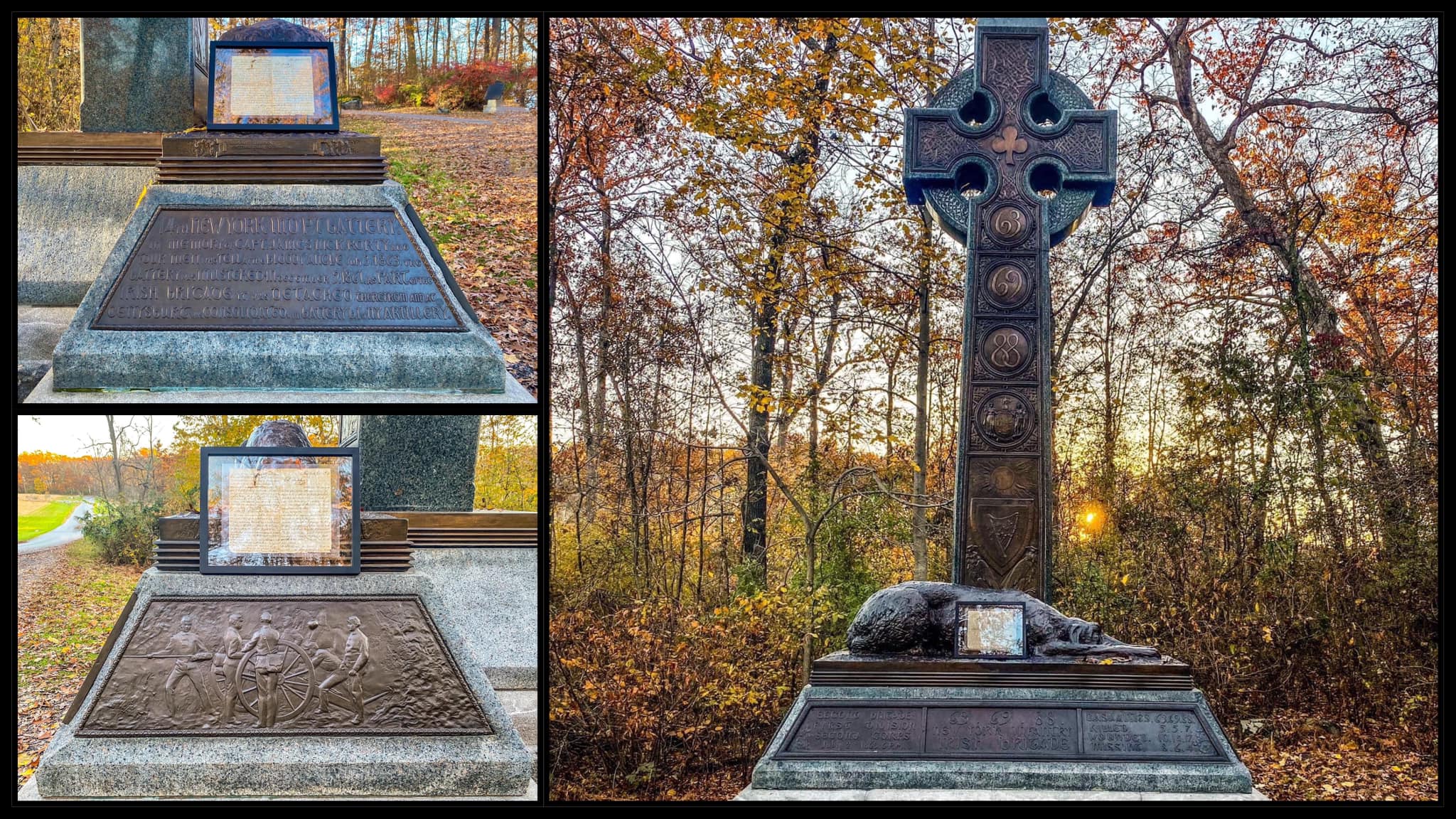
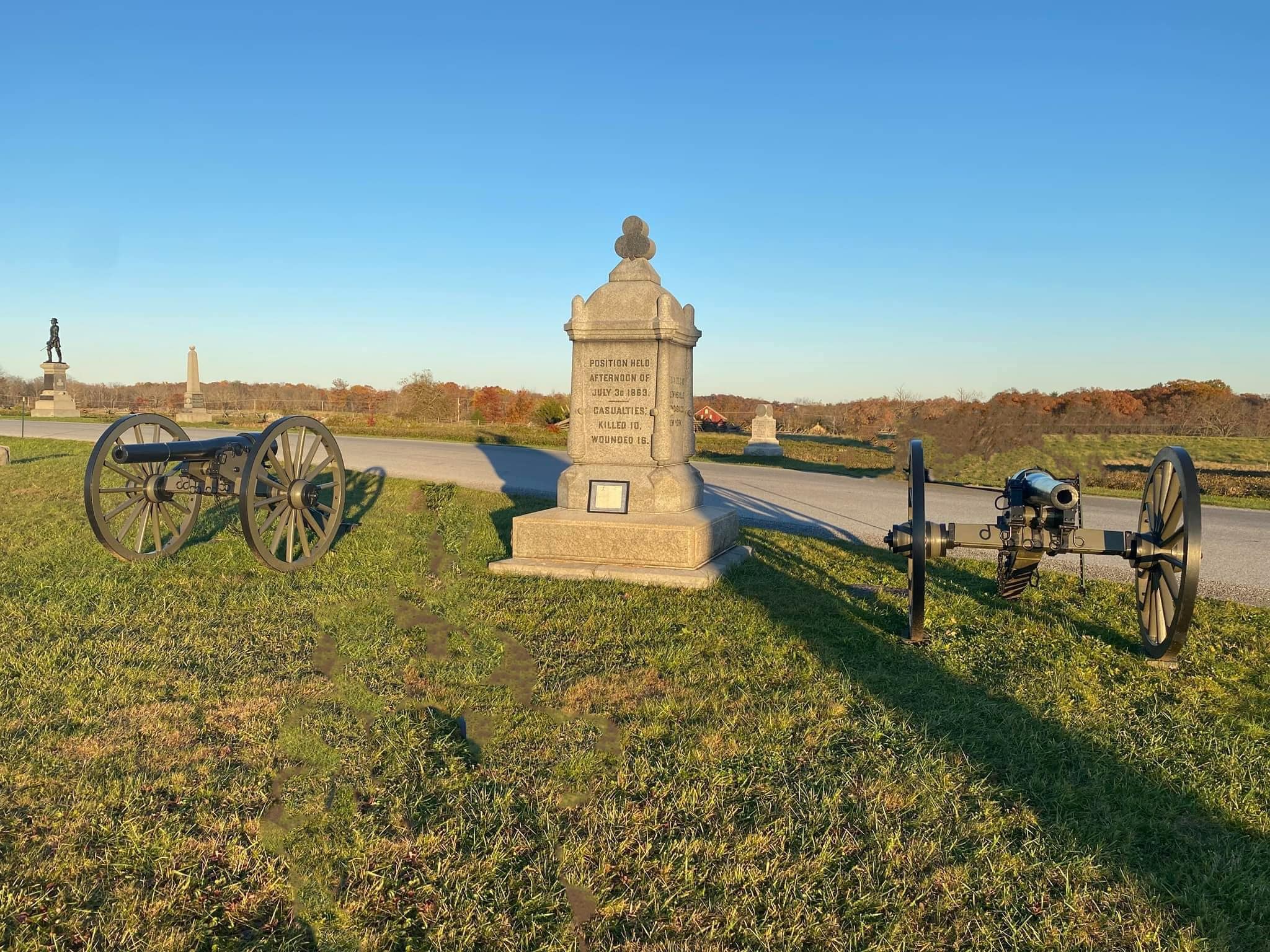
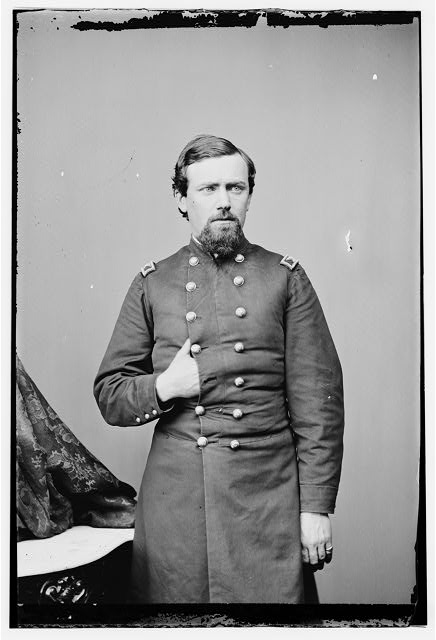
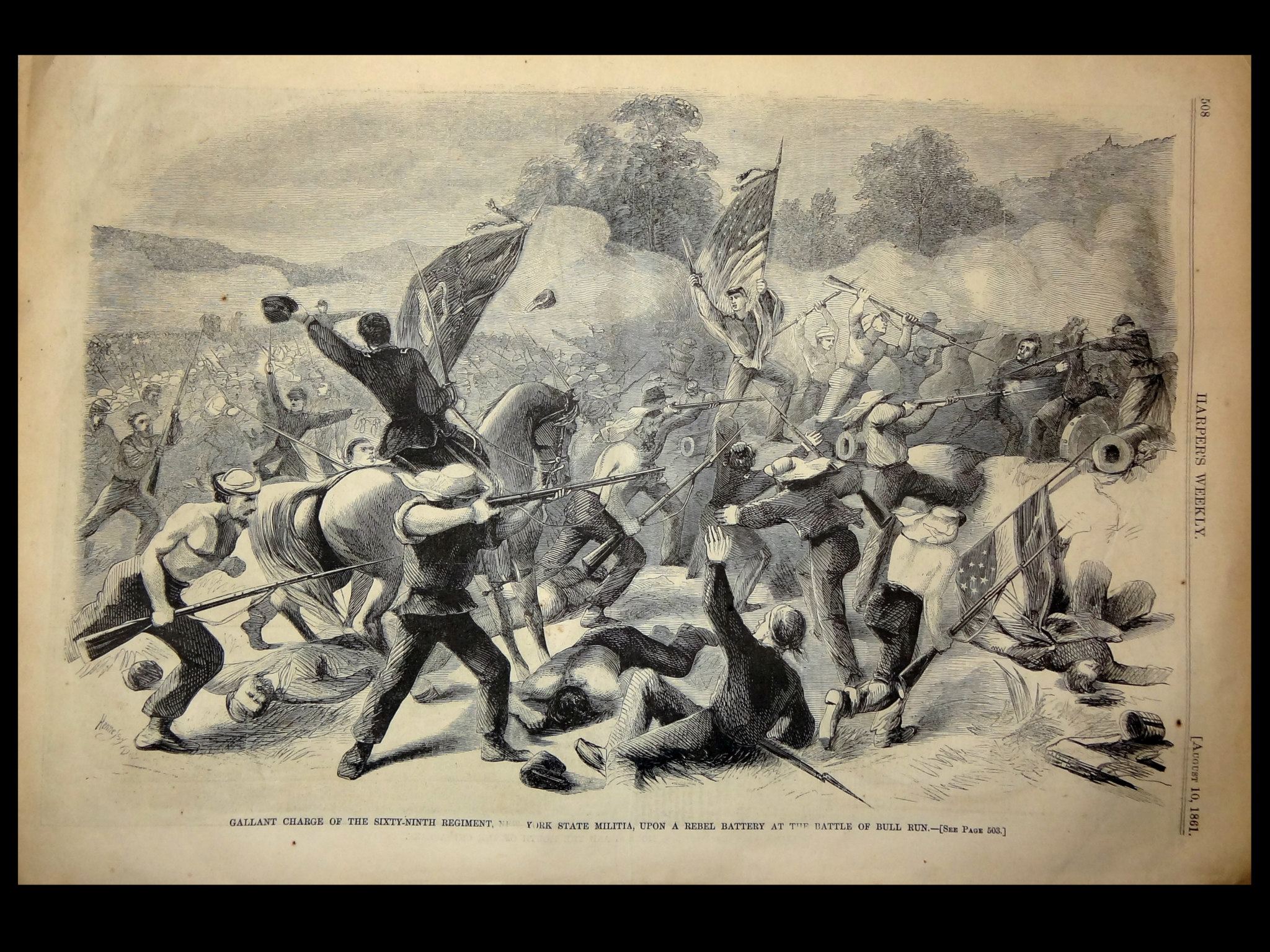
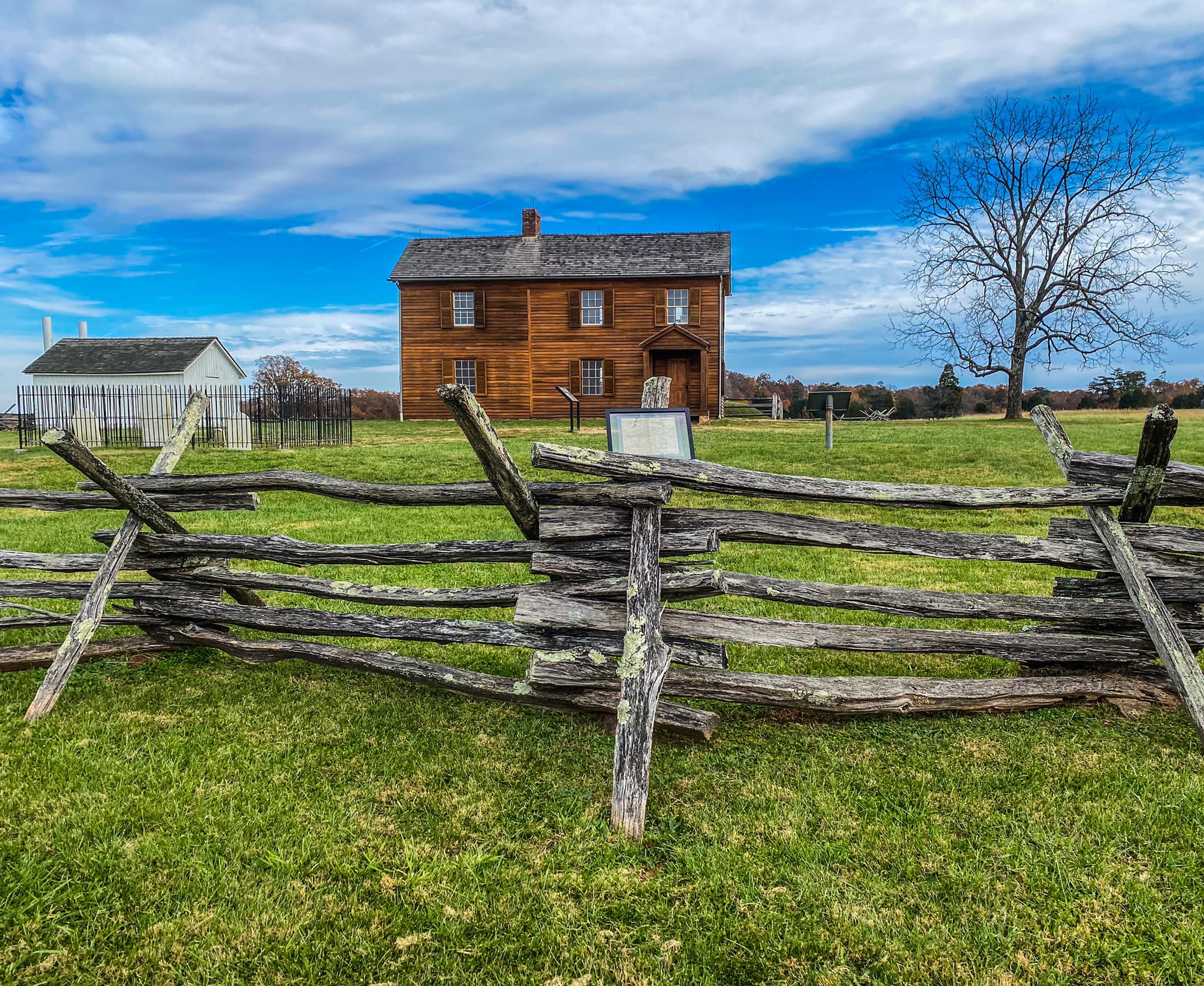
 The Military History Traveler