Nationalism by definition is: loving ones country and wanting to be governed by ones own people. During the second part of the nineteenth century, there was an increased progression of nationalistic feeling in Ireland. Due to this feeling there was a rise in physical force revolutionary groups, the largest organized group being the Fenians. Even though the Fenians started out in Ireland, they also established roots in America, by recruiting large numbers of the new Irish immigrant population. This was easily done due to the fact that the new Irish blamed the English for having to leave their homes in the old country. (1) The Fenian movment was at the height of popularity when the American Civil War broke out. So their ranks decided that fighting in this war would boost the movement as well as being great practice for the eventual uprising in Ireland. Even those who had no intention of going back to Ireland felt a connection to the Fenian movement and were swayed by it. Not to mention, many of the commanders of the Irish ethnic regiments were respected Fenians. These commanders were great motivators for the Irish fighting in the war, since many would follow them simply because of their allegiance to Ireland. This unique Irish quality was yet another reason these brave soldiers from Erin were such fierce fighters.
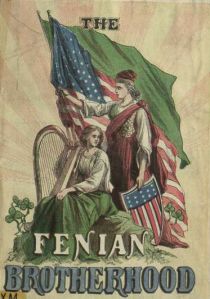
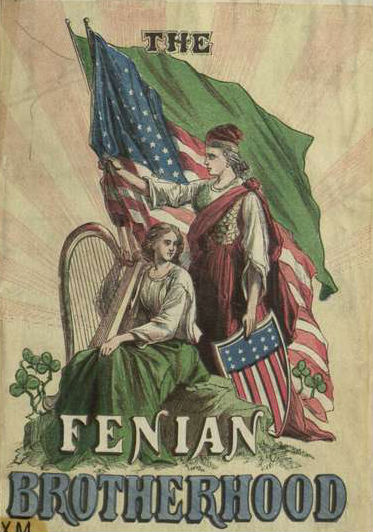
The Fenians’ progress (1865), cover.
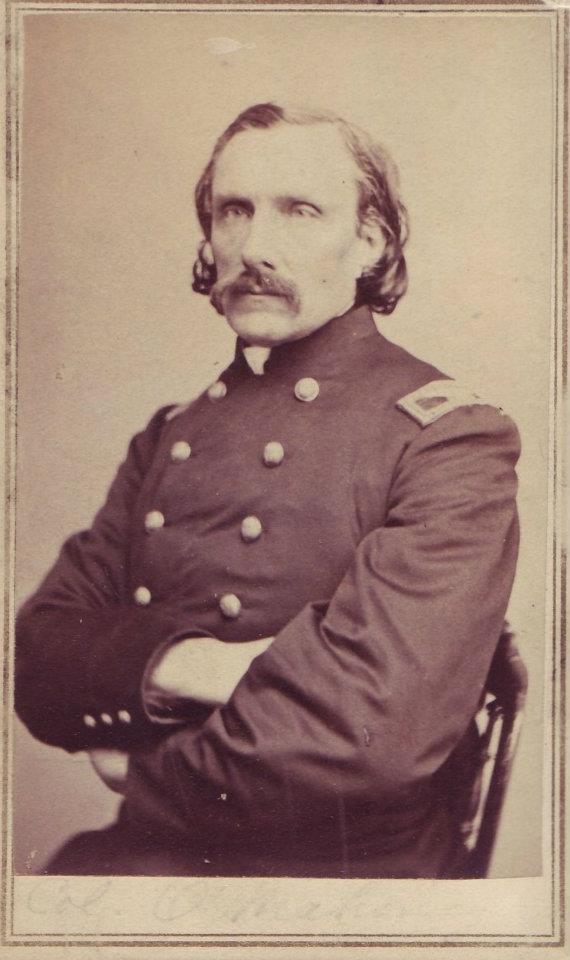
One such commander was John O’Mahony, one of the Fenian movement founders, O’Mahony was born in Ireland in 1816. In 1848 he took part in the failed Ballingarry rebellion and escaped to France. From there he made his way to the United States in 1854. Upon arrival he joined many groups to advance the cause of Irish freedom, one of which was the 69th New York, where he rose to the rank of colonel. During the American Civil War O’Mahony’s rank was mostly political, as he traveled around the nation speaking about the Fenian cause. However, he had a change of heart and felt fighting would help the Fenians cause even more. Therefore, he founded the Phoenix Brigade. At the time the Brigade was founded it was not endorsed as a State of New York military force. However, it was eventually merged into a formal State of New York militia force, designated as the 99th New York State Militia. This made it an Irish Republican military unit subsidized by an independent state. This unit would soon be activated to fight against the Confederate States. O’Mahoney also planned to use them after the war to invade Canada and strike a blow to the English on foreign soil. (2)
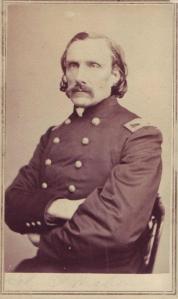
Carte de visite of John Francis O’Mahony; From The Collection of The American Military Heritage Museum Of North Carolina
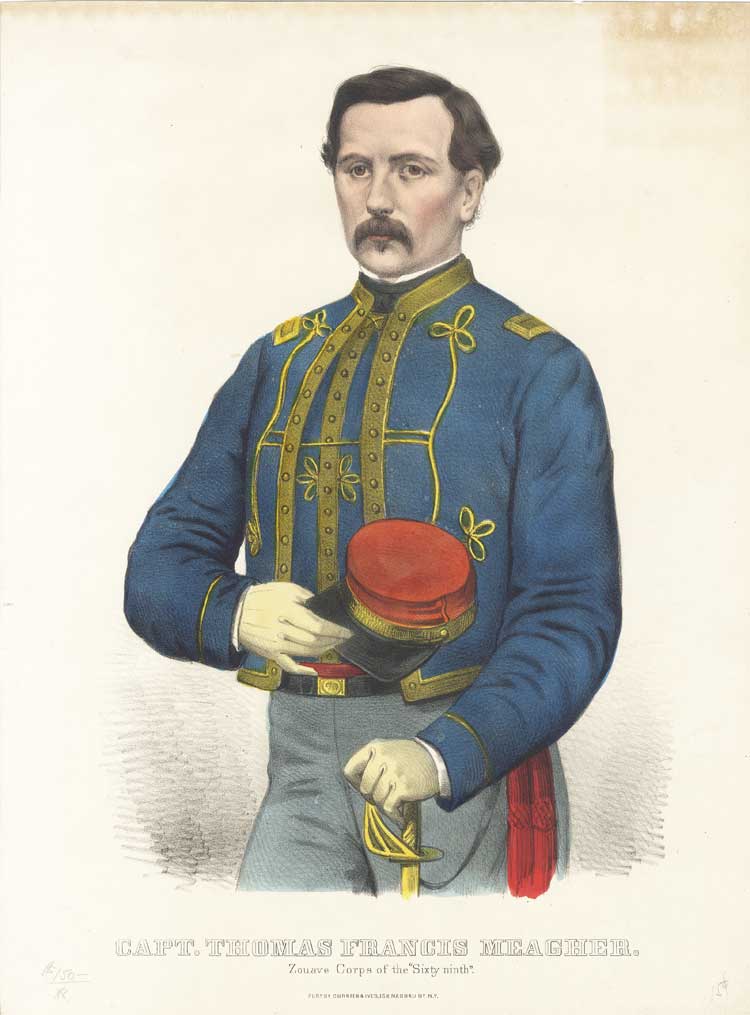
One of the most respected Fenians who inspired the Irish with his ferocious Irish nationalism was Thomas F. Meagher. Meagher succeeded in getting himself into difficulties on both sides of the Atlantic. Born in County Waterford, Ireland and opposed to British rule, he joined the Young Irelanders movement, which was a branch of the Fenians. Meagher quickly rose to a position of power do to his great oratory skills. His most famous speech was the “Sword Speech” given in Dublin on July 28, 1846, (3) this solidified his power and he was given the moniker “Meagher of the Sword.” Meagher’s prestige in the movement made him an ideal candidate for a diplomatic mission to France, which resulted in him bringing back a flag that would eventually become the Irish Tri-Color, the National flag of Ireland today. (4) Meagher like O’Mahony was involved in the failed uprising of the Young Irelanders at Ballingarry, County Tipperary. He was captured, tried, convicted and sentenced to be exiled to Tasmania. (5) Meagher made a daring escape from his penal colony and landed in America as a hero to the Irish population. He picked up where he left off as an orator for the Irish cause. It was of no surprise that when the American Civil War came about Meagher used his status to raise an Irish Zouave company in 1861 and joined the Union army himself.
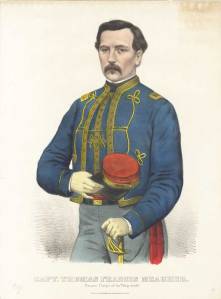
1861 Currier Ives entitled Captain. Thomas Francis Meagher. Zouave Corps Of The ‘Sixty-Ninth’. Meagher appears in his zouave uniform of the 69th New York Vols
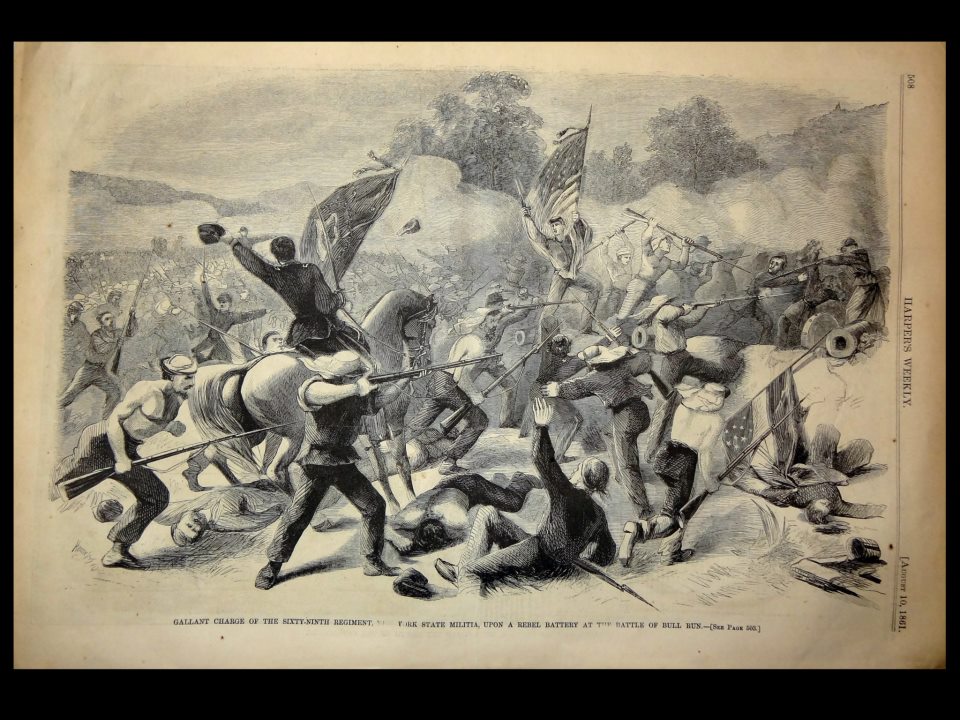
He served as the commanding officer of that company and eventually rose to the rank of Brigadier General in the Irish Brigade. Due to his popularity, gained by his actions back in Ireland, his men would fight hard for him. One example of this was at the Battle of Bull Run. The Brigade moved to the right and initially pushed back the enemy. The Confederate forces, with the timely aid of reinforcements, stopped the advancement of the Irish Brigade and began to move the Union forces back. The Irish of the 69th New York would not go down that easily. They rallied and charged multiple times under heavy artillery fire, only to be stopped. During this portion of the battle, General Meagher had his horse shot out from under him. He immediately jumped up, waved his sword, and exclaimed, “Boys! Look at that flag, remember Ireland and Fontenoy”. (a battle during the War of the Austrian Succession in which the Irish Brigade of France achieved victory against an English adversary) (6) With his nationalist battle cry ringing in their ears, the Brigade made one final push and sustained substantial casualties. One of these casualties was Lieutenant Colonel Haggerty, a native of Ireland, who was styled by Captain Conyngham “as fine a specimen of a Celt as Ireland could produce.” (7) Haggerty was just one of many men who perished valiantly that day. After the battle the Commander of the Union Army, General Irving McDowell, who watched the charge, rode up to the 69th and personally thanked them. Meagher lead the Irish Brigade in every battle up till and including the Battle of Fredericksburg. After this battle a war weary Meagher resigned his commission and was reassigned to other duties. (8)
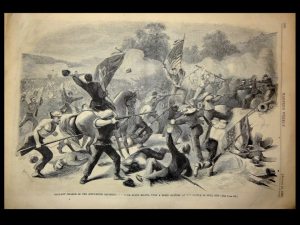
Gallant Charge of The Sixty Ninth Regiment New York State Militia Upon A Rebel Battery At The Battle of Bull Run. Published in Harper’s Weekly August 10th 1861
Although Meagher’s military service with the Irish Brigade did not last the duration of the war, his leadership and inspiration magnificently guided the Brigade through many of its hardest battles.
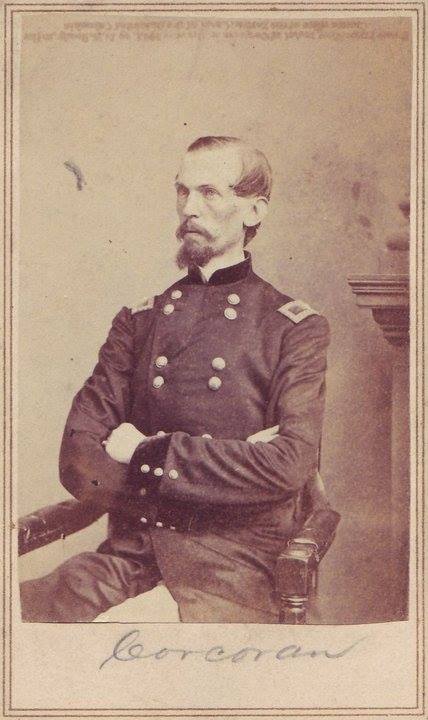
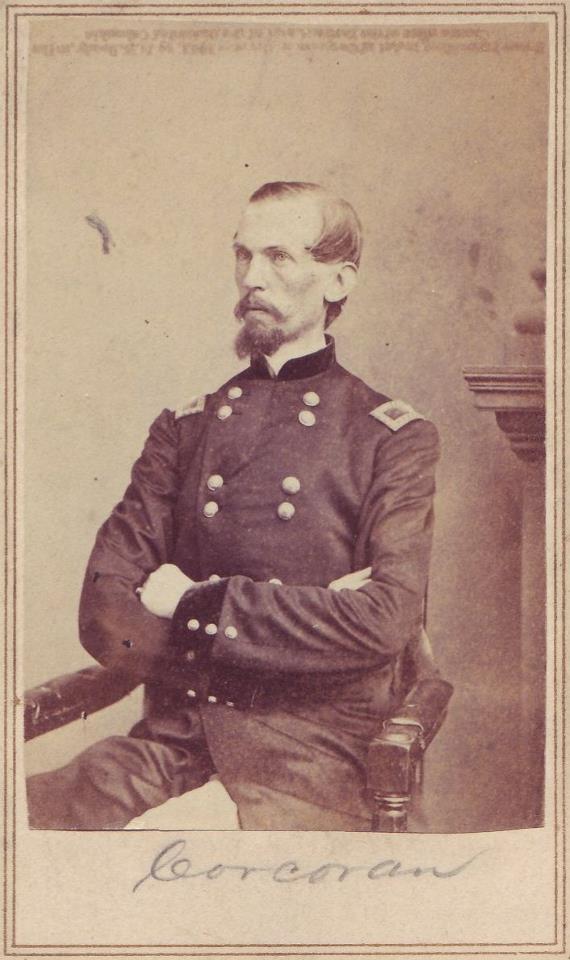
Another Irish Nationalist who had a positive effect on the fighting spirit of the Irish in the American Civil War was Michael Corcoran. Corcoran was born in Carrowkeel, county Sligo Ireland and was a member of the Irish Nationalist Guerrilla force known as the Ribbonman. His ties to this group were eventually discovered in 1849 so he immigrated to New York City in order to avoid capture. (9) To gain a position in society he joined the 69th New York State Militia as a private. This would not last as “his military passion and his previous knowledge of military tactics were a great advantage to him.” (10) Corcoran moved up in rank and became a Colonel. It was in this capacity that Corcoran became a hero to the Irish Nationalist, as well as the overall Irish immigrant population of New York. He chose not to parade his men in front of the Prince of Whales upon his visit, saying that “as an Irishman he could not consistently parade Irish-born citizens in honor of the son of a sovereign, under whose rule Ireland was left a desert and her best sons exiled or banished.” (11) His action resulted in a court-martial. However, it was overturned due to the need of good officers to fight in the Civil War. Corcoran resumed his rank in the 69th New York and was present at that Battle of First Manassas, where he was captured. Corcoran spoke of this later by saying, “I did not surrender until I found myself after having successfully taken my regiment off the field, left with only seven men and surrounded by the enemy.” (12) Corcoran was eventually exchanged over a year later, and was received back with acclaim. He was given the rank of Brigadier General and put in command of his own troops, known as Corcoran’s “Irish Legion.” The first battle of the Legion took place during the Battle of Deserted House Virginia. Although not one of the biggest battles of the war, Corcoran demonstrated calmness under fire and his men showed how they admired Corcoran by following his every commanded under intense battle conditions.
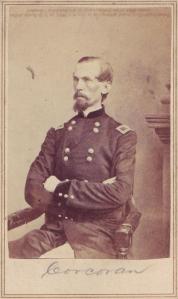
Carte de visite of Michael Corcoran From The Collection of The American Military Heritage Museum Of North Carolina
(13) Sadly this would be Corcoran’s last major battle as he was killed later that year when he fell from his horse. Even though Corcoran’s life was cut short his legend and the Prince of Wales incident continued to inspire men, especially those of his Legion who were fighting for Uncle Sam as well as Irish pride.
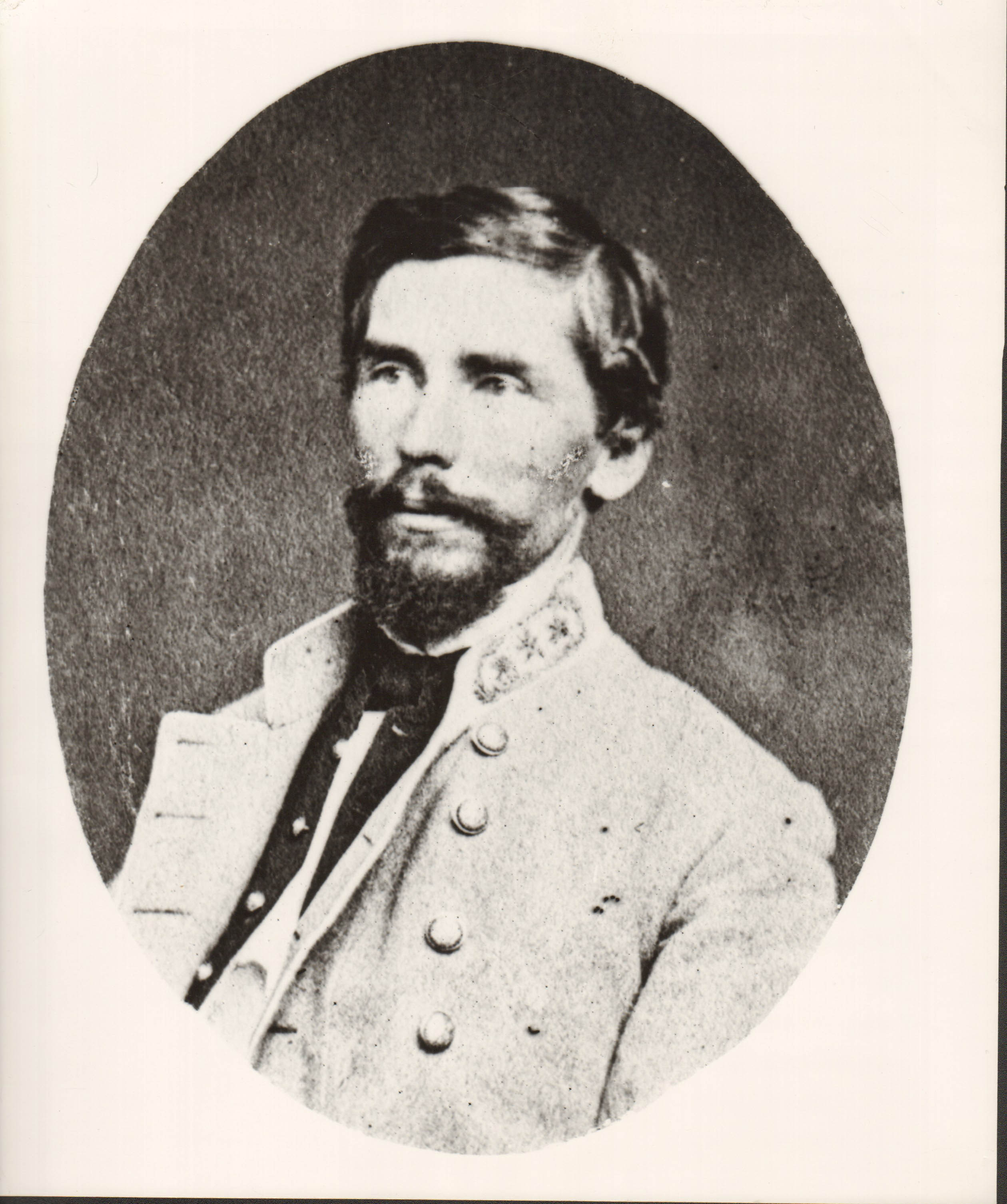
The Union was not the only beneficiary of Irish Nationalist leadership due to the fact that many of the Irish in the south felt the situation in America mirrored the situation in Ireland with Great Britain. They felt an aggressive big government had taken on the smaller independent state, and that was something they could support fighting against, one such leader was Patrick Ronayne Cleburne. Cleburne was born in the late 1820s to a middle class Irish Protestant family in County Cork, Ireland. He had an ambition to be an apothecary but he failed the entrance exam for the medical school. So for economic reasons he joined the British army even though he believed it to be “a symbol for tyranny.” (14) Cleburne’s time in the army was served in a unit that preformed civil duties in famine stricken Ireland. By 1849 the famine finally caught up to him and his family, so he and his sister immigrated to America. (15) Cleburne eventually settled in Arkansas where he joined many social clubs, including a Militia Company called the Yell Rifles, and was soon elected captain. (16) When the American Civil War broke out Cleburne was in charge of the Yell’s and marched them off to war. Soon his military prowess was noticed by Confederate commander William J. Hardee and he was promoted to Brigade Commander. (17) Cleburne served with distinction, most notably his stand at Ringgold Gap where his 4,000 men held off the superior numbers of General Hooker’s Union troops. (18)
During the battle, Cleburne personally took command of his battery units and waited for the Federal forces to get within a short distance. He kept his men calm till the enemy was in the precise position for their guns to inflict the most damage. Cleburne then shouted, “NOW!! Lieutenant, give it to em!” (19) The canister shot devastated the Union line and drove them back. For this act Commander Cleburne received a Congressional Citation from the Confederate Congress, and earned the nickname “Stonewall of the west.” (20) In November of 1864 Cleburne met his fate during the battle of Franklin, Tennessee. During the battle Cleburne had two horses shot out from under him then continued on foot drew his sword and charged head strong toward the Federal lines. As he urged his men forward and got within paces of the Union breastworks he was shot through the heart. (21)
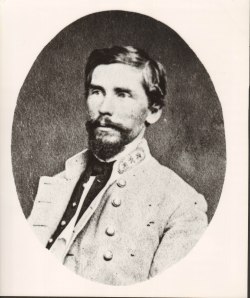
Major general Patrick Ronayne Cleburne
Cleburne died a hero’s death for his adopted land. However, after reading his words one can easily make the assumption that in his mind he gave his last full measure for Ireland as well. This can be seen in Cleburne’s Proposal to Arm Slaves. In this letter to Confederate commanders he writes, “As between the loss of independence and the loss of slavery, we assume that every patriot will freely give up the latter — give up the negro slave rather than be a slave himself. If we are correct in this assumption it only remains to show how this great national sacrifice is, in all human probabilities, to change the current of success and sweep the invader from our country.” (22) From this quote one can easily infer that Cleburne saw the parallels between the South’s struggle in the American Civil War and Irelands fight against English oppression. He was like other southern Irishmen inspiring to join the war effort with a fervent passion to vanquish their northern aggressors.
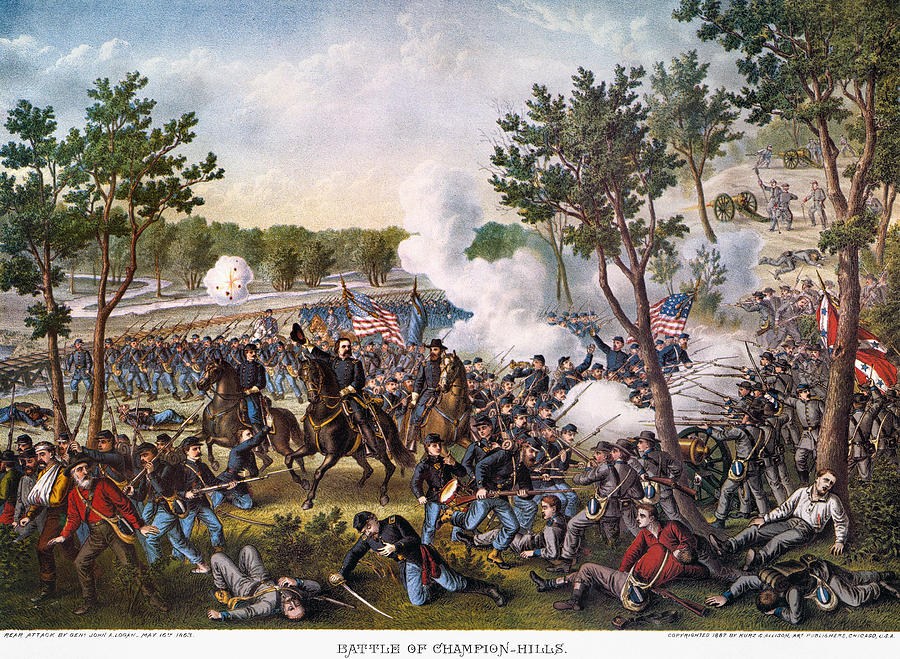
The Irishmen who felt the similarities between the south and Irish Nationalist fought with great vigor against the Federals, and stated their desire to subjugate their oppressive foe, when they chose the names for their regiments. A unit in the 1st Missouri Brigade evoked the name of the bold Robert Emmet, and Irish rebel and patriot, when they chose to be called Emmet Guards. (23) The Emmet Guards distinguished themselves at the Battle of Champion Hill, Mississippi. The action of the battle was described as such, “With flags flying and the rebel yell erupting from their mouths. The Missouri Confederates advanced, driving the bluecoats back, recapturing lost batteries, and gaining much ground. Bitter hand to hand fighting swirled over the rough terrain, among the magnolias, deep gullies, and dense woodlands of Champion Hill.” (24) The Irish from Missouri almost split the Union line in two before Federal reinforcements arrived and drove the rebels back. The Irishmen of the Emmet Guards did their namesake proud but suffered heavily for their effort. (25)

Battle of Champion Hill By Kurz & Allison published in 1887
Another southern battalion born out of Irish Nationalism was part of the 1st Virginia and named the Montgomery Guards, after the Irish born American Revolutionary war hero General Richard Montgomery. (26) Additionally, this unit has another strong tie to Irish patriotism and national pride. William Henry Mitchel, the son of John C. Mitchel Senior, an exiled Irish revolutionary and leader of the Young Irelander movement, served in its ranks. John C. Mitchel instilled the ideas of Irish nationalism into his son and explained how Irelands struggle was almost identical to that of the south. (27) Young William took those ideas into battle with him at Gettysburg. William was elected to be the color barer of the 1st Virginia and led them into what would be forever remembered as Pickett’s Charge. He was severely wounded and about to be escorted to the rear but refused in order to advance the standard of his regiment with a sense of Irish pride. He was struck again and this time the wound was mortal. Upon hearing of the news John C. Mitchel reflected, “He could not have died in better company nor, as I think, in a better cause.” (28) The Irishmen of the 1st Virginia fought that day “not only with pride in the centuries long Irish revolutionary heritage and the legacy of their Irish rebel forefathers but also in the rich traditions of their regiment as well.” (29)
The use of Irish Nationalism proved to be successful motivation for Celtic men on both sides of the American Civil War. It was a source of enthusiasm that other regiments in the conflict did not have. Therefore, one can say this was a uniquely Irish trait, and one that would have made them more powerful on the battlefield.
Notes;
1) Steward, Patrick. The Fenians : Irish Rebellion in the North Atlantic World, 1858-1876. (1st ed. Knoxville: University of Tennessee Press, 2013.) XIII-XIV
2) Webb, Alfred. A compendium of Irish biography: comprising sketches of distinguished Irishmen, and of eminent persons connected with Ireland by office or by their writings. (Dublin: M.H Gill & Son , 1878.) 402
3) Cavanagh, Michael. Memoirs of Gen. Thomas Francis Meagher. 56
4) Cornish, Rory T. Thomas Francis Meagher : the Making of an Irish American. (Dublin ;Portland, OR: Irish Academic Press, 2006) 2
5) Ibid
6) Conyngham, The Irish Brigade and It’s Campaigns 37
7) Ibid
8) Cornish, Rory T. Thomas Francis Meagher : the Making of an Irish American. 154-155
9) Pritchard, Russ A. The Irish Brigade : a Pictorial History of the Famed Civil War Fighters. (Philadelphia, Pa. ;London: Running, 2004.) 10
10) Conyngham, The Irish Brigade and It’s Campaigns , 537
11) Ibid
12) Ibid, 538
13) Shiels, Damian. Irish in the American Civil War Exploring Irish involvement in the American Civil War . March 18, 2012. http://irishamericancivilwar.com/2012/03/18/baptism-of-fire-the-corcoran-legion-at-deserted-house-virginia-30th-january-1863/ (accessed 11 20, 2013).
14) Joslyn, Mauriel. A Meteor Shining Brightly : Essays on the Life and Career of Major General Patrick R. Cleburne. (Macon, Ga.: Mercer University Press, 2000.) 7
15) Ibid, 16
16) Symonds, Craig L. Stonewall of the West : Patrick Cleburne and the Civil War. (Lawrence: University Press of Kansas, 1997.) 45
17) Ibid, 49
18) O’Brian. The Irish Americans In the Confederate Army. 139-140
19) Symonds, Stonewall of the West. 175
20) Ibid, 176
21) Ibid, 209
22) Cleburne, Patrick. Patrick Cleburne’s Proposal to Arm Slaves. 2013. http://www.civilwar.org/education/history/primarysources/patrick-r-cleburne-et-al.html (accessed 11 26, 2013).
23) Tucker, Irish Confederates The Civil Wars Forgotten Soldiers. 67
24) Ibid, 72
25) Ibid, 74-76
26) Ibid, 50
27) Ibid, 90
28) Ibid, 91
29) Ibid, 94


 The Military History Traveler