A Letter Speaks

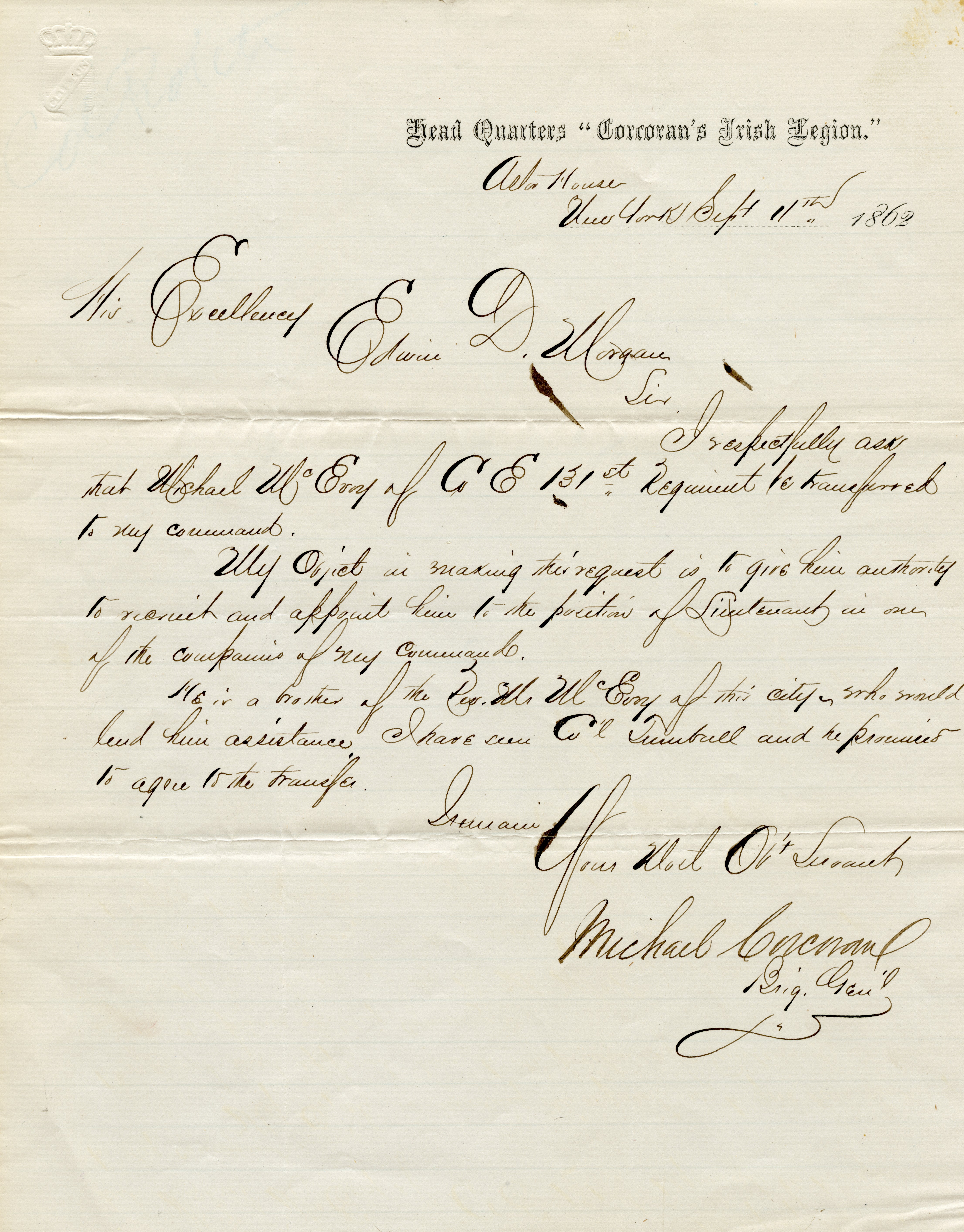
A letter to some is just a piece of paper with words on it. However when one digs deep they can find a hidden story. This letter is written and signed by Brigadier General Michael Corcoran. The letter’s recipient is then Governor of New York Edwin D. Morgan. In this post I am not going to just focus on the “big names” associated with the piece (We can all use Google for that). There is also the interesting tail of Michael McEvoy of Company E, 131st New York. So without further adieu may I present the The letter it reads……

“Sir,

I respectfully ask that Michael McEvoy of Company E, 131st Regiment be transferred to my command.

My object in making this request is to give him authority to recruit and appoint him to the position of Lieutenant in one of the companies of my command.

He is a brother of the Provost Marshal McEvoy of this city, who would lend his assistance. I have seen Colonel Turnbull and he promised to agree to the transfer.

I remain,

Your Most Obedient Servant,

Michael Corcoran

Brigadier General” [1]

Corcoran Letter, provided by The American Military Heritage Museum Of North Carolina
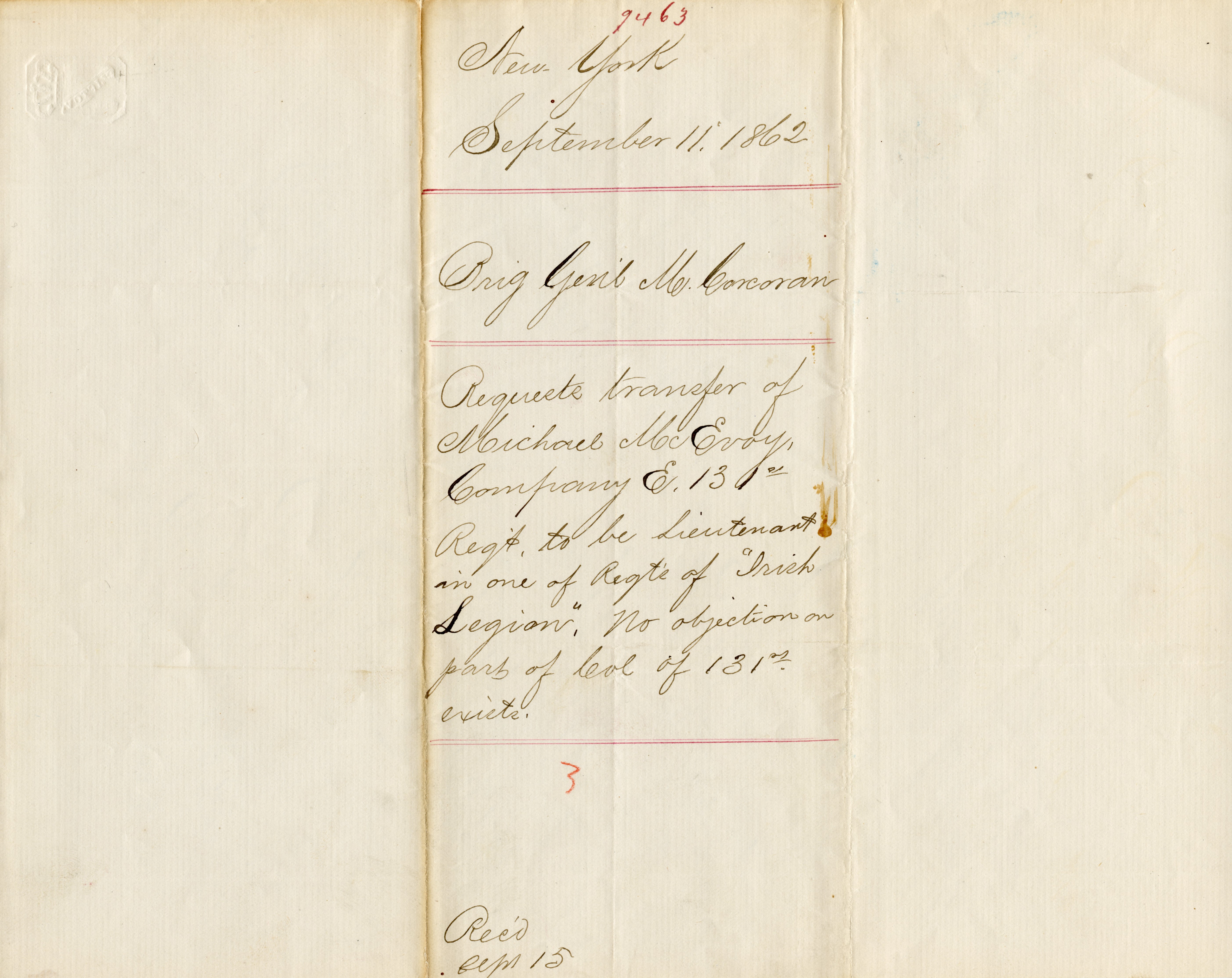
Back of the Corcoran Letter, provided by The American Military Heritage Museum Of North Carolina

Michael McEvoy was born in Ireland around 1828[2]. He was described as five feet nine inches tall, with blue eyes, light hair, and a light complexion.[3] McEvoy would immigrate to America prior to 1850. He was listed on the 1850 United States Federal Census as being a farmer, and married to Cath McEvoy, they had one child James.[4] McEvoy was employed as a Teamster, at the time of his enlistment in the Union army on August 13th, 1862.[5]

. He would be mustered into “E” Co 131st infantry as a private on September 6th.[6] Per General Corcoran’s request McEvoy would be transferred to “D” Co. 170th New York on September 19th, 1862.[7] He would be mustered in as a private on October 7th, 1862. Private McEvoy would participate in the battle of Deserted House. He would later be granted leave on March 21st, 1863, McEvoy would never return to service[8]. Private McEvoy would be listed as a deserter from camp at Suffolk Virginia on April 3rd, 1863.[9] That is where his trail ends for now.

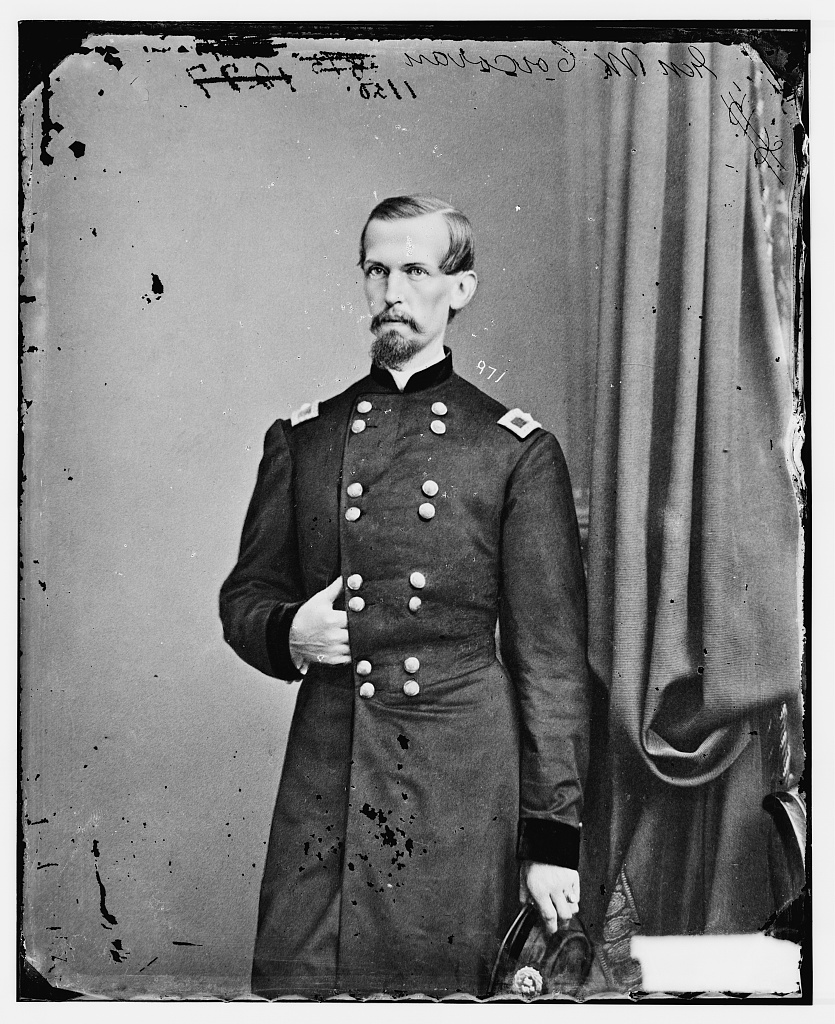
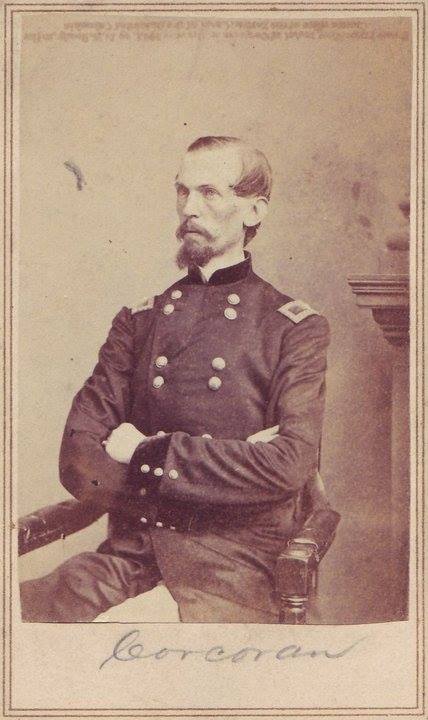
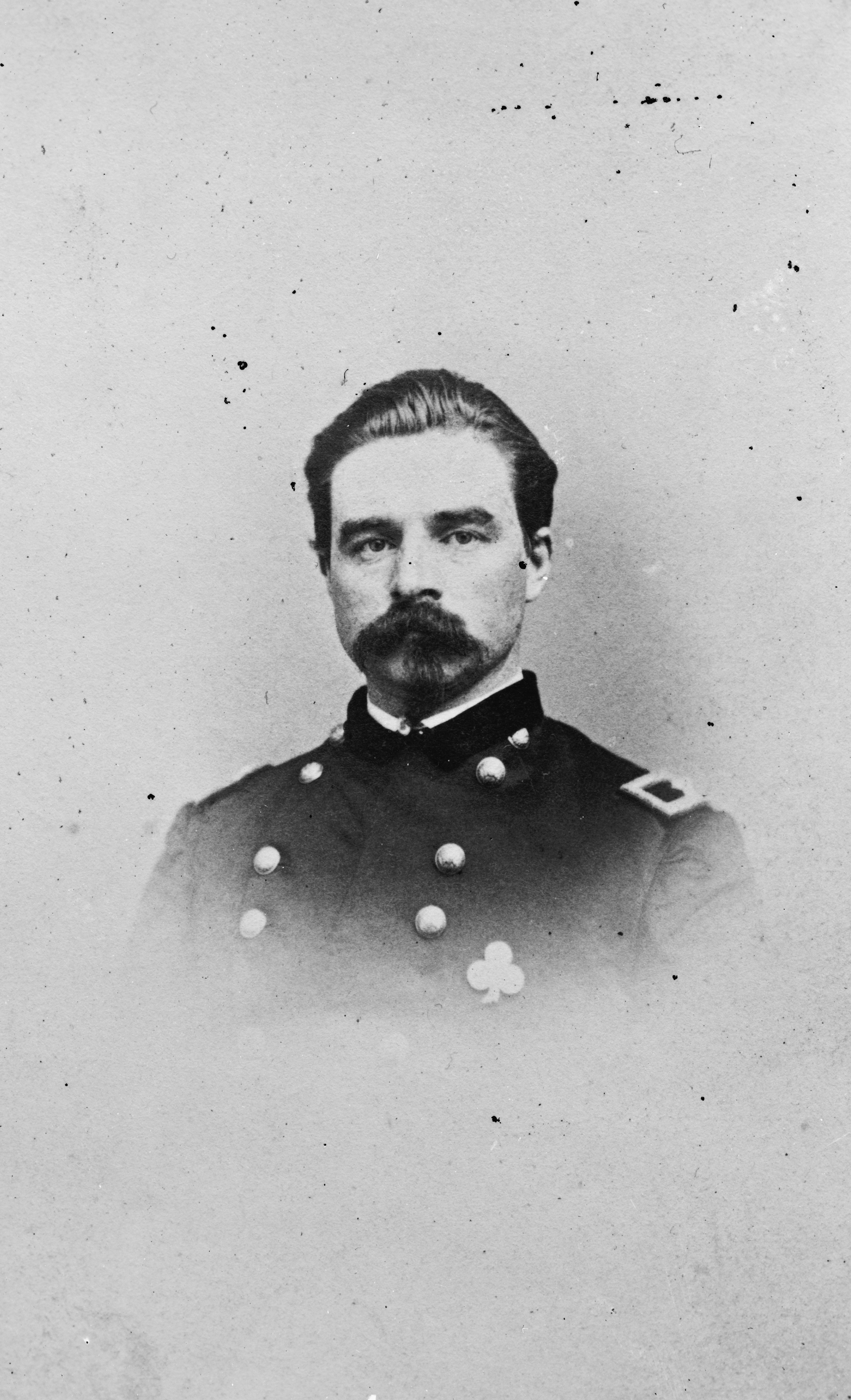
Michael Corcoran was born in Carrowkeel, county Sligo Ireland. He was a member of the Irish Nationalist Guerrilla force known as the Ribbonman. His ties to this group were eventually discovered in 1849, so he immigrated to New York City in order to avoid capture.[10] To gain a position in society Corcoran joined the 69th New York State Militia as a private. He would advance rapidly due to, “his military passion and his previous knowledge of military tactics were a great advantage to him.”[11] Corcoran moved up in rank and became a Colonel.  It was in this capacity that Corcoran became a hero to the Irish Nationalist, as well as the overall Irish immigrant population of New York. When he chose not to parade the 69th  in front of the Prince of Whales upon the Princes visit, saying that “as an Irishman he could not consistently parade Irish-born citizens in honor of the son of a sovereign, under whose rule Ireland was left a desert and her best sons exiled or banished.”[12] His action resulted in a court-martial. However, it was overturned due to the need of good officers to fight in the Civil War.


General Michael Corcoran, U.S.A. United States, None. [Between 1860 and 1865] Photograph. https://www.loc.gov/item/2018667330/.

Corcoran resumed his rank in the 69th New York and was present at that Battle of First Manassas, where he was captured. Corcoran spoke of this later by saying, “I did not surrender until I found myself after having successfully taken my regiment off the field, left with only seven men and surrounded by the enemy.”[13] Corcoran was eventually exchanged over a year later, and was received back with acclaim. He was given the rank of Brigadier General and put in command of his own troops, known as Corcoran’s “Irish Legion.” The first battle of the Legion took place during the Battle of Deserted House Virginia. Although not one of the biggest battles of the war, Corcoran demonstrated calmness under fire and his men showed how they admired Corcoran by following his every commanded under intense battle conditions. Sadly this would be Corcoran’s last major battle as he was killed later that year when he fell from his horse. Even though Corcoran’s life was cut short his legend and the Prince of Wales incident continued to inspire men, especially those of his Legion who were fighting for their adopted homes as well as Irish pride.

The National Governors Association has written this about Gov. Edwin D. Morgan.

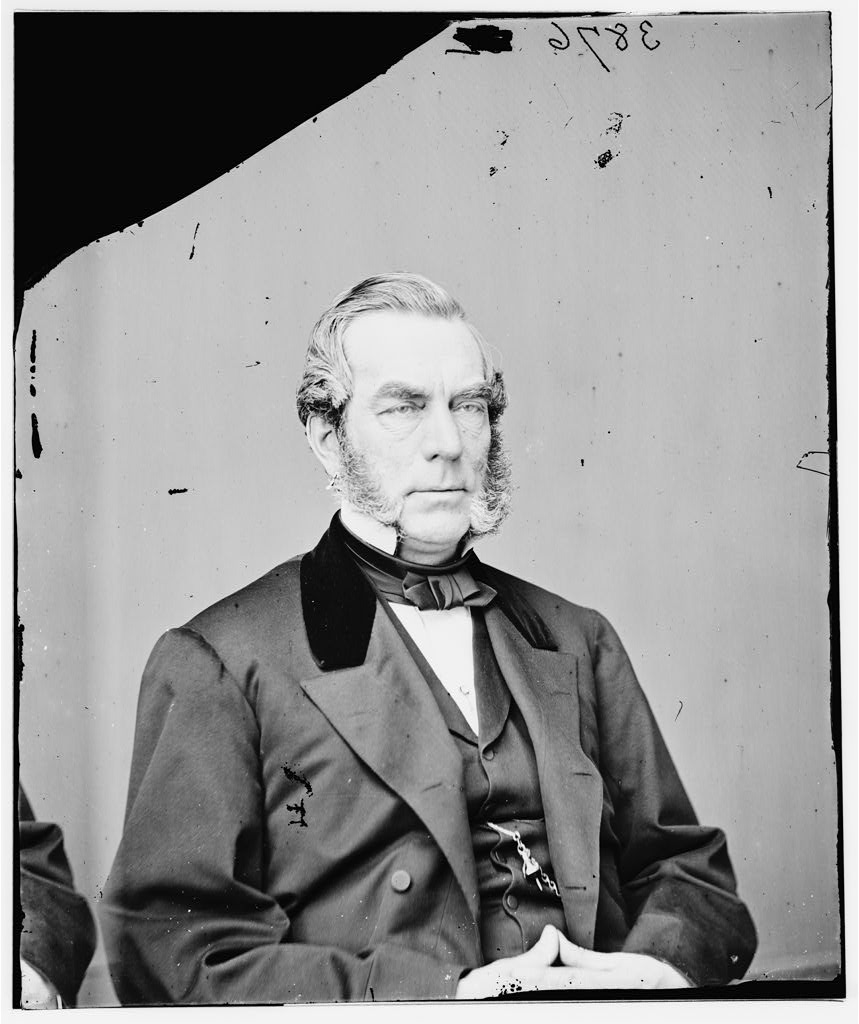
“EDWIN D. MORGAN, the twenty-third governor of New York, was born in Washington, Massachusetts on February 8, 1811. His education was attained at the Bacon Academy in Colchester, Connecticut, where his family moved to in 1822. Morgan established a successful business career, with holdings in the banking and brokerage industries. He first entered politics in Connecticut, serving as a member of the Hartford city council, a position he held in 1832. After moving to New York, he served as alderman of New York City in 1849; was a member of the New York State Senate from 1850 to 1851; and served as the state immigration commissioner from 1855 to 1858. He also chaired the Republican National Committee from 1856 to 1864. Morgan next secured the Republican gubernatorial nomination, and was elected governor by a popular vote on November 2, 1858.

Edwin D. Morgan
. United States, None. [Between 1860 and 1870] Photograph. https://www.loc.gov/item/2018669639/.

He was reelected to a second term in 1860. During his tenure, the state’s canal system was advanced; Vassar College was founded; and volunteers were raised and equipped for service in the Civil War. Morgan also served as major general of volunteers during the war, as well as serving as the commander for the Department of New York. After leaving the governorship, Morgan was elected to the U.S. Senate, an office he held from 1863 to 1869. From 1872 to 1876 he chaired the Republican National Committee; and in 1881 he turned down an appointment to serve as U.S. secretary of treasury. Governor Edwin D. Morgan passed away on February 14, 1883, and was buried in the Cedar Hill Cemetery in Hartford, Connecticut.” [14]

Although these three men are from completely different backgrounds, their stories intersect in this one document. Historical stories are everywhere, you just need to dig under the surface to find them.


[1] Corcoran, Michael. Letter to Gov. Edwin D, Morgan. “Brigadier General Michael Corcoran Request For Michael McEvoy.” New York, New York: Astor House, September 11, 1862.

[2] “Page 1 New York Civil War Muster Roll Abstracts McEvoy, Michael.” Fold3. Accessed December 31, 2022. https://www.fold3.com/image/315981459.

[3] Ibid

[4] “Michael McEvoy in the 1850 United States Federal Census.” Ancestry. Accessed December 31, 2022. https://www.ancestry.com/discoveryui-content/view/7008512:8054?tid=&pid=&queryId=6a9bb6ca9453a20b805c27f011dfac83&_phsrc=csG312&_phstart=successSource.

[5] Page 1 New York Civil War Muster Roll Abstracts McEvoy, Michael.” Fold3. Accessed December 31, 2022. https://www.fold3.com/image/315981459

[6] Ibid

[7] “Page 1 New York Civil War Muster Roll Abstracts Michael McEvoy.” Fold3. Accessed December 31, 2022. https://www.fold3.com/image/316135643.

[8] Ibid

[9] Ibid

[10] Pritchard, Russ A. The Irish Brigade : a Pictorial History of the Famed Civil War Fighters. (Philadelphia,

[11] Conyngham, The Irish Brigade and It’s Campaigns , 537

[12] Ibid 

[13] Ibid, 538

[13] Shiels, Damian. Irish in the American Civil War Exploring Irish involvement in the American Civil War . March 18, 2012. http://irishamericancivilwar.com/2012/03/18/baptism-of-fire-the-corcoran-legion-at-deserted-house-virginia-30th-january-1863/ (accessed 11 20, 2013).

[14] Sobel, Robert, and John Raimo. “Edwin Denison Morgan.” National Governors Association. Accessed November 3, 2023. https://www.nga.org/governor/edwin-denison-morgan/.

An Artifact Speaks

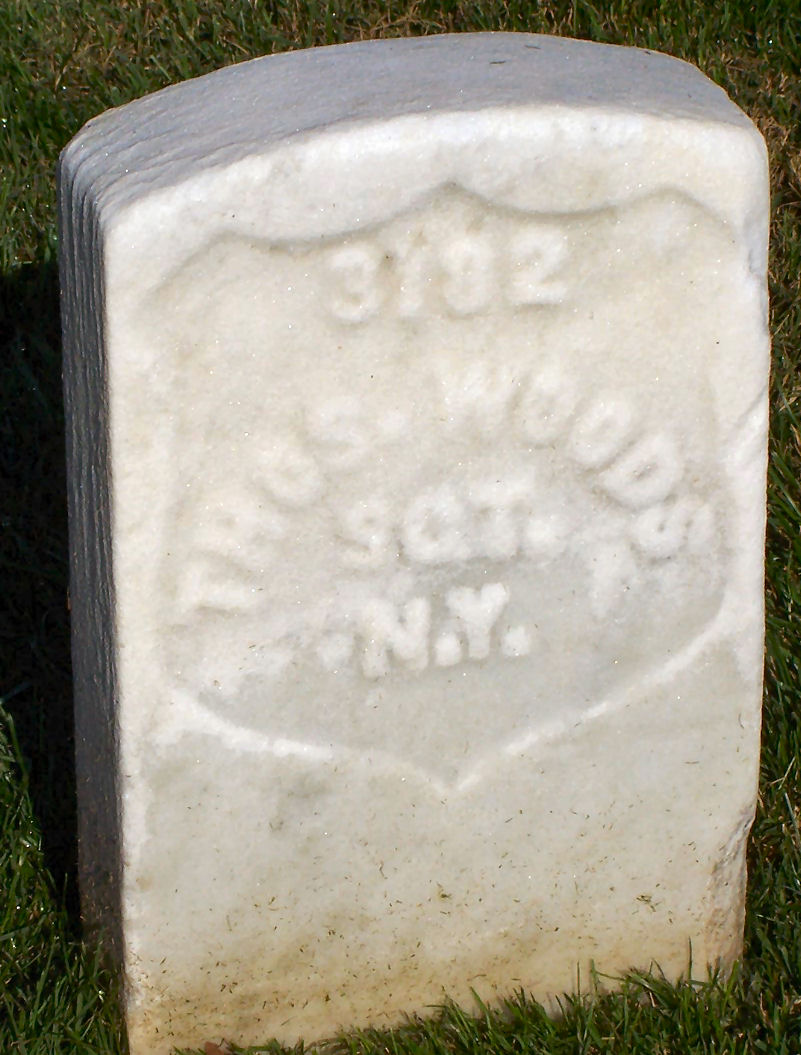
I feel every artifact has a story. This identification shield worn by Sergeant Thomas Wood (Woods) is no exception. Sgt. Woods was a member of Company “B”, 69th New York National Guard. This unit would later become the 182nd New York Infantry, part of Corcoran’s Irish Legion.

 Identification shield worn by Sergeant Thomas Wood (Woods). Provided by The American Military Heritage Museum Of North Carolina.
Identification shield worn by Sergeant Thomas Wood (Woods). Provided by The American Military Heritage Museum Of North Carolina.

Woods was born in Ireland around 1827[1] and arrived in the United States prior to 1850.[2] He married Margaret Begnan at St. James Roman Catholic Church in Manhattan on October 13, 1850.[3] By 1860 he was making a living as a butcher. He and his wife, along with their two children Patrick and Elizabeth, resided in the 18th Ward of Lower Manhattan.[4]  In November of 1861 Thomas and Margaret would have another child, Thomas Frances.[5]

As the American Civil War unfolded, Woods made the decision to enlist. On September 18, 1862, Woods enlisted in the 69th New York National Guard.[6]  On November 17, 1862, he was officially mustered in as a Sgt. in “B” Co. 69th N.Y.N.G. This regiment was organized by Col. Mathew Murphy as the first regiment of the Corcoran Brigade, also known as Corcoran’s Irish Legion.  The regiment left New York state on November 10, 1862, to serve at Newport News, VA. The unit first served in Corcoran’s Brigade, part of Peck’s Division, Department of Virginia. Then in December 1862 at Suffolk, as part of Murphy’s Brigade, Corcoran’s Division.[7] Sgt. Woods and the 69th N.Y.N.G spent most of their time guarding Federal naval yards at Portsmouth and Norfolk.

In January of 1863 Confederate Brigadier-General Roger Atkinson Pryor would move 1,800[8] men towards Suffolk, VA. His hope was to disturb Union activity in the region.  Early in the morning of January 30[9] Brigadier-General Corcoran ordered his men to march in the direction of the enemy.

Carte-de-visite of Michael Corcoran Provided by The American Military Heritage Museum Of North Carolina.

The men of the 69th N.Y.N.G were both anxious and eager to see their first combat. Their energy led them to be boisterous and the men had to be ordered to keep quiet, as to not alert the confederate soldiers that were in close proximity. Sgt. Wood and the men of Co. “B” slogged through the mud for nine miles before reaching the enemy.  Brigadier General Corcoran first sent in his cavalry and artillery, who took heavy fire. Corcoran than ordered the 167th Pennsylvania into the fight. However, they were in a shambles due to the wounding of their commander. It was time for Sgt. Woods and the men of the 69th N.Y.N.G to see the elephant. They advanced through the blackness of the early morning….

This magnificent map of The Battle of Deserted House is the property of Baylor University. The image is reprinted with permission from the War of the Rebellion Atlas digital collection. It was produced by the US Government.

“Moving into a gully near the unfortunate 167th Pennsylvania, the Legion came into range of the Confederate artillery, and were ordered to lie down. Trees and houses were ripped apart during the ferocious barrage that followed…. In defense of the Pennsylvanians, the fire under which they had been exposed was extremely heavy, as the Legion were finding out. A piece of spiraling shrapnel struck the canteen of the 69th’s Captain Michael Kelly, carrying away his elbow. 30-year-old Sergeant Thomas Woods took a shell fragment in the stomach, killing him.”[10]

This action would be known as “Deserted House.” It was the first combat for the 69th N.Y.N.G but the last that poor Sgt. Woods would see.

Sgt. Woods now rests in Hampton National Cemetery in section D number 3182.[11]

Photo by Dawn Bilik (prev. Stewart)
Grave of Sgt. Thomas Wood Photo by Dawn Bilik (prev. Stewart)

Margaret would apply for a widow’s pension for her and the three children on March 19, 1863.[12] She would receive a pension of $8.00 a month, which is about $108[13] in today’s money. Sadly, Margaret would die on July 4, 1864.[14] The children and the pension were then transferred to the custody of Mary Ann Grimes.

Let us never forget the sacrifice of Sgt. Woods and his family for their adopted country.


[1] “1860 United States Federal Census for Thomas Woods.” Ancestry. Accessed October 6, 2022. https://tinyurl.com/mr39du7m.

[2] “Thomas Woods Page 5 Civil War ‘Widows’ Pensions.’” Fold3. Accessed October 6, 2022. https://www.fold3.com/image/270483669.

[3] Ibid

[4] “1860 United States Federal Census for Thomas Woods.” Ancestry. Accessed October 6, 2022. https://tinyurl.com/mr39du7m.

[5] “Thomas Woods Page 11 Civil War ‘Widows’ Pensions.’” Fold3. Accessed October 6, 2022. https://www.fold3.com/image/270483681.

[6] “Thomas Woods Page 1 New York Civil War Muster Roll Abstracts.” Fold3. Accessed October 6, 2022. https://www.fold3.com/image/316281613.

[7] “New York State Military Museum and Veterans Research Center.” 182nd Infantry Regiment :: New York State Military Museum and Veterans Research Center. Accessed October 6, 2022. https://museum.dmna.ny.gov/unit-history/infantry-2/182nd-infantry-regiment.

[8] Shiels, Damian. “Baptism of Fire: The Corcoran Legion at Deserted House, Virginia, 30th January 1863.” Irish in the American Civil War, March 25, 2020. https://irishamericancivilwar.com/2012/03/18/baptism-of-fire-the-corcoran-legion-at-deserted-house-virginia-30th-january-1863/.

[9] Ibid

[10] Ibid

[11] “Thomas Woods (Unknown-1863) – Find a Grave…” Find a Grave. Accessed October 6, 2022. https://www.findagrave.com/memorial/3097387/thomas-woods.

[12] “Thomas Wood Page 21 Civil War ‘Widows’ Pensions.’” Fold3. Accessed October 6, 2022. https://www.fold3.com/image/270483701.

[13] “Inflation Rate between 1863-2022: Inflation Calculator.” $8 in 1863 → 2022 | Inflation Calculator. Accessed October 6, 2022. https://www.in2013dollars.com/us/inflation/1863?amount=8.

[14] “Thomas Woods Page 2 Civil War ‘Widows’ Pensions.’” Fold3. Accessed October 6, 2022. https://www.fold3.com/image/270483662.

The Brave Soldiers From Erin Why The Irish Fought With Great Success During The American Civil War: Part 4 Culture of the Irish


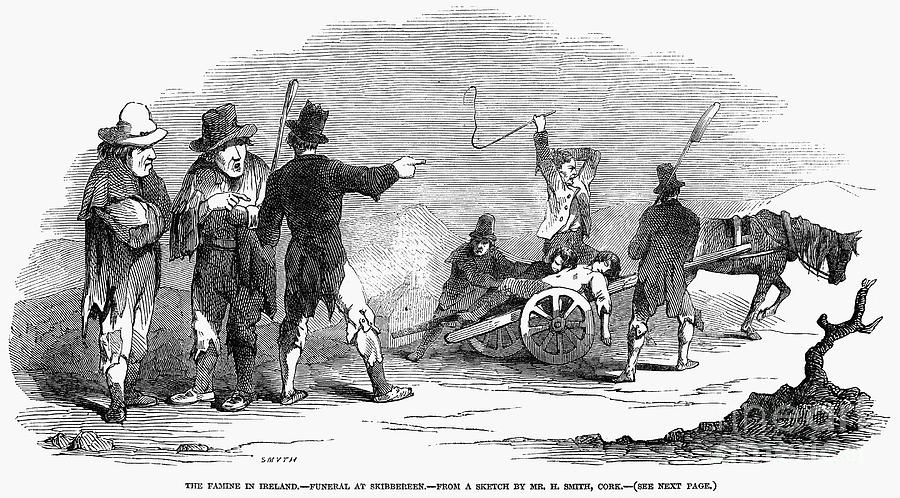
Engraving Titled The Famine In Ireland-Funeral At Skibbreen_From A Sketch By Mr. H Smith (1847)

Engraving Titled The Famine In Ireland-Funeral At Skibbreen From A Sketch By Mr. H Smith (1847)

Life in nineteenth century Ireland was challenging at best. The Irish faced death, on an almost daily bases. An anonymous poet wrote of this dreadful time in Ireland saying, “God sent a course upon the land because her sons were slaves; The rich earth brought forth rottenness, and gardens became graves; The green crops withered in the field, all blackened by the curse, And Wedding gay and dance gave way to coffin and hearse.” (1) In order to survive the Irish had to become accustomed to this dreadful way of life.

After emigrating from Ireland the Irish would be faced with the notion of death during the Civil War. Death would be common place during the four year conflict 750,000 men would die. (2) By comparison in five years 1,500,000 Irishmen and women would perish in the famine in Ireland. (3) In looking at these numbers one can only imagine that an Irish soldier who fled Ireland due to the famine had an overwhelming and powerful understanding of life and death upon entering Civil War service. This is not to say that the Irish took death lightly. However, they did become desensitized to it, thus making them more comfortable with the idea of dying.
The Irish’s ability to be at peace with the idea of death transformed itself into battlefield heroics. This idea can be seen in the actions of Brevet Brigadier General Thomas Smyth. Smyth immigrated to the United States at age twenty during the height of the famine, during the Civil War Smyth enlisted as a major in the 1st Delaware Infantry. He had gallant actions and a tendency to lead from the front with a disregard for his own life and safety. Captain Conyngham said this about him, “With the coolness and judgment of the scientific officer he combined a bravery almost amounting to rashness. He generally rode in front of his own picket lines along the outer posts, to make sure that all was right.” (4)

Brigadier General Thomas Smyth

Brigadier General Thomas Smyth

It was these qualities that gained him a promotion to the commander of his regiment. It was in this capacity that then Colonel Smyth found himself at Gettysburg, where on the third day of the battle he was severely wounded. The wound did not keep Smyth out of action for long though, as he returned to action with the rank of Brigadier General. Smyth again led from the front; however, this would be his undoing as he was shot in the neck while leading his men near Farmville, Virginia. (5) One can only surmise that Smyth’s fearlessness came from a different understanding of what it means to die, an understanding learned by seeing so much death as a youth back in Ireland.

The Irish in America whether being born in Ireland or in the United States always had a piece of the old country with them in their hearts and minds. The Irish had to develop coping mechanisms in order to survive their everyday struggles. Their coping skills came directly from their culture. Three of the most notorious traits the Irish are known for are their humor, drinking and love of a good fight. These characteristics served the Irish participants in the American Civil War well as they faced new hardships in their life as soldiers.

Irish humor can cover a rage from sarcastic wit to bawdy and over the top. This is as true today, as it was during the American Civil War. The Irish are known for using their humor to defuse tense emotional situations. One such occasion during the war was when the Irish of the 13th Louisiana were marching off amongst a sea of crying mothers and sweethearts. One of the men remarked, “I wish I had a gurl to cry for me but the devil a wun cares I go or stay.” Another member of the regiment was heard to reply, “I’m glad I’ve no wun. If I get kilt me people will never know what become of me, and I’ll only have a monument in the Company books, Killed in battle, Mike Morrisy and that’s not my thrue name, at that.” (6) After this statement the members of the 13th Louisiana, within earshot, must have had a good laugh and their tensions and anxieties relived, even if but for a mere moment.

The Irish units were also notorious for their hijinks, which were merely a way to cope with stress of battle. One example of this was when the town of Gettysburg turned out to defy the rebel occupation. An Irishmen named John Donnally of the 8th Alabama “Emerald Guard” looked into the crowed and saw a dapper gentleman, with a fine hat, standing along the route. Donnally broke ranks and snuck up behind the gentleman and placed his bullet riddled cap upon the dandy’s head, taking the expensive hat for himself. This resulted in tremendous laughter from them men of the 8th Alabama, as well as other confederates on the march. (7) This was another stressful and possibly volatile situation defused by Irish wit. These shenanigans were not just contained to off the battlefield. During the Battle of Murfreesboro an Irish Confederate soldier lay wounded on the field. He was searching for help to the rear, when he spotted a federal soldier running in that direction. The Confederate soldier took the yank hostage and rode him back to the rear whistling The Girl I left Behind Me, a popular cavalry tune of the era. (8) This episode shows just how the Irish used humor to stay calm while under fire, an attribute that would serve them well throughout the conflict.

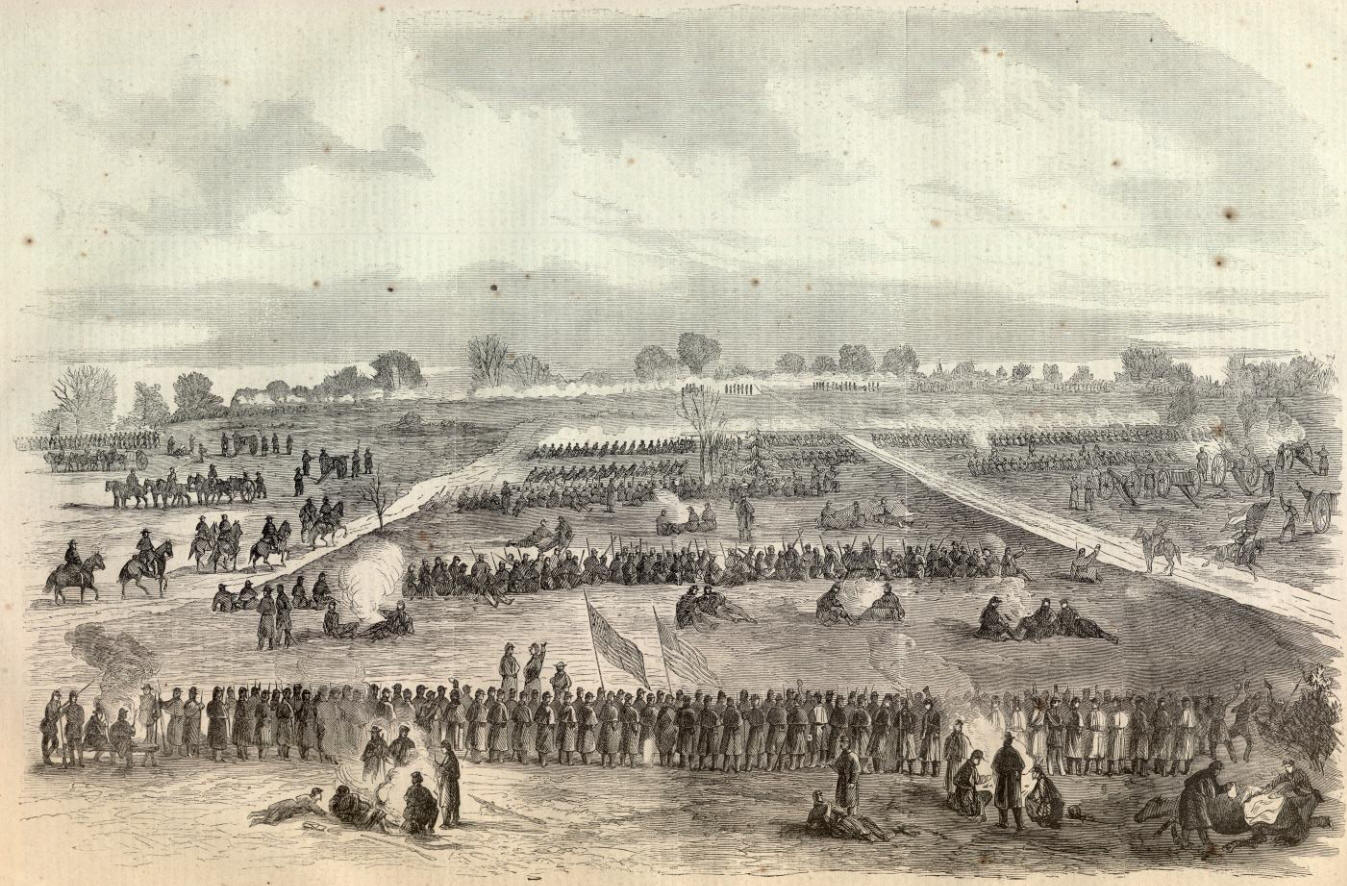
The Battle Of Murfreesboro, Tennessee Sketched By Mr. Henrr R. Hubner For Harper's Weekly Febuary 14th 1863

The Battle Of Murfreesboro, Tennessee Sketched By Mr. Henry R. Hubner For Harper’s Weekly February 14th 1863

Having men with an Irish sense of humor could also be a nice distraction from the long days. Captain Conyngham writes about Andrew Lawler, an officer in the 28th Massachusetts Volunteer Infantry, during one of their long forced marches. Conyngham says, “He was beloved by all; possessed of an ardent, hopeful temperament which no hardship; however sever could dampen, he was the life of the bivouac; while his rollicking humor and endless jokes often shortened the weary march.” (9) As anyone who was in the armed forces would know, having a man like that to lessen ones burden also helps keep a mass of men moving. The Irish regiments during the American Civil War were full of such men.

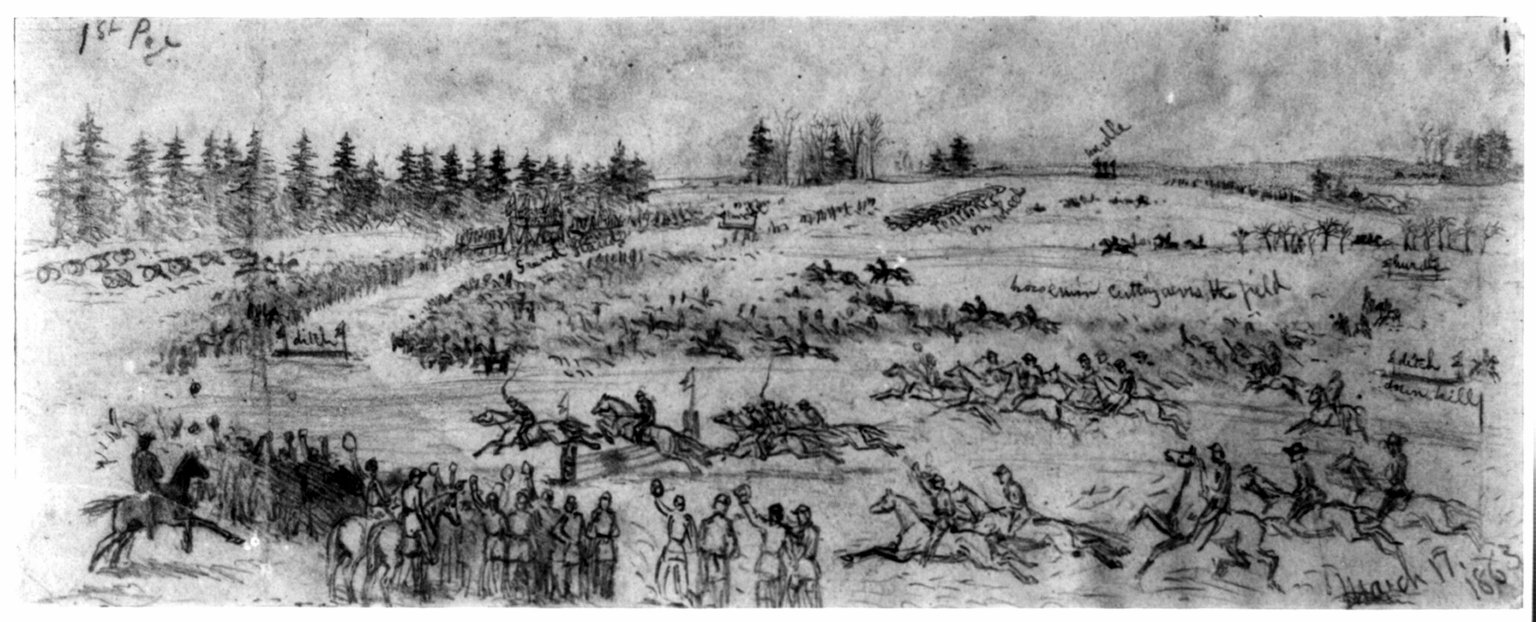
Drinking by itself is not a healthy way to deal with stress. However, the Irish have developed it into an art form full of music, good cheer, and lively conversation. This can be seen by the Saint Patrick’s Day Celebration the Irish soldiers had in 1863. The festivities consisted of athletic competitions, that including a steeple chase with the finest horses in the Brigade, and a liquor requisition that consisted of “eight buckets of champagne, ten gallons of rum, and twenty two of whisky,”. (10)  This break was well earned, as the Irish Brigade was previously involved in some of the hardest fighting the Army of the Potomac had engaged in. This celebration also gave the men a bonding experience, bringing them together in a way that many other regiments did not have. This experience may also have been the difference in the Brigades performance at the Battle of Chancellorsville. Although it was a Confederate victory, it could have been a much bigger blow to the Union. Conyngham writes of the Brigades actions while defending a Federal battery, saying, “Here the remnant of the Irish Brigade for it numbered only about five hundred and twenty men going into action did good service to the Union; for had the rebels seized the battery and turned it upon our army a regular panic might have ensued, for at the same time several regiments on the right and left were giving way.” (11) From this quote one can gather that the Irish Brigade fought as a tenacious unit, brought together through war as well as uniquely Irish celebrations off the battlefield.

St. Patrick's Day in the army--The steeple chase By Edwin,  Forbes Sketched March 17th 1863

St. Patrick’s Day in the army–The steeple chase By Edwin, Forbes Sketched March 17th 1863

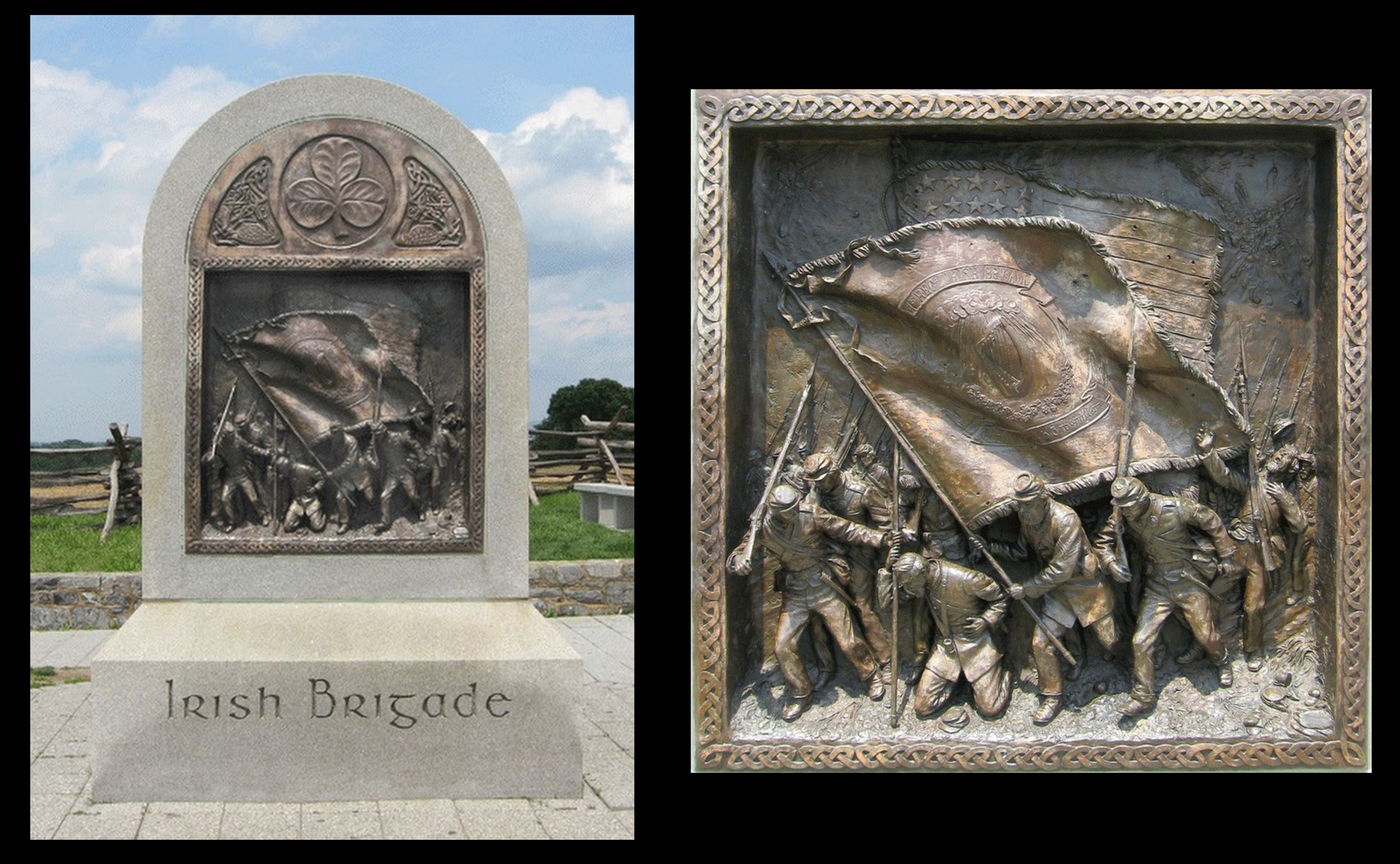
Irish Brigade Monument At

Irish Brigade Monument At Antietam

It is also known that the Irish love a good fight. This can be seen in the fact that a half million Irishmen left their homeland between 1585 and 1818 to fight for France and Spain, these men are known as the “Wild Geese.” (12) Therefore, when the American Civil War broke out, it naturally attracted Irishmen to sign up and enter the row. This fighting spirit transferred to the battlefield as well. An illustration of this can be seen in an account regarding Corporal Jack T. McBride of the 45th Mississippi. During an attack of his position he was slashed in the face by a federal officers sword. Without missing a step, McBride attacked the Yankee and threw him to the ground, pounding upon his head until he had to be physically removed and shackled by other Union officers. McBride taunted every Union soldier he encountered on his was to prison camp. He even challenged a Yankee officer to a boxing match, McBride got knocked out as a result of this challenge. However, throughout this one can see that his fighting Irish spirit never wavered. (13) The essence of the fighting Irish can also be seen during the Battle of Antietam. “The green flag was completely riddled, and it appeared certain death to anyone to bear it, for eight color-bearers had already fallen. The last had fallen, and the Irish green lay trailing in the dust. Meagher cried out ‘Boys, raise the colors, and follow me!’ Captain James McGee, of the Sixty-ninth, rushed forward, and crying, ‘I’ll follow you!’ seized the flag. As he raised it, a bullet cut the standard in two in his hand; and, as he again stooped down, another bullet tore through his cap. Still, he jumped up, waved the flag, shook it at the rebels, and cheered on the troops, almost miraculously escaping.” (14) This charge was successful, as it drove the Confederates back and forced them to retire from the field. The steadfast Irish pugnaciousness had won the day once more.

The American Civil War was a turning point in the history of the Irish American. Their devotion, bravery and sacrifices, both north and south, gave a new dignity and admiration to America’s Irish population. Not only did the Irish became widely accepted and well-respected, they also became a vital part of America. A journalist of the period is quoted as saying, “There are several kinds of power working at the fabric of the American republic water power, steam power and Irish power, the last works hardest of all.” (15) As for why the Irish made such fierce and bold fighters this is due to the four factors mentioned in this work: religion, acceptance, Irish Nationalism, and the Irish culture. It is the combination of all four that set the Irish apart, making them a superior fighting force that any army would be pleased to have on their side. A Confederate commander of an Irish regiment, when asked what ethnic group of soldiers he preferred, said:

“I would have Irish soldiers in preference to any others; and I tell you why. First, they have more dash, more élan than any other troops that I know of; then they are more cheerful and enduring nothing can depress them. Next, they are more cleanly. The Irishman never failed to wash himself and his clothes. Not only were they cheerful, but they were submissive to discipline when once broken in and where they had good officers that was easily done; but once they had confidence in their officers, their attachment to them was unbounded. And confidence was established the moment they saw their general in the fight with them…. They required strict discipline: but they always admitted the justice of their punishment when they believed their commander was impartial; and they never were sullen, or bore malice. There was one great element of strength in these men—they were volunteers, every man of them. Many could have been excused on the ground of their not being American citizens, as not more than one-third of them had a right to vote at the time; but they joined of their own free will—no Irishman was conscripted. I repeat, if I had to take from one to 10,000 men to make a reputation with, I’d take the same men as I had in the war—Irishmen from the city, the levees, the river, the railroads, the canals, or from ditching and fencing on the plantations. They make the finest soldiers that ever shouldered a musket.’ And this was the testimony of one of the fiercest fighters of the war.” (15)

This quote sums up the Irish service in the American Civil War; the general would choose the Irish to fight for the Confederates due to the combination of the four attributes discussed in this work. The Irish fought in every engagement during the American Civil War. Their valor was matched by none and their deeds are still legendary to this day.

Notes;

1) O’Riordan, Tomás. Ireland, 1815-70 : Emancipation, Famine and Religion. (Dublin ;Portland, OR: Four Courts Press, 2011.) 58

2) Gugliotta, Gary. New Estimate Raises Civil War Death Toll. April 2, 2012. http://www.nytimes.com/2012/04/03/science/civil-war-toll-up-by-20-percent-in-new-estimate.html?pagewanted=all&_r=0 (accessed November 24, 2013).

3) O’Riordan, Tomás. Ireland, 1815-70 : Emancipation, Famine and Religion 61

4) Conyngham, The Irish Brigade and It’s Campaigns. 542

5) Collins. Famine to Freedom The Irish in the American Civil War. 211

6) O’Brian. The Irish Americans In the Confederate Army. 28

7) Ibid

8) Ibid, 29

9) Conyngham, The Irish Brigade and It’s Campaigns. 588

10) Ibid, 373

11) Ibid, 400

12) McLaughlin, Mark. The Wild Geese : The Irish brigades of France and Spain. (Oxford, UK : Osprey Publishing, 1980.) 3

13) O’Brian. The Irish Americans In the Confederate Army. 27

14) Conyngham, The Irish Brigade and It’s Campaigns. 305-306

15) O’Brian. The Irish Americans In the Confederate Army. 3

The Brave Soldiers From Erin Why The Irish Fought With Great Success During The American Civil War: Part 3 Irish Nationalism

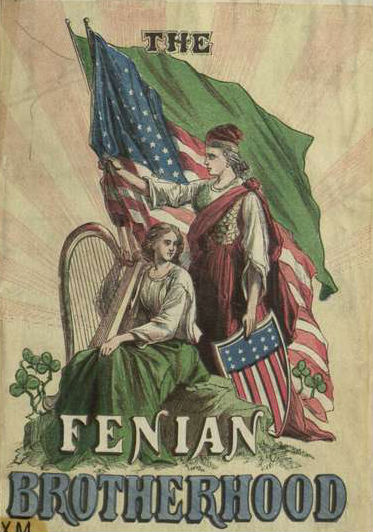
Nationalism by definition is: loving ones country and wanting to be governed by ones own people. During the second part of the nineteenth century, there was an increased progression of nationalistic feeling in Ireland. Due to this feeling there was a rise in physical force revolutionary groups, the largest organized group being the Fenians. Even though the Fenians started out in Ireland, they also established roots in America, by recruiting large numbers of the new Irish immigrant population. This was easily done due to the fact that the new Irish blamed the English for having to leave their homes in the old country. (1) The Fenian movment was at the height of popularity when the American Civil War broke out. So their ranks decided that fighting in this war would boost the movement as well as being great practice for the eventual uprising in Ireland. Even those who had no intention of going back to Ireland felt a connection to the Fenian movement and were swayed by it. Not to mention, many of the commanders of the Irish ethnic regiments were respected Fenians. These commanders were great motivators for the Irish fighting in the war, since many would follow them simply because of their allegiance to Ireland. This unique Irish quality was yet another reason these brave soldiers from Erin were such fierce fighters.

The Fenians' progress (1865), cover.

The Fenians’ progress (1865), cover.

One such commander was John O’Mahony, one of the Fenian movement founders,  O’Mahony was born in Ireland in 1816. In 1848 he took part in the failed Ballingarry rebellion and escaped to France. From there he made his way to the United States in 1854. Upon arrival he joined many groups to advance the cause of Irish freedom, one of which was the 69th New York, where he rose to the rank of colonel. During the American Civil War O’Mahony’s rank was mostly political, as he traveled around the nation speaking about the Fenian cause. However, he had a change of heart and felt fighting would help the Fenians cause even more. Therefore, he founded the Phoenix Brigade. At the time the Brigade was founded it was not endorsed as a State of New York military force. However, it was eventually merged into a formal State of New York militia force, designated as the 99th New York State Militia. This made it an Irish Republican military unit subsidized by an independent state. This unit would soon be activated to fight against the Confederate States. O’Mahoney also planned to use them after the war to invade Canada and strike a blow to the English on foreign soil. (2)

Carte de visite of John Francis O'Mahony; From The Collection of The American Military Heritage Museum Of North Carolina

Carte de visite of John Francis O’Mahony; From The Collection of The American Military Heritage Museum Of North Carolina

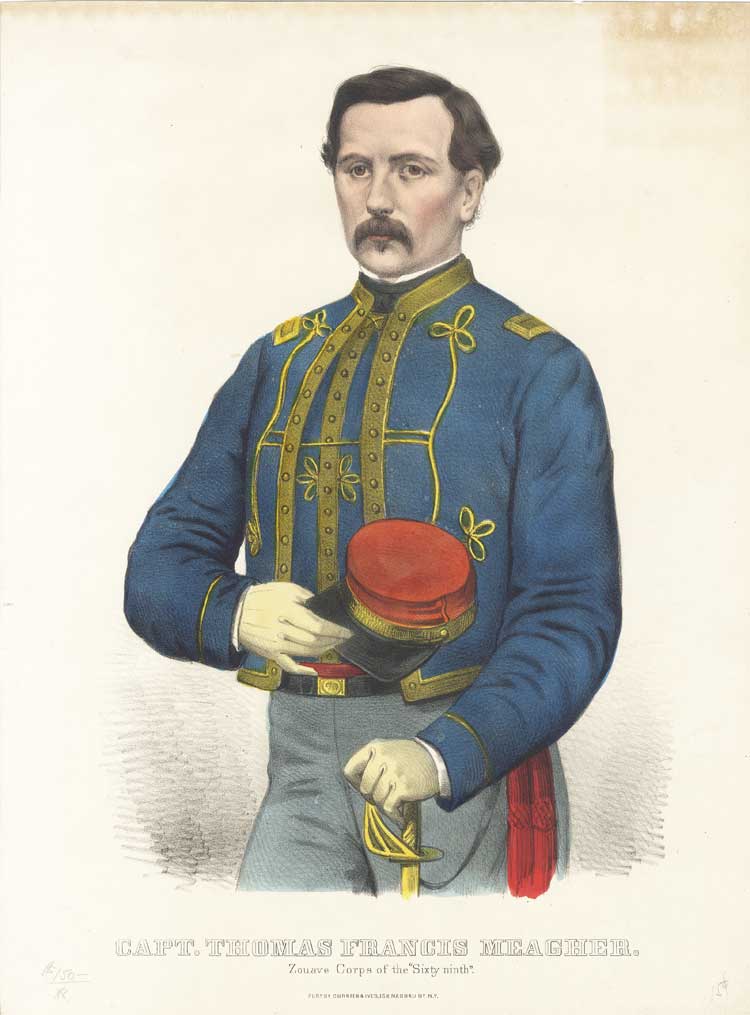
One of the most respected Fenians who inspired the Irish with his ferocious Irish nationalism was Thomas F. Meagher. Meagher succeeded in getting himself into difficulties on both sides of the Atlantic. Born in County Waterford, Ireland and opposed to British rule, he joined the Young Irelanders movement, which was a branch of the Fenians. Meagher quickly rose to a position of power do to his great oratory skills. His most famous speech was the “Sword Speech” given in Dublin on July 28, 1846, (3) this solidified his power and he was given the moniker “Meagher of the Sword.” Meagher’s prestige in the movement made him an ideal candidate for a diplomatic mission to France, which resulted in him bringing back a flag that would eventually become the Irish Tri-Color, the National flag of Ireland today. (4)  Meagher like O’Mahony was involved in the failed uprising of the Young Irelanders at Ballingarry, County Tipperary. He was captured, tried, convicted and sentenced to be exiled to Tasmania. (5) Meagher made a daring escape from his penal colony and landed in America as a hero to the Irish population. He picked up where he left off as an orator for the Irish cause. It was of no surprise that when the American Civil War came about Meagher used his status to raise an Irish Zouave company in 1861 and joined the Union army himself.

1861 Currier Ives entitled Captain. Thomas Francis Meagher. Zouave Corps Of The 'Sixty-Ninth'. Meagher appears in his zouave uniform of the 69th New York Vols

1861 Currier Ives entitled Captain. Thomas Francis Meagher. Zouave Corps Of The ‘Sixty-Ninth’. Meagher appears in his zouave uniform of the 69th New York Vols

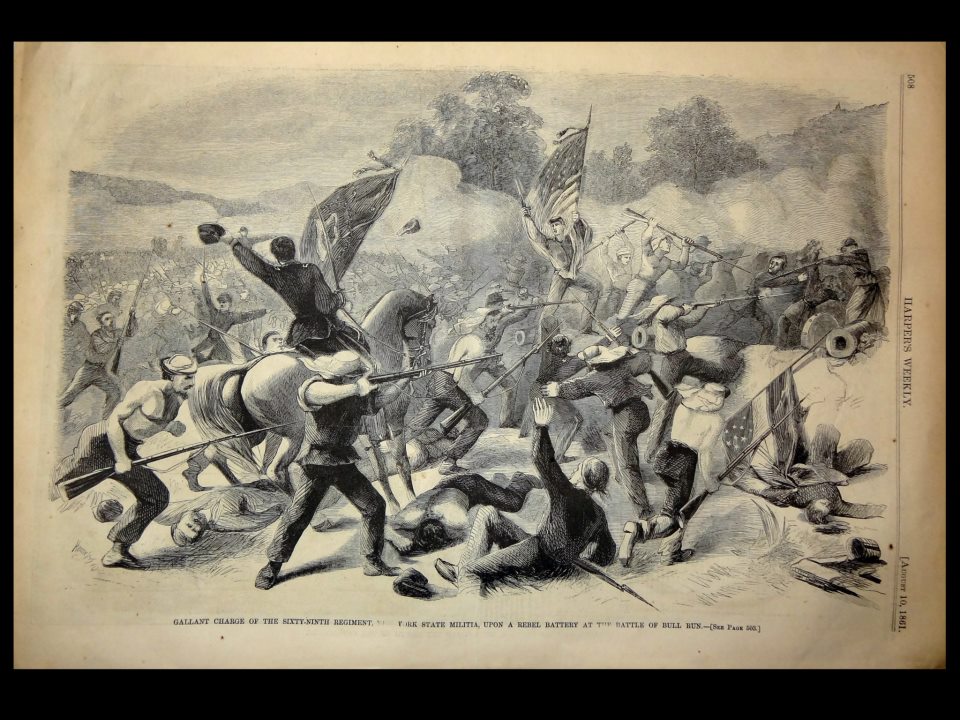
He served as the commanding officer of that company and eventually rose to the rank of Brigadier General in the Irish Brigade. Due to his popularity, gained by his actions back in Ireland, his men would fight hard for him. One example of this was at the Battle of Bull Run. The Brigade moved to the right and initially pushed back the enemy. The Confederate forces, with the timely aid of reinforcements, stopped the advancement of the Irish Brigade and began to move the Union forces back. The Irish of the 69th New York would not go down that easily. They rallied and charged multiple times under heavy artillery fire, only to be stopped. During this portion of the battle, General Meagher had his horse shot out from under him. He immediately jumped up, waved his sword, and exclaimed, “Boys! Look at that flag, remember Ireland and Fontenoy”. (a battle during the War of the Austrian Succession in which the Irish Brigade of France achieved victory against an English adversary) (6) With his nationalist battle cry ringing in their ears, the Brigade made one final push and sustained substantial casualties. One of these casualties was Lieutenant Colonel Haggerty, a native of Ireland, who was styled by Captain Conyngham “as fine a specimen of a Celt as Ireland could produce.” (7) Haggerty was just one of many men who perished valiantly that day. After the battle the Commander of the Union Army, General Irving McDowell, who watched the charge, rode up to the 69th and personally thanked them. Meagher lead the Irish Brigade in every battle up till and including the Battle of Fredericksburg. After this battle a war weary Meagher resigned his commission and was reassigned to other duties. (8)

Gallant Charge of The Sixty Ninth Regiment New York State Militia Upon A Rebel Battery At The Battle of Bull Run. Published in Harper's Weekly August 10th 1861

Gallant Charge of The Sixty Ninth Regiment New York State Militia Upon A Rebel Battery At The Battle of Bull Run. Published in Harper’s Weekly August 10th 1861

Although Meagher’s military service with the Irish Brigade did not last the duration of the war, his leadership and inspiration magnificently guided the Brigade through many of its hardest battles.
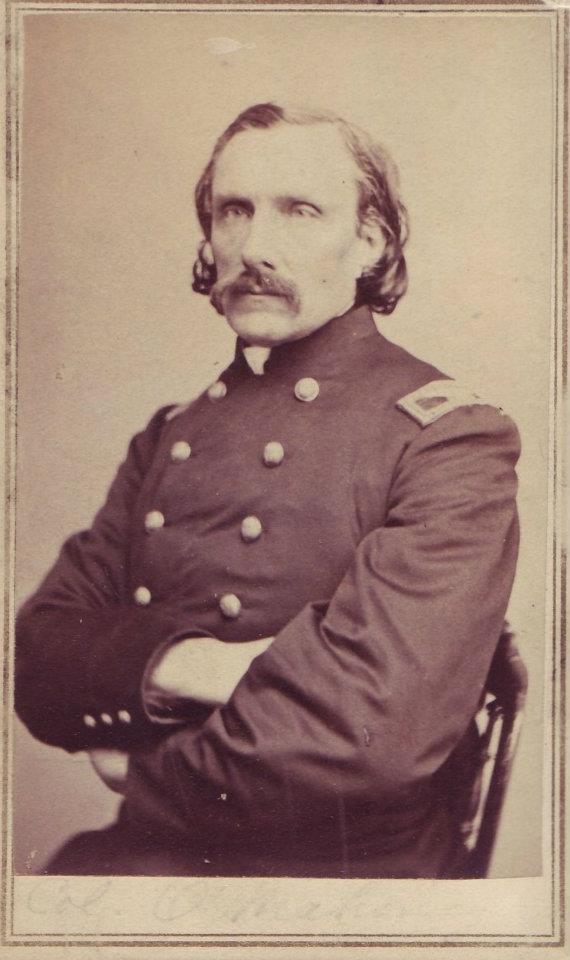
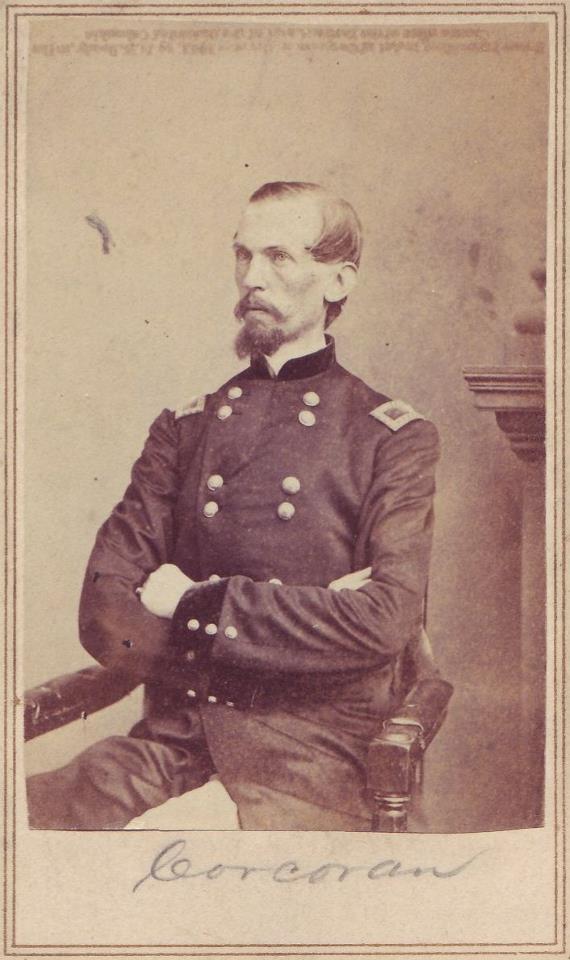
Another Irish Nationalist who had a positive effect on the fighting spirit of the Irish in the American Civil War was Michael Corcoran. Corcoran was born in Carrowkeel, county Sligo Ireland and was a member of the Irish Nationalist Guerrilla force known as the Ribbonman. His ties to this group were eventually discovered in 1849 so he immigrated to New York City in order to avoid capture. (9) To gain a position in society he joined the 69th New York State Militia as a private. This would not last as “his military passion and his previous knowledge of military tactics were a great advantage to him.” (10) Corcoran moved up in rank and became a Colonel. It was in this capacity that Corcoran became a hero to the Irish Nationalist, as well as the overall Irish immigrant population of New York. He chose not to parade his men in front of the Prince of Whales upon his visit, saying that “as an Irishman he could not consistently parade Irish-born citizens in honor of the son of a sovereign, under whose rule Ireland was left a desert and her best sons exiled or banished.” (11) His action resulted in a court-martial. However, it was overturned due to the need of good officers to fight in the Civil War. Corcoran resumed his rank in the 69th New York and was present at that Battle of First Manassas, where he was captured. Corcoran spoke of this later by saying, “I did not surrender until I found myself after having successfully taken my regiment off the field, left with only seven men and surrounded by the enemy.” (12) Corcoran was eventually exchanged over a year later, and was received back with acclaim. He was given the rank of Brigadier General and put in command of his own troops, known as Corcoran’s “Irish Legion.” The first battle of the Legion took place during the Battle of Deserted House Virginia. Although not one of the biggest battles of the war, Corcoran demonstrated calmness under fire and his men showed how they admired Corcoran by following his every commanded under intense battle conditions.

Carte de visite of Michael Corcoran From The Collection of The American Military Heritage Museum Of North Carolina

Carte de visite of Michael Corcoran From The Collection of The American Military Heritage Museum Of North Carolina

(13) Sadly this would be Corcoran’s last major battle as he was killed later that year when he fell from his horse. Even though Corcoran’s life was cut short his legend and the Prince of Wales incident continued to inspire men, especially those of his Legion who were fighting for Uncle Sam as well as Irish pride.
The Union was not the only beneficiary of Irish Nationalist leadership due to the fact that many of the Irish in the south felt the situation in America mirrored the situation in Ireland with Great Britain. They felt an aggressive big government had taken on the smaller independent state, and that was something they could support fighting against, one such leader was  Patrick Ronayne Cleburne. Cleburne was born in the late 1820s to a middle class Irish Protestant family in County Cork, Ireland. He had an ambition to be an apothecary but he failed the entrance exam for the medical school. So for economic reasons he joined the British army even though he believed it to be “a symbol for tyranny.” (14) Cleburne’s time in the army was served in a unit that preformed civil duties in famine stricken Ireland. By 1849 the famine finally caught up to him and his family, so he and his sister immigrated to America. (15) Cleburne eventually settled in Arkansas where he joined many social clubs, including a Militia Company called the Yell Rifles, and was soon elected captain. (16) When the American Civil War broke out Cleburne was in charge of the Yell’s and marched them off to war. Soon his military prowess was noticed by Confederate commander William J. Hardee and he was promoted to Brigade Commander. (17) Cleburne served with distinction, most notably his stand at Ringgold Gap where his 4,000 men held off the superior numbers of General Hooker’s Union troops. (18)

During the battle, Cleburne personally took command of his battery units and waited for the Federal forces to get within a short distance. He kept his men calm till the enemy was in the precise position for their guns to inflict the most damage. Cleburne then shouted, “NOW!! Lieutenant, give it to em!” (19) The canister shot devastated the Union line and drove them back. For this act Commander Cleburne received a Congressional Citation from the Confederate Congress, and earned the nickname “Stonewall of the west.” (20) In November of 1864 Cleburne met his fate during the battle of Franklin, Tennessee. During the battle Cleburne had two horses shot out from under him then continued on foot drew his sword and charged head strong toward the Federal lines. As he urged his men forward and got within paces of the Union breastworks he was shot through the heart. (21)

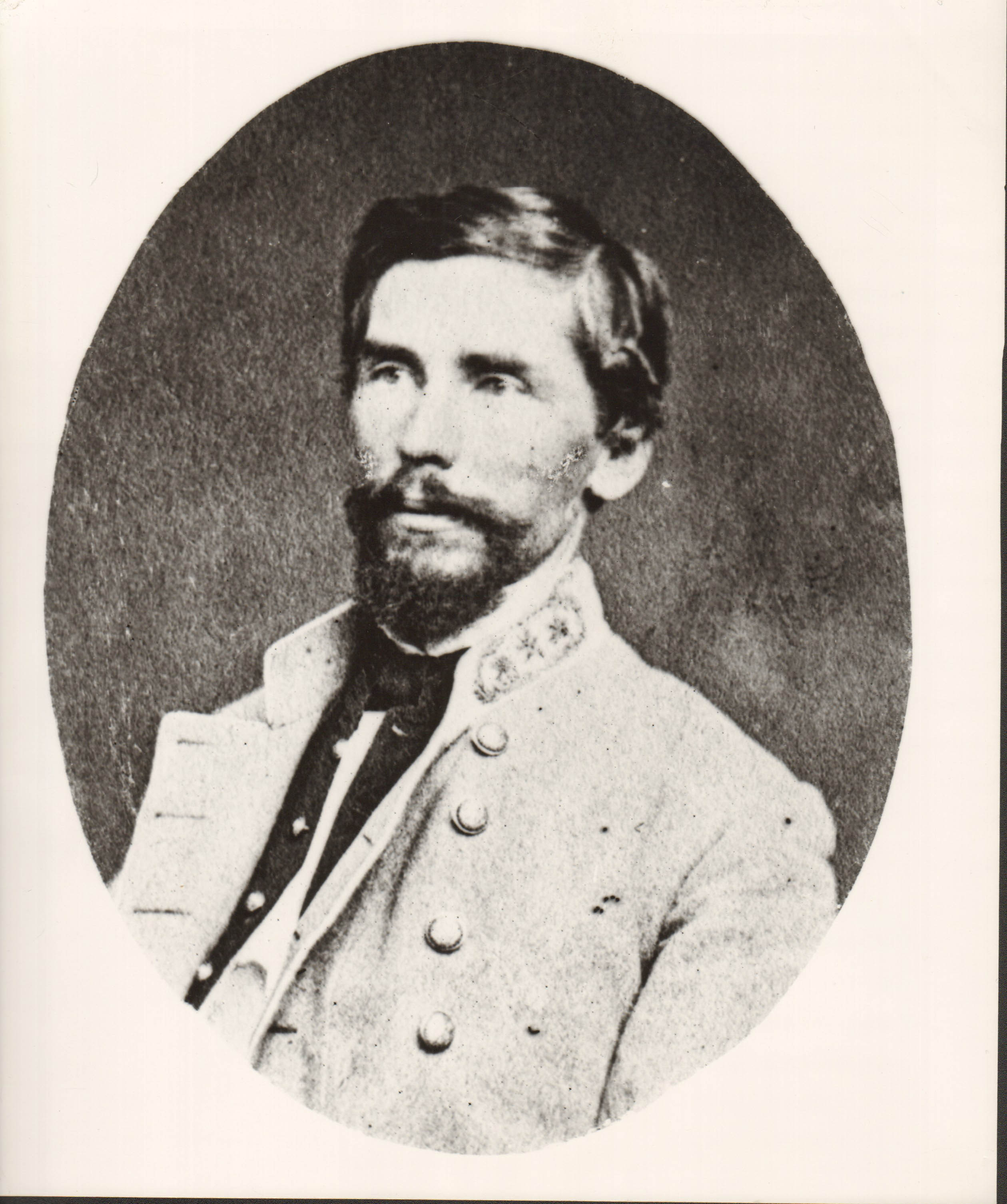
Major general Patrick Ronayne Cleburne

Major general Patrick Ronayne Cleburne

Cleburne died a hero’s death for his adopted land. However, after reading his words one can easily make the assumption that in his mind he gave his last full measure for Ireland as well. This can be seen in Cleburne’s Proposal to Arm Slaves. In this letter to Confederate commanders he writes, “As between the loss of independence and the loss of slavery, we assume that every patriot will freely give up the latter — give up the negro slave rather than be a slave himself. If we are correct in this assumption it only remains to show how this great national sacrifice is, in all human probabilities, to change the current of success and sweep the invader from our country.” (22) From this quote one can easily infer that Cleburne saw the parallels between the South’s struggle in the American Civil War and Irelands fight against English oppression. He was like other southern Irishmen inspiring to join the war effort with a fervent passion to vanquish their northern aggressors.
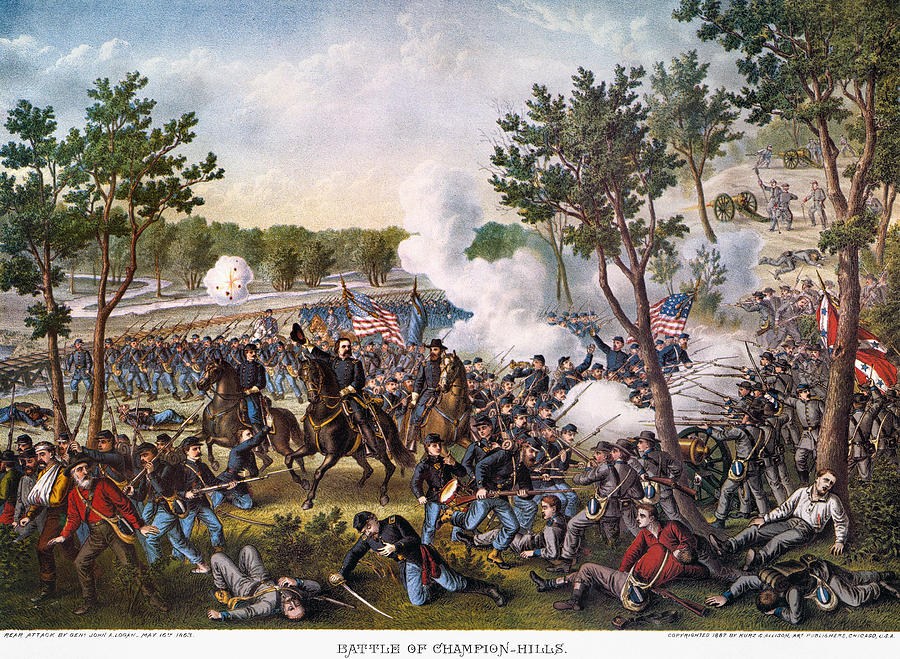
The Irishmen who felt the similarities between the south and Irish Nationalist fought with great vigor against the Federals, and stated their desire to subjugate their oppressive foe, when they chose the names for their regiments. A unit in the 1st Missouri Brigade evoked the name of the bold Robert Emmet, and Irish rebel and patriot, when they chose to be called Emmet Guards. (23) The Emmet Guards distinguished themselves at the Battle of Champion Hill, Mississippi. The action of the battle was described as such, “With flags flying and the rebel yell erupting from their mouths. The Missouri Confederates advanced, driving the bluecoats back, recapturing lost batteries, and gaining much ground. Bitter hand to hand fighting swirled over the rough terrain, among the magnolias, deep gullies, and dense woodlands of Champion Hill.” (24) The Irish from Missouri almost split the Union line in two before Federal reinforcements arrived and drove the rebels back. The Irishmen of the Emmet Guards did their namesake proud but suffered heavily for their effort. (25)

Battle of Champion Hill By Kurz & Allison published in 1887

Battle of Champion Hill By Kurz & Allison published in 1887

Another southern battalion born out of Irish Nationalism was part of the 1st Virginia and named the Montgomery Guards, after the Irish born American Revolutionary war hero General Richard Montgomery. (26) Additionally, this unit has another strong tie to Irish patriotism and national pride. William Henry Mitchel, the son of John C. Mitchel Senior, an exiled Irish revolutionary and leader of the Young Irelander movement, served in its ranks. John C. Mitchel instilled the ideas of Irish nationalism into his son and explained how Irelands struggle was almost identical to that of the south. (27) Young William took those ideas into battle with him at Gettysburg. William was elected to be the color barer of the 1st Virginia and led them into what would be forever remembered as Pickett’s Charge. He was severely wounded and about to be escorted to the rear but refused in order to advance the standard of his regiment with a sense of Irish pride. He was struck again and this time the wound was mortal. Upon hearing of the news John C. Mitchel reflected, “He could not have died in better company nor, as I think, in a better cause.” (28) The Irishmen of the 1st Virginia fought that day “not only with pride in the centuries long Irish revolutionary heritage and the legacy of their Irish rebel forefathers but also in the rich traditions of their regiment as well.” (29)
The use of Irish Nationalism proved to be successful motivation for Celtic men on both sides of the American Civil War. It was a source of enthusiasm that other regiments in the conflict did not have. Therefore, one can say this was a uniquely Irish trait, and one that would have made them more powerful on the battlefield.

Notes;

1) Steward, Patrick. The Fenians : Irish Rebellion in the North Atlantic World, 1858-1876. (1st ed. Knoxville: University of Tennessee Press, 2013.) XIII-XIV
2) Webb, Alfred. A compendium of Irish biography: comprising sketches of distinguished Irishmen, and of eminent persons connected with Ireland by office or by their writings. (Dublin: M.H Gill & Son , 1878.) 402
3) Cavanagh, Michael. Memoirs of Gen. Thomas Francis Meagher. 56
4) Cornish, Rory T. Thomas Francis Meagher : the Making of an Irish American. (Dublin ;Portland, OR: Irish Academic Press, 2006) 2
5) Ibid
6) Conyngham, The Irish Brigade and It’s Campaigns 37
7) Ibid
8) Cornish, Rory T. Thomas Francis Meagher : the Making of an Irish American. 154-155
9) Pritchard, Russ A. The Irish Brigade : a Pictorial History of the Famed Civil War Fighters. (Philadelphia, Pa. ;London: Running, 2004.) 10
10) Conyngham, The Irish Brigade and It’s Campaigns , 537
11) Ibid
12) Ibid, 538
13) Shiels, Damian. Irish in the American Civil War Exploring Irish involvement in the American Civil War . March 18, 2012. http://irishamericancivilwar.com/2012/03/18/baptism-of-fire-the-corcoran-legion-at-deserted-house-virginia-30th-january-1863/ (accessed 11 20, 2013).
14) Joslyn, Mauriel. A Meteor Shining Brightly : Essays on the Life and Career of Major General Patrick R. Cleburne. (Macon, Ga.: Mercer University Press, 2000.) 7
15) Ibid, 16
16) Symonds, Craig L. Stonewall of the West : Patrick Cleburne and the Civil War. (Lawrence: University Press of Kansas, 1997.) 45
17) Ibid, 49
18) O’Brian. The Irish Americans In the Confederate Army. 139-140
19) Symonds, Stonewall of the West. 175
20) Ibid, 176
21) Ibid, 209
22) Cleburne, Patrick. Patrick Cleburne’s Proposal to Arm Slaves. 2013. http://www.civilwar.org/education/history/primarysources/patrick-r-cleburne-et-al.html (accessed 11 26, 2013).
23) Tucker, Irish Confederates The Civil Wars Forgotten Soldiers. 67
24) Ibid, 72
25) Ibid, 74-76
26) Ibid, 50
27) Ibid, 90
28) Ibid, 91
29) Ibid, 94

The Brave Soldiers From Erin Why The Irish Fought With Great Success During The American Civil War: Part 2 Fighting for their place in American Society

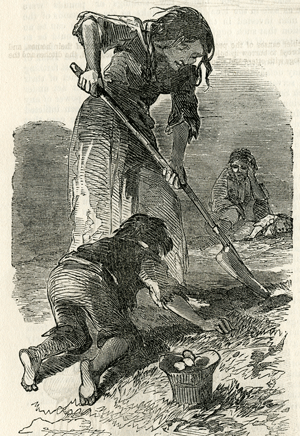
Searching for potatoes in a stubble field Illustrated London News, December 22, 1849

Searching for potatoes in a stubble field Illustrated London News, December 22, 1849

Ireland in the 1840s was a dreadful place. Many individuals lived on the edge of starvation and in subhuman conditions imposed by their British land lords. They relied on the potato as their main staple of life. Then, in 1845, the great famine occurred, or as the Irish called it “An Gorta Mór.” This blight was caused by the fungus Phytophthoera infestans and by 1852 this food shortage caused over one million people to die, and over two million to travel to North America. (1) Most of these immigrants traveled to America on what were known as “Coffin Ships,” called this due to their poor conditions and likelihood to sink. The passengers were provided with only one barrel of water and disease was rampant. (2) When the Irish immigrants landed in America they did not find the refuge they were seeking, in fact many of them found the opposite to be true.

Riots

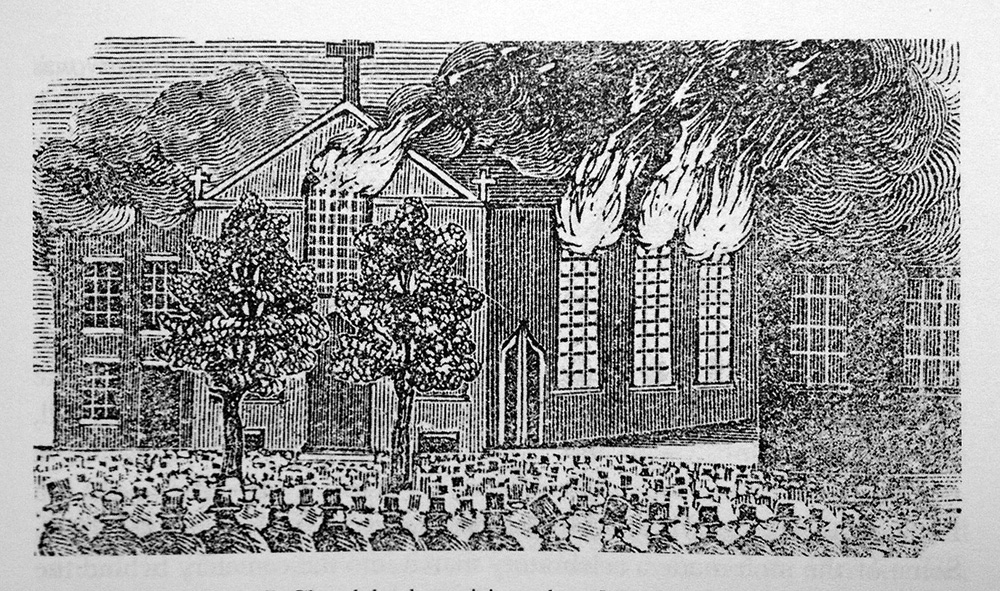
The burning of the original St. Michael’s Catholic Church | Engraving from A Full and Complete Account of the Late Awful Riots in Philadelphia, published in 1844 by nativist John B. Perry

The Irish Immigrants not only found poverty and overcrowding to be an issue, but they were also confronted by Americans who supported the nativist movement. A driving force in that movement was The Know Nothing party, founded in 1845, they led the political fight to purify America by removing its immigrants. As this group galvanized their movement the Irish were the prime target because of their high poverty rate, drinking, devotion to Ireland, and Catholic faith. The latter was due the fact that the Know Nothings felt the devotion of the Irish lay with the Pope in Rome and not with the United States. (3) The hatred the Know Nothings felt came to a boil in 1844 in Philadelphia when “Nativists battled Irish immigrants, and two Catholic churches and a Catholic school were burned by mobs. At least 20 people were killed in the mayhem.” (4) There were many more clashes with the Know Nothing party, including August 6, 1855 in Louisville, Kentucky. During an election the Know-nothings tried to take over the polls, resulting in a riot that culminated in the burning of an Irish tenement block and the shooting several Irishmen as they tried to escape the blaze. In all twenty two people lay dead after the night of anti-Irish violence. (5)

By the time the American Civil War came about the Irish felt the need to join the army of their new home, be it north or south. They wanted to gain a foothold in American society as well as to stand their ground and avoid being called cowards. A post war slogan stated, “Although the Celts be hyphenated Americans in name they were one hundred percent Americans in deed.” (6) All of the conflicts with the Know Nothings had the effect of galvanizing the Irish population in the south. This was increased by the idea of secession. The Irish population was more than happy to fight for the cause and prove themselves as true southerners. John McFarland, an Irish immigrant from county Tyrone Ireland that resided in Mississippi, wrote “My affections, my friends, my home are all here and whatever the fortunes of my adopted country mine rises and falls with it.” (7) This quote demonstrates how the typical southerner of Irish decent felt interconnected to their new homeland and wanted to be a worthy participant in its cause. This connection helped drive the Irish of the south to be fervent worriers in battle.

The Battle of Gettysburg was one of many battles that showed how hard the Irish of the south fought in the Civil War. The Battle for “Little Round Top” involved the now famous Union regiment the 20th Maine, commanded by Colonel Joshua Lawrence Chamberlin. One of their adversaries on this day would be Company K of the 15th Alabama, which was described by their commander Colonel William Calvin Oats in the following fashion: “It was an Irish company.” (8)

The 20th Maine & 15th Alabama at Gettysburg by Dale Gallon

The 20th Maine & 15th Alabama at Gettysburg by Dale Gallon

The life blood of this unit was found in Sergeant Patrick O’Conner, a twenty three year old Irish born tinner, who was thought of as the “Hardest fighting and toughest non-commissioned officer of the 15th Alabama.” (9) The 15th Alabama made repeated attempts to take the hill, but were repulsed by the guns of the 20th Maine. Eventually intense hand to hand combat broke out with Sergeant O’Conner yelling for the men to advance into the hail of deadly shot. This advance was not only inspirational to his company but to the whole Confederate line. (10) At one point, a Union soldier attempted to take the colors of the 15th Alabama, when according to Colonel Oats, Sergeant O’Connor “stove his bayonet through the head of the Yankee who fell dead.” (11) This hard fighting and sacrifice for the Confederates, however, was to be for naught. The 15th Alabama could not take the position due to their lack of reinforcements and ammunition. Although this was not a victory for the Irish Alabamians is demonstrates the hard fighting spirit that the Irish Confederate had for their new home, their cause and to become full members of southern society.

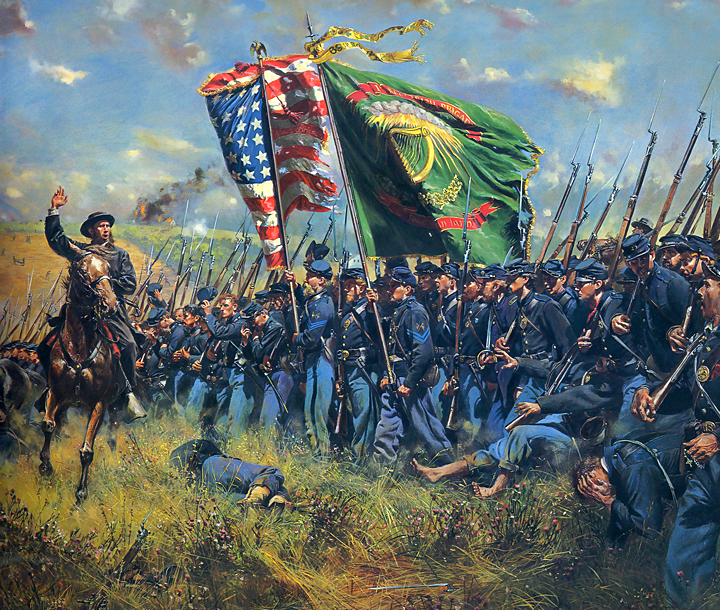
There is not a more a fitting place in the Civil War than Fredericksburg to show how the Irish spilled their blood on the soil of their new home. During the battle Irishmen squared off against each other. The men of the Union’s Irish Brigade confronted the 24th Georgia, commanded by Irish born Colonel Robert McMillan. The Union’s Irish mounted a gallant charge against the 24th Georgia and were repelled. (12) When the Confederate Irish from Georgia noticed the green flag of the 28th Massachusetts part of the Union’s Irish Brigade, one member was said to have uttered, “Oh God, what a pity! Here come Meagher’s fellows.” McMillian replied, “Give it to them now, boys! Now’s the time! Give it to them!” (13) The charge of the Union and its Irish Brigade was described by Confederate Artillery Commander William M. Owen in the following manner, “Bearing aloft the green flag with the golden harp of Ireland, those brave fellows came within five-and-twenty paces of the stone-wall and encountered such a fire of shot, shell, canister, and musketry as no command was even known to live through.” (14) The Union’s Irish Brigade was soundly defeated that day on Marye’s Heights. Although the Brigade was not victorious, its gallantry was an inspiration to all that day and woven well into the fabric of American military history.

Clear The Way By Don Troini depicting the 28th Massachusetts at Fredericksburg

Clear The Way By Don Troini depicting the 28th Massachusetts at Fredricksburg

The Battle of Fredericksburg helped show the rest of the country that the Irish were proud American citizens. Color Sergeant Welsh of the 28th Massachusetts part of the Irish Brigade echoes this feeling in a letter home saying, “This is my country as much as the man who was born on the soil and so it is with every man who comes to this country and becomes a citizen this being the case I have as much interest in the maintenance of the government and the laws of the nation as any other man.” (15) This letter was written in February of 1863, a year after Fredericksburg. One can make the inference that Color Sergeant Welsh felt strongly about his citizenship due to the sacrifices he and his fellow Irishman made during the war, especially at Fredericksburg. Union General Thomas Francis Meagher wrote in a letter about the effect that a desire for acceptance had on the men at Fredericksburg.

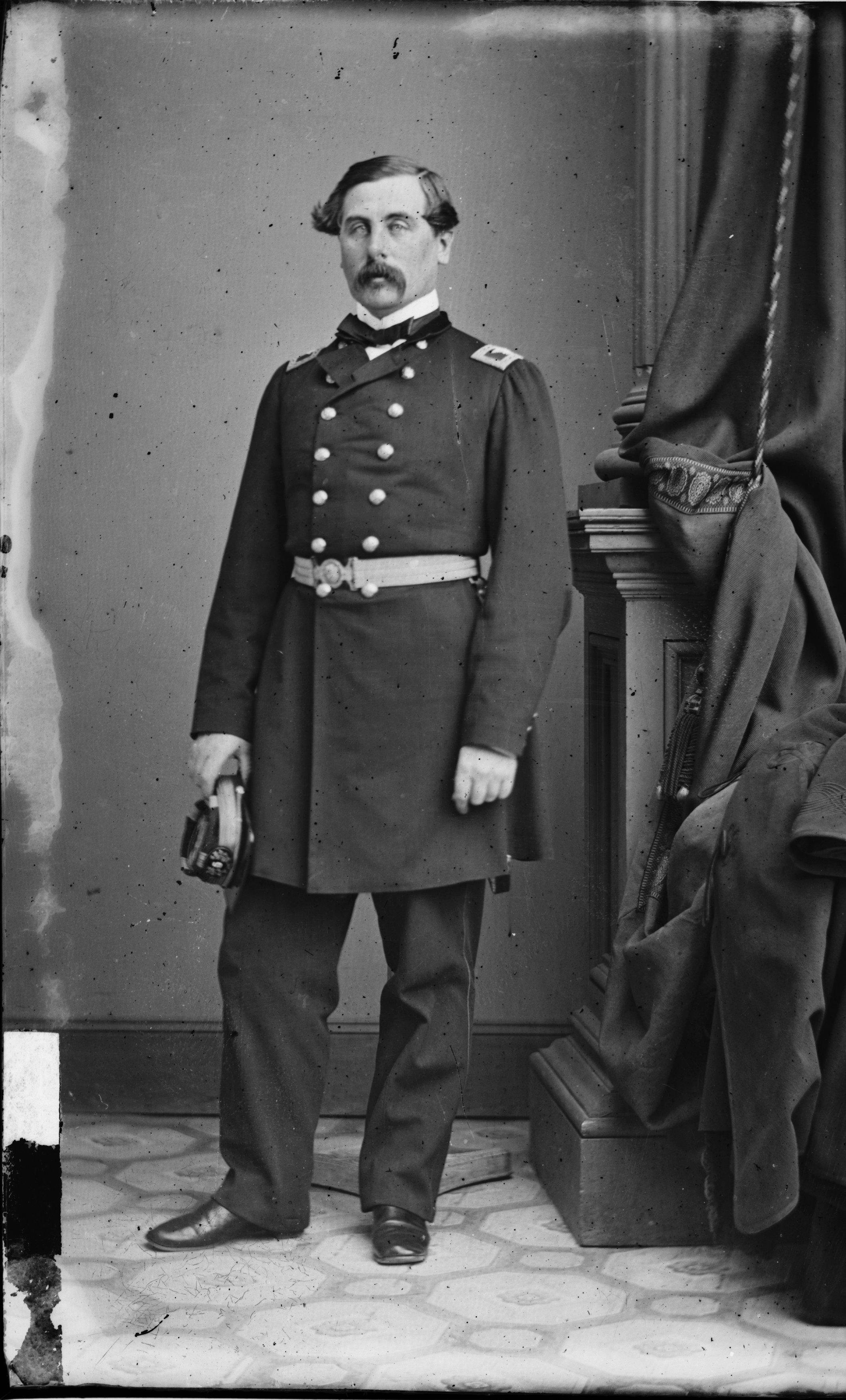
Brigadier general Thomas Francis Meagher

Brigadier general Thomas Francis Meagher

He felt this battle helped the Irish gain respect amongst natural born American citizens and stated, “In the very heart of the city of Fredericksburg under the fiercest play of shot and shell from the rifle pits and batteries of the enemy the General commanding the Brigade, displayed them (the colors) to the remnant of his command, as the splendid tribute which native-born Americans men of the highest private worth and widely acknowledged civic and social consequence had awarded to the Irish Brigade for the good service it had rendered in the great cause of the Constitution and the Chief-Magistracy of the American Union.” (16)

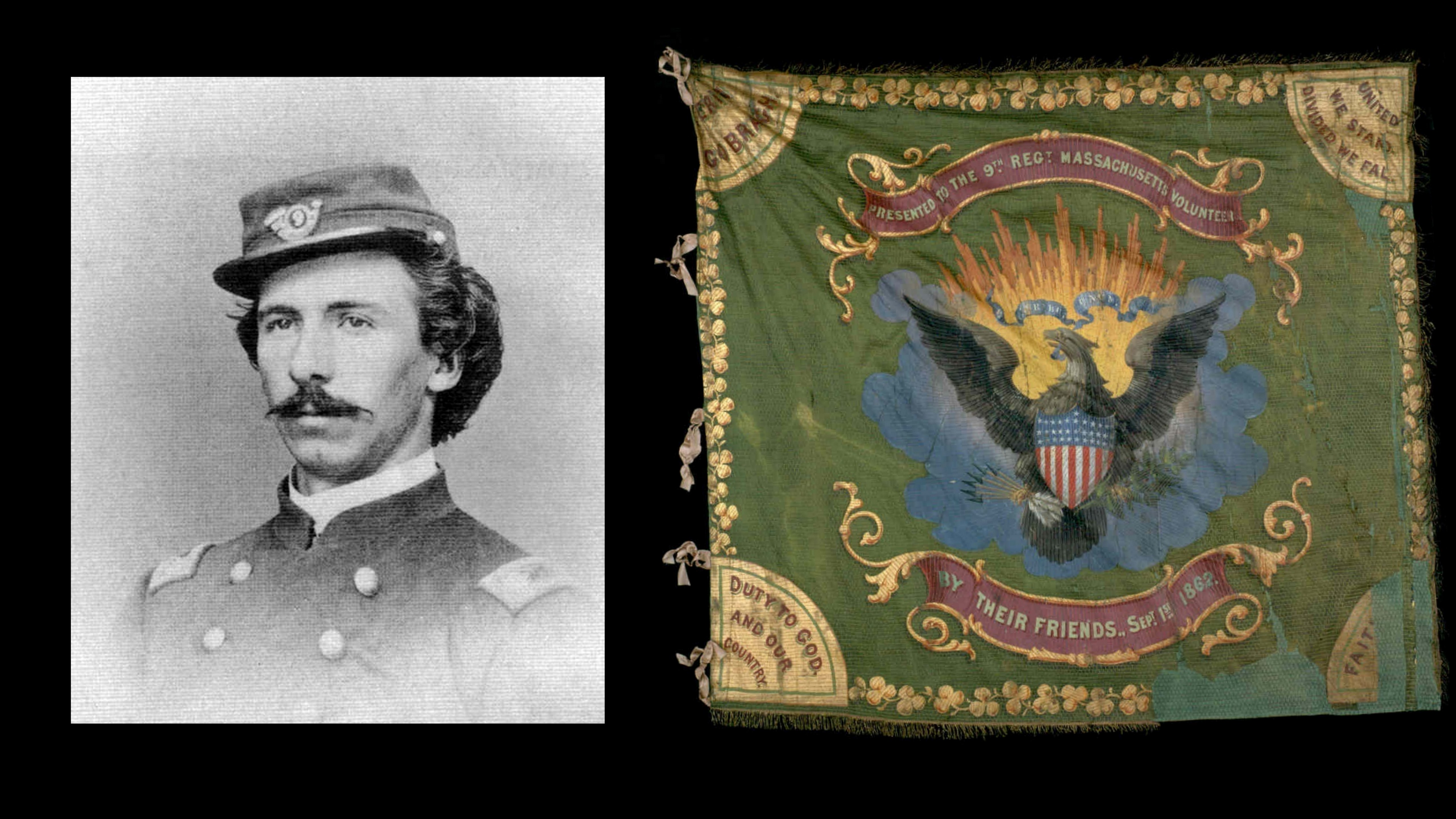
Irish 9th

Left: Colonel Patrick Robert Guiney Right: The Colors Of The 9th Regiment Massachusetts Volunteer Infantry

One can see just how the idea of being American was high motivation for these men from the Emerald Isle, to fight and fight hard for their adopted land. After the war the idea of nativism was a thing of the past. Colonel Guiney  of the Irish 9th said that the “accomplishments of the Irish regiments wiped away nativist prejudice against the Irish” and then challenged the audience to “go up to the State House and you will find the faded banners of the Ninth Regiment, and so long as they remain there no man will ever be heard to say that the Irish people living in Massachusetts are enemies of the republic.” (17) One can conclude that by being fierce fighters the Irish were able to accomplish their goal of being accepted in American society.

Notes;

1) Collins, J.J. Famine to Freedom The Irish in the American Civil War. (CreateSpace Independent Publishing Platform, 2011.) 28
2) Ibid, 28
3) Cal ,McCarthy. Green, Blue, and Grey : the Irish in the American Civil War. (Ireland: Collins Press, 2009.) 13
4) The Know-Nothing Party Opposed Immigration to America Secret Societies Emerged as Political Players in the 1850s By Robert McNamara; retrieved from http://history1800s.about.com/od/immigration/a/knownothing01.htm accessed on 09-11-2014
5) O’Brian. The Irish Americans In the Confederate Army. 18
6) Conyngham, The Irish Brigade and It’s Campaigns , XV.
7) Ibid, 19
8) Tucker, Phillip Thomas Irish Confederates The Civil Wars Forgotten Soldiers (Abilene Tx: McWhiney Foundation Press, 2006.) 78
9) Ibid, 80-81
10) Ibid, 85
11) Ibid
12) Undaunted Courage The Irish At Fredericksburg,” The Wildgeese.com, accessed January 01, 2012, http://www.thewildgeese.com/Pages/fredpt2.html.
13) Ibid
14) Tucker, Irish Confederates The Civil Wars Forgotten Soldiers. 62
15) Welsh, Irish Green and Union Blue, 65
16) Cavanagh, Michael. Memoirs of Gen, Thomas Francis Meagher, 533
17) Guiney, Patrick R. Commanding Boston’s Irish Ninth : the Civil War Letters of Colonel Patrick R. Guiney, Ninth Massachusetts Volunteer Infantry. (New York: Fordham University Press, 1998.) 252

The Brave Soldiers From Erin Why The Irish Fought With Great Success During The American Civil War: Part 1 Religion

In the mid-nineteenth Ireland was under oppressive English rule and suffering from famine. Many young Irish men fled their homeland to America in quest of a better life only to end up in the middle of a bloody civil war. This war divided bold Irishman against one another and created American heroes out of these foreign born sons. The Irish fought in almost every major engagement of the American Civil War. It is estimated that one hundred and fifty thousand Irishmen fought in this struggle and a high percentage of those men never returned. (1) They were left as Irish Brigade Captain David Power Conyngham put it, “On the bloody fields of Virginia, down amid the cotton fields of Georgia and in the swamps of the Carolinas, lie the bleached bones of many an Irish Soldier and chief.” (2) After the war General Robert E. Lee spoke about Irish soldiers by saying, “The Irish soldier,’ he said, ‘fights not so much for lucre as through the reckless love of adventure, and, moreover, with a chivalrous devotion to the cause he espouses for the time being.” (3) After reading these quotes, one can raise the question why is this so?

This four part series will show it was due to the very fact that they were Irishmen whom possessed a unique background, making them predisposed to greatness in battle. In essence there are four driving forces that will explain why the Irish fought with great success during the American Civil War. These driving forces are: religion, acceptance, Irish Nationalism and the Irish culture. This week we will focus on how religion influenced the Irish in battle?

Religion in Ireland was a fundamental way of life. It permeated not only their daily lives, but also their politics. Philosopher and politician Gustave De Beaument observes, “Ireland was eminent for its piety and sanctity amongst the most Christian nations. Its priests were the head of political as well as religious society. In this country, where the social powers were feeble, uncertain and ill-defined there was no fixed and invariable rule but that of religion no undisputed authority except priests.” (4) Although Beaument was speaking of the late 16th century one can easily speculate how this tradition would be an essential part of Irish culture in the 19th century. At the outbreak of the American Civil War, President Abraham Lincoln thought that spiritual guidance would be important for the Union soldiers. However, he overestimated the soldiers acceptance of the clergy in there regiments. Out of seven hundred Union regiments mustered, almost half decided to “find their way to hell without the assistance of clergy.”(5) The Irish in the Union regiments were mostly Catholic and did not think like the average Union soldier. They voted to have priests accompany their units, as religion was an important foundation of Irish culture. They knew battlefield motivation and encouragement is an important part of any conflict and can be the difference between victory and defeat. Having priests accompany them would help increase everyday moral, thus boosting the fighting spirit within them.
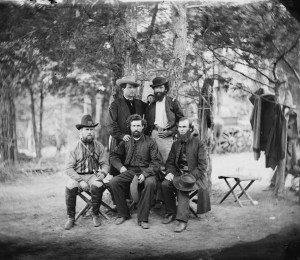
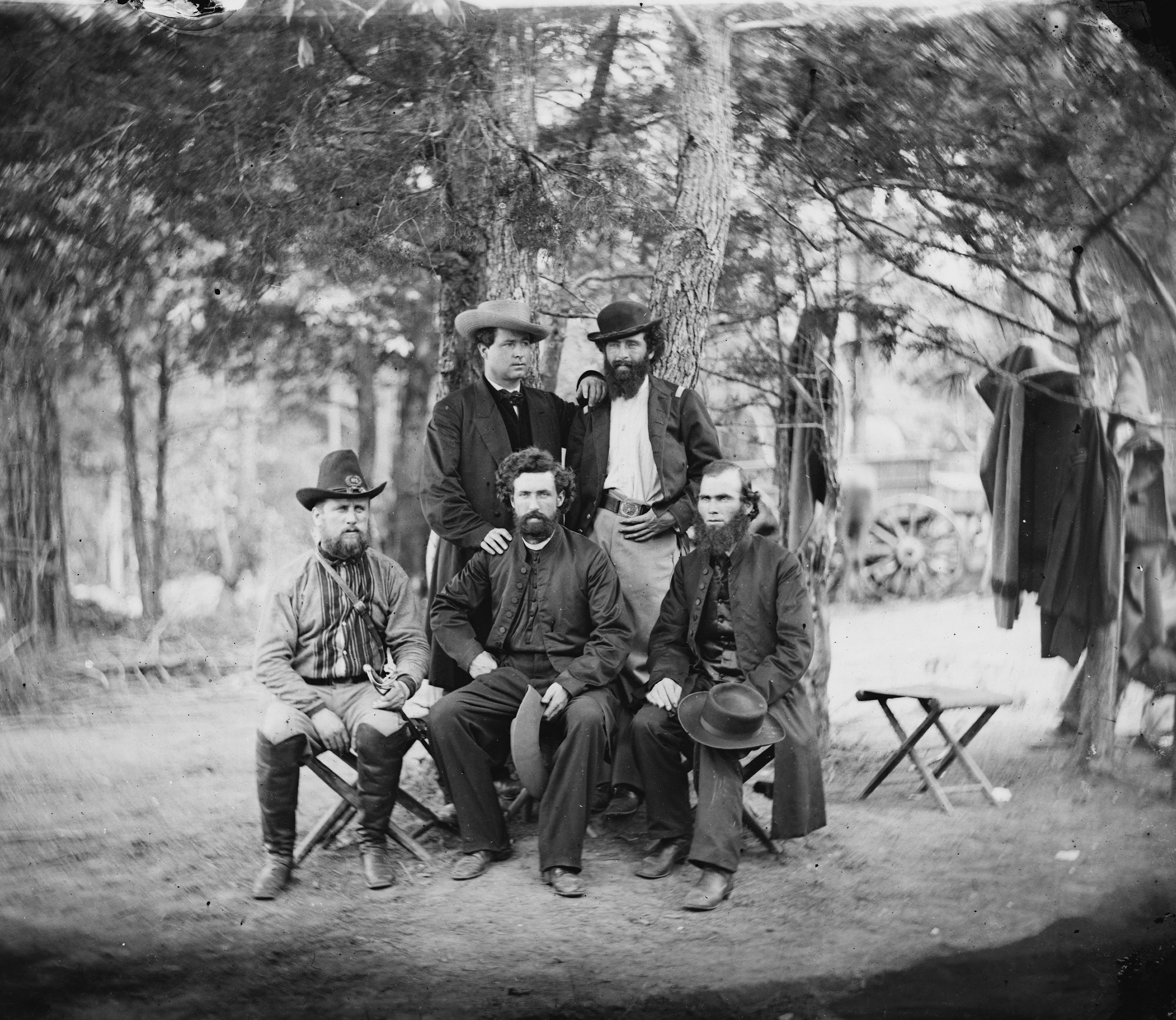
Photo shows: (back row) Patrick Dillon, unidentified; and (front row, left to right) unidentified, James Dillon, and William Corby. The identified men are priests of the Congregation of the Holy Cross, University of Notre Dame. (Source: E. Hogan, Univ. Notre Dame Archives, 2009.) Photograph from the main eastern theater of war, the Peninsular Campaign, May-August 1862.

Photo shows: (back row) Patrick Dillon, unidentified; and (front row, left to right) unidentified, James Dillon, and William Corby. The identified men are priests of the Congregation of the Holy Cross, University of Notre Dame. (Source: E. Hogan, Univ. Notre Dame Archives, 2009.) Photograph from the main eastern theater of war, the Peninsular Campaign, May-August 1862.

In order to heed this call for priests by the Irish fighting for the Union, Father Edwin Sorin, then president of the University of Notre Dame, ordered that Notre Dame was to at once deliver these Catholic soldiers the support they needed in order to offer the “help of their holy religion.” (6) Amongst those sent were Father William Corby and Father James Dillon. Father Corby was a second generation Irishman, born in Detroit in 1833, and Chaplin of the 88th New York. Father Dillon was Irish born and the Chaplin of the 63rd New York. Both regiments were part of the legendary Irish Brigade. Both of these men, along with many other priests in Irish regiments of the Union, helped drive the success of the Irish and in more than one documented case may have shifted the tide of battle. One battle where the Irish’s devotion to religion can be seen is during the battle of Antietam. Father Corby road his horse ahead of the 88th New York’s line, offering them a “hasty absolution.” (7) The Father then rode into the fray and heard confessions during the thick of the fighting. The idea of absolution before God was extremely important to these Irish-Catholic soldiers, as they believed that they “can be restored to grace by confession and the sacrament of penance.” (8)
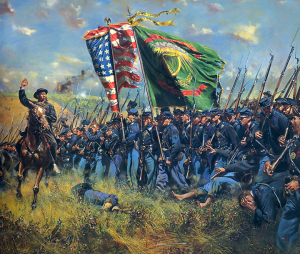
Sons Of Erin by Don Troiani this work depicts Father Corby giving absolution in front of the 88th New York during the Battle of Antietam on horseback

One can see how this could help calm the nerves of these men and help motivate them in the battle. Furthermore, after the battle Union General George McClellan said, “The Irish Brigade sustained their well-earned reputation, suffering terribly in officers and men, and strewing the ground with their enemies, as they drove them back.” (9) Perhaps the most famous example of religious motivation by a chaplain took place at Gettysburg. On the second day of battle Father Corby stood upon a rock and offered a general absolution to the men of the Irish Brigade. He ended his blessing with the words, “The Catholic Church refuses Christian burial to the soldier who turns his back upon his foe or deserts his flag.”(10) These words inspired the men to fight with all they had, and the fighting was fierce. Captain Conyngham described the fighting in the following passage, “Our rifled guns repelled with effect and for two hours the air seemed literally filled with screaming messengers of death.” (11) Peter Welsh was the Color Sergeant of the 28th Regiment Massachusetts Volunteers, a unit that was part of the famed Irish Brigade. He wrote this about the battle, “it was a hot place our little brigade fought like heroes and we drove the enemy nearly a quarter of a mile.” (12) The Irish Brigade came into that battle with five hundred and thirty men and left with three hundred of the original recruitment of over two thousand. (13) Eventually, the Confederate troops did push the Irish Brigade back a little during the struggle for what was later known as the Bloody Wheatfield. By the end of the battle of Gettysburg, the Union had defeated the Confederates and the Irish Brigade played a valuable role in this victory. One can easily make the connection that father Corby’s words helped and proved to be an inspiration to the men as they faced a tough enemy.
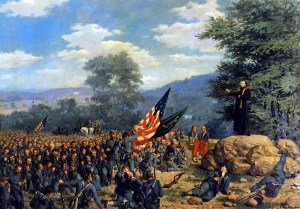
Absolution at Gettsburg

Absolution Under Fire, by Paul Wood this work shows Fr. Corby giving a general absolution to the Irish Brigade before the Battle of Gettysburg. The painting was done in 1891 , while Wood was a Notre Dame student.

Chaplains earned great respect amongst their regiments, which strengthened the effect they had on Irish soldiers; “Chaplin’s, like officers, won the respect with their bravery under fire. In the male time preserve of a wartime, army courage is currency with which men’s hearts are purchased.”(14) Father Dillon was one of the members of the cloth that was very influential amongst his regiment. The respect that he earned can be seen during the battle of Malvern Hill. When the 63rd New York was under heavy fire the men were unsure of their officers because they were inexperienced. The men were claiming that they were father Dillon’s regiment and shouted, “Yes, yes! Give us Father Dillon.” (15) Father Dillon stepped up into the skirmish and told the men to have confidence in their officers and restored order back in the ranks. Union General Fitz John Porter wrote of the Irish Brigades actions that day saying, “I found that our force had successfully driven back their assailants. About fifty yards in front of us, a large force of the enemy suddenly arose and opened fire with fearful volleys upon or advancing line. I turned to the brigade….and found it standing like a stone wall and returning a fire more destructive than it received.” (16) A feat that would have been nearly impossible if Father Dillon did not organize the disorderly rabble of his regiment earlier in the fight.
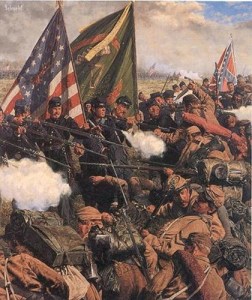
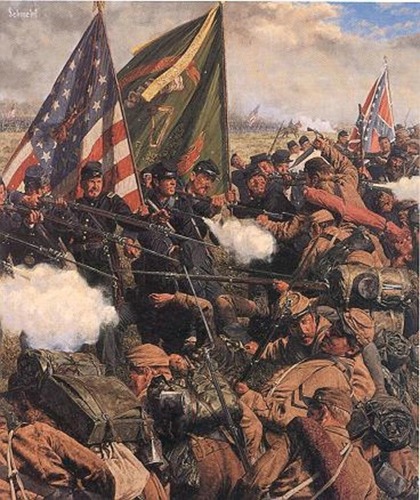
Painting titled A Donnybrook at dusk By  Bradley Schmehl, depicting the Irish Brigade at Malvern Hill

Painting titled A Donnybrook At Dusk By Bradley Schmehl, depicting the Irish Brigade at Malvern Hill

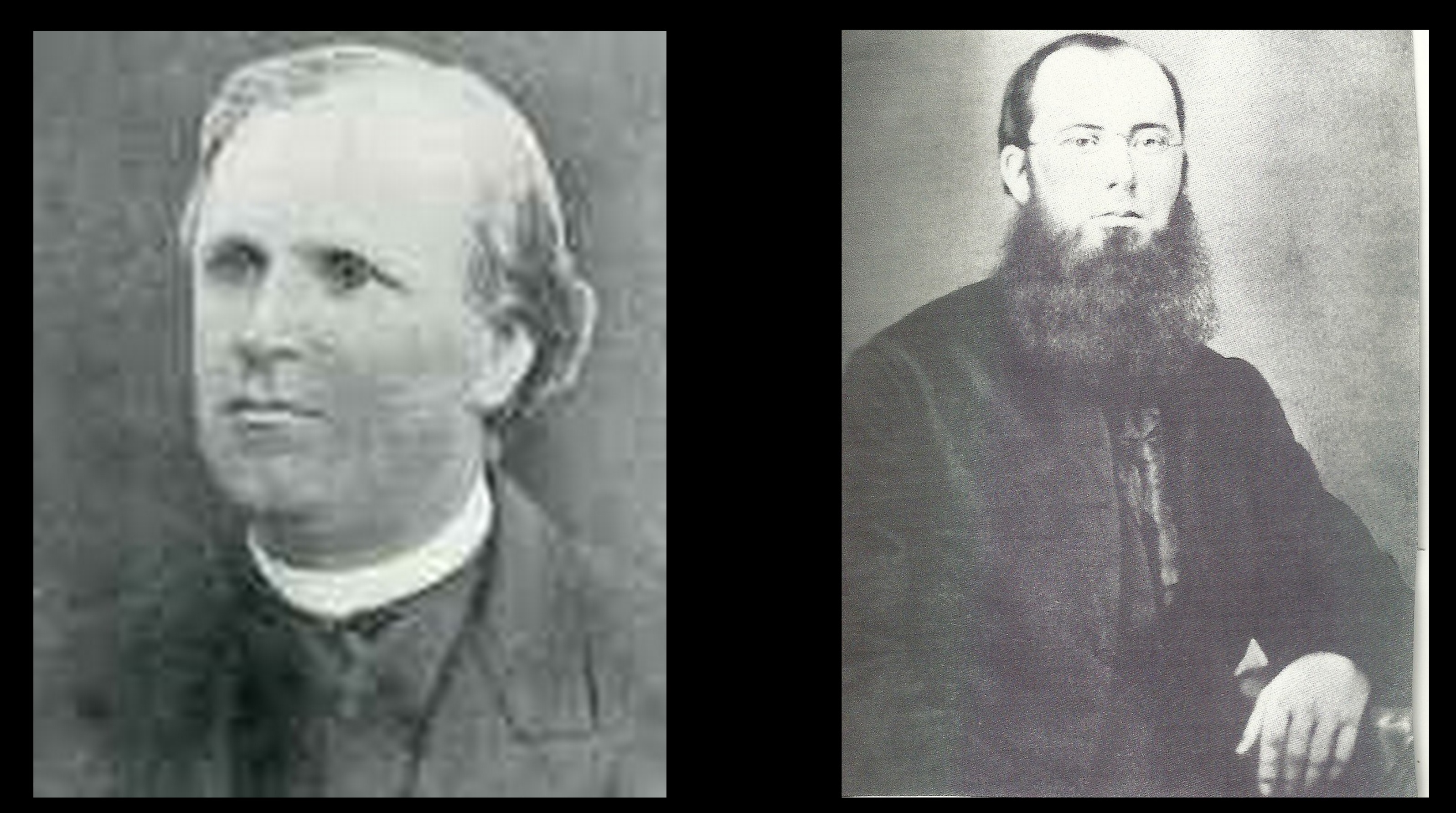
Catholic chaplains were not just a staple in Union Irish regiments, as they were also highly regarded in Confederate regiments. One such priest was Father Matthew O’Keefe, who was the chaplain of William Mahone’s Brigade of Virginians. He earned the respect of his followers due to the fact that he drew two pistols on a would be assassin, thus thwarting his plot. (17) Father O’Keefe also volunteered for service to the cause even after being denied by his bishop. (18) One can imagine that due to this esteem O’Keefe’s words and leadership would have a positive effect on the men he tended to and once again show what a driving force religion was in making the Irish soldiers of the Civil War such fierce fighters. Perhaps the most influential Irish priest of the Confederacy was Father John Bannon. He was Irish born and the priest of the Missouri Brigade. He was present during the Siege of Vicksburg and offered Catholic services, as well as administered food and water. He also gave last rights heard confessions and tended to the wounded. This would have had a profound effect on the moral of the men and although the city eventually fell to the Union, the care he provided would add time to the siege and help Confederate forces leave the city to fight another day. It was due to the respect he earned during this, as well as his staunch support of the Confederacy, that Father Bannon was sent in the dark of night to become a foreign ambassador to Ireland. (19)
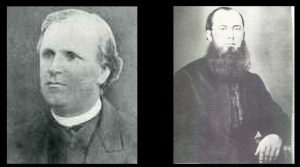
O'Keefe left O'bannon right

Left: Father Matthew O’Keefe, Right: Father John Bannon

Chaplains were not the only way Confederate Irish were motivated by religion in battle. This can be demonstrated by the fact that the Colors of the South Carolina Irish Volunteers were presented by Bishop Patrick Lynch during a Catholic mass. Bishop Lynch spoke to the men saying, “Receive it then {the flag} rally around it. Let it teach you of God, of Erin, of Carolina. Let it teach you your duty on this life as soldiers and Christians, so that fighting the good fight as Christians, you may receive the reward of eternal victory from the King of Kings.” (20) By doing this Bishop Lynch in essence consecrated the colors. By making the colors sacred he made them significantly meaningful to those of the Catholic faith. This would then provide additional inspiration to the men in battle. These Irish Confederates knew that if they were to die while fighting it would be for a virtuous cause and under a flag blessed by God.

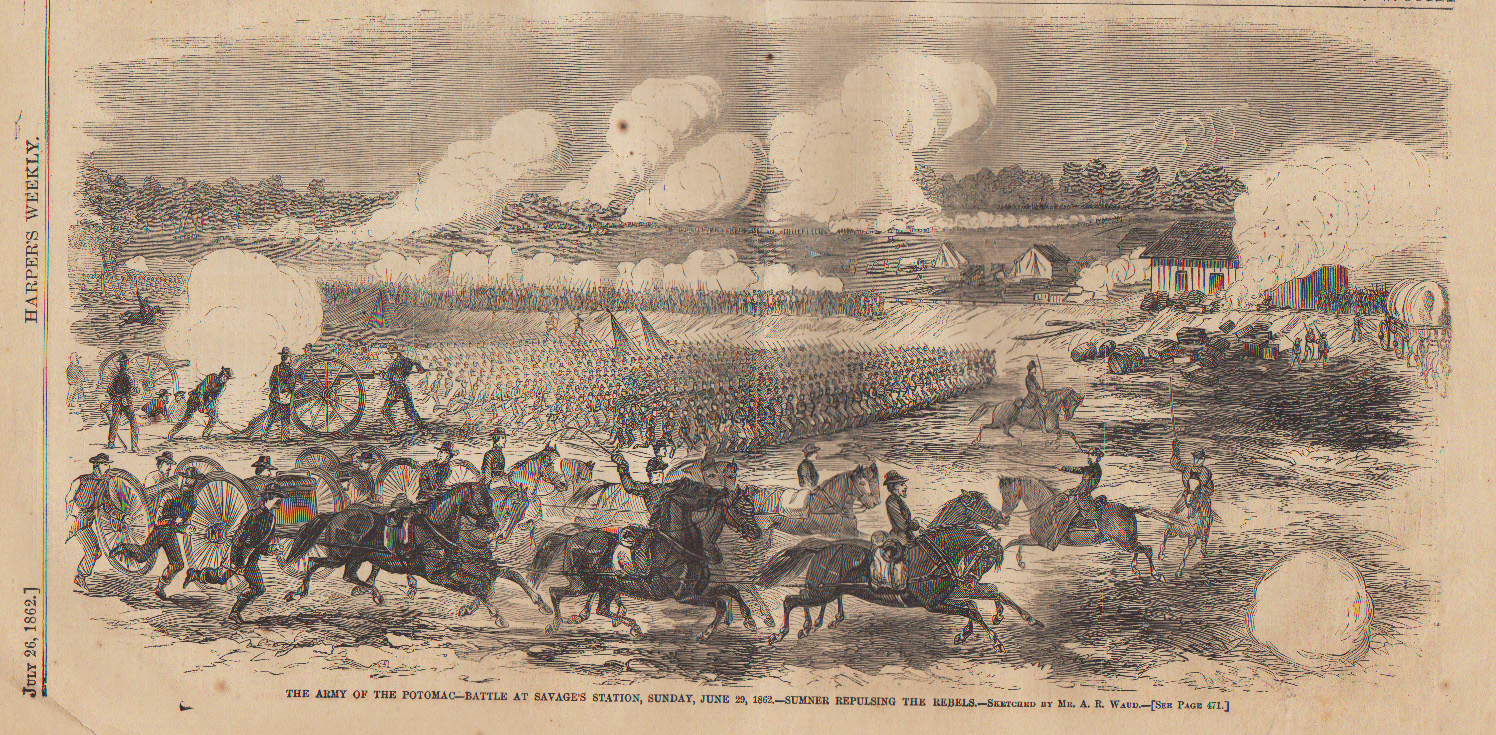
Not only did the clergy of both sides offer battlefield motivation to the Irish fighting in the war, but they also helped care for the soldier’s physical and mental health off the frontline. Supporting them behind the scenes as well was just another way to boost their moral. Military historian Lieutenant-Colonel Sir John Baynes speaks of the importance of soldier’s morale in his work Morale – A Study of Men and Courage. He stated: “High morale is the most important quality of a soldier. It is a quality of mind and spirit which combines courage, self-discipline, and endurance. It springs from infinitely varying and sometimes contradictory sources, but is easily recognizable, having as its hall-marks cheerfulness and unselfishness. In time of peace good morale is developed by sound training and the fostering of esprit de corps. In time of war it manifests itself in the soldier’s absolute determination to do his duty to the best of his ability in any circumstances. At its highest peak it is seen as an individual’s readiness to accept his fate willingly even to the point of death, and to refuse all roads that lead to safety at the price of conscience.” (21) Positive morale of the soldiers was significant to the men of the Irish Brigade during the Seven Days Battle. The men suffered long forced marches at night and hard fighting during the day, which would be enough to break any soldier. However, the men of the Brigade had support from their clergy. Around the clock priests heard confession and offered words of encouragement to the men keeping their spirits up. (22) The effects of which can be seen at the Battle of Savage Station, which was the fourth battle of the Seven Days Campaign. The Confederate attack at Savage Station was swift and organized. Non-Irish Union regiments had a hard time staying strong. For instance, the 106th Pennsylvania “broke and then fled in panic after losing one hundred men in killed and wounded.” (23) However, the Irish Brigade “greatly distinguished themselves, charging in some cases up to the very cannon of the enemy. One of the Rebel guns they hauled off, spiked the guns, demolished the carriages, and then abandoned them.” (24) The juxtaposition of these two units in the same battle goes to show the effect that the Chaplains had on their flock, and how that morale boost translated into action.
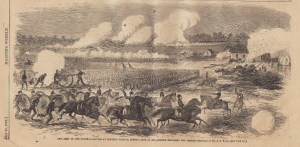
Battle of Savage Station engraving from Harpers Weekly

Engraving from the July 26th 1862 edition of Harper’s Weekly depicting the Battle of Savage Station.

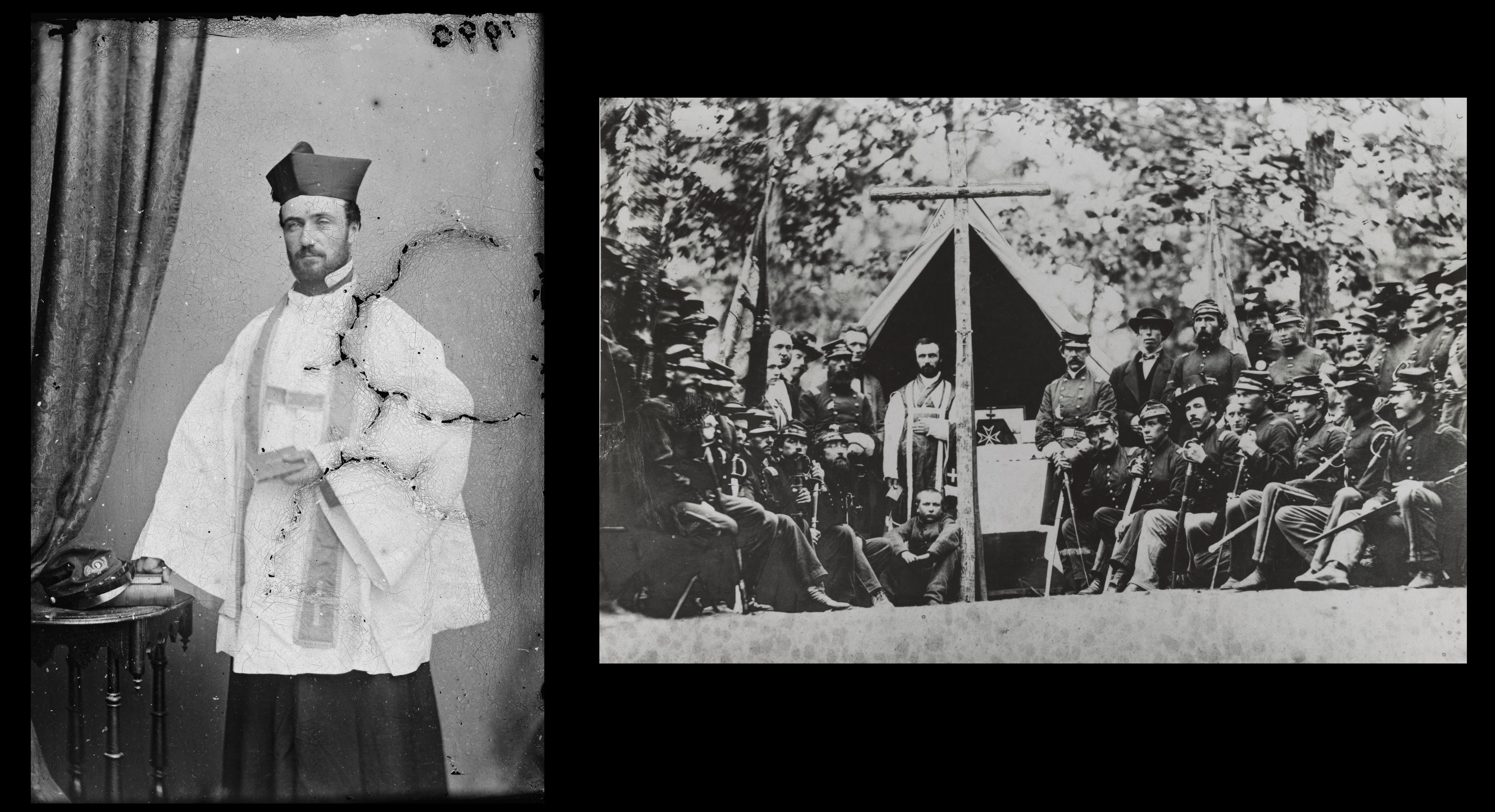
Religious services were yet another way to boost the morale of the men in the war, and this fact was not lost on the commanding officers of Irish regiments. The 9th Massachusetts Volunteer Infantry, also known as Boston’s Irish Ninth, lost their chaplain, Father Thomas Scully, for quite some time due to illness. During this time the commanding officer, Colonel Patrick R. Guiney, of the 9th Massachusetts borrowed the services of Father Corby. Both men met with General Charles Griffin, commander of the First Division of the Fifth Army Corps, to see if Father Corby could take on the 9th Massachusetts in addition to the 88th New York. Griffin knew that most of his men were of the Catholic denomination, and was surprised that they would be without a Catholic priest. General Griffin then suspended drill for a week so that his men could attend to “their religious duties.” (25) One can easily infer from this decision that General Griffin could see the value on religion and the effect it had on soldiers in battle. Furthermore, he realized the importance of how to use clergy to motivate the Irish in his ranks.
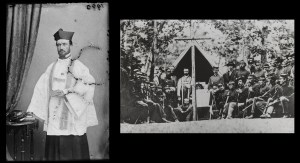
Left, Father Thomas Scully  Right Father Scully preparers to say mass to Bostons Irish 9th

Left: Father Thomas Scully Right: Father Scully prepares to say mass to Bostons Irish 9th at Camp Cass, Arlington Heights, Virginia.

Religion can be a powerful motivator and help an army. Father Corby himself writes of this by saying, “The feature in any army is indeed, no small matter… Men who are demoralized and men whose consciences trouble them make poor soldiers. Moral men, men who are free from the lower and degrading passions make brave, faithful and trustworthy soldiers.”(26) By embracing their religion during the war the Irish had a driving force that most other soldiers of the war did not. This force helped push them to do great things in battle; and the idea of the Irish being “brave, faithful and trustworthy soldiers” can be seen throughout the American Civil War.

Notes;

1) Donald, Robert Bruce. Manhood and Patriotic Awakening in the American Civil War: The John E. Mattoon Letters, 1859-1866. (Lanham, Maryland:Hamilton Books. 2008) 17

2) Conyngham, David Power. The Irish Brigade and Its Campaigns. (New York: Fordham University Press, 1994.) 8

3) Cavanagh, Michael. Memoirs of Gen. Thomas Francis Meagher : comprising the leading events of his career chronologically arranged, with selections from his speeches, lectures and miscellaneous writings, including personal reminiscences. (Worcester, Mass: The Messenger Press, 1892.) 470

4) De Beaumont, Gustave. Ireland Social, Political, and Religious . (Cambridge, Massachusetts: The Belknap Press Of Harvard University Press , 2006.) 10

5) Schmidt, James M. Notre Dame and the Civil War : Marching Onward to Victory. (Charleston, SC: History Press, 2010.) 30

6) Ibid

7) Corby, William. Memoirs of Chaplain Life : Three Years with the Irish Brigade in the Army of the Potomac. (New York: Fordham University Press, 1992.) 112

8) Campbell, Ted. 1996. Christian Confessions : a Historical Introduction. 1st ed. (Louisville, Ky.: Westminster John Knox Press.) 96

9) Corby, Memoirs of Chaplain Life, 373

10) Mulholland, St. The Story of the 116th Regiment, Pennsylvania Volunteers in the War of the Rebellion. (New York: Fordham University Press, 1996.) 407

11) Conyngham ,The Irish Brigade and It’s Campaigns, 416-417

12) Welsh, Peter. 1986. Irish Green and Union Blue : the Civil War Letters of Peter Welsh, Color Sergeant, 28th Regiment, Massachusetts Volunteers. (New York: Fordham University Press 1986.) 109

13) Wright Steven J., The Irish Brigade (Springfield, PA: Steven Wright Publishing, 1992.) 23

14) Corby, Memoirs of Chaplain Life, XVI

15) Schmidt, Notre Dame and the Civil War, 34

16) Corby, Memoirs of Chaplain Life, 370

17) O’Brian, Sean, The Irish Americans In the Confederate Army. (McFarland & Co, 2007) 40

18) Unknown. New York Times. January 29, 1906. http://query.nytimes.com/mem/archive-free/pdf?res=FB0F16FA3B5A12738DDDA00A94D9405B868CF1D3 (accessed September 10, 2014).

19) Gleeson, David. The Green and the Gray: The Irish in the Confederate States of America. (The University of North Carolina Press, 2013.) 169-170

20) Ibid, 150

21) Baynes, John Morale: A Study of Men and Courage, (Garden City Park, NY: Avery Publishing Group, 1988.) 108

22) Corby, Memoirs of Chaplain Life, 87

23) Smucker, Samuel M. A History of the Civil War in the United States : with a Preliminary View of Its Causes, and Biographical Sketches of Its Heroes. (Philadelphia: J.W. Bradley, 1865.) 289

24) Ibid

25) Corby, Memoirs of Chaplain Life, 315

26) Ibid. 271