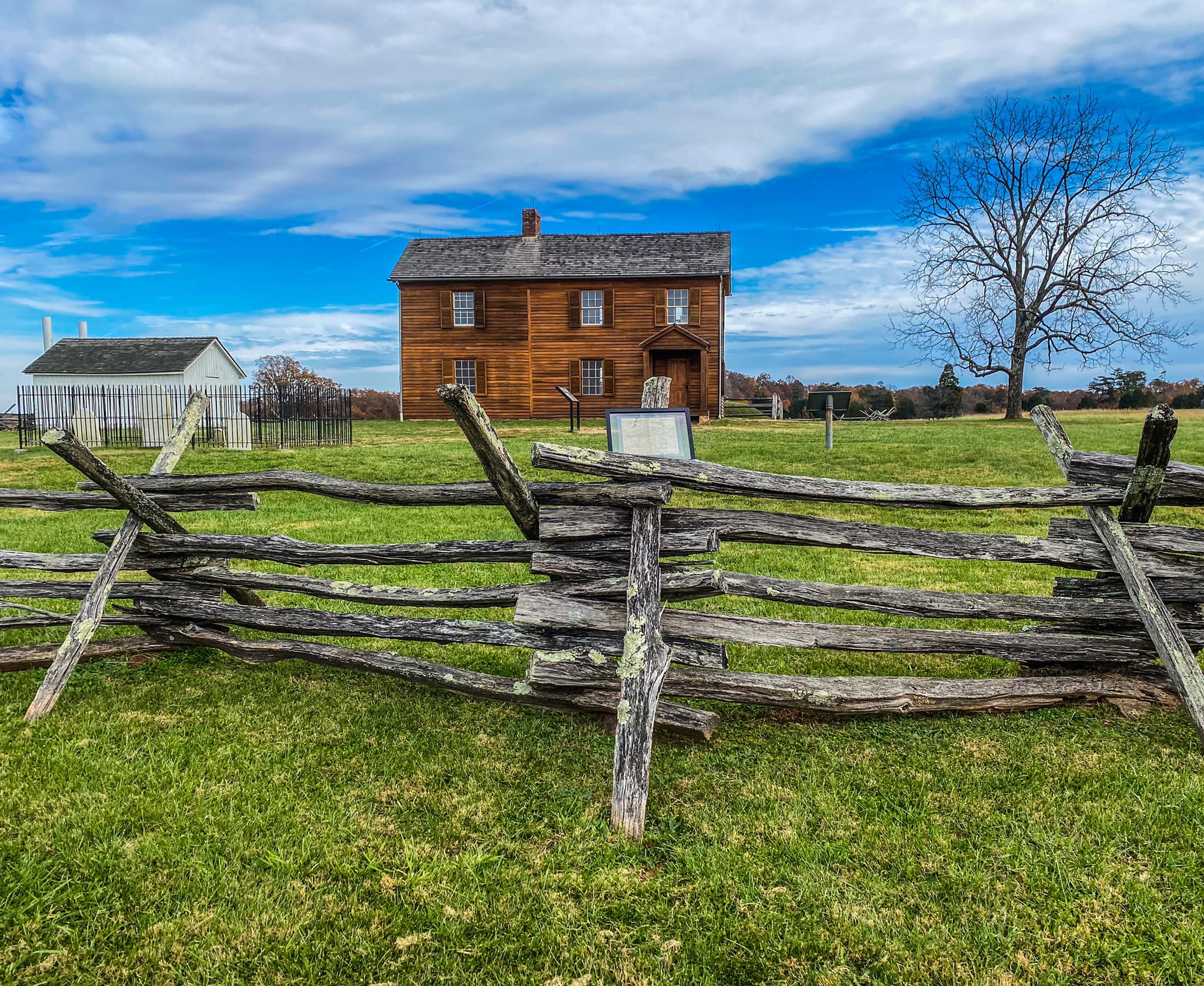
Private James Daniel Moore: A Journey from Rural Roots to the Battlefield

As I strolled through the serene grounds of Oakwood Cemetery in Gastonia, North Carolina, I couldn’t help but pause at the grave of Private James Daniel Moore, whose epitaph seemed to beckon me to delve deeper. Born to the hardworking farming couple of Carroll and Sarah Moore on January 5, 1846 [1], in the rural expanse of Caldwell County, young James, affectionately known as “Jimmie,” [2] had a modest upbringing and limited formal education. However, he more than made up for what he lacked in academic pursuits with his exceptional proficiency in the art of farming, honed through years of toiling alongside his parents in the fields.

Private James Daniel Moore’s grave at Oakwood Cemetery in Gastonia, North Carolina. Photo by @firefightinirish

Jimmie’s boyhood days were a tapestry of joyous outdoor adventures as he reveled in the simple pleasures of swimming, hunting, and fishing, immersing himself in the beauty of nature surrounding his family’s homestead. However the tranquility of his youth was soon shattered by the ominous rumblings of the American Civil War. This conflict would abruptly curtail his carefree pastimes and thrust him into the harsh realities of the battlefield. On July 15, 1861[3], the young Jimmie, driven by a sense of duty and patriotism, enlisted and was mustered into the “F” Company of the 26th North Carolina regiment as a private. He then embarked on a journey that would test his mettle and indelibly shape the course of his life.

Image of Private Moore in uniform provided by American Civil War Forums. “Confederate Veteran James Daniel Moore of Caldwell County, NC : Civil War Remembrances | Other Soldiers, Politicians, & Men.” Accessed June 29, 2024. https://civilwartalk.com/threads/confederate-veteran-james-daniel-moore-of-caldwell-county-nc-civil-war-remembrances.123810/.

Amid the chaos and carnage of the Seven Days Battles, Private Moore stood his ground, his youthful resilience and unwavering resolve on full display. At the pivotal Battle of Gettysburg, where the 26th North Carolina played a crucial role, Jimmie’s bravery and sacrifice would be etched into the annals of history. As part of the Color Guard on the first day’s fight, he found himself among the 85 [4] men wounded, his body bearing the scars of the relentless struggle, a testament to his unwavering dedication to the cause he had sworn to defend. He recounted his story in an 1897 interview for the “The Morning Post” (of Raleigh, NC.):

“I was wounded at the top of the hill (Cemetery Ridge) from which the last line of the enemy had been driven. At that time there was only three of us left, and I was congratulating myself that I was safe, when I was knocked insensible (senseless) by a piece of a shell striking me on the neck, and at the same time a ball passed through my leg.” [5]

He would lay there in the hot July sun for hours, losing blood and suffering from thirst before being rescued by his comrades.

Colonel Henry King Burgwyn Jr. leads the 26th North Carolina at the battle of Gettysburg, July 1, 1863. By Don Troiani.

Moore would recover in the hospital before being sent home on a furlough. While at home, he had to “fight off “bushwhackers,” northern sympathizers, who “prowled like wolves around those loyal valley homes, ready whenever they could rush in to kill and rob the unprotected.[6] He would return to the 26th in time to join them for the Battle of the Wilderness. Here, he was with Lieutenant Colonel Jones when Jones was mortally wounded. Private Moore attended to Lieutenant-Colonel Jones and watched him draw his last breath. Due to the pain of his leg wound, Private Moore was declared unfit for infantry duty and was transferred to Company D, 1st North Carolina Cavalry. He joined them near Petersburg in September 1864.[7]

A friend and fellow member of the 1st wrote:

he (Pvt. Moore) came to the regiment splendidly mounted on a beautiful dark mare, and from that time till the close of the war was with the regiment in the various cavalry battles and skirmishes in which it was engaged, including, among others, Boisseau’s farm. Gravelly Run, Wilson’s farm, Hampton’s cattle raid, and Bellfield.” With this cavalry troop, he served as General Wade Hampton’s courier until the close of the war, doing his full part in the exploits by which Hampton’s cavalry won imperishable fame for Southern arms.[8]

After the war, Moore moved to Winamac, Indiana, to avoid further trouble with the bushwhackers. Here, he would be employed as a store clerk, and he believes he met the man who shot him at Gettysburg.

One evening, while talking to several Union veterans in the store, one, whose name was Hayes, remarked that he was in the Battle of Gettysburg, and from his account of himself and his location and command, I satisfied myself that he was with the troops we fought at Gettysburg on the first day.” [9]

Image of Moore as an older man. from Parker, Hershel. “My Cousin the Author, James Daniel Moore–Female Soldier in Civil War.” My Cousin the Author, James Daniel Moore–Female Soldier in Civil War. Accessed June 29, 2024. https://fragmentsfromawritingdesk.blogspot.com/2016/04/my-cousin-author-james-daniel-moore.html.

They would remain friends during Moore’s time in Indiana. Moore would move back home to North Carolina in February of 1868[10]. Once at home, he would reconnect with Martha Lewis, they would marry on September 25th, 1870; [11] together, they would have eight children. Moore worked for his brother-in-law in Dallas, North Carolina, then moved to Gastonia to establish a cotton mill. He would become the secretary and treasurer of the Modena Cotton Mills. Moore would become one of the most successful businessmen in the county. He would die on August 6, 1905[12], after suffering from a brief illness. Businesses across the county closed, and hundreds attended his funeral. He was laid to rest at Oakwood Cemetery; his epitaph reads,

And I Heard A Voice From Heaven Saying Unto Me, Write Blessed Are The Dead Which Die In The Lord From Henceforth: Yea, Saith The Spirit, That They May Rest From Their Labours; And Their Works Do Follow Them.” [13]

Grave of Private James Daniel Moore. By @firefightinirish

[1] “James Daniel Moore: Free Download, Borrow, and Streaming,” Internet Archive (Gastonia, N.C.: Martha J. Moore, January 1, 1970), https://archive.org/details/jamesdanielmoore00gast/page/n5/mode/2up, Pg. 21.

[2] Ibid. Pg. 15

[3] James Daniel Moore Soldier History. “Historical Data Systems, Inc”, 2024. https://www.civilwardata.com/active/hdsquery.dll?SoldierHistory?C&156013.

[4] ccwinslow394, “James Daniel Moore, Company F 26th NC : The First Day At Gettysburg,” NC Civil War History Center of Fayetteville, March 6, 2019, https://nccivilwarcenter.org/james-daniel-moore-company-f-26th-nc-the-first-day-at-gettysburg/.

[5] Ibid

[6] “James Daniel Moore: Free Download, Borrow, and Streaming,” Internet Archive (Gastonia, N.C.: Martha J. Moore, January 1, 1970), https://archive.org/details/jamesdanielmoore00gast/page/n5/mode/2up, Pg.16.

[7] ccwinslow394, “James Daniel Moore, Company F 26th NC: The First Day At Gettysburg,” NC Civil War History Center of Fayetteville, March 6, 2019, https://nccivilwarcenter.org/james-daniel-moore-company-f-26th-nc-the-first-day-at-gettysburg/.

[8] “James Daniel Moore: Free Download, Borrow, and Streaming,” Internet Archive (Gastonia, N.C.: Martha J. Moore, January 1, 1970), https://archive.org/details/jamesdanielmoore00gast/page/n5/mode/2up, Pg. 16.

[9] ccwinslow394, “James Daniel Moore, Company F 26th NC: The First Day At Gettysburg,” NC Civil War History Center of Fayetteville, March 6, 2019, https://nccivilwarcenter.org/james-daniel-moore-company-f-26th-nc-the-first-day-at-gettysburg/.

[10] Ibid

[11] Ibid. Pg. 26

[12] Ibid.

[13] Ibid. Pg. 61
James McKay Rorty’s Letter to Mathew Murphy: Insights on the American Civil War

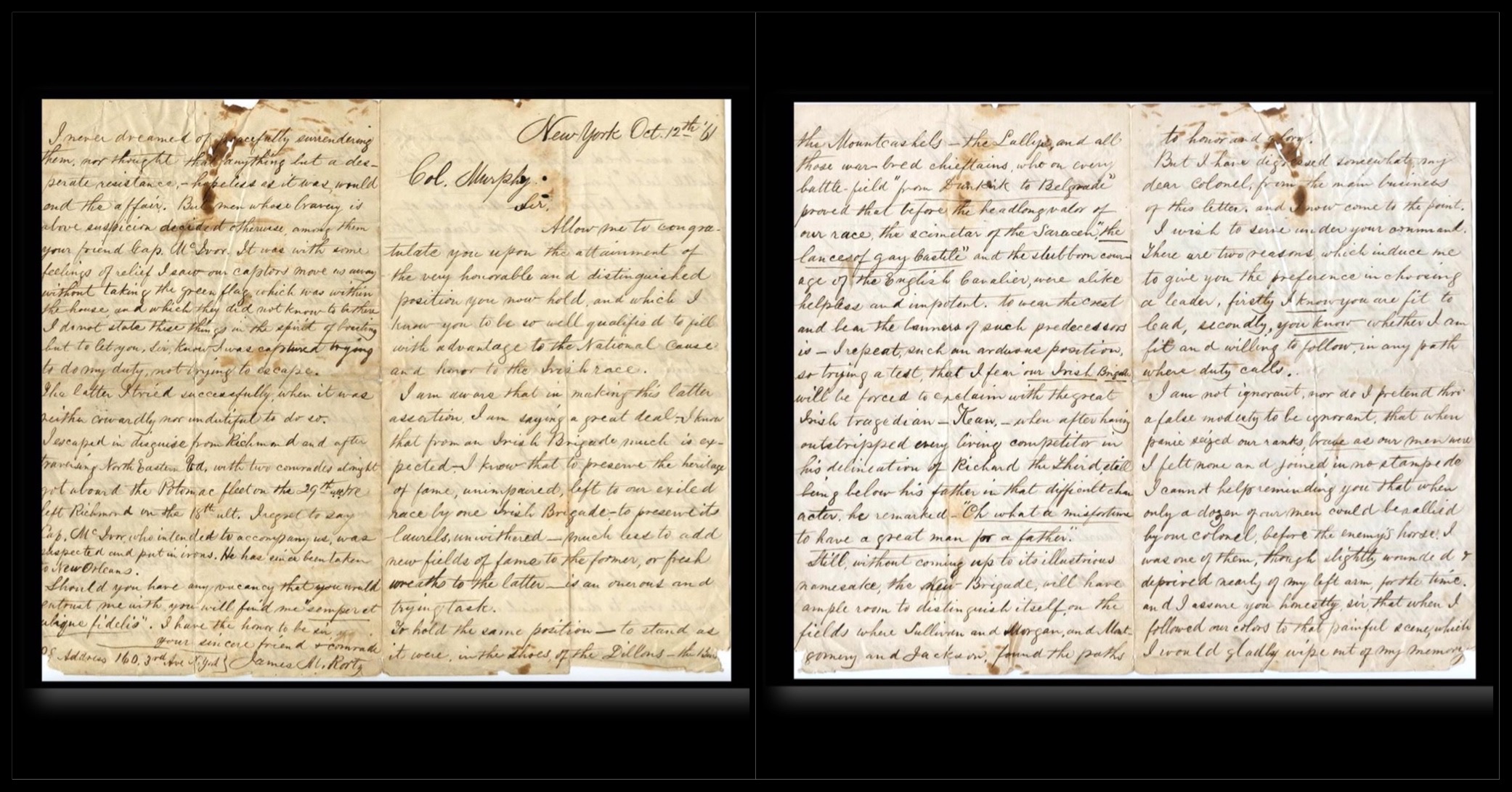
Sometimes one finds an artifact that connects so much history. This letter composed by Captain James McKay Rorty to Colonel Mathew Murphy, is one such artifact. Both men were of Irish birth, and dedicated to the cause of Irish freedom. Sadly they would also share the same fate of being killed in battle during the American Civil War. Here are their stories…..

Letter composed by Captain James McKay Rorty to Colonel Mathew Murphy. From The American Military Heritage Museum Of North Carolina

James McKay Rorty was one of the most active members of the Fenian Brotherhood in the Army of the Potomac.

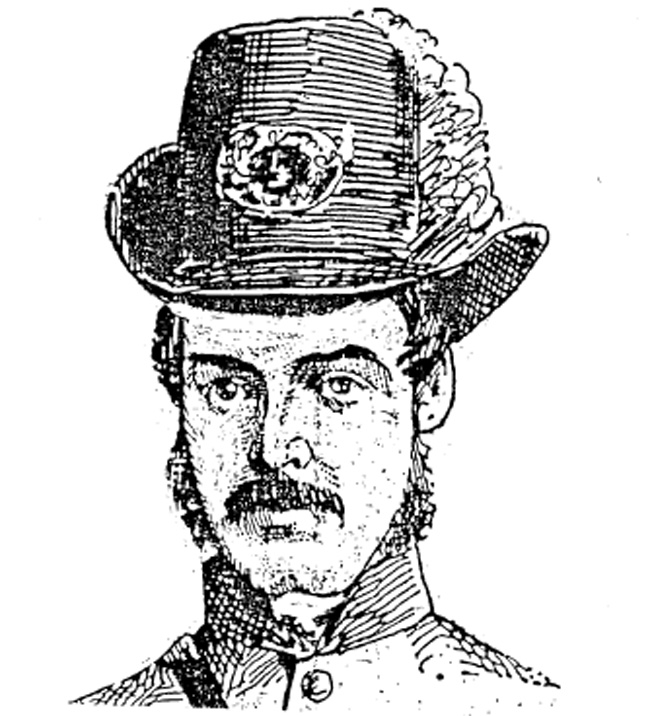
Engraving of Captain James McKay Rorty. From Brian Pohanka: James McKay Rorty, An Appreciation

He was born in Donegal town on 11 June 1837, but immigrated to New York in 1857′ settling in Brooklyn, where he worked as a book canvasser, and then later in dry goods. He was an enlisted man in the Phoenix Brigade, serving in ‘D’ Co, O’Mahony Guards, commanded by Captain Patrick Phelan. In April 1861, Rorty enlisted as a private in ‘G’ Co., 69th N.Y.S.M and was captured on 21 July 1861 at the first battle of Bull Run, his service record notes him as ‘wounded’.

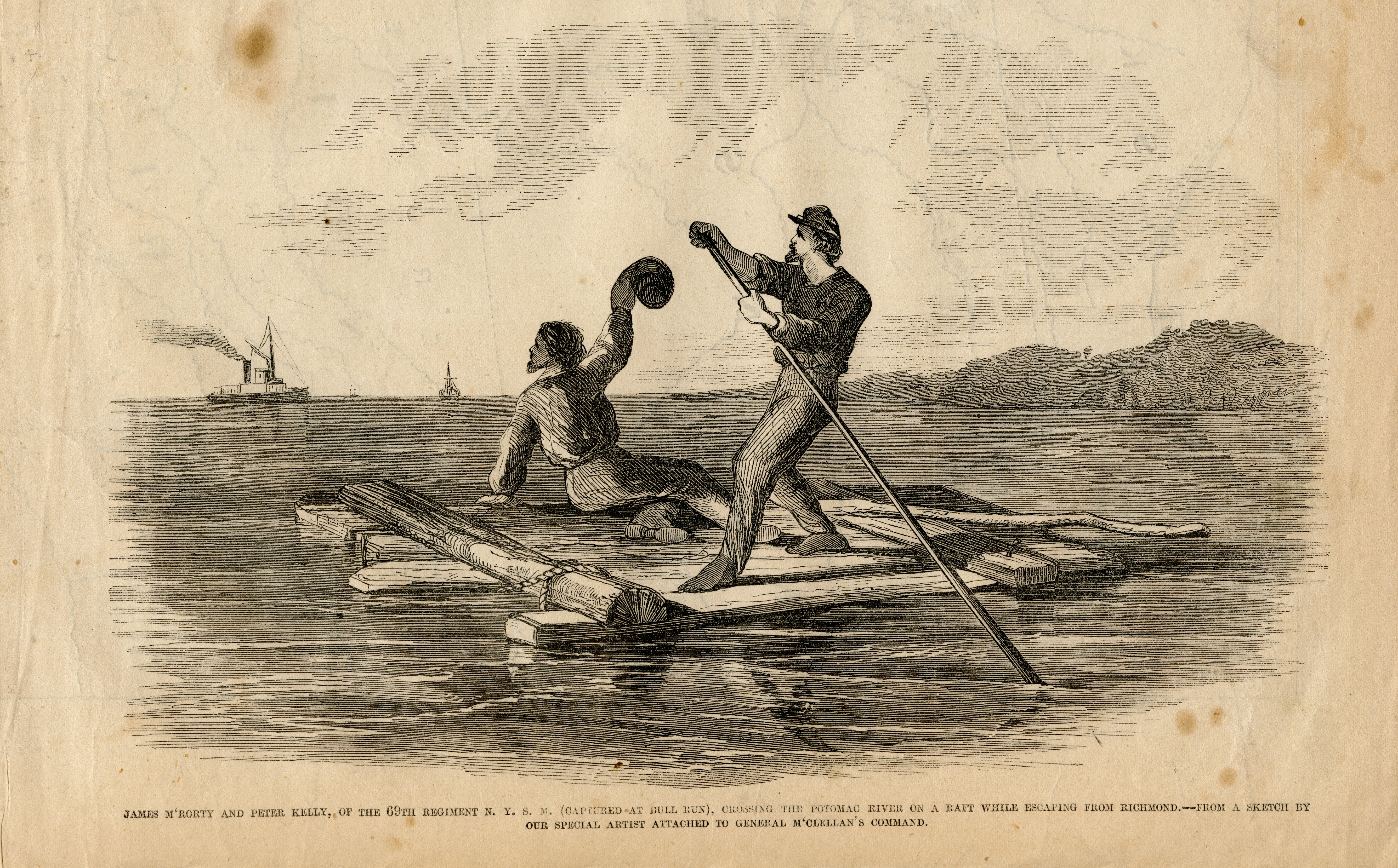
Together with two Irish companions from the 69th, Rorty escaped from Richmond, Virginia, returning to Union lines, on 28 September 1861.

Engraving of Rorty’s Escape from Richmond as featured in Frank Leslie’s Pictorial History of The War of 1861. The Caption reads “JAMES M’RORTY AND PETER KELLY, OF THE 69TH REGIMENT N. Y. S. M. (CAPTURED AT BUIL RUN), CROSSING THE POTOMAC RIVER ON A RAFT WHILE ESCAPING FROM RICHMOND. ~FROM A SKETCH BY OUR SPECIAL ARTIST ATTACHED TO GENERAL M’CLELLAN’S COMMAND. From The American Military Heritage Museum Of North Carolina

Back in New York City, Rorty accepted a lieutenant’s commission in the stillborn 5th Regiment, Irish Brigade. Trained as an artillery officer, Rorty became attached to the 2nd Battalion, New York Light Artillery, but was detached as a divisional staff officer in the Second Corps. He was shot in the arm at the battle of Fredericksburg, 13 December 1862, and his wound was treated by Surgeon Larry Reynolds, 63rd N.Y.

 Rorty was promoted to Acting Ordnance Officer and Ordnance Officer, Second Corps, Army of the Potomac. On the 24 June 1863 he was promoted to captain, 14th Independent Battery, N.Y. Light Artillery. On 3 July 1863 during Pickett’s Charge at the battle of Gettysburg, Rorty was KIA while commanding Battery ‘B’ First N.Y. Light Artillery (14th N.Y.1.B. attached), Second Corps Artillery Reserve. (Near the end of the Confederate barrage, Rorty was observed by men of the 19th Massachusetts, stripped of his hat and tunic, rammer in hand, operating a piece alone, with his gun crew all dead or disabled). (1)  

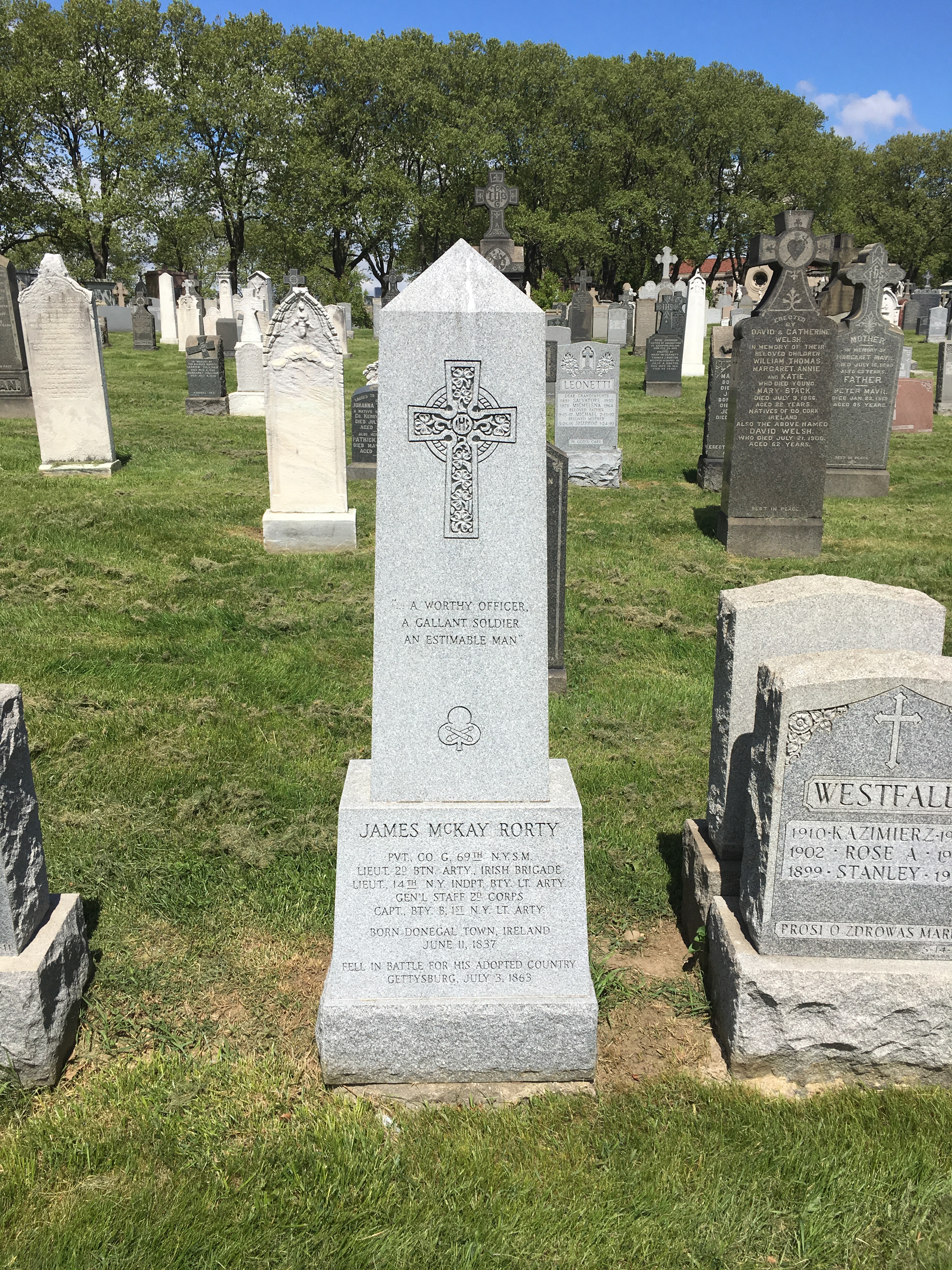
Front of Rorty’s headstone at Calvary Cemetery New York. Photo By @firefightinirish

Later that day James McKay Rorty was buried just north of the place he was killed. With him were buried his Fenian dreams of someday marching through Dublin as a free Irishmen. (2)

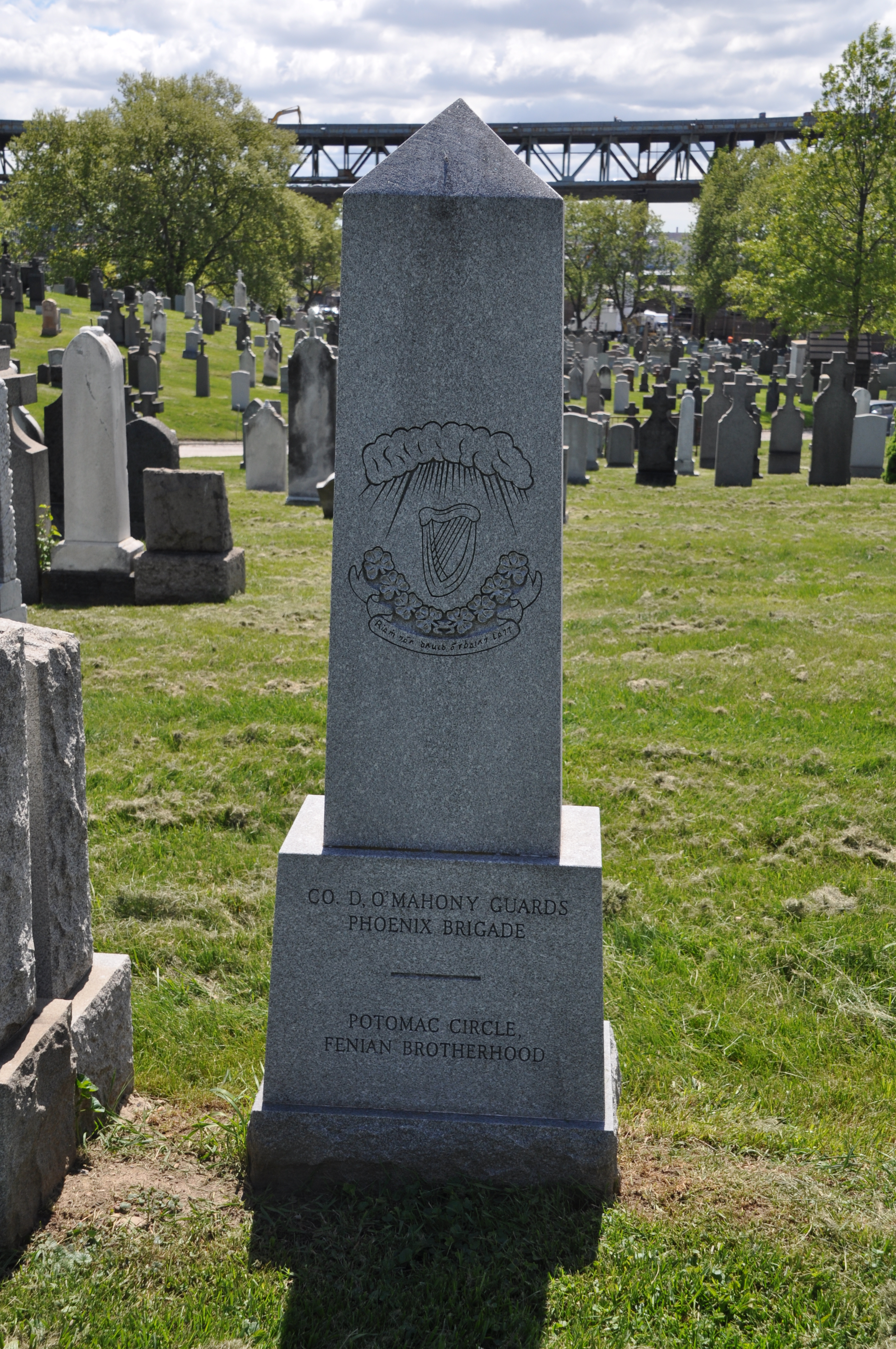
Back of Rorty’s headstone at Calvary Cemetery New York. Photo By @firefightinirish

Two weeks after the battle Richard Rorty, James’ brother, came to Gettysburg and returned his body to New York, where it was laid to rest among many other Irish heroes of the Civil War in Calvary Cemetery. (3)

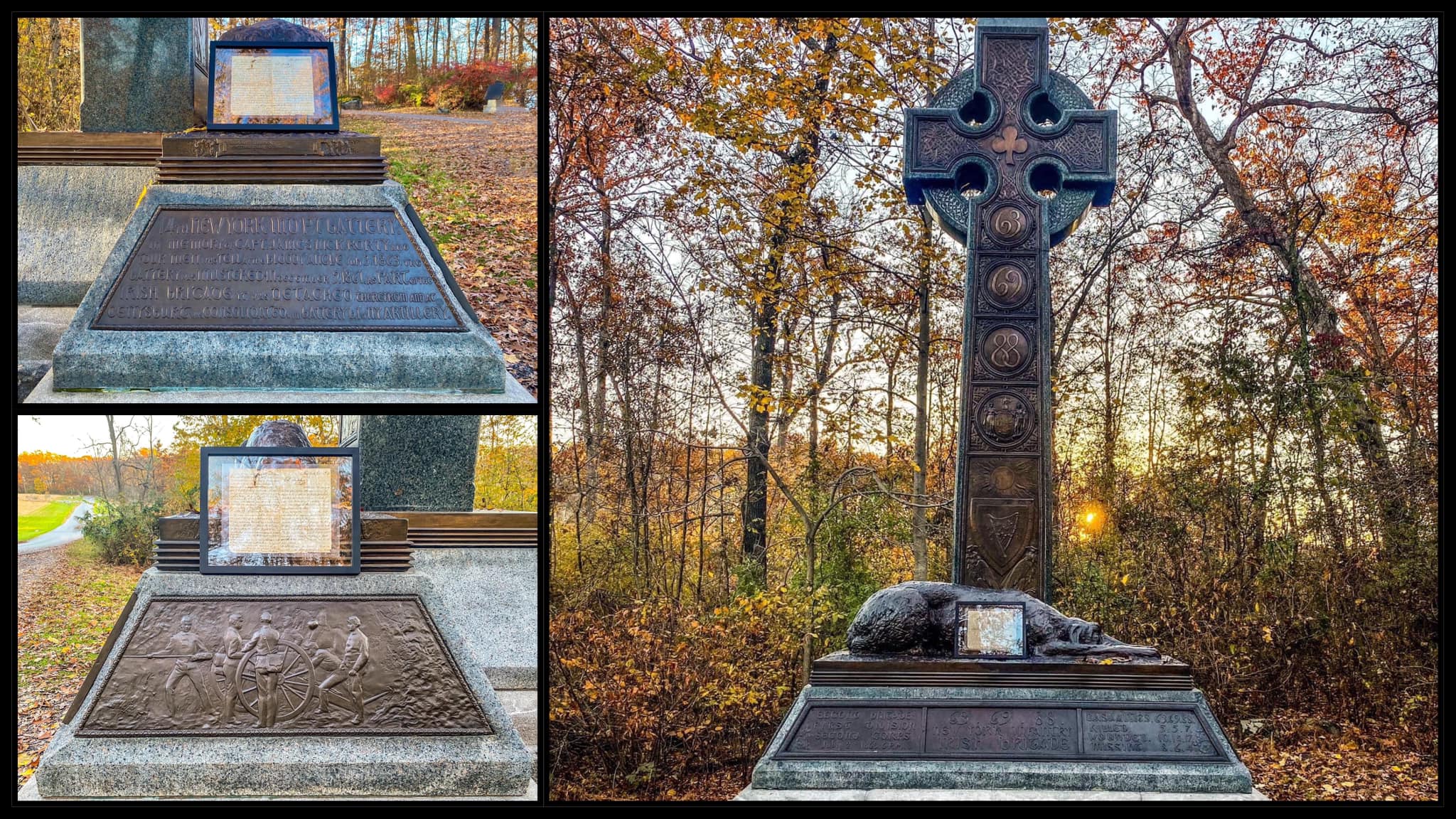
The Irish Brigade monument at Gettysburg has a bronze relief dedicated to Rorty and his men it reads….

Photo of the Irish Brigade Monument At Gettysburg With The Rorty Letter. Image By @firefightinirish

“14th New York Ind’pt Battery. In memory of Capt. James Mc.K. Rorty and four men who fell at the bloody angle July 3, 1863. The battery was mustered in December 9, 1861, as part of the Irish Brigade. it was detached therefrom and at Gettysburg was consolidated with Battery B, 1st N. Y. Artillery.”

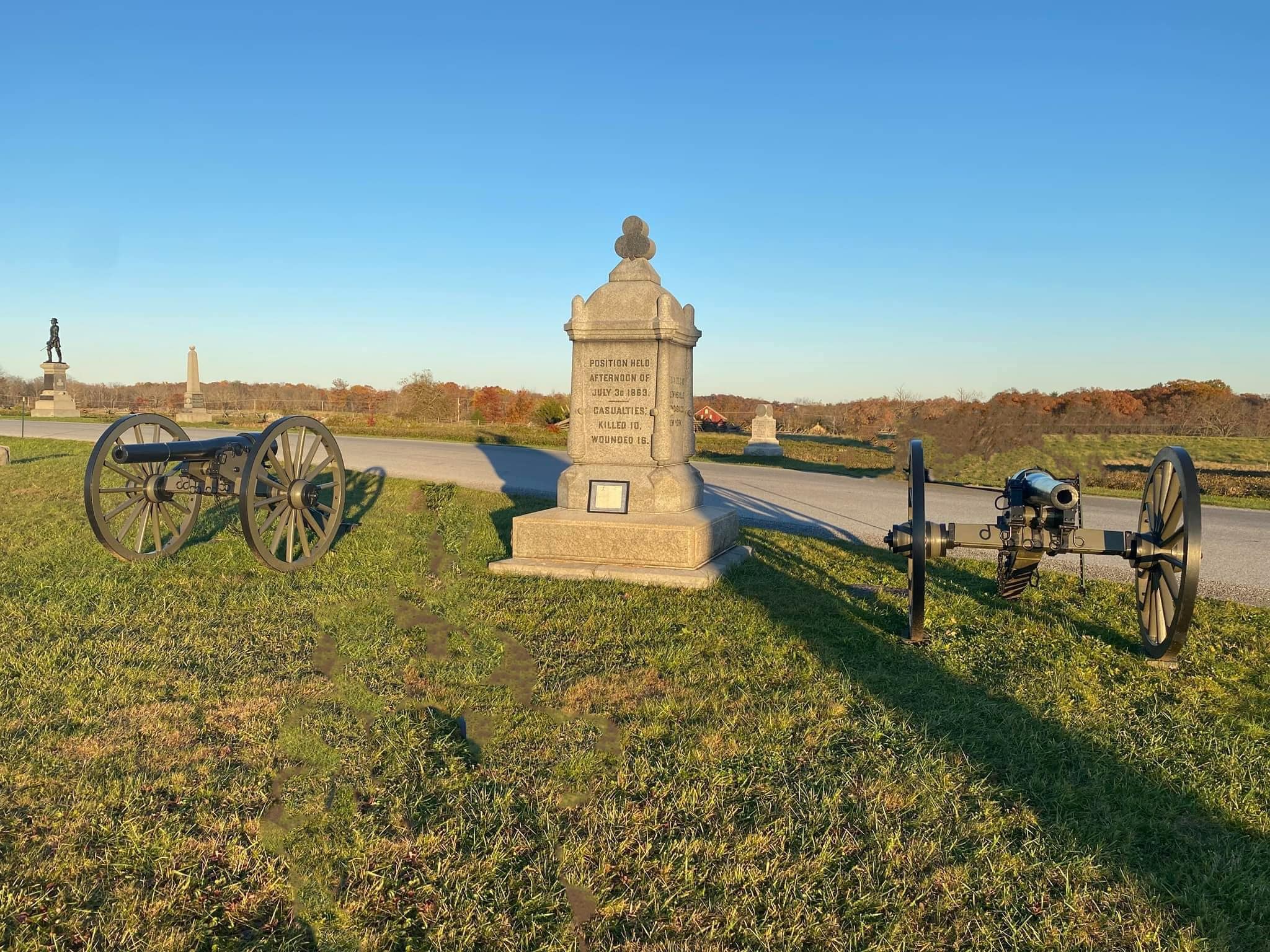
Rorty Letter with the monument to Battery “B” 1st New York Artillery. The Spot where Capt. Rorty fell on July 3rd 1863. Photo By @firefightinirish

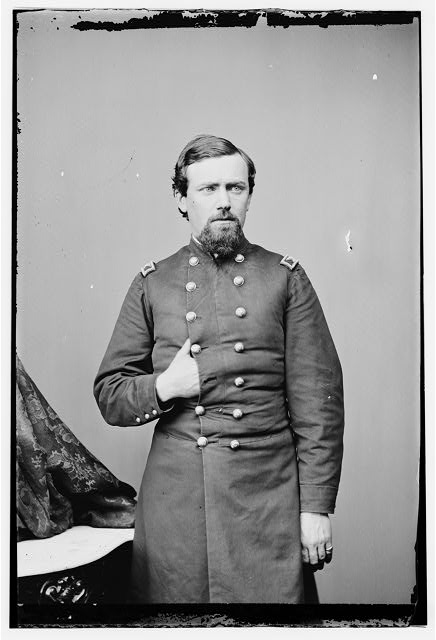
Colonel Mathew Murphy was born in 1840 at Ballysodare, Co. Sligo, and arrived in New York with his parents while still an infant.

 Col. M. Murphy, 182nd N.Y. Infy. From original neg. https://hdl.loc.gov/loc.pnp/cwpb.05498

In civilian life he was a public school principal at P.S. 24, in New York City. He entered the First Regiment, Phoenix Brigade as a private. By 1860, he was captain, ‘A’ Co., Wolfe Tone Guards, Phoenix Brigade, and was promoted to major in 1860. In April 1861, Murphy enlisted as a private in the 69th N.Y.S.M. and served as a lieutenant in ‘G’ Co., 69th N.Y.S.M. at the first battle of Bull Run. During the organization of the Irish Brigade, Colonel Corcoran proposed Murphy as colonel of the 29th Massachusetts, but the unit was never completed. In 1862, during the formation of Corcoran’s Irish Legion, Murphy was elected colonel of the first regiment, later consolidated into the 182nd N.Y. Murphy was head center, Nansemond Circle, the military circle of Corcoran’s Irish Legion. In 1863 at the first national convention of the Fenian Brotherhood, Murphy was named to the central council of five. He was wounded in the arm at Spottslvania Courthouse, Va. and mortally wounded at the battle of Hatcher’s Run, Va. He died on 16 April 1864. (4)

Transcription of the letter,

New York Oct 12th ‘61

Col. Murphy.

Sir,

Allow me to congratulate you upon the attainment of the very honorable and distinguished position you now hold, and which I know you to be so well qualified to fill with advantage to the National Cause and honor to the Irish race.

I am aware that in making this latter assertion, I am saying a great deal. I know that from an Irish Brigade much is expected. I know that to preserve the heritage of fame, unimpaired, left to our exiled race by one Irish Brigade – to preserve its laurels, unwithered – much less to add new fields of fame to the former, or fresh wreaths to the latter – is an onerous and trying task.

To hold the same position – to stand as it were in the shoes of the Dillons – the Bur__, the Mountcashels – the Lallys and all those war bred chieftains, who on every battle-field “from Dunkirk to Belgrade” proved that before the headlong valor of our race, the scimitar of the Saracen “the lances of gay bastele” and the stubborn courage of the English Cavalier, were alike helpless and impotent. To wear the crest and bear the banners of such predecessors is – I repeat, such an arduous position, so trying a test, that I fear our Irish Brigade will be forced to exclaim with the great Irish tragedian – Kean – when after having outstripped every living competitor in his delineation of Richard the Third, still being below his father in that difficult character, he remarked, “Oh what a misfortune to have a great man for a father.”

Still, without coming up to its illustrious namesake, the New Brigade, will have ample room to distinguish itself on the fields where Sullivan and Morgan, and Montgomery and Jackson found the paths to honor and glory.

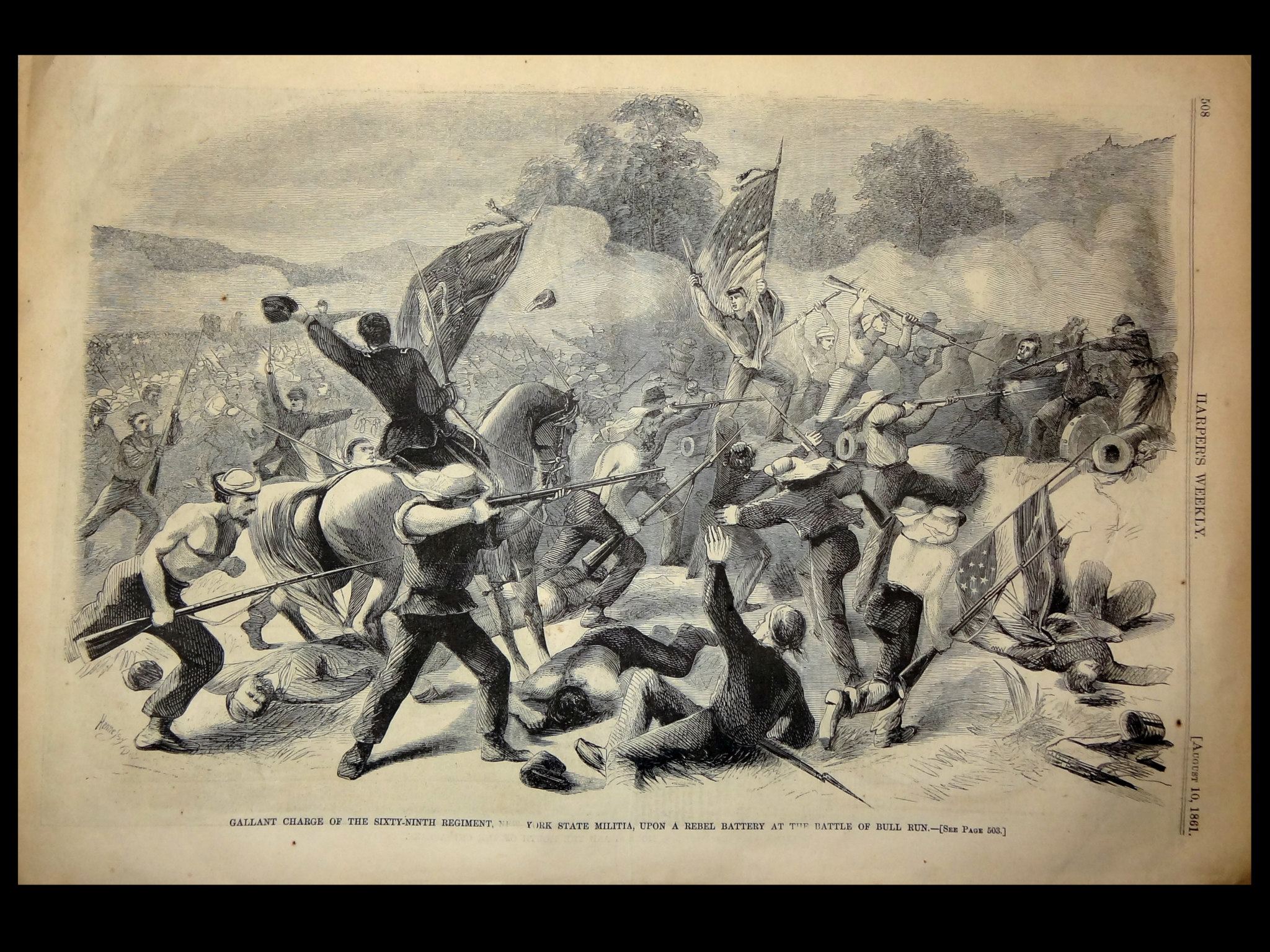
Original Etching From Harper’s Weekly Dated August 10th 1861 Depicting The “Gallant Charge Of The Sixty-Ninth Regiment New York State Militia, Upon A Rebel Battery At The Battle Of Bull Run” From The American Military Heritage Museum Of North Carolina

But I have digressed somewhat, my Dear Colonel, from the main business of this letter, and I now come to the point. I wish to serve under your command. There are two reasons which induce me to give you the preference in choosing a leader. Firstly, I know you are fit to lead, secondly, you know whether I am fit and willing to follow in any path where duty calls.

I am not ignorant, nor do I pretend thru a false modesty to be ignorant, that when panic seized our ranks, brave as our men were, I felt none and joined in no stampede. I cannot help reminding you that when only a dozen of our men could be rallied by our colonel, before the enemy’s horse, I was one of them, though lightly wounded and deprived nearly of my left arm, for the time and I assure you honestly, Sir, that when I followed our colors to that painful scene, which I would gladly wipe out of my memory, I never dreamed of peacefully surrendering them, nor thought that anything but a desperate resistance – hopeless as it was, would end the affair. But men whose bravery is above suspicion decided otherwise, among them your friend Cap. McIvor. It was with some feelings of relief I saw our captors move us away without taking the green flag, which was within the house, and which they did not know to be there. I do not state these things in the spirit of boasting, but to let you, Sir, know I was captured trying to do my duty, not trying to escape.

Letter at Manassas National Battlefield Park Near Where The Aforementioned Action Took Place, Photo By @firefightinirish

The latter I tried successfully, when it was neither cowardly nor undutiful to do so. I escaped in disguise from Richmond and after traversing North Eastern Va., with two comrades at night, got aboard the Potomac fleet on the 29th inst, left Richmond on the 18th ult. I regret to say Cap. McIvor who intended to accompany us, was suspected and put in irons. He has since been taken to New Orleans.

Should you have any vacancy that you would entrust me with you will find me “semper et ubiqus fidelis.” I have the honor to be, Sir, your sincere friend and comrade,

James M. Rorty

PS Address 160, 3rd Ave N. York

1) Kane, Michael H. 2002. ‘American Soldiers in Ireland, 1865-67’ in The Irish Sword: The Journal of the Military History Society of Ireland, Vol. 23, No. 91, pp. 136-137

2) For Erin and America – James McKay Rorty AN IRISH HERO OF THE BATTLE OF GETTYSBURG, The Wild Geese, January 19, 2013 https://thewildgeese.irish/profiles/blogs/for-erin-and-america-james-mckay-rorty

3) Ibid

4) Kane, Michael H. 2002. ‘American Soldiers in Ireland, 1865-67’ in The Irish Sword: The Journal of the Military History Society of Ireland, Vol. 23, No. 91, pp. 135-136