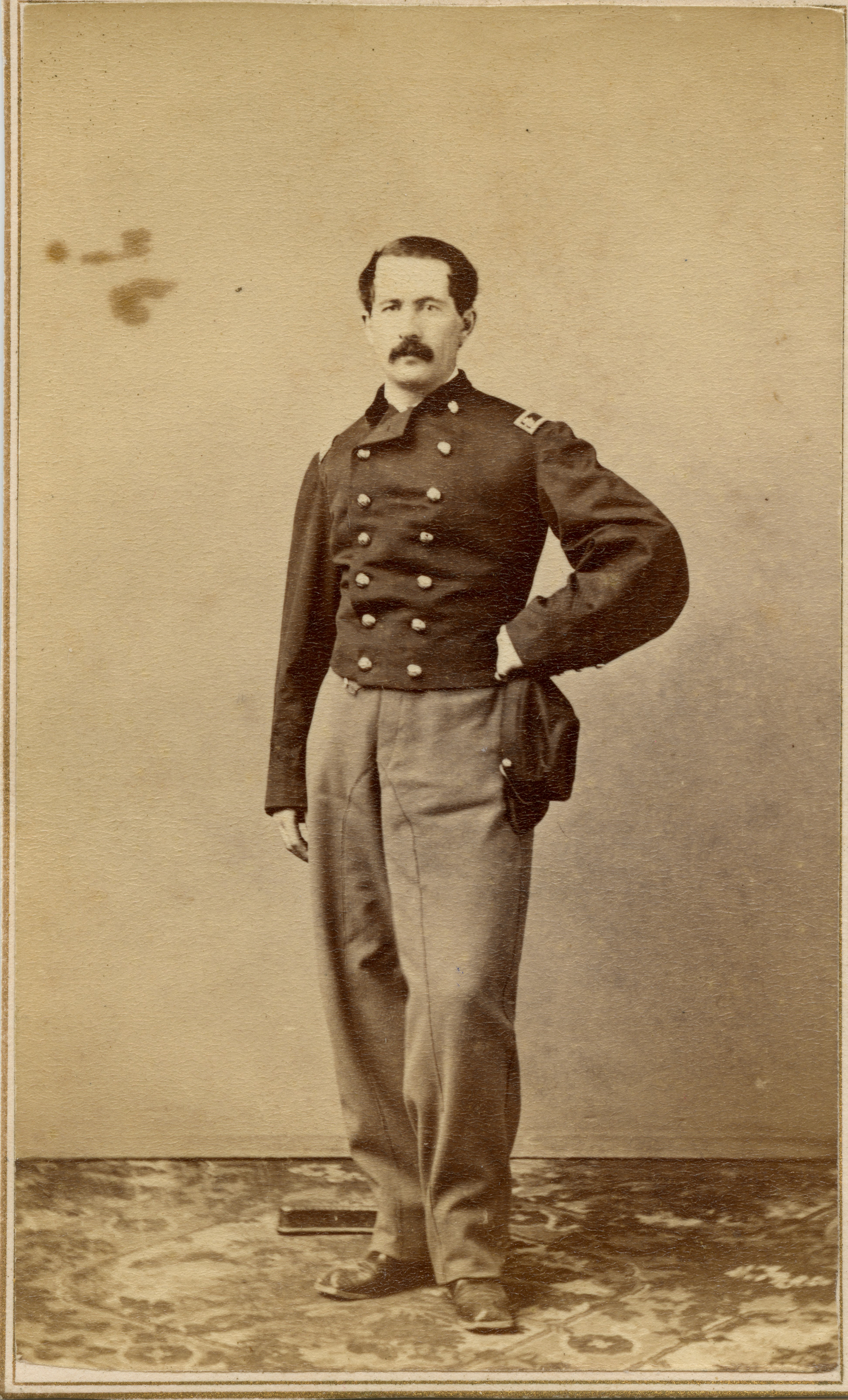
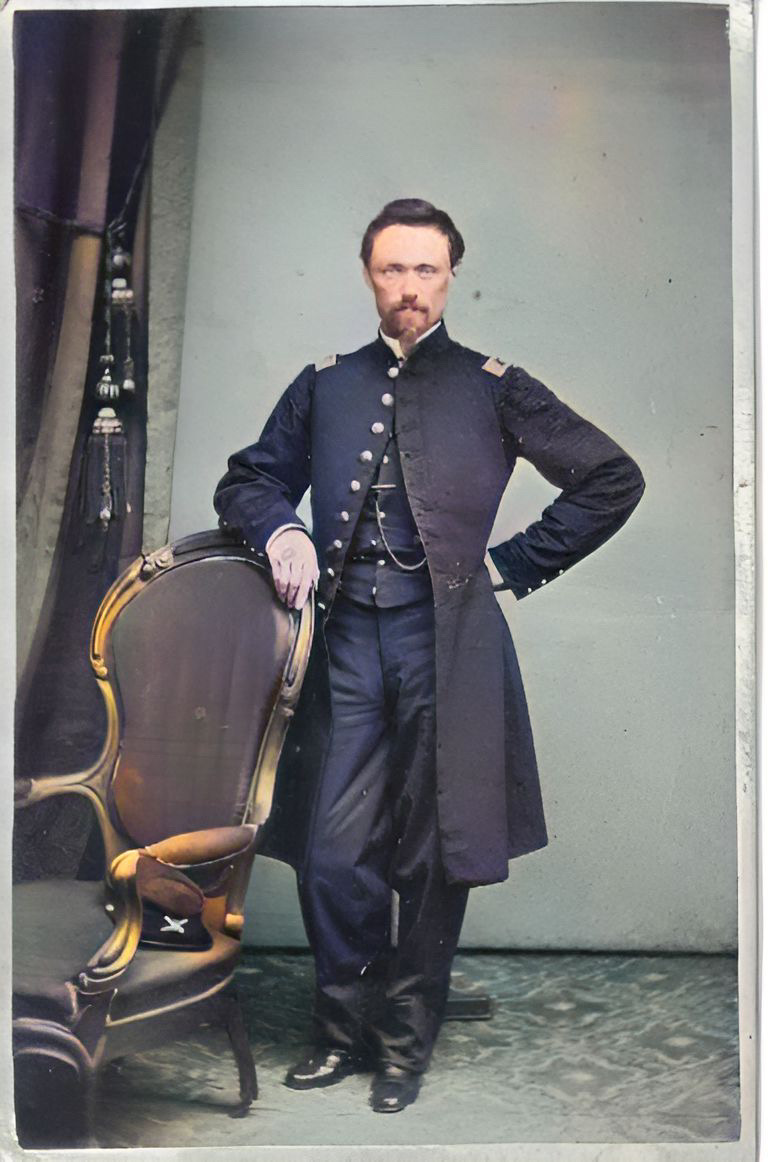
Major Jeremiah Andrew Sullivan was an Irish American hero of the Civil War. His distinguished career as an officer in the Union Army earned him a legacy as an American patriot and loyal son of his Irish roots. Jeremiah A. Sullivan was born near Killarney Ireland around 1839[1]. Jeremiah, his parents and two brothers emigrated from Ireland during the famine.
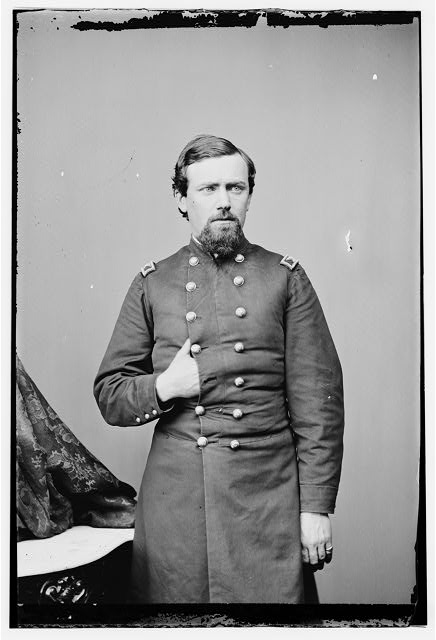
Carte de visite of Major Jeremiah Andrew Sullivan. From: The American Military Heritage Museum Of North Carolina
They eventually settled in Rochester New York. Before the war Jeremiah lived in Brooklyn and worked for Philips & Co. He would later move back to Rochester. Jeremiah was the chief provider for his family, since his father was debilitated by age and an old work injury. After the war broke out, Sullivan enlisted on April 25th, 1861, his brother Cornelius would enlist the same day. Both men would become members of the 13th New York infantry (Their brother Patrick would later serve in the 140th NY). Jeremiah would be commissioned a 2nd Lieutenant in “I” Co. on May 14th, 1861.[2] Sullivan and the 13th were engaged at first Bull Run. Here they “crossed Bull Run creek, about 10 a. m. (at this time the rations were exhausted), and immediately engaged the enemy in a heavy force until 5 p. m. when the whole line fell back on the fortifications near Washington. The strength of the regiment in the first battle of Bull Run, was 600, loss 12 killed, 26 wounded, 27 missing”[3].
They would continue to fight at Yorktown, Gaines’ Mill, Savage’s Station, Malvern Hill, 2nd Bull Run, and Antietam. Here “the Thirteenth were held in the reserve under General Porter. At nightfall on the 18th were deployed as pickets in front of General Burnside’s position—the next morning advancing as skirmishers through Shepardstown, taking some prisoners from the rear guard of the enemy”[4]. At Fredericksburg, Sullivan and the thirteenth began “Coming under fire immediately on reaching Fredericksburg bank of the river, we were advanced through the north end of the town, across the open ground beyond the railroad, taking our position to the extreme front, our line facing the stone wall and rifle pits occupied by the enemy, and within close range of their artillery on the immediate heights beyond and to the right and left. The men were obliged, from the exposure of the position, to fire lying down, thus taking advantage of a slight rise of ground running parallel to the front of our line. The fire of the enemy was very severe, both from artillery and musketry, especially during our advance to position. The Thirteenth were engaged receiving and returning fire until nightfall, and remaining in their position that night and the day following, and were only relieved about 10 o’clock p. m. Our loss was quite severe, out of 298 officers and men five were killed, sixty-three wounded, and seventeen taken prisoners”[5].
Currier & Ives. Battle of Fredericksburg, Va. Dec 13th. United States, 1862. [New York: Currier & Ives] Photograph. https://www.loc.gov/item/90709058/.
They would continue to Chancellorsville before the unit was mustered out of service. Jeremiah Andrew Sullivan would later be commissioned a Major into the Field & Staff of the 1st New York Veteran Cavalry.
Major Sullivan was with them at; Upperville, Snicker’s Ford, Snicker’s Gap, and Snickersville, before being “killed by a shot form the enemy at Cabletown”[6] West Virginia.
Since Major Sullivan’s income was the backbone of the family his mother would apply for and receive a mothers pension of $25 a month, the equivalent of $464.92 in 2023. Jeremiah’s brothers would both survive the war Cornelius however, was wounded during 2nd Bull Run. This family and its sacrifice give new meaning to the phrase “Fighting Irish”.
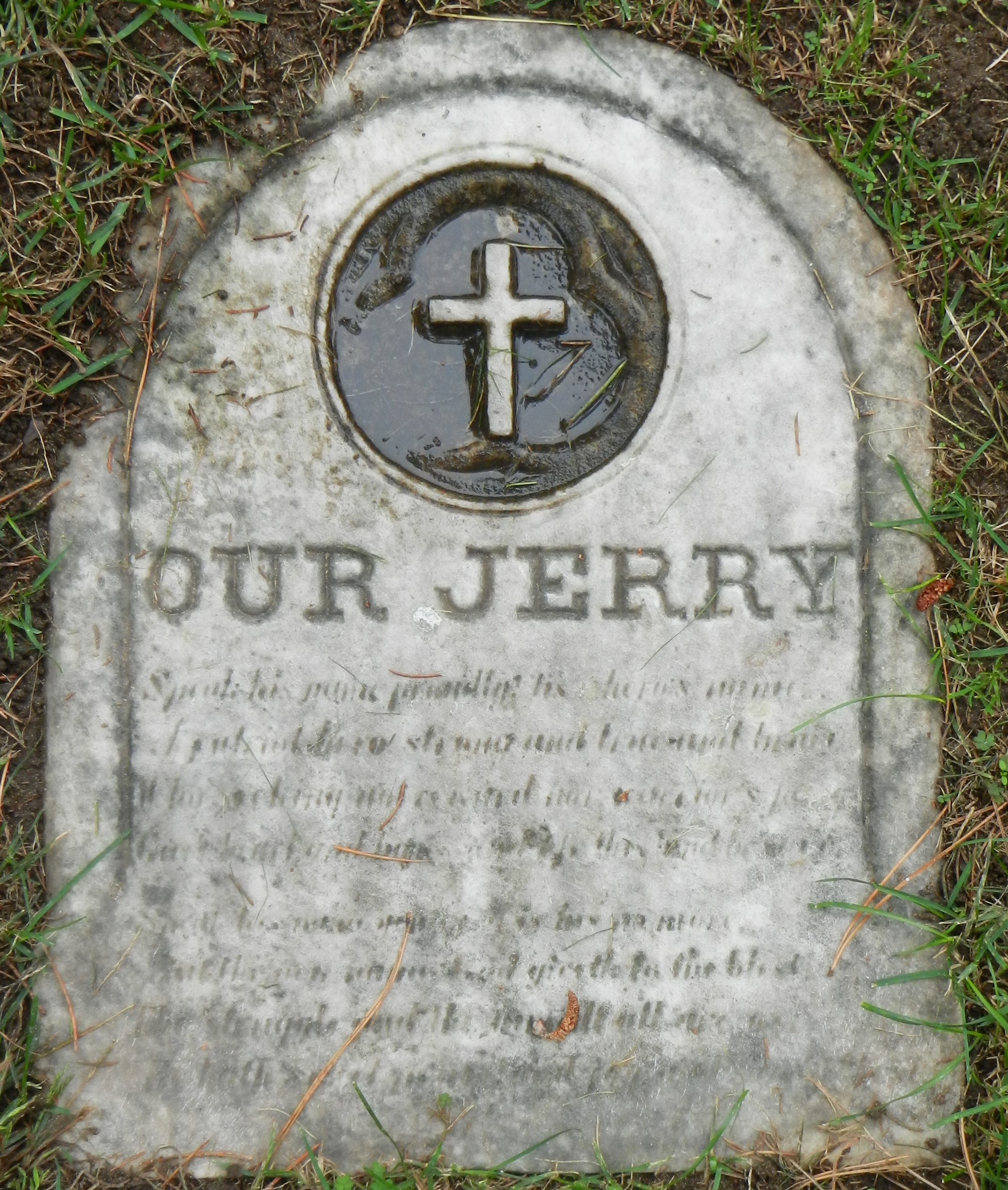
Grave of Major Jeremiah Andrew Sullivan photo by Judy Williams on 5 Oct 2013
[1] “1850 United States Federal Census for Jeremiah Sullivan.” Ancestry. Accessed November 23, 2023. https://tinyurl.com/4jpd2eya.
Green Hill Cemetery in Greensboro North Carolina, is a beautiful place with many interesting stories. One such story is that of Sir Douglas F. Dickerson. He was born to Raymond and Blanche Dickerson in Greenville South Carolina on March 5th, 1920.[1] Douglas was described as 6’ tall, 165 pounds, with brown hair, brown eyes, and a light complexion. He would attend college at North Carolina State College of Agriculture and Engineering (now North Carolina State University) in Raleigh, N.C.. Here he would play quarterback for the football team and outfield in baseball. Dickerson registered for the draft on July 1st, 1941.[2]
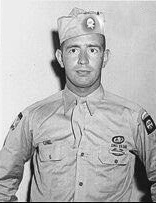
Douglas F. Dickerson 82nd Airborne.
During his Junior year at State the Japanese bombed Pearl Harbor, and Douglas’s number was called. Dickerson was given a deferment to finish out the semester and would become part of the 302nd Ordnance Co. made up of local boys. He was with them at Fort Jackson, and Fort Lewis. While Douglass was at Fort Lewis his brother who was an officer in the 82nd Airborne, personally recommend Douglass for the outfit to then Col. James Gavin. Gavin would call Douglass personally to ask him to join the Paratroopers. Dickerson agreed and his orders would arrive in a week. As Douglass would say later in an interview “he (Gavin) didn’t mess around.”[3] Dickerson would take a train from DC to Fort Benning Georgia and reported for Airborne training. He would later be sent to Camp Claiborne, LA. for commando training. Dickerson would finish his Airborne training at Fort Bragg. Here he was made part of a thirty man “hit squad”, they would be split up in teams of three and placed in each company of the 505th Parachute Infantry Regiment 82nd Airborne. The men of the hit squad were sworn to secrecy and finished their training as “ordinary” paratroopers. Before being sent oversees Douglas would don his jumpsuit and marry Edna Lee Kearns.
His first oversees station was in Tunisia. Douglas’s hit squad would be the first men to jump into Sicily and he was the first man out the door. Their objective was to take an airfield. They killed 108 men, destroyed the barracks, and all German aircraft on the field.[4] Douglass and the hit squad would later meet up with the rest of the 82nd. They would become engaged at Biazza Ridge, where he was almost run down by a German tank. During Dickerson’s 14th day of combat in Sicily he was wounded when a sniper’s bullet hit a grenade in his pocket. The grenade exploded outward embedding the top half in his leg. Dickerson pulled it out by the pin with a pen taking a large chink of skin with it. He bandaged the wound and remained on the line for three more days before being evacuated. Fifty years later a Doctor would find that Dickerson still had that sniper’s bullet in his leg. Returning to action Dickerson and his commandos would jump into Italy again, this time he would land on a cow. Their mission was to destroy a group of German trucks, they would only find a single vehicle and promptly blew up its engine. On the way to extraction they encountered two German patrols of 25 men each and killed them all.[5]
His next combat jump was during the Normandy invasion where he was first out the door as well, this time he landed on an outhouse. Their objective was a major communications unit near Cherbourg. They would destroy it in forty minutes and head to Sainte-Mère-Église. He reached Sainte-Mère-Église in time to see the famous Paratrooper on the church steeple and the town ablaze.[6] Dickerson would be wounded again in the leg, he patched it up and spent 33 straight days on the line during the Normandy Campaign.
Dickerson would then jump into Holland as part of Operation Market Garden. Their objective was Groesbeek where they went house to house to root out the Germans. They then went to Nijmegen to support the other men of the 82nd in taking the bridge. He would spend two months on the line in Holland. Dickerson was then sent to France to a little R & R, however this would only last three days as the Bulge had begun. He and his commando unit were loaded into trucks and sent to St. Vith in order to help free surrounded allied troops. They would use bazookas to hold off German armor, and successfully rescued their beleaguered comrades.
Dickerson would be sent to the Siegfried Line. It was shortly after crossing that he had his most traumatic experience of the war. Dickerson was showing a young replacement where to position his gun when a mortar round exploded near them. The round blew off the young replacements legs, the young man was screaming, and Dickerson held him till the medics had to pry them apart. Douglass then went behind a tree and wept.[7] According to a 1999 interview he still had flashbacks to this incident.
After the fighting around the Siegfried Line Dickerson, and the four remaining original members of the “hit squad” met with General Gavin. Gavin would send them to the rear for a physical and mental checkup. During the exam the Doctors fund that Dickerson had a bleeding ulcer. He would receive a medical discharge in March of 1945.
Dickerson would spend 371 days in combat receiving two Bronze Stars, two Purple Hearts, the Expert Infantry Badge, Triple Combat Infantryman Badge, and the Presidential Unit Citation. He would also receive Croix de Guerre medals from both France and Belgium.
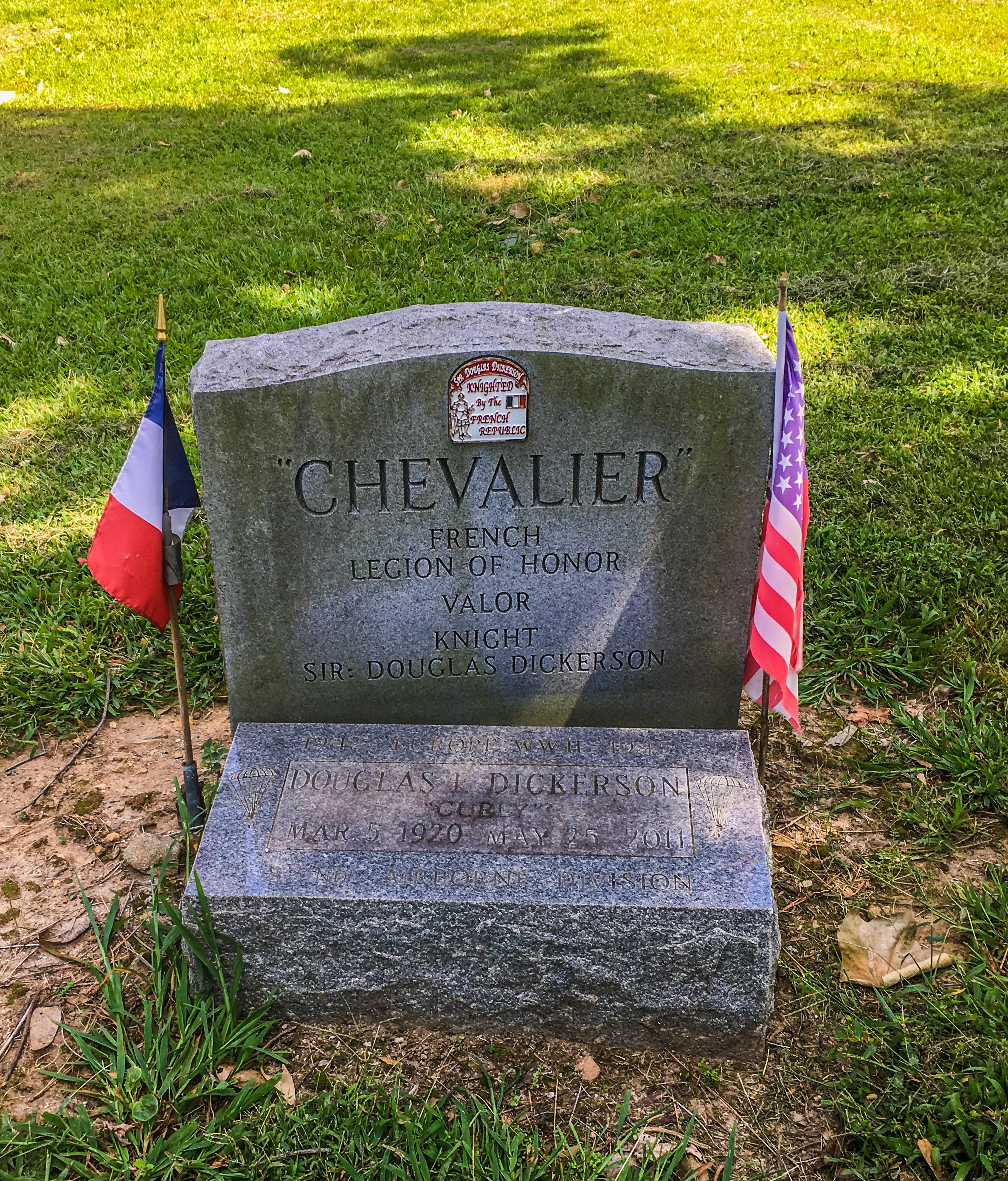
Grave of Sir Douglas F. Dickerson at Green Hill Cemetery. Photo By @firefightinirish
After the war Dickerson would return to Greensboro and resume his education at his education at Guilford College and then High Point College. He graduated in 1949 with a teaching certificate in Social Studies and Physical Education.[8] He was briefly employed as a teacher before working for the United States Postal Service. Dickerson would also coach High School football ant Little League Baseball. He would enjoy showing people his memorabilia gathered during his time overseas as well as items donated by other veterans and their families. The items were displayed in a “mini museum” in his pool house. In 1998 Dickerson published his wartime memoirs, “Doing My Duty”, in which he vividly described his wartime exploits.
In 2006 The French Legion of Honor gave Dickerson the rank of “Chevalier” or “Knight”. Douglas F. Dickerson died
Grave of Sir Douglas F. Dickerson at Green Hill Cemetery. Photo By @firefightinirish
on May 25, 2011 in Greensboro, N.C., and was buried in Green Hill Cemetery in the same city.
[3] Harrington, Sion, and John Durham. “Douglas F. Dickerson Interview, 1999-12-20 [MilColl OH 228] : Free Borrow & Streaming.” Internet Archive, December 20, 1999. https://archive.org/details/MilCollOH228Dickerson.
Sometimes one finds an artifact that connects so much history. This letter composed by Captain James McKay Rorty to Colonel Mathew Murphy, is one such artifact. Both men were of Irish birth, and dedicated to the cause of Irish freedom. Sadly they would also share the same fate of being killed in battle during the American Civil War. Here are their stories…..
James McKay Rorty was one of the most active members of the Fenian Brotherhood in the Army of the Potomac.
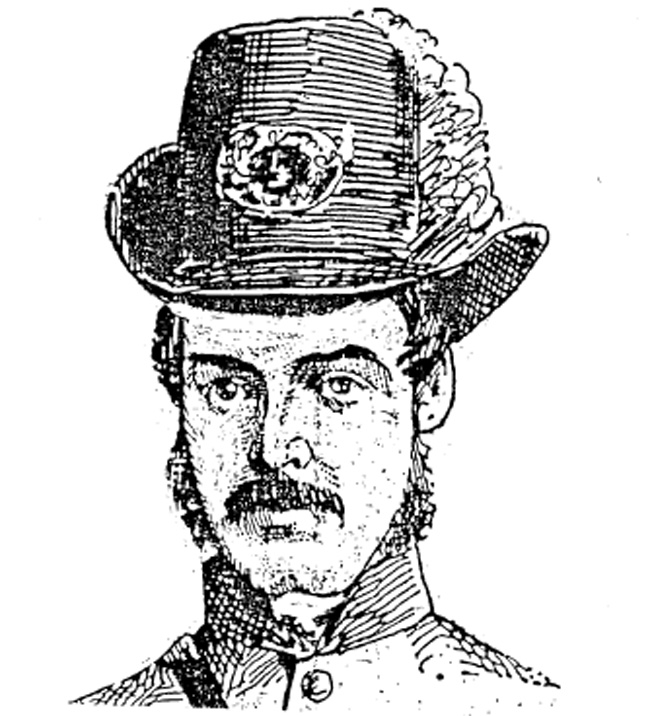
Engraving of Captain James McKay Rorty. From Brian Pohanka: James McKay Rorty, An Appreciation
He was born in Donegal town on 11 June 1837, but immigrated to New York in 1857′ settling in Brooklyn, where he worked as a book canvasser, and then later in dry goods. He was an enlisted man in the Phoenix Brigade, serving in ‘D’ Co, O’Mahony Guards, commanded by Captain Patrick Phelan. In April 1861, Rorty enlisted as a private in ‘G’ Co., 69th N.Y.S.M and was captured on 21 July 1861 at the first battle of Bull Run, his service record notes him as ‘wounded’.
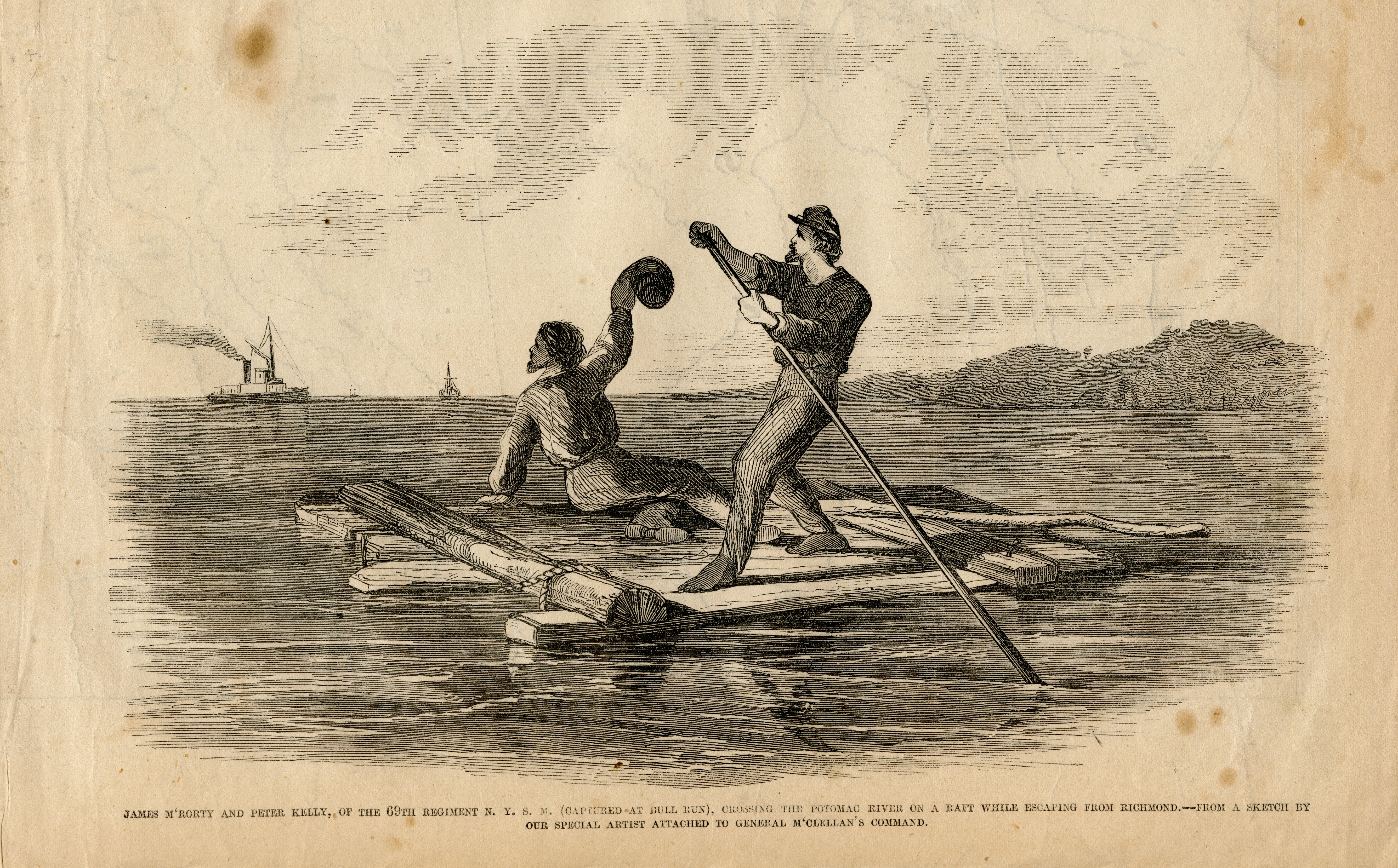
Together with two Irish companions from the 69th, Rorty escaped from Richmond, Virginia, returning to Union lines, on 28 September 1861.
Engraving of Rorty’s Escape from Richmond as featured in Frank Leslie’s Pictorial History of The War of 1861. The Caption reads “JAMES M’RORTY AND PETER KELLY, OF THE 69TH REGIMENT N. Y. S. M. (CAPTURED AT BUIL RUN), CROSSING THE POTOMAC RIVER ON A RAFT WHILE ESCAPING FROM RICHMOND. ~FROM A SKETCH BY OUR SPECIAL ARTIST ATTACHED TO GENERAL M’CLELLAN’S COMMAND.“ From The American Military Heritage Museum Of North Carolina
Back in New York City, Rorty accepted a lieutenant’s commission in the stillborn 5th Regiment, Irish Brigade. Trained as an artillery officer, Rorty became attached to the 2nd Battalion, New York Light Artillery, but was detached as a divisional staff officer in the Second Corps. He was shot in the arm at the battle of Fredericksburg, 13 December 1862, and his wound was treated by Surgeon Larry Reynolds, 63rd N.Y.
Rorty was promoted to Acting Ordnance Officer and Ordnance Officer, Second Corps, Army of the Potomac. On the 24 June 1863 he was promoted to captain, 14th Independent Battery, N.Y. Light Artillery. On 3 July 1863 during Pickett’s Charge at the battle of Gettysburg, Rorty was KIA while commanding Battery ‘B’ First N.Y. Light Artillery (14th N.Y.1.B. attached), Second Corps Artillery Reserve. (Near the end of the Confederate barrage, Rorty was observed by men of the 19th Massachusetts, stripped of his hat and tunic, rammer in hand, operating a piece alone, with his gun crew all dead or disabled). (1)
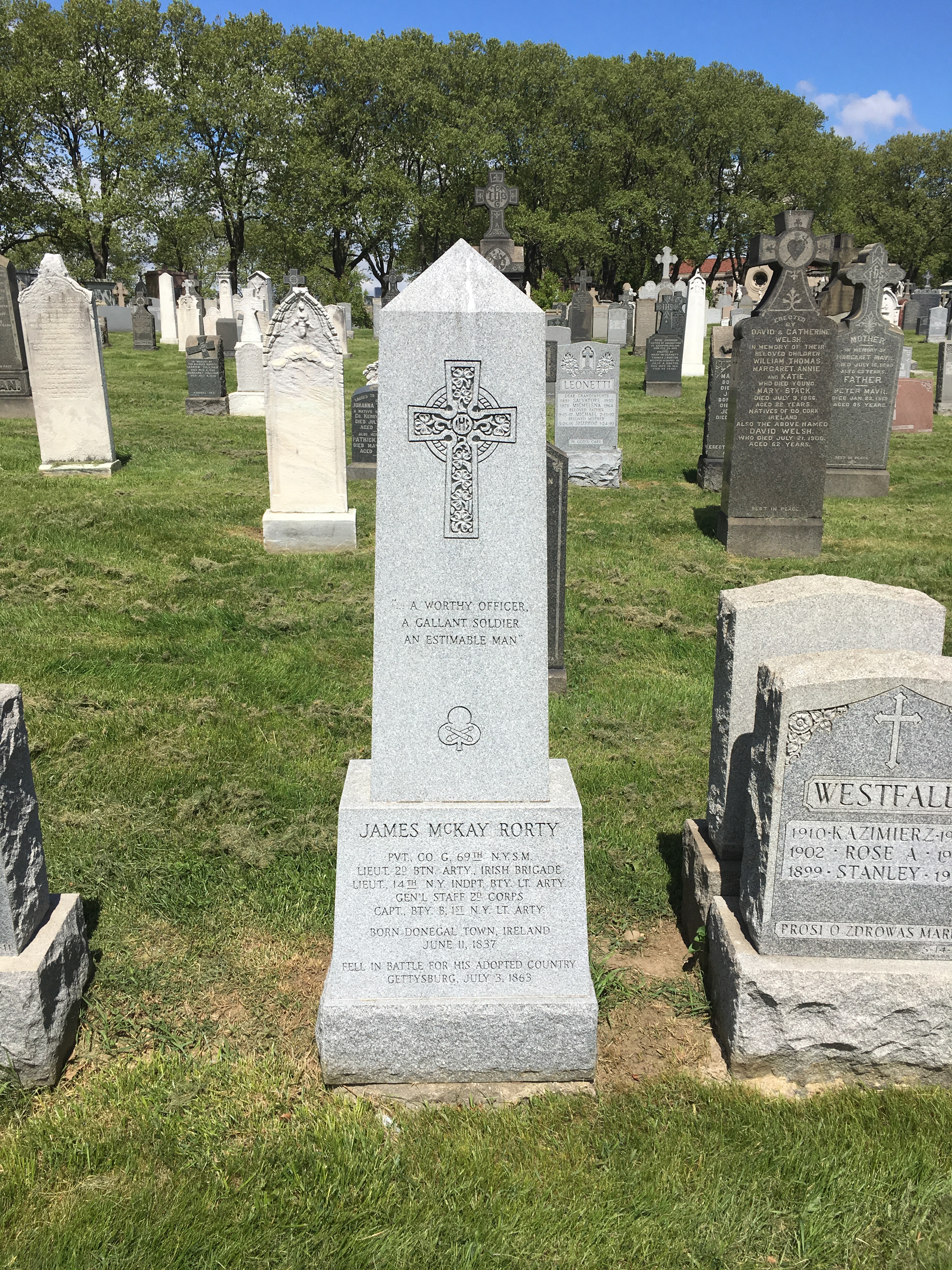
Front of Rorty’s headstone at Calvary Cemetery New York. Photo By @firefightinirish
Later that day James McKay Rorty was buried just north of the place he was killed. With him were buried his Fenian dreams of someday marching through Dublin as a free Irishmen. (2)
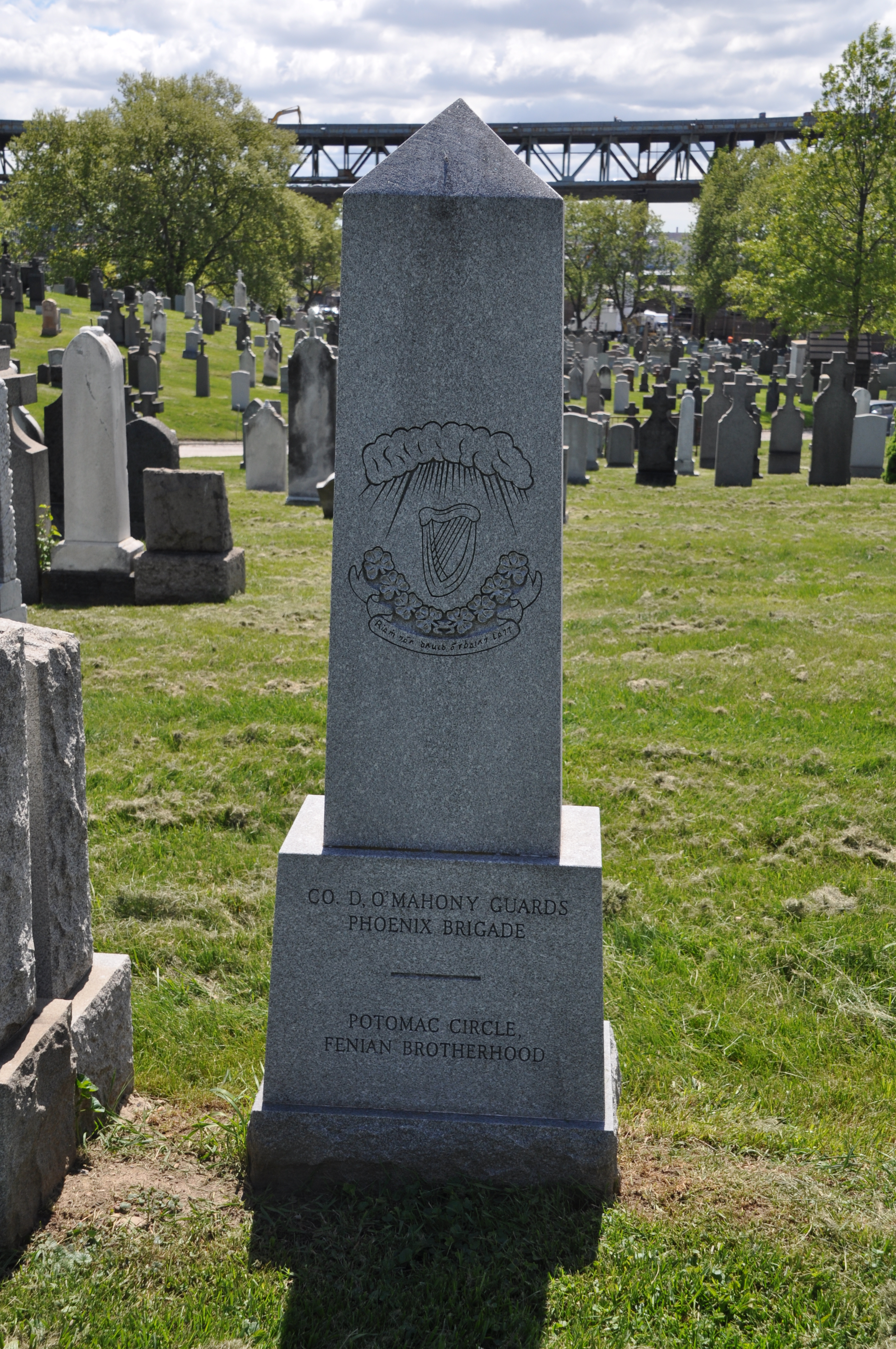
Back of Rorty’s headstone at Calvary Cemetery New York. Photo By @firefightinirish
Two weeks after the battle Richard Rorty, James’ brother, came to Gettysburg and returned his body to New York, where it was laid to rest among many other Irish heroes of the Civil War in Calvary Cemetery. (3)
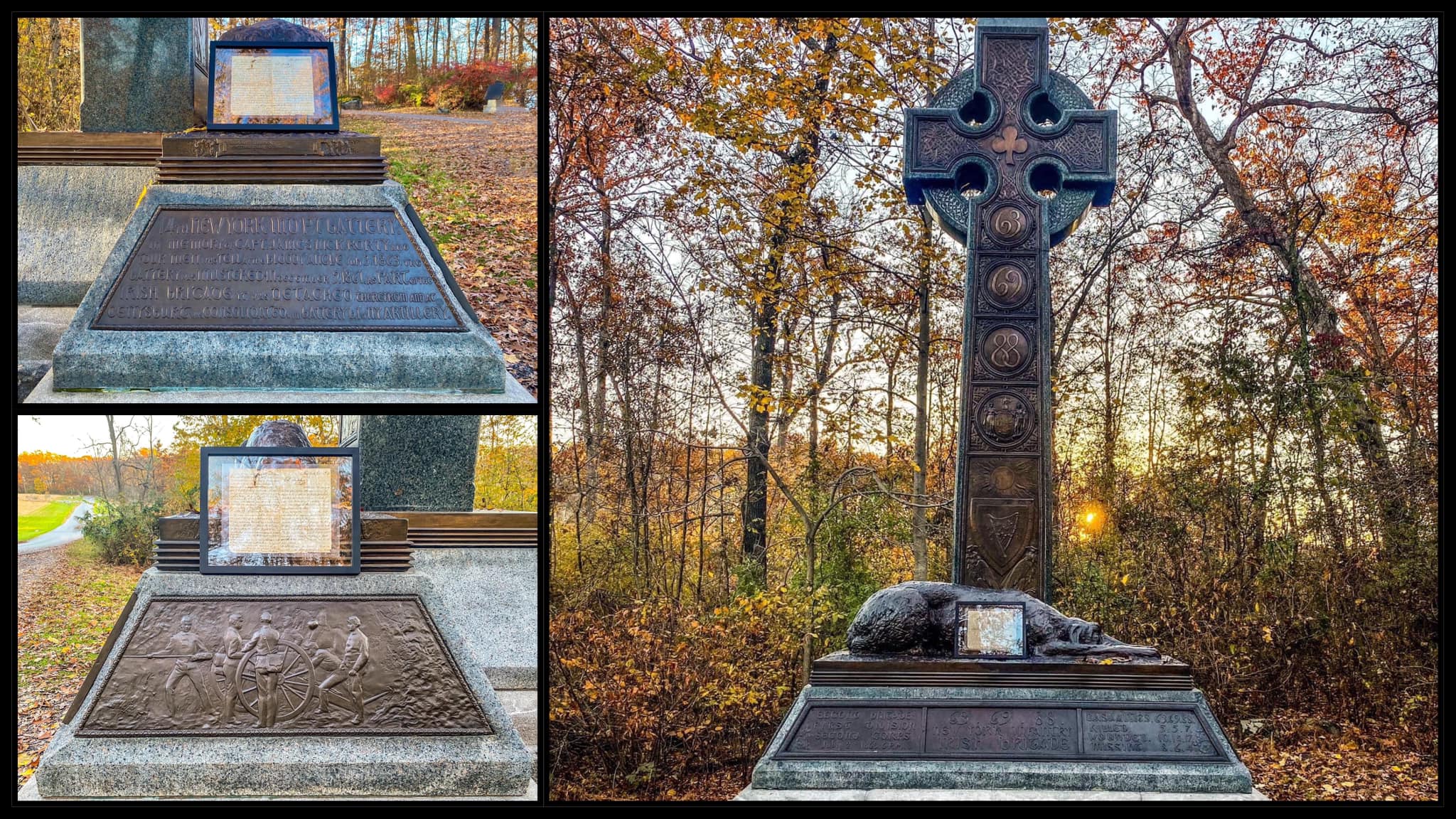
The Irish Brigade monument at Gettysburg has a bronze relief dedicated to Rorty and his men it reads….
Photo of the Irish Brigade Monument At Gettysburg With The Rorty Letter. Image By @firefightinirish
“14th New York Ind’pt Battery. In memory of Capt. James Mc.K. Rorty and four men who fell at the bloody angle July 3, 1863. The battery was mustered in December 9, 1861, as part of the Irish Brigade. it was detached therefrom and at Gettysburg was consolidated with Battery B, 1st N. Y. Artillery.”
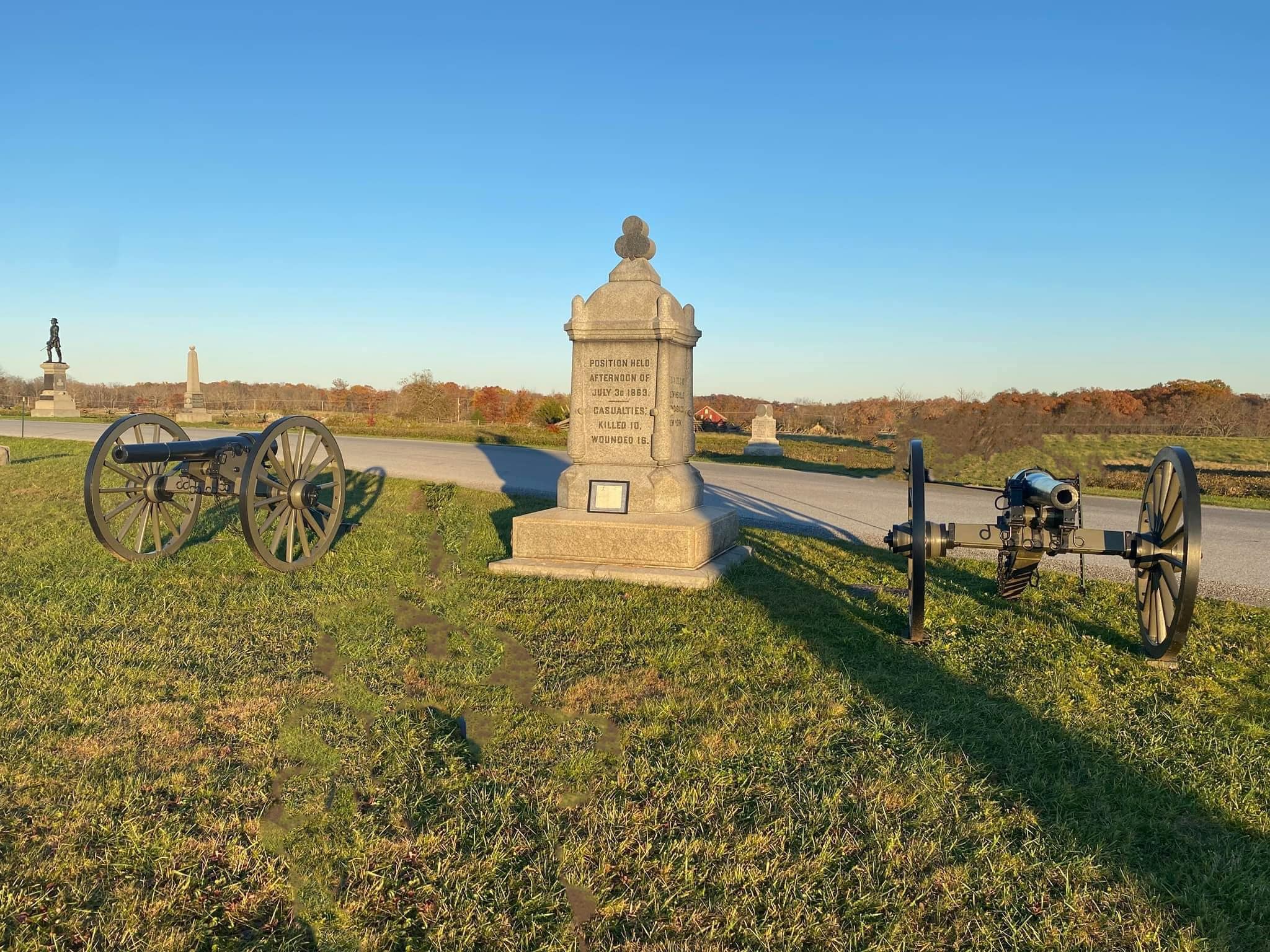
Rorty Letter with the monument to Battery “B” 1st New York Artillery. The Spot where Capt. Rorty fell on July 3rd 1863. Photo By @firefightinirish
Colonel Mathew Murphy was born in 1840 at Ballysodare, Co. Sligo, and arrived in New York with his parents while still an infant.
In civilian life he was a public school principal at P.S. 24, in New York City. He entered the First Regiment, Phoenix Brigade as a private. By 1860, he was captain, ‘A’ Co., Wolfe Tone Guards, Phoenix Brigade, and was promoted to major in 1860. In April 1861, Murphy enlisted as a private in the 69th N.Y.S.M. and served as a lieutenant in ‘G’ Co., 69th N.Y.S.M. at the first battle of Bull Run. During the organization of the Irish Brigade, Colonel Corcoran proposed Murphy as colonel of the 29th Massachusetts, but the unit was never completed. In 1862, during the formation of Corcoran’s Irish Legion, Murphy was elected colonel of the first regiment, later consolidated into the 182nd N.Y. Murphy was head center, Nansemond Circle, the military circle of Corcoran’s Irish Legion. In 1863 at the first national convention of the Fenian Brotherhood, Murphy was named to the central council of five. He was wounded in the arm at Spottslvania Courthouse, Va. and mortally wounded at the battle of Hatcher’s Run, Va. He died on 16 April 1864. (4)
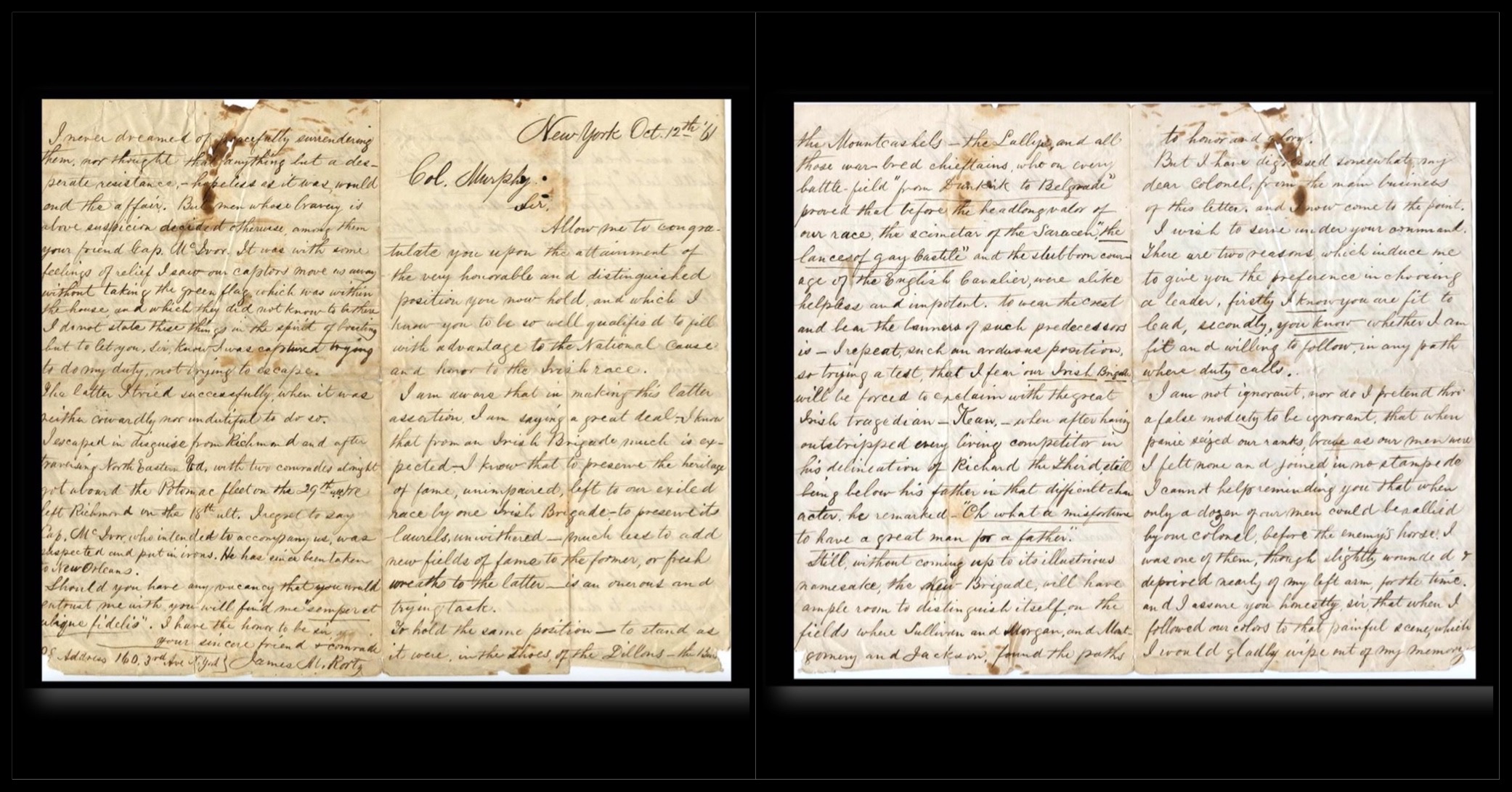
Transcription of the letter,
New York Oct 12th ‘61
Col. Murphy.
Sir,
Allow me to congratulate you upon the attainment of the very honorable and distinguished position you now hold, and which I know you to be so well qualified to fill with advantage to the National Cause and honor to the Irish race.
I am aware that in making this latter assertion, I am saying a great deal. I know that from an Irish Brigade much is expected. I know that to preserve the heritage of fame, unimpaired, left to our exiled race by one Irish Brigade – to preserve its laurels, unwithered – much less to add new fields of fame to the former, or fresh wreaths to the latter – is an onerous and trying task.
To hold the same position – to stand as it were in the shoes of the Dillons – the Bur__, the Mountcashels – the Lallys and all those war bred chieftains, who on every battle-field “from Dunkirk to Belgrade” proved that before the headlong valor of our race, the scimitar of the Saracen “the lances of gay bastele” and the stubborn courage of the English Cavalier, were alike helpless and impotent. To wear the crest and bear the banners of such predecessors is – I repeat, such an arduous position, so trying a test, that I fear our Irish Brigade will be forced to exclaim with the great Irish tragedian – Kean – when after having outstripped every living competitor in his delineation of Richard the Third, still being below his father in that difficult character, he remarked, “Oh what a misfortune to have a great man for a father.”
Still, without coming up to its illustrious namesake, the New Brigade, will have ample room to distinguish itself on the fields where Sullivan and Morgan, and Montgomery and Jackson found the paths to honor and glory.
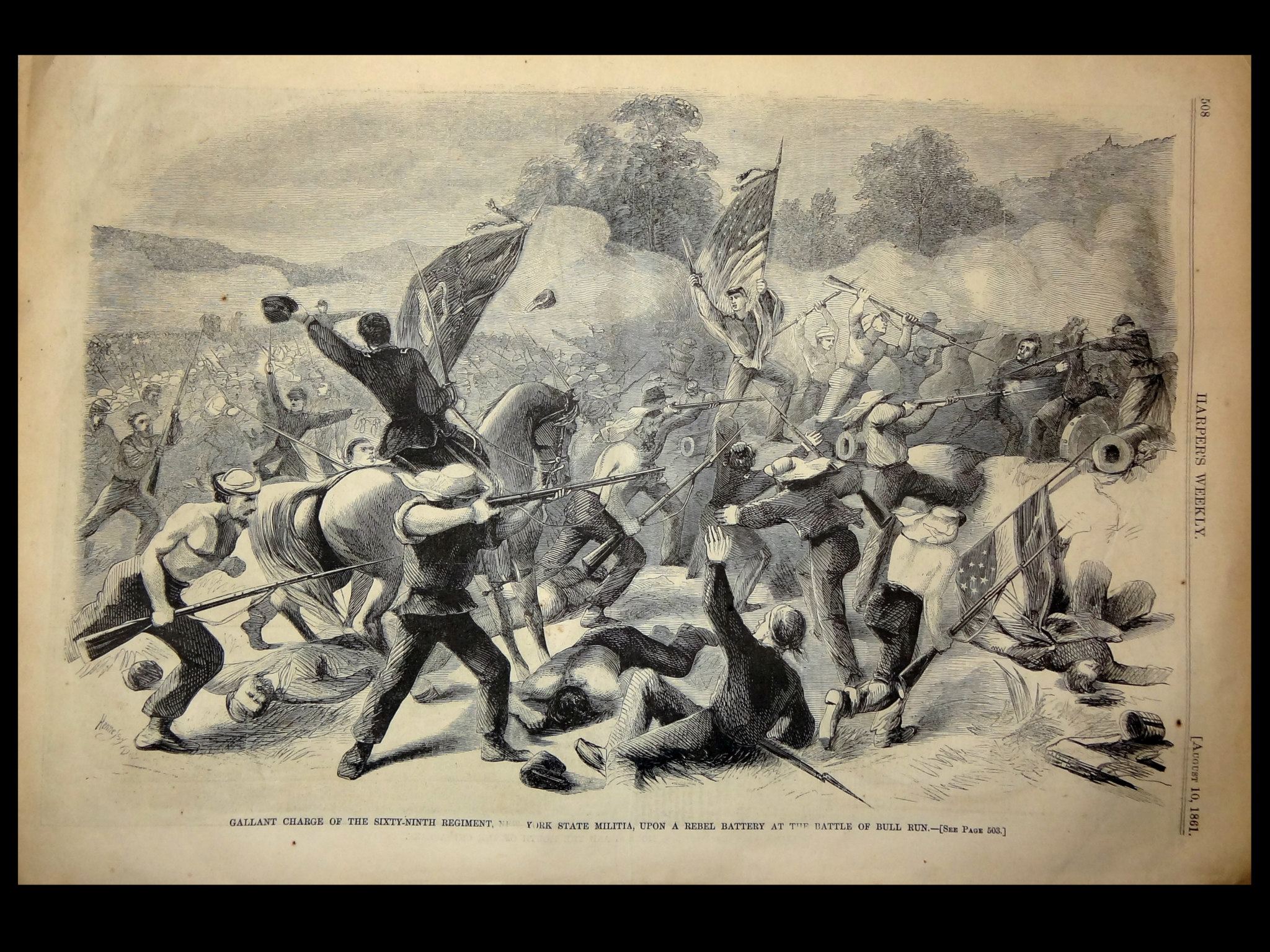
Original Etching From Harper’s Weekly Dated August 10th 1861 Depicting The “Gallant Charge Of The Sixty-Ninth Regiment New York State Militia, Upon A Rebel Battery At The Battle Of Bull Run” From The American Military Heritage Museum Of North Carolina
But I have digressed somewhat, my Dear Colonel, from the main business of this letter, and I now come to the point. I wish to serve under your command. There are two reasons which induce me to give you the preference in choosing a leader. Firstly, I know you are fit to lead, secondly, you know whether I am fit and willing to follow in any path where duty calls.
I am not ignorant, nor do I pretend thru a false modesty to be ignorant, that when panic seized our ranks, brave as our men were, I felt none and joined in no stampede. I cannot help reminding you that when only a dozen of our men could be rallied by our colonel, before the enemy’s horse, I was one of them, though lightly wounded and deprived nearly of my left arm, for the time and I assure you honestly, Sir, that when I followed our colors to that painful scene, which I would gladly wipe out of my memory, I never dreamed of peacefully surrendering them, nor thought that anything but a desperate resistance – hopeless as it was, would end the affair. But men whose bravery is above suspicion decided otherwise, among them your friend Cap. McIvor. It was with some feelings of relief I saw our captors move us away without taking the green flag, which was within the house, and which they did not know to be there. I do not state these things in the spirit of boasting, but to let you, Sir, know I was captured trying to do my duty, not trying to escape.
Letter at Manassas National Battlefield Park Near Where The Aforementioned Action Took Place, Photo By @firefightinirish
The latter I tried successfully, when it was neither cowardly nor undutiful to do so. I escaped in disguise from Richmond and after traversing North Eastern Va., with two comrades at night, got aboard the Potomac fleet on the 29th inst, left Richmond on the 18th ult. I regret to say Cap. McIvor who intended to accompany us, was suspected and put in irons. He has since been taken to New Orleans.
Should you have any vacancy that you would entrust me with you will find me “semper et ubiqus fidelis.” I have the honor to be, Sir, your sincere friend and comrade,
James M. Rorty
PS Address 160, 3rd Ave N. York
1) Kane, Michael H. 2002. ‘American Soldiers in Ireland, 1865-67’ in The Irish Sword: The Journal of the Military History Society of Ireland, Vol. 23, No. 91, pp. 136-137
4) Kane, Michael H. 2002. ‘American Soldiers in Ireland, 1865-67’ in The Irish Sword: The Journal of the Military History Society of Ireland, Vol. 23, No. 91, pp. 135-136
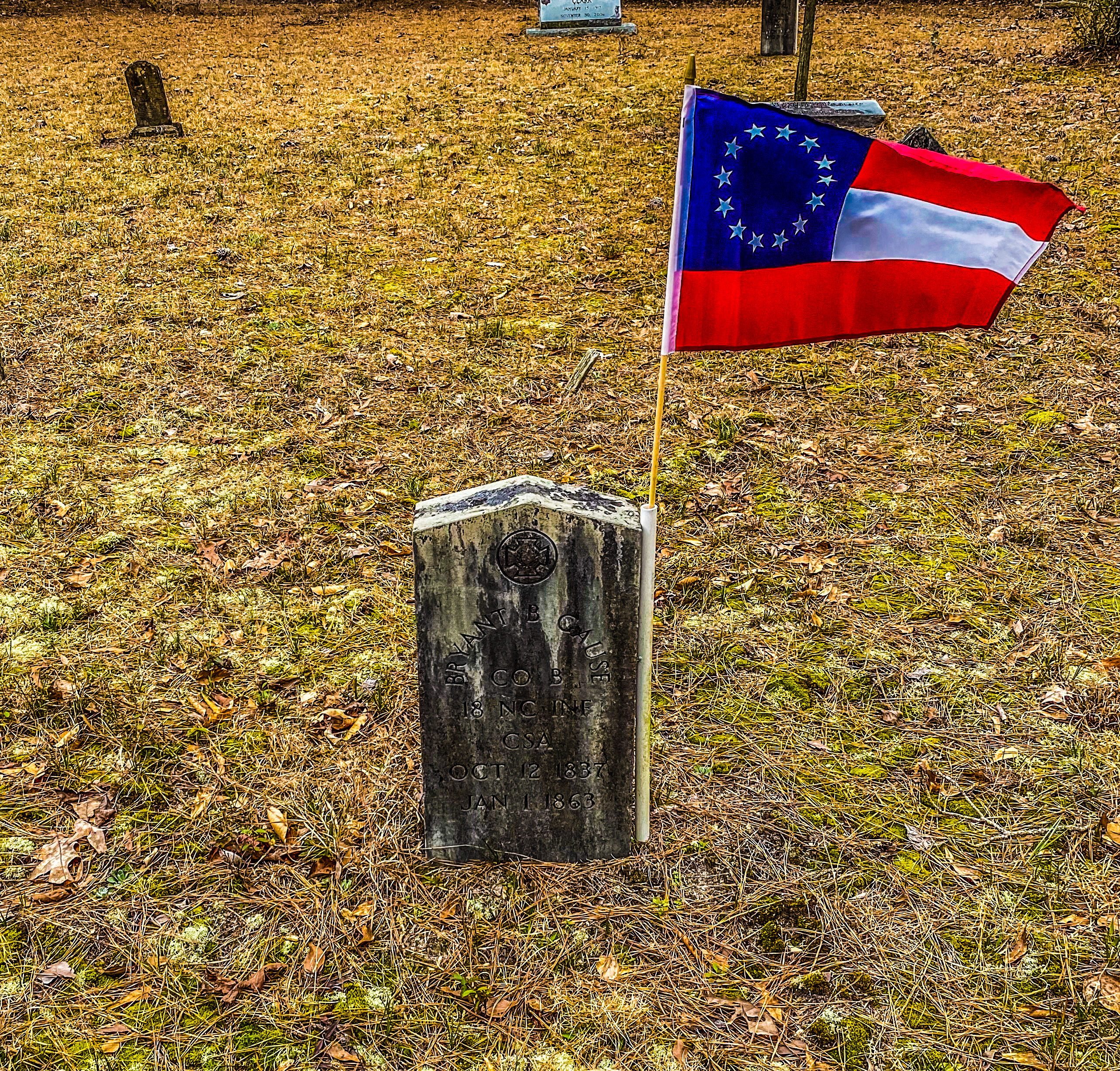
My recent adventures took me to Clarkton North Carolina. Here I stumbled upon Benevolence Cemetery, and the grave of Private Bryant B Gause. He was born in Bladen County North Carolina, to Henry Taylor and Lucy Ann Gause[1], on October 12th, 1837, [2] He was listed as being five feet ten inches tall, with blue eyes, dark hair, and a dark complexion.[3] Before the outbreak of the American Civil War Pvt. Gause was a farmer. He would meet Lucy Matilda Thompson. They would marry shortly before the hostilities began. Gause would enlist on May 3rd, 1861, at Elizabethtown North Carolina.[4] He was mustered into “B” Co. NC 18th Infantry the same day.[5] Not wanting to leave her husband and being 6 feet tall, 165 lbs., physically strong and an expert with the rifle herself[6], she…. “cut her thick hair close, took up seams in one of Bryant’s suits, oiled her squirrel musket, and boarded a train for Virginia as ‘Pvt. Bill Thompson”[7]
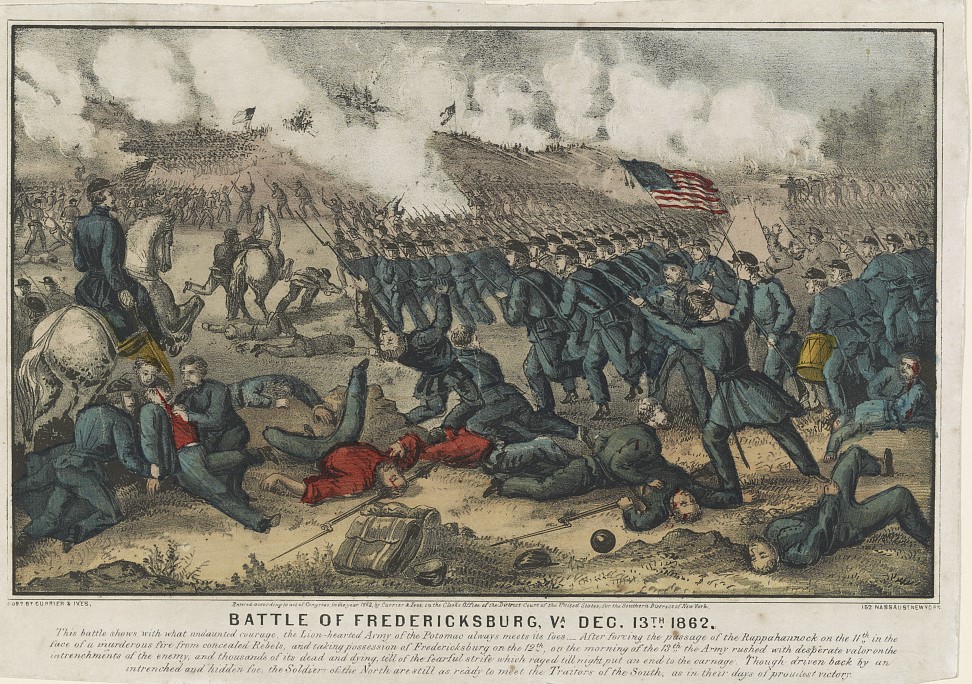
She fought side by side with her husband and the 18th at First Manassas, and was wounded when… “an iron (shell) scrap tore open her scalp from forehead to crown (later protected by a silver plate).””[8] She was discovered as a woman but begged to be sent back to her husband’s side. Her request was approved, and she was with her husband during the Seven Days where he was wounded at Frayser’s Farm.[9] They would also be engaged at the Battles of Antietam and Fredericksburg. Sadly, during the Battle of Fredericksburg Pvt. Gause was seriously wounded[10]. He was taken to a hospital in Scottsville, VA. Where he would die from his injuries on January 1st, 1863.[11]
Battle of Fredericksburg, created by Currier and Ives, Library of Congress
His wife” Pvt. Bill Thompson” was not by his side when he passed, as she was in the advanced stages of pregnancy and was home to give birth to their daughter Mary Caroline Gause.[12] Pvt. Gause’s body would be escorted home by his wife ending her service as well.
Grave of Private Bryant B Gause at Benevolence Cemetery in Clarkton North Carolina. Photo by @firefightinirish.
He would be interred at Benevolence Cemetery in Clarkton North Carolina where he now rests. Lucy Matilda Thompson Gause AKA Pvt. Bill Thompson would go back to a more traditional role post war weaving and working the fields. She would eventually settle in Savannah, Georgia. Here she would meet an Irishman who served in the Union Navy by the name of Joseph Patrick Kenney. [13] They would have six children. Lucy would die on June 22, 1925, at the age of 83. She is buried at the Meeks Cemetery in Nicholls, Georgia.[14]
Every soldier has a story, and Private Robert Jones Jr. is no exception.
Tintype of Private Robert Jones Jr. of the 112th New York Infantry “Chautauqua Regiment”. Provided by The American Military Heritage Museum Of North Carolina
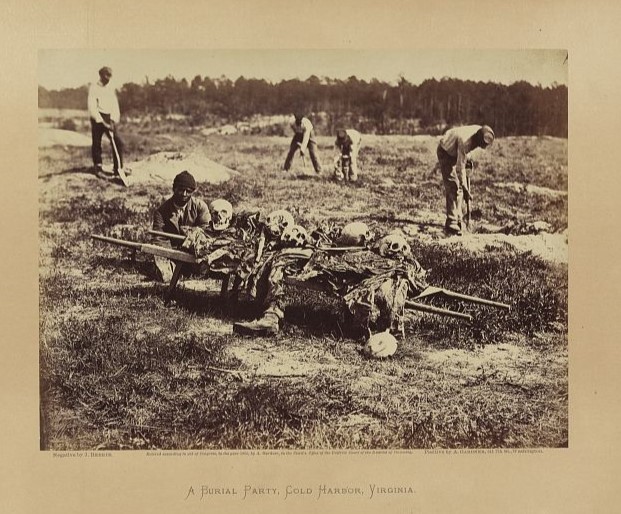
Jones was born to Robert and Mary Jones in Kent England[1] around 1832[2] The family immigrated to America prior to 1840[3], and settled in Westfield, Chautauqua, New York. Jones would work as a laborer, and would marry Betsy Ann Honeysett in 1860.[4] They would have their first child Rhoda in 1861.[5]At the outbreak of the American Civil War Robert’s brothers, Jacob[6]and Thomas[7] joined the Union as part of the 49th New York Infantry. Later when Chautauqua County was called on for a thousand men the state offered a $50 dollar bounty to any volunteer that enlisted. This $50 was in addition to a $100 dollar bounty offered by the Federal Government. The duty of recruiting a Regiment from Chautauqua County was met with enthusiasm[8]. On August 31st, 1862, Robert Jones filled with patriotism and some extra cash, joined the 112th New York. This regiment would be forever known as the “Chautauqua Regiment”. [9] At that time he was listed as being 5 Feet 7 and ¾ inches, with dark hair, chestnut eyes, and a fair complexion.[10] Jones would be mustered into “H” Co as a Private on September 11th, 1862.[11] Private Jones was in the following engagements; The Siege of Suffolk, Battle of Drewry’s Bluff, and the Battle of Cold Harbor. At Cold Harbor the 112th NY had to cross an open field of 600 yards to reach the Confederate advance skirmishers. This action is described by William Lyman Hyde, in his book History Of The One Hundred And Twelfth Regiment N.Y. Volunteers as follows.
Reekie, John, and Alexander Gardner, photographer. A burial party on the battle-field of Cold Harbor / negative by J. Reekie ; positive by A. Gardner. United States Cold Harbor Virginia, ca. 1866. [1865 April printed later] Photograph. https://www.loc.gov/item/2002713100/.
“This had been successfully accomplished and the enemy driven back to their rifle pits and the capture of 600 Confederate soldiers. Facing the Union Army were veteran soldiers….the right was occupied by General A.P. Hill’s Corp., in the center was General James Longstreet’s Corps., and on the left was General Richard Ewell’s Corps. As the attack progressed, Colonel Drake ordered the men to cease firing and fix bayonets. The attack pressed on, the Confederate works were irregular, and the men were exposed to a galling fire. Though the loss was severe the works were reached and mounting the parapet among the first of the men, Colonel Drake waved his sword, hurrahed and fairly danced with exultation as the rebels ran back to their rifle pits. This line of works had been carried with considerable loss and the ranks now quite broken, but the men were pressing on toward the second line. Unfortunately, a Regiment of the 6th Corps on the flank of the 112th New York was a raw regiment, enlisted only six weeks before and this was their first fight. The distance to the Confederate works in their front was less by a hundred rods than in front of Colonel Drake’s Brigade, but that Regiment quailed before the fire and could not be pushed up. This left the Brigade in a very unfortunate position and the Confederate rifle pits on the flank of the 112th were able to pour in a severe enfilading fire. In addition the men of the 112th were exposed to the frontal fire of the advance line of works….. at this point the carnage was terrible, the 112th New York from its position suffering the most severely, its casualties nearly equal to the sum of those in the rest of the Brigade.[12]”
Roberts survived this battle and continued to fight at, The Siege of Petersburg, Second Battle of Petersburg, and The Battle of the Crater. The Chaplin of the 112th New York, William L. Hyde describes the action at the Crater to his wife in a letter as such.
“Saturday morning about five o’clock our brigade with the ninth corps were drawn up in successive lines preparatory to a charge upon a redoubt which had been mined. The first operation was to blow up the fort. This was done in fine style, a complete success. The mine was lighted at precisely 5 o’clock and the huge mass of earth with men & guns were lifted up into the air. Some men were blown over into our advance pits. One man who came over unharmed said he thought it was rather unceremonious to send a man kiting through the air in that shape before he had eaten his breakfast. After the redoubt was blown up, we opened a terrible artillery fire along our whole line. then the troops made a charge the negro regiments first. We got possession of the redoubt without the loss of a man. With a very slight loss we got possession of the main works of the enemy. We held two lines and were preparing to make or position secure when the negros and some white troops in front were seized with panic and broke & ran and pressed the troops in the rear by sheer force of numbers. Some officers stood well & tried to stay the rush but it was in vain and in a few minutes the work of weeks was lost. Our Brigade was just getting into position when the stampede took place. They did what they could to arrest it but were too feeble. One man told me that a huge nigger came tumbling over him and almost broke his back! In our endeavoring to hold the position till the line could be reformed, our Regt suffered some casualties we had one man killed and eleven wounded. two men mortally wounded. I do not know of any with whom you are acquainted. We remained in the front of our works until about five o’clock PM when the regiment was marched back into the trenches where they had been so long.”[13]
Private Roberts would soldier on to, the Battle of Chaffin’s Farm, Battle of Fair Oaks & Darbytown Road, First Battle of Fort Fisher, Second Battle of Fort Fisher, and the Carolinas Campaign.[14] Robert would get through the war relatively unscathed. He would be mustered out with his regiment on June 13, 1865, at Raleigh, North Carolina.[15]
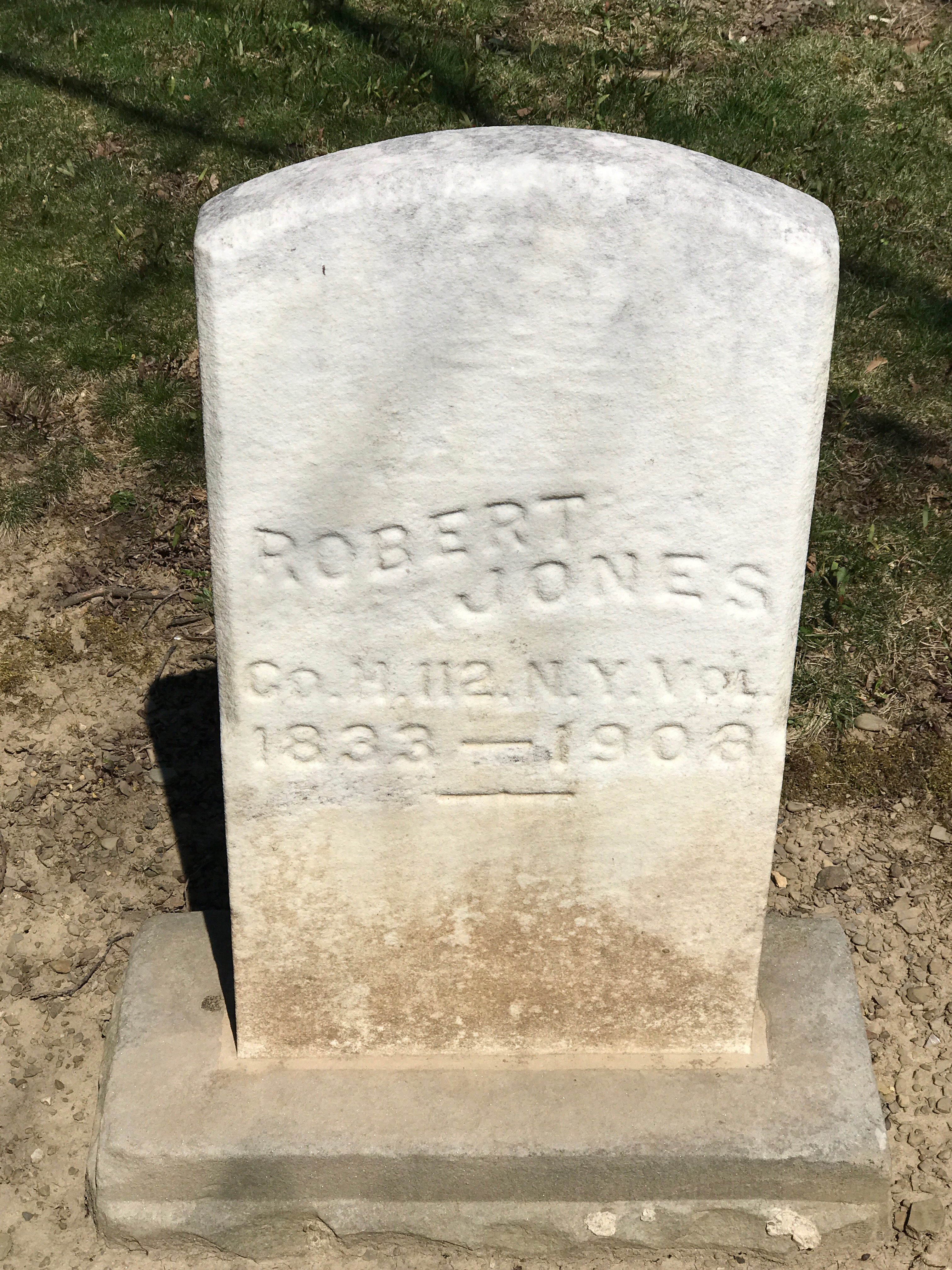
Grave of Private Robert Jones at Quincy Rural Cemetery Ripley, Chautauqua County, New York, USA. Photo By Robin Boyd on 1 May 2018
Sadly his brothers could not say the same. Jacob would be killed at Petersburg, Virginia, on April 2 1865[16], and Thomas would be severely wounded on May 5,1864 during The Battle of the Wilderness.
After the war Robert would become a farm laborer, and have three more children Matilda, Delbert, and Hattie.[17] His wife Betsy would die in 1878. Robert would pass on November 11th, 1908[18] at the approximate age of 76. He is interred at Quincy Rural Cemetery Ripley, Chautauqua County, New York, USA.[19]
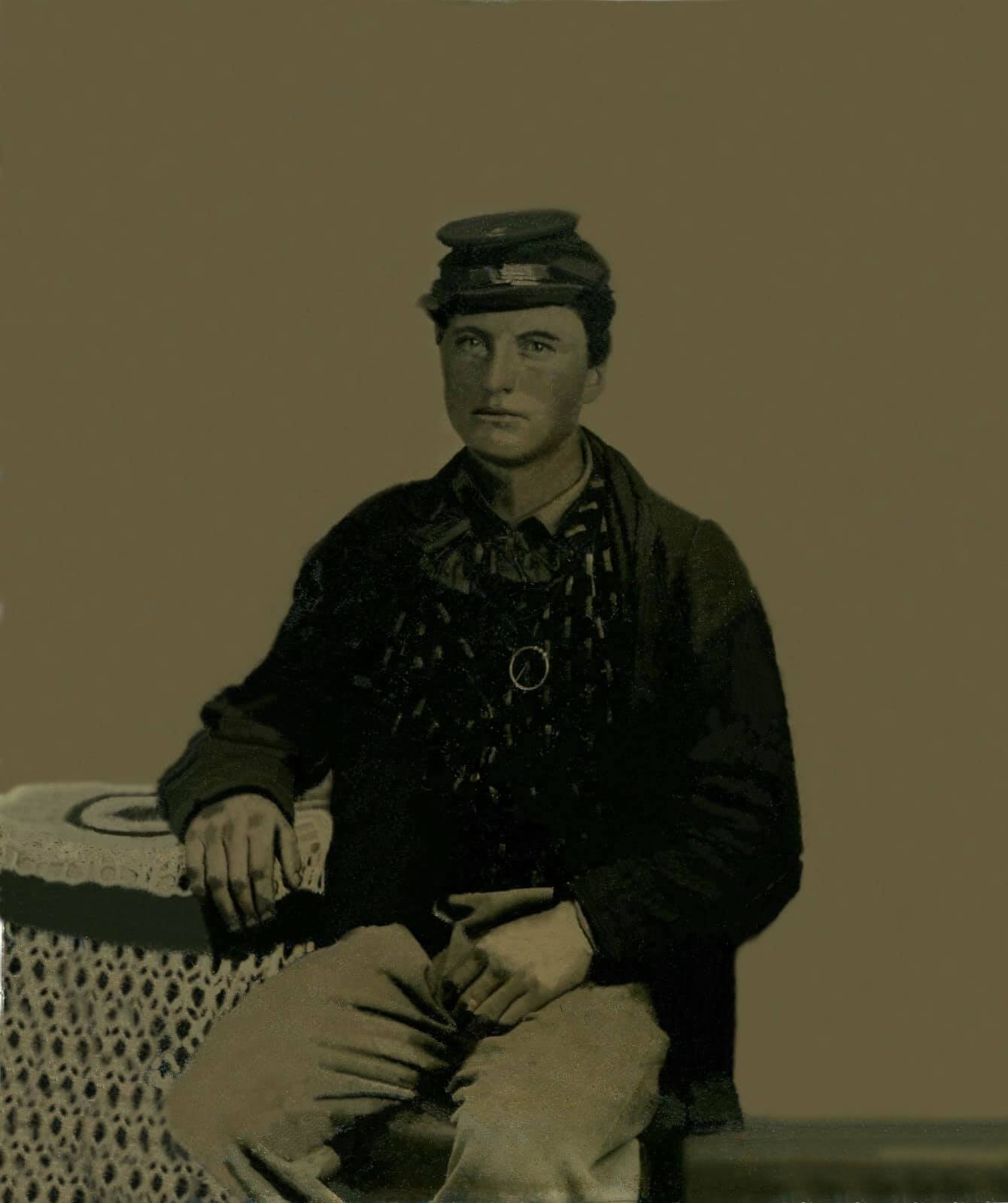
Over the weekend my travels took me to Ohio. Here I found a few cemeteries and many stories. One of those stories is of Private Hiram Fellows, of the 8th Ohio Infantry.
He was born in Ohio around 1842 to Henry and Susan Fellows. Before the war Hiram worked on his family farm with his brother and two sisters[1]. After the attack on Fort Sumter in Charleston, South Carolina. President Lincoln called for 75,000 volunteers to put down the uprising. Hundreds of men from northeastern Ohio were fast to respond, volunteering for three months of military service.
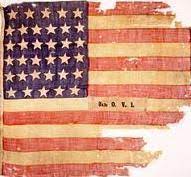
The 8th Ohio Infantry Regiment was organized in Cleveland between April 18 and May 4, 1861[2]. In June, the regiment was transported via train to Camp Dennison adjacent to Cincinnati for training and garrison duty. It mustered out June 22, having not left The Buckeye State. Many of the three-months men reenlisted for three years on June 22–24.[3]Hiram was one of these men.
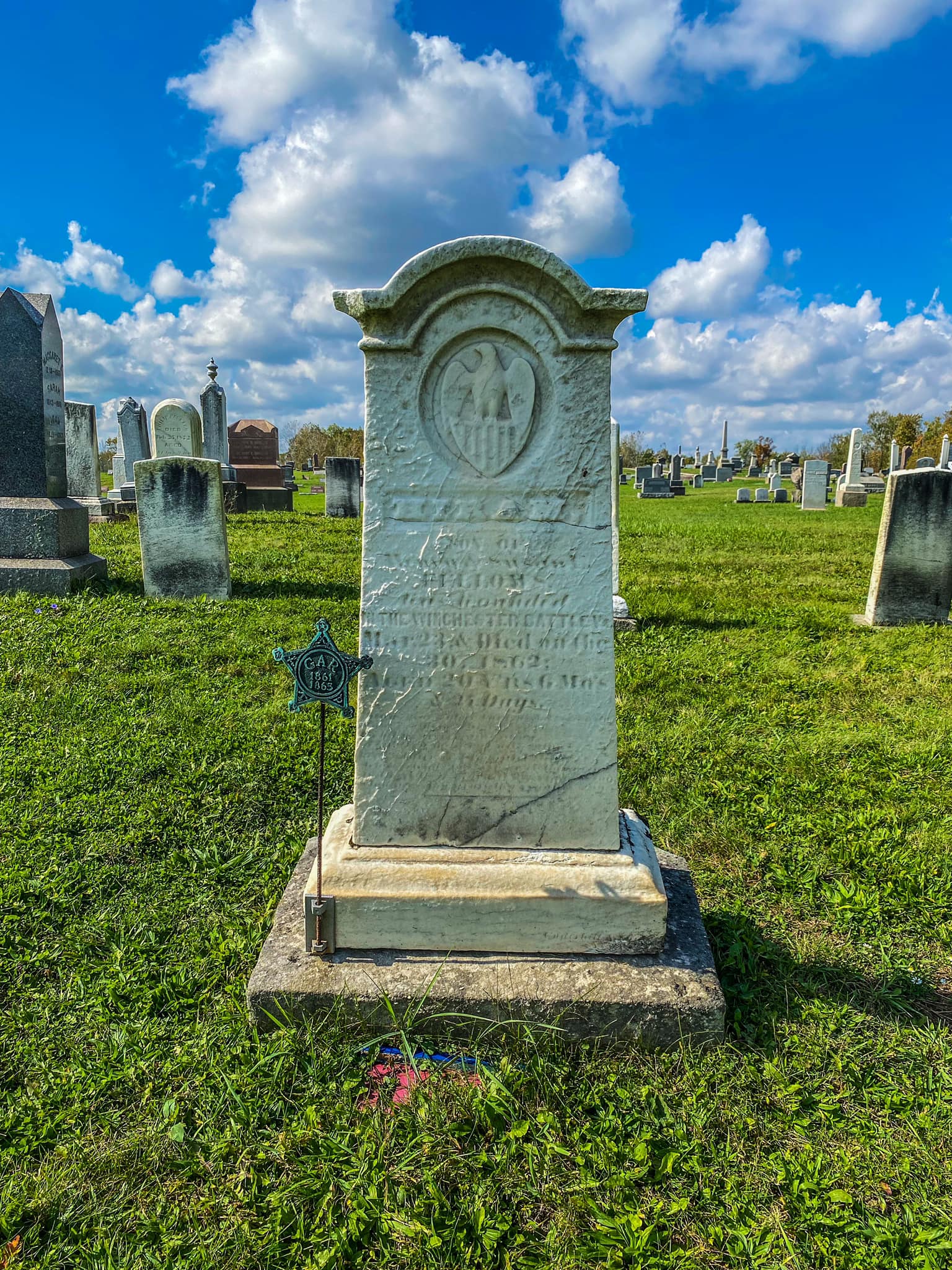
He would be mustered into “K” Co. 8th Ohio Infantry as a Private on June 5th, 1861[4]. Private Fellows and the 8th Ohio would see action at, Worthington, W. Va., Hanging Rock, Romney, The Expedition to Blue’s Gap, The Evacuation of Romney, Bloomery Gap, The Battle of Kernstown, and Winchester[5], where Private Fellows was wounded[6]. Private Fellows would die of his wounds at a hospital in Winchester Virginia on April 1st, 1862[7].
Forbes, Edwin, Artist. The first battle of Winchester–The charge on the stonewall . Winchester United States Virginia, 1862. Photograph. https://www.loc.gov/item/2004661872/.
Private Hiram Fellow’s body would be returned to Ohio. He would be interred at Chatham Township Cemetery, and his mother would receive a small “widows’ pension”[8]. Let us never forget the sacrifice of Private Hiram Fellows upon the alter of freedom.
Grave of Private Hiram Fellows at Chatham Township Cemetery. Photo By @firefightinirish
The American Civil War is full of interesting stories. This image of 1st Lieutenant Thomas J. Roberts contains one such tail. He was born in England around 1834[1], and immigrated to The United States in 1848[2]. Roberts Would settle in Brooklyn New York. He would meet Mary E. Spencer there.
Carte De Visite of 1st Lieutenant Thomas J. Roberts. Provided by,The American Military Heritage Museum Of North Carolina
They would marry on January 20th, 1859 at Seventh Presbyterian Church, in New York.[3] Mary and Roberts would have six children. Shortly after the outbreak of the American Civil War Roberts would heed the call. He enlisted on December 21st, 1861. At the time of his enlistment Roberts was listed as being a printer, and was described as five feet six inches, with grey eyes, black hair, and a fair complexion.[4]
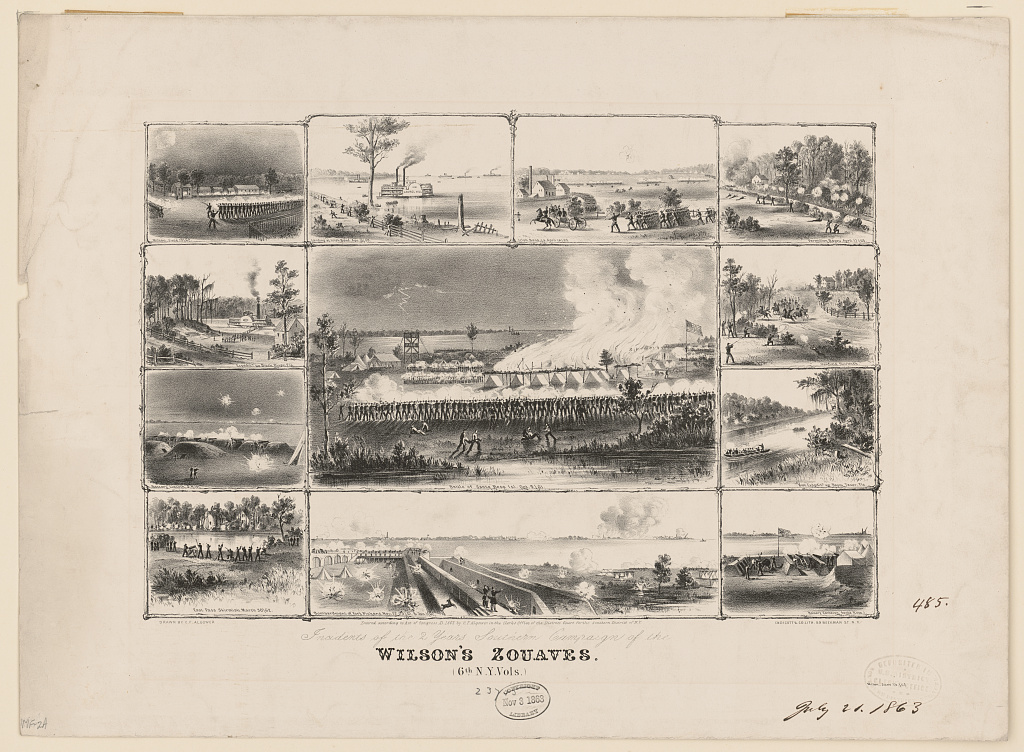
He would be commissioned as a 2nd Lieutenant into “G” Co. 6th New York Infantry that same day. The 6th New York known also as Billy Wilson’s Zouaves had a rough reputation. They were described in a New York paper of the era as..
“the regiment of New York firemen, with a pretty good mixture of the “roughs” of that city, of whom Col. “Billy” Wilson was himself one. They are a hard set to keep in subordination, but have generally proved better soldiers than would be expected. They were a long time stationed at Fort Pickens, and did some pretty good fighting there.”[5]
Incidents of the 2 years southern campaign of the Wilson’s Zouaves. 6th. N.Y. vols. , ca. 1863. July 21. Photograph. https://www.loc.gov/item/2003664954/.
2nd Lieutenant Roberts was with the 6th in all its engagements including the bombardment of Santa Rosa Island, FL, the Battle of Irish Bend, and the Battle of Vermillion Bayou. Roberts would be promoted to 1st Lieutenant. He would made quartermaster of the regiment upon the retirement of Quartermaster Bradley on July 21st, 1862.[6] Roberts would be mustered out with the regiment on the 25th of June 1863.[7]
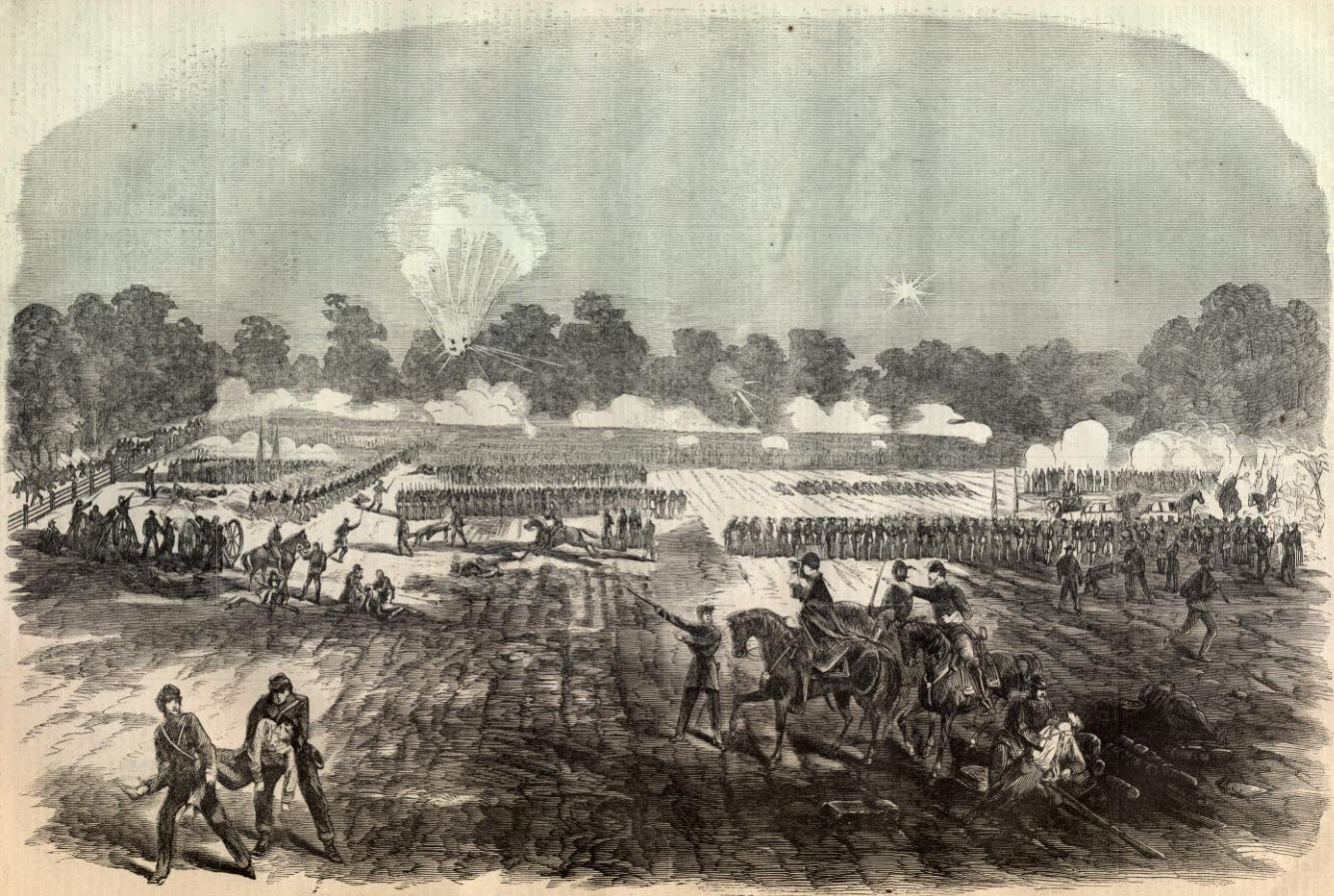
The Battle of Irish Bend Louisiana sketched by William Hall of the 22nd Maine. Harper’s Weekly 16 May 1863
After the war Roberts would continue to be a printer and live in Brooklyn. He would become a member of G.A.R Post 435. Roberts would die on October 1st 1912[8] at the approximate age of 78. He is interred at Cyprus Hills Cemetery in Brooklyn.
[8] “New York, U.S., Grand Army of the Republic Records, 1866-1931 Post 435 Descriptive Book.” Ancestry. Accessed March 8, 2021. https://tinyurl.com/hju4aaks.
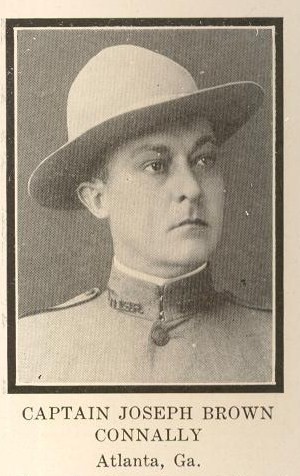
On my recent stop in Atlanta, I took a trip over to Oakland Cemetery. Initially established as Atlanta Cemetery in 1850 and renamed Oakland Cemetery in 1872, this landmark is a hidden treasure located near the heart of Downtown Atlanta. Historic Oakland Cemetery is rich in history, and stories. One such story is that of Captain Joseph Brown Connally.
Photo from The Atlanta Constitution
He was born in Atlanta Georgia on December 17th, 1875. His Parents were Dr. Elisha Connally, and Mary Virginia Brown. Captain Connally’s maternal grandfather was former Georgia Governor Joseph Emerson Brown. Young J.B Connally would attend the finest schools before being accepted to The University of Georgia. He would graduate from there and become an Insurance Clerk, eventually Connally would help form the first car insurance agency in Atlanta.[1] Connally would enlist in the army during America’s first call for volunteers.[2] He would receive his officers training at Fort McPherson and be commissioned into the 82nd Division. Capt. Connally was assigned to the 325th Infantry on September 2nd 1917[3], then sent to Camp Gordon to train his men. Capt. Connally was put in charge of 325th’s supply company. He and his men left for Europe aboard the S.S. Karmala on April 18th, 1918.[4]
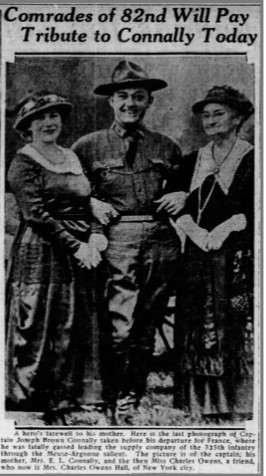
Last photo of Capt. Connally. His mother is on the right and his friend Miss, Charles Owens is on his left. Photo from: The Atlanta Constitution, September 27, 1930.
They were sent to the Toul sector, then became engaged during the Battle of Saint-Mihiel, and The Meuse–Argonne offensive. On October 10th, 1918, during the Meuse–Argonne offensive, Capt. Connally was hit with gas. An article in the Atlantic Constitution describes the scene of his gassing, “Far above the noise of battle are heard the groans of the wounded and the wails of the dying. Over the outstretched forms of many of their comrades the 325th pushes on. When the smoke clears away Joe Brown Connally is one of those on the ground his lungs filled with deadly Poisonous gas.”[5] One of his men stated that “Captain Connally should have two medals of honor.” [6] He then reported that Capt. Connally could barely stand and kept directing and calming his men while refusing medical treatment. It was reported that Connally said when urged to go to the hospital “My boys need me: if I go there will be no one to take care of them and if I leave here before we are relieved it will be to my own funeral.” [7] Capt. Connally would be sent to a field hospital to convalesce before heading stateside aboard the S.S. Sierra on May 9th, 1919.[8]
Sadly Connally would not ever recover fully from the gas attack. He would die on August 26th, 1920, at Lawson General Hospital. His cause of death was listed as “valvular heart disease with mitral insufficiency “[9]secondary to the lasting effects of the gas.
Funeral of Capt. Connally at Second Baptist Church. Photo From: The Atlanta Constitution, September 27th 1930.
In 1922 the Connally family established the “Joe Brown Connally Scholarship in Georgia History, this scholarship is still awarded to this day. Plaques honor Capt. Connally at Georgia Baptist Hospital, The University of George, and The Capital City Club.
At the Capital City Club plaque dedication, a friend said of Capt. Connally “As for his life at this club, it was he who showed us that the Volstead act could not kill the joy of the club, He showed Us that the roses on women’s cheeks bloom just as red after the act as before it, and taught us that Coca-Cola has a spice and can supplant champagne and that there is not really so great a gulf from Budweiser to Bevo.
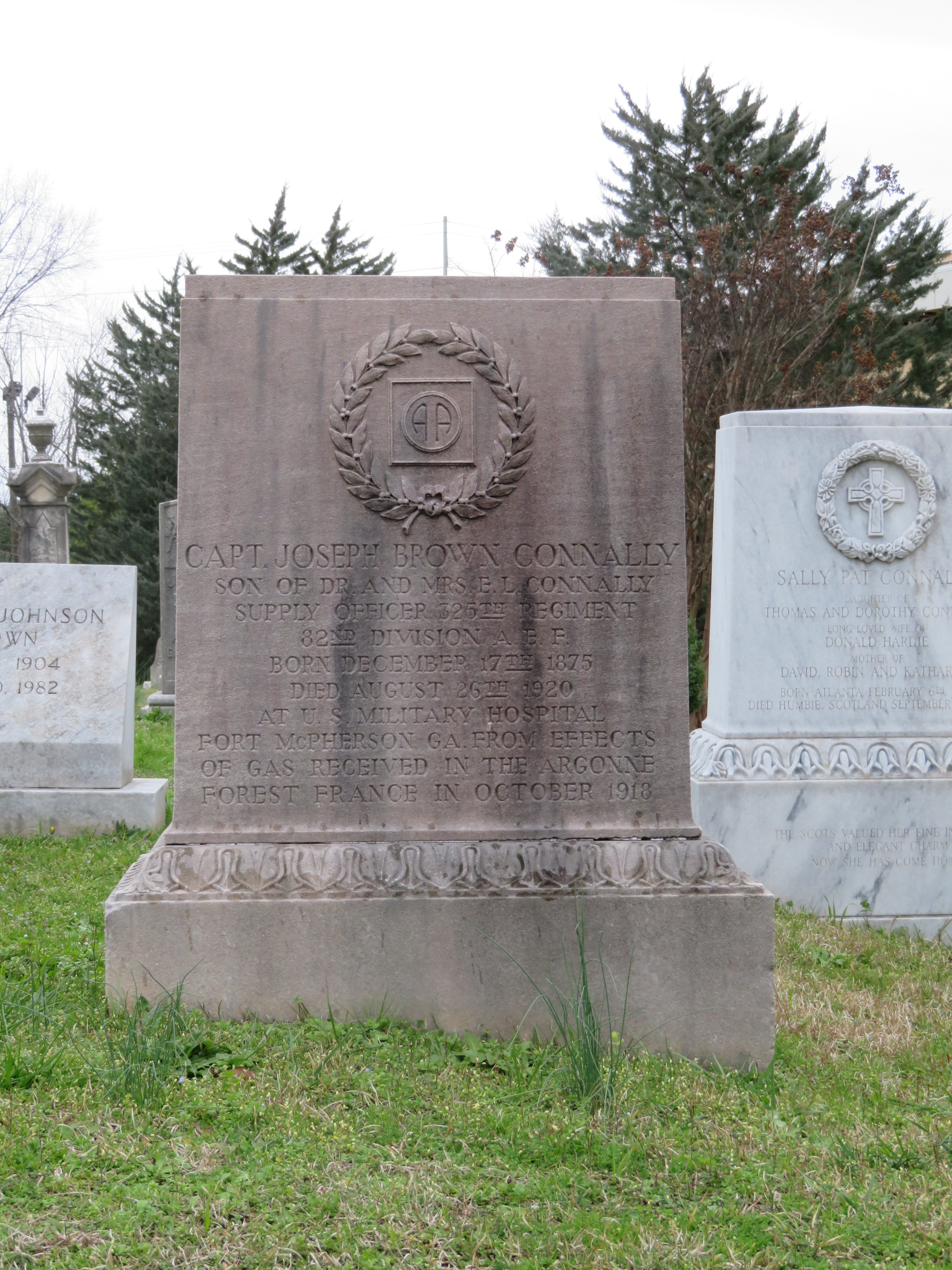
Grave of Captain Joseph Brown Connally at Oakland Cemetery. Photo Credit: @firefightinirish.
Those who knew him could never forget him and the great spirit he possessed. He was a prince of good fellows, and for cheer, unselfishness, and courage he had no superior.”[10] Let us never forget Capt. Connally’s sacrifice, he truly was an All American…
[1] Galloway, Tammy Harden. The Inman Family: an Atlanta Family from Reconstruction to World War I. Macon, Ga: Mercer Univ. Press, 2002. Pg. 66-67
[2] “Tablet Unveiled To Honor Memory Of Capt. Connally.” The Atlanta Constitution, November 12, 1921.
[3] “Georgia, World War I Service Cards, 1917-1919 for Joseph Brown Connally.” Ancestry.com. Accessed February 29, 2020. https://tinyurl.com/qqjaun8.
It never ceases to amaze me, how a letter can come alive with some digging. This letter written by then Captain Michael McGuire to his wife Elizabeth is one such correspondence. The document is dated October 31st, 1864. It reads…….
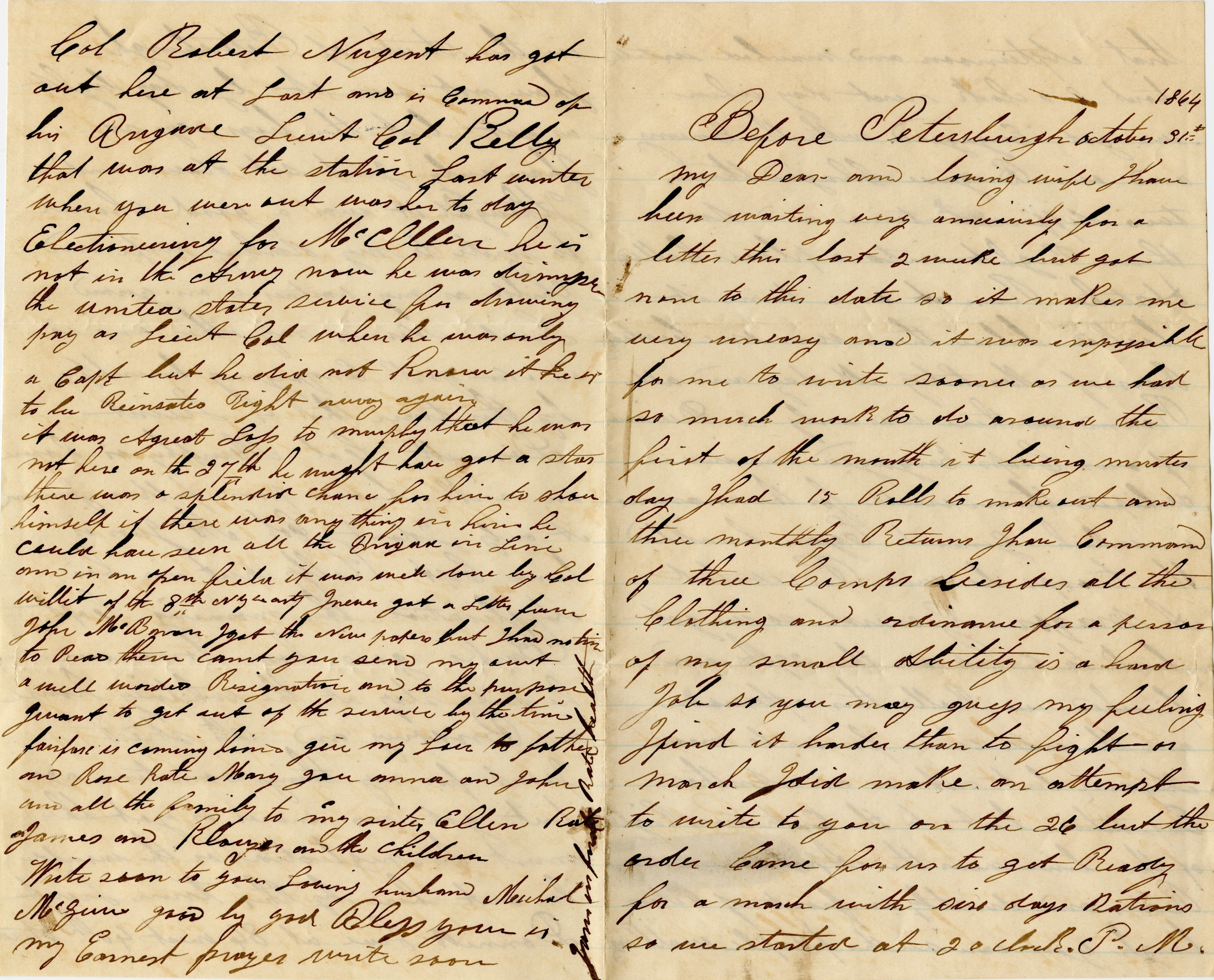
“Before Petersburg
October 31st, 1864,
My Dear and Loving Wife, I have been waiting very anxiously for a letter this last 2 weeks but got none to this date. So it makes me very uneasy and it was impossible for me to write sooner as we had so much work to do around the first of the month, it being muster day. I had 15 rolls to make out and three- monthly returns. I have command of three camps besides all the clothing and ordnance. For a person of my small ability is a hard job. So you may guess my feeling.
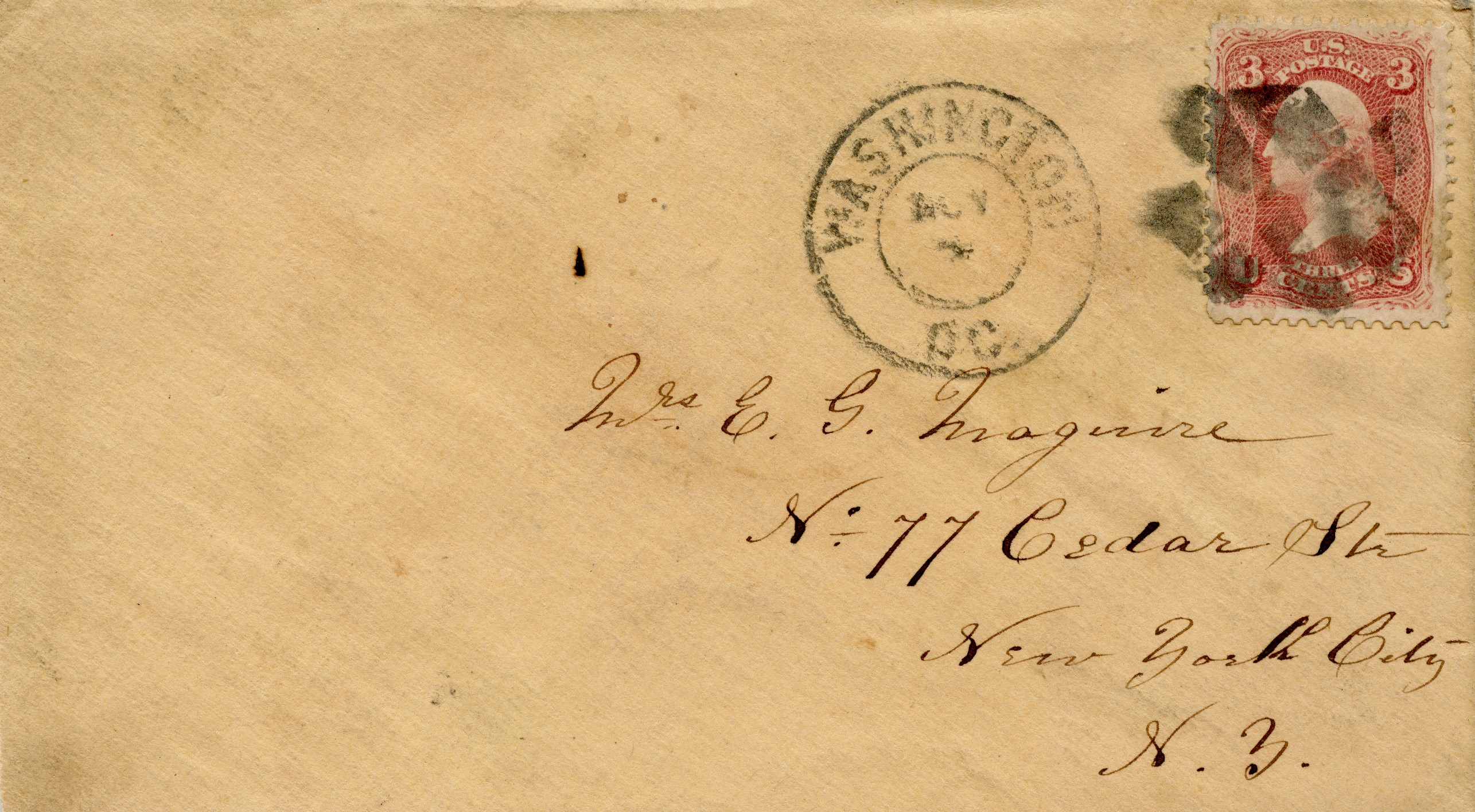
Envelope for Captain Michael McGuire’s letter. Provided by The American Military Heritage Museum Of North Carolina
I find it harder than to fight or march. I did make an attempt to write to you on the 26th, But the order came for us to get ready for a march with six days rations. So, we started at 2 o’clock p.m. that afternoon and marched until about 8 o’clock next day when we got engaged with the enemy and our charged them two different times and them right into a place called Hatcher’s Run. At one time it looked like there was one canteen, roar of musketry all day and all might as there was only two divisions of our corps engaged and we whipped them well for the manner in which General Egan handles the troops. He was breveted a Major General.
Front of Captain Michael McGuire’s letter. Provided by, The American Military Heritage Museum Of North Carolina,
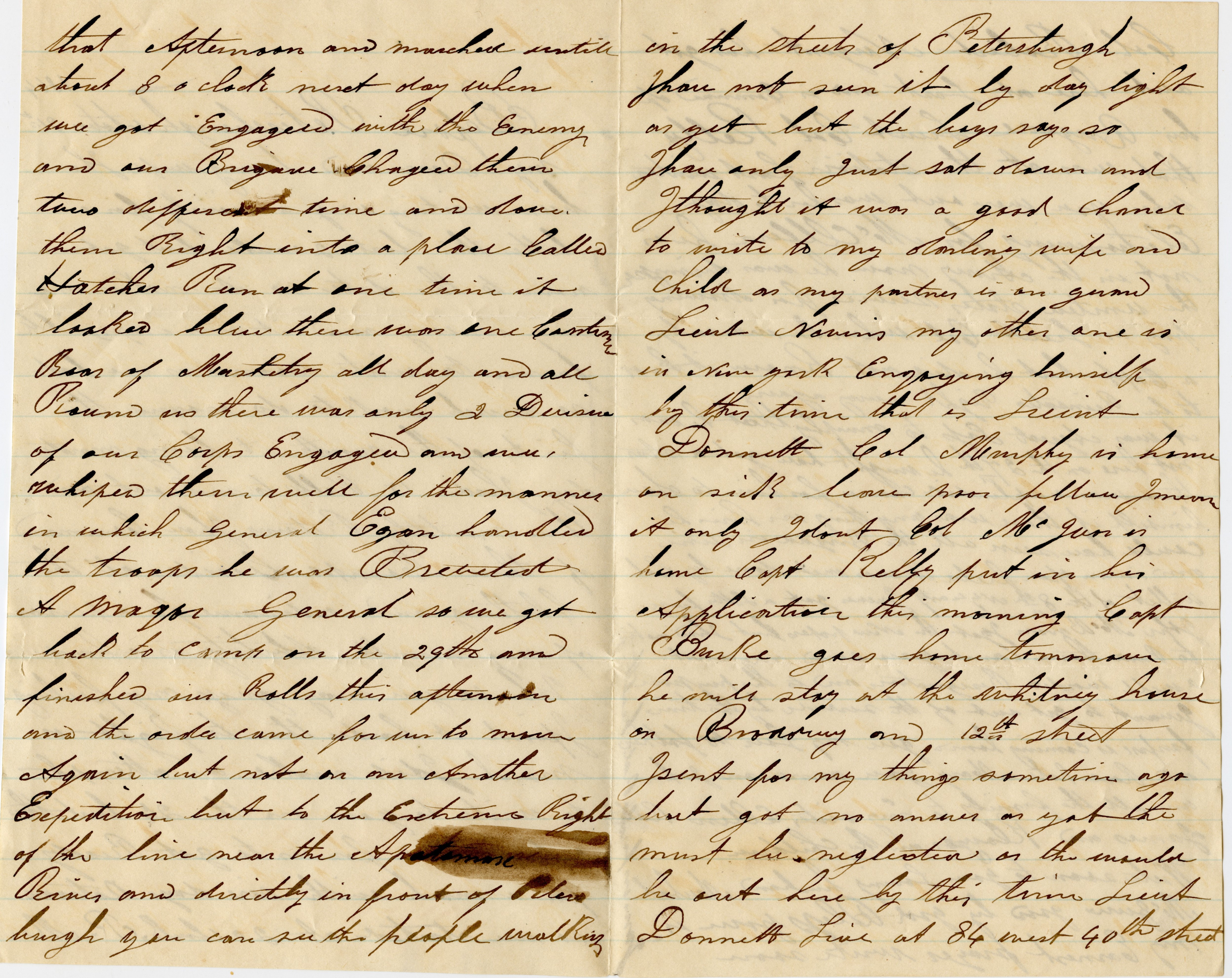
So, we got back to camp on the 29th and finished our rolls this afternoon. And the order came for us to move again. But not on another expedition. But to the extreme right of the line near the Appomattox River and directly in front of Petersburg. You can see the people walking in the streets of Petersburg. I have not seen it by daylight as yet. But the boys say so. I have only just sat down and I thought it was a good chance to write to my darling wife and child. As my partner is on guard., Lieutenant Nevin. My other one, is in New York enjoying himself by this time. That is Lieutenant Donett. Colonel Murphy is home on sick leave. Poor fellow. I mean it, only I don’t. Colonel McGunn is home. Captain Kelly put in his application this morning. Captain Burke goes home tomorrow. He will stay at the Whitney House on Broadway and 12th Street. I sent for my things sometime ago. But got no answer as yet. They must be neglecting or they would be out here by this time.
Lieutenant Donett lives at 86 West 40th Street. Colonel Robert Nugent has got out here at last and in command of his Brigade. Lieutenant Colonel Kelly that was at the station last winter when you were out, was here today electioneering for McClellan. He is not in the army now. He was dismissed from the United States service for drawing pay as lieutenant colonel when he was only a captain. But he did not know it. He is to be reinstated right away again. It was a great loss to Murphy that he was not here on the 27. He might have got a star.There was a splendid chance for him to show himself if there was anything in the fight. He could have seen all the Brigade in line and in an open field. It was not done by Colonel Willett of the 8th New York Artillery.
Back of Captain Michael McGuire’s letter. Provided by, The American Military Heritage Museum Of North Carolina,
I never got a letter from John McBowen. I got the newspapers but I had no time to read them. Can’t you send me out a well worded resignation and to the purpose I want to get out of the service by the time Fairfax is coming soon.
Give my love to Father and Rose Kate, Mary, you, Anna and John and all the family. To my sister Ellen, Kate and James and Klayer and the children.
Write soon to your loving husband,
Michael McGuire,
Goodbye. God Bless You. It is my earnest prayer. Write soon. James is in first rate health.”
McGuire was born in Caltra, County Galway Ireland on September 3rd, 1833. [1]The famine would force him to emigrate from Ireland abord the Clipper “Fidelia”, on October 6th, 1847.[2] He was described as five feet seven inches tall with blue eyes, brown hair, and a light complexion.[3] McGuire would settle into New York City and become a naturalized citizen in 1856.[4] Before the outbreak of the American Civil War McGuire would marry Elizabeth Moore. They would have a son in February of 1861.[5]
McGuire would enlist on April 20th, 1861,[6] and be mustered into company “D” 69th New York State Militia as a private. He would be with the regiment during First Bull Run where he was wounded. McGuire would be promoted to Captain of the 69th and later enlist in the 182nd New York. He would be commissioned a Capt. of that regiment on November 17th, 1862.[7]
Captain McGuire participated in the following engagements, The Battle of Deserted House, The Siege of Suffolk, Spotsylvania Court House, North Anna River (wounded left forearm), and Hatchers Run (wounded right side of chest). He would be promoted to Brevet Major on July 15th, 1865.[8]
After the war McGuire was promoted to Lieutenant Colonel of the 69th N.G.S.N.Y. Sadly, his wife Elizabeth would die of consumption on September 18th, 1869,[9]. He and his son would own a successful contracting company in Brooklyn. McGuire would marry Eliza T. Cloonan in 1873[10] and they would have one son. Lieutenant Colonel McGuire would die of Pneumonia in 1909.[11] The local chapter of the Grand Army of The Republic, provided full military honors at his burial. McGuire now rests in New York’s’ Calvary Cemetery.
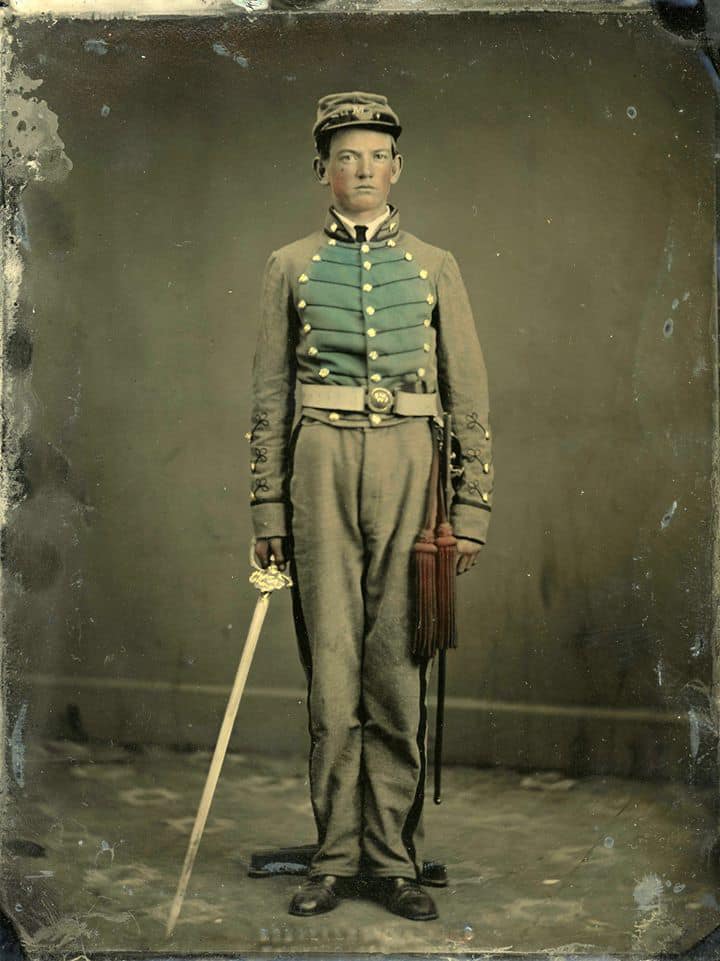
On my way back from Asheville I made a quick stop in Morganton. Here I paid respects to Lieut. John Caldwell. He was born in 1845 at Morganton, North Carolina to Tod & Minerva Caldwell. John grew up and worked on his family farm. In 1861 John who was known as “Jack”, was a Cadet at the Hillsboro Military Academy.[1] His father was a Unionist, but John went against his father’s wishes and chose to join his friends and defend his state. In July of 1861 John Was a member of the 6th North Carolina Volunteers stationed in Staunton Virginia.[2] By December of 1861, Caldwell was serving as a Drill Instructor for the state of North Carolina in a training camp at Asheville.[3] He continued in this capacity through 1862, until most of the volunteer regiments had organized and marched off. On May 5th, 1863, John Caldwell was mustered into “E” Co. 33rd North Carolina Infantry as a Private.[4]
1/4 plate tintype of Lieut. John Caldwell Courtesy of the Brem Family Collection.
He would be immediately promoted to Lieut. in order to replace the 33rd’s loses from the Battle of Chancellorsville.[5] Upon hearing of Young Johns promotion his father sent him a letter containing some wise fatherly advice… “Don’t be tyrannical or overbearing toward your men. Be kind and obliging to everyone no matter how low or humble his position may be, and if you get into battle be like a man and a true soldier. Be kind and merciful to your enemies if any should be placed in your power. It is a badge of true courage and of a gentlemanly Christian spirit to show mercy and kindness to your enemies and it may in the fortunes of war happen that you may need the friendship of those you are fighting against. Observe vigorously the golden rule, “to do unto others as you would have them do unto you.” Oh what would I not give if this cruel and unnatural war was ended and you and your army and in honor return home to your friends.”[6]
Lieut. Caldwell led his men during the march into Pennsylvania, he and his men were shelled along the way, and performed picket duty. They would reach Gettysburg on July 1st at around 15:30 they “on the right of the Division in the final and successful movement against the Union forces on Seminary Ridge held back Union Cavalry which threatened the flank and had a sharp conflict at the stone wall on Seminary Ridge just south of Fairfield Road.”[7] On the second day the 33rd was involved in some heavy skirmishing. “our line of battle was not engaged but there was a very strong picket fighting in front of us and as it was the turn of his company to go out on skirmish he (John Caldwell) was skirmishing all day and was not relived until about sundown. He took his skirmishers out in gallant style and during the day lost two of his company killed and several wounded.”[8] On the third day Lieut. Caldwell and the 33rd took part in the Pickett–Pettigrew–Trimble Charge, as part of Longstreet’s assault. During the assault Lieut. Caldwell and Lieut. Wilson Lucas were ordered by General Pender to command 75 men and take a farm lane. Lieut. Wilson Lucas writes of this action saying….
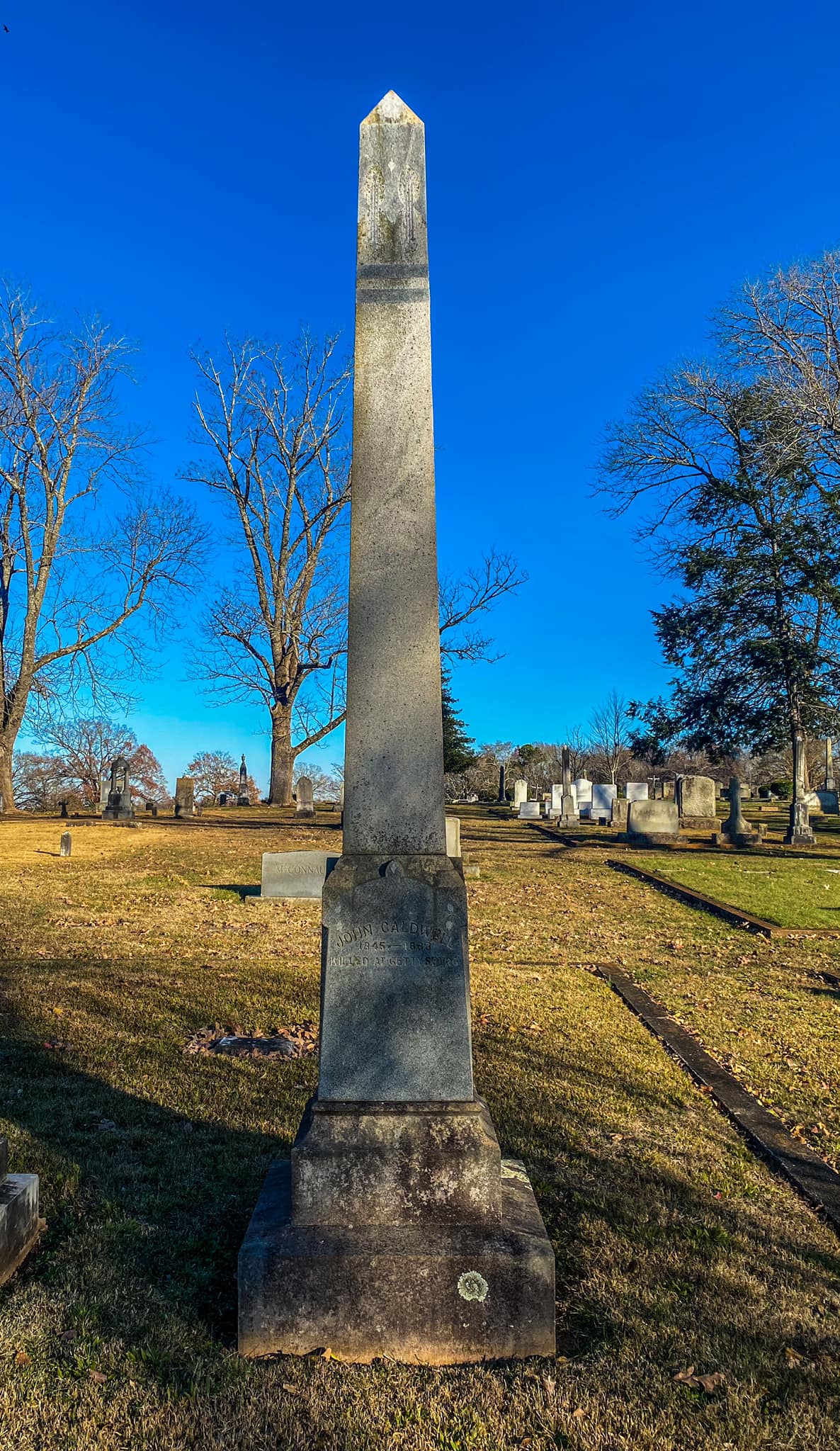
Gravestone of Lieut. John Caldwell 33rd North Carolina Infantry at Forest hill Cemetery MorgantonNorth Carolina Photo By @firefightinirish
“We formed the men in line, I commanded the right and Lieut. Caldwell the left. We had to charge through an open field, with no protection whatever. … When we got within two hundred yards of the Federals, we charged with a yell, and they stood their ground until we were within ten steps of the road, then a part of them ran, but 26 surrendered. And the very last time they fired upon us, which was not more than twelve or fourteen feet from them, they shot Lieut. Caldwell in the left breast. I did not see him fall. As soon as we were in the road one of the men told me Lieut. Caldwell was killed. I went at once to the left and found him, lying partly on his back and side … I called two men, and we placed him on his back and spread his oil cloth over him. He was warm and bleeding very freely when I got to him. I could not send him out to the regiment, for it was such an exposed placed the Federal skirmishers would have killed a man before he could get a hundred yards, as we were lying close to each other.”[9]
Currier & Ives. The battle of Gettysburg, Pa. July 3d. United States, 1863. [New York: Published by Currier & Ives, ?] Photograph. https://www.loc.gov/item/90709061/.
Lieut. Caldwell’s commanding officer Col. Avery in letter to John’s father wrote “You may have the satisfaction to know that he fell where we would all wish to fall (if it be God will) with his face to the enemy.’[10] Lieut. John Caldwell’s body was buried on Seminary Ridge that night “near “two honey-pod trees … not far from an old two-story house.”[11] Even with the reports of Lieut. Caldwell falling before the enemy, his father refused to believe his son was killed.
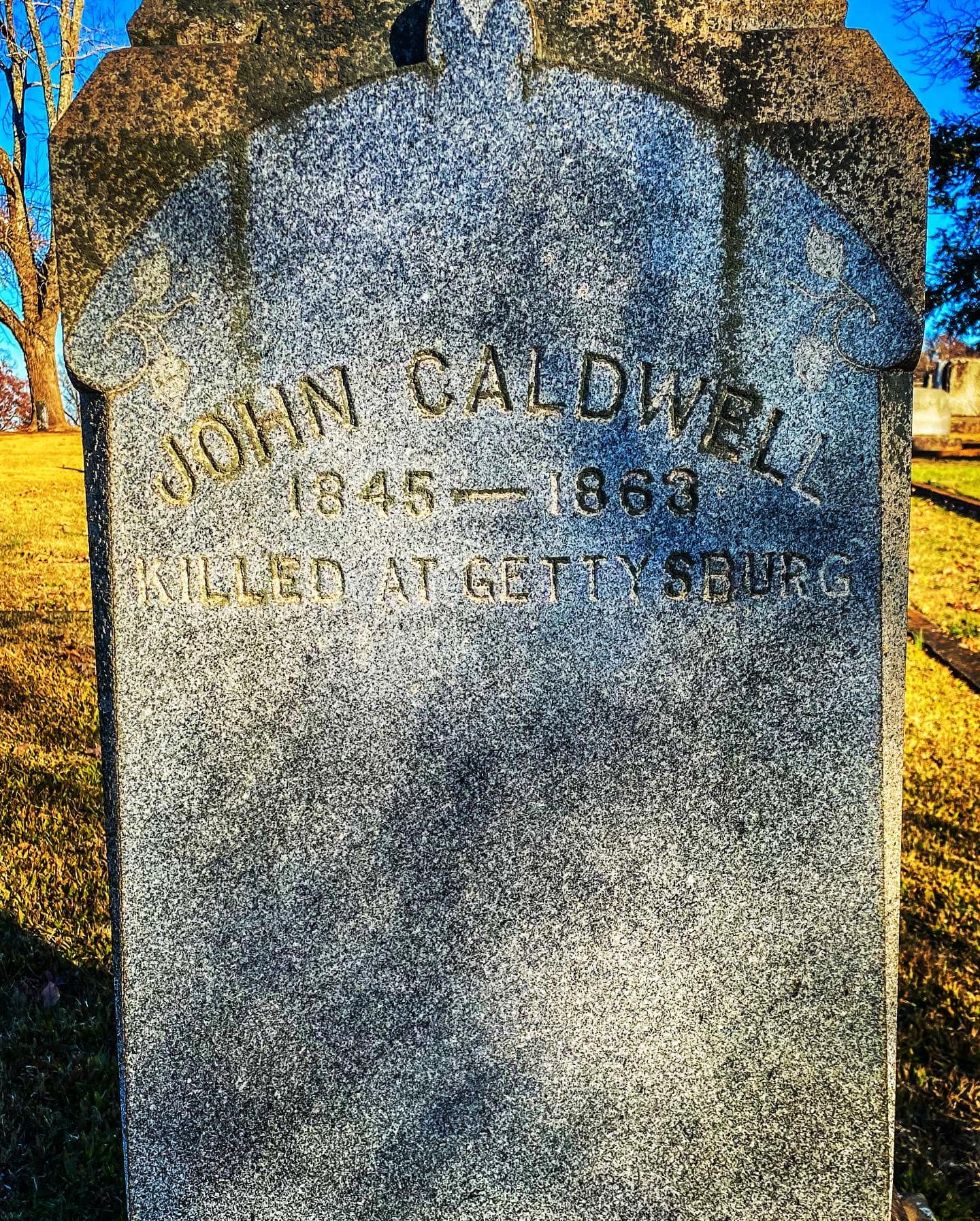
Inscription on Lieut. John Caldwell’s grave at Forest hill Cemetery MorgantonNorth Carolina. Photo By @firefightinirish
It was not until Tod R, Caldwell was governor of North Carolina, that he found out his son’s fate. It was told to him by Lieut. Wilson Lucas who was then a state legislature. It was said that the Governor “locked himself in his room and was all day in tears”.[12] Gov. Caldwell kept this secret from his wife for 14 years, she found out when Lieut. Caldwell’s bloodied commission to Lieut. Was sent home by a New Yorker who had found it on the Battlefield. Lieut. Caldwell’s body would be returned to North Carolina and reinterned at Forest Hill Cemetery in Morganton. Let us never forget this young man’s sacrifice for his state and his country.
[6] Christopher M. Watford, The Civil War in North Carolina: Soldiers’ and Civilians’ Letters and Diaries, 1861-1865 (Jefferson, North California: McFarland & Company, Inc., Publishers, 2009). Pg. 278
[8] Don Ernsberger, Also for Glory: The Pettigrew-Trimble Charge at Gettysburg July 3, 1863 (United States: Xlibris Corp, 2008). Pg. 57
[9] Michael C. Hardy, General Lee’s Immortals: The Battles and Campaigns of the Branch-Lane Brigade in the Army of Northern Virginia, 1861-1865 (El Dorado Hills, CA: Savas Beatie LLC, 2018). Pg. 330
[11] Michael C. Hardy, General Lee’s Immortals: The Battles and Campaigns of the Branch-Lane Brigade in the Army of Northern Virginia, 1861-1865 (El Dorado Hills, CA: Savas Beatie LLC, 2018). Pg. 350








 The Military History Traveler