A Letter From John Curran of the Irish Brigade

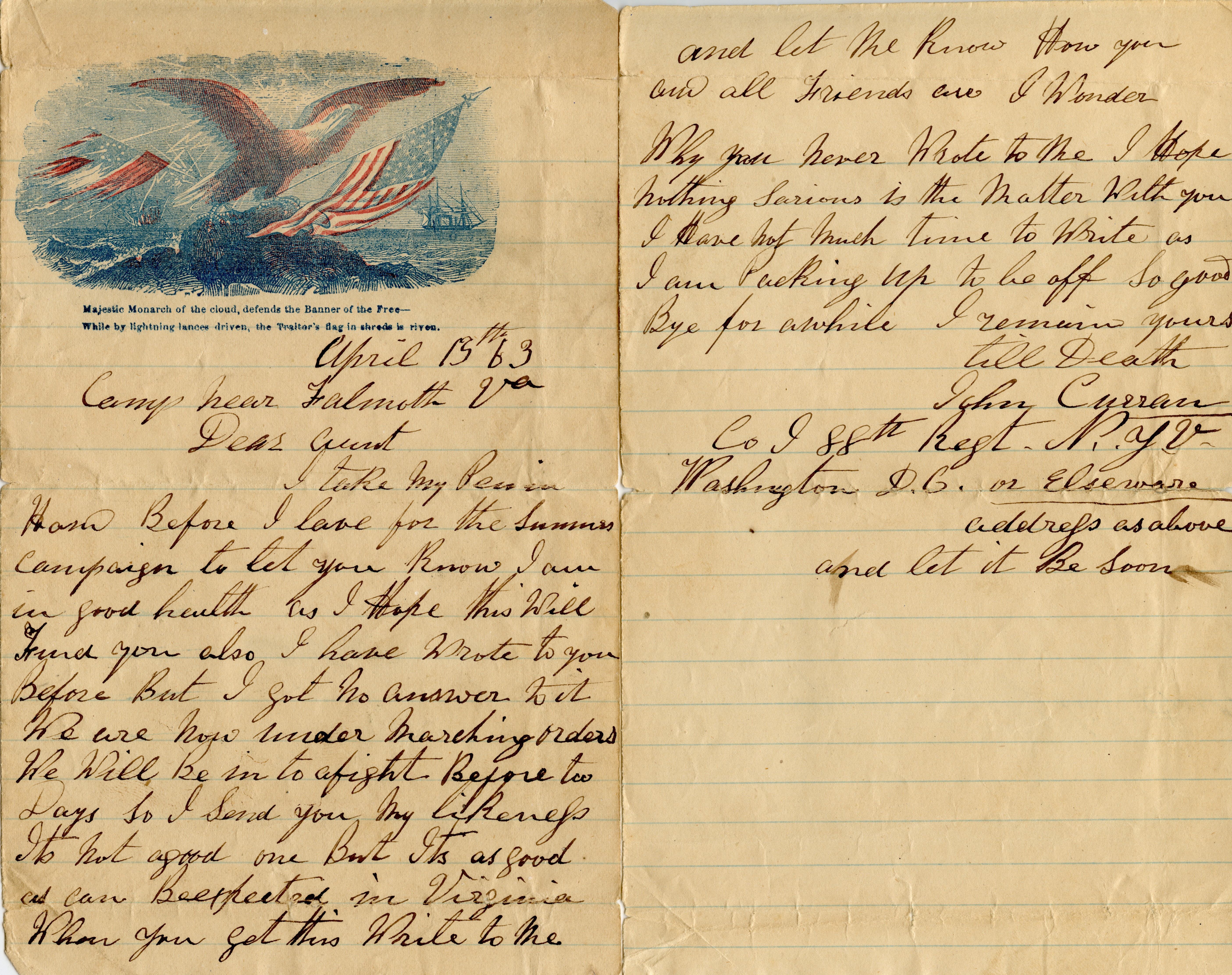
The Irish American experience in the Civil War takes on many facets. These can be seen in documents and stories. One such document is this letter composed by John Curran, of “I” Co. 88th Regiment New York Volunteers (Irish Brigade). The letter reads….


Camp Near Falmouth, Virginia
April 13th 1863

Dear Aunt,

I take my pen in hand before I leave for the Summer Campaign to let you know I am in good health. As I hope this will find you also. I have wrote to you before, but I got no answer to it.

We are now under marching orders. We will be into a fight before two days. So I send you my likeness. It is not a good one. But it’s as good as can be expected in Virginia.When you get this, write to me and let me know how you and all friends are. I wonder why you never wrote to me. I hope nothing serious is the matter with you. I have not much time to write as I am packing up to be off.
So good bye for a while.
I remain yours till death,

John Curran
Company I, 88th Regiment New York Volunteers
Washington, DC or elsewhere
Address as above and let it be soon.

John Curran was born in Ireland in 1843[1]  Curran would arrive in America and become a butcher. Soon after the outbreak of the American Civil War John heard the call. He would enlist in New York City on September 27th, 1861.[2] John would be mustered into “I” Co. 88th New York Infantry part of the famed Irish Brigade that same day. On the muster roll John Curran is listed as a Private.

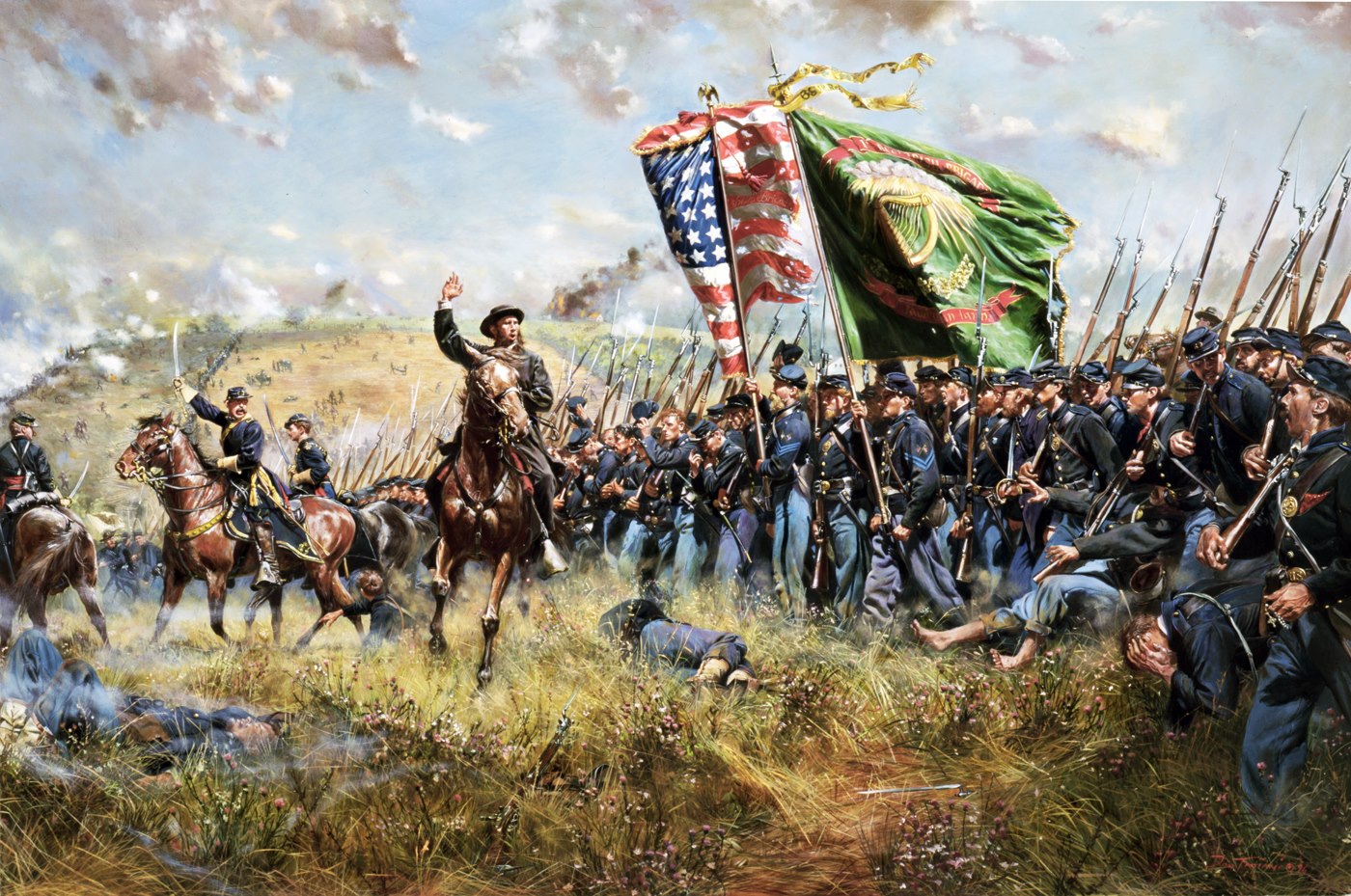
Father Corby blesses the Irish Brigade as they advance during the Battle of Antietam. Painting by Don Troiani Historical Artist

He was described as being five feet eight inches tall, with light hair, grey eyes, and a fair complexion. In December Curran and the 88th left for The Capital. They would remain to defend Washington till April of 1862, when the regiment participated in the siege of Yorktown. The 88th and Private Curran would be engaged at White Oak Swamp, Battle of Fair Oaks, The Seven days before Richmond, and Battle of Antietam. Here the 88th New York,

“crossed Antietam Creek (9:30 a.m.) at Pry’s Ford. As it formed at the edge of a cornfield Father William Corby, Chaplain rode along the line, giving absolution to the soldiers. The 88th New York crossing the cornfield, the command encountered a rail fence which was torn down under severe fire an opposing Confederate column advanced within 300 paces of the brigade. After several volleys, the Irish Brigade charged with fixed bayonets. At 30 paces it poured buck and ball into General George B. Anderson’s Brigade (2nd, 4th, 14th and 30th North Carolina Infantry Regiments) which fell back to “Bloody Lane”. After fierce combat its ammunition exhausted the Irish Brigade was relieved.”[3]

The next engagement Private Curran would be involved in would be the Battle of Fredericksburg. Before the battle..

“The men of the Irish Brigade placed sprigs of boxwood in their caps in honor of their Irish heritage. Later in the day, they took part in the futile assaults against confederate positions on Marye’s Heights. After the battle, the Union dead closest to the Confederate positions wore sprigs of boxwood in their caps.”[4]

At the time of this letter Private Curran and the 88th were posted in Falmouth Virginia. In the letter he states “We are now under marching orders. We will be into a fight before two days” This is a reference to the upcoming “Mud March”, and the Chancellorsville Campaign. During the Battle of Chancellorsville the regiment lost 5 men killed or mortally wounded, 4 officers and 18 men wounded, and 19 men missing.[5]

                In July of 1863 Private Curran would fight at Gettysburg.

 “The brigade entered the battle under command of Colonel Patrick Kelly 530 strong, of which this contingent, composing three battalions of two companies each, numbered 240 men. The original strength of these battalions was 3,000 men. The brigade participated with great credit to itself and the race it represented”[6]

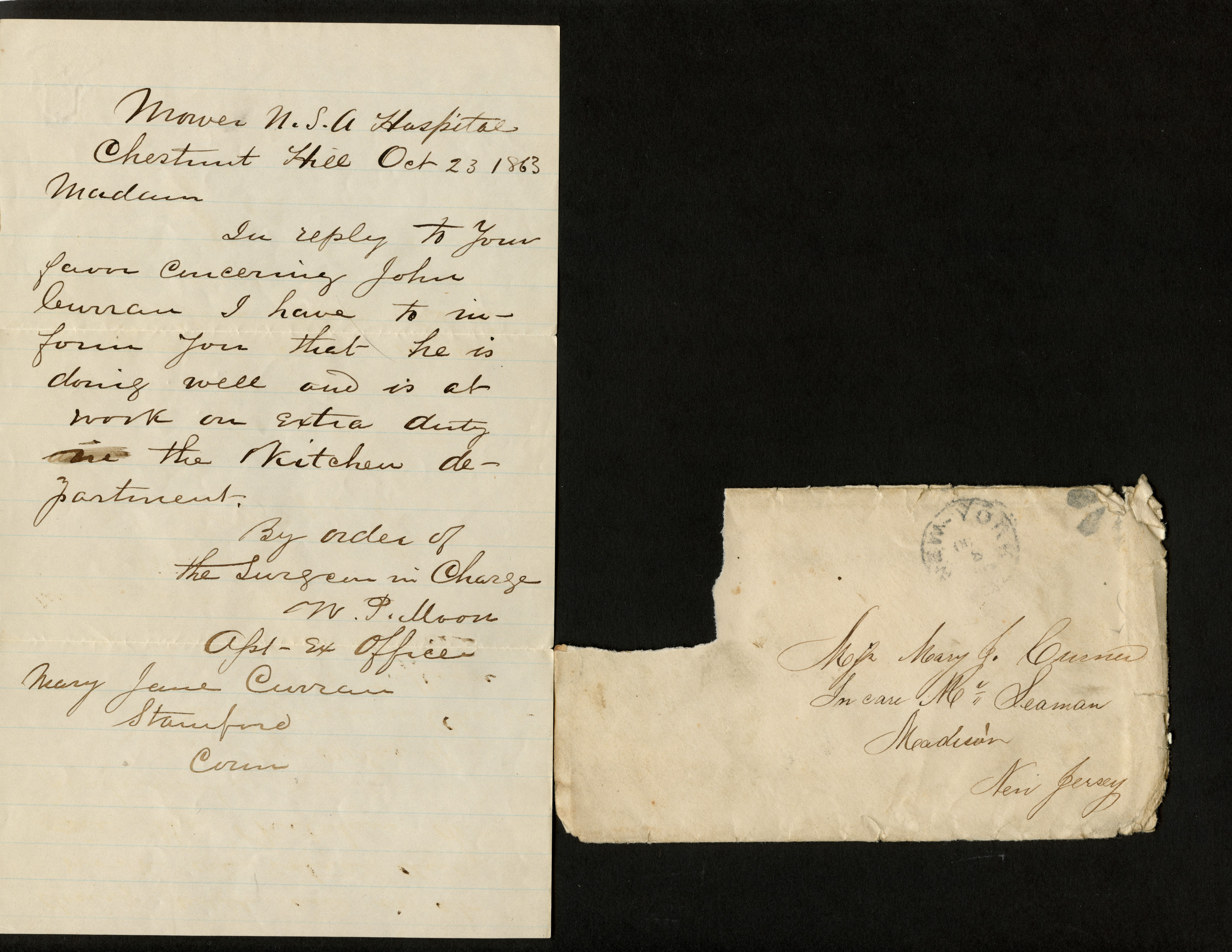
Campaigning and the toll of battle must have weighed heavily on Private Curran. According to a letter, written by Assistant Surgeon William Parkinson Moon in October of 1863.[7] Curran was on kitchen duty at Mower Hospital in the Chestnut Hill neighborhood of Philadelphia. It is unclear why he was there, however since Curran was not listed as wounded one can assume he was admitted for either disease, or “soldier’s heart” (The 1860’s term for PTSD).  

Letter, written by Assistant Surgeon William Parkinson Moon in October of 1863. Provided by, The American Military Heritage Museum of North Carolina.

                Private Curran would re-enlist in the 88th on March 22nd, 1864. He would participate in the following engagements: the Wilderness, Spotsylvania Court House, Po River, and the assault on the Salient or “Bloody Angle”.  He would desert while on furlough on May 16th, 1864.[8]

                After seeing all that death, one cannot blame Private Curran for his desertion. He served his adopted country honorably till his desertion. One could surmise that a lack of knowledge about the psychological toll of combat, and its treatment damaged Private Curran in an irreparable manor. His story ends here since no further records can be found.


[1] “Page 1 New York Civil War Muster Roll Abstracts,” Fold3, accessed January 7, 2022, https://www.fold3.com/image/315858065.

[2] Ibid

[3] “88th New York Infantry Regiment,” The Civil War in the East, May 28, 2019, https://civilwarintheeast.com/us-regiments-batteries/new-york-infantry/88th-new-york/.

[4] Ibid

[5] Ibid

[6] Ibid

[7] Moon, William Parkinson. Letter to Mary Jane Curran. “William Parkinson Moon RE: John Curran.” Chestnut Hill, Pennsylvania: Mower Hospital, October 23, 1863.

[8] “Page 1 New York Civil War Muster Roll Abstracts.” Fold3. Accessed January 7, 2022. https://www.fold3.com/image/315858065.

Image of an Immigrant Soldier Who Never Made it Home.

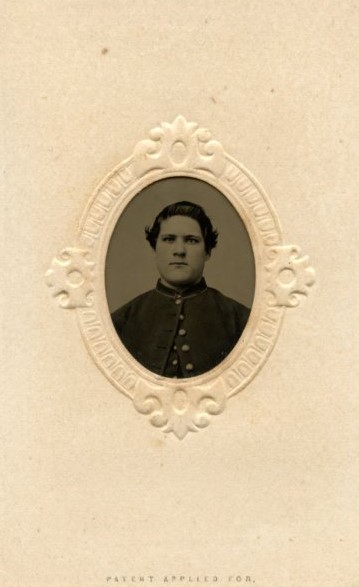
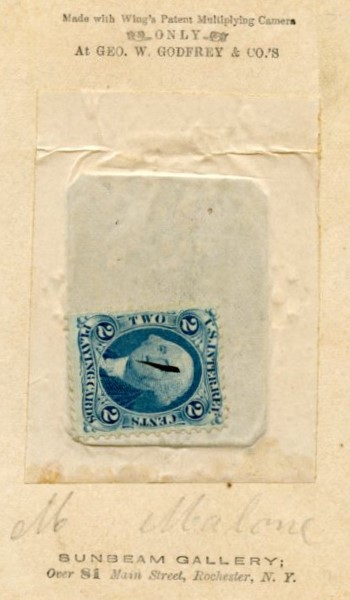
Every image has a story. This is the tail is of Private Michael Malone 14th New York Heavy Artillery. He was born in Ireland around 1828.[1] He was described as being five feet eight inches tall, with brown hair, blue eyes, and a light complexion.[2]

Tintype of Private Michael Malone 14th New York Heavy Artillery. From The The American Military Heritage Museum Of North Carolina

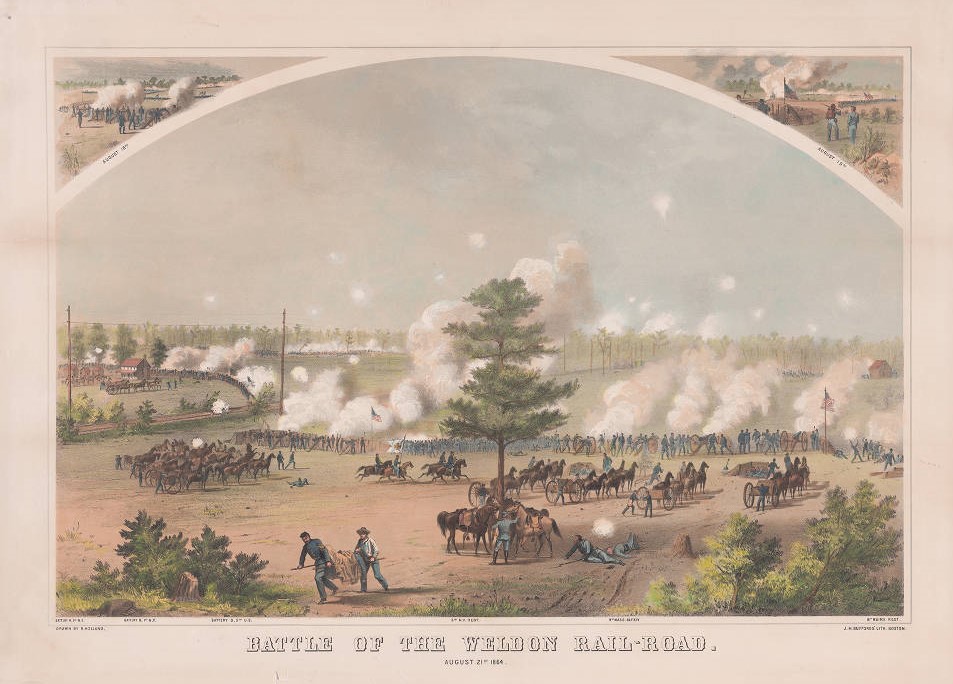
Michael would marry Mary Byrnes or Burns on January 17th, 1855, they would have four children.[3] Before the war Michael was employed as a day laborer in 1860[4] and as a farmer at the time of his enlistment.[5] Malone would enlist on September 4th 1863, and would muster into “D” Co. 14th New York Heavy Artillery eight days later. He would be assigned to garrison duty in New York Harbor till April 23, 1864.[6] From there he and the 14th would be in the following engagements, The Wilderness, Spottsylvania Court House, North Anna River, Totopotomoy, Cold Harbor, Siege of Petersburg, The Battle of the Crater, and Weldon Railroad where he was killed in action on August 19th, 1864.[7]

Battle of The Weldon Rail-Road August 21st 1864. Creator Holland, R., artist. J.H. Bufford’s Lith., printer.
Back of tintype card for Private Michael Malone 14th New York Heavy Artillery. From The The American Military Heritage Museum Of North Carolina

Michael would be survived by his wife and his children Ellen age nine, Bridget seven, Mary five, and John who was just one year old.[8] His wife Mary would apply for and receive a widows pension of $12 a month.[9] She would never remarry and worked as a housekeeper[10] till her death on July 12th, 1912.[11]

Private Michael Malone, a soldier in the 14th New York Heavy Artillery, exemplifies the sacrifices made during the Civil War, having served valiantly before being killed in action, leaving behind a widow and four young children who faced the challenges of life without him. His story highlights the personal toll of war on families and the enduring legacy of those who served.


[1] “New York Civil War Muster Roll Abstracts 14th Artillery Malone, Michael (25) Page 1.” Fold3. Accessed December 8, 2019. https://www.fold3.com/image/316624979.

[2] Ibid

[3] “Civil War ‘Widows’ Pensions’ New York Heavy Artillery Regiment 14 Company D Malone, Michael (WC40894).” Fold3. https://www.fold3.com/image/300805013. Accessed December 8, 2019. https://www.fold3.com/.

[4] “1860 United States Federal Census for Michael Malone New York Monroe Pittsford .” Ancestry. Accessed December 8, 2019. https://tinyurl.com/wkcydpf.

[5] “New York Civil War Muster Roll Abstracts 14th Artillery Malone, Michael (25) Page 1.” Fold3. Accessed December 8, 2019. https://www.fold3.com/image/316624979.

[6] “Battle Unit Details UNION NEW YORK VOLUNTEERS 14th Regiment, New York Heavy Artillery.” National Parks Service. U.S. Department of the Interior. Accessed December 8, 2019. https://www.nps.gov/civilwar/search-battle-units-detail.htm?battleUnitCode=UNY0014RAH.

[7] “Civil War ‘Widows’ Pensions’ New York Heavy Artillery Regiment 14 Company D Malone, Michael (WC40894).” Fold3. https://www.fold3.com/image/300805018. Accessed December 8, 2019. https://www.fold3.com/.

[8] Ibid

[9] “Civil War ‘Widows’ Pensions’ New York Heavy Artillery Regiment 14 Company D Malone, Michael (WC40894).” Fold3. https://www.fold3.com/image/300805022. Accessed December 8, 2019. https://www.fold3.com/.

[10] “1880 United States Federal Census for Mary Malone New York Monroe Pittsford 062.” Ancestry. Accessed December 8, 2019. https://tinyurl.com/wpej7e7.

[11] “Civil War ‘Widows’ Pensions’ New York Heavy Artillery Regiment 14 Company D Malone, Michael (WC40894).” Fold3. https://www.fold3.com/image/300805022. Accessed December 8, 2019. https://www.fold3.com/.

An American Flyer in Greensboro North Carolina: The Story of First Lieutenant Collier Carlton Olive.

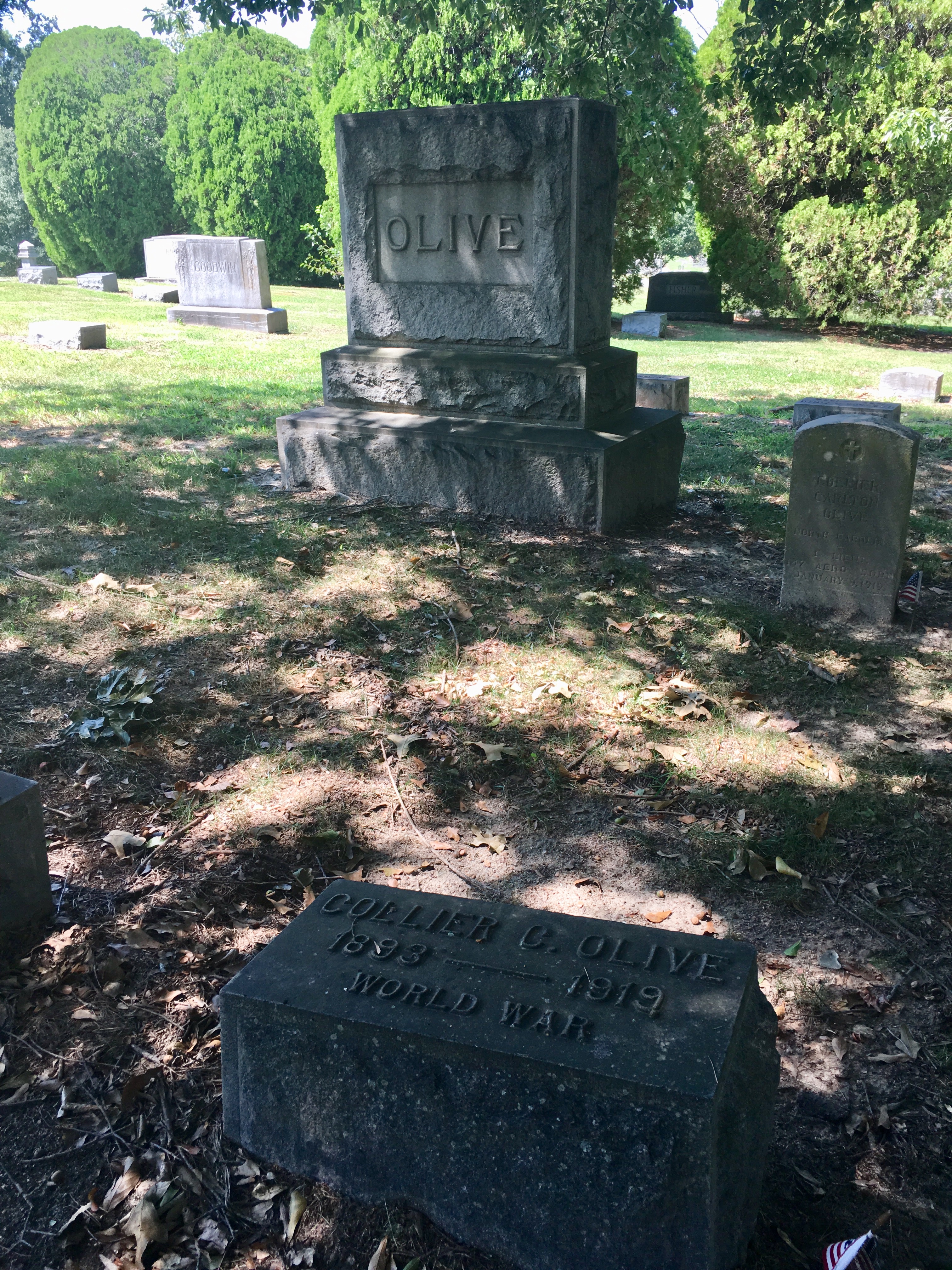
I recently took a trip to Green Hill cemetery in Greensboro North Carolina. Here I discovered the final resting place of First Lieutenant Collier Carlton Olive. He was born in Mount Airy North Carolina to Johnson and Margrett Olive on June 6th, 1893. He was of medium height and build, with blue eyes and brown hair[1].  Collier graduated from Greensboro High School before attending Mars Hill Academy. He later entered Wake Forest University as Junior. While attending Wake Forest Collier wrote humorous articles for the Greensboro Daily News.

Grave of First Lieutenant Collier Carlton Olive. At Green Hill cemetery Greensboro North Carolina. Photo By @firefightinirish

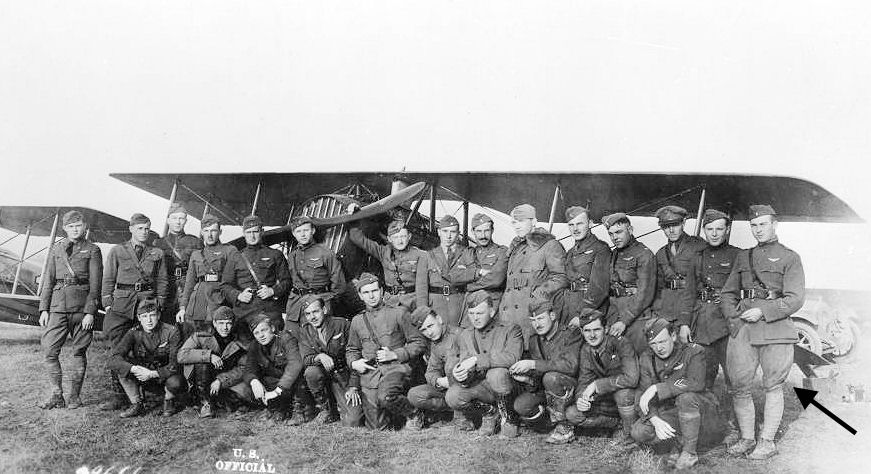
After graduating with honors, he would work as a journalist, and later be employed with Vick Chemical Company in their advertising department. With the First World War on the horizon Collier enlisted as a cadet at the officers’ training school Fort Oglethorpe Georgia, in May 1917.  During the time in OCS he applied for and was accepted into the aviation service. Collier was sent to ground school at the Georgia School of Technology and completed his course in the fall of 1917.[2]  He would set sail for Europe as an aviation cadet aboard the S.S. Kroonland on November 2nd, 1917.[3] Collier would earn his wings and commission in the 147th Aero Squadron on May 23rd 1918.[4] The 147th was assigned as a Day Pursuit (Fighter) Squadron as part of the 1st Pursuit Group, First United States Army. Its objective was to engage and clear enemy aircraft from the skies. As well as provide escort to reconnaissance and bombardment squadrons over enemy territory.

Photo of the 147th Aero Squadron group photo with a SPAD XIII. Likely taken at Rembercourt Aerodrome, France, November 1917. First Lieutenant Collier Carlton Olive is on the extreme right highlighted with an arrow. Photo provided by the Air Service, United States Army – Air Service, United States Army photograph.

The 147th also targeted enemy observation balloons, performed close air support, and tactical bombing attacks of enemy forces along the front lines.[5]  First Lieutenant Collier Carlton Olive participated in operations in the Toul Sector, Marne Sector, as well as Saint Mihiel. In a letter home dated December 22nd, 1918, he spoke of being wounded before the armistice and that he was suffering from influenza but was discharged from the hospital and feeling better. Sadly, Collier must have taken a turn for the worse as he would die of Pneumonia in Issoudun France on January 9th, 1919.[6] His body was sent home aboard the U.S.S Pocahontas on October 18th, 1920.[7] Colliers remains would arrive in Greensboro at 0645 on November 13th, he was interred at Green Hill cemetery at 1400 hrs. The services were conducted by Rev. J. Clyde Turner and were only attended by immediate family.[8]  Let us never forget this young man and his sacrifice to make the world safe for democracy.


[1] “U.S., World War I Draft Registration Cards, 1917-1918 for Rufus Eldrige Garrett.” Ancestry. Accessed September 12, 2019. https://www.ancestry.com/.

[2] “Lieut. Collier Olive Succumbs To Pneumonia.” Greensboro Daily News. January 30, 1919.

[3] “U.S., Army Transport Service, Passenger Lists, 1910-1939 for Collier C Olive” Ancestry. Accessed September 12, 2019. https://www.ancestry.com/.

[4] “Collier Olive Comissioned.” Greensboro Daily News. July 12, 1918.

[5]  Maurer, Maurer (1978), The US Air Service in World War I, The Office of Air Force History, Headquarters USAF Washington

[6] “Lieut. Collier Olive Succumbs To Pneumonia.” Greensboro Daily News. January 30, 1919.

[7] “U.S., Army Transport Service, Passenger Lists, 1910-1939 for Collier C Olive” Ancestry. Accessed September 12, 2019. https://www.ancestry.com/.

[8] “Body Of Lieut. Olive Buried In Green Hill.” Greensboro Daily News. November 14, 1920.

A Letter Speaks

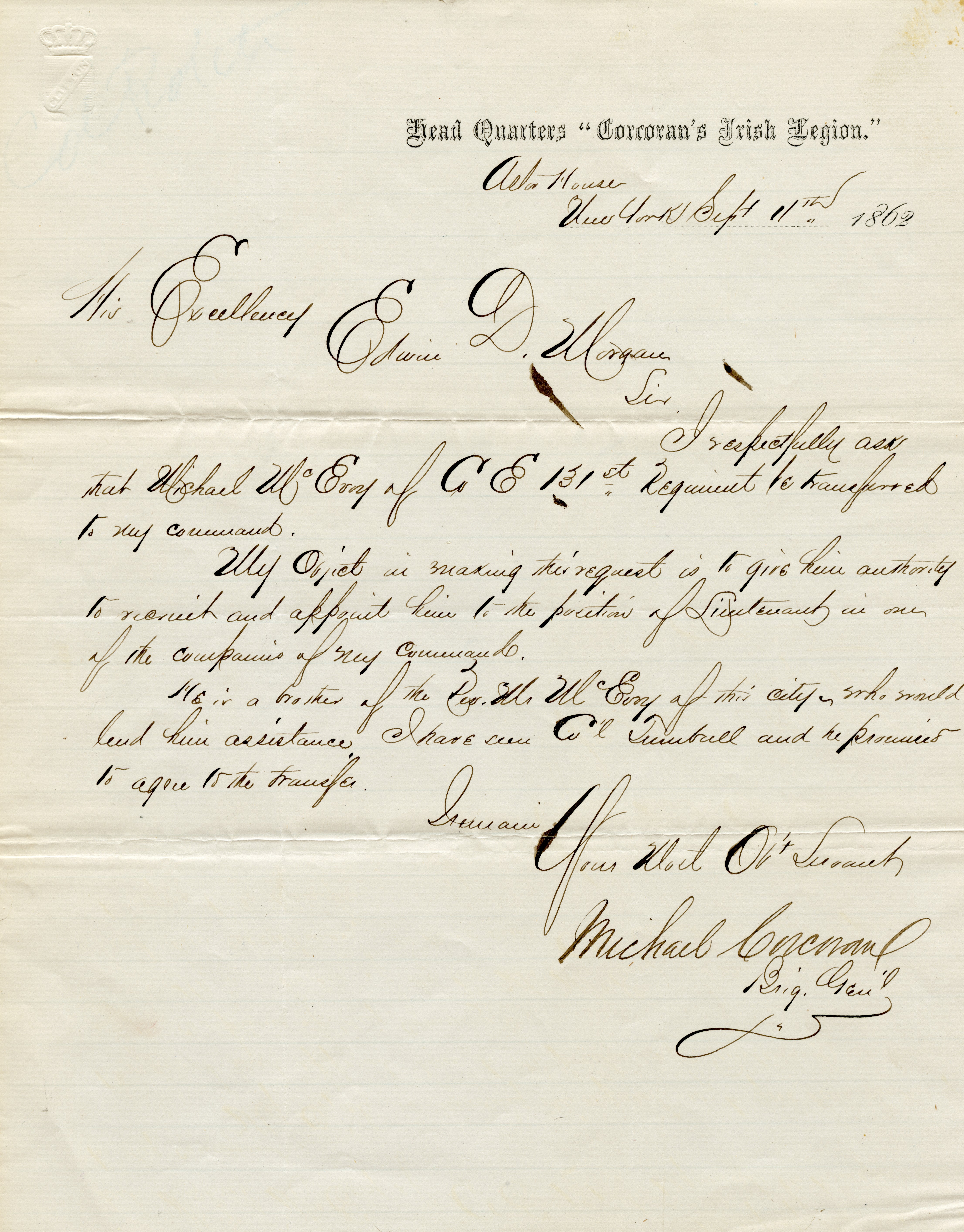
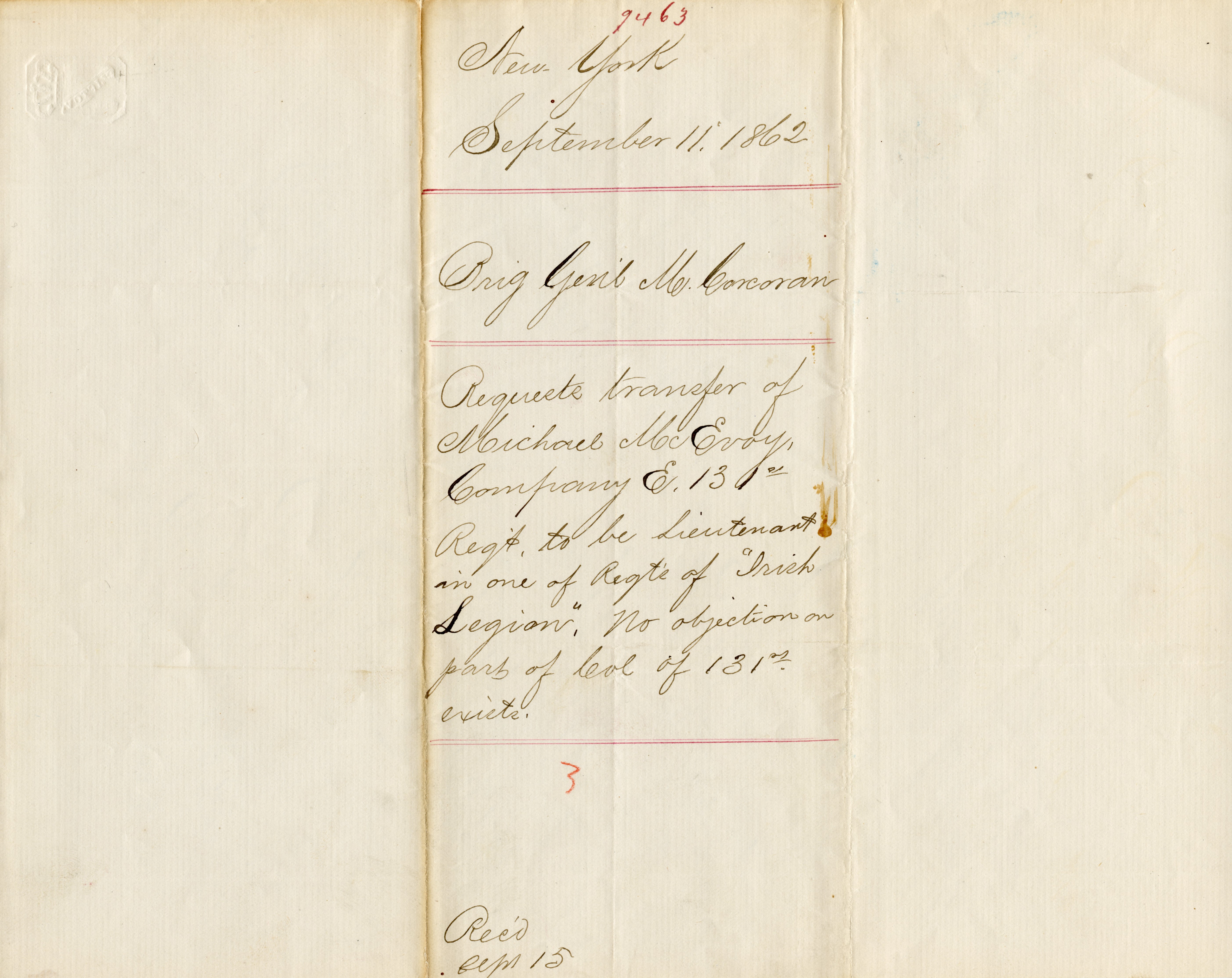
A letter to some is just a piece of paper with words on it. However when one digs deep they can find a hidden story. This letter is written and signed by Brigadier General Michael Corcoran. The letter’s recipient is then Governor of New York Edwin D. Morgan. In this post I am not going to just focus on the “big names” associated with the piece (We can all use Google for that). There is also the interesting tail of Michael McEvoy of Company E, 131st New York. So without further adieu may I present the The letter it reads……

“Sir,

I respectfully ask that Michael McEvoy of Company E, 131st Regiment be transferred to my command.

My object in making this request is to give him authority to recruit and appoint him to the position of Lieutenant in one of the companies of my command.

He is a brother of the Provost Marshal McEvoy of this city, who would lend his assistance. I have seen Colonel Turnbull and he promised to agree to the transfer.

I remain,

Your Most Obedient Servant,

Michael Corcoran

Brigadier General” [1]

Corcoran Letter, provided by The American Military Heritage Museum Of North Carolina
Back of the Corcoran Letter, provided by The American Military Heritage Museum Of North Carolina

Michael McEvoy was born in Ireland around 1828[2]. He was described as five feet nine inches tall, with blue eyes, light hair, and a light complexion.[3] McEvoy would immigrate to America prior to 1850. He was listed on the 1850 United States Federal Census as being a farmer, and married to Cath McEvoy, they had one child James.[4] McEvoy was employed as a Teamster, at the time of his enlistment in the Union army on August 13th, 1862.[5]

. He would be mustered into “E” Co 131st infantry as a private on September 6th.[6] Per General Corcoran’s request McEvoy would be transferred to “D” Co. 170th New York on September 19th, 1862.[7] He would be mustered in as a private on October 7th, 1862. Private McEvoy would participate in the battle of Deserted House. He would later be granted leave on March 21st, 1863, McEvoy would never return to service[8]. Private McEvoy would be listed as a deserter from camp at Suffolk Virginia on April 3rd, 1863.[9] That is where his trail ends for now.

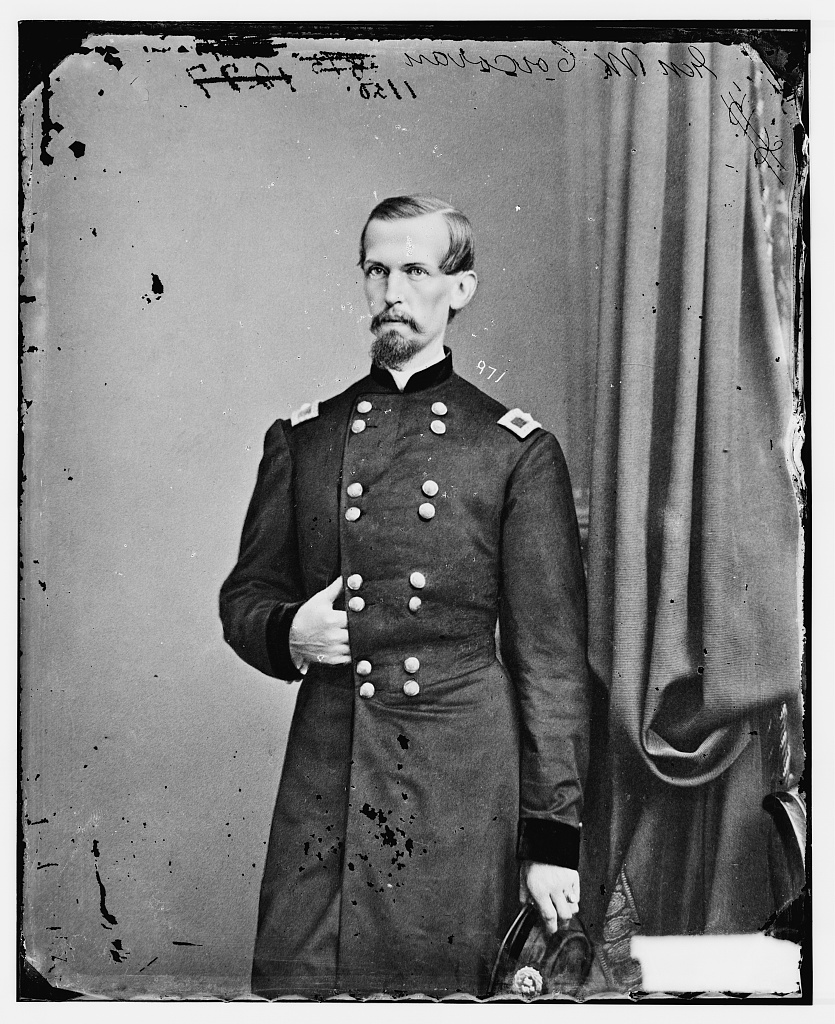
Michael Corcoran was born in Carrowkeel, county Sligo Ireland. He was a member of the Irish Nationalist Guerrilla force known as the Ribbonman. His ties to this group were eventually discovered in 1849, so he immigrated to New York City in order to avoid capture.[10] To gain a position in society Corcoran joined the 69th New York State Militia as a private. He would advance rapidly due to, “his military passion and his previous knowledge of military tactics were a great advantage to him.”[11] Corcoran moved up in rank and became a Colonel.  It was in this capacity that Corcoran became a hero to the Irish Nationalist, as well as the overall Irish immigrant population of New York. When he chose not to parade the 69th  in front of the Prince of Whales upon the Princes visit, saying that “as an Irishman he could not consistently parade Irish-born citizens in honor of the son of a sovereign, under whose rule Ireland was left a desert and her best sons exiled or banished.”[12] His action resulted in a court-martial. However, it was overturned due to the need of good officers to fight in the Civil War.


General Michael Corcoran, U.S.A. United States, None. [Between 1860 and 1865] Photograph. https://www.loc.gov/item/2018667330/.

Corcoran resumed his rank in the 69th New York and was present at that Battle of First Manassas, where he was captured. Corcoran spoke of this later by saying, “I did not surrender until I found myself after having successfully taken my regiment off the field, left with only seven men and surrounded by the enemy.”[13] Corcoran was eventually exchanged over a year later, and was received back with acclaim. He was given the rank of Brigadier General and put in command of his own troops, known as Corcoran’s “Irish Legion.” The first battle of the Legion took place during the Battle of Deserted House Virginia. Although not one of the biggest battles of the war, Corcoran demonstrated calmness under fire and his men showed how they admired Corcoran by following his every commanded under intense battle conditions. Sadly this would be Corcoran’s last major battle as he was killed later that year when he fell from his horse. Even though Corcoran’s life was cut short his legend and the Prince of Wales incident continued to inspire men, especially those of his Legion who were fighting for their adopted homes as well as Irish pride.

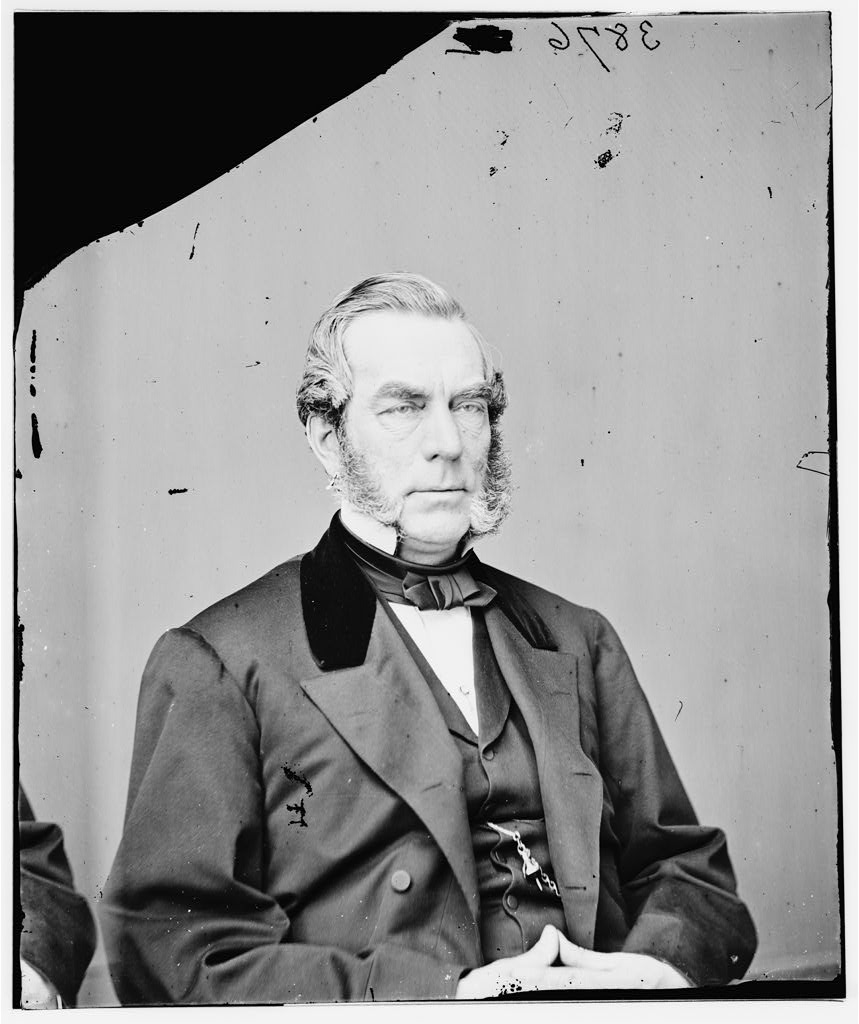
The National Governors Association has written this about Gov. Edwin D. Morgan.

“EDWIN D. MORGAN, the twenty-third governor of New York, was born in Washington, Massachusetts on February 8, 1811. His education was attained at the Bacon Academy in Colchester, Connecticut, where his family moved to in 1822. Morgan established a successful business career, with holdings in the banking and brokerage industries. He first entered politics in Connecticut, serving as a member of the Hartford city council, a position he held in 1832. After moving to New York, he served as alderman of New York City in 1849; was a member of the New York State Senate from 1850 to 1851; and served as the state immigration commissioner from 1855 to 1858. He also chaired the Republican National Committee from 1856 to 1864. Morgan next secured the Republican gubernatorial nomination, and was elected governor by a popular vote on November 2, 1858.

Edwin D. Morgan
. United States, None. [Between 1860 and 1870] Photograph. https://www.loc.gov/item/2018669639/.

He was reelected to a second term in 1860. During his tenure, the state’s canal system was advanced; Vassar College was founded; and volunteers were raised and equipped for service in the Civil War. Morgan also served as major general of volunteers during the war, as well as serving as the commander for the Department of New York. After leaving the governorship, Morgan was elected to the U.S. Senate, an office he held from 1863 to 1869. From 1872 to 1876 he chaired the Republican National Committee; and in 1881 he turned down an appointment to serve as U.S. secretary of treasury. Governor Edwin D. Morgan passed away on February 14, 1883, and was buried in the Cedar Hill Cemetery in Hartford, Connecticut.” [14]

Although these three men are from completely different backgrounds, their stories intersect in this one document. Historical stories are everywhere, you just need to dig under the surface to find them.


[1] Corcoran, Michael. Letter to Gov. Edwin D, Morgan. “Brigadier General Michael Corcoran Request For Michael McEvoy.” New York, New York: Astor House, September 11, 1862.

[2] “Page 1 New York Civil War Muster Roll Abstracts McEvoy, Michael.” Fold3. Accessed December 31, 2022. https://www.fold3.com/image/315981459.

[3] Ibid

[4] “Michael McEvoy in the 1850 United States Federal Census.” Ancestry. Accessed December 31, 2022. https://www.ancestry.com/discoveryui-content/view/7008512:8054?tid=&pid=&queryId=6a9bb6ca9453a20b805c27f011dfac83&_phsrc=csG312&_phstart=successSource.

[5] Page 1 New York Civil War Muster Roll Abstracts McEvoy, Michael.” Fold3. Accessed December 31, 2022. https://www.fold3.com/image/315981459

[6] Ibid

[7] “Page 1 New York Civil War Muster Roll Abstracts Michael McEvoy.” Fold3. Accessed December 31, 2022. https://www.fold3.com/image/316135643.

[8] Ibid

[9] Ibid

[10] Pritchard, Russ A. The Irish Brigade : a Pictorial History of the Famed Civil War Fighters. (Philadelphia,

[11] Conyngham, The Irish Brigade and It’s Campaigns , 537

[12] Ibid 

[13] Ibid, 538

[13] Shiels, Damian. Irish in the American Civil War Exploring Irish involvement in the American Civil War . March 18, 2012. http://irishamericancivilwar.com/2012/03/18/baptism-of-fire-the-corcoran-legion-at-deserted-house-virginia-30th-january-1863/ (accessed 11 20, 2013).

[14] Sobel, Robert, and John Raimo. “Edwin Denison Morgan.” National Governors Association. Accessed November 3, 2023. https://www.nga.org/governor/edwin-denison-morgan/.

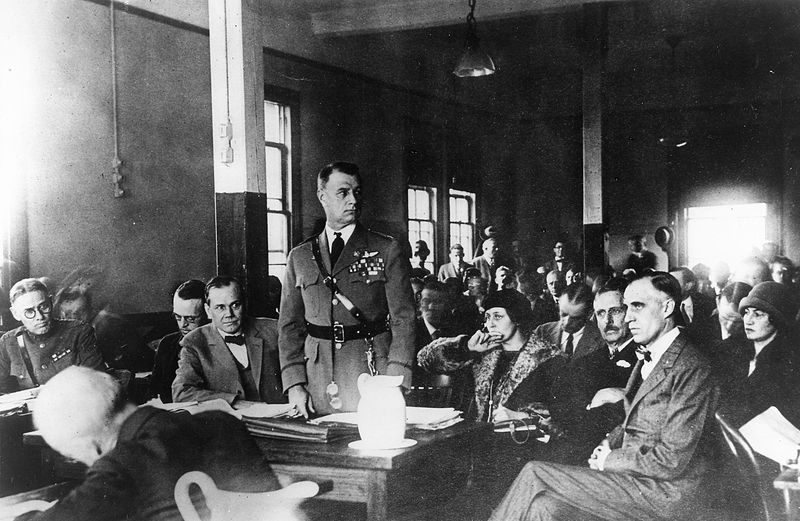
Brigadier General William “Billy” Mitchell A Hero Ahead Of His Time

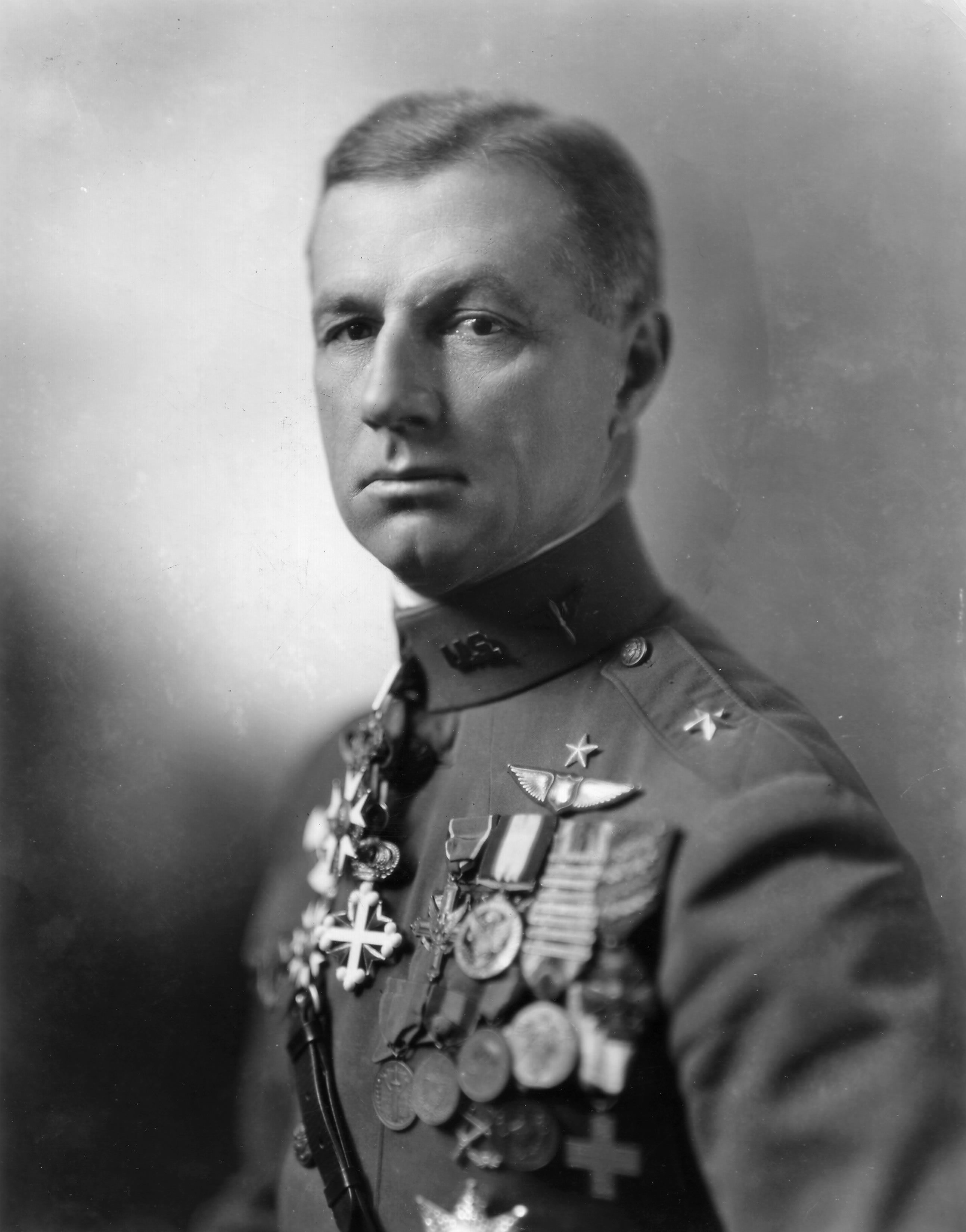
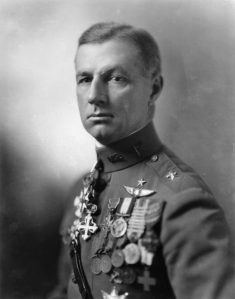
Brigadier General Billy Mitchell, United States Army Air Service

Brigadier General Billy Mitchell, United States Army Air Service

Brigadier General William “Billy” Mitchell was a born leader and a military visionary. He made numerous contributions to the United States and its use of air power. Even though his career ended in disgrace, Brigadier General Billy Mitchell’s ideas were ahead of his time. Mitchell personally saw the power of the air force in World War I. Stating, in 1918, “The day has passed when armies on the ground or navies on the sea can be the arbiter of a nation’s destiny in war. The main power of defense and the power of initiative against an enemy has passed to the air.” (1) Mitchell would spend the rest of his military career trying to prove this statement true by conducting tests and writing theory’s that are still used to this day.

William “Billy “Mitchell was born December 29th 1879 into a family of wealth and privilege. This gave him the advantage of a good education, as well as giving him opportunities not afforded to the average individual. These opportunities included travel. As a child, Mitchell’s father, 1st lieutenant John L. Mitchell who fought with the 24th Wisconsin Infantry Regiment during the American Civil War, would take young Billy to Waterloo and other battle sites around the world. There Billy was told of the gallant deeds and heroism that took place at these battle sites. Mitchell’s sister Ruth stated, “Willie could see the old battles going on as if they were unfolding before his eyes.” (2) In 1898 the United States was on the verge of conflict in Cuba. It was at this time, based on his background, that a youthful Billy Mitchell would sign up for service seeking adventure, thus beginning his twenty-eight year military career.
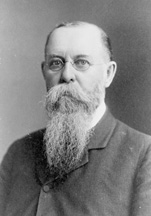
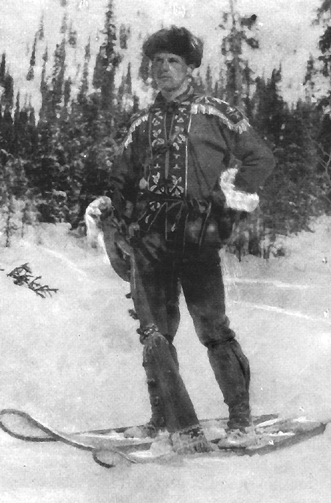
Billie Mitchell's Father John L. Mitchel

Billie Mitchell’s Father John L. Mitchel

Mitchell was sent to Florida with the First Wisconsin Volunteers. Within a week he made the rank of Second Lieutenant, becoming the youngest officer in service at just eighteen years of age. (3) During this campaign, Mitchell did not see any action. This frustrated him, he remarked to his father, “Here I have been since the war without any foreign service to speak of and have not been in any engagements as of yet. How would you have felt in the Civil War if you had been out of the way somewhere?” (4) In 1899 there was an insurrection in the Philippines and on November 1st of that year, Mitchell arrived there under the command of General Arthur Macarthur to help put down the insurgency. This would give Billy his wish to see combat and he did so as a member of the Signal Corps. It was the job of the Signal Corps to travel with the infantry and sometimes ahead of them to lay down wires to establish telegraph communications. This put Mitchell in the thick of the fighting. He related one particularly dangerous operation in Mabalang to his sister Ruth saying, “I got our line into the rebel trenches ahead of the troops. The insurrectionists ran, blowing up a big railroad bridge. We had a pretty good scrap there. As they retreated along the railroad track they were not more 300 yards away from us in columns of fours; but there was not a single company of our troops insight of them. I thought I could bring somebody down with my pistol, they looked so near, but I had to use my carbine.” (5) By the end of the Philippine insurrection Mitchell’s signalmen had broken up several rebel bands and captured seventy insurgent flags, furthermore Mitchell was promoted to the rank of Captain for his efforts. (6)
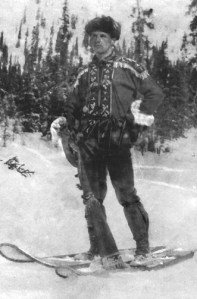
Mitchell in Alaska with the Signal Corps

Mitchell in Alaska with the Signal Corps

Mitchell decided to make the Army his career and spent time in Alaska with the Signal Corps engineering communications between isolated outposts and the United States as well as Canada, again with much success. After this he was assigned to Fort Leavenworth known back then as the “intellectual center of the army.” (7) It was there in 1906 that Mitchell first discovered the importance that the air would play in future warfare. He introduced his findings in a presentation given to the Signal Corps School entitled “The Signal Corps with Divisional Cavalry and Notes on Wireless Telegraphy, Searchlights and Military Ballooning.” (8) In this presentation, Mitchell spoke of dirigibles saying they may “Cruise at will over a battlefield, carrying messages out of a besieged fortress or sail alone above a beleaguered place, immune from the action of men on the earth’s surface.” (9) In the same article, Mitchell went on to say, “By towing another balloon, loaded with explosives, several hundred pounds of guncotton could be dropped from the balloon which it is towing in the midst of an enemy’s fortifications.” (10) These ideas were groundbreaking. As the awareness in the use of air combat was in its infancy, Mitchell saw its potential by concluding his work with this statement. “Conflicts, no doubt, will be carried on in the future in the air” (11)
Mitchell took a staff position in Washington DC where he stayed in till 1916 when due to his frustration at the lack of promotion and a desire to see field service he joined the Armies Aviation Squadron. In this capacity, Mitchell was promoted to Major and assigned to bolster military aviation training. He took part in the training getting fifteen hours of flight time while taking thirty-six flights. (12) Although Mitchell did not earn his wings with this training, he was considered one of America’s top aviation experts. It was due to this fact that on March 19th 1917 then Lieutenant Colonel Mitchell was sent to France as an aeronautical observer. By the time he arrived, the United States had declared war on Germany beginning American involvement in the First World War.

While Mitchell was in France, he was amazed to see the advancements the French had made in military aircraft. He remarked, “I had been able to flounder around with the animated kites that we called airplanes in the United States, but when I laid my hand to the greyhounds of the air they had in Europe, which went twice as fast as ours, it was an entirely different matter.” (13) It was this experience that started to display to Mitchell the full potential of modern air power. He immediately petitioned the United States Army to manufacture or purchase these new advanced aircraft, but he was rebuffed on multiple occasions making Mitchell most frustrated. Another experience that opened Mitchell’s eyes was when he was caught in an air raid noticing “…another series of strong explosions, then the machine gun and anti-aircraft fire. The whole town was, of course, in darkness and everyone had taken to the vaces or vaulted wine cellars inside of houses.” (14) This had a profound effect on Mitchell as he now could see the effect of air power on the morale of the enemy, as well as the reach that such power can have as to make a quick strike from a distance in a short amount of time. An additional event that facilitated Mitchell understanding about the future of air power was a reconnaissance flight that he took with a French pilot over the German lines. Mitchell wrote that he could gain a better picture of the troop formations by air then on the ground. He said, “A very significant thing to me was that we could cross the lines of these contending armies in a few minutes in our airplane, whereas the armies had been locked in the struggle, immovable, powerless to advance for three years…” (15) The combination of these revelations made Mitchell even more fervent in his requests for more support from the United States Army to strengthen and improve their air capabilities. He was looked at by those in Washington as someone of little value when it came to his grasp of aviation, where as he was considered an expert in France. Mitchell would later use his relationship with French premier Alexandre Ribot to coax him to send a message to Washington DC restating Mitchell’s plan, under the guise that it was Ribot’s, requesting twenty thousand planes and forty thousand mechanics. These numbers were much more than the United States could spare, however it awoke the bureaucrats in the American capital and started the process that would eventually lead to a massive aerial force three times the size of the French. (16)

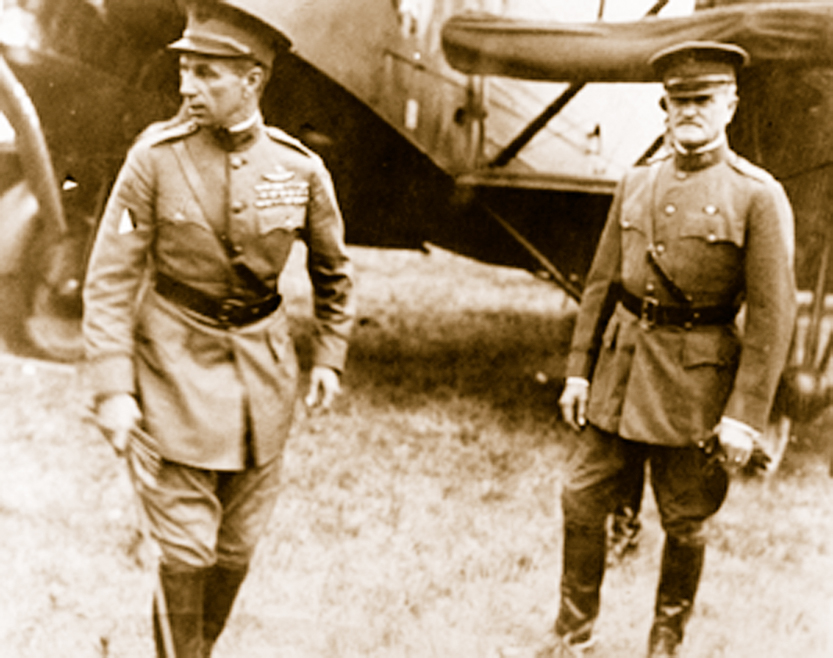
Although this was a victory for Mitchell, his problems with getting the United States aviation capabilities up to date were just starting. The arrival of General John “Black Jack” Pershing added a whole new set of challenges for Mitchell, who felt, “General Pershing himself thought aviation was full of dynamite and pussyfooted just when we needed the most action.” (17) These two strong characters, Mitchell and Pershing, would have many heated discussions on the role of air power and who would command it. Mitchell was tired of having to go through
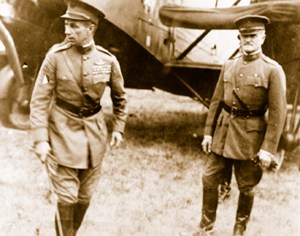
Billy Mitchell and General Pershing

Billy Mitchell and General Pershing

Washington for all of his requests and wanted one man to be the head of aviation, where Pershing did not see the need for this, feeling that aviation was just a whim. The discussions got so heated between the two that Pershing threatened to send Mitchell back to the states. Mitchell however was not intimidated and became unrelenting in this matter. So as to not have to make due on his threat, Pershing seeing the value of Mitchell, appointed Major General William Kenly as Chief of the Air Service in the fall of 1917 in order to calm Mitchell down and to keep peace. (18)
At this time, Mitchell was known as a bit of a highflier, racing around in his Mercedes and entertaining several up and coming flyers and dignitaries. On one occasion, Mitchell’s Mercedes broke down on a small French road when an Army driver stopped to help him. The driver ended up being able to fix the car due to the fact that he was a racing driver back in America. The driver wanted to be in the Air Service and Mitchell helped make that happen. The driver’s name was Eddie Rickenbacker, America’s first Ace Flyer and one of Mitchell’s greatest contributions to the Air Service. (19)

However, Mitchell’s life was still not all parties and leisure. There was still plenty of work to be done and arguments to be made. A new advisory rose to challenge Mitchell in the form of American Brigadier General Benny Foulois, who was put in command of the United States Air Service. Foulois was an experienced aviator who had no time for Mitchell’s brashness saying Mitchell had an “extremely childish attitude”, and was “mentally unfit for further field service”. (20) This posed yet another issue for Pershing who again saw the value of Mitchell not only as a tactician but also as a liaison to the French. So in order to mediate the situation, Pershing sent Mitchell to the front, and made him commander of all aviation forces there. This was where Mitchell shined the most.
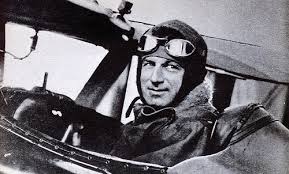
Mitchell about to fly an air mission during the First World War

Mitchell about to fly an air mission during the First World War

Mitchell, much like his friend future General George S. Patton Jr., always led from the front and in Mitchell’s case this meant flying missions. One such mission took place when the French and American Armies were being squeezed by the Germans in an attempt to out flank them and head into Paris. A plan was devised to use a combined British and American squadron to patrol the sky. Straightaway, Mitchell saw only disaster for this proposal and made a counter suggestion to fly a reconnaissance mission. This offer was accepted and Mitchell decided to fly the mission himself. He took off after a quick few hours of sleep and headed toward the enemy. Mitchell discovered thousands of Germans marching in columns towards a series of bridges. He quickly turned his aircraft in the direction of the closet allied air field touched down and found the commander spreading the word to start an aerial attack on the bridges. A secondary aerial attack on the German supply base at Fere-en-Tardenois was also suggested by Mitchel and approved by command. Mitchell’s vision saw that this plan, if successful, would turn the German Army around and trap them, thus destroying any chance they had for victory. (21) The action that took place was intense and resulted in the first allied success in the air. Although this success was limited, it started to turn the tide of the war. For his brave reconnaissance flight, Mitchell was awarded the Distinguished Service Cross. (22)

Mitchell’s next large scale maneuver was the largest aerial operation of the war consisting of fifteen hundred aircraft, this assault was known as the St. Mihiel offensive. Between September 12th and 16th , the Americans where in total command of the air making thirty three hundred flights into enemy territory racking up four thousand hours of flight time firing thirty thousand rounds of ammunition, making more than one thousand separate bomb attacks using seventy five tons of munitions. This operation resulted in the destruction of sixty enemy planes and twelve enemy balloons, all of this during bad weather. (23)

The First World War established the career of Billy Mitchell; he entered France as a Lieutenant Colonel and was now leaving a Brigadier General with a reputation for having extraordinary leadership and being perhaps the most experienced airmen in the service of the United States Army. On November 11th 1919, the armistice ending the First World War was signed. Before returning to the United States, Mitchell went to London to discuss air strategy with the Chief of the British Air Staff, General Hugh Trenchard. The focus of this discussion was on air independence, concentrating on the theory that the aviation wing of the Army should be a separate service all together. Mitchell was a propionate of this theory and after the talks upon his return to the United States it became one of his major goals. (24)

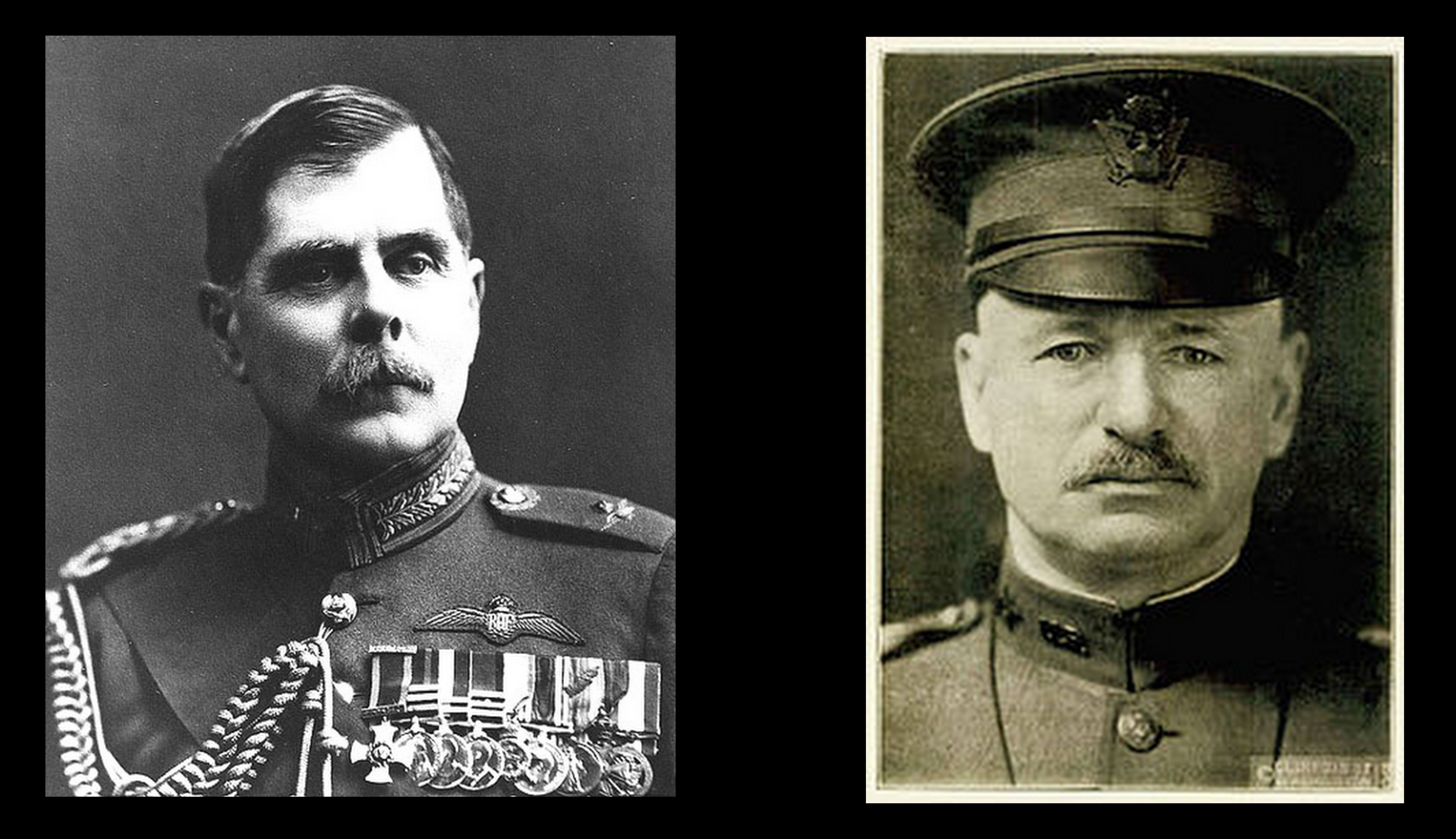
Left: Sir Huge Trench Right:  Major General William Hann

Left: Sir Huge Trench Right: Major General William Hann

Mitchell’s constant speeches and writings to the Army War Department concerning a separate aviation service and the possibility of air attack from across the globe, made him very unpopular. He was also making enemies amongst members of the Army who were not flyers by questioning their authority on matters of air combat. He had a large quarrel with General William G. Hann, who was a very well established commander at the time. Mitchel insisted that air power alone could win a war and that infantry was a thing of the past. Hann, an infantry commander, took offence and the argument ended in a great deal of destine between both men, Mitchel wrote about the situation saying, “it impressed on me more than ever that, under the control of the army, it will be impossible to develop an air service.” (25) Mitchell’s challengers were not only in the army, he was developing enemies in the navy as well, due to two factors; the aforementioned separate aviation service, as well as a tight military budget. A battle erupted between the Navy and Mitchell over these issues.

The Navy went so far as to send then Assistant Secretary of the Navy Franklin Delano Roosevelt out on a speaking tour to campaign against the idea of a separate air wing claiming it was ill conceived and would take money away from the navy, making them weaker and a strong navy was essential to keep America safe. (26) Mitchell long felt that the navy was almost obsolete and vulnerable to air attack saying in his book Winged Defense The Development and Possibilities of Modern Air Power –Economic and Military “From a military standpoint, the airmen have to study the effect that air power has on navies and what their future will be. They know that within the radius of air power’s activities, it can completely destroy any surface vessels or war ships. They know that in the last war, surface ships, battleships, cruisers and other sea craft took comparatively little active part.” (27)
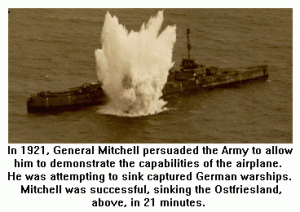
mitchell.6Mitchell’s ideas were put to the test in a series of experiments conducted by both the Army and the Navy on the bombing of ships from the air. Multiple vessels were used. One of the vessels used in this series of experiments was the captured German battleship Ostfriesland. The navy had the first chance at destroying the mighty craft, but only succeeded in damaging her. Then Mitchell’s army squadron flew in and obliterated the German warship, sinking her in minutes. Mitchell described the scene this way, “When a death blow has been dealt by a bomb to a vessel, there is no mistaking it. Water can be seen to come up under both sides of the ship and she trembles all over…In a minute the Osterfriesland was on her side in two minutes she was sliding down by the stern; in three minutes she was bottom-side up, looking like a gigantic whale, in a minute or more only her tip showed above water.” (28)

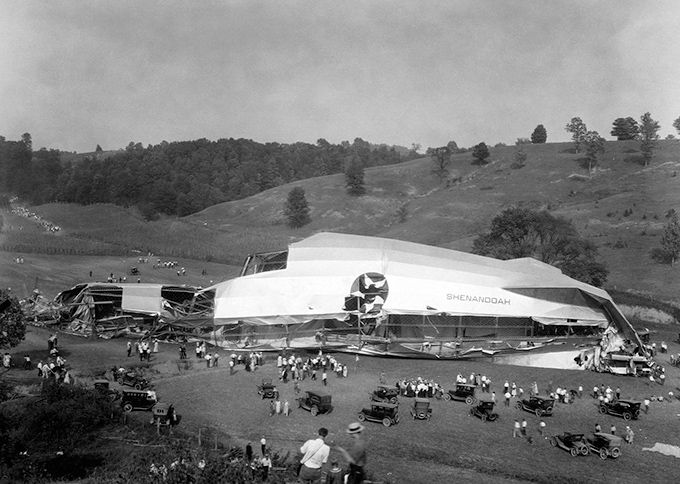
Although this proved Mitchell’s theory that air power can defeat sea power, his fight to gain funding and a separate aviation service went on to no avail and resulted in his demotion from Assistant Chief of the Air Service. He reverted to his permanent rank of Colonel and was transferred to San Antonio, Texas, as air officer to a ground forces corps. (29) This is where he heard the news about the tragedies of the Shenandoah as well as the ill-fated attempt to fly from San Pablo Bay to Hawaii. Both incidents happened within
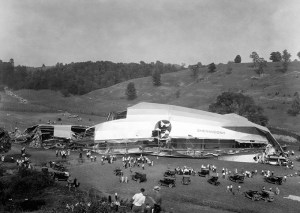
1925: Caught in a squall over southeastern Ohio, the Navy dirigible USS Shenandoah breaks up and crashes into a field, killing 14 of the 43 men aboard.

1925: Caught in a squall over southeastern Ohio, the Navy dirigible USS Shenandoah breaks up and crashes into a field, killing 14 of the 43 men aboard.

days of one another and were put on by the navy as well publicized attempts to show naval air superiority they ended in failure and death. The Secretary of the Navy not wanting to admit any wrongdoing issued a statement, “The failure of the Hawaiian flight and the Shenandoah disaster we have come to the conclusion that the Atlantic and the Pacific are still our best defenses. We have nothing to fear from enemy aircraft that is not on this continent.” (30) This enraged Mitchell as it was a slap in the face to everything he stood for and was warning against, therefore he felt compelled to make this statement, about the incidents; to the press, “My opinion is as follows: These accidents are the result of the

incompetency, the criminal negligence, and the almost treasonable administration of our national defense by the Navy and War Departments.” (31) Mitchell was court marshaled and charged with “Conduct to the prejudice of good order and military discipline and in a way to bring discredit upon military service” (32) Mitchell left for Washington DC and was placed under arrest a few days after his arrival. The court-martial record has one million four hundred thousand words and consists of seven large volumes, but in all of those words there was not enough to help Mitchell out of this predicament. (33) By Special order 248 on October 20Th 1925 Mitchell was found guilty and received what was considered a light sentence due to his heroic service in the First World War. The sentence consisted of a suspension of rank and command, plus forfeiture of pay for five years. Mitchell retired from the service one year later in disgrace. (34) The next ten years Mitchell spent time with his family and traveled around the country discussing air power still as feisty as he was during his many campaigns before Congress. He died of heart failure in 1936 a man ahead of his time but looked

The Court Martial of Billy Mitchell

The Court Martial of Billy Mitchell

upon then as an agitator and a crackpot.
Billy Mitchell is now revered by many and his doctrine has become the bases for the American Air Force which is now a separate branch of service something Mitchell fought so hard for but would never see in his life. He is a true war hero and a visionary whose grandiose ideas were way ahead of his time ending his career in disgrace. He was a man who never faltered from his beliefs, making him one of the greatest military leaders in the history of the United States of America.
1) Jones, Johnny R. William “Billy” Mitchell’s Air Power. Honolulu: University Press of the Pacific, 2004 Pg. 3

2) Davis, Burke. The Billy Mitchell Affair. New York: Random House, 1967. Pg. 15

3) Davis, Pg. 17

4) Ibid

5) Mitchell, Ruth. My Brother Bill. New York: Harcourt, Brace And Company, 1953. Pg. 49

6) Davis, Pg.’s 18-19

7) Hurley, Alfred F. Billy Mitchell, Crusader for Air Power. New ed. Bloomington: Indiana University Press, 1975. Pg. 10

8) Ibid, Pg. 11

9) Ibid,

10) Ibid,

11) Ibid,

12) Ibid, Pg. 21

13) Davis, Pg. 29

14) Schwarzer, William. The Lion Killers Billy Mitchell and the Birth of Strategic Bombing. Mt. Holly: Aerial Perspective, 2003. Pg. 20

15) Davis, Pg. 30

16) Ibid, Pg. 32

17) Ibid, Pg. 35

18) Ibid, Pg. 35

19) Ibid, Pg. 36

20) Ibid

21) Levine, Isaac Don. Mitchell Pioneer of Air Power. New York: Duell, Sloan and Pearce, 1943. Pg.’s 120-121

22) Ibid, Pg. 127

23) Ibid, Pg.’s 132-135

24) Cook, James. Billy Mitchell. Boulder: Lynne Reinner Publishing, 2002. Pg. 107

25) Cooke, Pg. 114

26) Ibid, Pg. 115

27) Mitchell, William. Winged Defense The Development and Possibilities of Modern Air Power, Economic and Military. New York: G.P. Putman’s Sons, 1925. Pg. 99

28) Ibid, Pg. 72

29) Burlingame, Roger. General Billy Mitchell Champion of Air Defense. New York: McGraw-Hill , 1952.Pg. 141

30) Ibid, Pg. 148

31) Mitchell, Pg. 301

32) Cooke, Pg. 180

33) Gaureau, Emile, and Cohen, Lester. Billly Mitchell Founder of Our Air Force and Prophet Without Honor. New York: E.P. Dutton & Co , 1942.Pg. 135

34) Cooke, Pg. 217
The Brave Soldiers From Erin Why The Irish Fought With Great Success During The American Civil War: Part 3 Irish Nationalism

Nationalism by definition is: loving ones country and wanting to be governed by ones own people. During the second part of the nineteenth century, there was an increased progression of nationalistic feeling in Ireland. Due to this feeling there was a rise in physical force revolutionary groups, the largest organized group being the Fenians. Even though the Fenians started out in Ireland, they also established roots in America, by recruiting large numbers of the new Irish immigrant population. This was easily done due to the fact that the new Irish blamed the English for having to leave their homes in the old country. (1) The Fenian movment was at the height of popularity when the American Civil War broke out. So their ranks decided that fighting in this war would boost the movement as well as being great practice for the eventual uprising in Ireland. Even those who had no intention of going back to Ireland felt a connection to the Fenian movement and were swayed by it. Not to mention, many of the commanders of the Irish ethnic regiments were respected Fenians. These commanders were great motivators for the Irish fighting in the war, since many would follow them simply because of their allegiance to Ireland. This unique Irish quality was yet another reason these brave soldiers from Erin were such fierce fighters.

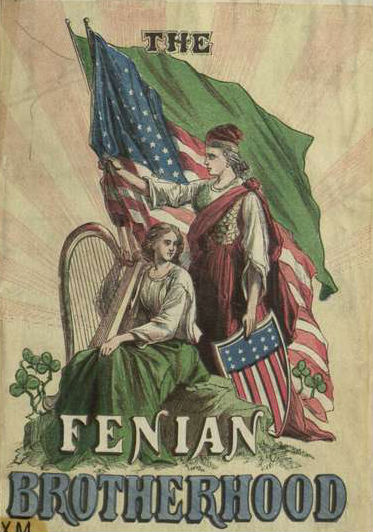
The Fenians' progress (1865), cover.

The Fenians’ progress (1865), cover.

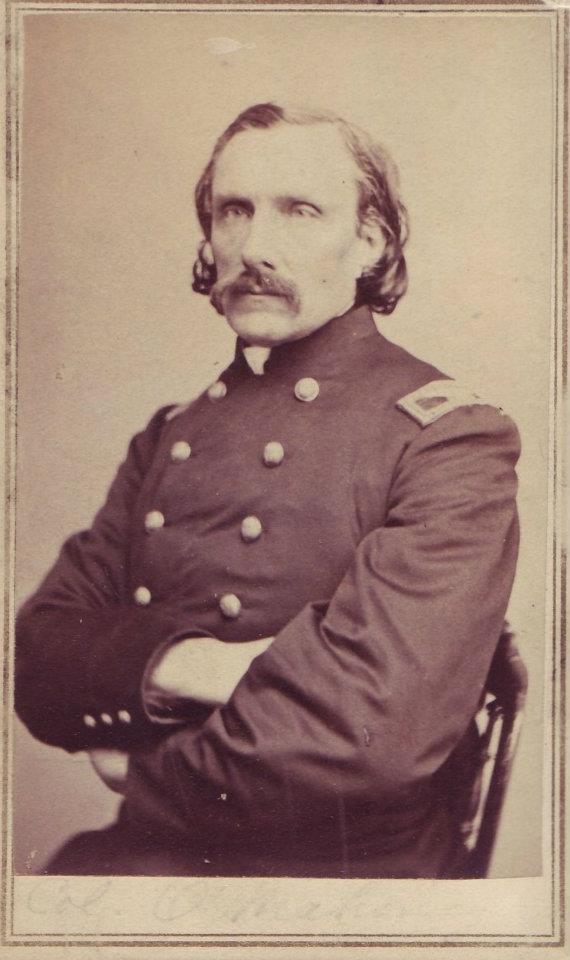
One such commander was John O’Mahony, one of the Fenian movement founders,  O’Mahony was born in Ireland in 1816. In 1848 he took part in the failed Ballingarry rebellion and escaped to France. From there he made his way to the United States in 1854. Upon arrival he joined many groups to advance the cause of Irish freedom, one of which was the 69th New York, where he rose to the rank of colonel. During the American Civil War O’Mahony’s rank was mostly political, as he traveled around the nation speaking about the Fenian cause. However, he had a change of heart and felt fighting would help the Fenians cause even more. Therefore, he founded the Phoenix Brigade. At the time the Brigade was founded it was not endorsed as a State of New York military force. However, it was eventually merged into a formal State of New York militia force, designated as the 99th New York State Militia. This made it an Irish Republican military unit subsidized by an independent state. This unit would soon be activated to fight against the Confederate States. O’Mahoney also planned to use them after the war to invade Canada and strike a blow to the English on foreign soil. (2)

Carte de visite of John Francis O'Mahony; From The Collection of The American Military Heritage Museum Of North Carolina

Carte de visite of John Francis O’Mahony; From The Collection of The American Military Heritage Museum Of North Carolina

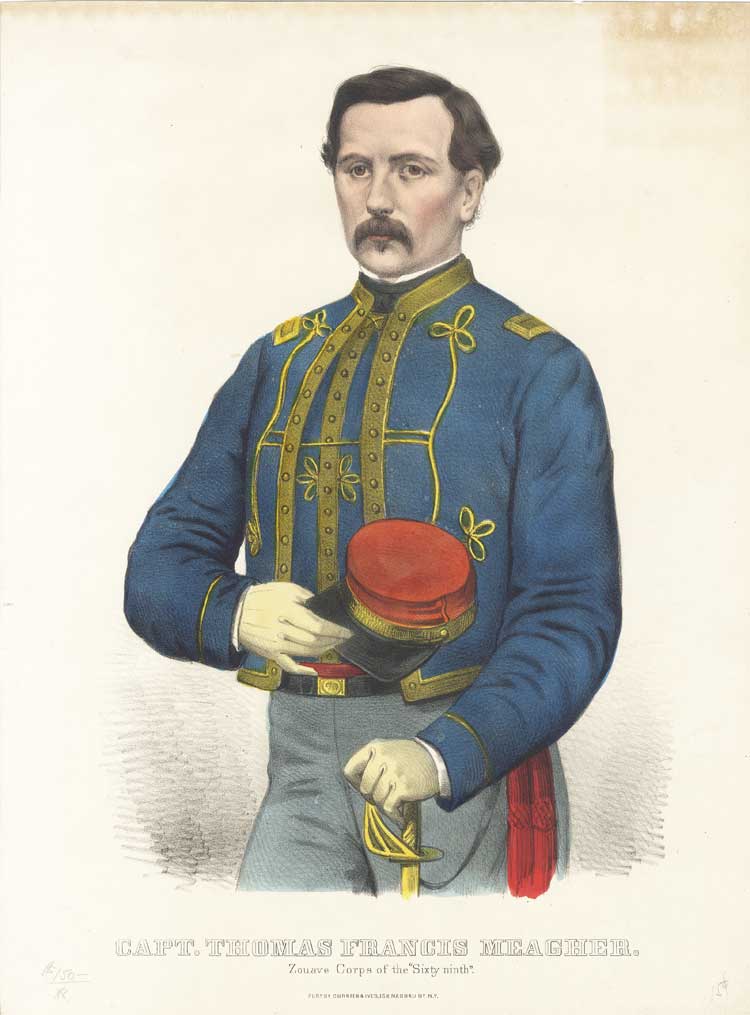
One of the most respected Fenians who inspired the Irish with his ferocious Irish nationalism was Thomas F. Meagher. Meagher succeeded in getting himself into difficulties on both sides of the Atlantic. Born in County Waterford, Ireland and opposed to British rule, he joined the Young Irelanders movement, which was a branch of the Fenians. Meagher quickly rose to a position of power do to his great oratory skills. His most famous speech was the “Sword Speech” given in Dublin on July 28, 1846, (3) this solidified his power and he was given the moniker “Meagher of the Sword.” Meagher’s prestige in the movement made him an ideal candidate for a diplomatic mission to France, which resulted in him bringing back a flag that would eventually become the Irish Tri-Color, the National flag of Ireland today. (4)  Meagher like O’Mahony was involved in the failed uprising of the Young Irelanders at Ballingarry, County Tipperary. He was captured, tried, convicted and sentenced to be exiled to Tasmania. (5) Meagher made a daring escape from his penal colony and landed in America as a hero to the Irish population. He picked up where he left off as an orator for the Irish cause. It was of no surprise that when the American Civil War came about Meagher used his status to raise an Irish Zouave company in 1861 and joined the Union army himself.

1861 Currier Ives entitled Captain. Thomas Francis Meagher. Zouave Corps Of The 'Sixty-Ninth'. Meagher appears in his zouave uniform of the 69th New York Vols

1861 Currier Ives entitled Captain. Thomas Francis Meagher. Zouave Corps Of The ‘Sixty-Ninth’. Meagher appears in his zouave uniform of the 69th New York Vols

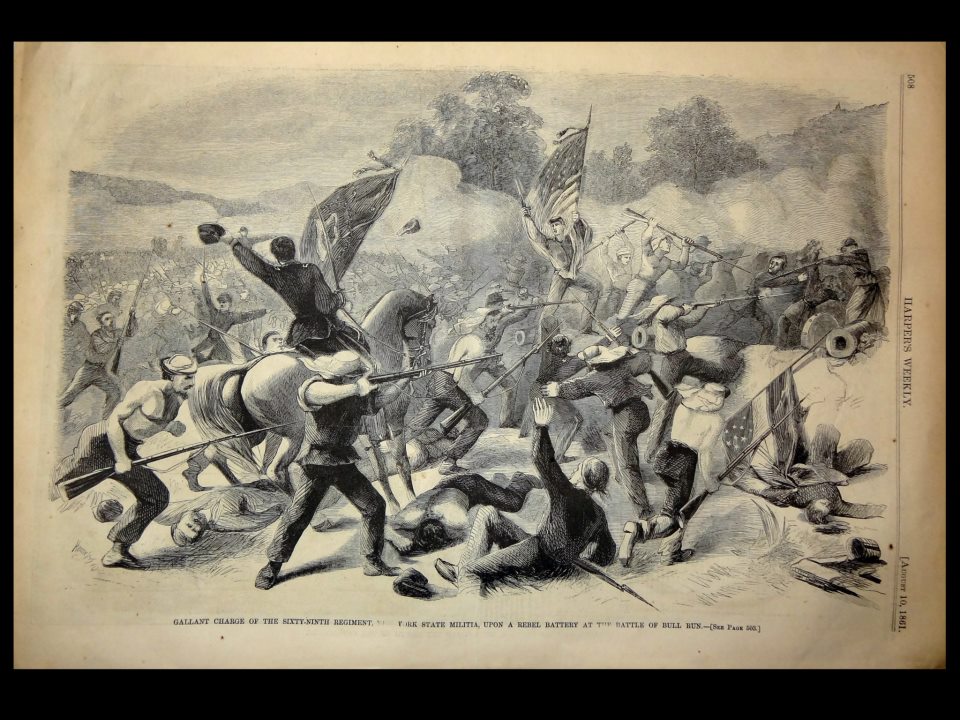
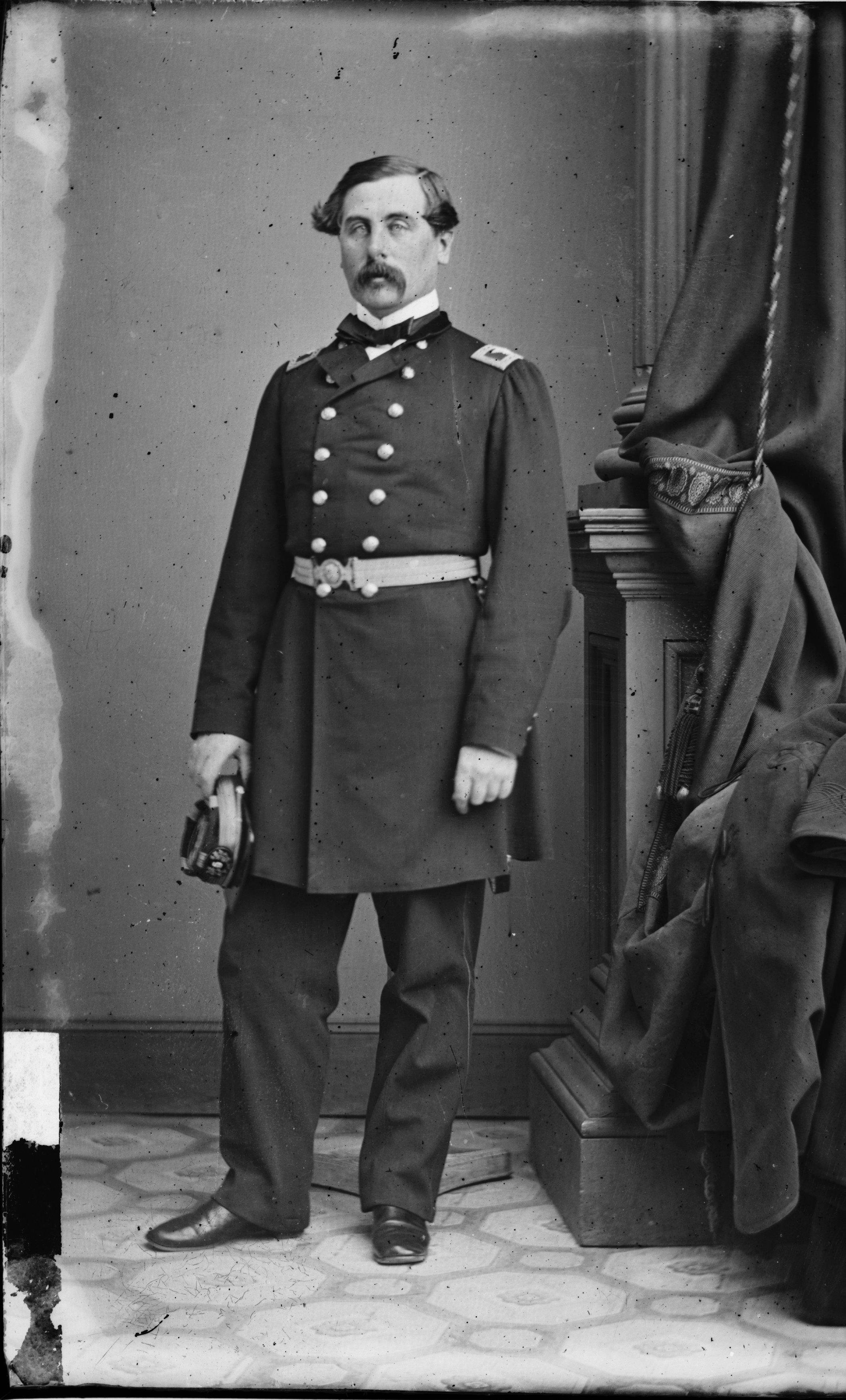
He served as the commanding officer of that company and eventually rose to the rank of Brigadier General in the Irish Brigade. Due to his popularity, gained by his actions back in Ireland, his men would fight hard for him. One example of this was at the Battle of Bull Run. The Brigade moved to the right and initially pushed back the enemy. The Confederate forces, with the timely aid of reinforcements, stopped the advancement of the Irish Brigade and began to move the Union forces back. The Irish of the 69th New York would not go down that easily. They rallied and charged multiple times under heavy artillery fire, only to be stopped. During this portion of the battle, General Meagher had his horse shot out from under him. He immediately jumped up, waved his sword, and exclaimed, “Boys! Look at that flag, remember Ireland and Fontenoy”. (a battle during the War of the Austrian Succession in which the Irish Brigade of France achieved victory against an English adversary) (6) With his nationalist battle cry ringing in their ears, the Brigade made one final push and sustained substantial casualties. One of these casualties was Lieutenant Colonel Haggerty, a native of Ireland, who was styled by Captain Conyngham “as fine a specimen of a Celt as Ireland could produce.” (7) Haggerty was just one of many men who perished valiantly that day. After the battle the Commander of the Union Army, General Irving McDowell, who watched the charge, rode up to the 69th and personally thanked them. Meagher lead the Irish Brigade in every battle up till and including the Battle of Fredericksburg. After this battle a war weary Meagher resigned his commission and was reassigned to other duties. (8)

Gallant Charge of The Sixty Ninth Regiment New York State Militia Upon A Rebel Battery At The Battle of Bull Run. Published in Harper's Weekly August 10th 1861

Gallant Charge of The Sixty Ninth Regiment New York State Militia Upon A Rebel Battery At The Battle of Bull Run. Published in Harper’s Weekly August 10th 1861

Although Meagher’s military service with the Irish Brigade did not last the duration of the war, his leadership and inspiration magnificently guided the Brigade through many of its hardest battles.
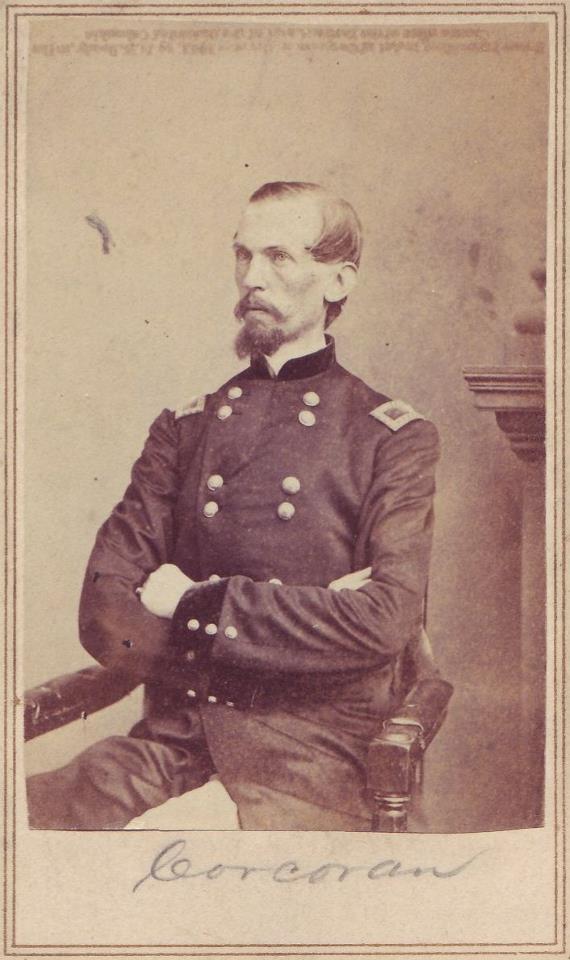
Another Irish Nationalist who had a positive effect on the fighting spirit of the Irish in the American Civil War was Michael Corcoran. Corcoran was born in Carrowkeel, county Sligo Ireland and was a member of the Irish Nationalist Guerrilla force known as the Ribbonman. His ties to this group were eventually discovered in 1849 so he immigrated to New York City in order to avoid capture. (9) To gain a position in society he joined the 69th New York State Militia as a private. This would not last as “his military passion and his previous knowledge of military tactics were a great advantage to him.” (10) Corcoran moved up in rank and became a Colonel. It was in this capacity that Corcoran became a hero to the Irish Nationalist, as well as the overall Irish immigrant population of New York. He chose not to parade his men in front of the Prince of Whales upon his visit, saying that “as an Irishman he could not consistently parade Irish-born citizens in honor of the son of a sovereign, under whose rule Ireland was left a desert and her best sons exiled or banished.” (11) His action resulted in a court-martial. However, it was overturned due to the need of good officers to fight in the Civil War. Corcoran resumed his rank in the 69th New York and was present at that Battle of First Manassas, where he was captured. Corcoran spoke of this later by saying, “I did not surrender until I found myself after having successfully taken my regiment off the field, left with only seven men and surrounded by the enemy.” (12) Corcoran was eventually exchanged over a year later, and was received back with acclaim. He was given the rank of Brigadier General and put in command of his own troops, known as Corcoran’s “Irish Legion.” The first battle of the Legion took place during the Battle of Deserted House Virginia. Although not one of the biggest battles of the war, Corcoran demonstrated calmness under fire and his men showed how they admired Corcoran by following his every commanded under intense battle conditions.

Carte de visite of Michael Corcoran From The Collection of The American Military Heritage Museum Of North Carolina

Carte de visite of Michael Corcoran From The Collection of The American Military Heritage Museum Of North Carolina

(13) Sadly this would be Corcoran’s last major battle as he was killed later that year when he fell from his horse. Even though Corcoran’s life was cut short his legend and the Prince of Wales incident continued to inspire men, especially those of his Legion who were fighting for Uncle Sam as well as Irish pride.
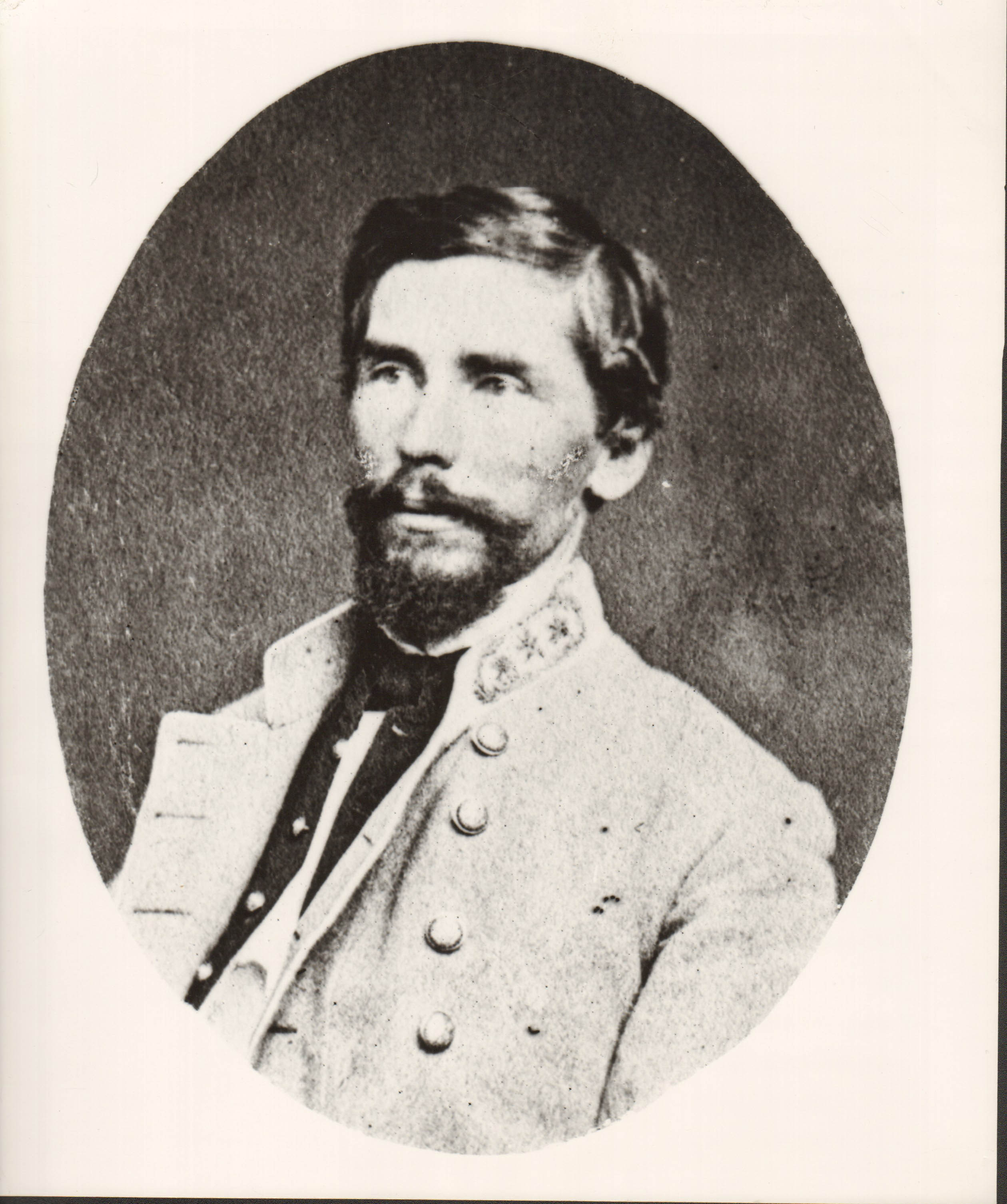
The Union was not the only beneficiary of Irish Nationalist leadership due to the fact that many of the Irish in the south felt the situation in America mirrored the situation in Ireland with Great Britain. They felt an aggressive big government had taken on the smaller independent state, and that was something they could support fighting against, one such leader was  Patrick Ronayne Cleburne. Cleburne was born in the late 1820s to a middle class Irish Protestant family in County Cork, Ireland. He had an ambition to be an apothecary but he failed the entrance exam for the medical school. So for economic reasons he joined the British army even though he believed it to be “a symbol for tyranny.” (14) Cleburne’s time in the army was served in a unit that preformed civil duties in famine stricken Ireland. By 1849 the famine finally caught up to him and his family, so he and his sister immigrated to America. (15) Cleburne eventually settled in Arkansas where he joined many social clubs, including a Militia Company called the Yell Rifles, and was soon elected captain. (16) When the American Civil War broke out Cleburne was in charge of the Yell’s and marched them off to war. Soon his military prowess was noticed by Confederate commander William J. Hardee and he was promoted to Brigade Commander. (17) Cleburne served with distinction, most notably his stand at Ringgold Gap where his 4,000 men held off the superior numbers of General Hooker’s Union troops. (18)

During the battle, Cleburne personally took command of his battery units and waited for the Federal forces to get within a short distance. He kept his men calm till the enemy was in the precise position for their guns to inflict the most damage. Cleburne then shouted, “NOW!! Lieutenant, give it to em!” (19) The canister shot devastated the Union line and drove them back. For this act Commander Cleburne received a Congressional Citation from the Confederate Congress, and earned the nickname “Stonewall of the west.” (20) In November of 1864 Cleburne met his fate during the battle of Franklin, Tennessee. During the battle Cleburne had two horses shot out from under him then continued on foot drew his sword and charged head strong toward the Federal lines. As he urged his men forward and got within paces of the Union breastworks he was shot through the heart. (21)

Major general Patrick Ronayne Cleburne

Major general Patrick Ronayne Cleburne

Cleburne died a hero’s death for his adopted land. However, after reading his words one can easily make the assumption that in his mind he gave his last full measure for Ireland as well. This can be seen in Cleburne’s Proposal to Arm Slaves. In this letter to Confederate commanders he writes, “As between the loss of independence and the loss of slavery, we assume that every patriot will freely give up the latter — give up the negro slave rather than be a slave himself. If we are correct in this assumption it only remains to show how this great national sacrifice is, in all human probabilities, to change the current of success and sweep the invader from our country.” (22) From this quote one can easily infer that Cleburne saw the parallels between the South’s struggle in the American Civil War and Irelands fight against English oppression. He was like other southern Irishmen inspiring to join the war effort with a fervent passion to vanquish their northern aggressors.
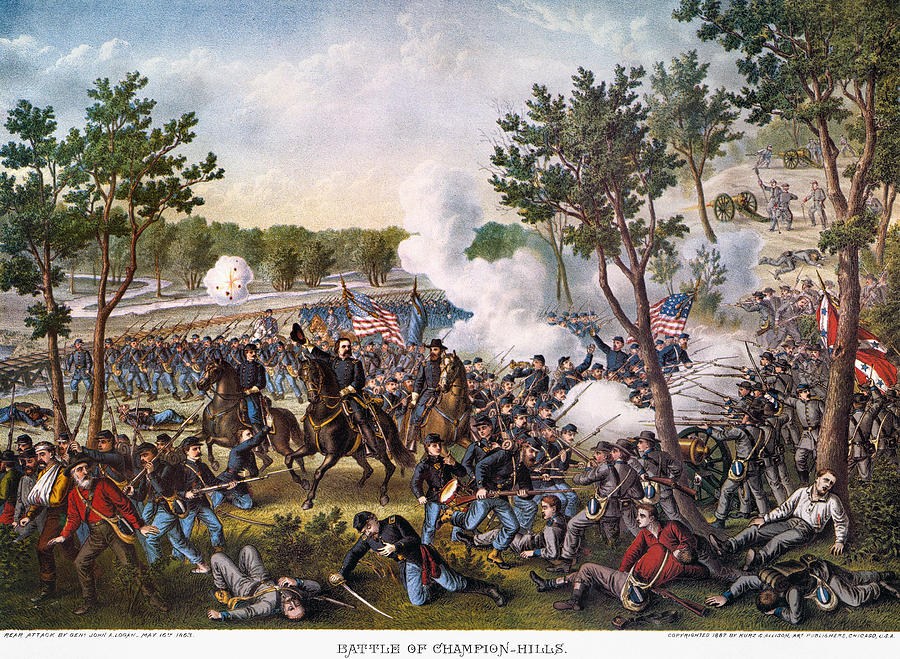
The Irishmen who felt the similarities between the south and Irish Nationalist fought with great vigor against the Federals, and stated their desire to subjugate their oppressive foe, when they chose the names for their regiments. A unit in the 1st Missouri Brigade evoked the name of the bold Robert Emmet, and Irish rebel and patriot, when they chose to be called Emmet Guards. (23) The Emmet Guards distinguished themselves at the Battle of Champion Hill, Mississippi. The action of the battle was described as such, “With flags flying and the rebel yell erupting from their mouths. The Missouri Confederates advanced, driving the bluecoats back, recapturing lost batteries, and gaining much ground. Bitter hand to hand fighting swirled over the rough terrain, among the magnolias, deep gullies, and dense woodlands of Champion Hill.” (24) The Irish from Missouri almost split the Union line in two before Federal reinforcements arrived and drove the rebels back. The Irishmen of the Emmet Guards did their namesake proud but suffered heavily for their effort. (25)

Battle of Champion Hill By Kurz & Allison published in 1887

Battle of Champion Hill By Kurz & Allison published in 1887

Another southern battalion born out of Irish Nationalism was part of the 1st Virginia and named the Montgomery Guards, after the Irish born American Revolutionary war hero General Richard Montgomery. (26) Additionally, this unit has another strong tie to Irish patriotism and national pride. William Henry Mitchel, the son of John C. Mitchel Senior, an exiled Irish revolutionary and leader of the Young Irelander movement, served in its ranks. John C. Mitchel instilled the ideas of Irish nationalism into his son and explained how Irelands struggle was almost identical to that of the south. (27) Young William took those ideas into battle with him at Gettysburg. William was elected to be the color barer of the 1st Virginia and led them into what would be forever remembered as Pickett’s Charge. He was severely wounded and about to be escorted to the rear but refused in order to advance the standard of his regiment with a sense of Irish pride. He was struck again and this time the wound was mortal. Upon hearing of the news John C. Mitchel reflected, “He could not have died in better company nor, as I think, in a better cause.” (28) The Irishmen of the 1st Virginia fought that day “not only with pride in the centuries long Irish revolutionary heritage and the legacy of their Irish rebel forefathers but also in the rich traditions of their regiment as well.” (29)
The use of Irish Nationalism proved to be successful motivation for Celtic men on both sides of the American Civil War. It was a source of enthusiasm that other regiments in the conflict did not have. Therefore, one can say this was a uniquely Irish trait, and one that would have made them more powerful on the battlefield.

Notes;

1) Steward, Patrick. The Fenians : Irish Rebellion in the North Atlantic World, 1858-1876. (1st ed. Knoxville: University of Tennessee Press, 2013.) XIII-XIV
2) Webb, Alfred. A compendium of Irish biography: comprising sketches of distinguished Irishmen, and of eminent persons connected with Ireland by office or by their writings. (Dublin: M.H Gill & Son , 1878.) 402
3) Cavanagh, Michael. Memoirs of Gen. Thomas Francis Meagher. 56
4) Cornish, Rory T. Thomas Francis Meagher : the Making of an Irish American. (Dublin ;Portland, OR: Irish Academic Press, 2006) 2
5) Ibid
6) Conyngham, The Irish Brigade and It’s Campaigns 37
7) Ibid
8) Cornish, Rory T. Thomas Francis Meagher : the Making of an Irish American. 154-155
9) Pritchard, Russ A. The Irish Brigade : a Pictorial History of the Famed Civil War Fighters. (Philadelphia, Pa. ;London: Running, 2004.) 10
10) Conyngham, The Irish Brigade and It’s Campaigns , 537
11) Ibid
12) Ibid, 538
13) Shiels, Damian. Irish in the American Civil War Exploring Irish involvement in the American Civil War . March 18, 2012. http://irishamericancivilwar.com/2012/03/18/baptism-of-fire-the-corcoran-legion-at-deserted-house-virginia-30th-january-1863/ (accessed 11 20, 2013).
14) Joslyn, Mauriel. A Meteor Shining Brightly : Essays on the Life and Career of Major General Patrick R. Cleburne. (Macon, Ga.: Mercer University Press, 2000.) 7
15) Ibid, 16
16) Symonds, Craig L. Stonewall of the West : Patrick Cleburne and the Civil War. (Lawrence: University Press of Kansas, 1997.) 45
17) Ibid, 49
18) O’Brian. The Irish Americans In the Confederate Army. 139-140
19) Symonds, Stonewall of the West. 175
20) Ibid, 176
21) Ibid, 209
22) Cleburne, Patrick. Patrick Cleburne’s Proposal to Arm Slaves. 2013. http://www.civilwar.org/education/history/primarysources/patrick-r-cleburne-et-al.html (accessed 11 26, 2013).
23) Tucker, Irish Confederates The Civil Wars Forgotten Soldiers. 67
24) Ibid, 72
25) Ibid, 74-76
26) Ibid, 50
27) Ibid, 90
28) Ibid, 91
29) Ibid, 94

The Brave Soldiers From Erin Why The Irish Fought With Great Success During The American Civil War: Part 2 Fighting for their place in American Society

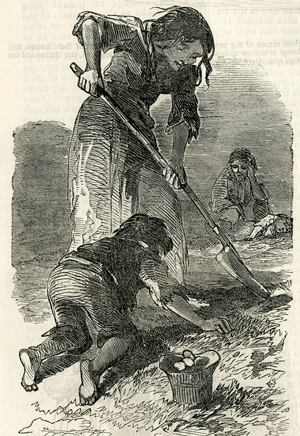
Searching for potatoes in a stubble field Illustrated London News, December 22, 1849

Searching for potatoes in a stubble field Illustrated London News, December 22, 1849

Ireland in the 1840s was a dreadful place. Many individuals lived on the edge of starvation and in subhuman conditions imposed by their British land lords. They relied on the potato as their main staple of life. Then, in 1845, the great famine occurred, or as the Irish called it “An Gorta Mór.” This blight was caused by the fungus Phytophthoera infestans and by 1852 this food shortage caused over one million people to die, and over two million to travel to North America. (1) Most of these immigrants traveled to America on what were known as “Coffin Ships,” called this due to their poor conditions and likelihood to sink. The passengers were provided with only one barrel of water and disease was rampant. (2) When the Irish immigrants landed in America they did not find the refuge they were seeking, in fact many of them found the opposite to be true.

Riots

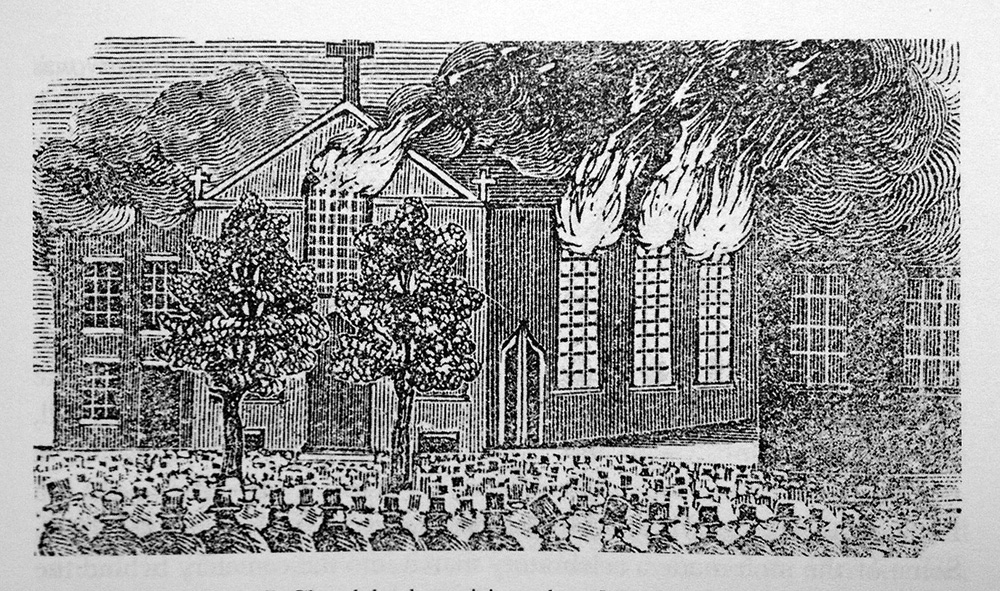
The burning of the original St. Michael’s Catholic Church | Engraving from A Full and Complete Account of the Late Awful Riots in Philadelphia, published in 1844 by nativist John B. Perry

The Irish Immigrants not only found poverty and overcrowding to be an issue, but they were also confronted by Americans who supported the nativist movement. A driving force in that movement was The Know Nothing party, founded in 1845, they led the political fight to purify America by removing its immigrants. As this group galvanized their movement the Irish were the prime target because of their high poverty rate, drinking, devotion to Ireland, and Catholic faith. The latter was due the fact that the Know Nothings felt the devotion of the Irish lay with the Pope in Rome and not with the United States. (3) The hatred the Know Nothings felt came to a boil in 1844 in Philadelphia when “Nativists battled Irish immigrants, and two Catholic churches and a Catholic school were burned by mobs. At least 20 people were killed in the mayhem.” (4) There were many more clashes with the Know Nothing party, including August 6, 1855 in Louisville, Kentucky. During an election the Know-nothings tried to take over the polls, resulting in a riot that culminated in the burning of an Irish tenement block and the shooting several Irishmen as they tried to escape the blaze. In all twenty two people lay dead after the night of anti-Irish violence. (5)

By the time the American Civil War came about the Irish felt the need to join the army of their new home, be it north or south. They wanted to gain a foothold in American society as well as to stand their ground and avoid being called cowards. A post war slogan stated, “Although the Celts be hyphenated Americans in name they were one hundred percent Americans in deed.” (6) All of the conflicts with the Know Nothings had the effect of galvanizing the Irish population in the south. This was increased by the idea of secession. The Irish population was more than happy to fight for the cause and prove themselves as true southerners. John McFarland, an Irish immigrant from county Tyrone Ireland that resided in Mississippi, wrote “My affections, my friends, my home are all here and whatever the fortunes of my adopted country mine rises and falls with it.” (7) This quote demonstrates how the typical southerner of Irish decent felt interconnected to their new homeland and wanted to be a worthy participant in its cause. This connection helped drive the Irish of the south to be fervent worriers in battle.

The Battle of Gettysburg was one of many battles that showed how hard the Irish of the south fought in the Civil War. The Battle for “Little Round Top” involved the now famous Union regiment the 20th Maine, commanded by Colonel Joshua Lawrence Chamberlin. One of their adversaries on this day would be Company K of the 15th Alabama, which was described by their commander Colonel William Calvin Oats in the following fashion: “It was an Irish company.” (8)

The 20th Maine & 15th Alabama at Gettysburg by Dale Gallon

The 20th Maine & 15th Alabama at Gettysburg by Dale Gallon

The life blood of this unit was found in Sergeant Patrick O’Conner, a twenty three year old Irish born tinner, who was thought of as the “Hardest fighting and toughest non-commissioned officer of the 15th Alabama.” (9) The 15th Alabama made repeated attempts to take the hill, but were repulsed by the guns of the 20th Maine. Eventually intense hand to hand combat broke out with Sergeant O’Conner yelling for the men to advance into the hail of deadly shot. This advance was not only inspirational to his company but to the whole Confederate line. (10) At one point, a Union soldier attempted to take the colors of the 15th Alabama, when according to Colonel Oats, Sergeant O’Connor “stove his bayonet through the head of the Yankee who fell dead.” (11) This hard fighting and sacrifice for the Confederates, however, was to be for naught. The 15th Alabama could not take the position due to their lack of reinforcements and ammunition. Although this was not a victory for the Irish Alabamians is demonstrates the hard fighting spirit that the Irish Confederate had for their new home, their cause and to become full members of southern society.

There is not a more a fitting place in the Civil War than Fredericksburg to show how the Irish spilled their blood on the soil of their new home. During the battle Irishmen squared off against each other. The men of the Union’s Irish Brigade confronted the 24th Georgia, commanded by Irish born Colonel Robert McMillan. The Union’s Irish mounted a gallant charge against the 24th Georgia and were repelled. (12) When the Confederate Irish from Georgia noticed the green flag of the 28th Massachusetts part of the Union’s Irish Brigade, one member was said to have uttered, “Oh God, what a pity! Here come Meagher’s fellows.” McMillian replied, “Give it to them now, boys! Now’s the time! Give it to them!” (13) The charge of the Union and its Irish Brigade was described by Confederate Artillery Commander William M. Owen in the following manner, “Bearing aloft the green flag with the golden harp of Ireland, those brave fellows came within five-and-twenty paces of the stone-wall and encountered such a fire of shot, shell, canister, and musketry as no command was even known to live through.” (14) The Union’s Irish Brigade was soundly defeated that day on Marye’s Heights. Although the Brigade was not victorious, its gallantry was an inspiration to all that day and woven well into the fabric of American military history.

Clear The Way By Don Troini depicting the 28th Massachusetts at Fredericksburg

Clear The Way By Don Troini depicting the 28th Massachusetts at Fredricksburg

The Battle of Fredericksburg helped show the rest of the country that the Irish were proud American citizens. Color Sergeant Welsh of the 28th Massachusetts part of the Irish Brigade echoes this feeling in a letter home saying, “This is my country as much as the man who was born on the soil and so it is with every man who comes to this country and becomes a citizen this being the case I have as much interest in the maintenance of the government and the laws of the nation as any other man.” (15) This letter was written in February of 1863, a year after Fredericksburg. One can make the inference that Color Sergeant Welsh felt strongly about his citizenship due to the sacrifices he and his fellow Irishman made during the war, especially at Fredericksburg. Union General Thomas Francis Meagher wrote in a letter about the effect that a desire for acceptance had on the men at Fredericksburg.

Brigadier general Thomas Francis Meagher

Brigadier general Thomas Francis Meagher

He felt this battle helped the Irish gain respect amongst natural born American citizens and stated, “In the very heart of the city of Fredericksburg under the fiercest play of shot and shell from the rifle pits and batteries of the enemy the General commanding the Brigade, displayed them (the colors) to the remnant of his command, as the splendid tribute which native-born Americans men of the highest private worth and widely acknowledged civic and social consequence had awarded to the Irish Brigade for the good service it had rendered in the great cause of the Constitution and the Chief-Magistracy of the American Union.” (16)

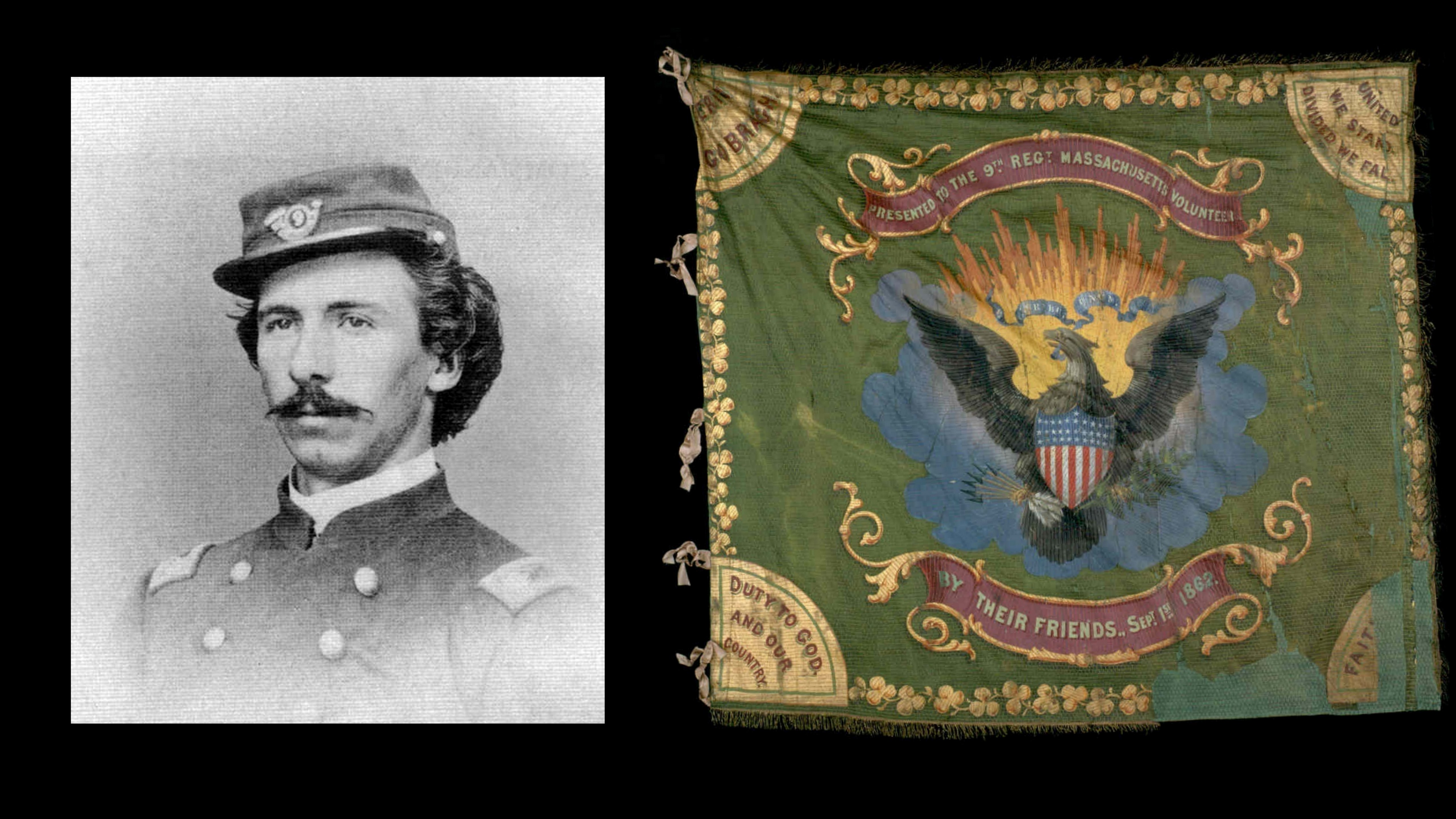
Irish 9th

Left: Colonel Patrick Robert Guiney Right: The Colors Of The 9th Regiment Massachusetts Volunteer Infantry

One can see just how the idea of being American was high motivation for these men from the Emerald Isle, to fight and fight hard for their adopted land. After the war the idea of nativism was a thing of the past. Colonel Guiney  of the Irish 9th said that the “accomplishments of the Irish regiments wiped away nativist prejudice against the Irish” and then challenged the audience to “go up to the State House and you will find the faded banners of the Ninth Regiment, and so long as they remain there no man will ever be heard to say that the Irish people living in Massachusetts are enemies of the republic.” (17) One can conclude that by being fierce fighters the Irish were able to accomplish their goal of being accepted in American society.

Notes;

1) Collins, J.J. Famine to Freedom The Irish in the American Civil War. (CreateSpace Independent Publishing Platform, 2011.) 28
2) Ibid, 28
3) Cal ,McCarthy. Green, Blue, and Grey : the Irish in the American Civil War. (Ireland: Collins Press, 2009.) 13
4) The Know-Nothing Party Opposed Immigration to America Secret Societies Emerged as Political Players in the 1850s By Robert McNamara; retrieved from http://history1800s.about.com/od/immigration/a/knownothing01.htm accessed on 09-11-2014
5) O’Brian. The Irish Americans In the Confederate Army. 18
6) Conyngham, The Irish Brigade and It’s Campaigns , XV.
7) Ibid, 19
8) Tucker, Phillip Thomas Irish Confederates The Civil Wars Forgotten Soldiers (Abilene Tx: McWhiney Foundation Press, 2006.) 78
9) Ibid, 80-81
10) Ibid, 85
11) Ibid
12) Undaunted Courage The Irish At Fredericksburg,” The Wildgeese.com, accessed January 01, 2012, http://www.thewildgeese.com/Pages/fredpt2.html.
13) Ibid
14) Tucker, Irish Confederates The Civil Wars Forgotten Soldiers. 62
15) Welsh, Irish Green and Union Blue, 65
16) Cavanagh, Michael. Memoirs of Gen, Thomas Francis Meagher, 533
17) Guiney, Patrick R. Commanding Boston’s Irish Ninth : the Civil War Letters of Colonel Patrick R. Guiney, Ninth Massachusetts Volunteer Infantry. (New York: Fordham University Press, 1998.) 252

San Juan Hill the Battle That Made America a World Power

The Spanish American War was fought in 1898 between Spain, and The United States, it took place in both the Caribbean as well as the Pacific. The United States was forced to get involved in Cuba’s War for Independence following the mysterious explosion and sinking of the USS Maine in Havana harbor Cuba, on February 15, 1898. The war only lasted a few months, yet the United States lost 2,456 lives. Most of which were from disease; however 385 men were lost in battle. Perhaps, the most famous battle of the Spanish American War was the Battle of San Juan Hill on July 1 in Cuba. (1)

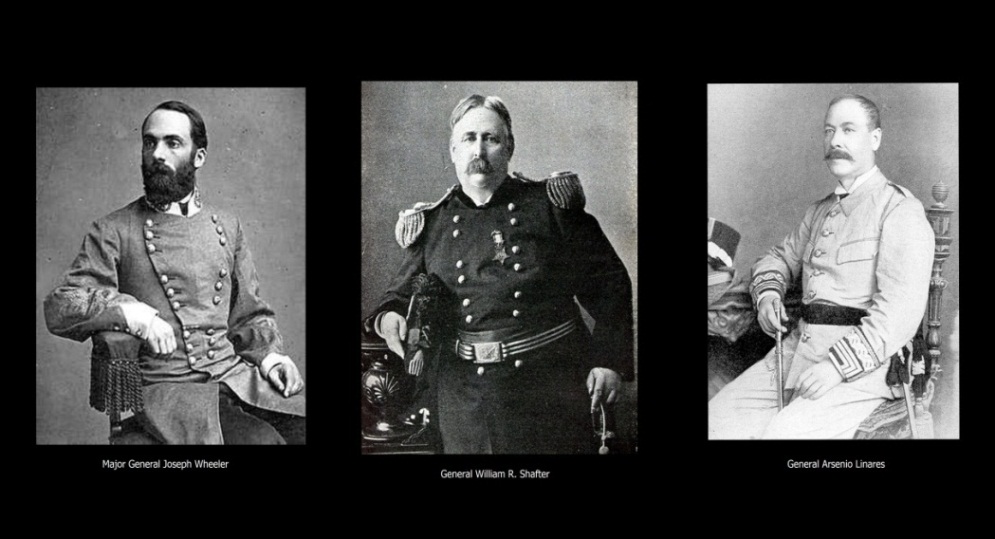
The Battle of San Juan Hill was fought between Americans and Cuban Gorillas. The Americans were led by Major General William R. Shafter and Major General Joseph Wheeler, also known as “Fighting Joe.” The Spanish forces were led by General Arsenio Linares.
The United States V Corps, consisting of 17,000 men, was under the command of Major General Shafter. (2) Shafter was born in 1835 in Michigan. Prior to the American Civil War he had no prior military experience and in fact was a school teacher when the war broke out. Shafter served with merit in the Union army and earned the Medal of Honor for heroism during the Battle of Fair Oaks. After the Civil War Shafter stayed in the army and eventually gained the rank of Brigadier General and by the time of the Spanish American War he was appointed Major General.

Left Gen. Wheeler, Middle Major Gen. Shafter Right Gen. Arsenio Linares

Left Gen. Wheeler, Middle Major Gen. Shafter Right Gen. Arsenio Linares

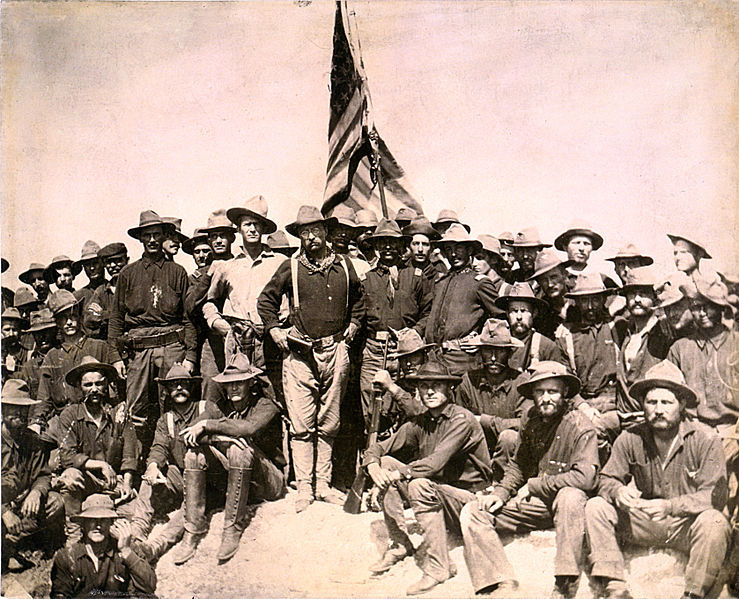
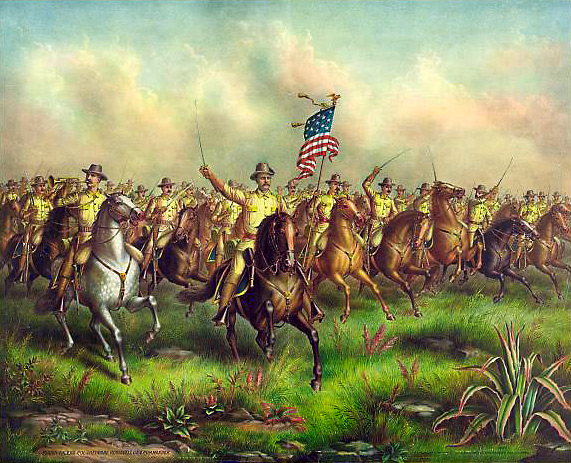
 During the Spanish American War, Major General Shafter and his men faced a few obstacles. At the time of the war, Shafter was an obese man who suffered from gout. His lack of mobility made him very unfit to command an army. Also, his men lacked discipline. These two factors would hurt him in the war. (3) Major General Shafter was given his command due to politics, ironically because many felt he  was not political. This shows that merit and fitness for command did not play into his appointment. Unfortunately, this cost many a young man his life during the Battle of San Juan Hill. Another problem facing  Shafter was the fact that most of his men came from ill trained volunteer regiments. One of these units was the now famous “Rough Riders.” Their commanding officer was a well-seasoned military man, Colonel Leonard Wood. However the second in command was Colonel Theodore Roosevelt, a man with no military experience but high political ambitions seeking the glory of combat.

Colonel Theodore Roosevelt, and the "Rough Riders"

Colonel Theodore Roosevelt, and the “Rough Riders”

The most qualified men of Shafter’s V Corps were the African American men of the Twenty-forth and Twenty-fifth Infantry as well as the Ninth and Tenth Cavalry Regiments. (4) Conversely the African American soldiers may have had issues with one of their commanders, Major General Joseph Wheeler, since he commanded a brigade of Confederate soldiers during the Civil War.
Major General Wheeler graduated West Point in the class of 1859 and was appointed as a Lieutenant in the Dragoons, a Calvary unit of the United States Army. In 1861 Wheeler resigned from the army and joined the Confederate forces. In 1862, he commanded an infantry regiment at Shiloh and through the operations around Corinth, Mississippi. Then during the summer of 1862 he was assigned to be in charge of the Cavalry for General Braxton Bragg’s Army of the Mississippi. He directed a mounted brigade at Perryville and a division at Murfreesboro while fighting in Tennessee. Then Wheeler was put in command of a corps of mounted troopers which he led in the Tullahoma Campaign in 1863. Then at Chickamauga he was in charge of one of the two cavalry corps. Wheeler was later put in charge of all the mounted troops with the Army of Tennessee. Then in 1864, he fought at Chattanooga and led his men in the Atlanta Campaign. During these last two operations he was famous for his raids on the Union supply lines. After the Civil War Major General Wheeler became a businessman and a member of congress. When the Spanish American War came about he offered his generalship and was appointed by President William McKinley. (5)
The Americans faced a formidable opponent in the Spanish. They were led by General Arsenio Linares. He was a professional Spanish Army officer with a large amount of military understanding and battle experience. General Linares was made a Lieutenant in charge of artillery. Later he moved to the infantry where he clashed with rebels in Cuba during the Carlist Wars in Spain, as well as in the Philippians. (6) By 1897 Linares was chosen to be the commanding officer of the Spanish defense force at Santiago, Cuba in preparations for the the coming war. In May of 1898 he was appointed Lieutenant General and was in charge of 35,000 men. Instead of garrisoning them all in Santiago he spread them out all over Cuba to protect against insurgent attacks leaving only about 10,000 in Santiago. This would affect the Spanish forces greatly during the Battle of San Juan Hill. (7)
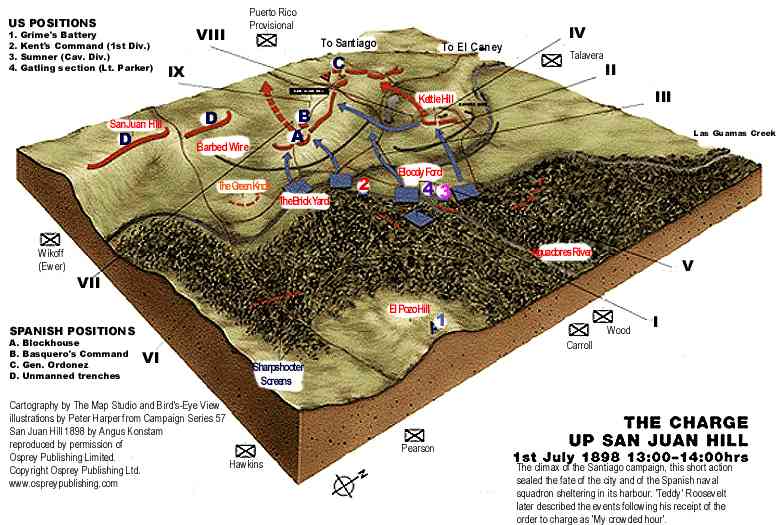
On June 22, 1898 the American assault force started coming ashore at Daiquiri and Siboney in Cuba. They began to head towards the city of Santiago where General Linares had deployed his Spanish troops along the peaks of San Juan and Kettle Hills, external to the city. The craggy topography and heavy vegetation combined with the lack of roads made anything other than a frontal attack impossible for the Americas. Furthermore outmoded rifles that used black powder exposed shooters positions and slowed their progress. In contrast the Spanish army had bolt action rifles that used new smokeless powder and a few German made machine-guns, but lacked the motivation to defend a Spanish colony as opposed to their homeland. (8) The American assault started early in the morning of July 1 as an attack on the city of El Caney. Major General Shafter grossly under estimated the Spanish and thought this battle would be a quick engagement, but the Spanish army was heavily entrenched and fought with ferocity hurting American progress. (9)

Battle of San Juan Hill Topographic Map

Battle of San Juan Hill Topographic Map

By eleven in the morning many of the American troops had reached the San Juan River, including the “Rough Riders.” They were ordered to the right of the line, so Roosevelt led his men in that direction. He recalled, “The fight was now on in good earnest and the Spaniards on the hills were engaged in heavy volley firing. The Mauser bullets drove through the trees and the tall jungle grass, making a peculiar whirring or rustling sound.” The Rough Riders stayed in a secure position and waited for orders. (10)
By one in the afternoon the American advance was all but halted by the Spanish resistance. A United States Captain at one point crawled into a ditch for cover and discovered over a hundred men lying there. He asked “Are those reserves?” and the reply he received was grave, “No sir by God They are casualties.” All of the men in that trench were dead. The situation was desperate; only a bold move could turn the tide in the Americans favor. (11) The American war correspondent Richard Harding Davis wrote of just how calamitous a predicament the United States Army was in, “Our troops could not retreat, as the trail for two miles behind them was wedged with men. They could not remain where they were for they were being shot to pieces. There was only one thing to do go forward and take San Juan Hills by force.” (12)
Colonel Roosevelt had the same thought and was about to move up Kettle Hill without orders when he was commanded to do so. Roosevelt first looked to the rear, the position he was supposed to be in as the commanding officer. Despite this, he decided that he could command better from the front. From this position Colonel Roosevelt rode between his men shouting orders and encouragement. The “Rough Riders” advanced so far and so fast that they reached the lines of the American infantry troops. Roosevelt later recalled this, “By the time I reached the lines of the regulars of the first brigade I had come to the conclusion that it would be silly to stay in the Valley firing at the hills, because that was really where we were

Teddy Roosevelt and his "Rough Riders" Charge Kettle Hill

Teddy Roosevelt and his “Rough Riders” Charge Kettle Hill

most exposed, and the only thing to do was to try to rush the entrenchments….I waved my hat and we went up the hill in a rush.” Thus began the now famous charge up Kettle Hill, not San Juan Hill as many think. (13) Another misconception about the charge was that it was swift and had a large number of men in fact the opposite was true. War correspondent Davis wrote, “They had no glittering bayonets; they were not massed in a regular array. There were a few men in advance bunched together, and creeping up a steep, sunny hill the tops of which roared and flashed with flame.” (14)

The slow pace of the charge broke when the African American Troopers of the Ninth and Tenth Calvary broke free. This bolstered the spirit of the charge and the American forces rushed up the hill. When Colonel Roosevelt reached the top he came across a barbed wire fence and dismounted his horse; his uniform and elbow pierced by shot. The Spanish seeing the rush of men poured heavy fire onto the American troops, which took shelter in time to witness the American infantry trying charge up San Juan Hill. Colonel Roosevelt ordered his men to give fire support to those advancing men. Then out of nowhere the sound of heavy fire erupted. At first the men under Roosevelt’s command thought it to be the Spanish machine guns, but Roosevelt could discern the sound was coming from the American lines and promptly informed his men “It’s the Gatling’s, men our Gatling’s.” (15)
Using the cover fire from the dismounted cavalry and the Gatling guns Lieutenant Jules Garesche Ord ordered his men of the United States Sixth Infantry forward up San Juan Hill to take the Spanish blockhouse. This charge was a fierce and quick, unlike the one up Kettle Hill. The men of the Sixth gave a cheer as they went up the hill. When they got to the highest point, the Spanish fled in a hurry. Unfortunately, Lieutenant Ord, the first man a top San Juan, was slain.
Despite the tide of battle being turned in the American favorer the battle was not over yet. By two in the afternoon the Americans were spread thin atop the hills as the Spanish made an organized retreat. Furthermore, the battle at El Caney was still raging on and an American officer speaking about the situation in El Caney recalled, “Our situation was extremely serious; we were holding our own and no more, and were losing far more heavily than the enemy.” (16) After appraising the situation in El Caney, Major General Shafter realized he had made a mistake by sending his forces there. This mistake may have been caused by the fact that due to his health and weight. Major General Shafter could not survey the ground in person or lead in the field, so the men in El Caney had to fight it out against a tenacious Spanish army. During this fight the Spanish General Linares took personal command of his soldiers and was wounded. He was carried off the field and replaced.
After almost ten hours of fighting, at four fifteen in the afternoon El Caney was seized by the American forces. A British military observer describes the carnage after the siege, “The trench around the fort was a gruesome sight, floored with dead Spaniards in horribly contorted attitudes and with sightless staring eyes. Others were littered about the slope, and these were mostly terribly mutilated by shell fire. Those killed in the trenches were all shot through the forehead, and their brains oozed out like white paint from a colored tube.” (17) The battle was over with the American narrowly gaining a victory. In the end this action would total 420 lives, 205 Americans and 215 Spaniards. The Americans dug in waiting to make another advance in the upcoming days, but that was not essential due to the American naval victory at Santiago harbor that destroyed the Spanish fleets Caribbean Squadron. By July 17 the residual Spanish forces surrendered.
This battle was significant due to the fact that it bolstered American pride and nationalism as well as making the United States a power on the world stage due to the fact that this victory lead to the US obtaining the territories of Cuba, Puerto Rico and the Philippines. This triumph also gave the American military the experience it needed and exposed issues with the armed forces that needed improvement. For example, the fact that many men died of tropical diseases led to research in yellow fever that all but eradicated the disease, thus making the building of the Panama canal a possibility. Furthermore, many of the men who fought in Cuba would later use that experience to lead men in World War One.

Notes.

1) Lee, R. “The History Guy: Casualties From America’s Wars” retrieved from, http://www.historyguy.com/american_war_casualties.html (8-15-2012)
2) Lt. Col Lanning Michael, The Battle 100: The Stories Behind History’s Most Influential Battles Sourcebooks (April 1, 2005) 109
3) Maj. Gen. William Shafter (1835 – 1906) By Patrick McSherry; retrieved from http://www.spanamwar.com/shafter.htm (8-15-2012)
4) Lanning, 109
5) Joseph Wheeler, Retrieved from http://www.arlingtoncemetery.net/jwheeler.htm (8-15-12)
6) Tucker, Spencer, The Encyclopedia of the Spanish-American and Philippine-American Wars: A Political, Social, and Military History ABC-CLIO (January 2009) 338
7) Ibid
8) Lt. Col Lanning Michael, The Battle 100: The Stories Behind History’s Most Influential Battles Sourcebooks (April 1, 2005) 110
9) Ibid
10) O’Toole, G. J. A. The Spanish War: An American Epic 1898, W. W. Norton & Company (August 17, 1986) 310
11) Ibid 314
12) Ibid 315
13) Ibid 316
14) Ibid
15) Ibid 318
16) Ibid 320
17) Ibid

Fortress Metz: The 3rd Army’s Toughest Battle

In the fall of 1944, after the Normandy break out, a three-month long struggle was fought during World War II around the fortress city of Metz, France. This fight would pit the United States 3rd Army, under General George Smith Patton Junior, against the German 1st Army, commanded by the newly appointed General der Panzertruppen Otto Von Knobelsdorff. This clash would be forgotten and pushed aside by history but it is one of great importance for the men who fought and died there. This campaign was one of the hardest fought during World War II due to the nature of Metz and its fortifications.
By September of 1944 the mighty 3rd Army had been reduced into only two corps after its triumphant march to Paris. The XII Corps was under the command of Major General Manton Eddy, while the XX Corps was under the command of Major General Walton Walker. After the three months of fighting and marching the troops were fatigued and were short on supplies. The indomitable 3rd Army although weakened  would soon be up against one of the most fortified sections of the western German front.

The Allies knew they would need a no nonsense general that would fight hard, which is why they chose General Patton to tackle the challenges of Metz.

Figure 1 General    George S. Patton

Figure 1: General George S.   Patton

Patton was fascinated by the military throughout his childhood and was regaled by stories from his dad, who served in the confederacy with distinction during the Civil War. Another man who was close to the Patton family also influenced young George this man was Colonel John Mosby, more famously known as “The Grey Ghost,” Mosby was part of Major general J.E.B Stuart’s Confederate Calvary . (1) During the summer Mosby would reenact battles from the Civil War with Patton on horseback. Patton would play the part of General Robert E. Lee and Mosby would play himself. (2) This influence and young George’s obsession with all things military, led Patton to attend the Virginia Military Institute, and then West Point. He saw his first combat in Mexico during the Mexican expedition of 1916, which was led by General “Black Jack” Pershing. During this expedition he would encounter his first experiences with close quarter combat, this took place when Patton killed three banditos with his pistol during a raid on a hacienda. He then strapped the bodies over the hood of his Dodge Touring car and drove back to Pershing with his trophies. (3) This action made Patton the first person in American history to engage an enemy in warfare using a motorized vehicle, which officially marshaled motorization into combat. (4)   His knowledge of mechanized warfare, vast knowledge of military history,and  close quarter combat would become useful during the 3rd Armies attack on the city of Metz.
During World War I Patton was again an aid to Pershing. During this time Patton focused on the idea of tank warfare; throwing himself into it with an almost religious fever writing manuals and virtually single handedly forming the tank corp. (5) He led the tank corps into combat during the Meuse-Argonne Offensive in France, and was severely wounded when a bullet pierced through his leg ripping out a large chunk of flesh from his backside. Patton nearly bled to death and before his recovery was complete the armistice was signed, Patton would not see combat again until World War II. (6)
Patton’s impressive resume continued into The second World War. He was given the assignment of creating the desert training corps in 1942. This group became proficient in tank warfare and was the first American force to land on enemy soil in World War II during Operation Torch in Africa. In 1943 after a devastating and embarrassing defeat of the United States forces at Kasserine in Africa, Patton was put in charge of the II Corps. With his strict discipline and attention to detail he turned this group of men from a loose group of misfits into a finally tuned fighting force that would achieve a sound victory in the battle of El Guettar. After his success in Africa, Patton moved onto Operation Husky. This invasion of Sicily fueled a rivalry between himself and General Bernard Montgomery of the British forces. This competition brought out the best and worst in Patton as he achieved victory in Palermo and Mesina. However the stress of these battles may have led Patton to his controversial “Slapping Incidents” in which on two separate occasions he slapped two soldiers that were suffering from battle fatigue in the face. This was almost the end of the Generals career; many high ranking officials were calling for his dismissal,but the army knew Patton’s value and suspended him from combat till 1944.
Patton was a natural born warrior and was feared by the Axis because of his reputation as an unrelenting attacker. The allies used his name and reputation while he was suspended to deceive the Germans into believing that the D-day landings would be led by Patton and that he would strike at Pas-de-Calais. To achieve this  the Allies employed special effects men from Hollywood to create a whole fictitious army that was built around Patton. They constructed fake tank barracks and fake radio chatter. This deception paid off because the German high command thought the Normandy landings were just a diversion and refused to release there reserve corps from Pas-de-Calais, allowing allied success. (7) The Allied Commanders knew they could not win the war without Patton; his reputation, experience and motto to never fight for the same piece of land twice lead to his re-instatement, and by late 1944 he was given command of the Third Army that would become the spearhead of Operation Cobra. Patton and his stout Third had success after success throughout Europe then they hit a wall in Metz.

The German commander of fortress Metz was, General Otto von Knobelsdorff. Like Patton, he was a decorated infantry officer during World War I where he earned the Iron Cross twice for his heroism. After World War I Knobelsdorff commanded a regiment that in 1935 was part of the Polish campaign that touched off World War II. During the beginning of the war he commanded divisions in the fight for France and Belgium.

Figure 2 General der Panzertruppen Otto von Knobeldorff

Figure 2: General der Panzertruppen Otto von Knobeldorff

He distinguished himself on the Russian front, receiving the Knights Cross for his division’s actions in 1942. Later that year he was promoted to General and commanded a Panzer Corp. He was decorated again for his leadership of that Corp during the battle of Kursk with a Knights Cross with Oakleaves, a very high honor in the German Army. For his battle command at Nikopol Bridgehead he was awarded yet another Knights Cross, this one with Oakleaves and Sword. This made him one of the highest decorated German commanders of the war. By the time he was put in command of the defenses around Lorraine in which Fortress Metz was a part of  there was a bit of trepidation due to his health, which would play a role in the battle’s outcome due to the fact that Knoblsdorff  during the height of this battle had to take a brief leave due to his health issues. (8)

Taking the city of Metz would be a challenging task for the allies. There were a series of natural as well as man-made obstacles these included, the Moselle River, a multitude of forts and a plethora of pill boxes. Patton’s army made attempt after attempt to cross the Moselle River but these fortresses rained heavy artillery fire down upon them making it a daunting task. These forts and pill boxes dated back to the 19th century making them almost a natural part of the landscape this made the structures much harder to detect and therefore defeat. (9) another reason the pill boxes created a challenge was, because of their small size. Two German soldiers could easily hide inside and shot a .50 caliber machine gun at the Allies and have little chance of being hit by small arms fire. The Combination of these natural and unnatural defenses had made the city of Metz  a formidable opponent for invaders for more then 1500 years since it is placed superbly for defense on the east bank of the Moselle River. As well as being surrounded by barbed wire and earth fortifications that had been built around the city. Its best defense however, was the fact it was surrounded by hills that were turned into dominating underground forts composed of passageways and well dug in steel and concrete doors placed in a fashion that not only concealed them but protected them from artillery fire.

Figure 3 German Pill Box

Figure 3: German Pill Box

These doors were also impervious to air attack since they were defended by earthen banks. (10) It would take multiple operations in order to take the city of Metz. A lull in the action took place during most of October before General Eisenhower authorized Operation Madison with the objective of taking Metz. He gave the task to General Patton and his 3rd Army.

Figure 4: Map of Fortress Metz and Surrounding Forts

Figure 4: Map of Fortress Metz and Surrounding Forts (Click to enlarge)

On November 8, 1944, General Eddy’s XII Corps began Operation Madison. Eddy had objections to starting the operation due to the muddy terrain as a result of heavy rains and flooding. He asked Patton to delay the attack to which Patton responded “Attack or name your replacement.” (10) At 0600 the attack on German forces that were blocking the way to Metz began with an artillery barrage that took the Germans by surprise. The attack was well camouflaged since the foggy weather the previous night allowed the 3rd Army to move the battery into position without being noticed. This led to a disruption in the forward German defenses. At the American right flank, Hill 310 was being defended by a regiment from the 361 Volksgreadier-Divison, leading to a three day intense engagement. This action created a breach between two German Volksgrenadier Divisions that was exploited by General Eddy. Eddy used the 4th Armored Division to try and seize the Morhange road junction, which was a vital peace of real-estate since it would help move men and material towards their ultimate objective. This move by the 4th Armored Division was such a threat  it forced the German Commander Knobeldorff to divert his reserve in defense and to equalize the front. (11) By the evening of the 8th the Allies held ten bridges over the Seille River. However, the ridge was still held by two German infantry units, the 48th and most of SS-Panzergrenadier 37th. The American 80th division was given the task of taking this ridge. (12) This push began early in the morning of the 9th and taxed the German defenses of the Delme Ridge forcing Gen. Knobelsdorff to transfer a division in relief. This only delayed the American advance and did not stop it.

Figure 5 Map Denoting The Battle Lines Of Operation Madison

Figure 5: Map Denoting The Battle Lines Of Operation Madison

Later in the day on the 9th, XX Corp got into the fray after the 95th division staged an attack that was intended to divert the Germans away from an incursion made by the 90th division at the most prominent river crossing. The weather played a factor in this action as well as the Germans were again caught off guard by the advance and the minefield they had put in place was rendered obsolete by a flood that turned the ground into a small body of water. The allies overran the German positions and advanced. Almost simultaneously the 358th infantry advanced to Fort Koenigsmacker and split up leaving companies A and B to deal with this nemesis. As it happened, the 358th was accompanied by a regiment of engineers who helped in the attack of the Fort by using improvised explosives to take down the observation domes. (13) By night fall the Americans had control of the western side of the fort but the fight was not over. It took till November 11th to gain total control of Fort Koenigsmacker. With this control the allies were on the precipice of the Fortress City Of Metz.

On November 18, 1944 the siege of the Fortress City Of  Metz commenced. This attack was reliant upon taking and securing the rest of the bridges over the Moselle River. This operation was made extremely difficult due to the destruction of almost all the bridges by German forces. The 95th infantry and 379th Infantry regiment moved in from the west but left two companies behind to deal with German resistance. They succeed in cutting off Fort Jeanne d’Arc and reached their bridge objective by the evening only to discover its destruction. A boat crossing was considered but determined not plausible so they were ordered to hold Ft Jeanne D’Arc and stop any further German resistance. (15) At this time the 378th infantry was in trouble as well, they had their full attention on engaging Fort Plappeville. This fort was in a good location for the Germans due to the fact that they could share supplies with a neighboring fort. Together both forts totaled 650 men, but that withstanding the Germans where still running low on food and ammunition. However, they were willing to hold these two forts till the last man due to their strategic position overlooking the Moselle and their ability to rain artillery fire down on all those who dare cross. If these forts were properly supplied they would have been able to greatly slow the American advance. US troops began to enter the city later that day with little resistance due to a lack of communication between the Germans as a result of the blown bridges disrupting their lines of communication. By the end of the day on the 18th the German high command made a decision to concentrate all their forces around their command post on the Isle of Chambiere as to hold this post to the last.

Figure 6 Envelopment Of Metz From The South 8-19 November 1944

Figure 6: Envelopment Of Metz From The South 8-19 November 1944 (Click to enlarge)

The next day, November 19th, The 377th American Infantry unit was returning to the area of Fort Bellacroix when they discovered one of the bridges had not been blown. They quickly overtook the small German opposition force and captured the important real estate. (16) A company with tank support crossed the bridge under heavy sniper fire and faced approximately 700 men. The German forces were not organized though and their commander surrendered. The US forces now had control of most of the city. An attempted was made by the Germans to air drop supplies to the desperate men in Fort Plappeville but failed, adding to their problems. By the evening of the 19th The American forces were well into Metz, even destroying a Gestapo Headquarters. All means of German retreat were sealed by the evening and the capture of the Fortress  City Of Metz was assured. (17)
On November 20th to the 21st American forces took part in bloody and chaotic house to house fighting. as the German army was desperate to hold the city and fought with tenacity. William Lake, a riflemen in the 377th infantry, stated “They fought like tigers that’s the something we would have done had it been reversed.” (18)

Figure 7 House To House Fighting In The City Of Metz

Figure 7: House To House Fighting In The City Of Metz

He also described just how rough the fight was when he said “These mortars walked down the street, they don’t come as a barrage, they come BOOM BOOM BOOM!! It turned out Sgt. Garsline lost one of his legs….and Schagle got hit in the stomach…During the same barrage one of the fragments went down the hallway where our squad was and hit another man in our squad in the spine.” (19) This hard fighting paid off when on the morning of the 21st German General Kittel was captured after he was wounded acting as an infantrymen. By the 22nd of November the resistance in the city had ended and the Allies held Metz. (20) Even though the battle for the city was over, the fight for the forts on the outskirts of town raged on into December.

The capture of Metz led the Allies to have a clear road across the Rhine and into Germany.  It was a long and hard fought struggle and resulted as a loss for the Germans. This victory did however delay the Allied advance, allowing the Germans to retreat and save their army for a later engagement, the Battle of the Bulge.

Figure 8 Capture of Ft Jeanne d'Arc December 13, 1944

Figure 8: Capture of Ft Jeanne d’Arc December 13, 1944

One can look at this battle to see the true character of the greatest generation in action. These brave men faced death every day but had a job to do and did it with the honor and courage that only an American would posess. The American men who fought in Metz would never forget the carnage and violence of that fight. A captured German Officer spoke of these men saying “You men must be made of Iron to take this city,”  . (21) These words most certainly sum up the character of the valiant 3rd Army soldiers who risked it all for the greater good.


Notes;
1) Province, Charles M.: The Unknown Patton (New York: Bonanza Books., 1983) Pg., 3
2) Ibid., Pg. 3
3) Ibid., Pg. 14
4) Ibid., Pg.16
5) Province, Charles M.: George S. Patton, Jr. U.S. Army 02605 1885-1945 (Oregon City, OR: The Patton Society), Retrieved From Http:// http://www.pattonhq.com/pattonbio.pdf, Pg. 2

6) Ibid., Pg. 2

7) America In WWII The Magazine of a People at War 1941-1945, “Patton’s ghost army” : Brian, John Murphy (310 Publishing 2009) Retrieved from http:// http://www.americainwwii.com/stories/pattonsghostarmy.html

8) Zaloga, Steven J.: Metz 1944 “Patton’s fortified nemesis” (Oxford, England: Osprey Publishing., 2012) Pg.’s 15-16

9) Ibid., Pg. 4

10) Ibid., Pg. 53

11) Wallace, Gen. Brenton G.: Patton & Third Army ( Mechanicsburg, Pa: Military Service Publishing, 1946) Pg. 117

12) Ibid., Pg. 57

13) Ibid., Pg. 57

14) Ibid., Pg. 60

15) Combat Studies Institute Battle Book 13-A: The Battle Of Metz (Ft. Leavenworth, TX: CSI Publishing, 1984) Pg. 55-56

16) Ibid., Pg.’s. 59-60

17) Ibid., 61

18) Vogt, Tobias O.: The Iron Men Of Metz Reflections Of Combat With The 95th Infantry Division( San Diego, CA: Aventine Press, 2005) Pg. 106

19) Ibid., Pg. 106

20) Combat Studies Institute., 64

21) Vogt., 113


Figures;
1) Retrieved From: http://www.biographyonline.net/military/general-patton.html
2) Retrieved From: http://imageshack.us/f/458/0193mz.jpg/
3) Retrieved From: Zaloga, Steven J. Metz 1944 “Patton’s fortified nemesis” (Oxford, England: Osprey Publishing., 2012) Pg. ,35

4) Retrieved From: http://www.ww2museums.com/article/27295/German-Pillbox-Bl%26%23299%3Bdene%26%238206%3B.html

5) Retrieved From: http://www.ibiblio.org/hyperwar/AAF/III/AAF-III-17.html
6) Retrieved From: http://www.ibiblio.org/hyperwar/USA/USA-E-Lorraine/maps/USA-E-Lorraine-XXXII.jpg

7) Retrieved From: http://www.ibiblio.org/hyperwar/USA/USA-E-Lorraine/img/USA-E-Lorraine-p445b.jpg

8) Retrieved From: Zologa, Pg. 76


The Bataan Death March: An Atrocity We Must Never Forget

A burial detail carries the remains of POWs who survived the Death March, but who later succumbed to exhaustion, disease, or execution after reaching Camp O'Donnell. (U.S. Air Force photo).

A burial detail carries the remains of POWs who survived the Death March, but who later succumbed to exhaustion, disease, or execution after reaching Camp O’Donnell. (U.S. Air Force photo).

The Bataan Death March began on April 9, 1942, following the three month battle of Bataan during World War II. It was the transfer of Filipino and American prisoners of war by the Imperial Japanese Army. This march was the worst atrocity on United States soldiers during the Second World War. This was because of its wide-ranging physical abuse and murder. During the march there was a very high fatality rate inflicted by the Japanese Army upon prisoners and civilians alike.

On December 7, 1941 the Japanese bombed Pearl Harbor, declaring war on the United States of America. On the 8th they launched a full scale assault on the American bases in the Philippian Islands. During the first day of the Japanese attack on the Philippian Islands, most of the American aircrafts got caught on the ground and were destroyed. Inside of a week, the Naval Yard at Manila was flattened by Japanese bombs, and many of the war ships left to find cover in the Dutch East Indies. Without sufficient air and sea support the Americans stationed in the Philippines were in a desperate situation, with little to no prospects of reinforcements. (1) After three months of fighting, the battered bloody and ill equipped American forces were forced to surrender to the well supplied and superior numbers of the Japanese forces. On April 9th Major General Edward P. King, commander of the last remaining American troops, rode off to meet Japanese General Homma and officially capitulate. The remaining American soldiers were now Japanese prisoners of war.

The uncertainty of how these American Soldiers would be treated was palpable amongst the American soldiers. As reported in the memoir of Army Captain Manny Lawton, entitled Some Survived, he wrote that some men expected to be shot on sight, as others were cautiously optimistic. The men found out quickly what they were in for when a truck of Japanese soldiers pulled up and motioned for the men to move forward. When they did not respond in time, the men got their first taste of Japanese brutality, “immediately they charged forward and began kicking and slapping us while indicating that we were to start marching….Our guard was assigned to heard us along while the others continued south to round up other prisoners. Threating with a bayonet, he kept us moving at a rapid pace almost a run.” (2) Thus began the treacherous journey known forever as the Bataan Death March.

More than seventy thousand Americans and Filipinos were sent on this forced march of sixty five miles. Approximately seven to ten thousand of them would die, from exhaustion, starvation and cruelties, before arriving at their destination, Camp O’Donnell, a Japanese prison camp.(3) The first of these fatalities would happen as early as the first day of the march, when the Japanese were searching the POWs for anything made in or from Japan. Their thinking being that these articles would have come from the corpse of a dead Japanese soldier. One unlucky prisoner, a Captain in the United States Army, was found with some Yen in his pocket. Lieutenant Colonel William Edwin “Ed” Dyess, a Bataan survivor, described what happened next, “The big Jap looked at the money. Without a word he grabbed the Captain by the shoulder and shoved him down to his knees. He pulled the sword out of the scabbard and raised it high above his head…Before we could grasp what was happening the black faced giant had swung his sword…. The Captains head seemed to jump off his shoulders … The body feel forward. I have seen wounds but never such a gush of blood as this.” (4) This was just one of the many unspeakable atrocities committed by the Japanese during the march.

Another shocking account is that of 3rd Lieutenant Corban K. Alabado. Lieutenant Alabado witnessed a fellow soldier break ranks to drink from a spring. He stated, “Just as he was about to drink, the Japanese sentry struck his bayonet into his back shouting “Kura Kura!” As our comrade struggled to get back into line, a Japanese truck ran him over like paper flat on the ground. A second truck whizzed by, its wheels running over the body and flattening it even more as if it were glued to the road.” (5) Lieutenant Alabado also observed the Japanese “fire volley after volley” at soldiers who broke rank to get sugar cane, since they were starving and thirsty. After they were wounded, the men lay bleeding on the ground as the Japanese fired into their defenseless bodies. Alabando was told to “Walk Faster” as he and the rest left those men suffering and bleeding in the middle of the road to die a horrible and slow death. (6)

In what can be argued as one of the most grotesque sites of the whole ordeal was what Sgt. Mario “Motts” Tonelli, a stand out football player for the University of Notre Dame, witnessed. He heard the hoof beats of a Japanese cavalry regiment approach and then suddenly stop. Tonelli looked up to see the Cavalry officer holding a Pike with a severed head on it. The morbid trophy was covered in flies and other insects. All Tonelli could say to a fellow soldier was, “We’re in trouble”. (7)
The brutality of the Japanese Guards was not the only problem facing the men during the march. Starvation was another pressing issue. Captain Manny Lawton recalls the rations being handed out only a few times during the entire march. These rations consisted of “one rice ball about the size of an orange.” (8) Captain Lawton also remembers that during their rare overnight stops more and more men would not awaken after they went to sleep, succumbing to both starvation and exhaustion. Lawton wrote, “Perhaps they were the fortunate ones, for more torment lay ahead for those who marched out.” (9)

The march culminated with the prisoners getting pushed and prodded at bayonet point into dark and dusty rail cars. “Temperatures in the poorly ventilated cars reached in excess of 100 degrees Fahrenheit, and a dreadful odor quickly filled the rolling kilns. The POWs had not bathed in weeks and their bodies stank. Floorboards were soon smeared with urine, feces, and vomit….In some cars, men died upright, unable to slump on the floor.” (10) When the train of horrors finally came to a stop, Lieutenant Colonel Dyess exited in a haze of hunger and exhaustion. The only thoughts swirling in his head were the horrors he had witnessed over the past few days. But he and the other prisoners had made it to Capas and Camp O’Donnell. The march was over. (11)

In both theaters of operation during the Second World War, the Bataan Death March was perhaps the most horrific war crime against the soldiers of the United States of America. One of the few other atrocities or World War II that stands out was the Malmedy massacre that took place during the Battle of the Bulge on December 17, 1944. This was when eighty six American soldiers were gunned down in cold blood after they surrendered by a German SS Division. (12) Although the Malmendy massacre was a dreadful atrocity, one can argue that Bataan was worse. First, one must look at the numbers. Over seventy thousand were involved in Bataan with several thousand dying from starvation, exhaustion, and being cut down by Japanese guards. Compare this to Malmandy, in which far less were affected. Second, we can look at the length of both occurrences. The Bataan Death March took place over days, with men suffering in agony over every hour and every mile dealing with starvation and overwhelming heat combined with exhaustion. Whereas by all accounts the Malmendy massacre lasted fifteen minutes with very little suffering, most of the men were killed instantly. (13) This is not to say that what happened in Malmendy was not a horrific and tragic event in the course of the Second World War, or to say that one life is worth more than another. However, the repeated atrocities and persistent agony that befell the men of Bataan make it the worst war crime committed against American soldiers during the Second World War.

Notes;
1) Lawton, Manny. Some Survived . Algonquin Books: Chapel Hill, 1984. 3
2) Ibid, 17
3) Reynoldson, Fiona. Key Battles of World War II. Chicago : Heinemann , 2001. 19
4) Alabado, Corban K. Bataan, Death March, Capas: A Tale of Japanese Cruelty and American Injustice. San Francisco: Sulu Books, 1995. 52-53
5) Ibid, 53
6) Lukacs, John D. Escape From Davao . New York: Simon & Schuster, 2010. 64
7) Lawton, 20
8) Ibid, 20
9) Ibid, 21
10) Lukacs, 72
11) Ibid, 73
12) Macdonald, Charles B. A Time for Trumpets: The Untold Story of the Battle of the Bulge. New York: William Morrow Paperbacks, 1997. 222
13) Ibid, 219