The Korean War was one of the most brutal conflicts in history. The soldiers involved were put through a meat grinder in battles such as Bloody Ridge and Pork Chop Hill. Wounded soldiers only hope for survival rested on the Army Medical Corps, which included doctors, nurses and medics. They were also greatly aided by the newly introduced helicopter units. In order to achieve a high success rate in keeping the soldiers of the Korean War alive, the Army Medical Corps and helicopter units had to overcome many obstacles.
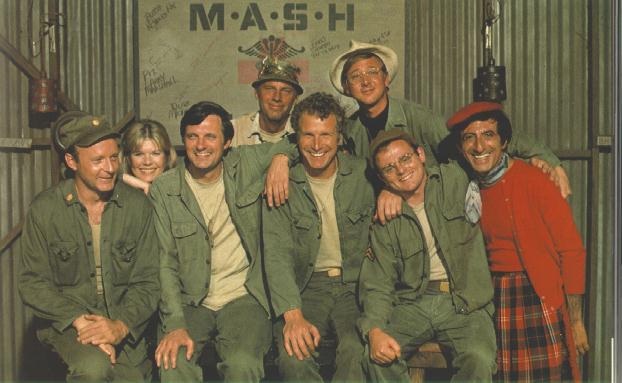 Countless individuals knowledge about army medical practices during the Korean War are derived from the movie and subsequent television show M*A*S*H. Both followed a group of doctors’ comical antics while serving in the Korean War. Interestingly enough the attitudes displayed by the doctors on these programs was not far from the truth. Just like in the show, most of the doctors that served in Korea were pulled straight from residency. This was due to the shortage of trained medical personal that was the result of post-World War II cutbacks. One such doctor to be called up was Doctor Otto F. Apel Junior, who served in the MASH 8076 unit. He described the situation as such, “The army got caught with its pants down. No one was prepared for this war. Across the military board, the army was napping…The army had done nothing to prepare the new doctors for combat medicine.” (1) This lack of training and army indoctrination resulted in many of the doctors in the Korean theater of operations being
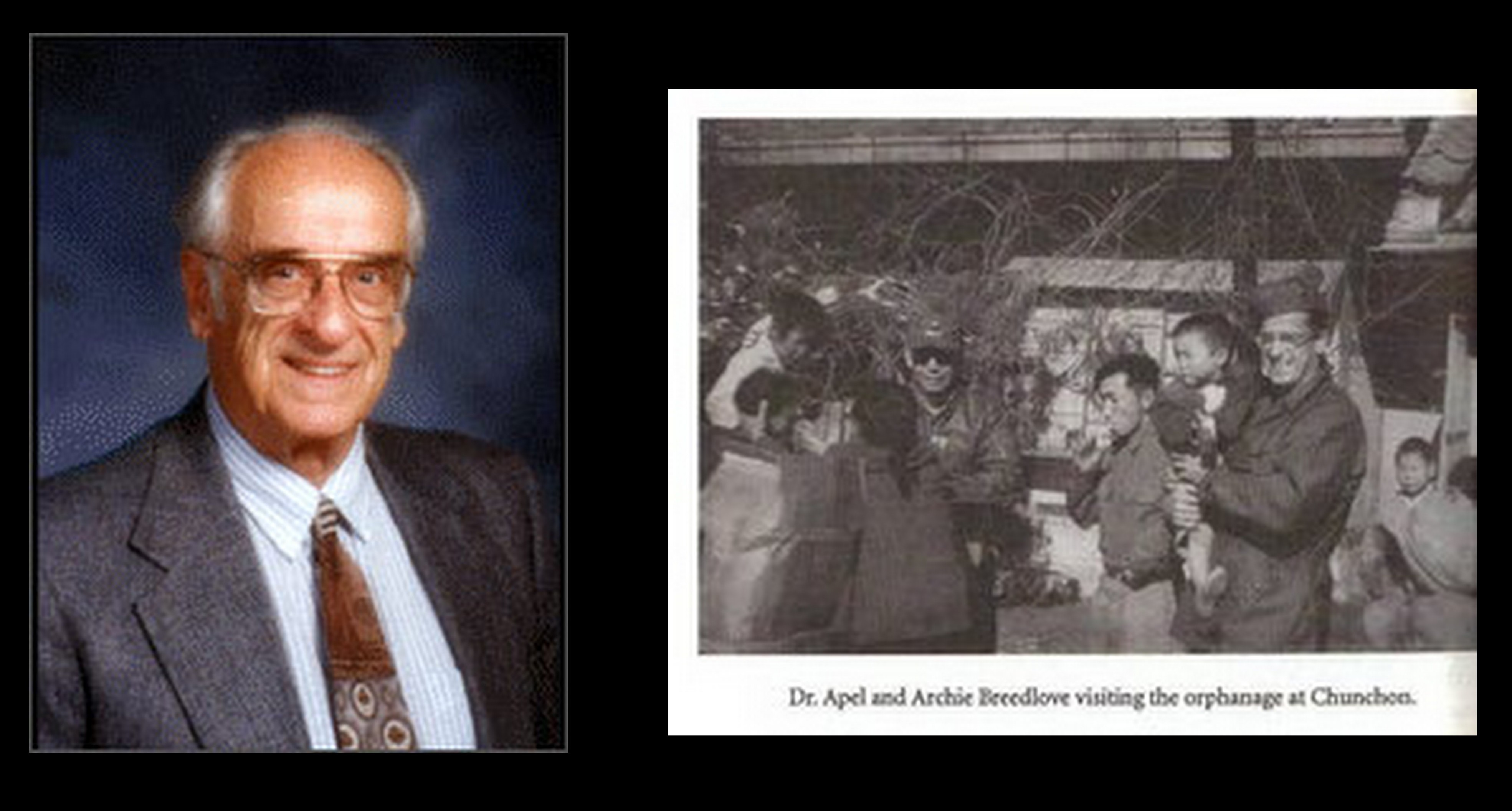
Dr Otto F. Apel, Jr
His experiences in Korea enabled him to serve as a consultant for the television show “M.A.S.H.” in the 1970’s and publish memoirs of his service, “M.A.S.H: An Army Surgeon in Korea” in 1998.
disrespectful to army command. However, this attitude and lack of training did not stop them from doing their job as doctors saving lives. Apel stated, “The career soldiers, from our prospective, tended to be more concerned with how to where the uniform and salute, and then they looked for some connection to the prevention of suffering and the saving of lives…To us in the MASH just behind the front lines of combat, to us in the summer of 1951, the methods of delivering the best medical care possible to the fine young men who were giving their lives at their country’s request eclipsed everything else.” (2)
A large portion of medical care given by the Army Medical Care took place in Mobile Army Surgical Hospital (MASH) units, which were an obstacle in themselves. This was the first time the army history that mobile units were deployed. The whole camp – doctors, nurses, enlisted personal and equipment – had to be able to move at a moment’s notice. MASH units were designed to be moved within twenty four hours after a suitable location was found. When it was time to relocate the MASH would be moved in two phases. First, the pharmacy, laboratory and admitting utility of the receiving ward were moved into the pre-op ward. Then, the tents of the pre-op ward were taken down and moved to the new location where they were immediately set up in order to function as a hospital. The remaining tents of the unit were left behind to maintain the wounded on hand. Once able the remaining tents would be moved to new location. One year the MASH 8076 unit moved seven times. (3)
Another problem facing the medical personal on the front was the conditions of the MASH units themselves. In addition to make shift facilities, they often had make shift equipment. For instance, one unit had a metal wash bucket with holes punched in the bottom to use as a scrub sink. And in the case of the 8063rd MASH, their unit was set up in an abandoned and filthy old school house that had seventeen nurses sleeping in one small room that was sealed tight despite the high temperatures to keep the rats out. (4) The operating conditions were also less than ideal.
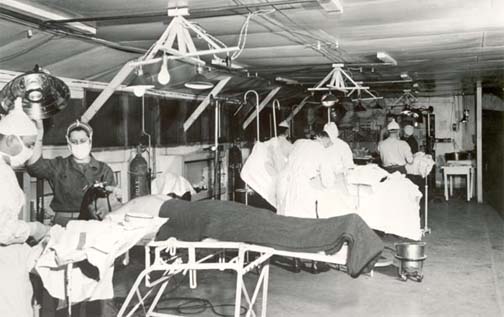
44th Surgical Hospital (Mobile Army) MASH operating room, Korea, January 1954.
The operating tents were dark due to the fact that they had to keep the flaps down in order to keep the flies and dust out. As a direct result light was made a premium, so the Army provided light kits. Generators were the most precious piece of equipment in the unit since electricity at a MASH was used heavily and unlike other army units it was used twenty four hours a day. Wet weather conditions created yet another obstacle within the operating rooms. The majority of them time their floors were made of dirt, which would turn to mud and making the footing for the doctors and nurses difficult. Sometimes this issue could be solved with bricks, but not often due to the units need for mobility. On top of all of this, MASH units also had to deal with the obstacle of overcrowding. The hospitals had a large amount of personal to house, as well as the wounded which often came in large groups. Dr. Apel speaks of this issue in a letter home saying, “Hospital tents filled to overflowing with G.I.’s. All our tents were so full that only one person at a time could walk down the aisles … anyplace that there was a just a tent overhead was filled.” (5)
As one would expect the life of MASH personnel were less than ideal between the movements and conditions, but they were still expected to work with the wounded and save lives. For instance, in one year the MASH 8076 unit treated 5,674 wounded in a sixty bed hospital. They even had a day were they performed 244 surgeries. (6) Doctor Apel tells of one of the long stretches by stating, “The only times I left the Operating tent during those first eighty hours after my arrival at MASH 8076 were to take a smoke break or to “make rounds” in the post-op tent.” (7) Despite all of this hardship on the part of the MASH personal their life saving capability was second to none. 19,143 of the 21,408 patients treated by the 8076th in 1951 were successfully evacuated. They only had 188 deaths, which was a most impressive record in the face of such unorthodox medical conditions. (8)
As one can imagine doctors in MASH units never knew what to expect, as they were located near the fighting. During one of his breaks Dr. Apel witnessed the war first hand, “Suddenly, all the cool peace and quiet darkness burst into a delightful fireworks display when the Chinese lunched their flares, the night lit up like the day, and through the eerie flair-induced light came the shrill bugles of the Chinese infantry.” (9) This was not the only time his MASH unit was exposed to fighting. The 8076th was harassed at one point by a lone antiquated prop plane that would drop ordnance every day at four o’clock. The men and women of the 8076th dubbed him “Bedcheck Charley” (10) due to his daily time of arrival. Although comically harmless, this still added an element of danger to life in a MASH unit. The men and women serving in these units were also exposed to enemy fire on occasion. During one of the MASH 8076 moves the convoy was harassed by Chinese artillery and the doctors had to wait multiple times in their trucks till it was safe to continue. It was during one of these delays that Dr. Apel heard someone call for a doctor. He jumped out of the back of his truck as Military Police directed him to another vehicle. When the doctor opened the door he found a woman in labor. Dr. Apel’s first delivery was done in the back of a truck, in the middle of Korea. (11) Army doctors were truly kept on their toes.
However, the men and women of the MASH units were not the only lifesaving heroes of the Korean War, as they were greatly assisted by medevac helicopter pilots. These soldiers were affectionately known as “Air Angles.” Prior to 1951 most medical evacuations of wounded were done by trucks and other wheeled vehicles. These trucks often had a hard time on the winding and often muddy roads of Korea. Adding to this issue was the fact they frequently broke down and were therefore unsatisfactory to transport those who were more seriously wounded. By March of 1951, three medical helicopter units entered the Korean theater to help remedy a difficult situation. Each unit consisted of four pilots and four choppers. The units were also equipped with their own mechanical engineers to keep the helicopters in working order. (12) The most commonly used helicopter for medevac operation during the Korean was the Bell H-13. They were equipped with two litters, one on each skid of the chopper.

Capt. John W. Hammett poses with one of the Bell H-13 helicopters the solo pilots used to move patients injured in Korea. Hammett was commander of the 49th Medical Detachment during the Korean conflict.
Due to the limited number of helicopter units only the highest priority medical cases flew by chopper. The men who flew the helicopters were officers in the medical corps, so they also preformed some triage and inserted blood and fluid intravenously preflight in order to stabilize the patient. This fluid could be monitored and adjusted in flight by the pilot through plastic tubes with a ball at the end that could be squeezed to increase pressure as needed. Some pilots went so far as to devise a warming system for hypothermic patients by placing a blanket over the engine manifold. (13)
Despite their need, helicopters during the Korean War were still not that prevalent. This being said, the Army made strict guidelines on their use. The two main rules being: not to fly at night or into direct combat situations. However, these rules were not always followed. In one particular intrepid case, Captain Oscar N. Tibbetts, a pioneer in the use of helicopters for medical transport, flew into 80 miles of enemy territory to rescue a downed airman. Captain Tibbetts was flanked by T-Sgt. James Bryson. As soon as they located the downed pilot and began to descend, the pilots were assaulted by small arms fire this continued as they loaded him and took off. By this time night had fallen. The helicopters were not equipped with lighted gauges so Capt. Tibbetts flew back to the landing zone blind, and for this rescue he was awarded the Silver Star for Valor. (14) Not only were helicopter useful for bringing wounded soldiers from the front, they were also instrumental in bringing supplies to the front. For instance, helicopters were used to transport blood to forward stations, bringing over 5,000 units to the front. (15) The helicopters combined
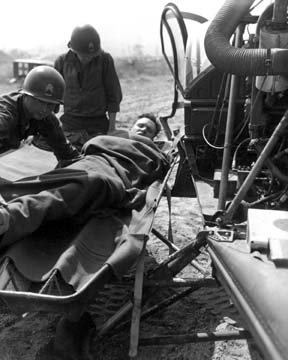
A wounded American is lifted onto a helicopter at the 21st Inf. Regt. collecting station at Painmal, Korea, one mile south of the 38th Parallel, for evacuation to a base hospital. April 3, 1951
with the brave pilots who flew them saved numerous lives on the front lines of the Korean War.
Nothing though compares to the bravery of the combat medic, which were the first link in the life saving chain during battle. The combat medic was not an idea born during the Korean War. However, even with the advancement of the MASH unit and helicopter transport, the combat medic was still the workhorse of the Army Medical Corps. These men were on the front line of combat, facing all the dangers that the position presents. They would work in adverse conditions trying to save lives with the little they had. In a letter home Corpsmen Jerry Chappell describes a particularly bad situation, “On the night of the 11th the unlucky first platoon pulled a raid on another hill they got hit badly….My bunker was used for the smaller casualties with the other two bunkers being used for the worst cases. I patched up eight guys myself…Mac performed an arm amputation all by himself.” (16)
Medics on the front were in constant peril. Private first class Bryant H. Womack found himself to be the only medic in a platoon that was overrun by an overwhelming enemy force. Womack’s platoon suffered a massive amount of casualties, and as a medic he began to render aid immediately to the wounded. He did so amongst a barrage of enemy fire and was wounded. He refused aid so that he could help more of his men. He was then struck a second time losing his right arm. However, this did not stop him, as Womack still directed other soldiers on how to care for the wounded. Womack was the last man to leave the field. As he was being carried off he succumbed to his injuries and died. For his actions he was posthumously awarded the Medal of Honor. (17)
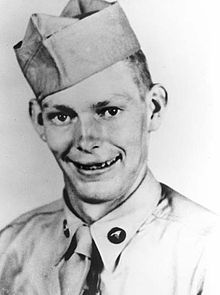
Private First Class Bryant Womack
The medic did it all and without them the whole army medical system would have fallen apart. Not only did they assist on the battle field, but they also played a key role in the evacuation process. They carried litters, drove ambulances and trucks, and loaded and flew in helicopters. Some also worked in MASH units as they assisted doctors and nurses.
Being a part of the medical team the Korean War was not an easy task. Medics had always worked close to the front line, but this was a relatively new concept for army doctors and helicopter pilots. Make-shift conditions and enemy fire did not stop them from doing their jobs though. Without these brave men and women, many more wounded soldiers would have been lost during the bloody battles of the Korean War.
1) Otto F. Apel Jr., M.D. and Pat Apel. MASH. Louisville: University Of Kentucky Press, 1998. 25
2) Ibid, 36
3) Ibid, 53, 56
4) Edwards, Paul. The Korean War. Westport: Greenwood Press, 2006. 102
5) Apel, 123
6) Ibid
7) Ibid, 39
8) Ibid, 129
9) Ibid, 38
10) Ibid, 116
11) Ibid, 56
12) Cowdrey, Albert E. The medics’ war. Washington D.C: Center of Military History United States Army, 1987. 163
13) Ibid, 166
14) Ibid, 167
15) Cowdrey, 164
16) Chappell, Richard G. & Gerald E. Corpsman Letters From Korea. Kent: Kent State University Press, 2000. 66
17) Army, Association of the United States. Medics at War Millitary Medicine from Colonial Times to the 21st Century. Annapolis: Naval Institute Press, 2005. 127
Bibliography
Army, Association of the United States. Medics at War Millitary Medicine from Colonial Times to the 21st Century. Annapolis: Naval Institute Press, 2005.
Chappell, Richard G. & Gerald E. Corpsman Letters From Korea. Kent: Kent State University Press, 2000.
Cowdrey, Albert E. The medics’ war. Washington D.C: Center of Military History United States Army, 1987.
Edwards, Paul. The Korean War. Westport: Greenwood Press, 2006.
Otto F. Apel Jr., M.D. and Pat Apel. MASH. Louisville: University Of Kentucky Press, 1998.


 The Military History Traveler