The Brave Soldiers From Erin Why The Irish Fought With Great Success During The American Civil War: Part 1 Religion

In the mid-nineteenth Ireland was under oppressive English rule and suffering from famine. Many young Irish men fled their homeland to America in quest of a better life only to end up in the middle of a bloody civil war. This war divided bold Irishman against one another and created American heroes out of these foreign born sons. The Irish fought in almost every major engagement of the American Civil War. It is estimated that one hundred and fifty thousand Irishmen fought in this struggle and a high percentage of those men never returned. (1) They were left as Irish Brigade Captain David Power Conyngham put it, “On the bloody fields of Virginia, down amid the cotton fields of Georgia and in the swamps of the Carolinas, lie the bleached bones of many an Irish Soldier and chief.” (2) After the war General Robert E. Lee spoke about Irish soldiers by saying, “The Irish soldier,’ he said, ‘fights not so much for lucre as through the reckless love of adventure, and, moreover, with a chivalrous devotion to the cause he espouses for the time being.” (3) After reading these quotes, one can raise the question why is this so?

This four part series will show it was due to the very fact that they were Irishmen whom possessed a unique background, making them predisposed to greatness in battle. In essence there are four driving forces that will explain why the Irish fought with great success during the American Civil War. These driving forces are: religion, acceptance, Irish Nationalism and the Irish culture. This week we will focus on how religion influenced the Irish in battle?

Religion in Ireland was a fundamental way of life. It permeated not only their daily lives, but also their politics. Philosopher and politician Gustave De Beaument observes, “Ireland was eminent for its piety and sanctity amongst the most Christian nations. Its priests were the head of political as well as religious society. In this country, where the social powers were feeble, uncertain and ill-defined there was no fixed and invariable rule but that of religion no undisputed authority except priests.” (4) Although Beaument was speaking of the late 16th century one can easily speculate how this tradition would be an essential part of Irish culture in the 19th century. At the outbreak of the American Civil War, President Abraham Lincoln thought that spiritual guidance would be important for the Union soldiers. However, he overestimated the soldiers acceptance of the clergy in there regiments. Out of seven hundred Union regiments mustered, almost half decided to “find their way to hell without the assistance of clergy.”(5) The Irish in the Union regiments were mostly Catholic and did not think like the average Union soldier. They voted to have priests accompany their units, as religion was an important foundation of Irish culture. They knew battlefield motivation and encouragement is an important part of any conflict and can be the difference between victory and defeat. Having priests accompany them would help increase everyday moral, thus boosting the fighting spirit within them.
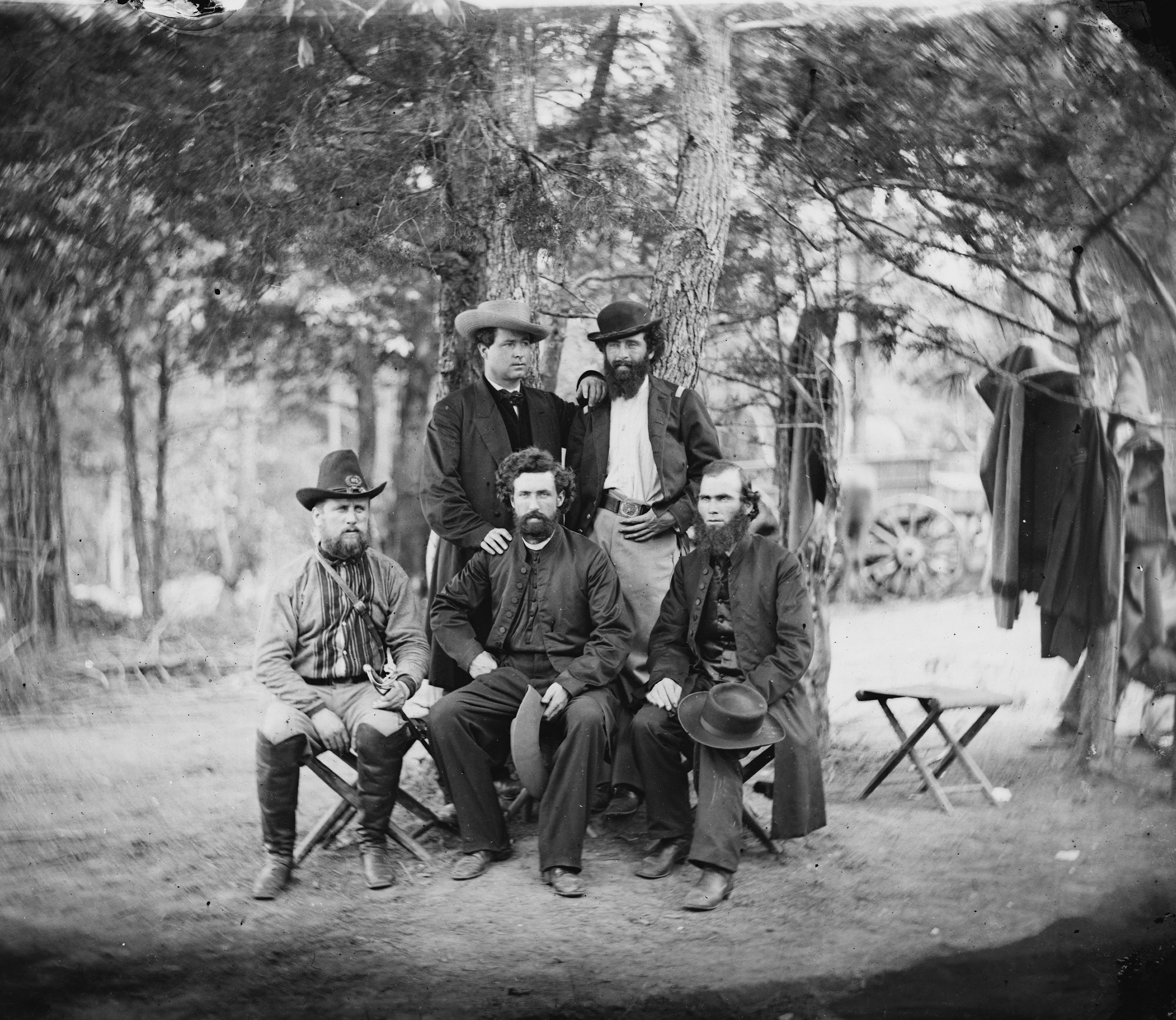
Photo shows: (back row) Patrick Dillon, unidentified; and (front row, left to right) unidentified, James Dillon, and William Corby. The identified men are priests of the Congregation of the Holy Cross, University of Notre Dame. (Source: E. Hogan, Univ. Notre Dame Archives, 2009.) Photograph from the main eastern theater of war, the Peninsular Campaign, May-August 1862.

Photo shows: (back row) Patrick Dillon, unidentified; and (front row, left to right) unidentified, James Dillon, and William Corby. The identified men are priests of the Congregation of the Holy Cross, University of Notre Dame. (Source: E. Hogan, Univ. Notre Dame Archives, 2009.) Photograph from the main eastern theater of war, the Peninsular Campaign, May-August 1862.

In order to heed this call for priests by the Irish fighting for the Union, Father Edwin Sorin, then president of the University of Notre Dame, ordered that Notre Dame was to at once deliver these Catholic soldiers the support they needed in order to offer the “help of their holy religion.” (6) Amongst those sent were Father William Corby and Father James Dillon. Father Corby was a second generation Irishman, born in Detroit in 1833, and Chaplin of the 88th New York. Father Dillon was Irish born and the Chaplin of the 63rd New York. Both regiments were part of the legendary Irish Brigade. Both of these men, along with many other priests in Irish regiments of the Union, helped drive the success of the Irish and in more than one documented case may have shifted the tide of battle. One battle where the Irish’s devotion to religion can be seen is during the battle of Antietam. Father Corby road his horse ahead of the 88th New York’s line, offering them a “hasty absolution.” (7) The Father then rode into the fray and heard confessions during the thick of the fighting. The idea of absolution before God was extremely important to these Irish-Catholic soldiers, as they believed that they “can be restored to grace by confession and the sacrament of penance.” (8)
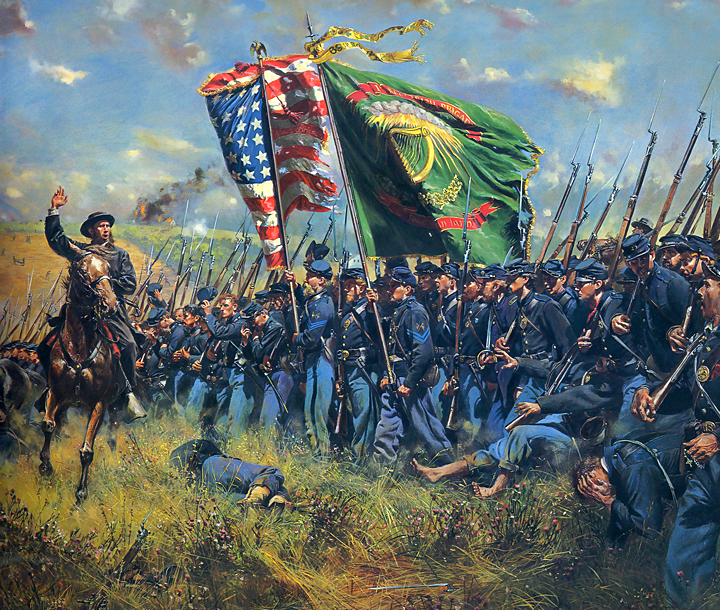
Sons Of Erin by Don Troiani this work depicts Father Corby giving absolution in front of the 88th New York during the Battle of Antietam on horseback

One can see how this could help calm the nerves of these men and help motivate them in the battle. Furthermore, after the battle Union General George McClellan said, “The Irish Brigade sustained their well-earned reputation, suffering terribly in officers and men, and strewing the ground with their enemies, as they drove them back.” (9) Perhaps the most famous example of religious motivation by a chaplain took place at Gettysburg. On the second day of battle Father Corby stood upon a rock and offered a general absolution to the men of the Irish Brigade. He ended his blessing with the words, “The Catholic Church refuses Christian burial to the soldier who turns his back upon his foe or deserts his flag.”(10) These words inspired the men to fight with all they had, and the fighting was fierce. Captain Conyngham described the fighting in the following passage, “Our rifled guns repelled with effect and for two hours the air seemed literally filled with screaming messengers of death.” (11) Peter Welsh was the Color Sergeant of the 28th Regiment Massachusetts Volunteers, a unit that was part of the famed Irish Brigade. He wrote this about the battle, “it was a hot place our little brigade fought like heroes and we drove the enemy nearly a quarter of a mile.” (12) The Irish Brigade came into that battle with five hundred and thirty men and left with three hundred of the original recruitment of over two thousand. (13) Eventually, the Confederate troops did push the Irish Brigade back a little during the struggle for what was later known as the Bloody Wheatfield. By the end of the battle of Gettysburg, the Union had defeated the Confederates and the Irish Brigade played a valuable role in this victory. One can easily make the connection that father Corby’s words helped and proved to be an inspiration to the men as they faced a tough enemy.

Absolution at Gettsburg

Absolution Under Fire, by Paul Wood this work shows Fr. Corby giving a general absolution to the Irish Brigade before the Battle of Gettysburg. The painting was done in 1891 , while Wood was a Notre Dame student.

Chaplains earned great respect amongst their regiments, which strengthened the effect they had on Irish soldiers; “Chaplin’s, like officers, won the respect with their bravery under fire. In the male time preserve of a wartime, army courage is currency with which men’s hearts are purchased.”(14) Father Dillon was one of the members of the cloth that was very influential amongst his regiment. The respect that he earned can be seen during the battle of Malvern Hill. When the 63rd New York was under heavy fire the men were unsure of their officers because they were inexperienced. The men were claiming that they were father Dillon’s regiment and shouted, “Yes, yes! Give us Father Dillon.” (15) Father Dillon stepped up into the skirmish and told the men to have confidence in their officers and restored order back in the ranks. Union General Fitz John Porter wrote of the Irish Brigades actions that day saying, “I found that our force had successfully driven back their assailants. About fifty yards in front of us, a large force of the enemy suddenly arose and opened fire with fearful volleys upon or advancing line. I turned to the brigade….and found it standing like a stone wall and returning a fire more destructive than it received.” (16) A feat that would have been nearly impossible if Father Dillon did not organize the disorderly rabble of his regiment earlier in the fight.
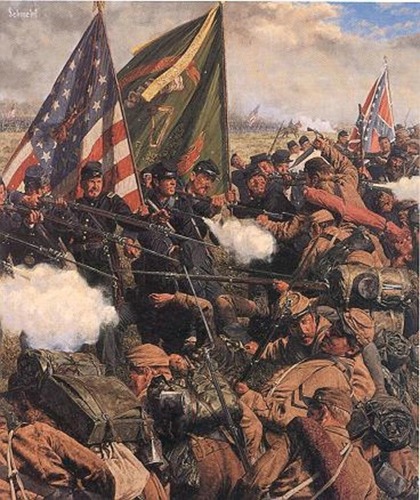
Painting titled A Donnybrook at dusk By  Bradley Schmehl, depicting the Irish Brigade at Malvern Hill

Painting titled A Donnybrook At Dusk By Bradley Schmehl, depicting the Irish Brigade at Malvern Hill

Catholic chaplains were not just a staple in Union Irish regiments, as they were also highly regarded in Confederate regiments. One such priest was Father Matthew O’Keefe, who was the chaplain of William Mahone’s Brigade of Virginians. He earned the respect of his followers due to the fact that he drew two pistols on a would be assassin, thus thwarting his plot. (17) Father O’Keefe also volunteered for service to the cause even after being denied by his bishop. (18) One can imagine that due to this esteem O’Keefe’s words and leadership would have a positive effect on the men he tended to and once again show what a driving force religion was in making the Irish soldiers of the Civil War such fierce fighters. Perhaps the most influential Irish priest of the Confederacy was Father John Bannon. He was Irish born and the priest of the Missouri Brigade. He was present during the Siege of Vicksburg and offered Catholic services, as well as administered food and water. He also gave last rights heard confessions and tended to the wounded. This would have had a profound effect on the moral of the men and although the city eventually fell to the Union, the care he provided would add time to the siege and help Confederate forces leave the city to fight another day. It was due to the respect he earned during this, as well as his staunch support of the Confederacy, that Father Bannon was sent in the dark of night to become a foreign ambassador to Ireland. (19)
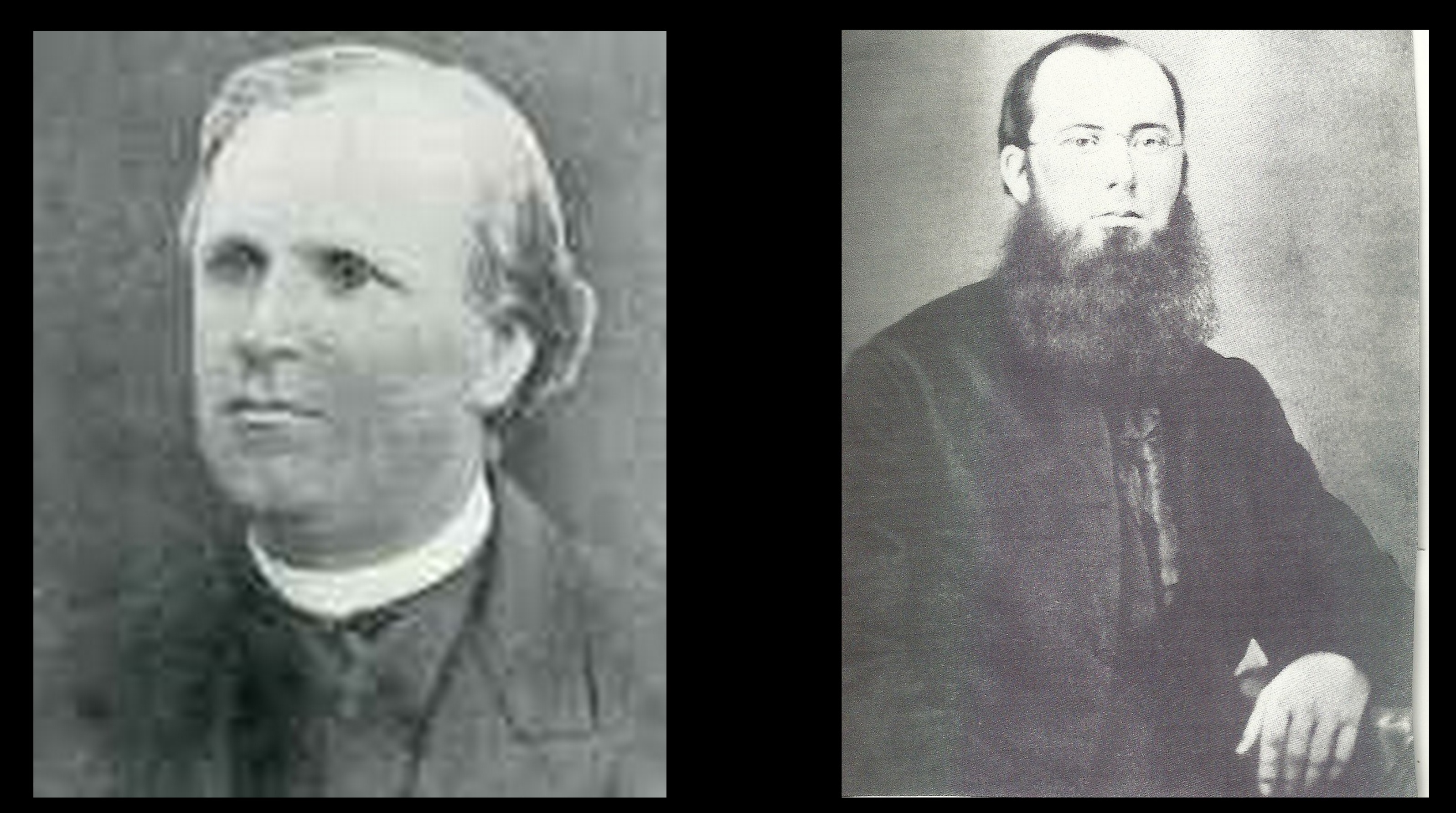
O'Keefe left O'bannon right

Left: Father Matthew O’Keefe, Right: Father John Bannon

Chaplains were not the only way Confederate Irish were motivated by religion in battle. This can be demonstrated by the fact that the Colors of the South Carolina Irish Volunteers were presented by Bishop Patrick Lynch during a Catholic mass. Bishop Lynch spoke to the men saying, “Receive it then {the flag} rally around it. Let it teach you of God, of Erin, of Carolina. Let it teach you your duty on this life as soldiers and Christians, so that fighting the good fight as Christians, you may receive the reward of eternal victory from the King of Kings.” (20) By doing this Bishop Lynch in essence consecrated the colors. By making the colors sacred he made them significantly meaningful to those of the Catholic faith. This would then provide additional inspiration to the men in battle. These Irish Confederates knew that if they were to die while fighting it would be for a virtuous cause and under a flag blessed by God.

Not only did the clergy of both sides offer battlefield motivation to the Irish fighting in the war, but they also helped care for the soldier’s physical and mental health off the frontline. Supporting them behind the scenes as well was just another way to boost their moral. Military historian Lieutenant-Colonel Sir John Baynes speaks of the importance of soldier’s morale in his work Morale – A Study of Men and Courage. He stated: “High morale is the most important quality of a soldier. It is a quality of mind and spirit which combines courage, self-discipline, and endurance. It springs from infinitely varying and sometimes contradictory sources, but is easily recognizable, having as its hall-marks cheerfulness and unselfishness. In time of peace good morale is developed by sound training and the fostering of esprit de corps. In time of war it manifests itself in the soldier’s absolute determination to do his duty to the best of his ability in any circumstances. At its highest peak it is seen as an individual’s readiness to accept his fate willingly even to the point of death, and to refuse all roads that lead to safety at the price of conscience.” (21) Positive morale of the soldiers was significant to the men of the Irish Brigade during the Seven Days Battle. The men suffered long forced marches at night and hard fighting during the day, which would be enough to break any soldier. However, the men of the Brigade had support from their clergy. Around the clock priests heard confession and offered words of encouragement to the men keeping their spirits up. (22) The effects of which can be seen at the Battle of Savage Station, which was the fourth battle of the Seven Days Campaign. The Confederate attack at Savage Station was swift and organized. Non-Irish Union regiments had a hard time staying strong. For instance, the 106th Pennsylvania “broke and then fled in panic after losing one hundred men in killed and wounded.” (23) However, the Irish Brigade “greatly distinguished themselves, charging in some cases up to the very cannon of the enemy. One of the Rebel guns they hauled off, spiked the guns, demolished the carriages, and then abandoned them.” (24) The juxtaposition of these two units in the same battle goes to show the effect that the Chaplains had on their flock, and how that morale boost translated into action.
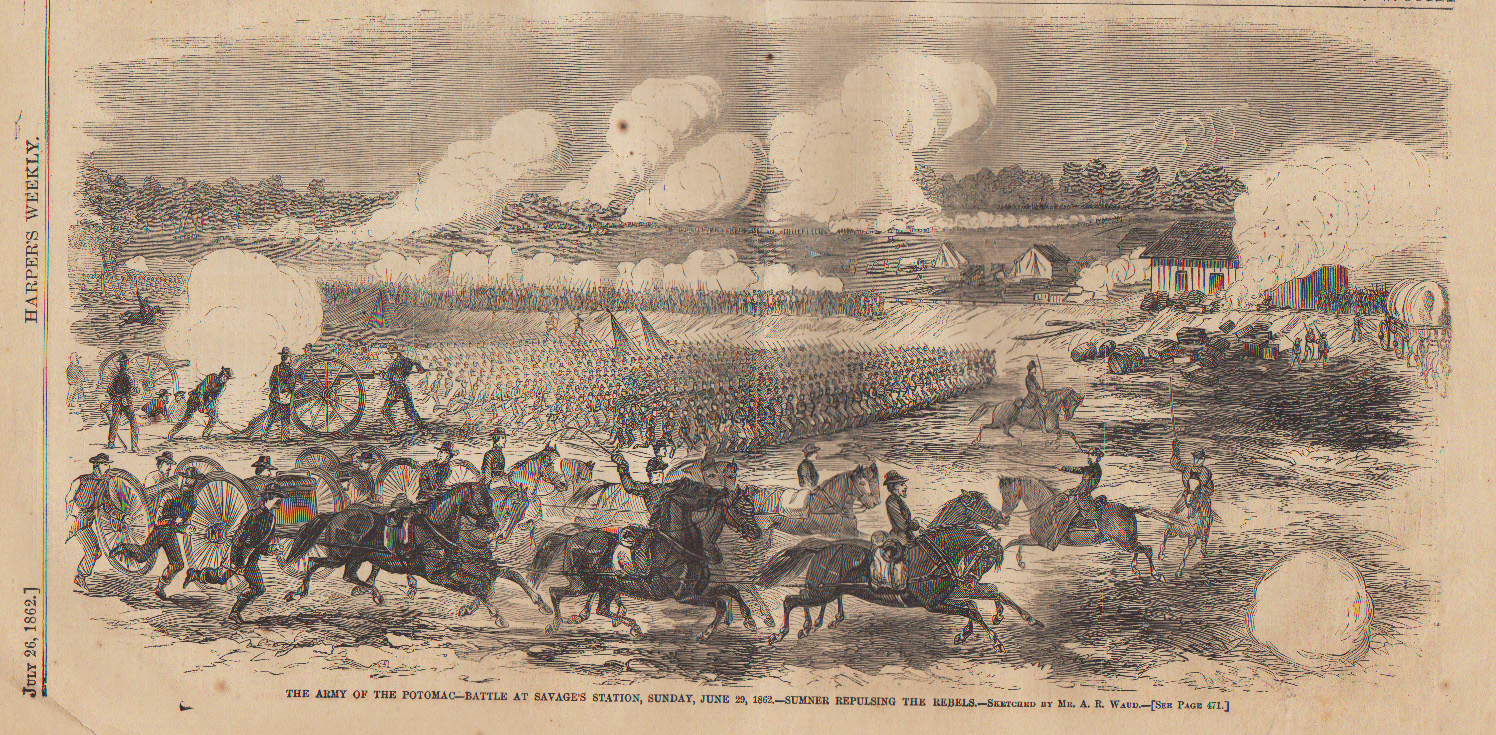
Battle of Savage Station engraving from Harpers Weekly

Engraving from the July 26th 1862 edition of Harper’s Weekly depicting the Battle of Savage Station.

Religious services were yet another way to boost the morale of the men in the war, and this fact was not lost on the commanding officers of Irish regiments. The 9th Massachusetts Volunteer Infantry, also known as Boston’s Irish Ninth, lost their chaplain, Father Thomas Scully, for quite some time due to illness. During this time the commanding officer, Colonel Patrick R. Guiney, of the 9th Massachusetts borrowed the services of Father Corby. Both men met with General Charles Griffin, commander of the First Division of the Fifth Army Corps, to see if Father Corby could take on the 9th Massachusetts in addition to the 88th New York. Griffin knew that most of his men were of the Catholic denomination, and was surprised that they would be without a Catholic priest. General Griffin then suspended drill for a week so that his men could attend to “their religious duties.” (25) One can easily infer from this decision that General Griffin could see the value on religion and the effect it had on soldiers in battle. Furthermore, he realized the importance of how to use clergy to motivate the Irish in his ranks.
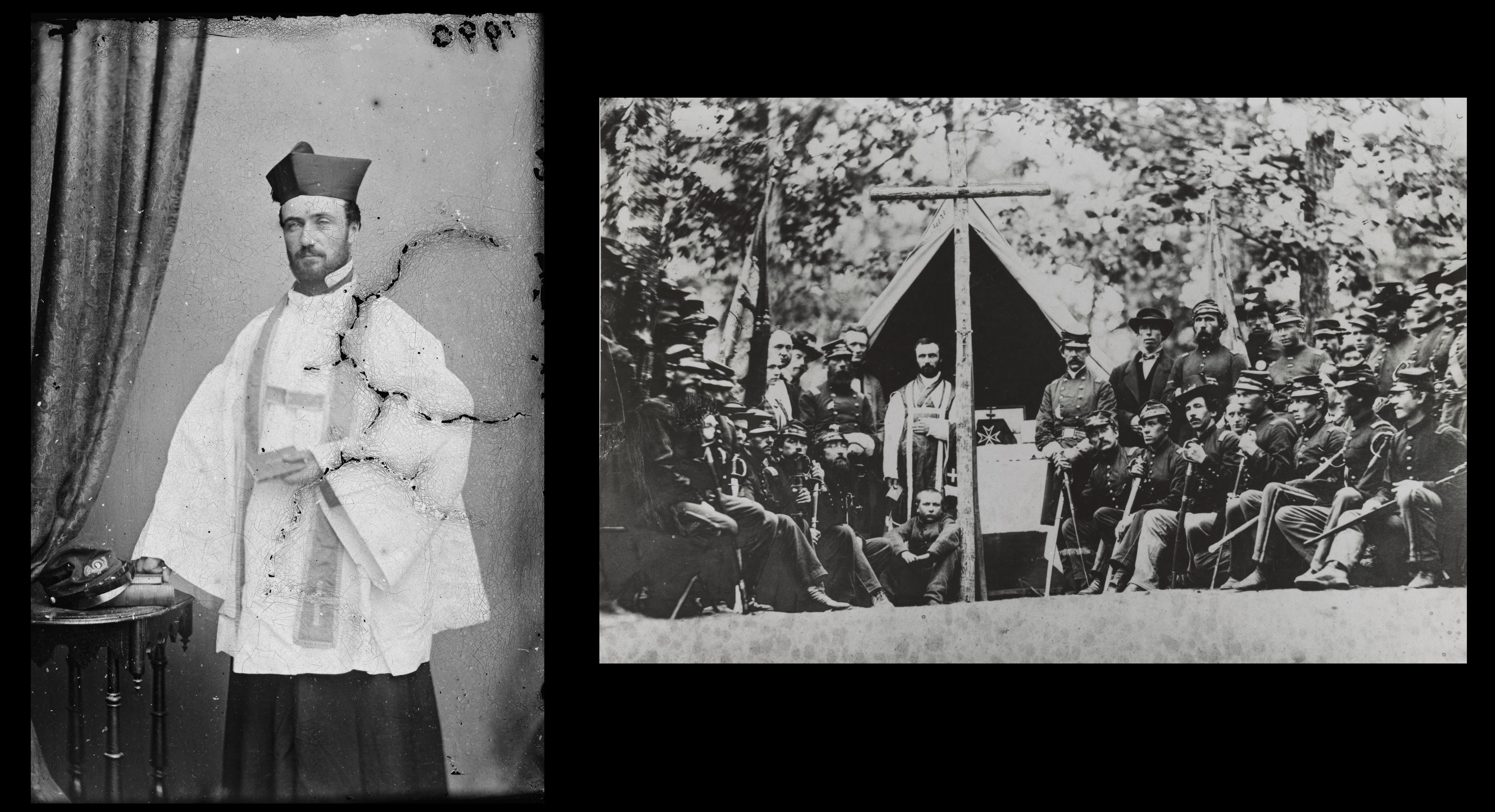
Left, Father Thomas Scully  Right Father Scully preparers to say mass to Bostons Irish 9th

Left: Father Thomas Scully Right: Father Scully prepares to say mass to Bostons Irish 9th at Camp Cass, Arlington Heights, Virginia.

Religion can be a powerful motivator and help an army. Father Corby himself writes of this by saying, “The feature in any army is indeed, no small matter… Men who are demoralized and men whose consciences trouble them make poor soldiers. Moral men, men who are free from the lower and degrading passions make brave, faithful and trustworthy soldiers.”(26) By embracing their religion during the war the Irish had a driving force that most other soldiers of the war did not. This force helped push them to do great things in battle; and the idea of the Irish being “brave, faithful and trustworthy soldiers” can be seen throughout the American Civil War.

Notes;

1) Donald, Robert Bruce. Manhood and Patriotic Awakening in the American Civil War: The John E. Mattoon Letters, 1859-1866. (Lanham, Maryland:Hamilton Books. 2008) 17

2) Conyngham, David Power. The Irish Brigade and Its Campaigns. (New York: Fordham University Press, 1994.) 8

3) Cavanagh, Michael. Memoirs of Gen. Thomas Francis Meagher : comprising the leading events of his career chronologically arranged, with selections from his speeches, lectures and miscellaneous writings, including personal reminiscences. (Worcester, Mass: The Messenger Press, 1892.) 470

4) De Beaumont, Gustave. Ireland Social, Political, and Religious . (Cambridge, Massachusetts: The Belknap Press Of Harvard University Press , 2006.) 10

5) Schmidt, James M. Notre Dame and the Civil War : Marching Onward to Victory. (Charleston, SC: History Press, 2010.) 30

6) Ibid

7) Corby, William. Memoirs of Chaplain Life : Three Years with the Irish Brigade in the Army of the Potomac. (New York: Fordham University Press, 1992.) 112

8) Campbell, Ted. 1996. Christian Confessions : a Historical Introduction. 1st ed. (Louisville, Ky.: Westminster John Knox Press.) 96

9) Corby, Memoirs of Chaplain Life, 373

10) Mulholland, St. The Story of the 116th Regiment, Pennsylvania Volunteers in the War of the Rebellion. (New York: Fordham University Press, 1996.) 407

11) Conyngham ,The Irish Brigade and It’s Campaigns, 416-417

12) Welsh, Peter. 1986. Irish Green and Union Blue : the Civil War Letters of Peter Welsh, Color Sergeant, 28th Regiment, Massachusetts Volunteers. (New York: Fordham University Press 1986.) 109

13) Wright Steven J., The Irish Brigade (Springfield, PA: Steven Wright Publishing, 1992.) 23

14) Corby, Memoirs of Chaplain Life, XVI

15) Schmidt, Notre Dame and the Civil War, 34

16) Corby, Memoirs of Chaplain Life, 370

17) O’Brian, Sean, The Irish Americans In the Confederate Army. (McFarland & Co, 2007) 40

18) Unknown. New York Times. January 29, 1906. http://query.nytimes.com/mem/archive-free/pdf?res=FB0F16FA3B5A12738DDDA00A94D9405B868CF1D3 (accessed September 10, 2014).

19) Gleeson, David. The Green and the Gray: The Irish in the Confederate States of America. (The University of North Carolina Press, 2013.) 169-170

20) Ibid, 150

21) Baynes, John Morale: A Study of Men and Courage, (Garden City Park, NY: Avery Publishing Group, 1988.) 108

22) Corby, Memoirs of Chaplain Life, 87

23) Smucker, Samuel M. A History of the Civil War in the United States : with a Preliminary View of Its Causes, and Biographical Sketches of Its Heroes. (Philadelphia: J.W. Bradley, 1865.) 289

24) Ibid

25) Corby, Memoirs of Chaplain Life, 315

26) Ibid. 271
Fortress Metz: The 3rd Army’s Toughest Battle

In the fall of 1944, after the Normandy break out, a three-month long struggle was fought during World War II around the fortress city of Metz, France. This fight would pit the United States 3rd Army, under General George Smith Patton Junior, against the German 1st Army, commanded by the newly appointed General der Panzertruppen Otto Von Knobelsdorff. This clash would be forgotten and pushed aside by history but it is one of great importance for the men who fought and died there. This campaign was one of the hardest fought during World War II due to the nature of Metz and its fortifications.
By September of 1944 the mighty 3rd Army had been reduced into only two corps after its triumphant march to Paris. The XII Corps was under the command of Major General Manton Eddy, while the XX Corps was under the command of Major General Walton Walker. After the three months of fighting and marching the troops were fatigued and were short on supplies. The indomitable 3rd Army although weakened  would soon be up against one of the most fortified sections of the western German front.

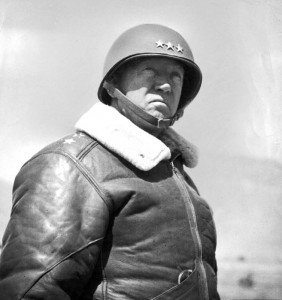
The Allies knew they would need a no nonsense general that would fight hard, which is why they chose General Patton to tackle the challenges of Metz.

Figure 1 General    George S. Patton

Figure 1: General George S.   Patton

Patton was fascinated by the military throughout his childhood and was regaled by stories from his dad, who served in the confederacy with distinction during the Civil War. Another man who was close to the Patton family also influenced young George this man was Colonel John Mosby, more famously known as “The Grey Ghost,” Mosby was part of Major general J.E.B Stuart’s Confederate Calvary . (1) During the summer Mosby would reenact battles from the Civil War with Patton on horseback. Patton would play the part of General Robert E. Lee and Mosby would play himself. (2) This influence and young George’s obsession with all things military, led Patton to attend the Virginia Military Institute, and then West Point. He saw his first combat in Mexico during the Mexican expedition of 1916, which was led by General “Black Jack” Pershing. During this expedition he would encounter his first experiences with close quarter combat, this took place when Patton killed three banditos with his pistol during a raid on a hacienda. He then strapped the bodies over the hood of his Dodge Touring car and drove back to Pershing with his trophies. (3) This action made Patton the first person in American history to engage an enemy in warfare using a motorized vehicle, which officially marshaled motorization into combat. (4)   His knowledge of mechanized warfare, vast knowledge of military history,and  close quarter combat would become useful during the 3rd Armies attack on the city of Metz.
During World War I Patton was again an aid to Pershing. During this time Patton focused on the idea of tank warfare; throwing himself into it with an almost religious fever writing manuals and virtually single handedly forming the tank corp. (5) He led the tank corps into combat during the Meuse-Argonne Offensive in France, and was severely wounded when a bullet pierced through his leg ripping out a large chunk of flesh from his backside. Patton nearly bled to death and before his recovery was complete the armistice was signed, Patton would not see combat again until World War II. (6)
Patton’s impressive resume continued into The second World War. He was given the assignment of creating the desert training corps in 1942. This group became proficient in tank warfare and was the first American force to land on enemy soil in World War II during Operation Torch in Africa. In 1943 after a devastating and embarrassing defeat of the United States forces at Kasserine in Africa, Patton was put in charge of the II Corps. With his strict discipline and attention to detail he turned this group of men from a loose group of misfits into a finally tuned fighting force that would achieve a sound victory in the battle of El Guettar. After his success in Africa, Patton moved onto Operation Husky. This invasion of Sicily fueled a rivalry between himself and General Bernard Montgomery of the British forces. This competition brought out the best and worst in Patton as he achieved victory in Palermo and Mesina. However the stress of these battles may have led Patton to his controversial “Slapping Incidents” in which on two separate occasions he slapped two soldiers that were suffering from battle fatigue in the face. This was almost the end of the Generals career; many high ranking officials were calling for his dismissal,but the army knew Patton’s value and suspended him from combat till 1944.
Patton was a natural born warrior and was feared by the Axis because of his reputation as an unrelenting attacker. The allies used his name and reputation while he was suspended to deceive the Germans into believing that the D-day landings would be led by Patton and that he would strike at Pas-de-Calais. To achieve this  the Allies employed special effects men from Hollywood to create a whole fictitious army that was built around Patton. They constructed fake tank barracks and fake radio chatter. This deception paid off because the German high command thought the Normandy landings were just a diversion and refused to release there reserve corps from Pas-de-Calais, allowing allied success. (7) The Allied Commanders knew they could not win the war without Patton; his reputation, experience and motto to never fight for the same piece of land twice lead to his re-instatement, and by late 1944 he was given command of the Third Army that would become the spearhead of Operation Cobra. Patton and his stout Third had success after success throughout Europe then they hit a wall in Metz.

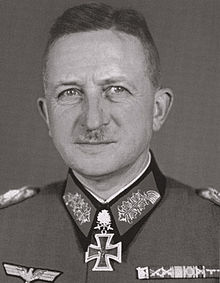
The German commander of fortress Metz was, General Otto von Knobelsdorff. Like Patton, he was a decorated infantry officer during World War I where he earned the Iron Cross twice for his heroism. After World War I Knobelsdorff commanded a regiment that in 1935 was part of the Polish campaign that touched off World War II. During the beginning of the war he commanded divisions in the fight for France and Belgium.

Figure 2 General der Panzertruppen Otto von Knobeldorff

Figure 2: General der Panzertruppen Otto von Knobeldorff

He distinguished himself on the Russian front, receiving the Knights Cross for his division’s actions in 1942. Later that year he was promoted to General and commanded a Panzer Corp. He was decorated again for his leadership of that Corp during the battle of Kursk with a Knights Cross with Oakleaves, a very high honor in the German Army. For his battle command at Nikopol Bridgehead he was awarded yet another Knights Cross, this one with Oakleaves and Sword. This made him one of the highest decorated German commanders of the war. By the time he was put in command of the defenses around Lorraine in which Fortress Metz was a part of  there was a bit of trepidation due to his health, which would play a role in the battle’s outcome due to the fact that Knoblsdorff  during the height of this battle had to take a brief leave due to his health issues. (8)

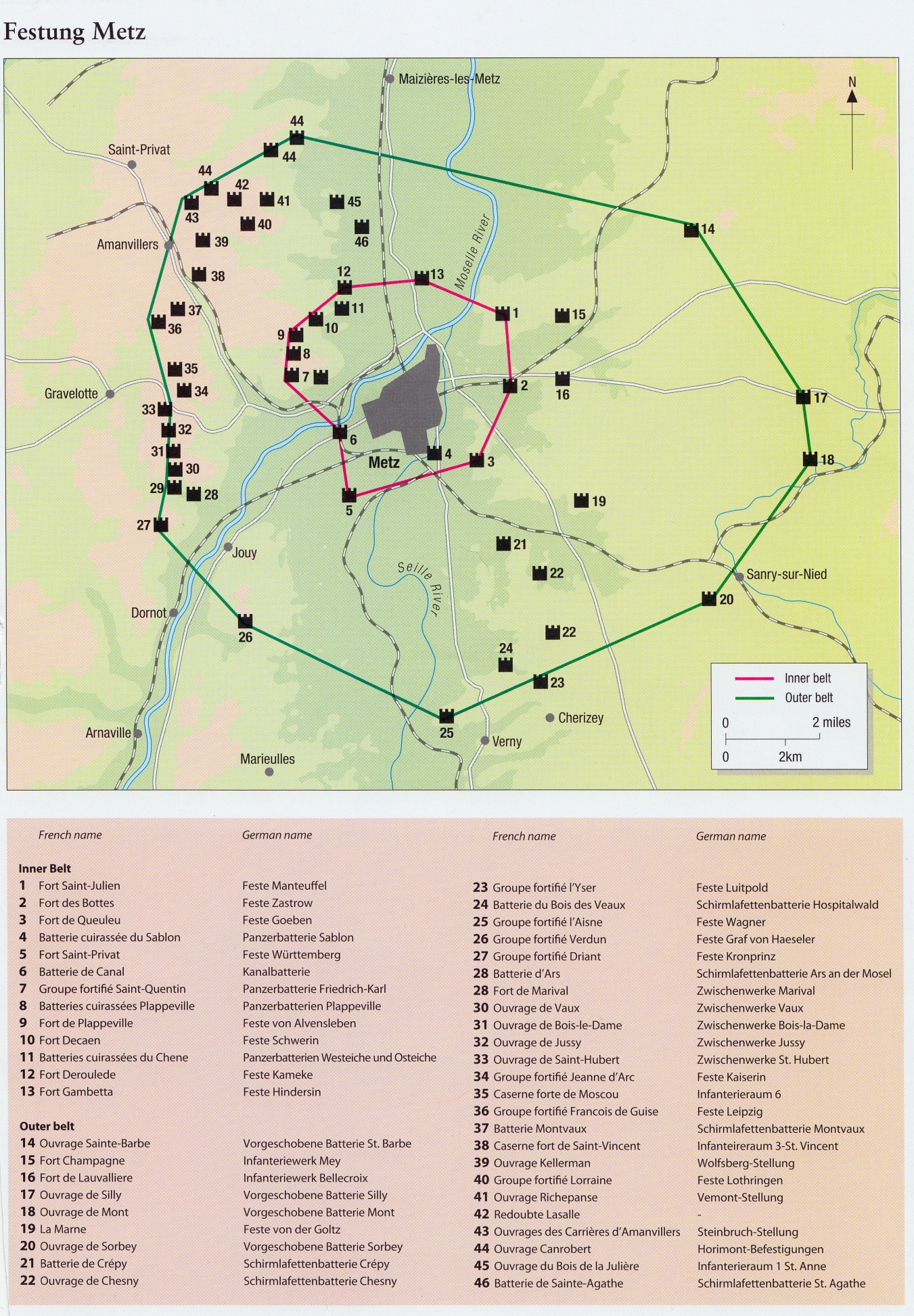
Taking the city of Metz would be a challenging task for the allies. There were a series of natural as well as man-made obstacles these included, the Moselle River, a multitude of forts and a plethora of pill boxes. Patton’s army made attempt after attempt to cross the Moselle River but these fortresses rained heavy artillery fire down upon them making it a daunting task. These forts and pill boxes dated back to the 19th century making them almost a natural part of the landscape this made the structures much harder to detect and therefore defeat. (9) another reason the pill boxes created a challenge was, because of their small size. Two German soldiers could easily hide inside and shot a .50 caliber machine gun at the Allies and have little chance of being hit by small arms fire. The Combination of these natural and unnatural defenses had made the city of Metz  a formidable opponent for invaders for more then 1500 years since it is placed superbly for defense on the east bank of the Moselle River. As well as being surrounded by barbed wire and earth fortifications that had been built around the city. Its best defense however, was the fact it was surrounded by hills that were turned into dominating underground forts composed of passageways and well dug in steel and concrete doors placed in a fashion that not only concealed them but protected them from artillery fire.

Figure 3 German Pill Box

Figure 3: German Pill Box

These doors were also impervious to air attack since they were defended by earthen banks. (10) It would take multiple operations in order to take the city of Metz. A lull in the action took place during most of October before General Eisenhower authorized Operation Madison with the objective of taking Metz. He gave the task to General Patton and his 3rd Army.

Figure 4: Map of Fortress Metz and Surrounding Forts

Figure 4: Map of Fortress Metz and Surrounding Forts (Click to enlarge)

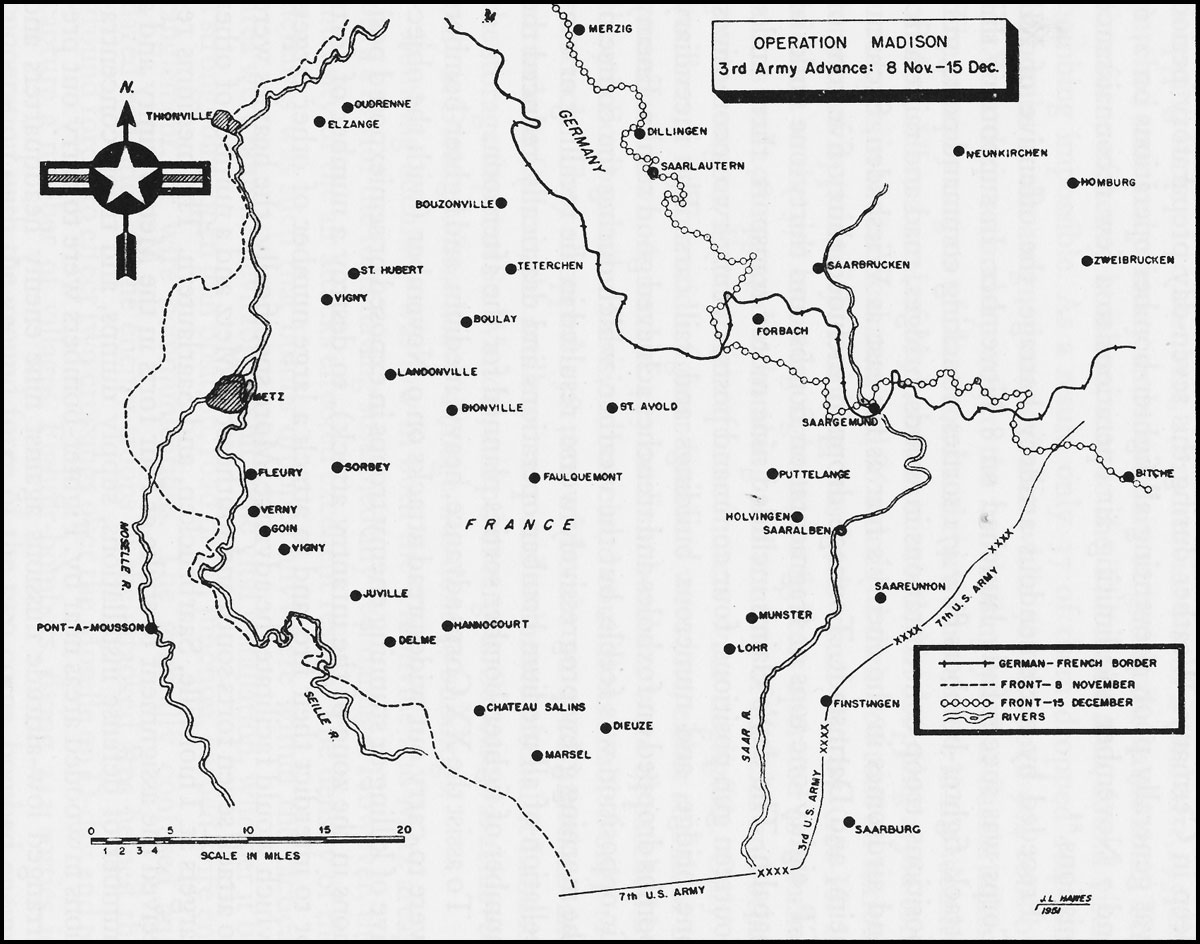
On November 8, 1944, General Eddy’s XII Corps began Operation Madison. Eddy had objections to starting the operation due to the muddy terrain as a result of heavy rains and flooding. He asked Patton to delay the attack to which Patton responded “Attack or name your replacement.” (10) At 0600 the attack on German forces that were blocking the way to Metz began with an artillery barrage that took the Germans by surprise. The attack was well camouflaged since the foggy weather the previous night allowed the 3rd Army to move the battery into position without being noticed. This led to a disruption in the forward German defenses. At the American right flank, Hill 310 was being defended by a regiment from the 361 Volksgreadier-Divison, leading to a three day intense engagement. This action created a breach between two German Volksgrenadier Divisions that was exploited by General Eddy. Eddy used the 4th Armored Division to try and seize the Morhange road junction, which was a vital peace of real-estate since it would help move men and material towards their ultimate objective. This move by the 4th Armored Division was such a threat  it forced the German Commander Knobeldorff to divert his reserve in defense and to equalize the front. (11) By the evening of the 8th the Allies held ten bridges over the Seille River. However, the ridge was still held by two German infantry units, the 48th and most of SS-Panzergrenadier 37th. The American 80th division was given the task of taking this ridge. (12) This push began early in the morning of the 9th and taxed the German defenses of the Delme Ridge forcing Gen. Knobelsdorff to transfer a division in relief. This only delayed the American advance and did not stop it.

Figure 5 Map Denoting The Battle Lines Of Operation Madison

Figure 5: Map Denoting The Battle Lines Of Operation Madison

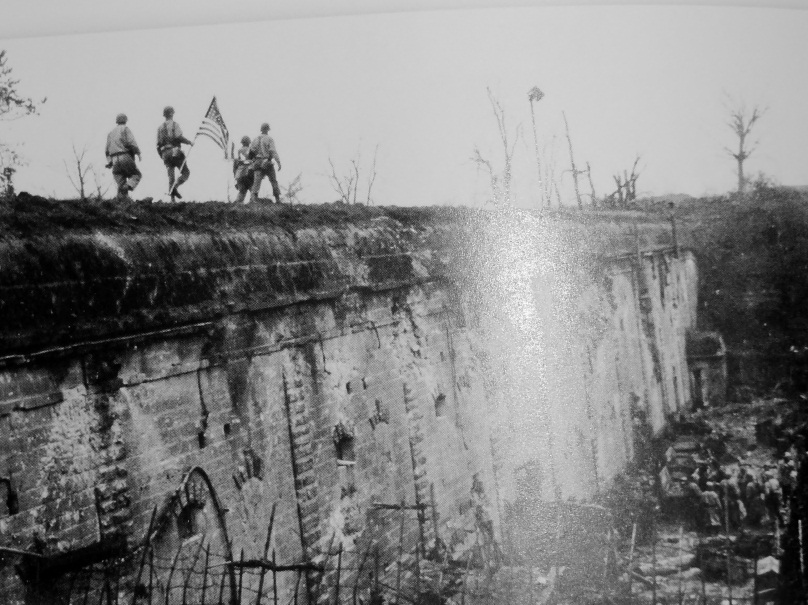
Later in the day on the 9th, XX Corp got into the fray after the 95th division staged an attack that was intended to divert the Germans away from an incursion made by the 90th division at the most prominent river crossing. The weather played a factor in this action as well as the Germans were again caught off guard by the advance and the minefield they had put in place was rendered obsolete by a flood that turned the ground into a small body of water. The allies overran the German positions and advanced. Almost simultaneously the 358th infantry advanced to Fort Koenigsmacker and split up leaving companies A and B to deal with this nemesis. As it happened, the 358th was accompanied by a regiment of engineers who helped in the attack of the Fort by using improvised explosives to take down the observation domes. (13) By night fall the Americans had control of the western side of the fort but the fight was not over. It took till November 11th to gain total control of Fort Koenigsmacker. With this control the allies were on the precipice of the Fortress City Of Metz.

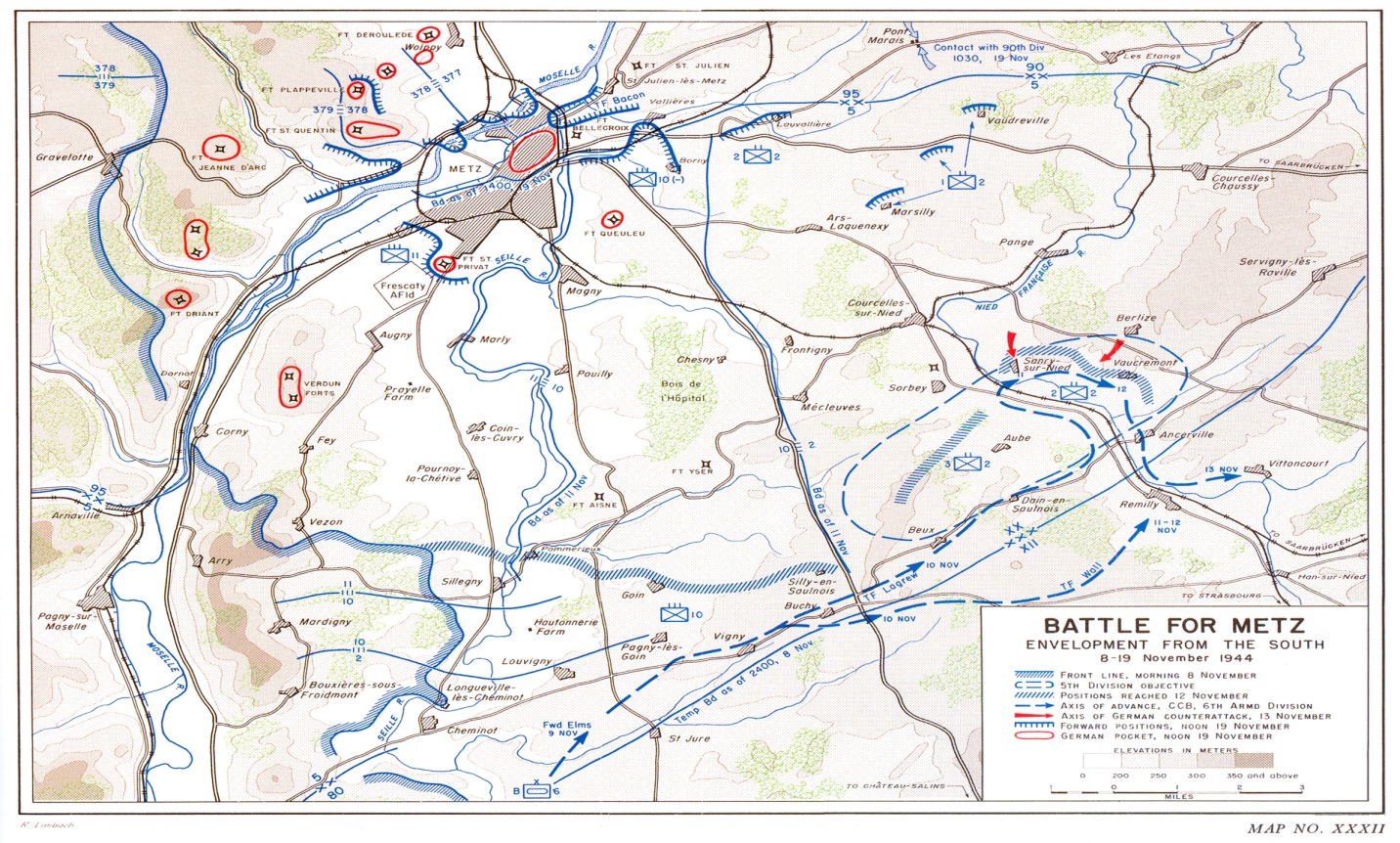
On November 18, 1944 the siege of the Fortress City Of  Metz commenced. This attack was reliant upon taking and securing the rest of the bridges over the Moselle River. This operation was made extremely difficult due to the destruction of almost all the bridges by German forces. The 95th infantry and 379th Infantry regiment moved in from the west but left two companies behind to deal with German resistance. They succeed in cutting off Fort Jeanne d’Arc and reached their bridge objective by the evening only to discover its destruction. A boat crossing was considered but determined not plausible so they were ordered to hold Ft Jeanne D’Arc and stop any further German resistance. (15) At this time the 378th infantry was in trouble as well, they had their full attention on engaging Fort Plappeville. This fort was in a good location for the Germans due to the fact that they could share supplies with a neighboring fort. Together both forts totaled 650 men, but that withstanding the Germans where still running low on food and ammunition. However, they were willing to hold these two forts till the last man due to their strategic position overlooking the Moselle and their ability to rain artillery fire down on all those who dare cross. If these forts were properly supplied they would have been able to greatly slow the American advance. US troops began to enter the city later that day with little resistance due to a lack of communication between the Germans as a result of the blown bridges disrupting their lines of communication. By the end of the day on the 18th the German high command made a decision to concentrate all their forces around their command post on the Isle of Chambiere as to hold this post to the last.

Figure 6 Envelopment Of Metz From The South 8-19 November 1944

Figure 6: Envelopment Of Metz From The South 8-19 November 1944 (Click to enlarge)

The next day, November 19th, The 377th American Infantry unit was returning to the area of Fort Bellacroix when they discovered one of the bridges had not been blown. They quickly overtook the small German opposition force and captured the important real estate. (16) A company with tank support crossed the bridge under heavy sniper fire and faced approximately 700 men. The German forces were not organized though and their commander surrendered. The US forces now had control of most of the city. An attempted was made by the Germans to air drop supplies to the desperate men in Fort Plappeville but failed, adding to their problems. By the evening of the 19th The American forces were well into Metz, even destroying a Gestapo Headquarters. All means of German retreat were sealed by the evening and the capture of the Fortress  City Of Metz was assured. (17)
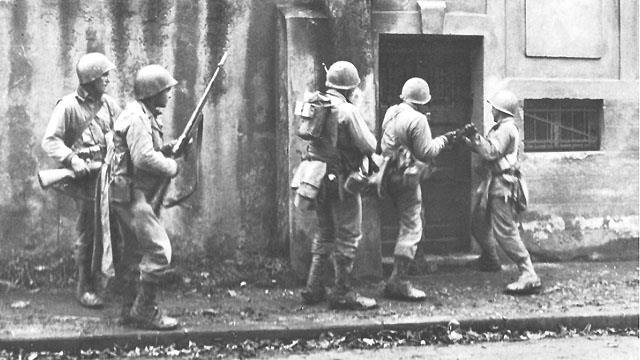
On November 20th to the 21st American forces took part in bloody and chaotic house to house fighting. as the German army was desperate to hold the city and fought with tenacity. William Lake, a riflemen in the 377th infantry, stated “They fought like tigers that’s the something we would have done had it been reversed.” (18)

Figure 7 House To House Fighting In The City Of Metz

Figure 7: House To House Fighting In The City Of Metz

He also described just how rough the fight was when he said “These mortars walked down the street, they don’t come as a barrage, they come BOOM BOOM BOOM!! It turned out Sgt. Garsline lost one of his legs….and Schagle got hit in the stomach…During the same barrage one of the fragments went down the hallway where our squad was and hit another man in our squad in the spine.” (19) This hard fighting paid off when on the morning of the 21st German General Kittel was captured after he was wounded acting as an infantrymen. By the 22nd of November the resistance in the city had ended and the Allies held Metz. (20) Even though the battle for the city was over, the fight for the forts on the outskirts of town raged on into December.

The capture of Metz led the Allies to have a clear road across the Rhine and into Germany.  It was a long and hard fought struggle and resulted as a loss for the Germans. This victory did however delay the Allied advance, allowing the Germans to retreat and save their army for a later engagement, the Battle of the Bulge.

Figure 8 Capture of Ft Jeanne d'Arc December 13, 1944

Figure 8: Capture of Ft Jeanne d’Arc December 13, 1944

One can look at this battle to see the true character of the greatest generation in action. These brave men faced death every day but had a job to do and did it with the honor and courage that only an American would posess. The American men who fought in Metz would never forget the carnage and violence of that fight. A captured German Officer spoke of these men saying “You men must be made of Iron to take this city,”  . (21) These words most certainly sum up the character of the valiant 3rd Army soldiers who risked it all for the greater good.


Notes;
1) Province, Charles M.: The Unknown Patton (New York: Bonanza Books., 1983) Pg., 3
2) Ibid., Pg. 3
3) Ibid., Pg. 14
4) Ibid., Pg.16
5) Province, Charles M.: George S. Patton, Jr. U.S. Army 02605 1885-1945 (Oregon City, OR: The Patton Society), Retrieved From Http:// http://www.pattonhq.com/pattonbio.pdf, Pg. 2

6) Ibid., Pg. 2

7) America In WWII The Magazine of a People at War 1941-1945, “Patton’s ghost army” : Brian, John Murphy (310 Publishing 2009) Retrieved from http:// http://www.americainwwii.com/stories/pattonsghostarmy.html

8) Zaloga, Steven J.: Metz 1944 “Patton’s fortified nemesis” (Oxford, England: Osprey Publishing., 2012) Pg.’s 15-16

9) Ibid., Pg. 4

10) Ibid., Pg. 53

11) Wallace, Gen. Brenton G.: Patton & Third Army ( Mechanicsburg, Pa: Military Service Publishing, 1946) Pg. 117

12) Ibid., Pg. 57

13) Ibid., Pg. 57

14) Ibid., Pg. 60

15) Combat Studies Institute Battle Book 13-A: The Battle Of Metz (Ft. Leavenworth, TX: CSI Publishing, 1984) Pg. 55-56

16) Ibid., Pg.’s. 59-60

17) Ibid., 61

18) Vogt, Tobias O.: The Iron Men Of Metz Reflections Of Combat With The 95th Infantry Division( San Diego, CA: Aventine Press, 2005) Pg. 106

19) Ibid., Pg. 106

20) Combat Studies Institute., 64

21) Vogt., 113


Figures;
1) Retrieved From: http://www.biographyonline.net/military/general-patton.html
2) Retrieved From: http://imageshack.us/f/458/0193mz.jpg/
3) Retrieved From: Zaloga, Steven J. Metz 1944 “Patton’s fortified nemesis” (Oxford, England: Osprey Publishing., 2012) Pg. ,35

4) Retrieved From: http://www.ww2museums.com/article/27295/German-Pillbox-Bl%26%23299%3Bdene%26%238206%3B.html

5) Retrieved From: http://www.ibiblio.org/hyperwar/AAF/III/AAF-III-17.html
6) Retrieved From: http://www.ibiblio.org/hyperwar/USA/USA-E-Lorraine/maps/USA-E-Lorraine-XXXII.jpg

7) Retrieved From: http://www.ibiblio.org/hyperwar/USA/USA-E-Lorraine/img/USA-E-Lorraine-p445b.jpg

8) Retrieved From: Zologa, Pg. 76


Matthew B. Ridgway: Fighting General and Statesman

  Matthew B. Ridgway was born to a military family on March 3, 1895. Like most army families, the Ridgways moved around quite a bit; it was not till Ridgway’s appointment to West Point in 1913 that he finally felt at home. (1) It was at West Point where Ridgway first was established as a leader, becoming cadet lieutenant, and was said to be “the busiest man in the place, handling well the jobs of several men” (2). This would serve him well in the future. After his West Point graduation in 1917, Ridgway looked forward to seeing combat in The Great War. However, this was not to be the case since he was recalled to West Point as an instructor after a brief stint in the infantry stationed in Texas. Ridgway was outwardly upset with his new assignment, saying, “To me, this was the death knell of my military career. The last Great War the world would ever see was ending, and there would never be another. Once the Hun was beaten, the world would live in peace throughout my lifetime.” (3) Nevertheless, Ridgway was wrong on all counts as the Japanese bombed Pearl Harbor on December 7th, 1941, thrusting America and then Lieutenant Colonel Ridgway into war. 

Ridgway was promoted to full Colonel and assigned to the War Plans department, where he stayed until 1942 when he was promoted to Brigadier General and assigned to help General Omar Bradley put together and train the 82nd Airborne Division. Upon Bradley’s reassignment, promoted again to Major General and given command of the 82nd.  During the Second World War, Ridgway led the 82nd into battle through every significant engagement, even jumping with them into Normandy.

Uniform worn by General Ridgeway when he jumped into Normandy, on display at The National Museum of the U.S. Air Force, located at Wright-Patterson Air Force Base near DaytonOhio. Photo by MGC

Ridgway even received a Purple Heart for actions that took place during Operation Varsity; General Ridgway describes the action in his memories: “I fired all five shots from my Springfield, shooting from the hip because the range was so close. Then I hit the ground to reload…There was quite an explosion then, very close to em’, and I felt the heat of a stinging fragment in my shoulder.” (4) He later states the grenade missed his head by three feet. General Ridgway was indeed a fighting general; he led the 82nd through the most formidable fighting and was loved by the men he commanded; he was dubbed “Old Iron Tits” because he always had a grenade and metal first aid kit strapped to him. However, the true sign of respect came from the saying, “There is a right way, a wrong way, and a Ridgeway,” the Ridgway being the best (5)

After World War II, Ridgway was assigned to multiple posts, including a United Nations liaison and a command in the Caribbean islands, before being selected by General Omar Bradley to be deputy chief of staff of the army in Washington, D.C.

Lieutenant General Matthew B. Ridgway, three-quarter length portrait, standing, facing front, in uniform. , 1952. Photograph. https://www.loc.gov/item/2002697883/.

In this position, in 1950, Ridgway was first exposed to the situation in Korea. He was deeply engrossed in high-level planning and feared that this conflict would lead to World War III. On December 22nd, 1950, after a long work day, Ridgway was out to dinner with his wife when he was informed he would head up the Eight Army in Korea due to the sudden death of its commander, General Walton Walker, in a car accident. (6) When Ridgway arrived in Korea, he found an American army in shambles and retreat. Ridgway’s aid, Walter Winton, described the situation in later years as “Weather terrible, Chinese ferocious, moral stinko” (7). Ridgway now had the daunting task of turning the war effort around. His first task was to instill a sense of order in the troops by teaching them discipline, feeling that this would put his men in an aggressive disposition. Another psychological maneuver that Ridgway employed was when he fired Colonel John R. Jeter when Jeter offered cautious plans. When Ridgway asked if Jeter had any more aggressive plans, Jeter responded that he did not and was sacked on the spot; this story was widely publicized and had the effect of officers under Ridgway focusing on attack from henceforth.

This constant state of aggression Ridgway believed was the only way to defeat the Chinese, and he used the American’s superior military capability to turn the Korean conflict into total war; Ridgway reorganized the Eight Army to make all the units self-supporting. Nonetheless, this new strategy did not work immediately as Ridgway was forced to evacuate Seoul in early January 1951, but the Chinese offensive was stopped. By the middle of the month, the UN forces were making great strides, and by March, Seoul was recaptured. A Regimental commander spoke of Ridgway’s part in the Eighth Army’s turnaround like this, “He not only made us attack, but he made us win. He made us into a professional army. The boys aren’t up there fighting for democracy. Now they are fighting because the platoon leader is leading them, and the platoon leader is fighting because of command, and so on right up.” (8)

General Ridgway’s success did not go unnoticed in Washington, and when Truman dismissed General Douglass McArthur later that year, Ridgway was given the title of theater commander. In this capacity, General Ridgeway initiated peace talks with a radio broadcast on June 30th, 1951; along with this, Ridgway supported the limited war strategy that Truman had recommended, and MacArthur refused. Ridgway poured all his effort into making the peace talks work and preventing what he thought may be a third world war. Foreign Service officer William N. Stokes noted, “Ridgway’s investment of personal time and effort demonstrates his extraordinary care to collect and face the facts before arriving at conclusions regardless of perceptions…. Ridgway then recommended to Washington against bombing….by this restraint the United States confined the war to Korea” (9). However, as General Dwight Eisenhower planned to run for President, Ridgway could not see the fruits of his labors. Ridgway was made supreme allied commander of Europe in 1952 before the peace talks in Korea were over.

In his job as supreme allied commander, Ridgway again applied his whole self to his work and tried to strengthen NATO, but this job also did not last long as he was appointed United States Army Chief of Staff in 1953 under Eisenhower; this was Ridgway’s most challenging assignment as he stated “The Vexations and frustrations I encountered in Europe, though they were many and great, were in no way comparable to the vexations, the frustrations, the sheer travail of spirit which were my final lot in my two-year tour as Chief of Staff”  (10) Ridgway’s main issue was Eisenhower’s armed forces reduction act wanting to reduce the military by 20 percent, Ridgway disagreed with this policy known as the New Look, and for this he was not reappointed to his post in 1955.

Ridgway retired after not retaining his Chief of Staff job but stayed in the spotlight. He was put on an advisory board about the Vietnam War, arguing against the “domino” theory and said the war was unwinnable.  Ridgway stayed in the public eye through the Regan administration till his death in 1993.

Placing a flag at General Ridgway’s grave in Arlington National Cemetery. Photo by @firefightinirish

General Matthew B. Ridgway was one of the most outstanding Americans of an already unique generation. Not only did he put his life on the line for freedom, but he stood firm in his convictions and used his experience and tireless effort to keep the Korean War from getting out of control and possibly prevent World War III.


1)  Soffer, Jonathan M. General Matthew B. Ridgway From Progressivism to Reaganism 1895-1993. (Westport: Praeger Publishers, 1998.) 12

2)  Ibid

3)  Mitchell, George C. Matthew B. Ridgway Soldier, Statesman, Scholar, Citizen. (Mechanicsburg: Stackpole Books, 2002.) 10

4)  Ridgway, General Matthew B. Soldier The Memoirs of Matthew B. Ridgway. (New York: Harper & Brothers, 1956.) 126

5)  Mitchell, Pg. 35

6)  Soffer, Pg. 116

7)  Ibid, Pg. 117

8)  Mitchell, Pg. 55

9)  Ibid, Pg. 97

10) Soffer, Pg. 175