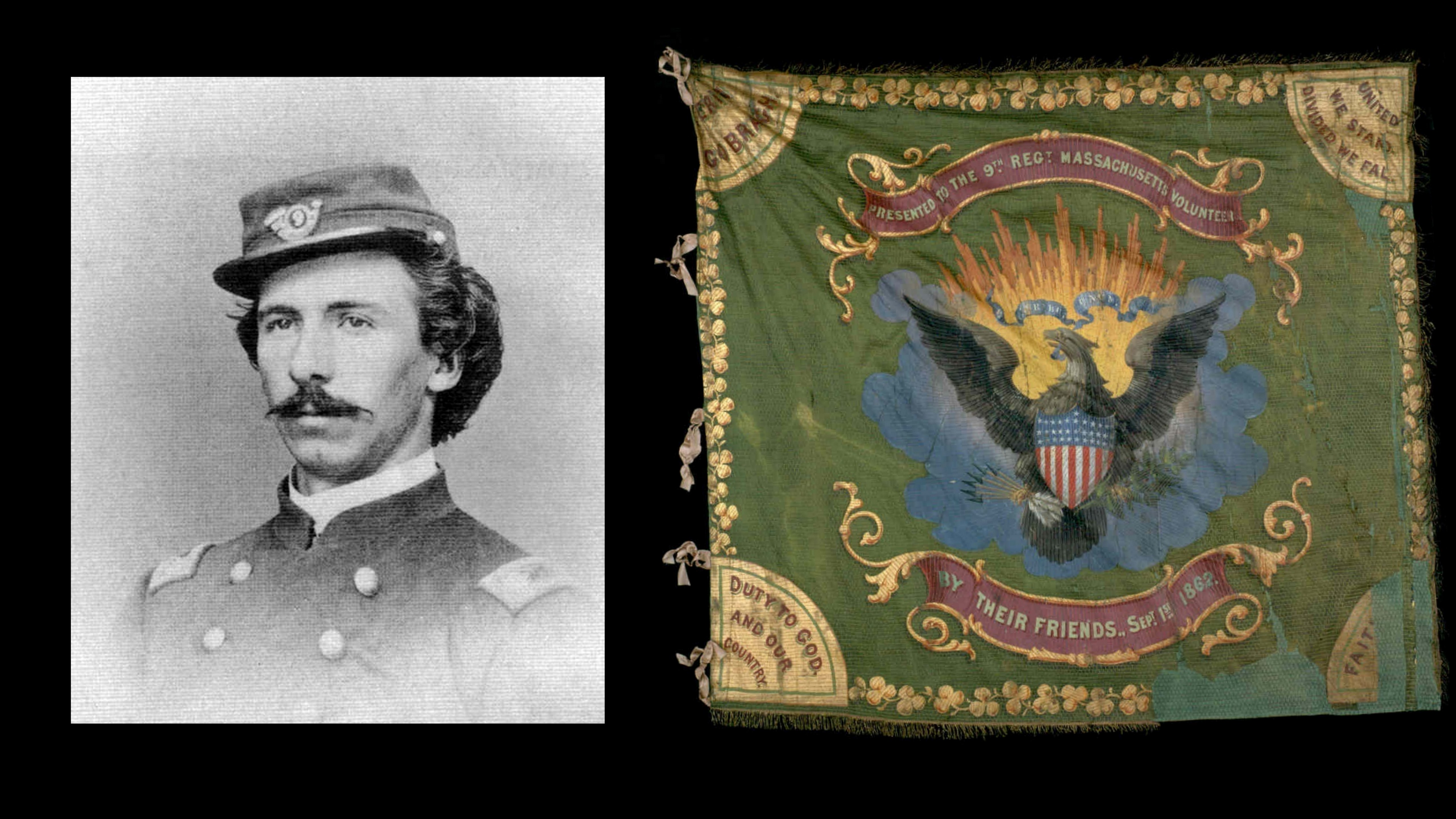
A Letter From John Curran of the Irish Brigade

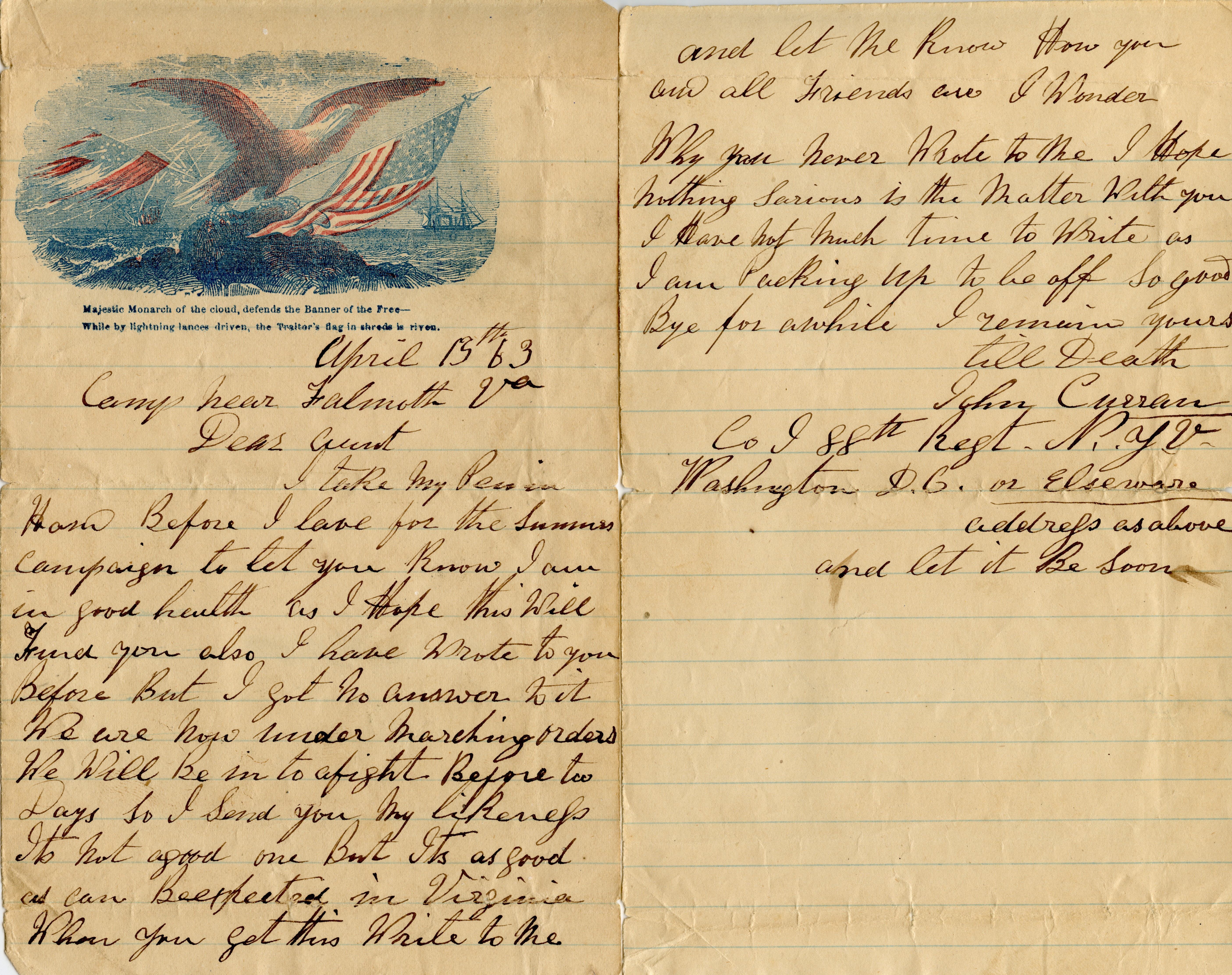
The Irish American experience in the Civil War takes on many facets. These can be seen in documents and stories. One such document is this letter composed by John Curran, of “I” Co. 88th Regiment New York Volunteers (Irish Brigade). The letter reads….


Camp Near Falmouth, Virginia
April 13th 1863

Dear Aunt,

I take my pen in hand before I leave for the Summer Campaign to let you know I am in good health. As I hope this will find you also. I have wrote to you before, but I got no answer to it.

We are now under marching orders. We will be into a fight before two days. So I send you my likeness. It is not a good one. But it’s as good as can be expected in Virginia.When you get this, write to me and let me know how you and all friends are. I wonder why you never wrote to me. I hope nothing serious is the matter with you. I have not much time to write as I am packing up to be off.
So good bye for a while.
I remain yours till death,

John Curran
Company I, 88th Regiment New York Volunteers
Washington, DC or elsewhere
Address as above and let it be soon.

John Curran was born in Ireland in 1843[1]  Curran would arrive in America and become a butcher. Soon after the outbreak of the American Civil War John heard the call. He would enlist in New York City on September 27th, 1861.[2] John would be mustered into “I” Co. 88th New York Infantry part of the famed Irish Brigade that same day. On the muster roll John Curran is listed as a Private.

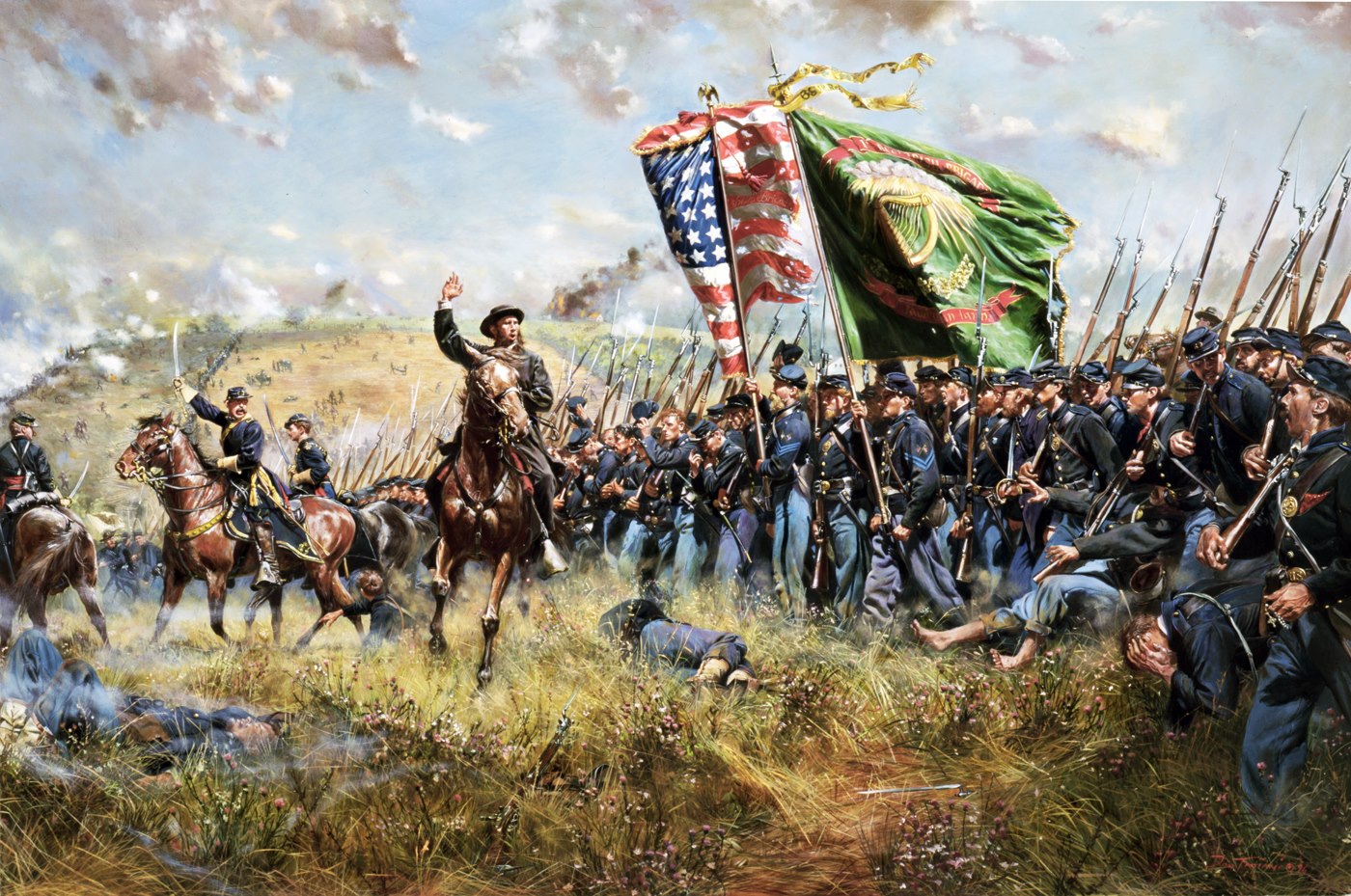
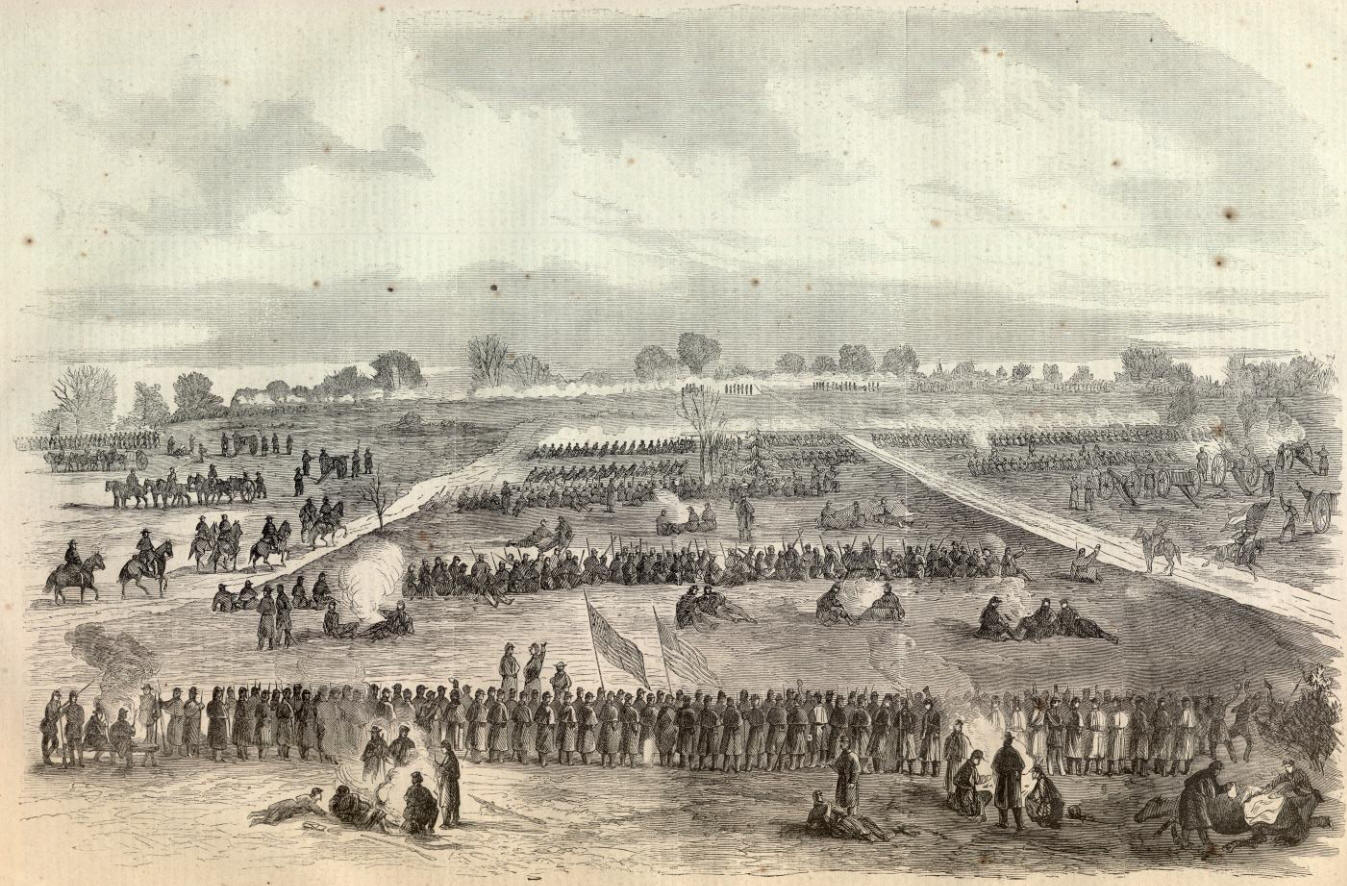
Father Corby blesses the Irish Brigade as they advance during the Battle of Antietam. Painting by Don Troiani Historical Artist

He was described as being five feet eight inches tall, with light hair, grey eyes, and a fair complexion. In December Curran and the 88th left for The Capital. They would remain to defend Washington till April of 1862, when the regiment participated in the siege of Yorktown. The 88th and Private Curran would be engaged at White Oak Swamp, Battle of Fair Oaks, The Seven days before Richmond, and Battle of Antietam. Here the 88th New York,

“crossed Antietam Creek (9:30 a.m.) at Pry’s Ford. As it formed at the edge of a cornfield Father William Corby, Chaplain rode along the line, giving absolution to the soldiers. The 88th New York crossing the cornfield, the command encountered a rail fence which was torn down under severe fire an opposing Confederate column advanced within 300 paces of the brigade. After several volleys, the Irish Brigade charged with fixed bayonets. At 30 paces it poured buck and ball into General George B. Anderson’s Brigade (2nd, 4th, 14th and 30th North Carolina Infantry Regiments) which fell back to “Bloody Lane”. After fierce combat its ammunition exhausted the Irish Brigade was relieved.”[3]

The next engagement Private Curran would be involved in would be the Battle of Fredericksburg. Before the battle..

“The men of the Irish Brigade placed sprigs of boxwood in their caps in honor of their Irish heritage. Later in the day, they took part in the futile assaults against confederate positions on Marye’s Heights. After the battle, the Union dead closest to the Confederate positions wore sprigs of boxwood in their caps.”[4]

At the time of this letter Private Curran and the 88th were posted in Falmouth Virginia. In the letter he states “We are now under marching orders. We will be into a fight before two days” This is a reference to the upcoming “Mud March”, and the Chancellorsville Campaign. During the Battle of Chancellorsville the regiment lost 5 men killed or mortally wounded, 4 officers and 18 men wounded, and 19 men missing.[5]

                In July of 1863 Private Curran would fight at Gettysburg.

 “The brigade entered the battle under command of Colonel Patrick Kelly 530 strong, of which this contingent, composing three battalions of two companies each, numbered 240 men. The original strength of these battalions was 3,000 men. The brigade participated with great credit to itself and the race it represented”[6]

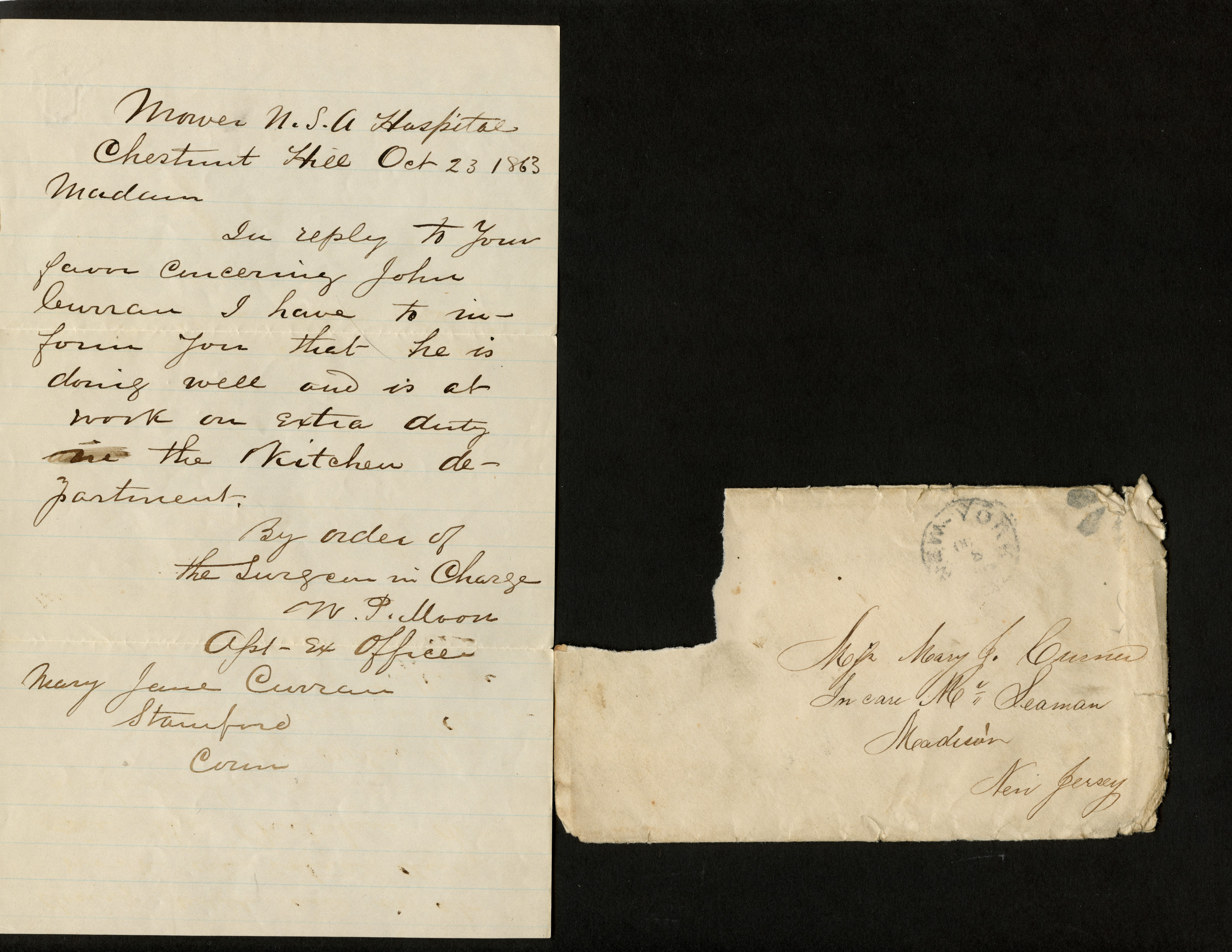
Campaigning and the toll of battle must have weighed heavily on Private Curran. According to a letter, written by Assistant Surgeon William Parkinson Moon in October of 1863.[7] Curran was on kitchen duty at Mower Hospital in the Chestnut Hill neighborhood of Philadelphia. It is unclear why he was there, however since Curran was not listed as wounded one can assume he was admitted for either disease, or “soldier’s heart” (The 1860’s term for PTSD).  

Letter, written by Assistant Surgeon William Parkinson Moon in October of 1863. Provided by, The American Military Heritage Museum of North Carolina.

                Private Curran would re-enlist in the 88th on March 22nd, 1864. He would participate in the following engagements: the Wilderness, Spotsylvania Court House, Po River, and the assault on the Salient or “Bloody Angle”.  He would desert while on furlough on May 16th, 1864.[8]

                After seeing all that death, one cannot blame Private Curran for his desertion. He served his adopted country honorably till his desertion. One could surmise that a lack of knowledge about the psychological toll of combat, and its treatment damaged Private Curran in an irreparable manor. His story ends here since no further records can be found.


[1] “Page 1 New York Civil War Muster Roll Abstracts,” Fold3, accessed January 7, 2022, https://www.fold3.com/image/315858065.

[2] Ibid

[3] “88th New York Infantry Regiment,” The Civil War in the East, May 28, 2019, https://civilwarintheeast.com/us-regiments-batteries/new-york-infantry/88th-new-york/.

[4] Ibid

[5] Ibid

[6] Ibid

[7] Moon, William Parkinson. Letter to Mary Jane Curran. “William Parkinson Moon RE: John Curran.” Chestnut Hill, Pennsylvania: Mower Hospital, October 23, 1863.

[8] “Page 1 New York Civil War Muster Roll Abstracts.” Fold3. Accessed January 7, 2022. https://www.fold3.com/image/315858065.

Image of an Immigrant Soldier Who Never Made it Home.

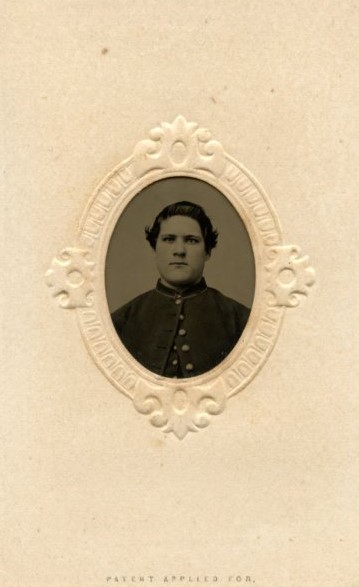
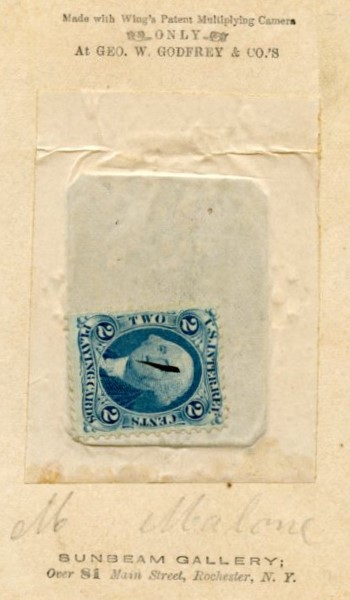
Every image has a story. This is the tail is of Private Michael Malone 14th New York Heavy Artillery. He was born in Ireland around 1828.[1] He was described as being five feet eight inches tall, with brown hair, blue eyes, and a light complexion.[2]

Tintype of Private Michael Malone 14th New York Heavy Artillery. From The The American Military Heritage Museum Of North Carolina

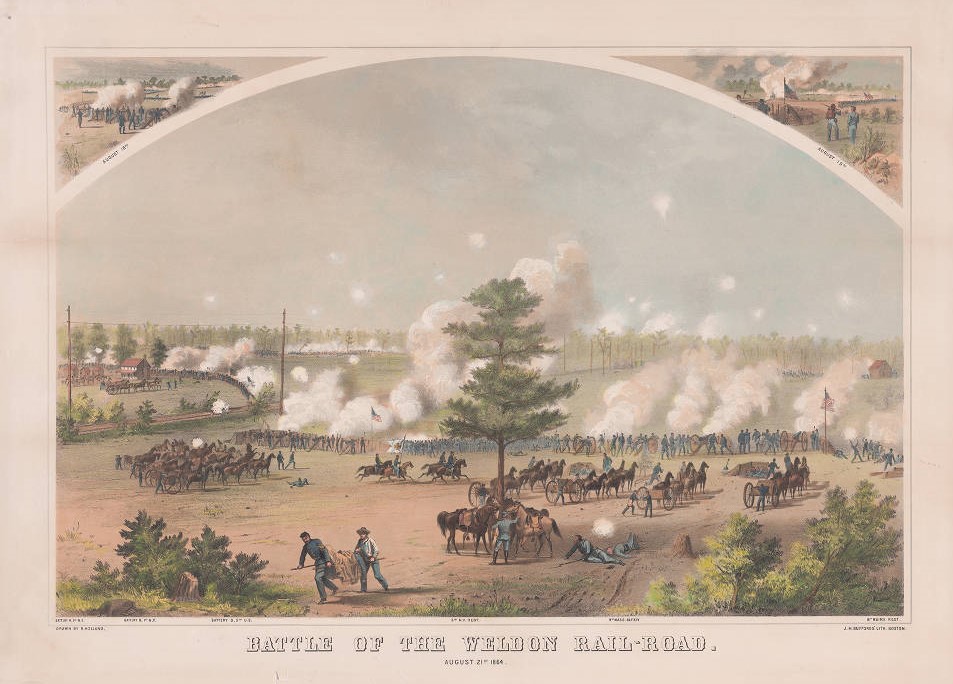
Michael would marry Mary Byrnes or Burns on January 17th, 1855, they would have four children.[3] Before the war Michael was employed as a day laborer in 1860[4] and as a farmer at the time of his enlistment.[5] Malone would enlist on September 4th 1863, and would muster into “D” Co. 14th New York Heavy Artillery eight days later. He would be assigned to garrison duty in New York Harbor till April 23, 1864.[6] From there he and the 14th would be in the following engagements, The Wilderness, Spottsylvania Court House, North Anna River, Totopotomoy, Cold Harbor, Siege of Petersburg, The Battle of the Crater, and Weldon Railroad where he was killed in action on August 19th, 1864.[7]

Battle of The Weldon Rail-Road August 21st 1864. Creator Holland, R., artist. J.H. Bufford’s Lith., printer.
Back of tintype card for Private Michael Malone 14th New York Heavy Artillery. From The The American Military Heritage Museum Of North Carolina

Michael would be survived by his wife and his children Ellen age nine, Bridget seven, Mary five, and John who was just one year old.[8] His wife Mary would apply for and receive a widows pension of $12 a month.[9] She would never remarry and worked as a housekeeper[10] till her death on July 12th, 1912.[11]

Private Michael Malone, a soldier in the 14th New York Heavy Artillery, exemplifies the sacrifices made during the Civil War, having served valiantly before being killed in action, leaving behind a widow and four young children who faced the challenges of life without him. His story highlights the personal toll of war on families and the enduring legacy of those who served.


[1] “New York Civil War Muster Roll Abstracts 14th Artillery Malone, Michael (25) Page 1.” Fold3. Accessed December 8, 2019. https://www.fold3.com/image/316624979.

[2] Ibid

[3] “Civil War ‘Widows’ Pensions’ New York Heavy Artillery Regiment 14 Company D Malone, Michael (WC40894).” Fold3. https://www.fold3.com/image/300805013. Accessed December 8, 2019. https://www.fold3.com/.

[4] “1860 United States Federal Census for Michael Malone New York Monroe Pittsford .” Ancestry. Accessed December 8, 2019. https://tinyurl.com/wkcydpf.

[5] “New York Civil War Muster Roll Abstracts 14th Artillery Malone, Michael (25) Page 1.” Fold3. Accessed December 8, 2019. https://www.fold3.com/image/316624979.

[6] “Battle Unit Details UNION NEW YORK VOLUNTEERS 14th Regiment, New York Heavy Artillery.” National Parks Service. U.S. Department of the Interior. Accessed December 8, 2019. https://www.nps.gov/civilwar/search-battle-units-detail.htm?battleUnitCode=UNY0014RAH.

[7] “Civil War ‘Widows’ Pensions’ New York Heavy Artillery Regiment 14 Company D Malone, Michael (WC40894).” Fold3. https://www.fold3.com/image/300805018. Accessed December 8, 2019. https://www.fold3.com/.

[8] Ibid

[9] “Civil War ‘Widows’ Pensions’ New York Heavy Artillery Regiment 14 Company D Malone, Michael (WC40894).” Fold3. https://www.fold3.com/image/300805022. Accessed December 8, 2019. https://www.fold3.com/.

[10] “1880 United States Federal Census for Mary Malone New York Monroe Pittsford 062.” Ancestry. Accessed December 8, 2019. https://tinyurl.com/wpej7e7.

[11] “Civil War ‘Widows’ Pensions’ New York Heavy Artillery Regiment 14 Company D Malone, Michael (WC40894).” Fold3. https://www.fold3.com/image/300805022. Accessed December 8, 2019. https://www.fold3.com/.

An American Flyer in Greensboro North Carolina: The Story of First Lieutenant Collier Carlton Olive.

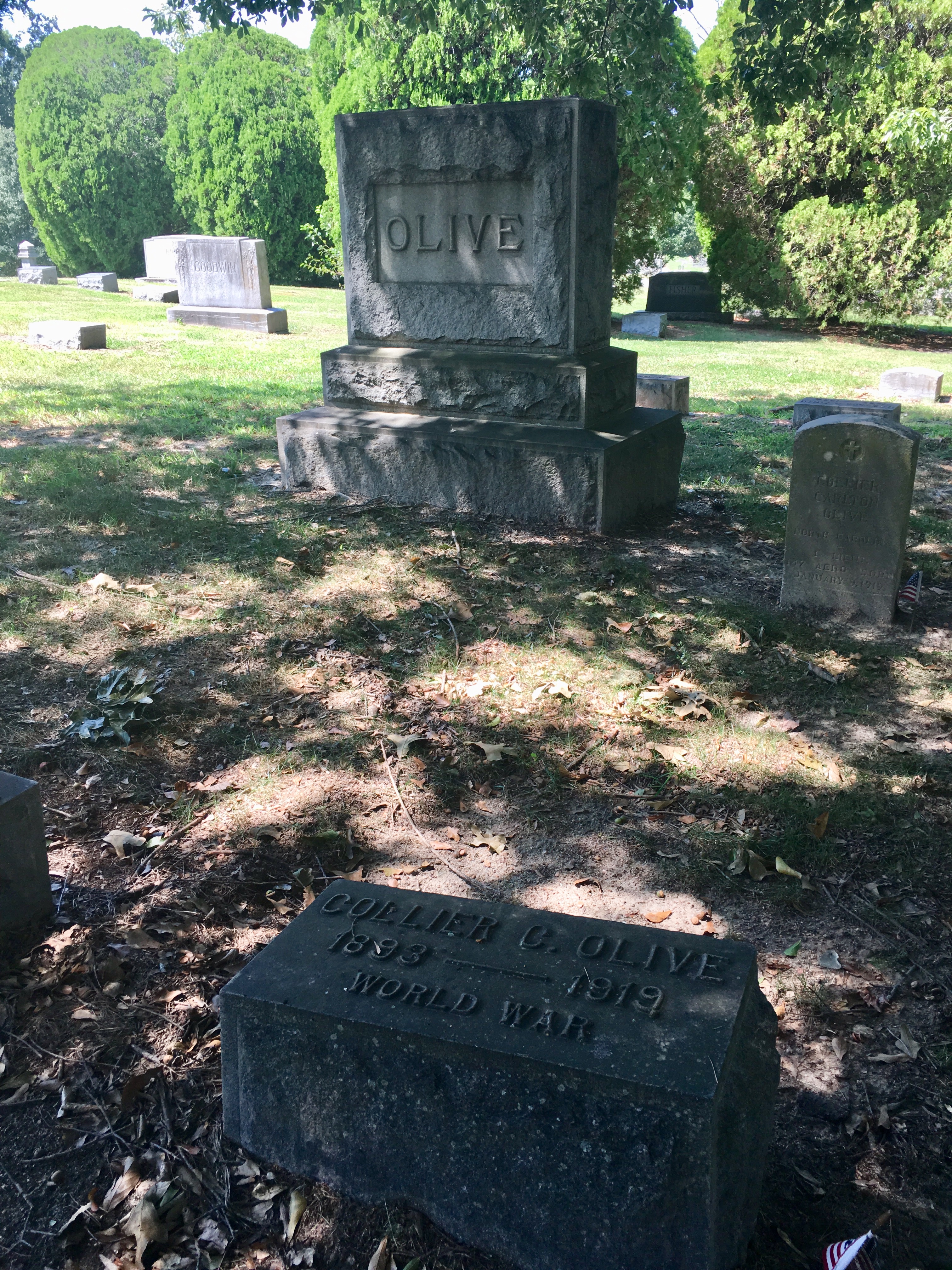
I recently took a trip to Green Hill cemetery in Greensboro North Carolina. Here I discovered the final resting place of First Lieutenant Collier Carlton Olive. He was born in Mount Airy North Carolina to Johnson and Margrett Olive on June 6th, 1893. He was of medium height and build, with blue eyes and brown hair[1].  Collier graduated from Greensboro High School before attending Mars Hill Academy. He later entered Wake Forest University as Junior. While attending Wake Forest Collier wrote humorous articles for the Greensboro Daily News.

Grave of First Lieutenant Collier Carlton Olive. At Green Hill cemetery Greensboro North Carolina. Photo By @firefightinirish

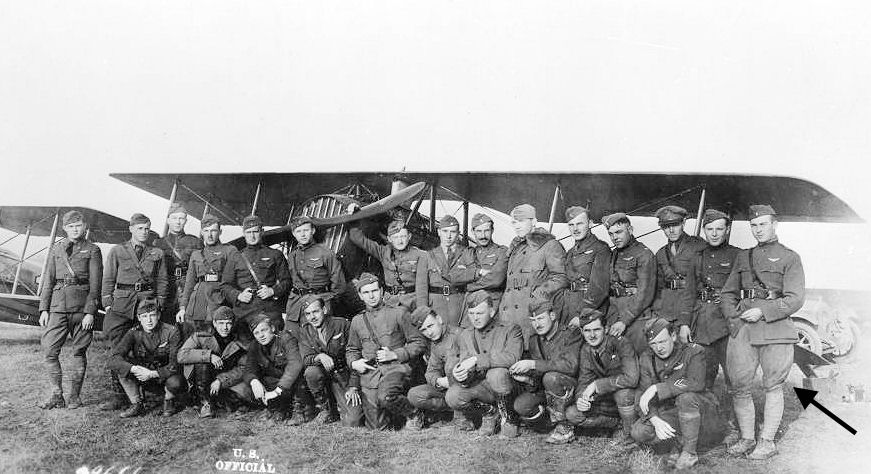
After graduating with honors, he would work as a journalist, and later be employed with Vick Chemical Company in their advertising department. With the First World War on the horizon Collier enlisted as a cadet at the officers’ training school Fort Oglethorpe Georgia, in May 1917.  During the time in OCS he applied for and was accepted into the aviation service. Collier was sent to ground school at the Georgia School of Technology and completed his course in the fall of 1917.[2]  He would set sail for Europe as an aviation cadet aboard the S.S. Kroonland on November 2nd, 1917.[3] Collier would earn his wings and commission in the 147th Aero Squadron on May 23rd 1918.[4] The 147th was assigned as a Day Pursuit (Fighter) Squadron as part of the 1st Pursuit Group, First United States Army. Its objective was to engage and clear enemy aircraft from the skies. As well as provide escort to reconnaissance and bombardment squadrons over enemy territory.

Photo of the 147th Aero Squadron group photo with a SPAD XIII. Likely taken at Rembercourt Aerodrome, France, November 1917. First Lieutenant Collier Carlton Olive is on the extreme right highlighted with an arrow. Photo provided by the Air Service, United States Army – Air Service, United States Army photograph.

The 147th also targeted enemy observation balloons, performed close air support, and tactical bombing attacks of enemy forces along the front lines.[5]  First Lieutenant Collier Carlton Olive participated in operations in the Toul Sector, Marne Sector, as well as Saint Mihiel. In a letter home dated December 22nd, 1918, he spoke of being wounded before the armistice and that he was suffering from influenza but was discharged from the hospital and feeling better. Sadly, Collier must have taken a turn for the worse as he would die of Pneumonia in Issoudun France on January 9th, 1919.[6] His body was sent home aboard the U.S.S Pocahontas on October 18th, 1920.[7] Colliers remains would arrive in Greensboro at 0645 on November 13th, he was interred at Green Hill cemetery at 1400 hrs. The services were conducted by Rev. J. Clyde Turner and were only attended by immediate family.[8]  Let us never forget this young man and his sacrifice to make the world safe for democracy.


[1] “U.S., World War I Draft Registration Cards, 1917-1918 for Rufus Eldrige Garrett.” Ancestry. Accessed September 12, 2019. https://www.ancestry.com/.

[2] “Lieut. Collier Olive Succumbs To Pneumonia.” Greensboro Daily News. January 30, 1919.

[3] “U.S., Army Transport Service, Passenger Lists, 1910-1939 for Collier C Olive” Ancestry. Accessed September 12, 2019. https://www.ancestry.com/.

[4] “Collier Olive Comissioned.” Greensboro Daily News. July 12, 1918.

[5]  Maurer, Maurer (1978), The US Air Service in World War I, The Office of Air Force History, Headquarters USAF Washington

[6] “Lieut. Collier Olive Succumbs To Pneumonia.” Greensboro Daily News. January 30, 1919.

[7] “U.S., Army Transport Service, Passenger Lists, 1910-1939 for Collier C Olive” Ancestry. Accessed September 12, 2019. https://www.ancestry.com/.

[8] “Body Of Lieut. Olive Buried In Green Hill.” Greensboro Daily News. November 14, 1920.

A Soldier’s Story: One Federal Soldier’s Tail as Told Through His Letter.

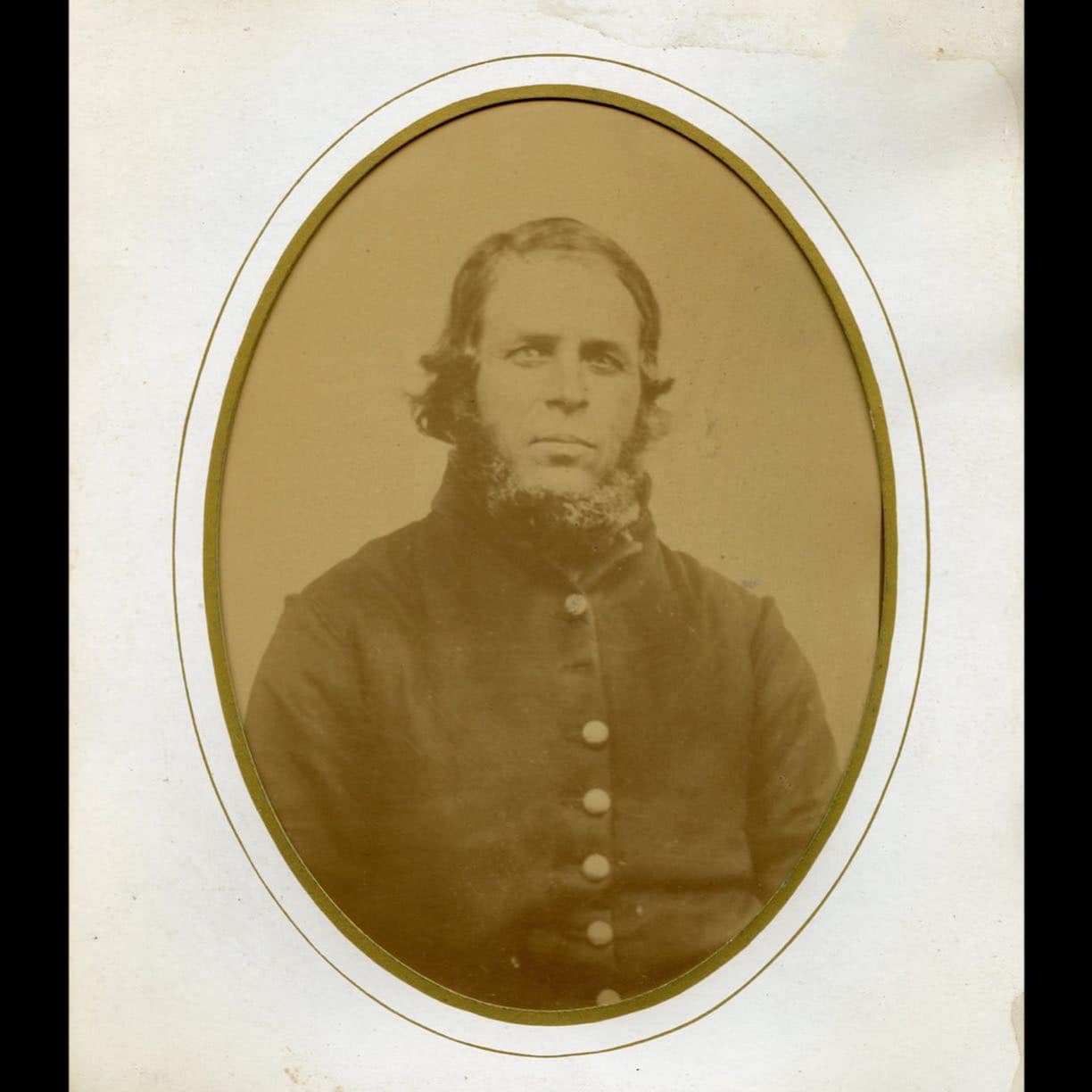
Sometimes one purchases an antique only to discover a fascinating story. This Post-war albumen of Pvt. Augustus H Dayton 14th New York Heavy Artillery, accompanied with letter composed by him is one of those pieces. Augustus Dayton was born in 1817, to Thomas and Almira Dayton in Vermont.[1] Prior to 1850[2] Augustus would marry Catherine Smith, they would have five children.

Before the war Dayton lived in Geneseo and worked as a farmer. In 1862 both of Dayton’s sons enlisted in the 136th NY.[3][4] Augustus would enlist on December 19th, 1863[5], at Genesee New York. He was described on the rolls as being, five feet ten inches tall, with brown hair, blue eyes, and a light complexion. Dayton would be mustered into “L” Co. 14th New York Heavy Artillery as a Private on January 8th, 1864[6].

Post-war albumen of Pvt. Augustus H Dayton 14th New York Heavy Artillery. Provided by, The American Military Heritage Museum Of North Carolina,

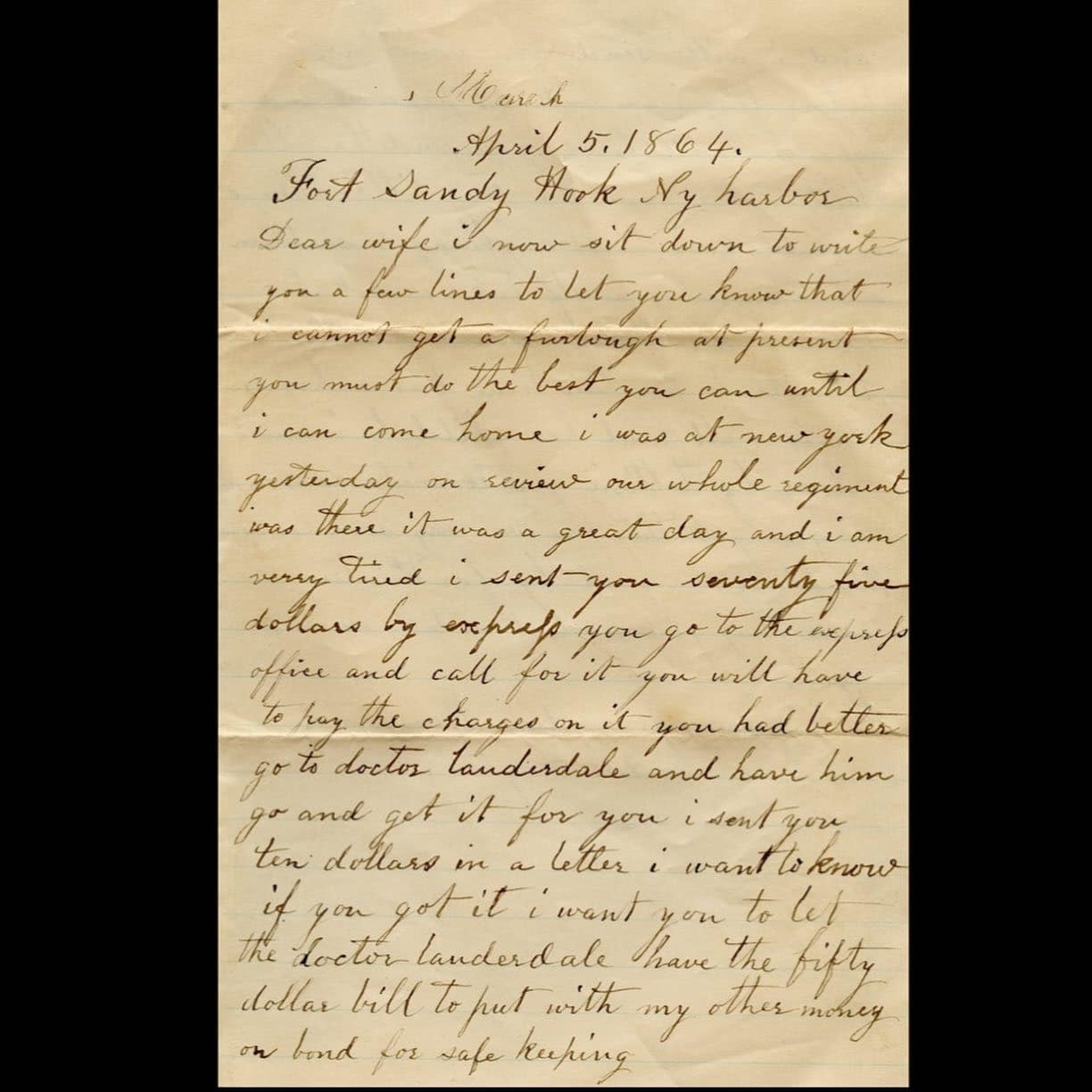
Private Dayton and the 14th N.Y.H.A were sent to New York to defend the harbor. Here is where he would write his wife this letter:

March, April 5, 1864,

Fort Sandy Hook Ny harbor.

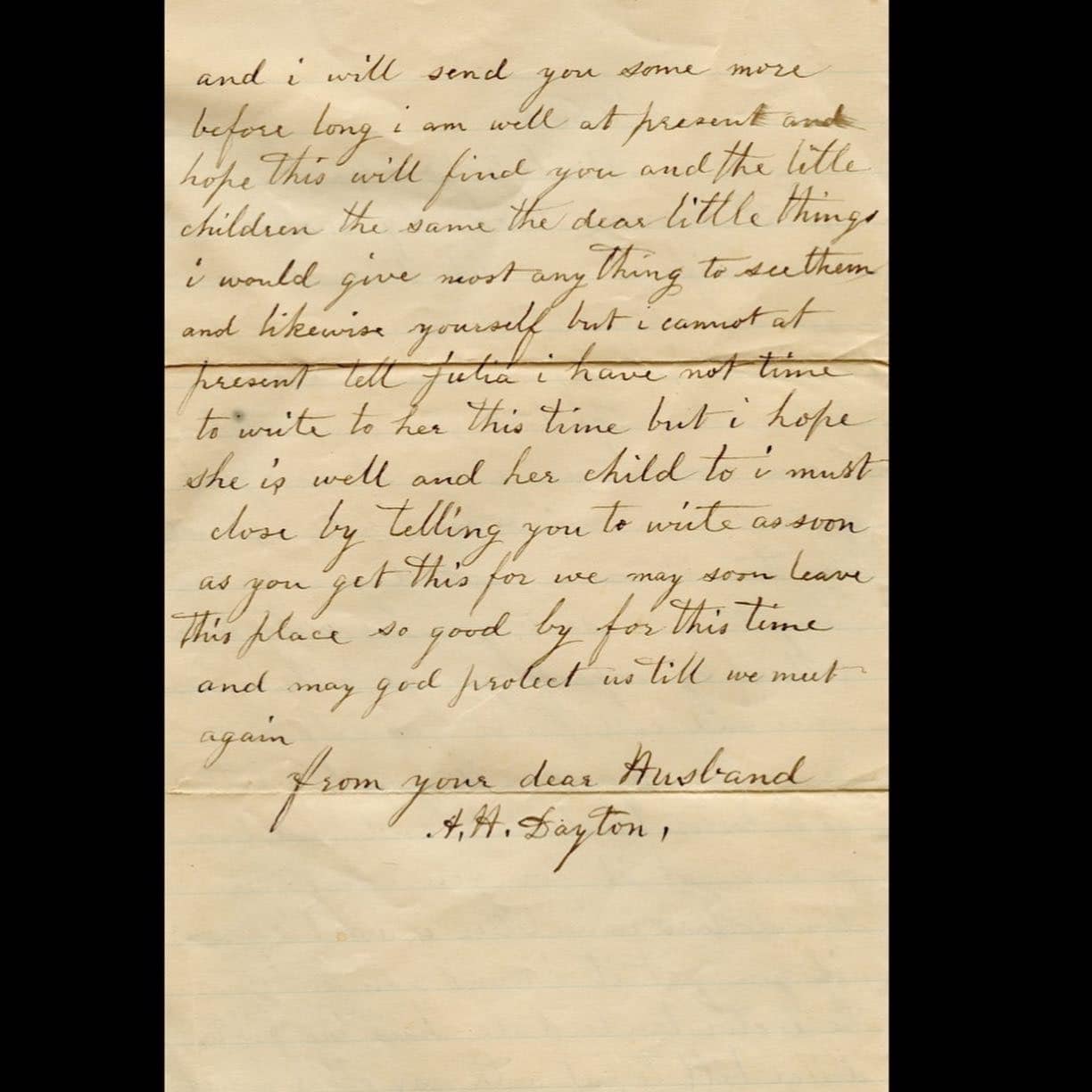
Dear wife I now sit down To write you a few lines to let you know that I cannot get a furlough at present you must do the best you can until I can come home I was at New York yesterday on service our whole regiment was there it was a great day and I am very tired I sent you seventy five dollars by express You go to the express office and call for it you will have to pay the charges on it you had better go to doctor lauderdale and have him go and get it for you I sent you ten dollars in a letter I want to know if you got it I want you to let the doctor lauderdale have the fifty dollar bill to put it with my other money on hand for safe keeping and i will send you some more before long i am well at present and hope this will find you and the little children the same the dear little things I would give most anything to see them and likewise yourself but i cannot at present tell Julia i have not time to write to her this time but I hope she is well and her child is to i must i must close by telling you to write as soon as you get this for we may soon leave This place so good by for This Time and may god protect us till we meet again.

From your dear Husband,

A.H. Dayton,

Front of Dayton letter, The American Military Heritage Museum Of North Carolina,


From the forts of New York harbor the 14th was sent south where they were in the following engagements, the Rapidan Campaign, Battle of the Wilderness, Battle of Spotsylvania Court House, The Battle of North Anna, Battle of Totopotomoy Creek, Battle of Cold Harbor, The Siege of Petersburg (including the Mine Explosion), The Battle of the Weldon Railroad, and The Battle of Peebles’s Farm.

Private Dayton was sent to the hospital at City Point Virginia on October 6th 1864[7] suffering from chronic diarrhea. He would later be sent home on furlough. Private Dayton arrived in Rochester New York on December 15th, 1864.[8] Here he would receive hospital care for his illness. Sadly, Private Dayton would die on March 28th 1865[9]. Dayton’s wife Catherine would apply for a widow’s pension, for her and the two youngest children. Dr. Lauderdale would testify that he attended to Private Dayton, and Dayton also had dropsy as well as insanity before he passed. Dr. Lauderdale would also say that Dayton was a healthy man and a “devoted father”[10].

Back of Dayton letter, The American Military Heritage Museum Of North Carolina,

Catherine would ultimately receive a widow’s pension of eight dollars a month. This would be the equivalent of about one hundred and thirty-seven dollars today.

Let us never forget the sacrifice that Private Dayton made for his country. As well as the loss his family had to suffer in his absence.

[1] “1850 United States Federal Census for Augustus H Dayton New York Livingston Geneseo.” Ancestry®. Accessed January 12, 2022. https://www.ancestry.com/imageviewer/collections/8054/images/4197497-00120?pId=7026585.

[2] Ibid

[3] “Lewis A. Dayton.” American Civil War Research Database. Accessed January 12, 2022. http://civilwardata.com/.

[4] “Henry A. Daton.” American Civil War Research Database. Accessed January 12, 2022. http://www.civilwardata.com/active/index.html.

[5] “New York Civil War Muster Roll Abstracts Dayton, Augustus H .” Fold3. Accessed January 17, 2022. https://www.fold3.com/image/316571763.

[6] Ibid

[7] Ibid

[8] “Page 3 Civil War ‘Widows’ Pensions’ Augustus H Dayton.” Fold3. Accessed January 17, 2022. https://www.fold3.com/image/283724325.

[9] “New York Civil War Muster Roll Abstracts Dayton, Augustus H .” Fold3. Accessed January 17, 2022. https://www.fold3.com/image/316571763.

[10] Page 3 Civil War ‘Widows’ Pensions’ Augustus H Dayton.” Fold3. Accessed January 17, 2022. https://www.fold3.com/image/283724325.

A Letter Speaks

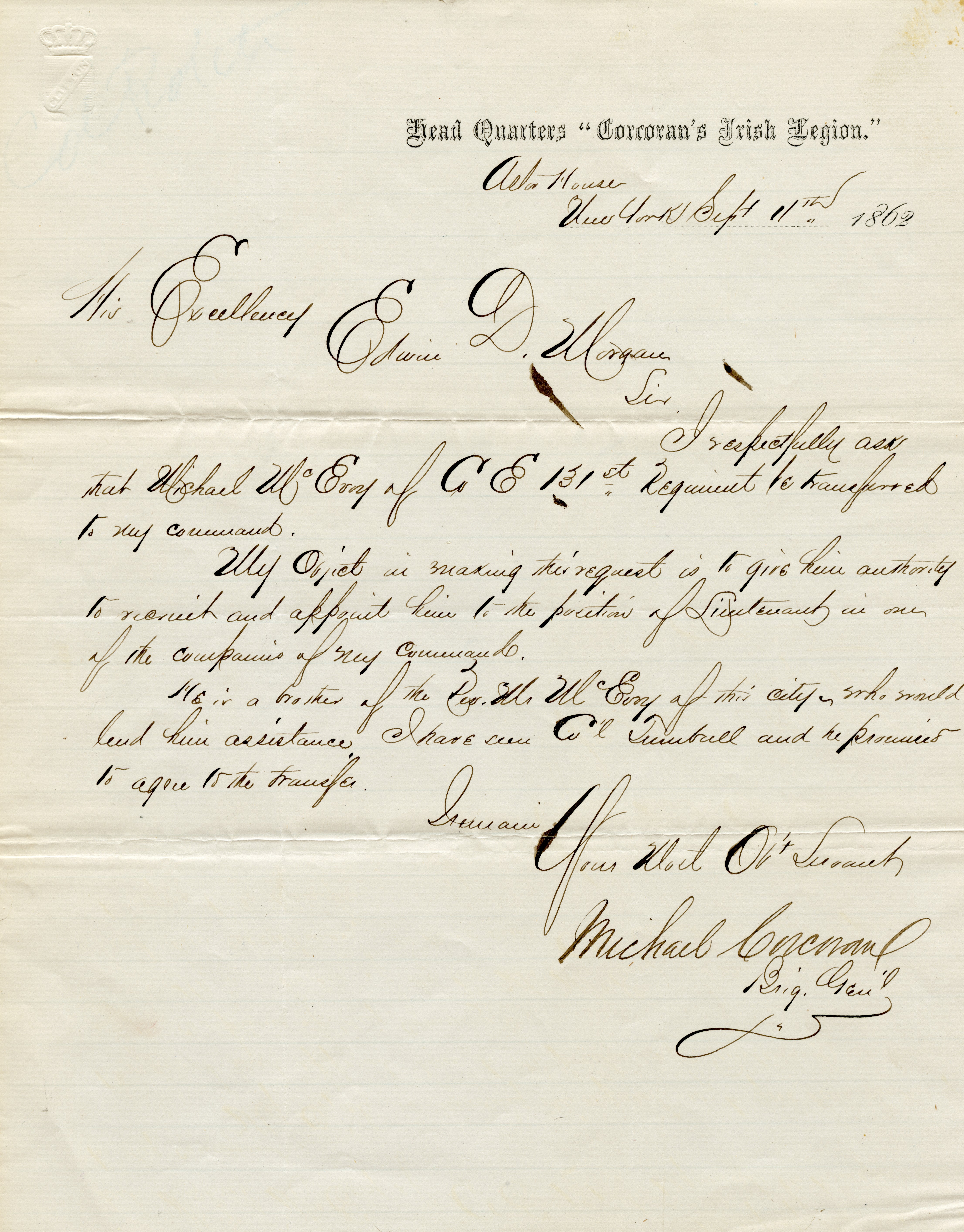
A letter to some is just a piece of paper with words on it. However when one digs deep they can find a hidden story. This letter is written and signed by Brigadier General Michael Corcoran. The letter’s recipient is then Governor of New York Edwin D. Morgan. In this post I am not going to just focus on the “big names” associated with the piece (We can all use Google for that). There is also the interesting tail of Michael McEvoy of Company E, 131st New York. So without further adieu may I present the The letter it reads……

“Sir,

I respectfully ask that Michael McEvoy of Company E, 131st Regiment be transferred to my command.

My object in making this request is to give him authority to recruit and appoint him to the position of Lieutenant in one of the companies of my command.

He is a brother of the Provost Marshal McEvoy of this city, who would lend his assistance. I have seen Colonel Turnbull and he promised to agree to the transfer.

I remain,

Your Most Obedient Servant,

Michael Corcoran

Brigadier General” [1]

Corcoran Letter, provided by The American Military Heritage Museum Of North Carolina
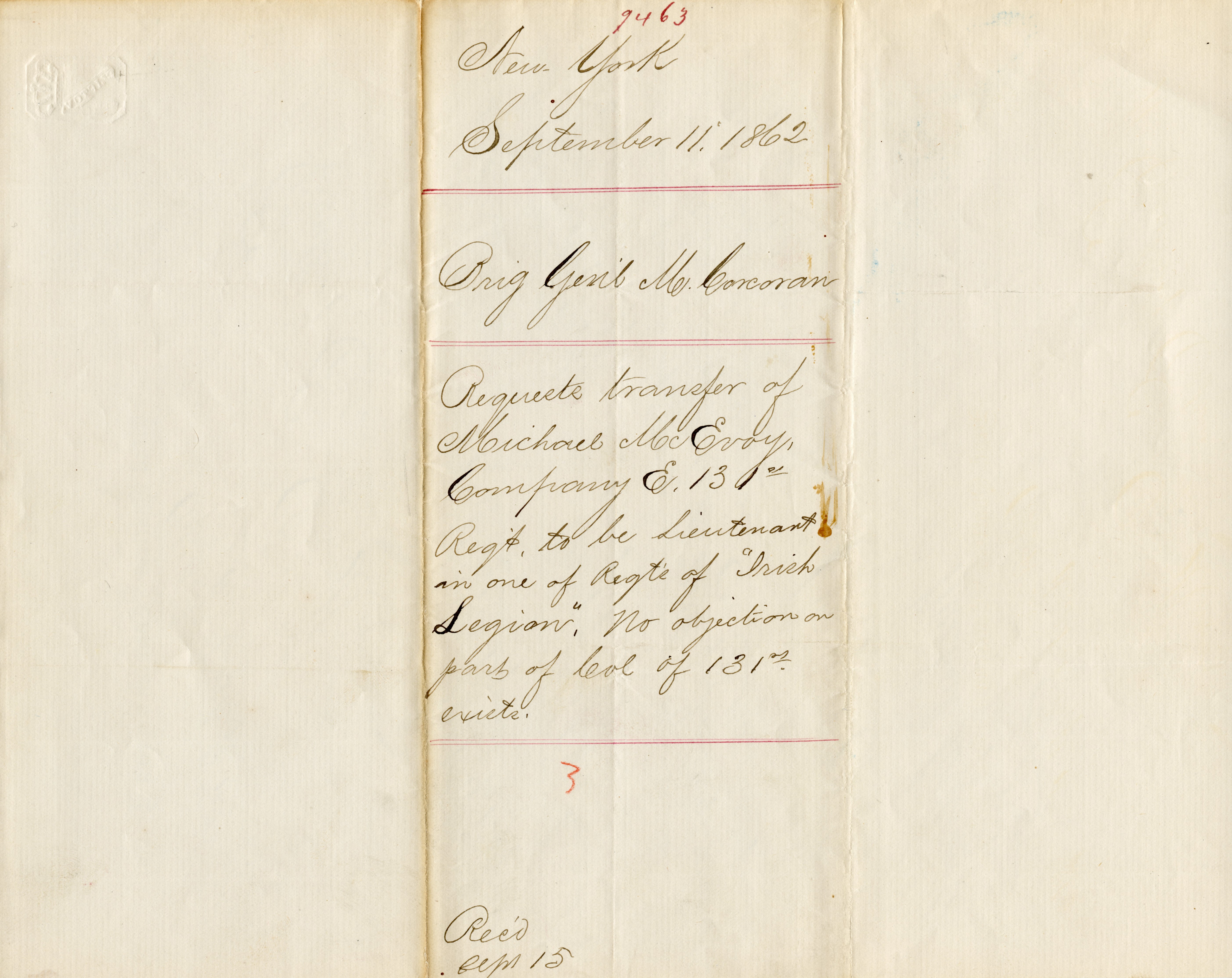
Back of the Corcoran Letter, provided by The American Military Heritage Museum Of North Carolina

Michael McEvoy was born in Ireland around 1828[2]. He was described as five feet nine inches tall, with blue eyes, light hair, and a light complexion.[3] McEvoy would immigrate to America prior to 1850. He was listed on the 1850 United States Federal Census as being a farmer, and married to Cath McEvoy, they had one child James.[4] McEvoy was employed as a Teamster, at the time of his enlistment in the Union army on August 13th, 1862.[5]

. He would be mustered into “E” Co 131st infantry as a private on September 6th.[6] Per General Corcoran’s request McEvoy would be transferred to “D” Co. 170th New York on September 19th, 1862.[7] He would be mustered in as a private on October 7th, 1862. Private McEvoy would participate in the battle of Deserted House. He would later be granted leave on March 21st, 1863, McEvoy would never return to service[8]. Private McEvoy would be listed as a deserter from camp at Suffolk Virginia on April 3rd, 1863.[9] That is where his trail ends for now.

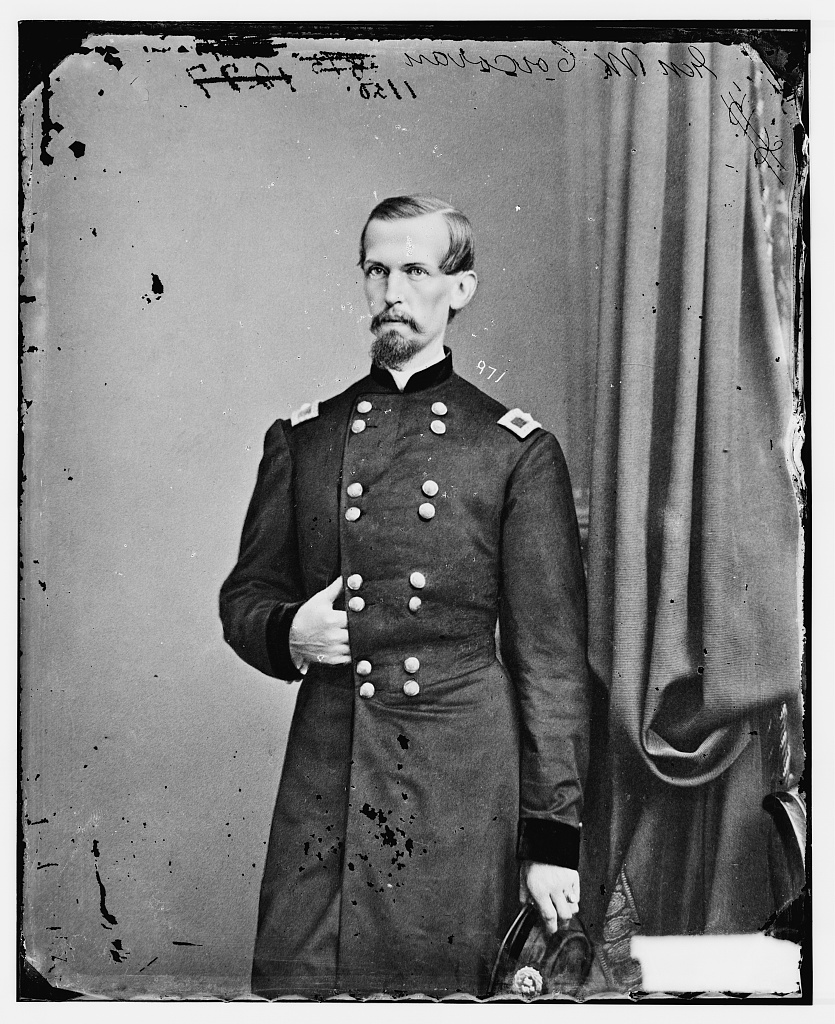
Michael Corcoran was born in Carrowkeel, county Sligo Ireland. He was a member of the Irish Nationalist Guerrilla force known as the Ribbonman. His ties to this group were eventually discovered in 1849, so he immigrated to New York City in order to avoid capture.[10] To gain a position in society Corcoran joined the 69th New York State Militia as a private. He would advance rapidly due to, “his military passion and his previous knowledge of military tactics were a great advantage to him.”[11] Corcoran moved up in rank and became a Colonel.  It was in this capacity that Corcoran became a hero to the Irish Nationalist, as well as the overall Irish immigrant population of New York. When he chose not to parade the 69th  in front of the Prince of Whales upon the Princes visit, saying that “as an Irishman he could not consistently parade Irish-born citizens in honor of the son of a sovereign, under whose rule Ireland was left a desert and her best sons exiled or banished.”[12] His action resulted in a court-martial. However, it was overturned due to the need of good officers to fight in the Civil War.


General Michael Corcoran, U.S.A. United States, None. [Between 1860 and 1865] Photograph. https://www.loc.gov/item/2018667330/.

Corcoran resumed his rank in the 69th New York and was present at that Battle of First Manassas, where he was captured. Corcoran spoke of this later by saying, “I did not surrender until I found myself after having successfully taken my regiment off the field, left with only seven men and surrounded by the enemy.”[13] Corcoran was eventually exchanged over a year later, and was received back with acclaim. He was given the rank of Brigadier General and put in command of his own troops, known as Corcoran’s “Irish Legion.” The first battle of the Legion took place during the Battle of Deserted House Virginia. Although not one of the biggest battles of the war, Corcoran demonstrated calmness under fire and his men showed how they admired Corcoran by following his every commanded under intense battle conditions. Sadly this would be Corcoran’s last major battle as he was killed later that year when he fell from his horse. Even though Corcoran’s life was cut short his legend and the Prince of Wales incident continued to inspire men, especially those of his Legion who were fighting for their adopted homes as well as Irish pride.

The National Governors Association has written this about Gov. Edwin D. Morgan.

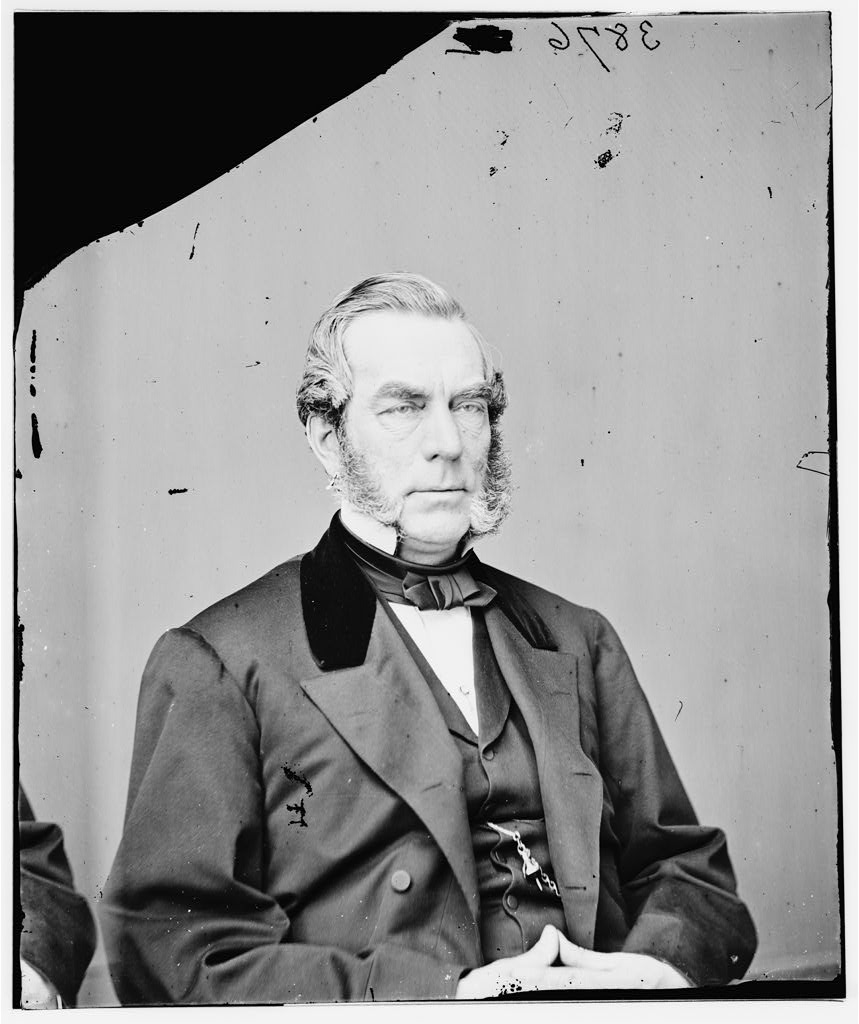
“EDWIN D. MORGAN, the twenty-third governor of New York, was born in Washington, Massachusetts on February 8, 1811. His education was attained at the Bacon Academy in Colchester, Connecticut, where his family moved to in 1822. Morgan established a successful business career, with holdings in the banking and brokerage industries. He first entered politics in Connecticut, serving as a member of the Hartford city council, a position he held in 1832. After moving to New York, he served as alderman of New York City in 1849; was a member of the New York State Senate from 1850 to 1851; and served as the state immigration commissioner from 1855 to 1858. He also chaired the Republican National Committee from 1856 to 1864. Morgan next secured the Republican gubernatorial nomination, and was elected governor by a popular vote on November 2, 1858.

Edwin D. Morgan
. United States, None. [Between 1860 and 1870] Photograph. https://www.loc.gov/item/2018669639/.

He was reelected to a second term in 1860. During his tenure, the state’s canal system was advanced; Vassar College was founded; and volunteers were raised and equipped for service in the Civil War. Morgan also served as major general of volunteers during the war, as well as serving as the commander for the Department of New York. After leaving the governorship, Morgan was elected to the U.S. Senate, an office he held from 1863 to 1869. From 1872 to 1876 he chaired the Republican National Committee; and in 1881 he turned down an appointment to serve as U.S. secretary of treasury. Governor Edwin D. Morgan passed away on February 14, 1883, and was buried in the Cedar Hill Cemetery in Hartford, Connecticut.” [14]

Although these three men are from completely different backgrounds, their stories intersect in this one document. Historical stories are everywhere, you just need to dig under the surface to find them.


[1] Corcoran, Michael. Letter to Gov. Edwin D, Morgan. “Brigadier General Michael Corcoran Request For Michael McEvoy.” New York, New York: Astor House, September 11, 1862.

[2] “Page 1 New York Civil War Muster Roll Abstracts McEvoy, Michael.” Fold3. Accessed December 31, 2022. https://www.fold3.com/image/315981459.

[3] Ibid

[4] “Michael McEvoy in the 1850 United States Federal Census.” Ancestry. Accessed December 31, 2022. https://www.ancestry.com/discoveryui-content/view/7008512:8054?tid=&pid=&queryId=6a9bb6ca9453a20b805c27f011dfac83&_phsrc=csG312&_phstart=successSource.

[5] Page 1 New York Civil War Muster Roll Abstracts McEvoy, Michael.” Fold3. Accessed December 31, 2022. https://www.fold3.com/image/315981459

[6] Ibid

[7] “Page 1 New York Civil War Muster Roll Abstracts Michael McEvoy.” Fold3. Accessed December 31, 2022. https://www.fold3.com/image/316135643.

[8] Ibid

[9] Ibid

[10] Pritchard, Russ A. The Irish Brigade : a Pictorial History of the Famed Civil War Fighters. (Philadelphia,

[11] Conyngham, The Irish Brigade and It’s Campaigns , 537

[12] Ibid 

[13] Ibid, 538

[13] Shiels, Damian. Irish in the American Civil War Exploring Irish involvement in the American Civil War . March 18, 2012. http://irishamericancivilwar.com/2012/03/18/baptism-of-fire-the-corcoran-legion-at-deserted-house-virginia-30th-january-1863/ (accessed 11 20, 2013).

[14] Sobel, Robert, and John Raimo. “Edwin Denison Morgan.” National Governors Association. Accessed November 3, 2023. https://www.nga.org/governor/edwin-denison-morgan/.

An Artifact Speaks

I feel every artifact has a story. This identification shield worn by Sergeant Thomas Wood (Woods) is no exception. Sgt. Woods was a member of Company “B”, 69th New York National Guard. This unit would later become the 182nd New York Infantry, part of Corcoran’s Irish Legion.

 Identification shield worn by Sergeant Thomas Wood (Woods). Provided by The American Military Heritage Museum Of North Carolina.
Identification shield worn by Sergeant Thomas Wood (Woods). Provided by The American Military Heritage Museum Of North Carolina.

Woods was born in Ireland around 1827[1] and arrived in the United States prior to 1850.[2] He married Margaret Begnan at St. James Roman Catholic Church in Manhattan on October 13, 1850.[3] By 1860 he was making a living as a butcher. He and his wife, along with their two children Patrick and Elizabeth, resided in the 18th Ward of Lower Manhattan.[4]  In November of 1861 Thomas and Margaret would have another child, Thomas Frances.[5]

As the American Civil War unfolded, Woods made the decision to enlist. On September 18, 1862, Woods enlisted in the 69th New York National Guard.[6]  On November 17, 1862, he was officially mustered in as a Sgt. in “B” Co. 69th N.Y.N.G. This regiment was organized by Col. Mathew Murphy as the first regiment of the Corcoran Brigade, also known as Corcoran’s Irish Legion.  The regiment left New York state on November 10, 1862, to serve at Newport News, VA. The unit first served in Corcoran’s Brigade, part of Peck’s Division, Department of Virginia. Then in December 1862 at Suffolk, as part of Murphy’s Brigade, Corcoran’s Division.[7] Sgt. Woods and the 69th N.Y.N.G spent most of their time guarding Federal naval yards at Portsmouth and Norfolk.

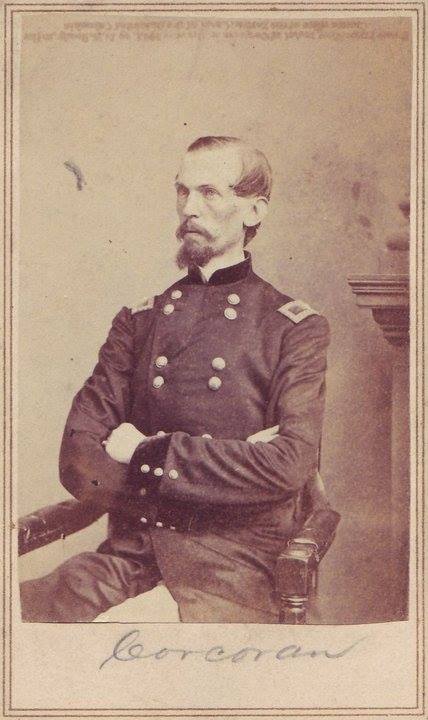
In January of 1863 Confederate Brigadier-General Roger Atkinson Pryor would move 1,800[8] men towards Suffolk, VA. His hope was to disturb Union activity in the region.  Early in the morning of January 30[9] Brigadier-General Corcoran ordered his men to march in the direction of the enemy.

Carte-de-visite of Michael Corcoran Provided by The American Military Heritage Museum Of North Carolina.

The men of the 69th N.Y.N.G were both anxious and eager to see their first combat. Their energy led them to be boisterous and the men had to be ordered to keep quiet, as to not alert the confederate soldiers that were in close proximity. Sgt. Wood and the men of Co. “B” slogged through the mud for nine miles before reaching the enemy.  Brigadier General Corcoran first sent in his cavalry and artillery, who took heavy fire. Corcoran than ordered the 167th Pennsylvania into the fight. However, they were in a shambles due to the wounding of their commander. It was time for Sgt. Woods and the men of the 69th N.Y.N.G to see the elephant. They advanced through the blackness of the early morning….

This magnificent map of The Battle of Deserted House is the property of Baylor University. The image is reprinted with permission from the War of the Rebellion Atlas digital collection. It was produced by the US Government.

“Moving into a gully near the unfortunate 167th Pennsylvania, the Legion came into range of the Confederate artillery, and were ordered to lie down. Trees and houses were ripped apart during the ferocious barrage that followed…. In defense of the Pennsylvanians, the fire under which they had been exposed was extremely heavy, as the Legion were finding out. A piece of spiraling shrapnel struck the canteen of the 69th’s Captain Michael Kelly, carrying away his elbow. 30-year-old Sergeant Thomas Woods took a shell fragment in the stomach, killing him.”[10]

This action would be known as “Deserted House.” It was the first combat for the 69th N.Y.N.G but the last that poor Sgt. Woods would see.

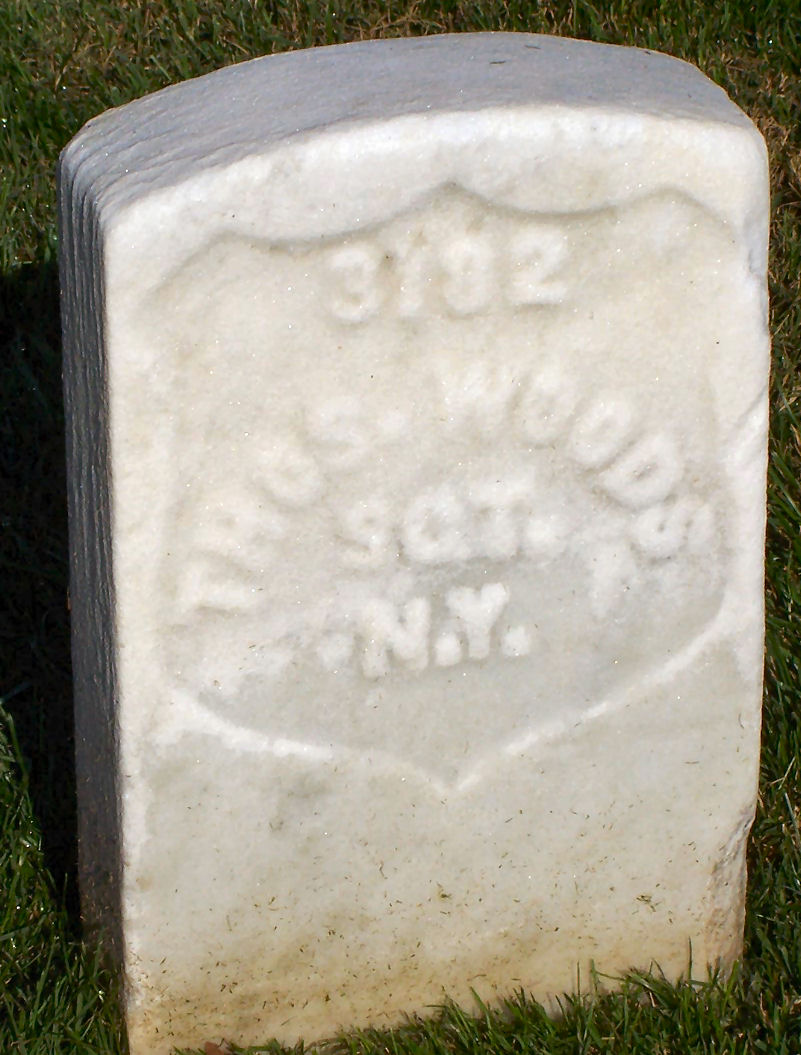
Sgt. Woods now rests in Hampton National Cemetery in section D number 3182.[11]

Photo by Dawn Bilik (prev. Stewart)
Grave of Sgt. Thomas Wood Photo by Dawn Bilik (prev. Stewart)

Margaret would apply for a widow’s pension for her and the three children on March 19, 1863.[12] She would receive a pension of $8.00 a month, which is about $108[13] in today’s money. Sadly, Margaret would die on July 4, 1864.[14] The children and the pension were then transferred to the custody of Mary Ann Grimes.

Let us never forget the sacrifice of Sgt. Woods and his family for their adopted country.


[1] “1860 United States Federal Census for Thomas Woods.” Ancestry. Accessed October 6, 2022. https://tinyurl.com/mr39du7m.

[2] “Thomas Woods Page 5 Civil War ‘Widows’ Pensions.’” Fold3. Accessed October 6, 2022. https://www.fold3.com/image/270483669.

[3] Ibid

[4] “1860 United States Federal Census for Thomas Woods.” Ancestry. Accessed October 6, 2022. https://tinyurl.com/mr39du7m.

[5] “Thomas Woods Page 11 Civil War ‘Widows’ Pensions.’” Fold3. Accessed October 6, 2022. https://www.fold3.com/image/270483681.

[6] “Thomas Woods Page 1 New York Civil War Muster Roll Abstracts.” Fold3. Accessed October 6, 2022. https://www.fold3.com/image/316281613.

[7] “New York State Military Museum and Veterans Research Center.” 182nd Infantry Regiment :: New York State Military Museum and Veterans Research Center. Accessed October 6, 2022. https://museum.dmna.ny.gov/unit-history/infantry-2/182nd-infantry-regiment.

[8] Shiels, Damian. “Baptism of Fire: The Corcoran Legion at Deserted House, Virginia, 30th January 1863.” Irish in the American Civil War, March 25, 2020. https://irishamericancivilwar.com/2012/03/18/baptism-of-fire-the-corcoran-legion-at-deserted-house-virginia-30th-january-1863/.

[9] Ibid

[10] Ibid

[11] “Thomas Woods (Unknown-1863) – Find a Grave…” Find a Grave. Accessed October 6, 2022. https://www.findagrave.com/memorial/3097387/thomas-woods.

[12] “Thomas Wood Page 21 Civil War ‘Widows’ Pensions.’” Fold3. Accessed October 6, 2022. https://www.fold3.com/image/270483701.

[13] “Inflation Rate between 1863-2022: Inflation Calculator.” $8 in 1863 → 2022 | Inflation Calculator. Accessed October 6, 2022. https://www.in2013dollars.com/us/inflation/1863?amount=8.

[14] “Thomas Woods Page 2 Civil War ‘Widows’ Pensions.’” Fold3. Accessed October 6, 2022. https://www.fold3.com/image/270483662.

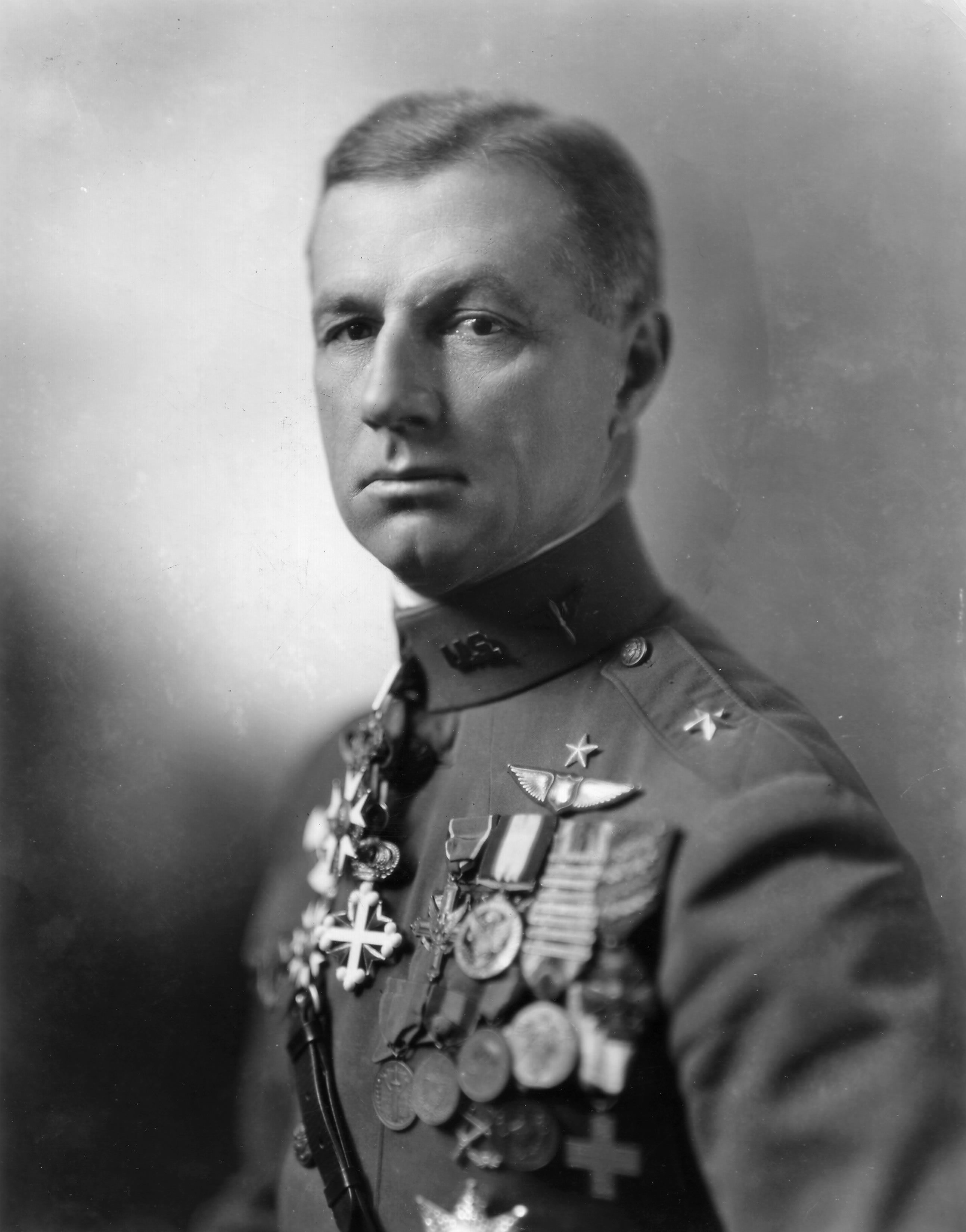
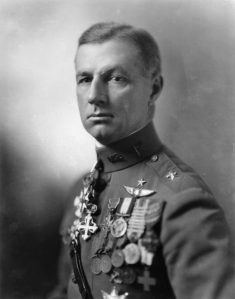
Brigadier General William “Billy” Mitchell A Hero Ahead Of His Time

Brigadier General Billy Mitchell, United States Army Air Service

Brigadier General Billy Mitchell, United States Army Air Service

Brigadier General William “Billy” Mitchell was a born leader and a military visionary. He made numerous contributions to the United States and its use of air power. Even though his career ended in disgrace, Brigadier General Billy Mitchell’s ideas were ahead of his time. Mitchell personally saw the power of the air force in World War I. Stating, in 1918, “The day has passed when armies on the ground or navies on the sea can be the arbiter of a nation’s destiny in war. The main power of defense and the power of initiative against an enemy has passed to the air.” (1) Mitchell would spend the rest of his military career trying to prove this statement true by conducting tests and writing theory’s that are still used to this day.

William “Billy “Mitchell was born December 29th 1879 into a family of wealth and privilege. This gave him the advantage of a good education, as well as giving him opportunities not afforded to the average individual. These opportunities included travel. As a child, Mitchell’s father, 1st lieutenant John L. Mitchell who fought with the 24th Wisconsin Infantry Regiment during the American Civil War, would take young Billy to Waterloo and other battle sites around the world. There Billy was told of the gallant deeds and heroism that took place at these battle sites. Mitchell’s sister Ruth stated, “Willie could see the old battles going on as if they were unfolding before his eyes.” (2) In 1898 the United States was on the verge of conflict in Cuba. It was at this time, based on his background, that a youthful Billy Mitchell would sign up for service seeking adventure, thus beginning his twenty-eight year military career.
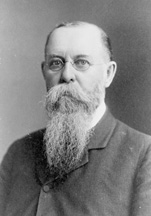
Billie Mitchell's Father John L. Mitchel

Billie Mitchell’s Father John L. Mitchel

Mitchell was sent to Florida with the First Wisconsin Volunteers. Within a week he made the rank of Second Lieutenant, becoming the youngest officer in service at just eighteen years of age. (3) During this campaign, Mitchell did not see any action. This frustrated him, he remarked to his father, “Here I have been since the war without any foreign service to speak of and have not been in any engagements as of yet. How would you have felt in the Civil War if you had been out of the way somewhere?” (4) In 1899 there was an insurrection in the Philippines and on November 1st of that year, Mitchell arrived there under the command of General Arthur Macarthur to help put down the insurgency. This would give Billy his wish to see combat and he did so as a member of the Signal Corps. It was the job of the Signal Corps to travel with the infantry and sometimes ahead of them to lay down wires to establish telegraph communications. This put Mitchell in the thick of the fighting. He related one particularly dangerous operation in Mabalang to his sister Ruth saying, “I got our line into the rebel trenches ahead of the troops. The insurrectionists ran, blowing up a big railroad bridge. We had a pretty good scrap there. As they retreated along the railroad track they were not more 300 yards away from us in columns of fours; but there was not a single company of our troops insight of them. I thought I could bring somebody down with my pistol, they looked so near, but I had to use my carbine.” (5) By the end of the Philippine insurrection Mitchell’s signalmen had broken up several rebel bands and captured seventy insurgent flags, furthermore Mitchell was promoted to the rank of Captain for his efforts. (6)
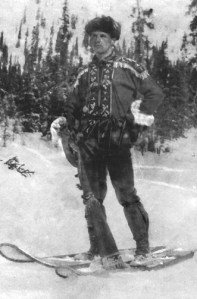
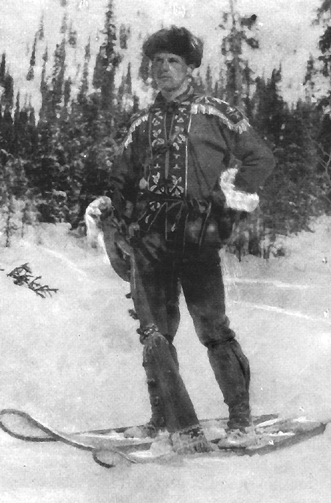
Mitchell in Alaska with the Signal Corps

Mitchell in Alaska with the Signal Corps

Mitchell decided to make the Army his career and spent time in Alaska with the Signal Corps engineering communications between isolated outposts and the United States as well as Canada, again with much success. After this he was assigned to Fort Leavenworth known back then as the “intellectual center of the army.” (7) It was there in 1906 that Mitchell first discovered the importance that the air would play in future warfare. He introduced his findings in a presentation given to the Signal Corps School entitled “The Signal Corps with Divisional Cavalry and Notes on Wireless Telegraphy, Searchlights and Military Ballooning.” (8) In this presentation, Mitchell spoke of dirigibles saying they may “Cruise at will over a battlefield, carrying messages out of a besieged fortress or sail alone above a beleaguered place, immune from the action of men on the earth’s surface.” (9) In the same article, Mitchell went on to say, “By towing another balloon, loaded with explosives, several hundred pounds of guncotton could be dropped from the balloon which it is towing in the midst of an enemy’s fortifications.” (10) These ideas were groundbreaking. As the awareness in the use of air combat was in its infancy, Mitchell saw its potential by concluding his work with this statement. “Conflicts, no doubt, will be carried on in the future in the air” (11)
Mitchell took a staff position in Washington DC where he stayed in till 1916 when due to his frustration at the lack of promotion and a desire to see field service he joined the Armies Aviation Squadron. In this capacity, Mitchell was promoted to Major and assigned to bolster military aviation training. He took part in the training getting fifteen hours of flight time while taking thirty-six flights. (12) Although Mitchell did not earn his wings with this training, he was considered one of America’s top aviation experts. It was due to this fact that on March 19th 1917 then Lieutenant Colonel Mitchell was sent to France as an aeronautical observer. By the time he arrived, the United States had declared war on Germany beginning American involvement in the First World War.

While Mitchell was in France, he was amazed to see the advancements the French had made in military aircraft. He remarked, “I had been able to flounder around with the animated kites that we called airplanes in the United States, but when I laid my hand to the greyhounds of the air they had in Europe, which went twice as fast as ours, it was an entirely different matter.” (13) It was this experience that started to display to Mitchell the full potential of modern air power. He immediately petitioned the United States Army to manufacture or purchase these new advanced aircraft, but he was rebuffed on multiple occasions making Mitchell most frustrated. Another experience that opened Mitchell’s eyes was when he was caught in an air raid noticing “…another series of strong explosions, then the machine gun and anti-aircraft fire. The whole town was, of course, in darkness and everyone had taken to the vaces or vaulted wine cellars inside of houses.” (14) This had a profound effect on Mitchell as he now could see the effect of air power on the morale of the enemy, as well as the reach that such power can have as to make a quick strike from a distance in a short amount of time. An additional event that facilitated Mitchell understanding about the future of air power was a reconnaissance flight that he took with a French pilot over the German lines. Mitchell wrote that he could gain a better picture of the troop formations by air then on the ground. He said, “A very significant thing to me was that we could cross the lines of these contending armies in a few minutes in our airplane, whereas the armies had been locked in the struggle, immovable, powerless to advance for three years…” (15) The combination of these revelations made Mitchell even more fervent in his requests for more support from the United States Army to strengthen and improve their air capabilities. He was looked at by those in Washington as someone of little value when it came to his grasp of aviation, where as he was considered an expert in France. Mitchell would later use his relationship with French premier Alexandre Ribot to coax him to send a message to Washington DC restating Mitchell’s plan, under the guise that it was Ribot’s, requesting twenty thousand planes and forty thousand mechanics. These numbers were much more than the United States could spare, however it awoke the bureaucrats in the American capital and started the process that would eventually lead to a massive aerial force three times the size of the French. (16)

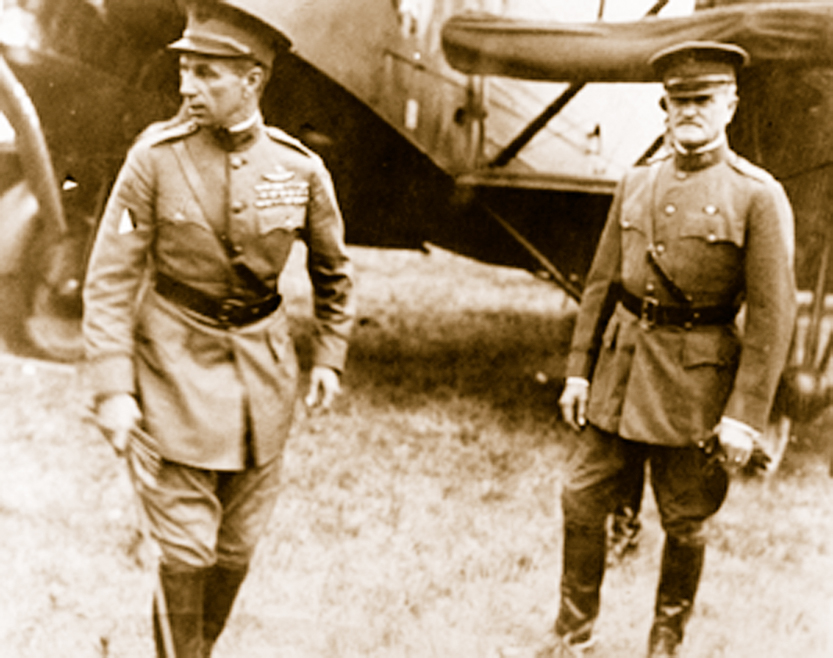
Although this was a victory for Mitchell, his problems with getting the United States aviation capabilities up to date were just starting. The arrival of General John “Black Jack” Pershing added a whole new set of challenges for Mitchell, who felt, “General Pershing himself thought aviation was full of dynamite and pussyfooted just when we needed the most action.” (17) These two strong characters, Mitchell and Pershing, would have many heated discussions on the role of air power and who would command it. Mitchell was tired of having to go through
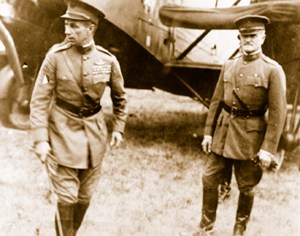
Billy Mitchell and General Pershing

Billy Mitchell and General Pershing

Washington for all of his requests and wanted one man to be the head of aviation, where Pershing did not see the need for this, feeling that aviation was just a whim. The discussions got so heated between the two that Pershing threatened to send Mitchell back to the states. Mitchell however was not intimidated and became unrelenting in this matter. So as to not have to make due on his threat, Pershing seeing the value of Mitchell, appointed Major General William Kenly as Chief of the Air Service in the fall of 1917 in order to calm Mitchell down and to keep peace. (18)
At this time, Mitchell was known as a bit of a highflier, racing around in his Mercedes and entertaining several up and coming flyers and dignitaries. On one occasion, Mitchell’s Mercedes broke down on a small French road when an Army driver stopped to help him. The driver ended up being able to fix the car due to the fact that he was a racing driver back in America. The driver wanted to be in the Air Service and Mitchell helped make that happen. The driver’s name was Eddie Rickenbacker, America’s first Ace Flyer and one of Mitchell’s greatest contributions to the Air Service. (19)

However, Mitchell’s life was still not all parties and leisure. There was still plenty of work to be done and arguments to be made. A new advisory rose to challenge Mitchell in the form of American Brigadier General Benny Foulois, who was put in command of the United States Air Service. Foulois was an experienced aviator who had no time for Mitchell’s brashness saying Mitchell had an “extremely childish attitude”, and was “mentally unfit for further field service”. (20) This posed yet another issue for Pershing who again saw the value of Mitchell not only as a tactician but also as a liaison to the French. So in order to mediate the situation, Pershing sent Mitchell to the front, and made him commander of all aviation forces there. This was where Mitchell shined the most.
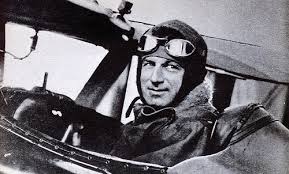
Mitchell about to fly an air mission during the First World War

Mitchell about to fly an air mission during the First World War

Mitchell, much like his friend future General George S. Patton Jr., always led from the front and in Mitchell’s case this meant flying missions. One such mission took place when the French and American Armies were being squeezed by the Germans in an attempt to out flank them and head into Paris. A plan was devised to use a combined British and American squadron to patrol the sky. Straightaway, Mitchell saw only disaster for this proposal and made a counter suggestion to fly a reconnaissance mission. This offer was accepted and Mitchell decided to fly the mission himself. He took off after a quick few hours of sleep and headed toward the enemy. Mitchell discovered thousands of Germans marching in columns towards a series of bridges. He quickly turned his aircraft in the direction of the closet allied air field touched down and found the commander spreading the word to start an aerial attack on the bridges. A secondary aerial attack on the German supply base at Fere-en-Tardenois was also suggested by Mitchel and approved by command. Mitchell’s vision saw that this plan, if successful, would turn the German Army around and trap them, thus destroying any chance they had for victory. (21) The action that took place was intense and resulted in the first allied success in the air. Although this success was limited, it started to turn the tide of the war. For his brave reconnaissance flight, Mitchell was awarded the Distinguished Service Cross. (22)

Mitchell’s next large scale maneuver was the largest aerial operation of the war consisting of fifteen hundred aircraft, this assault was known as the St. Mihiel offensive. Between September 12th and 16th , the Americans where in total command of the air making thirty three hundred flights into enemy territory racking up four thousand hours of flight time firing thirty thousand rounds of ammunition, making more than one thousand separate bomb attacks using seventy five tons of munitions. This operation resulted in the destruction of sixty enemy planes and twelve enemy balloons, all of this during bad weather. (23)

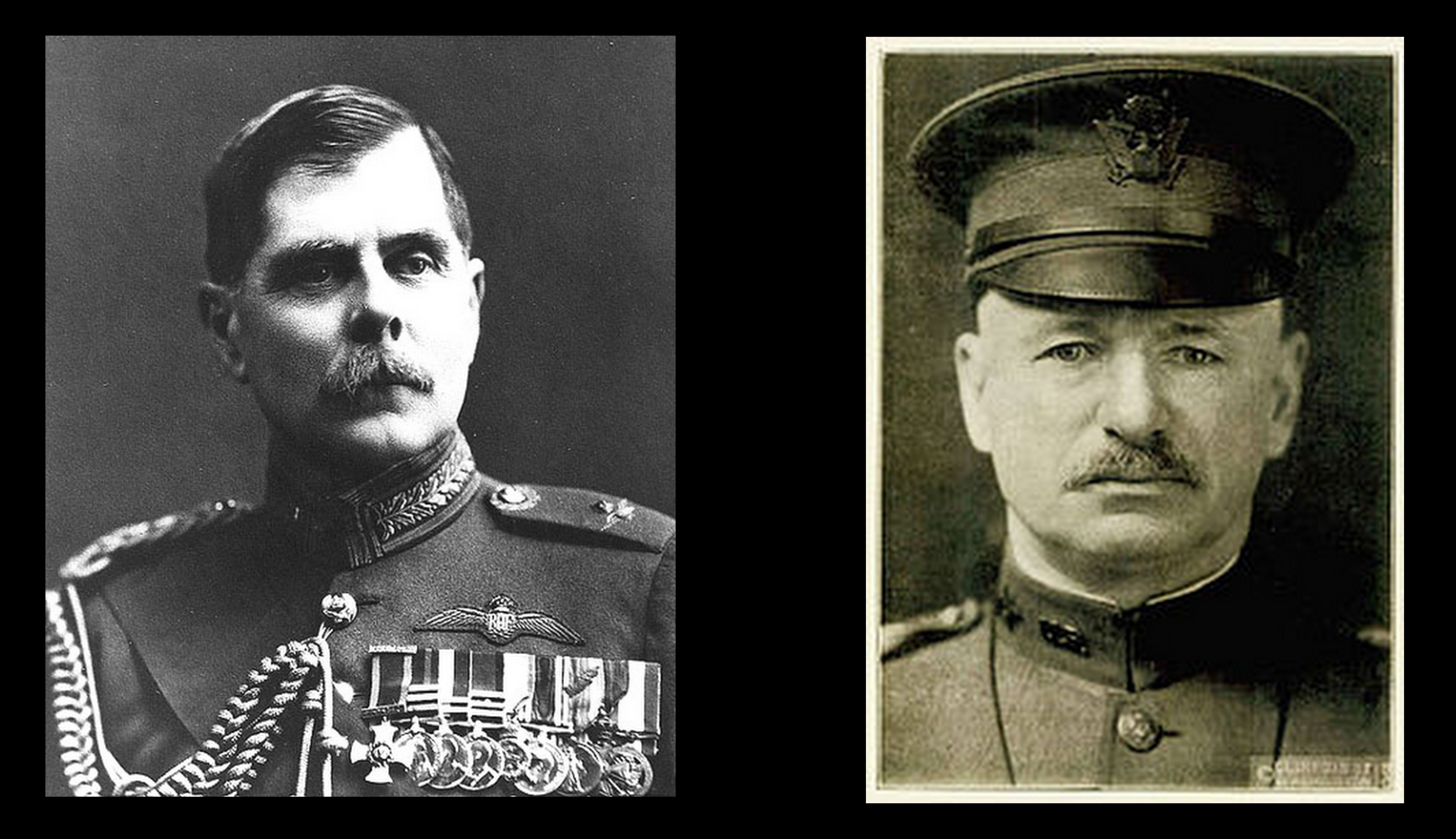
The First World War established the career of Billy Mitchell; he entered France as a Lieutenant Colonel and was now leaving a Brigadier General with a reputation for having extraordinary leadership and being perhaps the most experienced airmen in the service of the United States Army. On November 11th 1919, the armistice ending the First World War was signed. Before returning to the United States, Mitchell went to London to discuss air strategy with the Chief of the British Air Staff, General Hugh Trenchard. The focus of this discussion was on air independence, concentrating on the theory that the aviation wing of the Army should be a separate service all together. Mitchell was a propionate of this theory and after the talks upon his return to the United States it became one of his major goals. (24)

Left: Sir Huge Trench Right:  Major General William Hann

Left: Sir Huge Trench Right: Major General William Hann

Mitchell’s constant speeches and writings to the Army War Department concerning a separate aviation service and the possibility of air attack from across the globe, made him very unpopular. He was also making enemies amongst members of the Army who were not flyers by questioning their authority on matters of air combat. He had a large quarrel with General William G. Hann, who was a very well established commander at the time. Mitchel insisted that air power alone could win a war and that infantry was a thing of the past. Hann, an infantry commander, took offence and the argument ended in a great deal of destine between both men, Mitchel wrote about the situation saying, “it impressed on me more than ever that, under the control of the army, it will be impossible to develop an air service.” (25) Mitchell’s challengers were not only in the army, he was developing enemies in the navy as well, due to two factors; the aforementioned separate aviation service, as well as a tight military budget. A battle erupted between the Navy and Mitchell over these issues.

The Navy went so far as to send then Assistant Secretary of the Navy Franklin Delano Roosevelt out on a speaking tour to campaign against the idea of a separate air wing claiming it was ill conceived and would take money away from the navy, making them weaker and a strong navy was essential to keep America safe. (26) Mitchell long felt that the navy was almost obsolete and vulnerable to air attack saying in his book Winged Defense The Development and Possibilities of Modern Air Power –Economic and Military “From a military standpoint, the airmen have to study the effect that air power has on navies and what their future will be. They know that within the radius of air power’s activities, it can completely destroy any surface vessels or war ships. They know that in the last war, surface ships, battleships, cruisers and other sea craft took comparatively little active part.” (27)
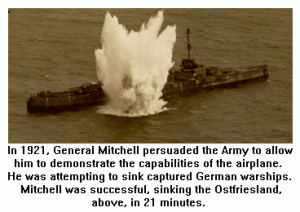
mitchell.6Mitchell’s ideas were put to the test in a series of experiments conducted by both the Army and the Navy on the bombing of ships from the air. Multiple vessels were used. One of the vessels used in this series of experiments was the captured German battleship Ostfriesland. The navy had the first chance at destroying the mighty craft, but only succeeded in damaging her. Then Mitchell’s army squadron flew in and obliterated the German warship, sinking her in minutes. Mitchell described the scene this way, “When a death blow has been dealt by a bomb to a vessel, there is no mistaking it. Water can be seen to come up under both sides of the ship and she trembles all over…In a minute the Osterfriesland was on her side in two minutes she was sliding down by the stern; in three minutes she was bottom-side up, looking like a gigantic whale, in a minute or more only her tip showed above water.” (28)

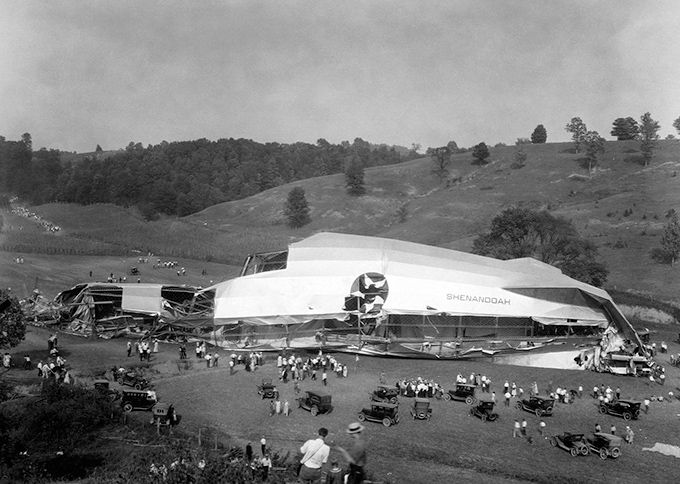
Although this proved Mitchell’s theory that air power can defeat sea power, his fight to gain funding and a separate aviation service went on to no avail and resulted in his demotion from Assistant Chief of the Air Service. He reverted to his permanent rank of Colonel and was transferred to San Antonio, Texas, as air officer to a ground forces corps. (29) This is where he heard the news about the tragedies of the Shenandoah as well as the ill-fated attempt to fly from San Pablo Bay to Hawaii. Both incidents happened within
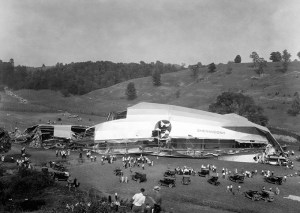
1925: Caught in a squall over southeastern Ohio, the Navy dirigible USS Shenandoah breaks up and crashes into a field, killing 14 of the 43 men aboard.

1925: Caught in a squall over southeastern Ohio, the Navy dirigible USS Shenandoah breaks up and crashes into a field, killing 14 of the 43 men aboard.

days of one another and were put on by the navy as well publicized attempts to show naval air superiority they ended in failure and death. The Secretary of the Navy not wanting to admit any wrongdoing issued a statement, “The failure of the Hawaiian flight and the Shenandoah disaster we have come to the conclusion that the Atlantic and the Pacific are still our best defenses. We have nothing to fear from enemy aircraft that is not on this continent.” (30) This enraged Mitchell as it was a slap in the face to everything he stood for and was warning against, therefore he felt compelled to make this statement, about the incidents; to the press, “My opinion is as follows: These accidents are the result of the

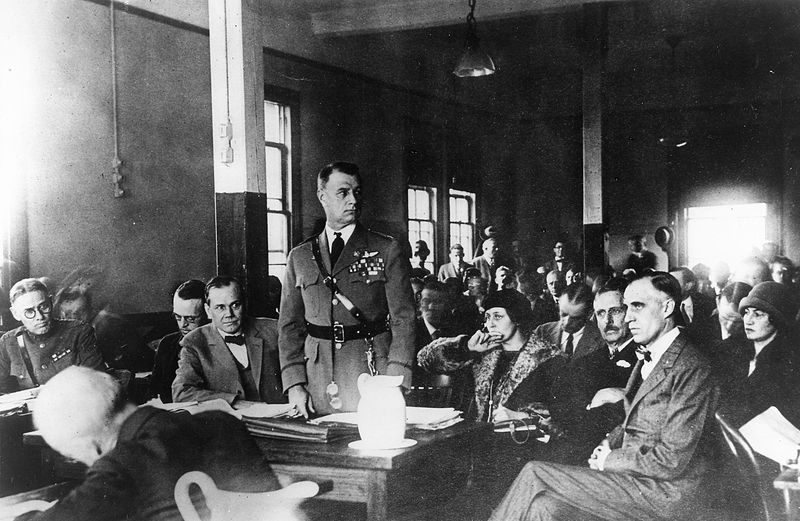
incompetency, the criminal negligence, and the almost treasonable administration of our national defense by the Navy and War Departments.” (31) Mitchell was court marshaled and charged with “Conduct to the prejudice of good order and military discipline and in a way to bring discredit upon military service” (32) Mitchell left for Washington DC and was placed under arrest a few days after his arrival. The court-martial record has one million four hundred thousand words and consists of seven large volumes, but in all of those words there was not enough to help Mitchell out of this predicament. (33) By Special order 248 on October 20Th 1925 Mitchell was found guilty and received what was considered a light sentence due to his heroic service in the First World War. The sentence consisted of a suspension of rank and command, plus forfeiture of pay for five years. Mitchell retired from the service one year later in disgrace. (34) The next ten years Mitchell spent time with his family and traveled around the country discussing air power still as feisty as he was during his many campaigns before Congress. He died of heart failure in 1936 a man ahead of his time but looked

The Court Martial of Billy Mitchell

The Court Martial of Billy Mitchell

upon then as an agitator and a crackpot.
Billy Mitchell is now revered by many and his doctrine has become the bases for the American Air Force which is now a separate branch of service something Mitchell fought so hard for but would never see in his life. He is a true war hero and a visionary whose grandiose ideas were way ahead of his time ending his career in disgrace. He was a man who never faltered from his beliefs, making him one of the greatest military leaders in the history of the United States of America.
1) Jones, Johnny R. William “Billy” Mitchell’s Air Power. Honolulu: University Press of the Pacific, 2004 Pg. 3

2) Davis, Burke. The Billy Mitchell Affair. New York: Random House, 1967. Pg. 15

3) Davis, Pg. 17

4) Ibid

5) Mitchell, Ruth. My Brother Bill. New York: Harcourt, Brace And Company, 1953. Pg. 49

6) Davis, Pg.’s 18-19

7) Hurley, Alfred F. Billy Mitchell, Crusader for Air Power. New ed. Bloomington: Indiana University Press, 1975. Pg. 10

8) Ibid, Pg. 11

9) Ibid,

10) Ibid,

11) Ibid,

12) Ibid, Pg. 21

13) Davis, Pg. 29

14) Schwarzer, William. The Lion Killers Billy Mitchell and the Birth of Strategic Bombing. Mt. Holly: Aerial Perspective, 2003. Pg. 20

15) Davis, Pg. 30

16) Ibid, Pg. 32

17) Ibid, Pg. 35

18) Ibid, Pg. 35

19) Ibid, Pg. 36

20) Ibid

21) Levine, Isaac Don. Mitchell Pioneer of Air Power. New York: Duell, Sloan and Pearce, 1943. Pg.’s 120-121

22) Ibid, Pg. 127

23) Ibid, Pg.’s 132-135

24) Cook, James. Billy Mitchell. Boulder: Lynne Reinner Publishing, 2002. Pg. 107

25) Cooke, Pg. 114

26) Ibid, Pg. 115

27) Mitchell, William. Winged Defense The Development and Possibilities of Modern Air Power, Economic and Military. New York: G.P. Putman’s Sons, 1925. Pg. 99

28) Ibid, Pg. 72

29) Burlingame, Roger. General Billy Mitchell Champion of Air Defense. New York: McGraw-Hill , 1952.Pg. 141

30) Ibid, Pg. 148

31) Mitchell, Pg. 301

32) Cooke, Pg. 180

33) Gaureau, Emile, and Cohen, Lester. Billly Mitchell Founder of Our Air Force and Prophet Without Honor. New York: E.P. Dutton & Co , 1942.Pg. 135

34) Cooke, Pg. 217
The Brave Soldiers From Erin Why The Irish Fought With Great Success During The American Civil War: Part 4 Culture of the Irish


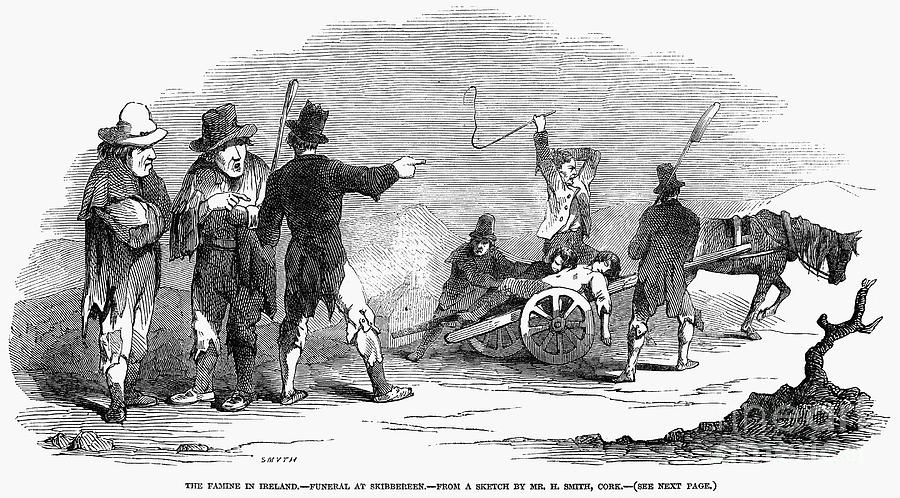
Engraving Titled The Famine In Ireland-Funeral At Skibbreen_From A Sketch By Mr. H Smith (1847)

Engraving Titled The Famine In Ireland-Funeral At Skibbreen From A Sketch By Mr. H Smith (1847)

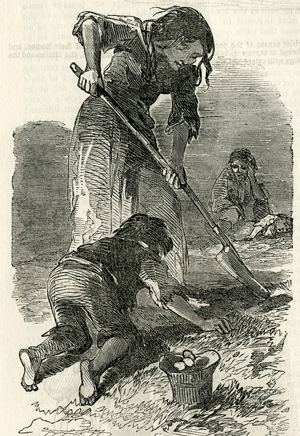
Life in nineteenth century Ireland was challenging at best. The Irish faced death, on an almost daily bases. An anonymous poet wrote of this dreadful time in Ireland saying, “God sent a course upon the land because her sons were slaves; The rich earth brought forth rottenness, and gardens became graves; The green crops withered in the field, all blackened by the curse, And Wedding gay and dance gave way to coffin and hearse.” (1) In order to survive the Irish had to become accustomed to this dreadful way of life.

After emigrating from Ireland the Irish would be faced with the notion of death during the Civil War. Death would be common place during the four year conflict 750,000 men would die. (2) By comparison in five years 1,500,000 Irishmen and women would perish in the famine in Ireland. (3) In looking at these numbers one can only imagine that an Irish soldier who fled Ireland due to the famine had an overwhelming and powerful understanding of life and death upon entering Civil War service. This is not to say that the Irish took death lightly. However, they did become desensitized to it, thus making them more comfortable with the idea of dying.
The Irish’s ability to be at peace with the idea of death transformed itself into battlefield heroics. This idea can be seen in the actions of Brevet Brigadier General Thomas Smyth. Smyth immigrated to the United States at age twenty during the height of the famine, during the Civil War Smyth enlisted as a major in the 1st Delaware Infantry. He had gallant actions and a tendency to lead from the front with a disregard for his own life and safety. Captain Conyngham said this about him, “With the coolness and judgment of the scientific officer he combined a bravery almost amounting to rashness. He generally rode in front of his own picket lines along the outer posts, to make sure that all was right.” (4)

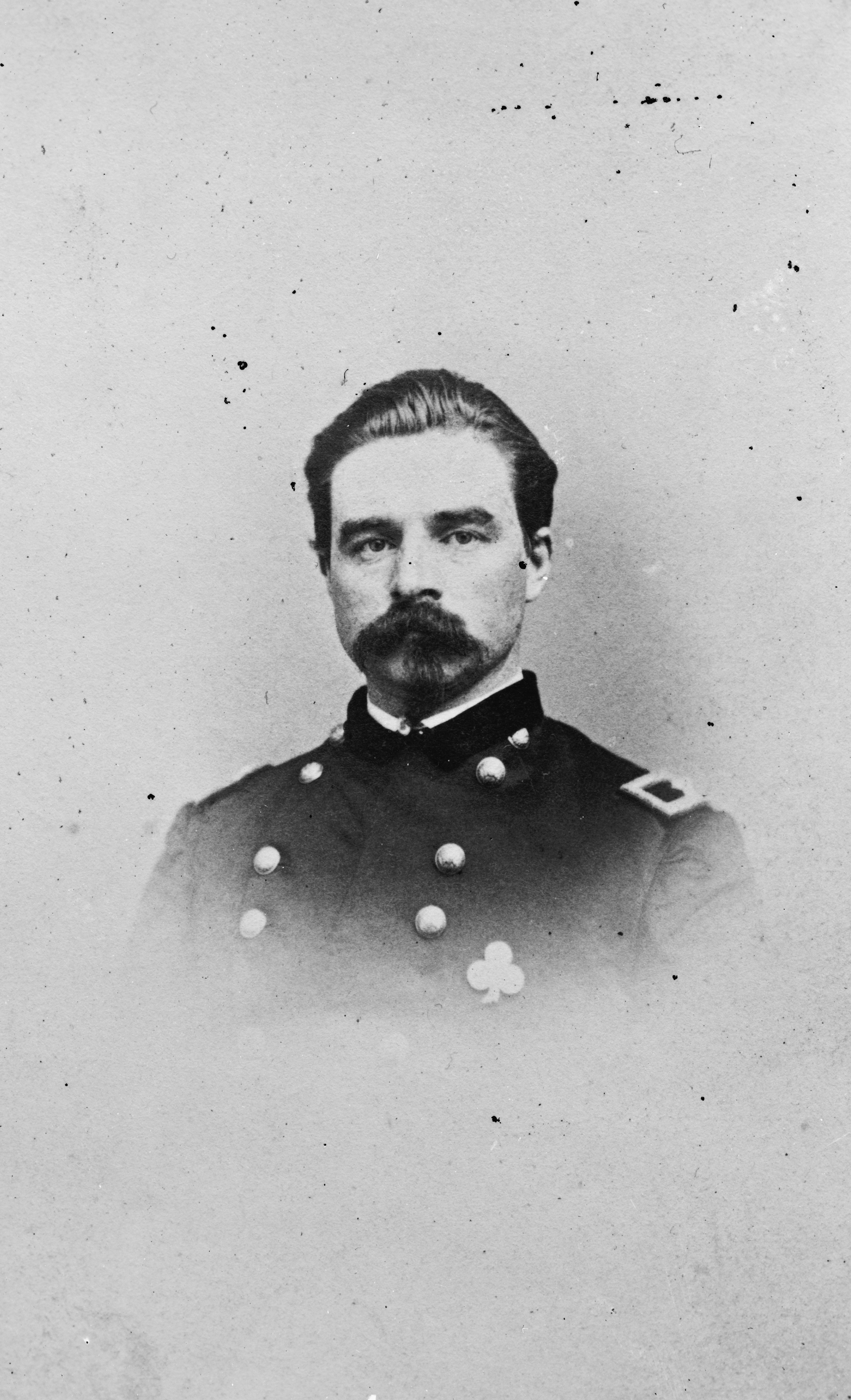
Brigadier General Thomas Smyth

Brigadier General Thomas Smyth

It was these qualities that gained him a promotion to the commander of his regiment. It was in this capacity that then Colonel Smyth found himself at Gettysburg, where on the third day of the battle he was severely wounded. The wound did not keep Smyth out of action for long though, as he returned to action with the rank of Brigadier General. Smyth again led from the front; however, this would be his undoing as he was shot in the neck while leading his men near Farmville, Virginia. (5) One can only surmise that Smyth’s fearlessness came from a different understanding of what it means to die, an understanding learned by seeing so much death as a youth back in Ireland.

The Irish in America whether being born in Ireland or in the United States always had a piece of the old country with them in their hearts and minds. The Irish had to develop coping mechanisms in order to survive their everyday struggles. Their coping skills came directly from their culture. Three of the most notorious traits the Irish are known for are their humor, drinking and love of a good fight. These characteristics served the Irish participants in the American Civil War well as they faced new hardships in their life as soldiers.

Irish humor can cover a rage from sarcastic wit to bawdy and over the top. This is as true today, as it was during the American Civil War. The Irish are known for using their humor to defuse tense emotional situations. One such occasion during the war was when the Irish of the 13th Louisiana were marching off amongst a sea of crying mothers and sweethearts. One of the men remarked, “I wish I had a gurl to cry for me but the devil a wun cares I go or stay.” Another member of the regiment was heard to reply, “I’m glad I’ve no wun. If I get kilt me people will never know what become of me, and I’ll only have a monument in the Company books, Killed in battle, Mike Morrisy and that’s not my thrue name, at that.” (6) After this statement the members of the 13th Louisiana, within earshot, must have had a good laugh and their tensions and anxieties relived, even if but for a mere moment.

The Irish units were also notorious for their hijinks, which were merely a way to cope with stress of battle. One example of this was when the town of Gettysburg turned out to defy the rebel occupation. An Irishmen named John Donnally of the 8th Alabama “Emerald Guard” looked into the crowed and saw a dapper gentleman, with a fine hat, standing along the route. Donnally broke ranks and snuck up behind the gentleman and placed his bullet riddled cap upon the dandy’s head, taking the expensive hat for himself. This resulted in tremendous laughter from them men of the 8th Alabama, as well as other confederates on the march. (7) This was another stressful and possibly volatile situation defused by Irish wit. These shenanigans were not just contained to off the battlefield. During the Battle of Murfreesboro an Irish Confederate soldier lay wounded on the field. He was searching for help to the rear, when he spotted a federal soldier running in that direction. The Confederate soldier took the yank hostage and rode him back to the rear whistling The Girl I left Behind Me, a popular cavalry tune of the era. (8) This episode shows just how the Irish used humor to stay calm while under fire, an attribute that would serve them well throughout the conflict.

The Battle Of Murfreesboro, Tennessee Sketched By Mr. Henrr R. Hubner For Harper's Weekly Febuary 14th 1863

The Battle Of Murfreesboro, Tennessee Sketched By Mr. Henry R. Hubner For Harper’s Weekly February 14th 1863

Having men with an Irish sense of humor could also be a nice distraction from the long days. Captain Conyngham writes about Andrew Lawler, an officer in the 28th Massachusetts Volunteer Infantry, during one of their long forced marches. Conyngham says, “He was beloved by all; possessed of an ardent, hopeful temperament which no hardship; however sever could dampen, he was the life of the bivouac; while his rollicking humor and endless jokes often shortened the weary march.” (9) As anyone who was in the armed forces would know, having a man like that to lessen ones burden also helps keep a mass of men moving. The Irish regiments during the American Civil War were full of such men.

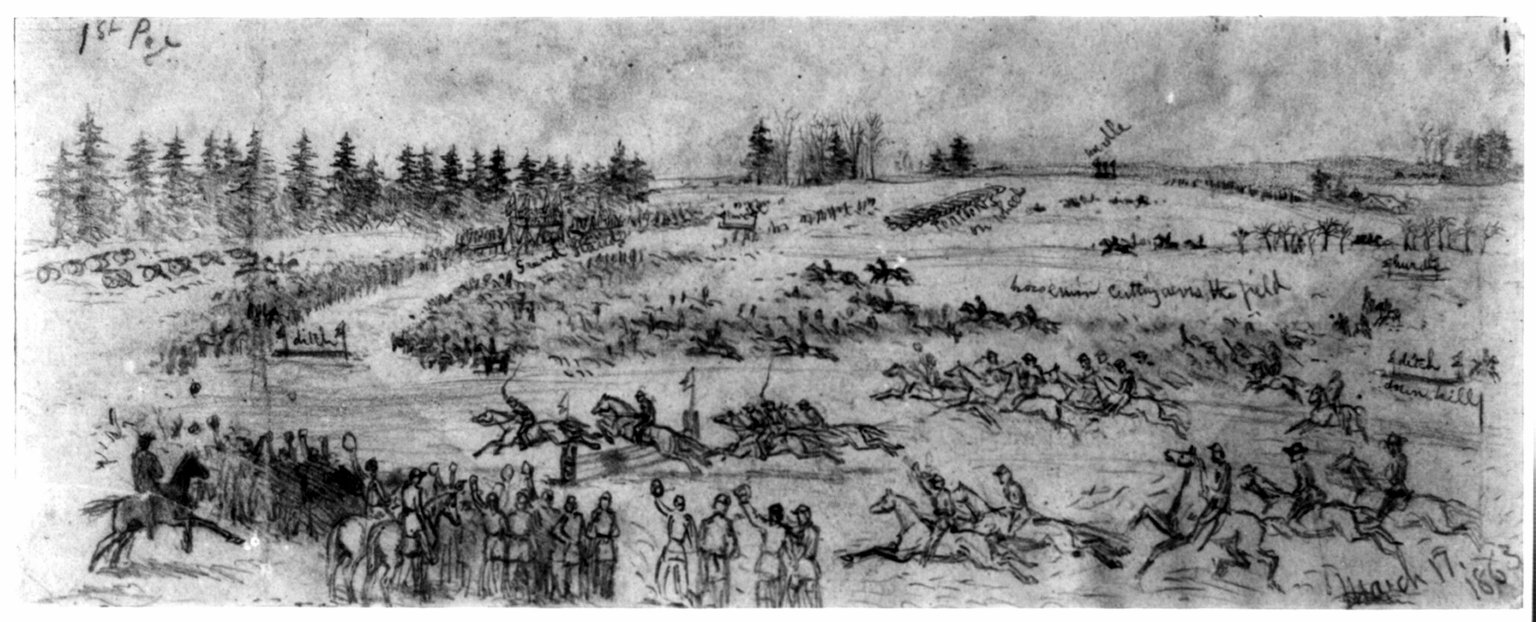
Drinking by itself is not a healthy way to deal with stress. However, the Irish have developed it into an art form full of music, good cheer, and lively conversation. This can be seen by the Saint Patrick’s Day Celebration the Irish soldiers had in 1863. The festivities consisted of athletic competitions, that including a steeple chase with the finest horses in the Brigade, and a liquor requisition that consisted of “eight buckets of champagne, ten gallons of rum, and twenty two of whisky,”. (10)  This break was well earned, as the Irish Brigade was previously involved in some of the hardest fighting the Army of the Potomac had engaged in. This celebration also gave the men a bonding experience, bringing them together in a way that many other regiments did not have. This experience may also have been the difference in the Brigades performance at the Battle of Chancellorsville. Although it was a Confederate victory, it could have been a much bigger blow to the Union. Conyngham writes of the Brigades actions while defending a Federal battery, saying, “Here the remnant of the Irish Brigade for it numbered only about five hundred and twenty men going into action did good service to the Union; for had the rebels seized the battery and turned it upon our army a regular panic might have ensued, for at the same time several regiments on the right and left were giving way.” (11) From this quote one can gather that the Irish Brigade fought as a tenacious unit, brought together through war as well as uniquely Irish celebrations off the battlefield.

St. Patrick's Day in the army--The steeple chase By Edwin,  Forbes Sketched March 17th 1863

St. Patrick’s Day in the army–The steeple chase By Edwin, Forbes Sketched March 17th 1863

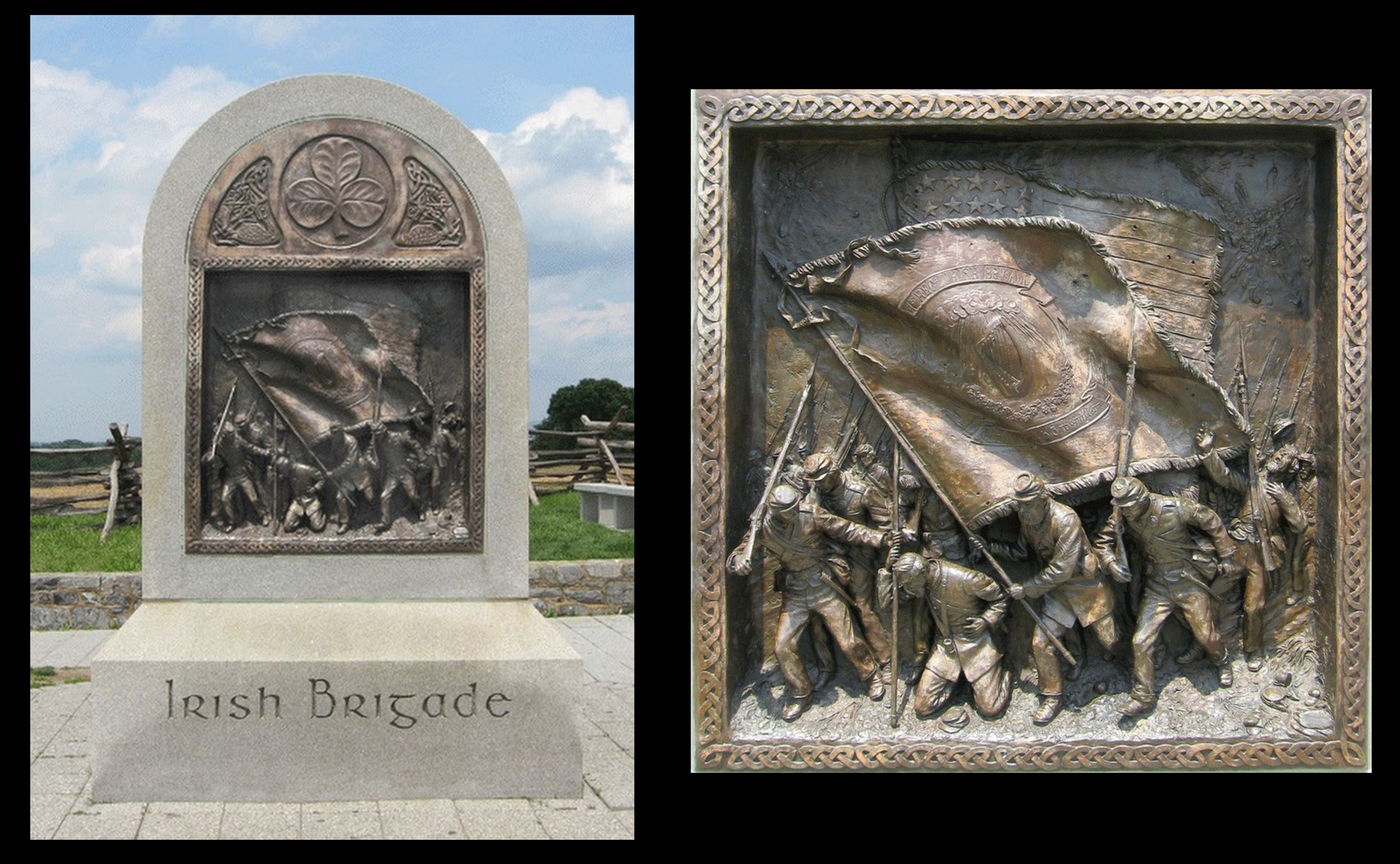
Irish Brigade Monument At

Irish Brigade Monument At Antietam

It is also known that the Irish love a good fight. This can be seen in the fact that a half million Irishmen left their homeland between 1585 and 1818 to fight for France and Spain, these men are known as the “Wild Geese.” (12) Therefore, when the American Civil War broke out, it naturally attracted Irishmen to sign up and enter the row. This fighting spirit transferred to the battlefield as well. An illustration of this can be seen in an account regarding Corporal Jack T. McBride of the 45th Mississippi. During an attack of his position he was slashed in the face by a federal officers sword. Without missing a step, McBride attacked the Yankee and threw him to the ground, pounding upon his head until he had to be physically removed and shackled by other Union officers. McBride taunted every Union soldier he encountered on his was to prison camp. He even challenged a Yankee officer to a boxing match, McBride got knocked out as a result of this challenge. However, throughout this one can see that his fighting Irish spirit never wavered. (13) The essence of the fighting Irish can also be seen during the Battle of Antietam. “The green flag was completely riddled, and it appeared certain death to anyone to bear it, for eight color-bearers had already fallen. The last had fallen, and the Irish green lay trailing in the dust. Meagher cried out ‘Boys, raise the colors, and follow me!’ Captain James McGee, of the Sixty-ninth, rushed forward, and crying, ‘I’ll follow you!’ seized the flag. As he raised it, a bullet cut the standard in two in his hand; and, as he again stooped down, another bullet tore through his cap. Still, he jumped up, waved the flag, shook it at the rebels, and cheered on the troops, almost miraculously escaping.” (14) This charge was successful, as it drove the Confederates back and forced them to retire from the field. The steadfast Irish pugnaciousness had won the day once more.

The American Civil War was a turning point in the history of the Irish American. Their devotion, bravery and sacrifices, both north and south, gave a new dignity and admiration to America’s Irish population. Not only did the Irish became widely accepted and well-respected, they also became a vital part of America. A journalist of the period is quoted as saying, “There are several kinds of power working at the fabric of the American republic water power, steam power and Irish power, the last works hardest of all.” (15) As for why the Irish made such fierce and bold fighters this is due to the four factors mentioned in this work: religion, acceptance, Irish Nationalism, and the Irish culture. It is the combination of all four that set the Irish apart, making them a superior fighting force that any army would be pleased to have on their side. A Confederate commander of an Irish regiment, when asked what ethnic group of soldiers he preferred, said:

“I would have Irish soldiers in preference to any others; and I tell you why. First, they have more dash, more élan than any other troops that I know of; then they are more cheerful and enduring nothing can depress them. Next, they are more cleanly. The Irishman never failed to wash himself and his clothes. Not only were they cheerful, but they were submissive to discipline when once broken in and where they had good officers that was easily done; but once they had confidence in their officers, their attachment to them was unbounded. And confidence was established the moment they saw their general in the fight with them…. They required strict discipline: but they always admitted the justice of their punishment when they believed their commander was impartial; and they never were sullen, or bore malice. There was one great element of strength in these men—they were volunteers, every man of them. Many could have been excused on the ground of their not being American citizens, as not more than one-third of them had a right to vote at the time; but they joined of their own free will—no Irishman was conscripted. I repeat, if I had to take from one to 10,000 men to make a reputation with, I’d take the same men as I had in the war—Irishmen from the city, the levees, the river, the railroads, the canals, or from ditching and fencing on the plantations. They make the finest soldiers that ever shouldered a musket.’ And this was the testimony of one of the fiercest fighters of the war.” (15)

This quote sums up the Irish service in the American Civil War; the general would choose the Irish to fight for the Confederates due to the combination of the four attributes discussed in this work. The Irish fought in every engagement during the American Civil War. Their valor was matched by none and their deeds are still legendary to this day.

Notes;

1) O’Riordan, Tomás. Ireland, 1815-70 : Emancipation, Famine and Religion. (Dublin ;Portland, OR: Four Courts Press, 2011.) 58

2) Gugliotta, Gary. New Estimate Raises Civil War Death Toll. April 2, 2012. http://www.nytimes.com/2012/04/03/science/civil-war-toll-up-by-20-percent-in-new-estimate.html?pagewanted=all&_r=0 (accessed November 24, 2013).

3) O’Riordan, Tomás. Ireland, 1815-70 : Emancipation, Famine and Religion 61

4) Conyngham, The Irish Brigade and It’s Campaigns. 542

5) Collins. Famine to Freedom The Irish in the American Civil War. 211

6) O’Brian. The Irish Americans In the Confederate Army. 28

7) Ibid

8) Ibid, 29

9) Conyngham, The Irish Brigade and It’s Campaigns. 588

10) Ibid, 373

11) Ibid, 400

12) McLaughlin, Mark. The Wild Geese : The Irish brigades of France and Spain. (Oxford, UK : Osprey Publishing, 1980.) 3

13) O’Brian. The Irish Americans In the Confederate Army. 27
14) Conyngham, The Irish Brigade and It’s Campaigns. 305-306

15) O’Brian. The Irish Americans In the Confederate Army. 3

The Brave Soldiers From Erin Why The Irish Fought With Great Success During The American Civil War: Part 3 Irish Nationalism

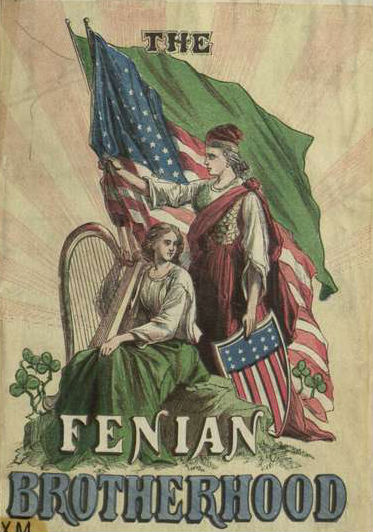
Nationalism by definition is: loving ones country and wanting to be governed by ones own people. During the second part of the nineteenth century, there was an increased progression of nationalistic feeling in Ireland. Due to this feeling there was a rise in physical force revolutionary groups, the largest organized group being the Fenians. Even though the Fenians started out in Ireland, they also established roots in America, by recruiting large numbers of the new Irish immigrant population. This was easily done due to the fact that the new Irish blamed the English for having to leave their homes in the old country. (1) The Fenian movment was at the height of popularity when the American Civil War broke out. So their ranks decided that fighting in this war would boost the movement as well as being great practice for the eventual uprising in Ireland. Even those who had no intention of going back to Ireland felt a connection to the Fenian movement and were swayed by it. Not to mention, many of the commanders of the Irish ethnic regiments were respected Fenians. These commanders were great motivators for the Irish fighting in the war, since many would follow them simply because of their allegiance to Ireland. This unique Irish quality was yet another reason these brave soldiers from Erin were such fierce fighters.

The Fenians' progress (1865), cover.

The Fenians’ progress (1865), cover.

One such commander was John O’Mahony, one of the Fenian movement founders,  O’Mahony was born in Ireland in 1816. In 1848 he took part in the failed Ballingarry rebellion and escaped to France. From there he made his way to the United States in 1854. Upon arrival he joined many groups to advance the cause of Irish freedom, one of which was the 69th New York, where he rose to the rank of colonel. During the American Civil War O’Mahony’s rank was mostly political, as he traveled around the nation speaking about the Fenian cause. However, he had a change of heart and felt fighting would help the Fenians cause even more. Therefore, he founded the Phoenix Brigade. At the time the Brigade was founded it was not endorsed as a State of New York military force. However, it was eventually merged into a formal State of New York militia force, designated as the 99th New York State Militia. This made it an Irish Republican military unit subsidized by an independent state. This unit would soon be activated to fight against the Confederate States. O’Mahoney also planned to use them after the war to invade Canada and strike a blow to the English on foreign soil. (2)

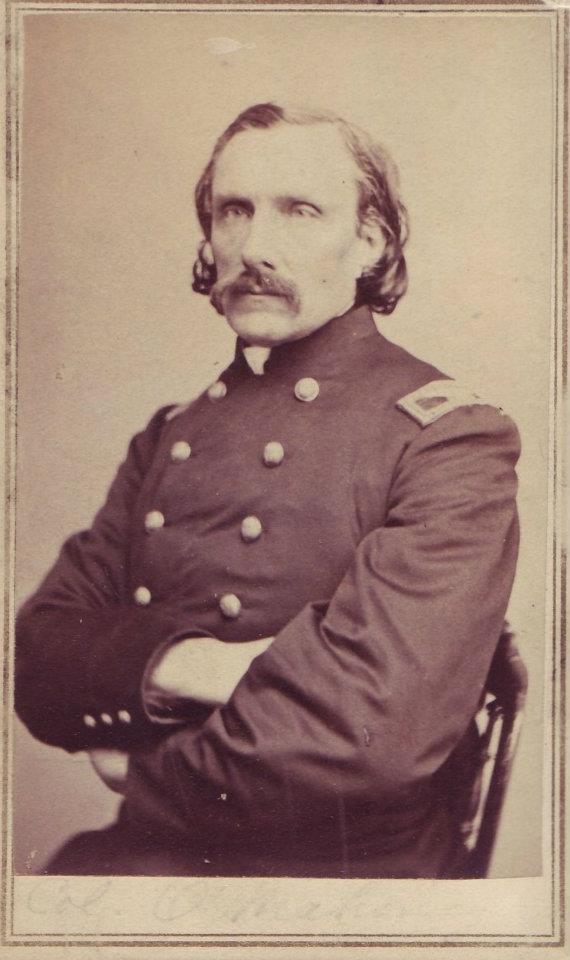
Carte de visite of John Francis O'Mahony; From The Collection of The American Military Heritage Museum Of North Carolina

Carte de visite of John Francis O’Mahony; From The Collection of The American Military Heritage Museum Of North Carolina

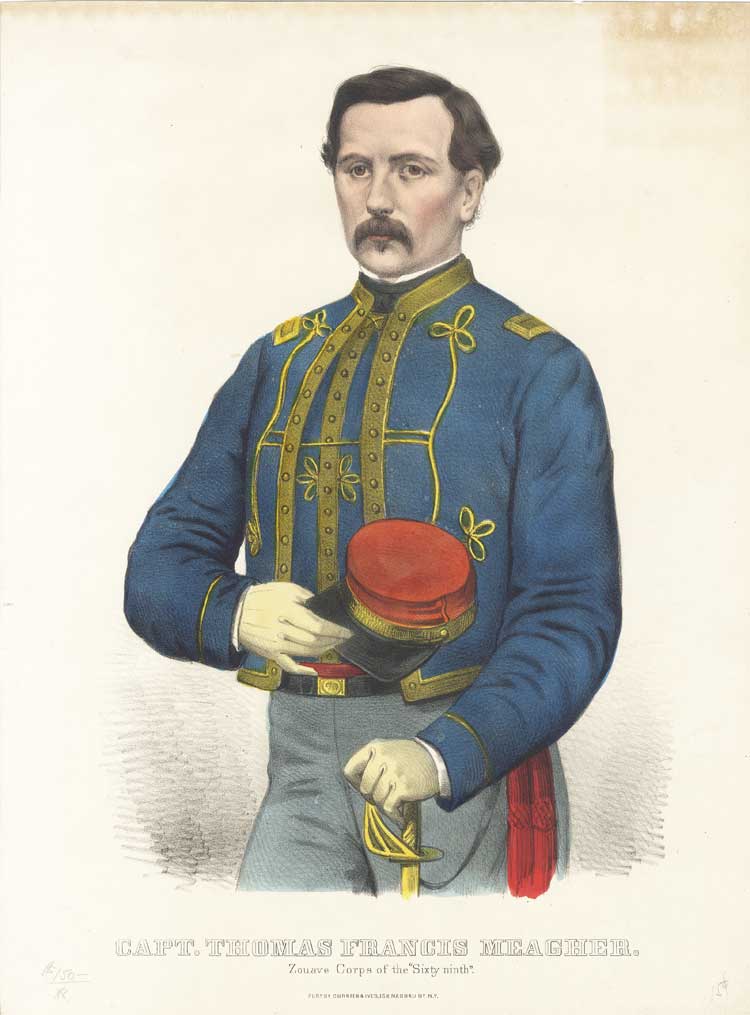
One of the most respected Fenians who inspired the Irish with his ferocious Irish nationalism was Thomas F. Meagher. Meagher succeeded in getting himself into difficulties on both sides of the Atlantic. Born in County Waterford, Ireland and opposed to British rule, he joined the Young Irelanders movement, which was a branch of the Fenians. Meagher quickly rose to a position of power do to his great oratory skills. His most famous speech was the “Sword Speech” given in Dublin on July 28, 1846, (3) this solidified his power and he was given the moniker “Meagher of the Sword.” Meagher’s prestige in the movement made him an ideal candidate for a diplomatic mission to France, which resulted in him bringing back a flag that would eventually become the Irish Tri-Color, the National flag of Ireland today. (4)  Meagher like O’Mahony was involved in the failed uprising of the Young Irelanders at Ballingarry, County Tipperary. He was captured, tried, convicted and sentenced to be exiled to Tasmania. (5) Meagher made a daring escape from his penal colony and landed in America as a hero to the Irish population. He picked up where he left off as an orator for the Irish cause. It was of no surprise that when the American Civil War came about Meagher used his status to raise an Irish Zouave company in 1861 and joined the Union army himself.

1861 Currier Ives entitled Captain. Thomas Francis Meagher. Zouave Corps Of The 'Sixty-Ninth'. Meagher appears in his zouave uniform of the 69th New York Vols

1861 Currier Ives entitled Captain. Thomas Francis Meagher. Zouave Corps Of The ‘Sixty-Ninth’. Meagher appears in his zouave uniform of the 69th New York Vols

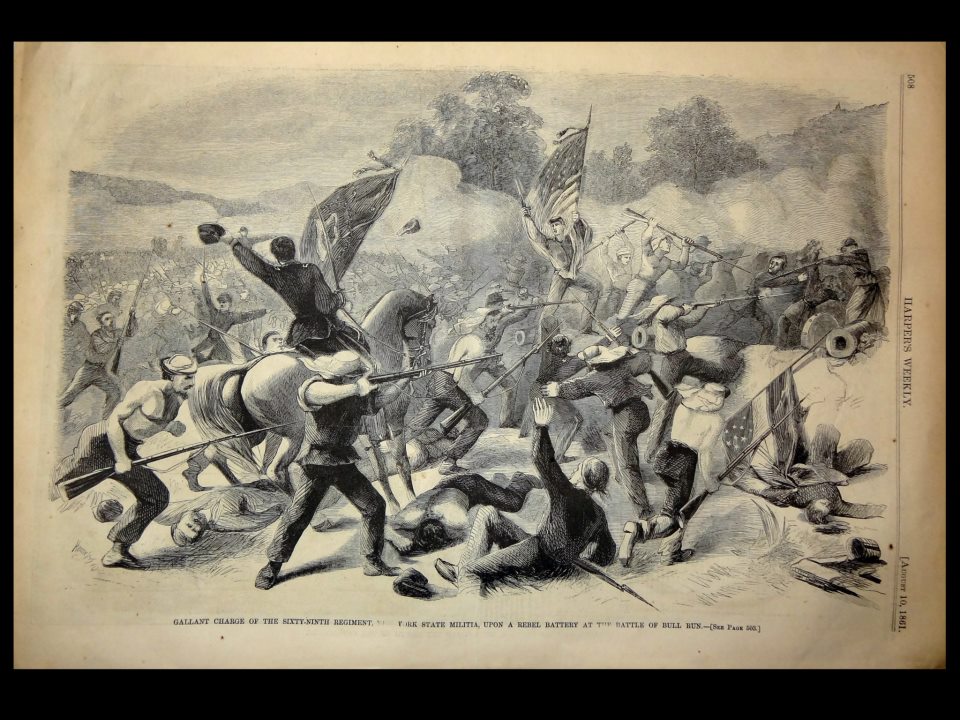
He served as the commanding officer of that company and eventually rose to the rank of Brigadier General in the Irish Brigade. Due to his popularity, gained by his actions back in Ireland, his men would fight hard for him. One example of this was at the Battle of Bull Run. The Brigade moved to the right and initially pushed back the enemy. The Confederate forces, with the timely aid of reinforcements, stopped the advancement of the Irish Brigade and began to move the Union forces back. The Irish of the 69th New York would not go down that easily. They rallied and charged multiple times under heavy artillery fire, only to be stopped. During this portion of the battle, General Meagher had his horse shot out from under him. He immediately jumped up, waved his sword, and exclaimed, “Boys! Look at that flag, remember Ireland and Fontenoy”. (a battle during the War of the Austrian Succession in which the Irish Brigade of France achieved victory against an English adversary) (6) With his nationalist battle cry ringing in their ears, the Brigade made one final push and sustained substantial casualties. One of these casualties was Lieutenant Colonel Haggerty, a native of Ireland, who was styled by Captain Conyngham “as fine a specimen of a Celt as Ireland could produce.” (7) Haggerty was just one of many men who perished valiantly that day. After the battle the Commander of the Union Army, General Irving McDowell, who watched the charge, rode up to the 69th and personally thanked them. Meagher lead the Irish Brigade in every battle up till and including the Battle of Fredericksburg. After this battle a war weary Meagher resigned his commission and was reassigned to other duties. (8)

Gallant Charge of The Sixty Ninth Regiment New York State Militia Upon A Rebel Battery At The Battle of Bull Run. Published in Harper's Weekly August 10th 1861

Gallant Charge of The Sixty Ninth Regiment New York State Militia Upon A Rebel Battery At The Battle of Bull Run. Published in Harper’s Weekly August 10th 1861

Although Meagher’s military service with the Irish Brigade did not last the duration of the war, his leadership and inspiration magnificently guided the Brigade through many of its hardest battles.
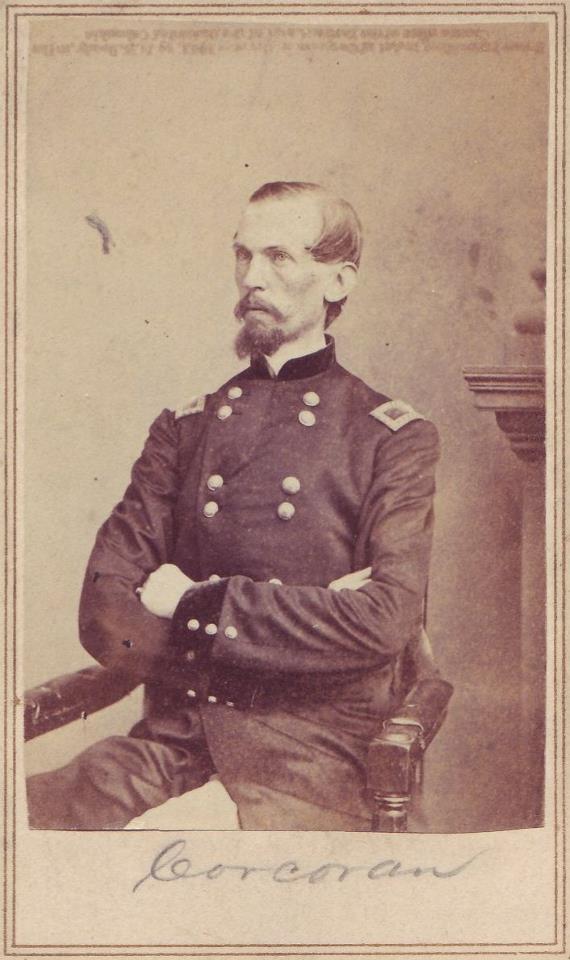
Another Irish Nationalist who had a positive effect on the fighting spirit of the Irish in the American Civil War was Michael Corcoran. Corcoran was born in Carrowkeel, county Sligo Ireland and was a member of the Irish Nationalist Guerrilla force known as the Ribbonman. His ties to this group were eventually discovered in 1849 so he immigrated to New York City in order to avoid capture. (9) To gain a position in society he joined the 69th New York State Militia as a private. This would not last as “his military passion and his previous knowledge of military tactics were a great advantage to him.” (10) Corcoran moved up in rank and became a Colonel. It was in this capacity that Corcoran became a hero to the Irish Nationalist, as well as the overall Irish immigrant population of New York. He chose not to parade his men in front of the Prince of Whales upon his visit, saying that “as an Irishman he could not consistently parade Irish-born citizens in honor of the son of a sovereign, under whose rule Ireland was left a desert and her best sons exiled or banished.” (11) His action resulted in a court-martial. However, it was overturned due to the need of good officers to fight in the Civil War. Corcoran resumed his rank in the 69th New York and was present at that Battle of First Manassas, where he was captured. Corcoran spoke of this later by saying, “I did not surrender until I found myself after having successfully taken my regiment off the field, left with only seven men and surrounded by the enemy.” (12) Corcoran was eventually exchanged over a year later, and was received back with acclaim. He was given the rank of Brigadier General and put in command of his own troops, known as Corcoran’s “Irish Legion.” The first battle of the Legion took place during the Battle of Deserted House Virginia. Although not one of the biggest battles of the war, Corcoran demonstrated calmness under fire and his men showed how they admired Corcoran by following his every commanded under intense battle conditions.

Carte de visite of Michael Corcoran From The Collection of The American Military Heritage Museum Of North Carolina

Carte de visite of Michael Corcoran From The Collection of The American Military Heritage Museum Of North Carolina

(13) Sadly this would be Corcoran’s last major battle as he was killed later that year when he fell from his horse. Even though Corcoran’s life was cut short his legend and the Prince of Wales incident continued to inspire men, especially those of his Legion who were fighting for Uncle Sam as well as Irish pride.
The Union was not the only beneficiary of Irish Nationalist leadership due to the fact that many of the Irish in the south felt the situation in America mirrored the situation in Ireland with Great Britain. They felt an aggressive big government had taken on the smaller independent state, and that was something they could support fighting against, one such leader was  Patrick Ronayne Cleburne. Cleburne was born in the late 1820s to a middle class Irish Protestant family in County Cork, Ireland. He had an ambition to be an apothecary but he failed the entrance exam for the medical school. So for economic reasons he joined the British army even though he believed it to be “a symbol for tyranny.” (14) Cleburne’s time in the army was served in a unit that preformed civil duties in famine stricken Ireland. By 1849 the famine finally caught up to him and his family, so he and his sister immigrated to America. (15) Cleburne eventually settled in Arkansas where he joined many social clubs, including a Militia Company called the Yell Rifles, and was soon elected captain. (16) When the American Civil War broke out Cleburne was in charge of the Yell’s and marched them off to war. Soon his military prowess was noticed by Confederate commander William J. Hardee and he was promoted to Brigade Commander. (17) Cleburne served with distinction, most notably his stand at Ringgold Gap where his 4,000 men held off the superior numbers of General Hooker’s Union troops. (18)

During the battle, Cleburne personally took command of his battery units and waited for the Federal forces to get within a short distance. He kept his men calm till the enemy was in the precise position for their guns to inflict the most damage. Cleburne then shouted, “NOW!! Lieutenant, give it to em!” (19) The canister shot devastated the Union line and drove them back. For this act Commander Cleburne received a Congressional Citation from the Confederate Congress, and earned the nickname “Stonewall of the west.” (20) In November of 1864 Cleburne met his fate during the battle of Franklin, Tennessee. During the battle Cleburne had two horses shot out from under him then continued on foot drew his sword and charged head strong toward the Federal lines. As he urged his men forward and got within paces of the Union breastworks he was shot through the heart. (21)

Major general Patrick Ronayne Cleburne

Major general Patrick Ronayne Cleburne

Cleburne died a hero’s death for his adopted land. However, after reading his words one can easily make the assumption that in his mind he gave his last full measure for Ireland as well. This can be seen in Cleburne’s Proposal to Arm Slaves. In this letter to Confederate commanders he writes, “As between the loss of independence and the loss of slavery, we assume that every patriot will freely give up the latter — give up the negro slave rather than be a slave himself. If we are correct in this assumption it only remains to show how this great national sacrifice is, in all human probabilities, to change the current of success and sweep the invader from our country.” (22) From this quote one can easily infer that Cleburne saw the parallels between the South’s struggle in the American Civil War and Irelands fight against English oppression. He was like other southern Irishmen inspiring to join the war effort with a fervent passion to vanquish their northern aggressors.
The Irishmen who felt the similarities between the south and Irish Nationalist fought with great vigor against the Federals, and stated their desire to subjugate their oppressive foe, when they chose the names for their regiments. A unit in the 1st Missouri Brigade evoked the name of the bold Robert Emmet, and Irish rebel and patriot, when they chose to be called Emmet Guards. (23) The Emmet Guards distinguished themselves at the Battle of Champion Hill, Mississippi. The action of the battle was described as such, “With flags flying and the rebel yell erupting from their mouths. The Missouri Confederates advanced, driving the bluecoats back, recapturing lost batteries, and gaining much ground. Bitter hand to hand fighting swirled over the rough terrain, among the magnolias, deep gullies, and dense woodlands of Champion Hill.” (24) The Irish from Missouri almost split the Union line in two before Federal reinforcements arrived and drove the rebels back. The Irishmen of the Emmet Guards did their namesake proud but suffered heavily for their effort. (25)

Battle of Champion Hill By Kurz & Allison published in 1887

Battle of Champion Hill By Kurz & Allison published in 1887

Another southern battalion born out of Irish Nationalism was part of the 1st Virginia and named the Montgomery Guards, after the Irish born American Revolutionary war hero General Richard Montgomery. (26) Additionally, this unit has another strong tie to Irish patriotism and national pride. William Henry Mitchel, the son of John C. Mitchel Senior, an exiled Irish revolutionary and leader of the Young Irelander movement, served in its ranks. John C. Mitchel instilled the ideas of Irish nationalism into his son and explained how Irelands struggle was almost identical to that of the south. (27) Young William took those ideas into battle with him at Gettysburg. William was elected to be the color barer of the 1st Virginia and led them into what would be forever remembered as Pickett’s Charge. He was severely wounded and about to be escorted to the rear but refused in order to advance the standard of his regiment with a sense of Irish pride. He was struck again and this time the wound was mortal. Upon hearing of the news John C. Mitchel reflected, “He could not have died in better company nor, as I think, in a better cause.” (28) The Irishmen of the 1st Virginia fought that day “not only with pride in the centuries long Irish revolutionary heritage and the legacy of their Irish rebel forefathers but also in the rich traditions of their regiment as well.” (29)
The use of Irish Nationalism proved to be successful motivation for Celtic men on both sides of the American Civil War. It was a source of enthusiasm that other regiments in the conflict did not have. Therefore, one can say this was a uniquely Irish trait, and one that would have made them more powerful on the battlefield.

Notes;

1) Steward, Patrick. The Fenians : Irish Rebellion in the North Atlantic World, 1858-1876. (1st ed. Knoxville: University of Tennessee Press, 2013.) XIII-XIV
2) Webb, Alfred. A compendium of Irish biography: comprising sketches of distinguished Irishmen, and of eminent persons connected with Ireland by office or by their writings. (Dublin: M.H Gill & Son , 1878.) 402
3) Cavanagh, Michael. Memoirs of Gen. Thomas Francis Meagher. 56
4) Cornish, Rory T. Thomas Francis Meagher : the Making of an Irish American. (Dublin ;Portland, OR: Irish Academic Press, 2006) 2
5) Ibid
6) Conyngham, The Irish Brigade and It’s Campaigns 37
7) Ibid
8) Cornish, Rory T. Thomas Francis Meagher : the Making of an Irish American. 154-155
9) Pritchard, Russ A. The Irish Brigade : a Pictorial History of the Famed Civil War Fighters. (Philadelphia, Pa. ;London: Running, 2004.) 10
10) Conyngham, The Irish Brigade and It’s Campaigns , 537
11) Ibid
12) Ibid, 538
13) Shiels, Damian. Irish in the American Civil War Exploring Irish involvement in the American Civil War . March 18, 2012. http://irishamericancivilwar.com/2012/03/18/baptism-of-fire-the-corcoran-legion-at-deserted-house-virginia-30th-january-1863/ (accessed 11 20, 2013).
14) Joslyn, Mauriel. A Meteor Shining Brightly : Essays on the Life and Career of Major General Patrick R. Cleburne. (Macon, Ga.: Mercer University Press, 2000.) 7
15) Ibid, 16
16) Symonds, Craig L. Stonewall of the West : Patrick Cleburne and the Civil War. (Lawrence: University Press of Kansas, 1997.) 45
17) Ibid, 49
18) O’Brian. The Irish Americans In the Confederate Army. 139-140
19) Symonds, Stonewall of the West. 175
20) Ibid, 176
21) Ibid, 209
22) Cleburne, Patrick. Patrick Cleburne’s Proposal to Arm Slaves. 2013. http://www.civilwar.org/education/history/primarysources/patrick-r-cleburne-et-al.html (accessed 11 26, 2013).
23) Tucker, Irish Confederates The Civil Wars Forgotten Soldiers. 67
24) Ibid, 72
25) Ibid, 74-76
26) Ibid, 50
27) Ibid, 90
28) Ibid, 91
29) Ibid, 94

The Brave Soldiers From Erin Why The Irish Fought With Great Success During The American Civil War: Part 2 Fighting for their place in American Society

Searching for potatoes in a stubble field Illustrated London News, December 22, 1849

Searching for potatoes in a stubble field Illustrated London News, December 22, 1849

Ireland in the 1840s was a dreadful place. Many individuals lived on the edge of starvation and in subhuman conditions imposed by their British land lords. They relied on the potato as their main staple of life. Then, in 1845, the great famine occurred, or as the Irish called it “An Gorta Mór.” This blight was caused by the fungus Phytophthoera infestans and by 1852 this food shortage caused over one million people to die, and over two million to travel to North America. (1) Most of these immigrants traveled to America on what were known as “Coffin Ships,” called this due to their poor conditions and likelihood to sink. The passengers were provided with only one barrel of water and disease was rampant. (2) When the Irish immigrants landed in America they did not find the refuge they were seeking, in fact many of them found the opposite to be true.

Riots

The burning of the original St. Michael’s Catholic Church | Engraving from A Full and Complete Account of the Late Awful Riots in Philadelphia, published in 1844 by nativist John B. Perry

The Irish Immigrants not only found poverty and overcrowding to be an issue, but they were also confronted by Americans who supported the nativist movement. A driving force in that movement was The Know Nothing party, founded in 1845, they led the political fight to purify America by removing its immigrants. As this group galvanized their movement the Irish were the prime target because of their high poverty rate, drinking, devotion to Ireland, and Catholic faith. The latter was due the fact that the Know Nothings felt the devotion of the Irish lay with the Pope in Rome and not with the United States. (3) The hatred the Know Nothings felt came to a boil in 1844 in Philadelphia when “Nativists battled Irish immigrants, and two Catholic churches and a Catholic school were burned by mobs. At least 20 people were killed in the mayhem.” (4) There were many more clashes with the Know Nothing party, including August 6, 1855 in Louisville, Kentucky. During an election the Know-nothings tried to take over the polls, resulting in a riot that culminated in the burning of an Irish tenement block and the shooting several Irishmen as they tried to escape the blaze. In all twenty two people lay dead after the night of anti-Irish violence. (5)

By the time the American Civil War came about the Irish felt the need to join the army of their new home, be it north or south. They wanted to gain a foothold in American society as well as to stand their ground and avoid being called cowards. A post war slogan stated, “Although the Celts be hyphenated Americans in name they were one hundred percent Americans in deed.” (6) All of the conflicts with the Know Nothings had the effect of galvanizing the Irish population in the south. This was increased by the idea of secession. The Irish population was more than happy to fight for the cause and prove themselves as true southerners. John McFarland, an Irish immigrant from county Tyrone Ireland that resided in Mississippi, wrote “My affections, my friends, my home are all here and whatever the fortunes of my adopted country mine rises and falls with it.” (7) This quote demonstrates how the typical southerner of Irish decent felt interconnected to their new homeland and wanted to be a worthy participant in its cause. This connection helped drive the Irish of the south to be fervent worriers in battle.

The Battle of Gettysburg was one of many battles that showed how hard the Irish of the south fought in the Civil War. The Battle for “Little Round Top” involved the now famous Union regiment the 20th Maine, commanded by Colonel Joshua Lawrence Chamberlin. One of their adversaries on this day would be Company K of the 15th Alabama, which was described by their commander Colonel William Calvin Oats in the following fashion: “It was an Irish company.” (8)

The 20th Maine & 15th Alabama at Gettysburg by Dale Gallon

The 20th Maine & 15th Alabama at Gettysburg by Dale Gallon

The life blood of this unit was found in Sergeant Patrick O’Conner, a twenty three year old Irish born tinner, who was thought of as the “Hardest fighting and toughest non-commissioned officer of the 15th Alabama.” (9) The 15th Alabama made repeated attempts to take the hill, but were repulsed by the guns of the 20th Maine. Eventually intense hand to hand combat broke out with Sergeant O’Conner yelling for the men to advance into the hail of deadly shot. This advance was not only inspirational to his company but to the whole Confederate line. (10) At one point, a Union soldier attempted to take the colors of the 15th Alabama, when according to Colonel Oats, Sergeant O’Connor “stove his bayonet through the head of the Yankee who fell dead.” (11) This hard fighting and sacrifice for the Confederates, however, was to be for naught. The 15th Alabama could not take the position due to their lack of reinforcements and ammunition. Although this was not a victory for the Irish Alabamians is demonstrates the hard fighting spirit that the Irish Confederate had for their new home, their cause and to become full members of southern society.

There is not a more a fitting place in the Civil War than Fredericksburg to show how the Irish spilled their blood on the soil of their new home. During the battle Irishmen squared off against each other. The men of the Union’s Irish Brigade confronted the 24th Georgia, commanded by Irish born Colonel Robert McMillan. The Union’s Irish mounted a gallant charge against the 24th Georgia and were repelled. (12) When the Confederate Irish from Georgia noticed the green flag of the 28th Massachusetts part of the Union’s Irish Brigade, one member was said to have uttered, “Oh God, what a pity! Here come Meagher’s fellows.” McMillian replied, “Give it to them now, boys! Now’s the time! Give it to them!” (13) The charge of the Union and its Irish Brigade was described by Confederate Artillery Commander William M. Owen in the following manner, “Bearing aloft the green flag with the golden harp of Ireland, those brave fellows came within five-and-twenty paces of the stone-wall and encountered such a fire of shot, shell, canister, and musketry as no command was even known to live through.” (14) The Union’s Irish Brigade was soundly defeated that day on Marye’s Heights. Although the Brigade was not victorious, its gallantry was an inspiration to all that day and woven well into the fabric of American military history.

Clear The Way By Don Troini depicting the 28th Massachusetts at Fredericksburg

Clear The Way By Don Troini depicting the 28th Massachusetts at Fredricksburg

The Battle of Fredericksburg helped show the rest of the country that the Irish were proud American citizens. Color Sergeant Welsh of the 28th Massachusetts part of the Irish Brigade echoes this feeling in a letter home saying, “This is my country as much as the man who was born on the soil and so it is with every man who comes to this country and becomes a citizen this being the case I have as much interest in the maintenance of the government and the laws of the nation as any other man.” (15) This letter was written in February of 1863, a year after Fredericksburg. One can make the inference that Color Sergeant Welsh felt strongly about his citizenship due to the sacrifices he and his fellow Irishman made during the war, especially at Fredericksburg. Union General Thomas Francis Meagher wrote in a letter about the effect that a desire for acceptance had on the men at Fredericksburg.

Brigadier general Thomas Francis Meagher

Brigadier general Thomas Francis Meagher

He felt this battle helped the Irish gain respect amongst natural born American citizens and stated, “In the very heart of the city of Fredericksburg under the fiercest play of shot and shell from the rifle pits and batteries of the enemy the General commanding the Brigade, displayed them (the colors) to the remnant of his command, as the splendid tribute which native-born Americans men of the highest private worth and widely acknowledged civic and social consequence had awarded to the Irish Brigade for the good service it had rendered in the great cause of the Constitution and the Chief-Magistracy of the American Union.” (16)

Irish 9th

Left: Colonel Patrick Robert Guiney Right: The Colors Of The 9th Regiment Massachusetts Volunteer Infantry

One can see just how the idea of being American was high motivation for these men from the Emerald Isle, to fight and fight hard for their adopted land. After the war the idea of nativism was a thing of the past. Colonel Guiney  of the Irish 9th said that the “accomplishments of the Irish regiments wiped away nativist prejudice against the Irish” and then challenged the audience to “go up to the State House and you will find the faded banners of the Ninth Regiment, and so long as they remain there no man will ever be heard to say that the Irish people living in Massachusetts are enemies of the republic.” (17) One can conclude that by being fierce fighters the Irish were able to accomplish their goal of being accepted in American society.

Notes;

1) Collins, J.J. Famine to Freedom The Irish in the American Civil War. (CreateSpace Independent Publishing Platform, 2011.) 28
2) Ibid, 28
3) Cal ,McCarthy. Green, Blue, and Grey : the Irish in the American Civil War. (Ireland: Collins Press, 2009.) 13
4) The Know-Nothing Party Opposed Immigration to America Secret Societies Emerged as Political Players in the 1850s By Robert McNamara; retrieved from http://history1800s.about.com/od/immigration/a/knownothing01.htm accessed on 09-11-2014
5) O’Brian. The Irish Americans In the Confederate Army. 18
6) Conyngham, The Irish Brigade and It’s Campaigns , XV.
7) Ibid, 19
8) Tucker, Phillip Thomas Irish Confederates The Civil Wars Forgotten Soldiers (Abilene Tx: McWhiney Foundation Press, 2006.) 78
9) Ibid, 80-81
10) Ibid, 85
11) Ibid
12) Undaunted Courage The Irish At Fredericksburg,” The Wildgeese.com, accessed January 01, 2012, http://www.thewildgeese.com/Pages/fredpt2.html.
13) Ibid
14) Tucker, Irish Confederates The Civil Wars Forgotten Soldiers. 62
15) Welsh, Irish Green and Union Blue, 65
16) Cavanagh, Michael. Memoirs of Gen, Thomas Francis Meagher, 533
17) Guiney, Patrick R. Commanding Boston’s Irish Ninth : the Civil War Letters of Colonel Patrick R. Guiney, Ninth Massachusetts Volunteer Infantry. (New York: Fordham University Press, 1998.) 252