Captain Joseph Brown Connally: A True All American

On my recent stop in Atlanta, I took a trip over to Oakland Cemetery. Initially established as Atlanta Cemetery in 1850 and renamed Oakland Cemetery in 1872, this landmark is a hidden treasure located near the heart of Downtown Atlanta. Historic Oakland Cemetery is rich in history, and stories. One such story is that of Captain Joseph Brown Connally.

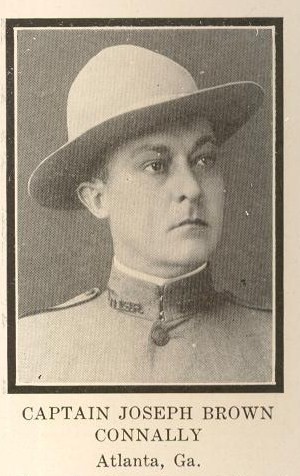
Photo from The Atlanta Constitution

He was born in Atlanta Georgia on December 17th, 1875. His Parents were Dr. Elisha Connally, and Mary Virginia Brown. Captain Connally’s maternal grandfather was former Georgia Governor Joseph Emerson Brown. Young J.B Connally would attend the finest schools before being accepted to The University of Georgia. He would graduate from there and become an Insurance Clerk, eventually Connally would help form the first car insurance agency in Atlanta.[1] Connally would enlist in the army during America’s first call for volunteers.[2] He would receive his officers training at Fort McPherson and be commissioned into the 82nd Division. Capt. Connally was assigned to the 325th Infantry on September 2nd 1917[3], then sent to Camp Gordon to train his men. Capt. Connally was put in charge of 325th’s supply company. He and his men left for Europe aboard the S.S. Karmala on April 18th, 1918.[4] 

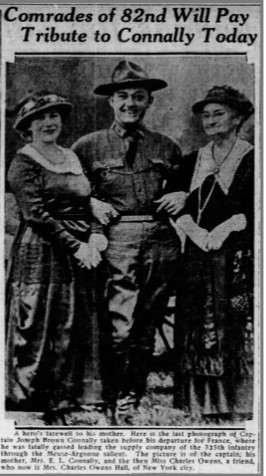
Last photo of Capt. Connally. His mother is on the right and his friend Miss, Charles Owens is on his left. Photo from: The Atlanta Constitution, September 27, 1930.

They were sent to the Toul sector, then became engaged during the Battle of Saint-Mihiel, and The Meuse–Argonne offensive. On October 10th, 1918, during the Meuse–Argonne offensive, Capt. Connally was hit with gas. An article in the Atlantic Constitution describes the scene of his gassing, “Far above the noise of battle are heard the groans of the wounded and the wails of the dying. Over the outstretched forms of many of their comrades the 325th pushes on. When the smoke clears away Joe Brown Connally is one of those on the ground his lungs filled with deadly Poisonous gas.”[5] One of his men stated that “Captain Connally should have two medals of honor.” [6] He then reported that Capt. Connally could barely stand and kept directing and calming his men while refusing medical treatment. It was reported that Connally said when urged to go to the hospital “My boys need me: if I go there will be no one to take care of them and if I leave here before we are relieved it will be to my own funeral.” [7] Capt. Connally would be sent to a field hospital to convalesce before heading stateside aboard the S.S. Sierra on May 9th, 1919.[8]

Sadly Connally would not ever recover fully from the gas attack. He would die on August 26th, 1920, at Lawson General Hospital. His cause of death was listed as “valvular heart disease with mitral insufficiency “[9]secondary to the lasting effects of the gas.

Funeral of Capt. Connally at Second Baptist Church. Photo From: The Atlanta Constitution, September 27th 1930.

In 1922 the Connally family established the “Joe Brown Connally Scholarship in Georgia History, this scholarship is still awarded to this day.  Plaques honor Capt. Connally at Georgia Baptist Hospital, The University of George, and The Capital City Club.

At the Capital City Club plaque dedication, a friend said of Capt. Connally “As for his life at this club, it was he who showed us that the Volstead act could not kill the joy of the club, He showed Us that the roses on women’s cheeks bloom just as red after the act as before it, and taught us that Coca-Cola has a spice and can supplant champagne and that there is not really so great a gulf from Budweiser to Bevo.

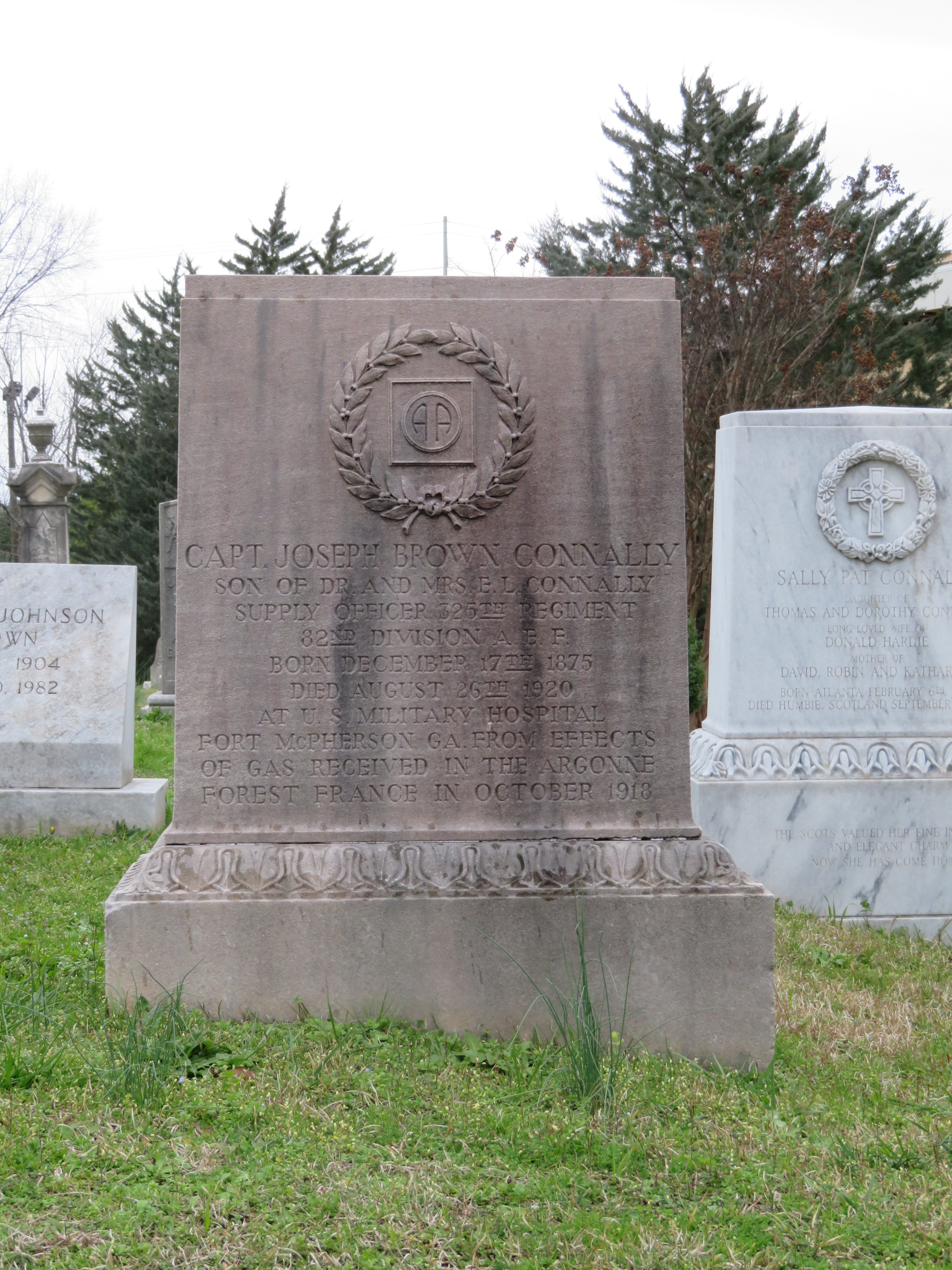
Grave of Captain Joseph Brown Connally at Oakland Cemetery. Photo Credit: @firefightinirish.

Those who knew him could never forget him and the great spirit he possessed. He was a prince of good fellows, and for cheer, unselfishness, and courage he had no superior.”[10]  Let us never forget Capt. Connally’s sacrifice, he truly was an All American…


[1] Galloway, Tammy Harden. The Inman Family: an Atlanta Family from Reconstruction to World War I. Macon, Ga: Mercer Univ. Press, 2002. Pg. 66-67

[2] “Tablet Unveiled To Honor Memory Of Capt. Connally.” The Atlanta Constitution, November 12, 1921.

[3] “Georgia, World War I Service Cards, 1917-1919 for Joseph Brown Connally.” Ancestry.com. Accessed February 29, 2020. https://tinyurl.com/qqjaun8.

[4] “Page 149 US Army WWI Transport Service, Passenger Lists.” Fold3. Accessed February 29, 2020. https://www.fold3.com/image/604138259.

[5] “Smile of Fallen Warrior Not Forgotten by Soldier Companions Who Fought Beside Him .” The Atlanta Constitution, September 27, 1930.

[6] “Captain Connally Given High Praise By Fellow Officer.” The Atlanta Constitution, December 8th, 1930.

[7] Ibid.

[8] “Page 434 US Army WWI Transport Service, Passenger Lists.” Fold3. Accessed February 29, 2020. https://www.fold3.com/image/604339436.

[9] “Georgia, Deaths Index, 1914-1940 for Joseph B. Connally.” Ancestry. Accessed February 29, 2020. https://tinyurl.com/rh7a6xb.

[10] “Tablet Unveiled To Honor Memory Of Capt. Connally.” The Atlanta Constitution, November 12, 1921.

An American Flyer in Greensboro North Carolina: The Story of First Lieutenant Collier Carlton Olive.

I recently took a trip to Green Hill cemetery in Greensboro North Carolina. Here I discovered the final resting place of First Lieutenant Collier Carlton Olive. He was born in Mount Airy North Carolina to Johnson and Margrett Olive on June 6th, 1893. He was of medium height and build, with blue eyes and brown hair[1].  Collier graduated from Greensboro High School before attending Mars Hill Academy. He later entered Wake Forest University as Junior. While attending Wake Forest Collier wrote humorous articles for the Greensboro Daily News.

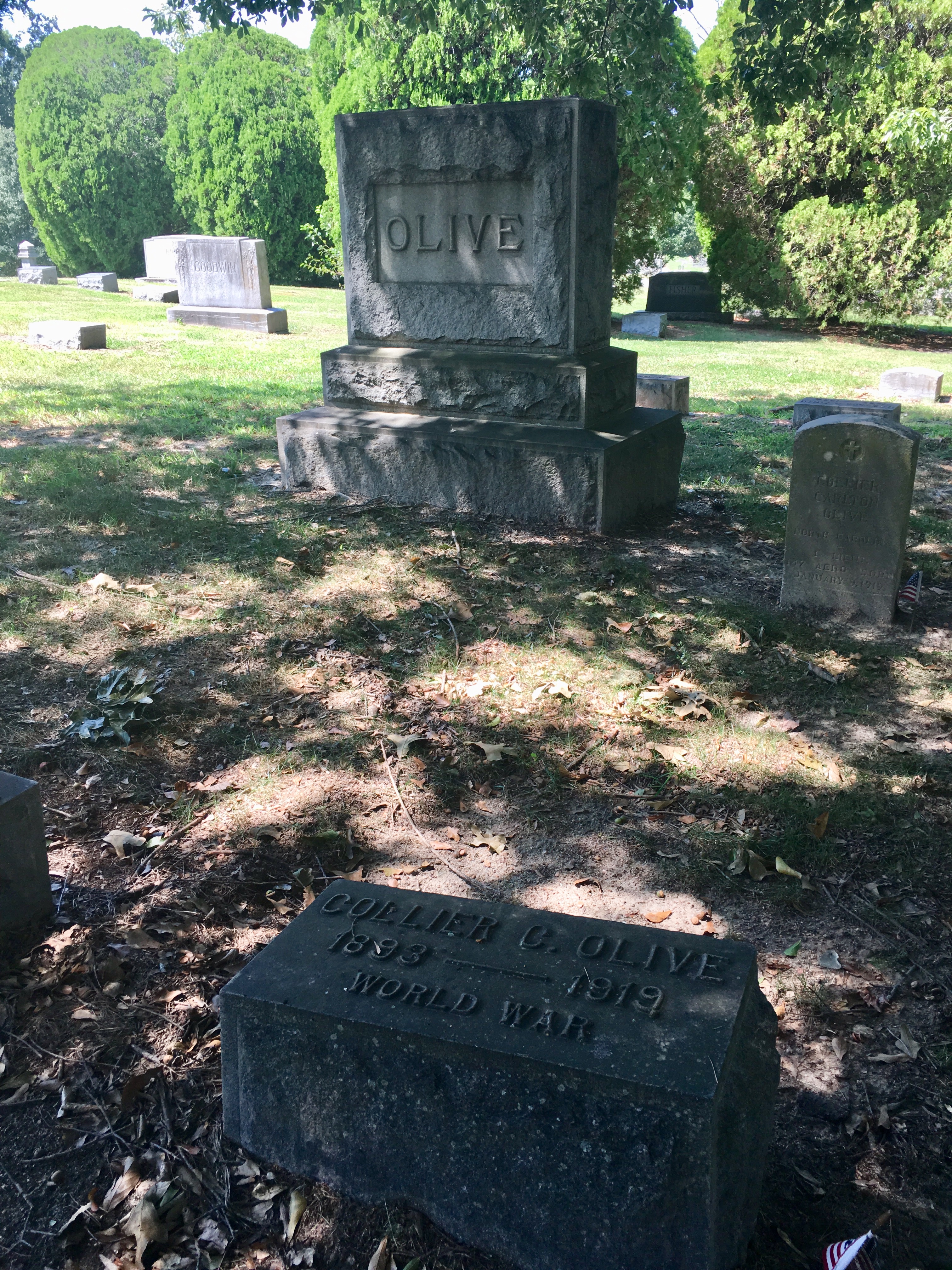
Grave of First Lieutenant Collier Carlton Olive. At Green Hill cemetery Greensboro North Carolina. Photo By @firefightinirish

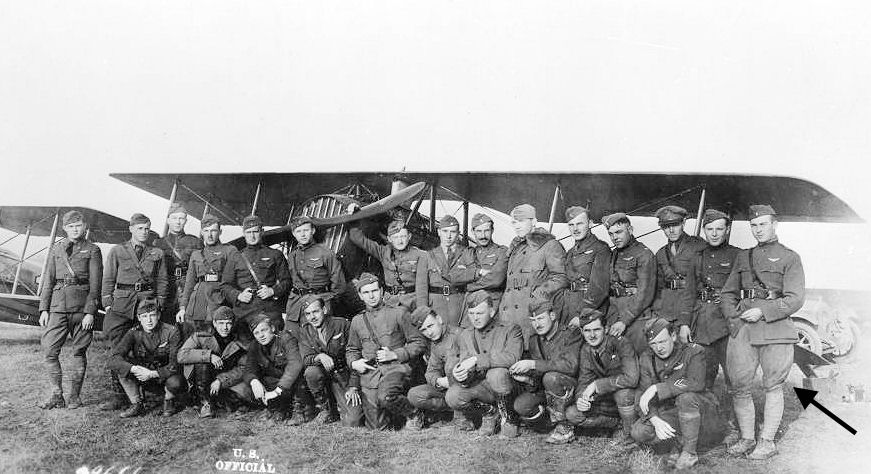
After graduating with honors, he would work as a journalist, and later be employed with Vick Chemical Company in their advertising department. With the First World War on the horizon Collier enlisted as a cadet at the officers’ training school Fort Oglethorpe Georgia, in May 1917.  During the time in OCS he applied for and was accepted into the aviation service. Collier was sent to ground school at the Georgia School of Technology and completed his course in the fall of 1917.[2]  He would set sail for Europe as an aviation cadet aboard the S.S. Kroonland on November 2nd, 1917.[3] Collier would earn his wings and commission in the 147th Aero Squadron on May 23rd 1918.[4] The 147th was assigned as a Day Pursuit (Fighter) Squadron as part of the 1st Pursuit Group, First United States Army. Its objective was to engage and clear enemy aircraft from the skies. As well as provide escort to reconnaissance and bombardment squadrons over enemy territory.

Photo of the 147th Aero Squadron group photo with a SPAD XIII. Likely taken at Rembercourt Aerodrome, France, November 1917. First Lieutenant Collier Carlton Olive is on the extreme right highlighted with an arrow. Photo provided by the Air Service, United States Army – Air Service, United States Army photograph.

The 147th also targeted enemy observation balloons, performed close air support, and tactical bombing attacks of enemy forces along the front lines.[5]  First Lieutenant Collier Carlton Olive participated in operations in the Toul Sector, Marne Sector, as well as Saint Mihiel. In a letter home dated December 22nd, 1918, he spoke of being wounded before the armistice and that he was suffering from influenza but was discharged from the hospital and feeling better. Sadly, Collier must have taken a turn for the worse as he would die of Pneumonia in Issoudun France on January 9th, 1919.[6] His body was sent home aboard the U.S.S Pocahontas on October 18th, 1920.[7] Colliers remains would arrive in Greensboro at 0645 on November 13th, he was interred at Green Hill cemetery at 1400 hrs. The services were conducted by Rev. J. Clyde Turner and were only attended by immediate family.[8]  Let us never forget this young man and his sacrifice to make the world safe for democracy.


[1] “U.S., World War I Draft Registration Cards, 1917-1918 for Rufus Eldrige Garrett.” Ancestry. Accessed September 12, 2019. https://www.ancestry.com/.

[2] “Lieut. Collier Olive Succumbs To Pneumonia.” Greensboro Daily News. January 30, 1919.

[3] “U.S., Army Transport Service, Passenger Lists, 1910-1939 for Collier C Olive” Ancestry. Accessed September 12, 2019. https://www.ancestry.com/.

[4] “Collier Olive Comissioned.” Greensboro Daily News. July 12, 1918.

[5]  Maurer, Maurer (1978), The US Air Service in World War I, The Office of Air Force History, Headquarters USAF Washington

[6] “Lieut. Collier Olive Succumbs To Pneumonia.” Greensboro Daily News. January 30, 1919.

[7] “U.S., Army Transport Service, Passenger Lists, 1910-1939 for Collier C Olive” Ancestry. Accessed September 12, 2019. https://www.ancestry.com/.

[8] “Body Of Lieut. Olive Buried In Green Hill.” Greensboro Daily News. November 14, 1920.

John J. “Black Jack” Pershing: the Man that Made the World Safe for Democracy


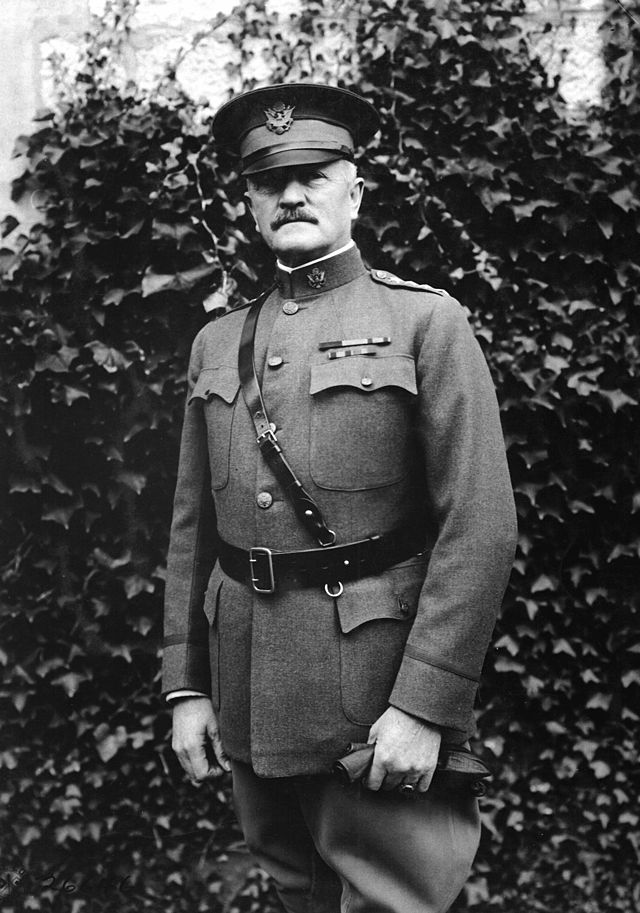
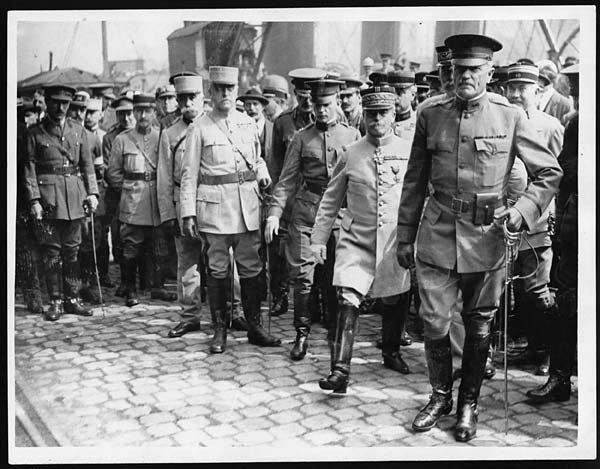
Pershing at General Headquarters in Chaumont, France, October 1918

Pershing at General Headquarters in Chaumont, France, October 1918

On April 6, 1917 the United States entered into World War One; a war that had been raging on in Europe for three years already. America sent two million men overseas under the command of Major General John J. Pershing. Even though Pershing had some battle experience that made him a qualified commander, he was not the Army’s first choice. With the sudden death of General Frederick Funston, Pershing was chosen to lead the men into war. Pershing would soon show the world he was actually the right choice due to his skills as a leader, statesman and military tactical expert.

Pershing was born on September 13, 1860 in Laclede, Missouri and experienced war at an early age. By 1861 the Civil War had consumed the United States. The town of Laclede was constantly harassed by Southern Raiders who attacked local businesses. One of these businesses was owned by Perishing’s father. On June 18, 1863 a young Pershing accompanied his father to the store that morning and at four in the afternoon they were sacked by Raiders. Perishing’s father locked the safe and grabbed young John and his shotgun as they fled the store; this was the

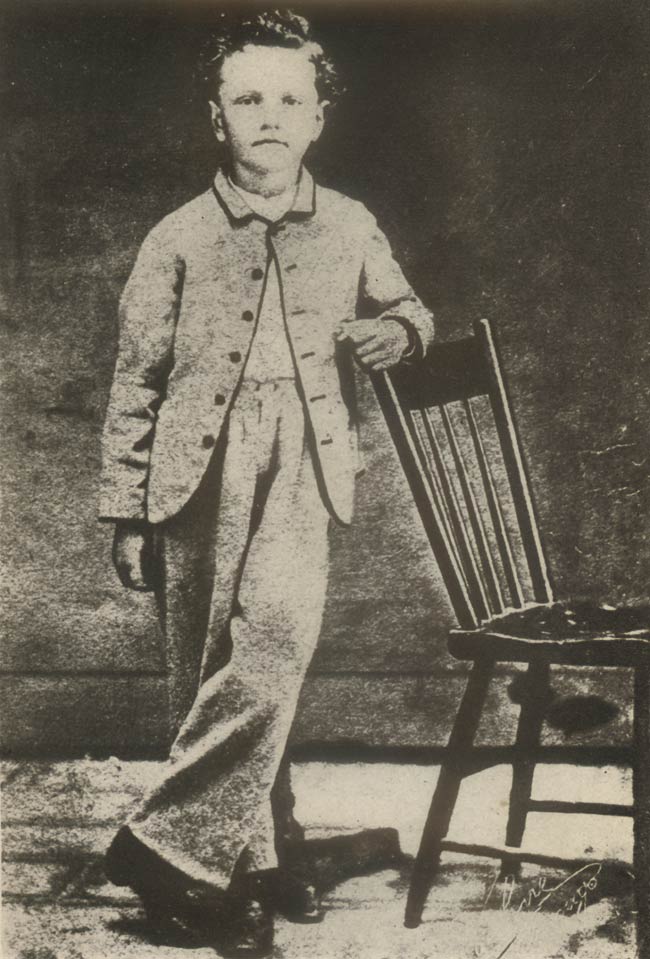
Young Pershing

Young Pershing

General’s first taste of war.[1] Although no one in the family was hurt, the raiders took $3,000 and the lives of several of the towns citizens before a train full of Union Soldiers came to their rescue.[2]

After working a series of jobs with varied success Pershing saw an opportunity to better himself by attending West Point. After a rough testing process Pershing was admitted in 1882. [3] It was during his time at West Point that Pershing first established himself as a leader and was made Captain of the Corps of Cadets. It was during this role that he established his policy on discipline. Pershing stated “If the men of that class have a high regard for discipline and frown upon unbecoming behavior, the other classes follow the example; if there is a laxity in the First Class, or if they are complaining or carless in dress, such faults are reflected in the classes below.” [4] In 1886 Pershing graduated West Point, although not the top of his class academically. His actions as Captain set him apart from the rest of his class and made him a rising star in the United States Army. It was due to his class standing that Pershing was given the opportunity to select his assignment. Seeking glory and adventure, the twenty-six year old Pershing chose the cavalry.

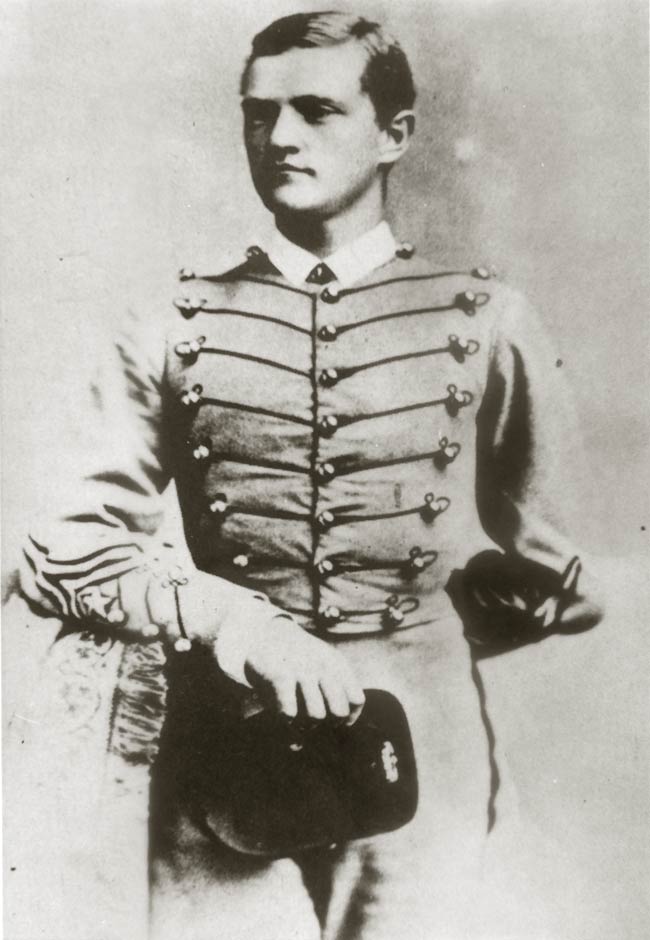
Cadet Pershing at West Point

Cadet Pershing at West Point

The next few years were a time of growth and development for Pershing. Pershing first official assignment was at Fort Bayard in New Mexico as part of a unit that was trying to fight the last of the Apache Indian Tribe in the southwest. Pershing was out on many patrols but never had an opportunity to engage any members of the tribe. Over the next few years Pershing moved from post to post and learned how to lead men in harsh conditions, mostly climate related situations than actual combat. Pershing soon grew tired of roaming the plains and decided to apply for the position of Commander of Cadets at the University of Nebraska. This was a job Pershing excelled at. In just a few years he turned a floundering program into the winners of the National Drill Competition. After his term at the University of Nebraska Pershing was assigned to the Tenth Cavalry; an African American unit of the now famous Buffalo Soldiers.

It was with the Tenth Calvary that Pershing’s life and career would make a drastic shift. Pershing took his command of the Tenth Cavalry very earnestly and during this time of racial tension Pershing found his new job challenging. He soon discovered though that if he gave his men the respect they deserved, they would perform their tasks with extreme diligence. Lieutenant Perishing led the Tenth in rounding up Cree Indians. This was not an easy task as he had to forge through the mountains and his men were fighting outs of small pox. Due to his success Pershing caught the eye of the Commander of the Army, General Nelson Miles. This is when Perishing’s military career began to take off. He was assigned to General Miles staff and from there became an assistant instructor at West Point.

During his time as an instructor at West Point Pershing drove his cadets hard. Biographer Gene Smith state in his book on Pershing that “To his charges he seemed a heartless martinet, rigid, unforgiving, always ready to pounce on the slightest departure from perfect performance, someone seeming ever ready indeed anxious to mark down demerits.” [5] As a result of his hard driving attitude and Perishing’s association with the Tenth Cavalry the cadets nicknamed him “Nigger Jack.” [6] This name would later become Black Jack in public media. His now famous moniker was at first a term of derision and disrespect.

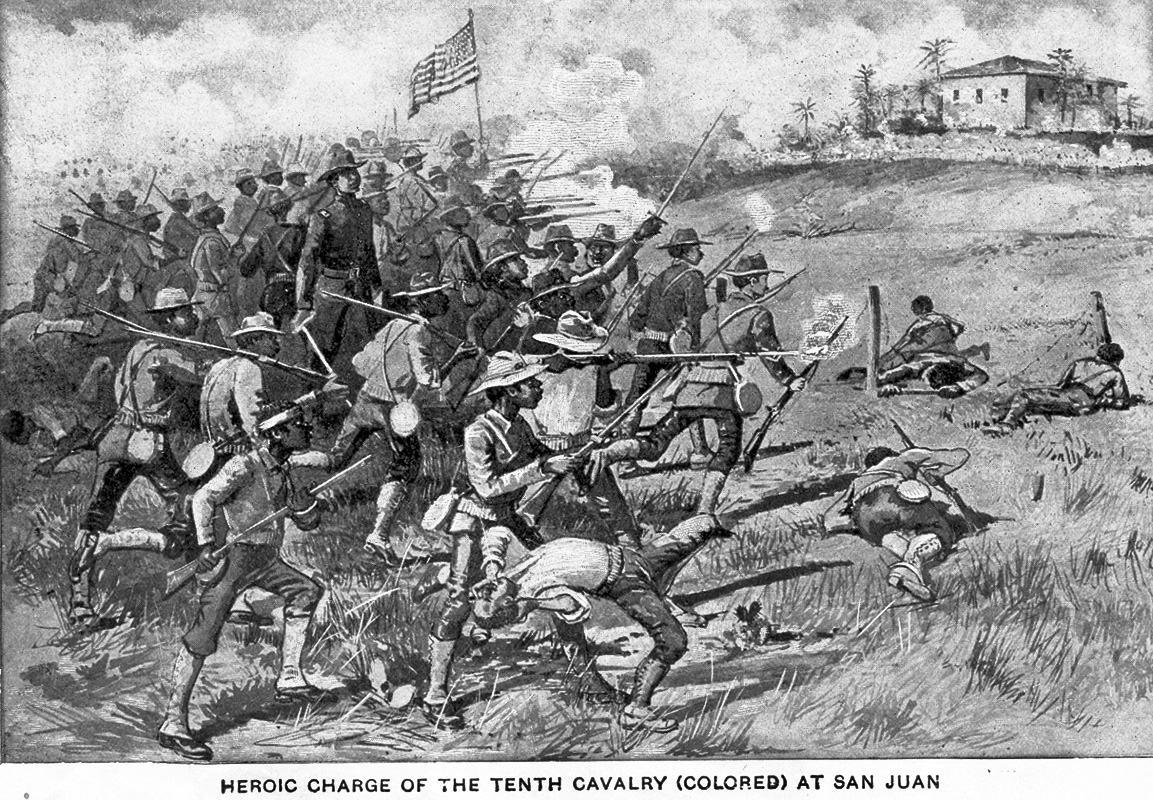
10-cav-san-juanPershing finally got to put his leadership skills into play during combat when the Spanish American War broke out in 1898. Pershing was not enjoying his teaching role and wanted to help on the front lines. The only problem was that he was not allowed to be called into the field due to a military decree that prevented instructors at West Point from doing so. Pershing had to call in every favor he had owed to him and stated he would take any post. Due to his connections, Pershing was finally allowed to leave West Point and was reassigned to the Tenth Cavalry as their captain. Pershing and the Tenth arrived in Cuba ready to fight. Unfortunately for Pershing he did not see any action when the war began. Instead, he was being assigned to various missions, such as picking up Cuban insurgents to help the American cause. Perishing’s first taste of hostile combat came during the Battle of San Juan Hill when the poorly equipped Tenth marched through the most harsh and unforgiving terrain only to be met by the heavily armed and entrenched Spanish. Pershing called it “A veritable hail of shot and shell”. [7] The Americans were out gunned since their weapons were no match for the Spanish. The Tenth took heavy fire and casualties. At one point one of the squadrons from the Tenth got separated from the rest of the unit, so Pershing set out to find them in the midst of the fight. Pershing ran across General Joseph Wheeler just as a shell exploded between the two of them. This incident made an impression on Pershing as he then decided that a fighting general should always be at the front. [8] Another thing that made a lasting impression on Pershing was the courage of the black troops. Pershing later wrote in a memo, “We officers of the Tenth Cavalry could have taken our black heroes in our arms.”[9]

The years following the Spanish American War contained a combination of combat, office work and personal tragedy. Pershing was assigned to a series of desk jobs in Washington DC before being sent to the Philippines in 1889. While there he used military tact and diplomacy to help settle a dispute between the United States and the local tribe. Pershing was again assigned back to Washington and held a desk job for several years. In 1914, he was sent to El Paso, Texas to lead troops for a possible excursion into Mexico. Pershing decided to leave his wife and children behind; a decision he would regret the rest of his life. In 1915 the Pershing house burned down killing his wife and three daughters, the only survivor was his son.[10] This forever changed Pershing. The once vibrant and sometimes even jovial man turned into a cold and withdrawn soul saddled with grief.

On March 14, 1916 Pershing got the orders to go into Mexico for the purpose of hunting down Poncho Villa. Villa had been raiding American

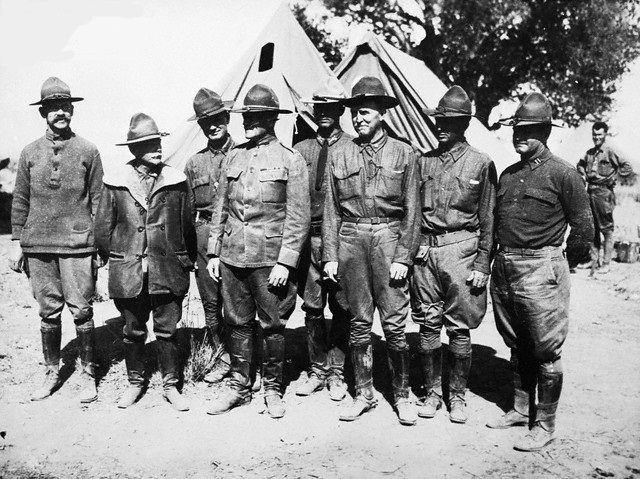
Pershing and staff in Mexico, Pershing 4th from left. Pershings aide, Capt George S. Patton 5th from left.

Pershing and staff in Mexico, Pershing 4th from left. Pershings aide, Capt George S. Patton 5th from left.

towns along the Mexican border and his men were murdering American citizens and stealing their positions. The Mexican expedition proved to be a failure overall as Villa was never captured. However, for Pershing it became a great proving ground as it tested his skills of leadership over such a force and its supply lines. This expedition also proved to be America’s first use of mechanized warfare. By exhibiting this force Pershing saw its potential for future wars. It was also on this expedition that Pershing met a young and eager lieutenant named George S. Patton. Pershing saw a lot of himself in the young officer and soon took him under his wing, which would later be beneficial during World War One.

In 1917 when the United States finally felt they had no choice but to enter the war that was happing in Europe, Pershing was station at Fort Sam Houston in Texas. In the preceding years the United States was desperately trying to stay out of the war that was embroiling Europe. However, after the sinking of the RMS Lusitania as sea, which killed one hundred and twenty eight Americans,[11] and the Publication of the Zimmerman Telegram, in which Germany promised American territory to Mexico, the U.S. entered the war. Pershing was fearful he would be passed over for a command to be a part of the action. He wrote the Secretary of War, Newton Baker, saying “My life has been spent as a soldier, much of it on campaign, so that I am now fully prepared for the duties of this hour.” [12] His plea worked as Pershing was assigned to command the first division in France. However, no decision was made on who would command the entire American Expeditionary Force (AEF). This decision was up to Baker; whom had eliminated candidates due to health reasons and age. Eventually he was left with two individuals: General Leonard Wood and Pershing. Pershing was finally selected due to the fact that he had led a large force before and Wood lacked discretion when speaking in public.

Major General Pershing now had the overwhelming task of putting together an army that was in shambles. Due to years of isolationism the United States Army was nothing but a paper tiger, full of outdated weapons and only a handful of soldiers. After Pershing selected his staff he set off to Europe with the AEF. They had only 550 guns, which was enough ammunition to last through a nine hour firefight, and 55 airplanes, most of which were outdated.[13] During the trip over to Europe Pershing had a staff meeting in which it was decided that 1,000,000 American soldiers were needed to win the war.[14] Pershing arrived in Great Britain to much fan fair and was the highlighted guest at many parties and political gatherings. However, this was not Perishing’s idea of war. He knew that there was work to be done and resented the public spectacle.

During the next few months Pershing was overworked and kept long hours trying to get his men ready for combat. Fourteen thousand young men mustered in front of Pershing on the June 26, 1917 the first of the American forces arrived. The General was unimpressed as he found them to be undisciplined and unkempt. Pershing was also disappointed in the commanders of the First Division, so in order to better fit his ideals he made some changes in the command structure. By October 1917 Perishing felt they were ready to be rotated into the fight.[15] Unfortunately, the Germans learned of the green American troops being transferred and launched an attack first. Although this attack was large in scale and a defeat for the Allies, the American casualties were light with only three Americans killed. When Pershing heard the news he openly wept. [16]

General Pershing In France Leading the American Expeditionary Force (AEF)

General Pershing In France Leading the American Expeditionary Force (AEF)

As the American entered the war it was a devastating time for the Allies. The Allies were losing men by the thousands and America had not yet raised the number of troops to be effective. During their early months of involvement, Pershing only had 175,000 men in Europe, mostly in non-combat related jobs.[17] With the losses suffered by the other Allied forces, France and Britain called for the amalgamation of all forces and to use the American forces as replacements in other units. Pershing was dead set against this idea because he felt it would demoralize the American troops. He also felt distrust for the foreign commanders and feeling did not want American blood spilled because of their incompetence. By the end of 1917 Pershing was still working on the logistics of gathering his force and was playing politics with the French, British and the United States War Department. The American forces still had not seen much action on the front.

It took till the summer of 1918 before Pershing felt comfortable enough with his numbers to issue an order creating the American First Army. This army was then sent into the fray at St. Mihiel, France and prepared for battle. At this time French Marshal Ferdinand Foch made one more push for the amalgamation of French and American forces. Perishing angrily replied, “Here on the very day that you turn over a sector the American army and almost on the eve of an offensive you ask me to reduce my operation so you can take away several of my divisions and assigning them to the French… This virtually destroys the American army that we have been trying for so long.” [18] Foch left the office angered and the issue was dropped for the last time.

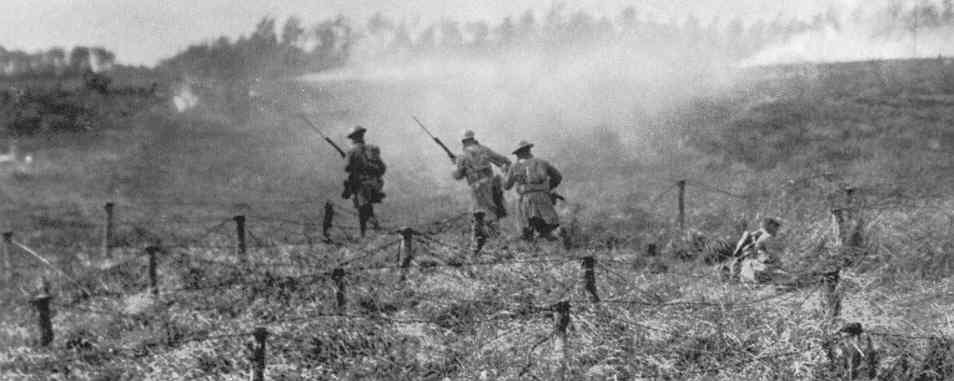
During the fall of 1918 the United States army finally entered into the action. Their first major combat action was when they went into the battle

American charge against the St.-Mihiel salient (one doughboy has just taken a hit from German fire)

American charge against the St.-Mihiel salient
(one doughboy has just taken a hit from German fire)

of St. Mihiel. The American forces started off with an artillery barrage and then set forth with a push that went further than their objectives expected them too. The American force took 16,000 prisoners and 450 enemy guns.[19] This was the first major victory for the AEF. This success allowed Pershing to authorize what would be known as the Meuse-Argonne Offensive. Pershing wrote, “Our dogged offensive was wearing down the enemy, who continued desperately to throw his best troops against us, thus weakening his line in front of ours Allies and making their advance less difficult,” when discussing this American success.[20] This push eventually resulted in the depletion of German forces and by the 8th of November Pershing received word that the hostilities would be ending soon. Finally on the 11th of November, 1918 the war ended with the signing of the Treaty of Versailles. This Allied victory was set in motion due to the AEF and Perishing’s leadership.

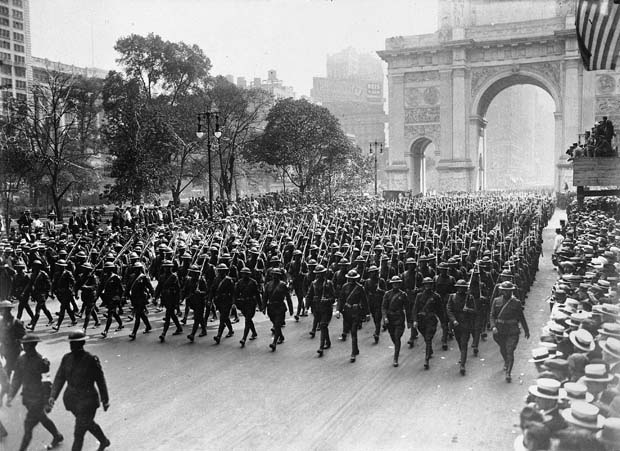
eterans of World War I parade down 5th Avenue in New York City on Sept. 10, 1919. The parade was held to honor General John J. Pershing and an estimated 25,000 soldiers from the American Expeditionary Force, almost one year after the official end to the war.

eterans of World War I parade down 5th Avenue in New York City on Sept. 10, 1919. The parade was held to honor General John J. Pershing and an estimated 25,000 soldiers from the American Expeditionary Force, almost one year after the official end to the war.

Pershing returned home to a hero’s welcome. Parades were held in Philadelphia and New York in which Pershing faced cheering crowds and adoring children. At one point a little girl handed him some flowers and Pershing broke down; one would only assume it was due to the loss of his own daughters. After that all visits with children had to be screened. Pershing was elevated to Army Chief of Staff before retiring in 1924 because of his age. The Cleveland Plain Dealer wrote about the loss of Pershing to the Army and said “His retirement is a loss to the country; and there is no doubt that when the public becomes acquainted with the circumstances of his retirement, especially the sharp reduction in his pay, it will demand tardy justice for him. Pershing has never stooped to the more obvious devices to obtain popularity; and this fact has strengthened his hold on the country.” [21] After retiring, Pershing gave speeches from time to time; but mostly kept to himself and what was left of his family. Over the years his appearances grew less and less as the General got weaker and finally passed quietly in his sleep in 1948. General Pershing

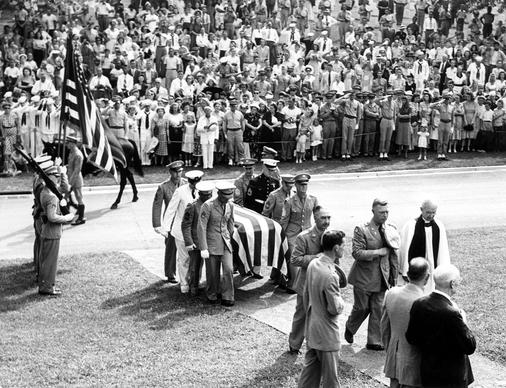
Carrying the casket of General John J. Pershing to the gravesite at Arlington National Cemetery

Carrying the casket of General John J. Pershing to the gravesite at Arlington National Cemetery

made a lasting impact on those he commanded and befriended over the years. Nothing compared though to the impact the death of his wife and children left on Pershing. Their deaths turned Perishing into the cold, calculated leader that crafted an army and won the First World War


Bibliography

Delgado, James P. Silent Killers: Submarines and Underwater Warfare. Osprey Publishing, 2011.

Lacey, Jim. Pershing. New York: Palgrave Macmillan, 2008.

Palmer, Frederick. John J. Pershing General of th Armies. Harrisburg: The Military Service Publishing Company, 1948.

Perry, John. Pershing Commander of The Great War. Nashville: Thomas Nelson , 2011.

Pershing, John J. My Experienced in the First World War. New York: Da Capo Press, 1931.

Smith, Gene. Until The Last Trumpet Sounds The Life of General of The Armies John J. Pershing. New York: John Wiley & Sons, Inc., 1998.

Times, The Army. The Yanks Are Coming. New York: G.P. Putnam’s Sons, 1960.

Vandiver, Frank E. Black Jack The Life and Times of John J. Pershing. College Station : Texas A&M University Press, 1977.

Weir, William. The Encyclopeda of African American Military History. Prometheus Books: Amherst, 2004.


[1] Lacey, Pg. 7

[2] Lacey, Pg. 8

[3] Lacey, Pg. 10

[4] Vandiver, Pg. 41

[5] Smith, Pg. 48

[6] Smith, Pg. 49

[7] Perry, Pg. 41

[8] Perry, Pg. 42

[9] Weir, Pg. 231

[10] Palmer, Pg. 67

[11] Delgado, Pg. 150

[12] Lacey, Pg. 88

[13] Times, Pg. 59

[14] Vandiver, Pg., 700

[15] Lacey, Pg. 127

[16] Lacey, Pg. 128

[17] Lacey, Pg. 130

[18] Lacey, Pg. 152

[19] Pershing, Pg. 270

[20] Times, Pg. 118

[21] Times, Pg.159

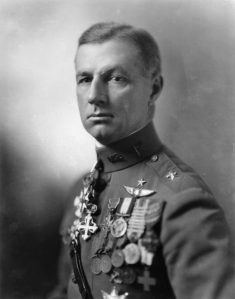
Brigadier General William “Billy” Mitchell A Hero Ahead Of His Time

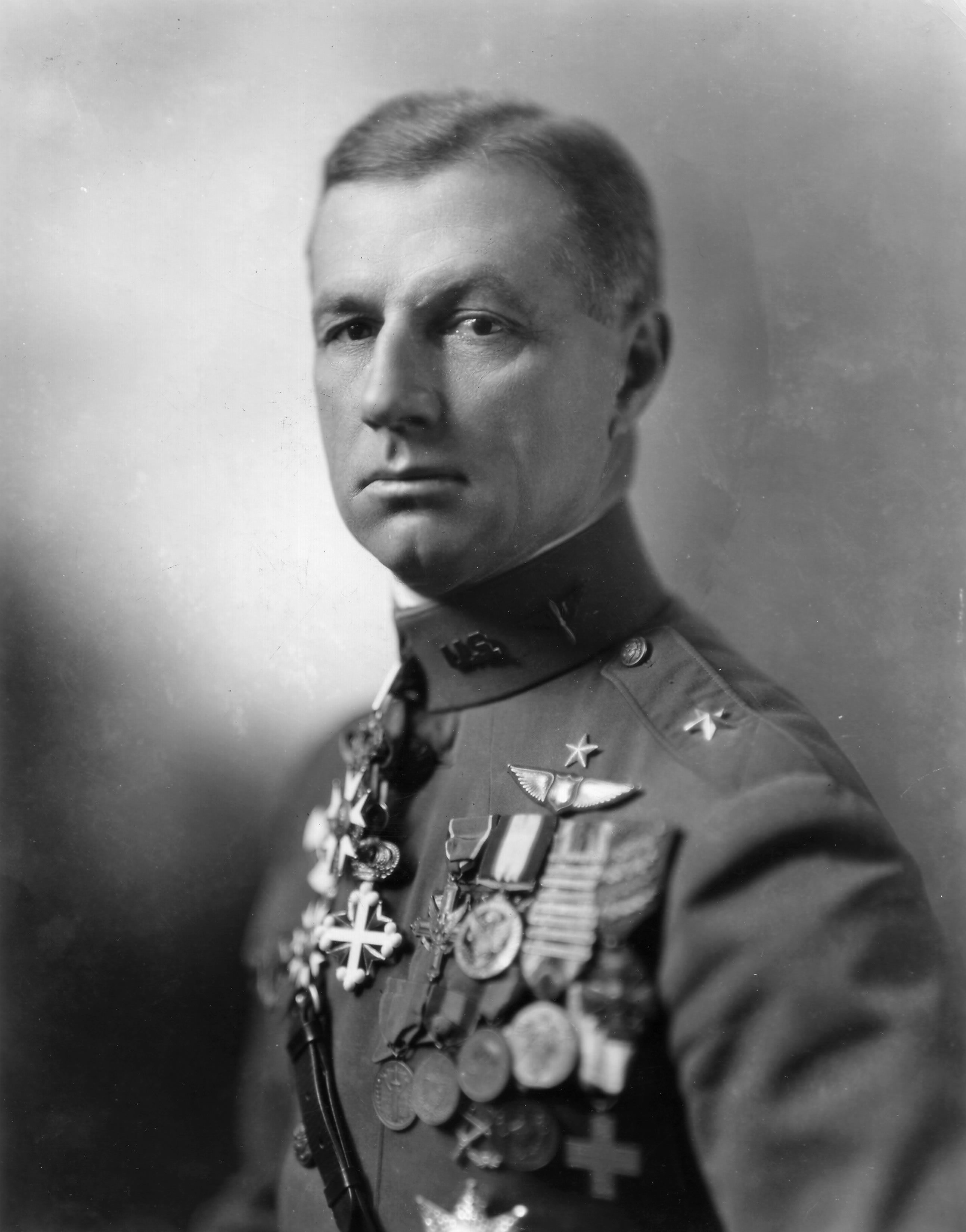
Brigadier General Billy Mitchell, United States Army Air Service

Brigadier General Billy Mitchell, United States Army Air Service

Brigadier General William “Billy” Mitchell was a born leader and a military visionary. He made numerous contributions to the United States and its use of air power. Even though his career ended in disgrace, Brigadier General Billy Mitchell’s ideas were ahead of his time. Mitchell personally saw the power of the air force in World War I. Stating, in 1918, “The day has passed when armies on the ground or navies on the sea can be the arbiter of a nation’s destiny in war. The main power of defense and the power of initiative against an enemy has passed to the air.” (1) Mitchell would spend the rest of his military career trying to prove this statement true by conducting tests and writing theory’s that are still used to this day.

William “Billy “Mitchell was born December 29th 1879 into a family of wealth and privilege. This gave him the advantage of a good education, as well as giving him opportunities not afforded to the average individual. These opportunities included travel. As a child, Mitchell’s father, 1st lieutenant John L. Mitchell who fought with the 24th Wisconsin Infantry Regiment during the American Civil War, would take young Billy to Waterloo and other battle sites around the world. There Billy was told of the gallant deeds and heroism that took place at these battle sites. Mitchell’s sister Ruth stated, “Willie could see the old battles going on as if they were unfolding before his eyes.” (2) In 1898 the United States was on the verge of conflict in Cuba. It was at this time, based on his background, that a youthful Billy Mitchell would sign up for service seeking adventure, thus beginning his twenty-eight year military career.
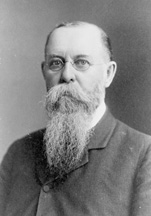
Billie Mitchell's Father John L. Mitchel

Billie Mitchell’s Father John L. Mitchel

Mitchell was sent to Florida with the First Wisconsin Volunteers. Within a week he made the rank of Second Lieutenant, becoming the youngest officer in service at just eighteen years of age. (3) During this campaign, Mitchell did not see any action. This frustrated him, he remarked to his father, “Here I have been since the war without any foreign service to speak of and have not been in any engagements as of yet. How would you have felt in the Civil War if you had been out of the way somewhere?” (4) In 1899 there was an insurrection in the Philippines and on November 1st of that year, Mitchell arrived there under the command of General Arthur Macarthur to help put down the insurgency. This would give Billy his wish to see combat and he did so as a member of the Signal Corps. It was the job of the Signal Corps to travel with the infantry and sometimes ahead of them to lay down wires to establish telegraph communications. This put Mitchell in the thick of the fighting. He related one particularly dangerous operation in Mabalang to his sister Ruth saying, “I got our line into the rebel trenches ahead of the troops. The insurrectionists ran, blowing up a big railroad bridge. We had a pretty good scrap there. As they retreated along the railroad track they were not more 300 yards away from us in columns of fours; but there was not a single company of our troops insight of them. I thought I could bring somebody down with my pistol, they looked so near, but I had to use my carbine.” (5) By the end of the Philippine insurrection Mitchell’s signalmen had broken up several rebel bands and captured seventy insurgent flags, furthermore Mitchell was promoted to the rank of Captain for his efforts. (6)
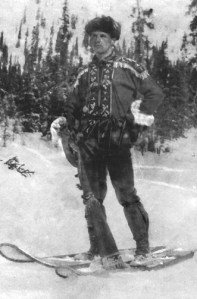
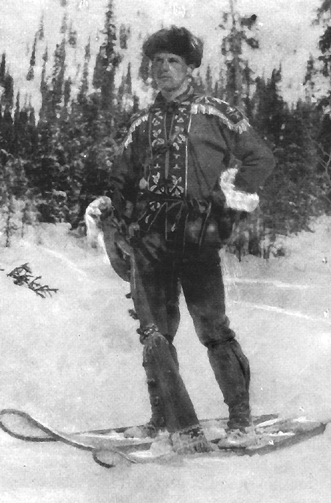
Mitchell in Alaska with the Signal Corps

Mitchell in Alaska with the Signal Corps

Mitchell decided to make the Army his career and spent time in Alaska with the Signal Corps engineering communications between isolated outposts and the United States as well as Canada, again with much success. After this he was assigned to Fort Leavenworth known back then as the “intellectual center of the army.” (7) It was there in 1906 that Mitchell first discovered the importance that the air would play in future warfare. He introduced his findings in a presentation given to the Signal Corps School entitled “The Signal Corps with Divisional Cavalry and Notes on Wireless Telegraphy, Searchlights and Military Ballooning.” (8) In this presentation, Mitchell spoke of dirigibles saying they may “Cruise at will over a battlefield, carrying messages out of a besieged fortress or sail alone above a beleaguered place, immune from the action of men on the earth’s surface.” (9) In the same article, Mitchell went on to say, “By towing another balloon, loaded with explosives, several hundred pounds of guncotton could be dropped from the balloon which it is towing in the midst of an enemy’s fortifications.” (10) These ideas were groundbreaking. As the awareness in the use of air combat was in its infancy, Mitchell saw its potential by concluding his work with this statement. “Conflicts, no doubt, will be carried on in the future in the air” (11)
Mitchell took a staff position in Washington DC where he stayed in till 1916 when due to his frustration at the lack of promotion and a desire to see field service he joined the Armies Aviation Squadron. In this capacity, Mitchell was promoted to Major and assigned to bolster military aviation training. He took part in the training getting fifteen hours of flight time while taking thirty-six flights. (12) Although Mitchell did not earn his wings with this training, he was considered one of America’s top aviation experts. It was due to this fact that on March 19th 1917 then Lieutenant Colonel Mitchell was sent to France as an aeronautical observer. By the time he arrived, the United States had declared war on Germany beginning American involvement in the First World War.

While Mitchell was in France, he was amazed to see the advancements the French had made in military aircraft. He remarked, “I had been able to flounder around with the animated kites that we called airplanes in the United States, but when I laid my hand to the greyhounds of the air they had in Europe, which went twice as fast as ours, it was an entirely different matter.” (13) It was this experience that started to display to Mitchell the full potential of modern air power. He immediately petitioned the United States Army to manufacture or purchase these new advanced aircraft, but he was rebuffed on multiple occasions making Mitchell most frustrated. Another experience that opened Mitchell’s eyes was when he was caught in an air raid noticing “…another series of strong explosions, then the machine gun and anti-aircraft fire. The whole town was, of course, in darkness and everyone had taken to the vaces or vaulted wine cellars inside of houses.” (14) This had a profound effect on Mitchell as he now could see the effect of air power on the morale of the enemy, as well as the reach that such power can have as to make a quick strike from a distance in a short amount of time. An additional event that facilitated Mitchell understanding about the future of air power was a reconnaissance flight that he took with a French pilot over the German lines. Mitchell wrote that he could gain a better picture of the troop formations by air then on the ground. He said, “A very significant thing to me was that we could cross the lines of these contending armies in a few minutes in our airplane, whereas the armies had been locked in the struggle, immovable, powerless to advance for three years…” (15) The combination of these revelations made Mitchell even more fervent in his requests for more support from the United States Army to strengthen and improve their air capabilities. He was looked at by those in Washington as someone of little value when it came to his grasp of aviation, where as he was considered an expert in France. Mitchell would later use his relationship with French premier Alexandre Ribot to coax him to send a message to Washington DC restating Mitchell’s plan, under the guise that it was Ribot’s, requesting twenty thousand planes and forty thousand mechanics. These numbers were much more than the United States could spare, however it awoke the bureaucrats in the American capital and started the process that would eventually lead to a massive aerial force three times the size of the French. (16)

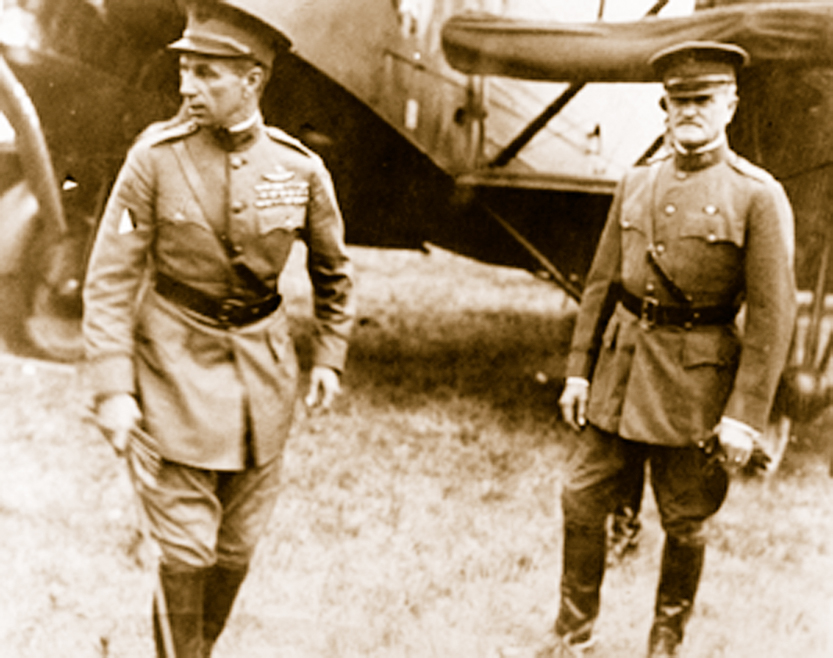
Although this was a victory for Mitchell, his problems with getting the United States aviation capabilities up to date were just starting. The arrival of General John “Black Jack” Pershing added a whole new set of challenges for Mitchell, who felt, “General Pershing himself thought aviation was full of dynamite and pussyfooted just when we needed the most action.” (17) These two strong characters, Mitchell and Pershing, would have many heated discussions on the role of air power and who would command it. Mitchell was tired of having to go through
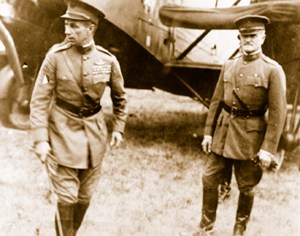
Billy Mitchell and General Pershing

Billy Mitchell and General Pershing

Washington for all of his requests and wanted one man to be the head of aviation, where Pershing did not see the need for this, feeling that aviation was just a whim. The discussions got so heated between the two that Pershing threatened to send Mitchell back to the states. Mitchell however was not intimidated and became unrelenting in this matter. So as to not have to make due on his threat, Pershing seeing the value of Mitchell, appointed Major General William Kenly as Chief of the Air Service in the fall of 1917 in order to calm Mitchell down and to keep peace. (18)
At this time, Mitchell was known as a bit of a highflier, racing around in his Mercedes and entertaining several up and coming flyers and dignitaries. On one occasion, Mitchell’s Mercedes broke down on a small French road when an Army driver stopped to help him. The driver ended up being able to fix the car due to the fact that he was a racing driver back in America. The driver wanted to be in the Air Service and Mitchell helped make that happen. The driver’s name was Eddie Rickenbacker, America’s first Ace Flyer and one of Mitchell’s greatest contributions to the Air Service. (19)

However, Mitchell’s life was still not all parties and leisure. There was still plenty of work to be done and arguments to be made. A new advisory rose to challenge Mitchell in the form of American Brigadier General Benny Foulois, who was put in command of the United States Air Service. Foulois was an experienced aviator who had no time for Mitchell’s brashness saying Mitchell had an “extremely childish attitude”, and was “mentally unfit for further field service”. (20) This posed yet another issue for Pershing who again saw the value of Mitchell not only as a tactician but also as a liaison to the French. So in order to mediate the situation, Pershing sent Mitchell to the front, and made him commander of all aviation forces there. This was where Mitchell shined the most.
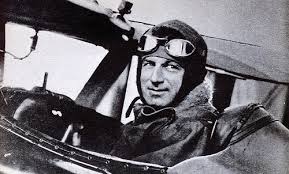
Mitchell about to fly an air mission during the First World War

Mitchell about to fly an air mission during the First World War

Mitchell, much like his friend future General George S. Patton Jr., always led from the front and in Mitchell’s case this meant flying missions. One such mission took place when the French and American Armies were being squeezed by the Germans in an attempt to out flank them and head into Paris. A plan was devised to use a combined British and American squadron to patrol the sky. Straightaway, Mitchell saw only disaster for this proposal and made a counter suggestion to fly a reconnaissance mission. This offer was accepted and Mitchell decided to fly the mission himself. He took off after a quick few hours of sleep and headed toward the enemy. Mitchell discovered thousands of Germans marching in columns towards a series of bridges. He quickly turned his aircraft in the direction of the closet allied air field touched down and found the commander spreading the word to start an aerial attack on the bridges. A secondary aerial attack on the German supply base at Fere-en-Tardenois was also suggested by Mitchel and approved by command. Mitchell’s vision saw that this plan, if successful, would turn the German Army around and trap them, thus destroying any chance they had for victory. (21) The action that took place was intense and resulted in the first allied success in the air. Although this success was limited, it started to turn the tide of the war. For his brave reconnaissance flight, Mitchell was awarded the Distinguished Service Cross. (22)

Mitchell’s next large scale maneuver was the largest aerial operation of the war consisting of fifteen hundred aircraft, this assault was known as the St. Mihiel offensive. Between September 12th and 16th , the Americans where in total command of the air making thirty three hundred flights into enemy territory racking up four thousand hours of flight time firing thirty thousand rounds of ammunition, making more than one thousand separate bomb attacks using seventy five tons of munitions. This operation resulted in the destruction of sixty enemy planes and twelve enemy balloons, all of this during bad weather. (23)

The First World War established the career of Billy Mitchell; he entered France as a Lieutenant Colonel and was now leaving a Brigadier General with a reputation for having extraordinary leadership and being perhaps the most experienced airmen in the service of the United States Army. On November 11th 1919, the armistice ending the First World War was signed. Before returning to the United States, Mitchell went to London to discuss air strategy with the Chief of the British Air Staff, General Hugh Trenchard. The focus of this discussion was on air independence, concentrating on the theory that the aviation wing of the Army should be a separate service all together. Mitchell was a propionate of this theory and after the talks upon his return to the United States it became one of his major goals. (24)

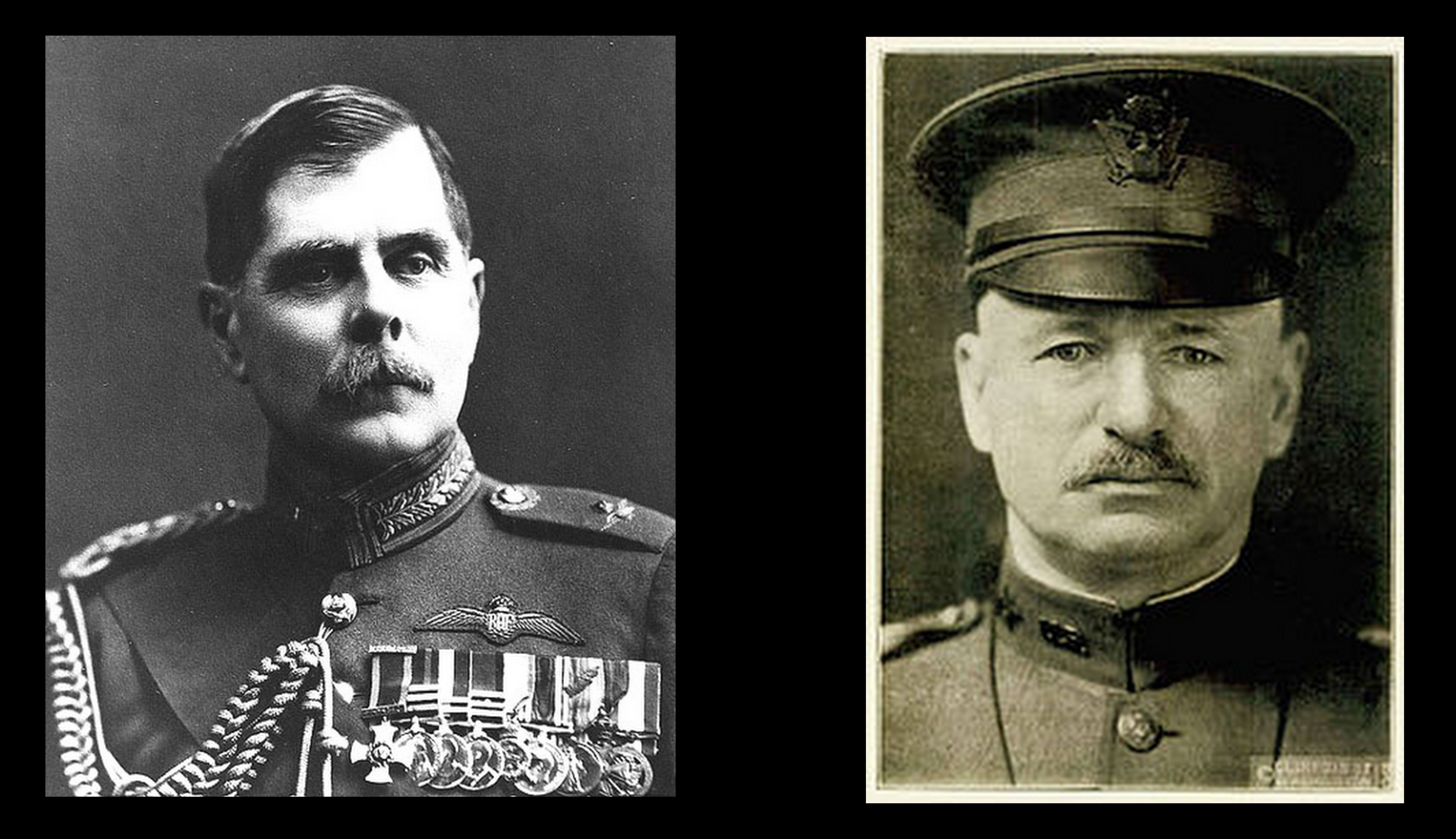
Left: Sir Huge Trench Right:  Major General William Hann

Left: Sir Huge Trench Right: Major General William Hann

Mitchell’s constant speeches and writings to the Army War Department concerning a separate aviation service and the possibility of air attack from across the globe, made him very unpopular. He was also making enemies amongst members of the Army who were not flyers by questioning their authority on matters of air combat. He had a large quarrel with General William G. Hann, who was a very well established commander at the time. Mitchel insisted that air power alone could win a war and that infantry was a thing of the past. Hann, an infantry commander, took offence and the argument ended in a great deal of destine between both men, Mitchel wrote about the situation saying, “it impressed on me more than ever that, under the control of the army, it will be impossible to develop an air service.” (25) Mitchell’s challengers were not only in the army, he was developing enemies in the navy as well, due to two factors; the aforementioned separate aviation service, as well as a tight military budget. A battle erupted between the Navy and Mitchell over these issues.

The Navy went so far as to send then Assistant Secretary of the Navy Franklin Delano Roosevelt out on a speaking tour to campaign against the idea of a separate air wing claiming it was ill conceived and would take money away from the navy, making them weaker and a strong navy was essential to keep America safe. (26) Mitchell long felt that the navy was almost obsolete and vulnerable to air attack saying in his book Winged Defense The Development and Possibilities of Modern Air Power –Economic and Military “From a military standpoint, the airmen have to study the effect that air power has on navies and what their future will be. They know that within the radius of air power’s activities, it can completely destroy any surface vessels or war ships. They know that in the last war, surface ships, battleships, cruisers and other sea craft took comparatively little active part.” (27)
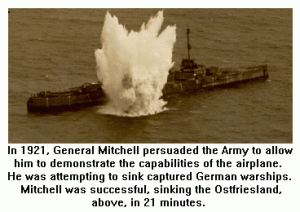
mitchell.6Mitchell’s ideas were put to the test in a series of experiments conducted by both the Army and the Navy on the bombing of ships from the air. Multiple vessels were used. One of the vessels used in this series of experiments was the captured German battleship Ostfriesland. The navy had the first chance at destroying the mighty craft, but only succeeded in damaging her. Then Mitchell’s army squadron flew in and obliterated the German warship, sinking her in minutes. Mitchell described the scene this way, “When a death blow has been dealt by a bomb to a vessel, there is no mistaking it. Water can be seen to come up under both sides of the ship and she trembles all over…In a minute the Osterfriesland was on her side in two minutes she was sliding down by the stern; in three minutes she was bottom-side up, looking like a gigantic whale, in a minute or more only her tip showed above water.” (28)

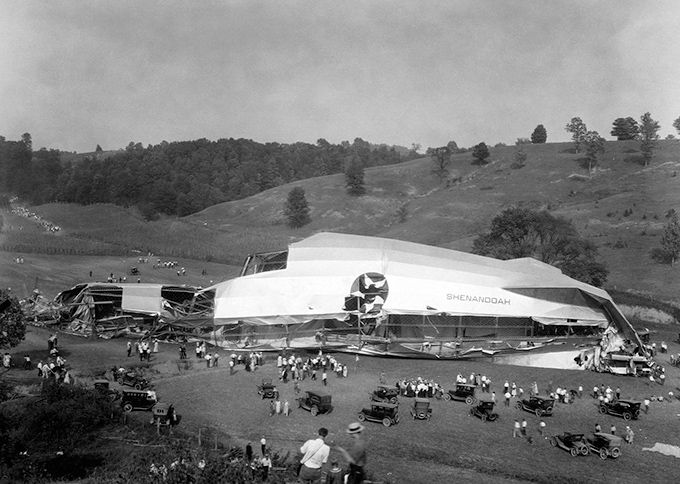
Although this proved Mitchell’s theory that air power can defeat sea power, his fight to gain funding and a separate aviation service went on to no avail and resulted in his demotion from Assistant Chief of the Air Service. He reverted to his permanent rank of Colonel and was transferred to San Antonio, Texas, as air officer to a ground forces corps. (29) This is where he heard the news about the tragedies of the Shenandoah as well as the ill-fated attempt to fly from San Pablo Bay to Hawaii. Both incidents happened within
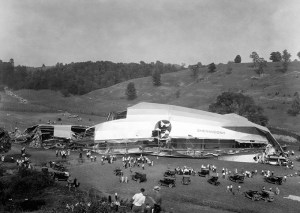
1925: Caught in a squall over southeastern Ohio, the Navy dirigible USS Shenandoah breaks up and crashes into a field, killing 14 of the 43 men aboard.

1925: Caught in a squall over southeastern Ohio, the Navy dirigible USS Shenandoah breaks up and crashes into a field, killing 14 of the 43 men aboard.

days of one another and were put on by the navy as well publicized attempts to show naval air superiority they ended in failure and death. The Secretary of the Navy not wanting to admit any wrongdoing issued a statement, “The failure of the Hawaiian flight and the Shenandoah disaster we have come to the conclusion that the Atlantic and the Pacific are still our best defenses. We have nothing to fear from enemy aircraft that is not on this continent.” (30) This enraged Mitchell as it was a slap in the face to everything he stood for and was warning against, therefore he felt compelled to make this statement, about the incidents; to the press, “My opinion is as follows: These accidents are the result of the

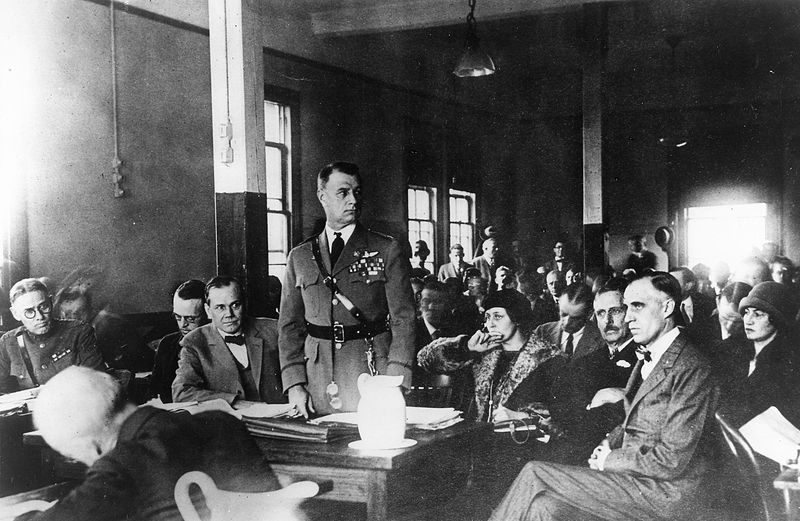
incompetency, the criminal negligence, and the almost treasonable administration of our national defense by the Navy and War Departments.” (31) Mitchell was court marshaled and charged with “Conduct to the prejudice of good order and military discipline and in a way to bring discredit upon military service” (32) Mitchell left for Washington DC and was placed under arrest a few days after his arrival. The court-martial record has one million four hundred thousand words and consists of seven large volumes, but in all of those words there was not enough to help Mitchell out of this predicament. (33) By Special order 248 on October 20Th 1925 Mitchell was found guilty and received what was considered a light sentence due to his heroic service in the First World War. The sentence consisted of a suspension of rank and command, plus forfeiture of pay for five years. Mitchell retired from the service one year later in disgrace. (34) The next ten years Mitchell spent time with his family and traveled around the country discussing air power still as feisty as he was during his many campaigns before Congress. He died of heart failure in 1936 a man ahead of his time but looked

The Court Martial of Billy Mitchell

The Court Martial of Billy Mitchell

upon then as an agitator and a crackpot.
Billy Mitchell is now revered by many and his doctrine has become the bases for the American Air Force which is now a separate branch of service something Mitchell fought so hard for but would never see in his life. He is a true war hero and a visionary whose grandiose ideas were way ahead of his time ending his career in disgrace. He was a man who never faltered from his beliefs, making him one of the greatest military leaders in the history of the United States of America.
1) Jones, Johnny R. William “Billy” Mitchell’s Air Power. Honolulu: University Press of the Pacific, 2004 Pg. 3

2) Davis, Burke. The Billy Mitchell Affair. New York: Random House, 1967. Pg. 15

3) Davis, Pg. 17

4) Ibid

5) Mitchell, Ruth. My Brother Bill. New York: Harcourt, Brace And Company, 1953. Pg. 49

6) Davis, Pg.’s 18-19

7) Hurley, Alfred F. Billy Mitchell, Crusader for Air Power. New ed. Bloomington: Indiana University Press, 1975. Pg. 10

8) Ibid, Pg. 11

9) Ibid,

10) Ibid,

11) Ibid,

12) Ibid, Pg. 21

13) Davis, Pg. 29

14) Schwarzer, William. The Lion Killers Billy Mitchell and the Birth of Strategic Bombing. Mt. Holly: Aerial Perspective, 2003. Pg. 20

15) Davis, Pg. 30

16) Ibid, Pg. 32

17) Ibid, Pg. 35

18) Ibid, Pg. 35

19) Ibid, Pg. 36

20) Ibid

21) Levine, Isaac Don. Mitchell Pioneer of Air Power. New York: Duell, Sloan and Pearce, 1943. Pg.’s 120-121

22) Ibid, Pg. 127

23) Ibid, Pg.’s 132-135

24) Cook, James. Billy Mitchell. Boulder: Lynne Reinner Publishing, 2002. Pg. 107

25) Cooke, Pg. 114

26) Ibid, Pg. 115

27) Mitchell, William. Winged Defense The Development and Possibilities of Modern Air Power, Economic and Military. New York: G.P. Putman’s Sons, 1925. Pg. 99

28) Ibid, Pg. 72

29) Burlingame, Roger. General Billy Mitchell Champion of Air Defense. New York: McGraw-Hill , 1952.Pg. 141

30) Ibid, Pg. 148

31) Mitchell, Pg. 301

32) Cooke, Pg. 180

33) Gaureau, Emile, and Cohen, Lester. Billly Mitchell Founder of Our Air Force and Prophet Without Honor. New York: E.P. Dutton & Co , 1942.Pg. 135

34) Cooke, Pg. 217