A Southern Tale Of Love and War.

My recent adventures took me to Clarkton North Carolina. Here I stumbled upon Benevolence Cemetery, and the grave of Private Bryant B Gause. He was born in Bladen County North Carolina, to Henry Taylor and Lucy Ann Gause[1], on October 12th, 1837, [2] He was listed as being five feet ten inches tall, with blue eyes, dark hair, and a dark complexion.[3] Before the outbreak of the American Civil War Pvt. Gause was a farmer. He would meet Lucy Matilda Thompson. They would marry shortly before the hostilities began. Gause would enlist on May 3rd, 1861, at Elizabethtown North Carolina.[4] He was mustered into “B” Co. NC 18th Infantry the same day.[5] Not wanting to leave her husband and being 6 feet tall, 165 lbs., physically strong and an expert with the rifle herself[6], she…. “cut her thick hair close, took up seams in one of Bryant’s suits, oiled her squirrel musket, and boarded a train for Virginia as ‘Pvt. Bill Thompson”[7] 

She fought side by side with her husband and the 18th at First Manassas, and was wounded when… “an iron (shell) scrap tore open her scalp from forehead to crown (later protected by a silver plate).””[8] She was discovered as a woman but begged to be sent back to her husband’s side. Her request was approved, and she was with her husband during the Seven Days where he was wounded at Frayser’s Farm.[9] They would also be engaged at the Battles of Antietam and Fredericksburg. Sadly, during the Battle of Fredericksburg Pvt. Gause was seriously wounded[10]. He was taken to a hospital in Scottsville, VA. Where he would die from his injuries on January 1st, 1863.[11]

Battle of Fredericksburg, created by Currier and Ives, Library of Congress

His wife” Pvt. Bill Thompson” was not by his side when he passed, as she was in the advanced stages of pregnancy and was home to give birth to their daughter Mary Caroline Gause.[12] Pvt. Gause’s body would be escorted home by his wife ending her service as well.
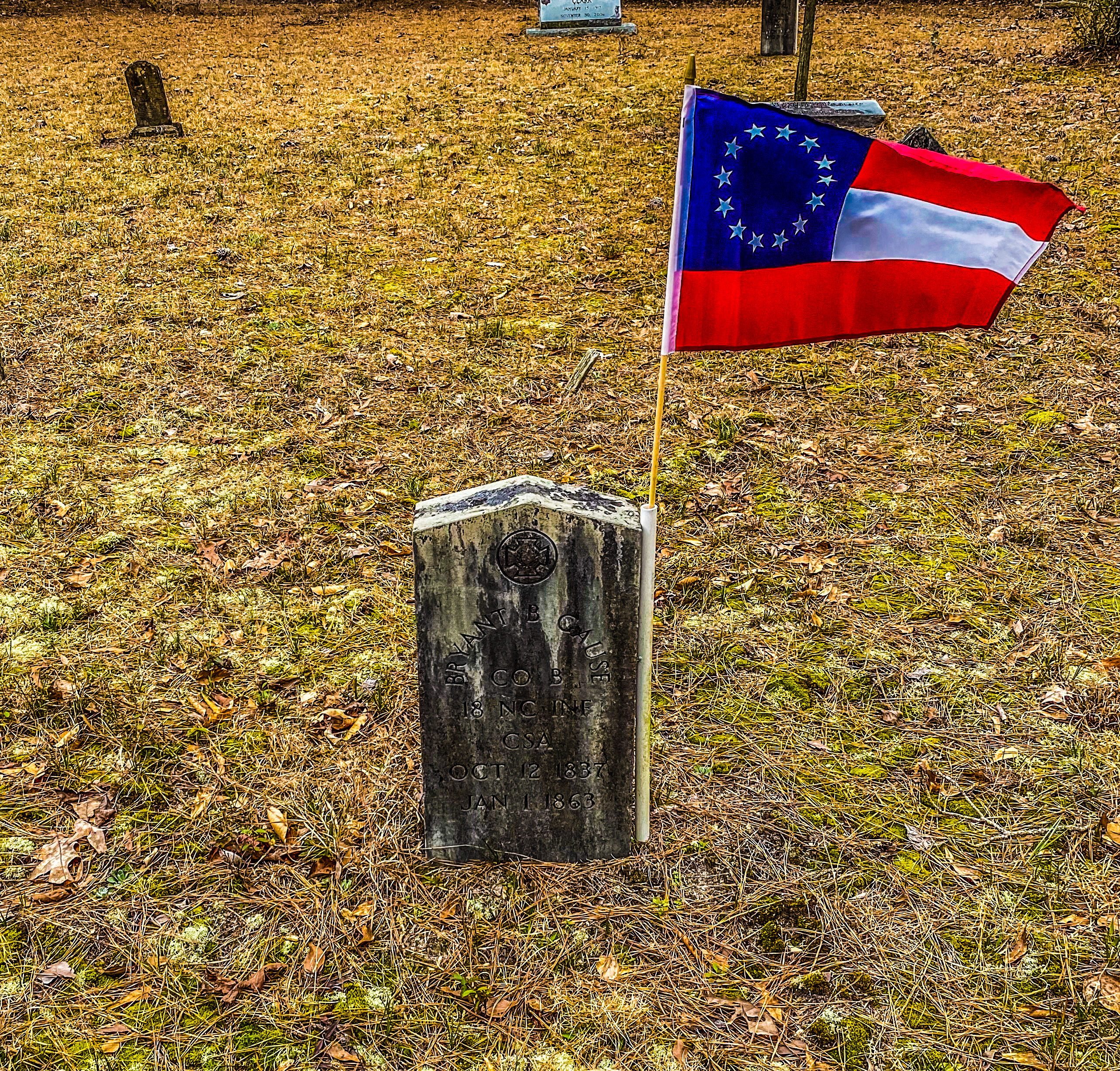
Grave of Private Bryant B Gause at Benevolence Cemetery in Clarkton North Carolina. Photo by @firefightinirish.

He would be interred at Benevolence Cemetery in Clarkton North Carolina where he now rests. Lucy Matilda Thompson Gause AKA Pvt. Bill Thompson would go back to a more traditional role post war weaving and working the fields. She would eventually settle in Savannah, Georgia. Here she would meet an Irishman who served in the Union Navy by the name of Joseph Patrick Kenney. [13] They would have six children. Lucy would die on June 22, 1925, at the age of 83. She is buried at the Meeks Cemetery in Nicholls, Georgia.[14]


[1] Gloria Cash, “Gill Family Tree,” Ancestry, accessed April 21, 2021, https://www.ancestry.com/family-tree/person/tree/153633896/person/102030276353/facts.

[2] “Page 1 Headstone Applications, 1925-1963.” Fold3. Accessed April 21, 2021. https://www.fold3.com/image/320518210.

[3] “Page 31 Civil War Service Records (CMSR) – Confederate – North Carolina,” Fold3, accessed April 21, 2021, https://www.fold3.com/image/37632252

[4] “Page 31 Civil War Service Records (CMSR) – Confederate – North Carolina,” Fold3, accessed April 21, 2021, https://www.fold3.com/image/37632252

[5] “Bryant B. Gause,” American Civil War Research Database (Historical Data Systems, Inc.), accessed April 21, 2021, http://www.civilwardata.com/active/hdsquery.dll?SoldierHistory?C&181744.

[6] “Florida 7th VF Bulletin,” Ancestry, accessed April 21, 2021, https://www.ancestry.com/mediaui-viewer/tree/1034196/person/6003737475/media/8a687238-5116-41c0-83db-19d1689cb275?_phsrc=ZhY340&_phstart=successSource.

[7] Mauriel Joslyn, Confederate Women (Gretna, LA: Pelican, 2005), Pg. 67.

[8] Mauriel Joslyn, Confederate Women (Gretna, LA: Pelican, 2005), Pg. 67.

[9] “Bryant B. Gause,” American Civil War Research Database (Historical Data Systems, Inc.), accessed April 21, 2021, http://www.civilwardata.com/active/hdsquery.dll?SoldierHistory?C&181744.

[10] “Page 31 Civil War Service Records (CMSR) – Confederate – North Carolina,” Fold3, accessed April 21, 2021, https://www.fold3.com/image/37632252.

[11] Ibid

[12] DeAnne Blanton and Lauren M. Cook, They Fought like Demons: Women Soldiers in the American Civil War (Stroud: Sutton, 2005), Pg. 59.

[13] “Florida 7th VF Bulletin,” Ancestry, accessed April 21, 2021, https://www.ancestry.com/mediaui-viewer/tree/1034196/person/6003737475/media/8a687238-5116-41c0-83db-19d1689cb275?_phsrc=ZhY340&_phstart=successSource.

[14] Ibid
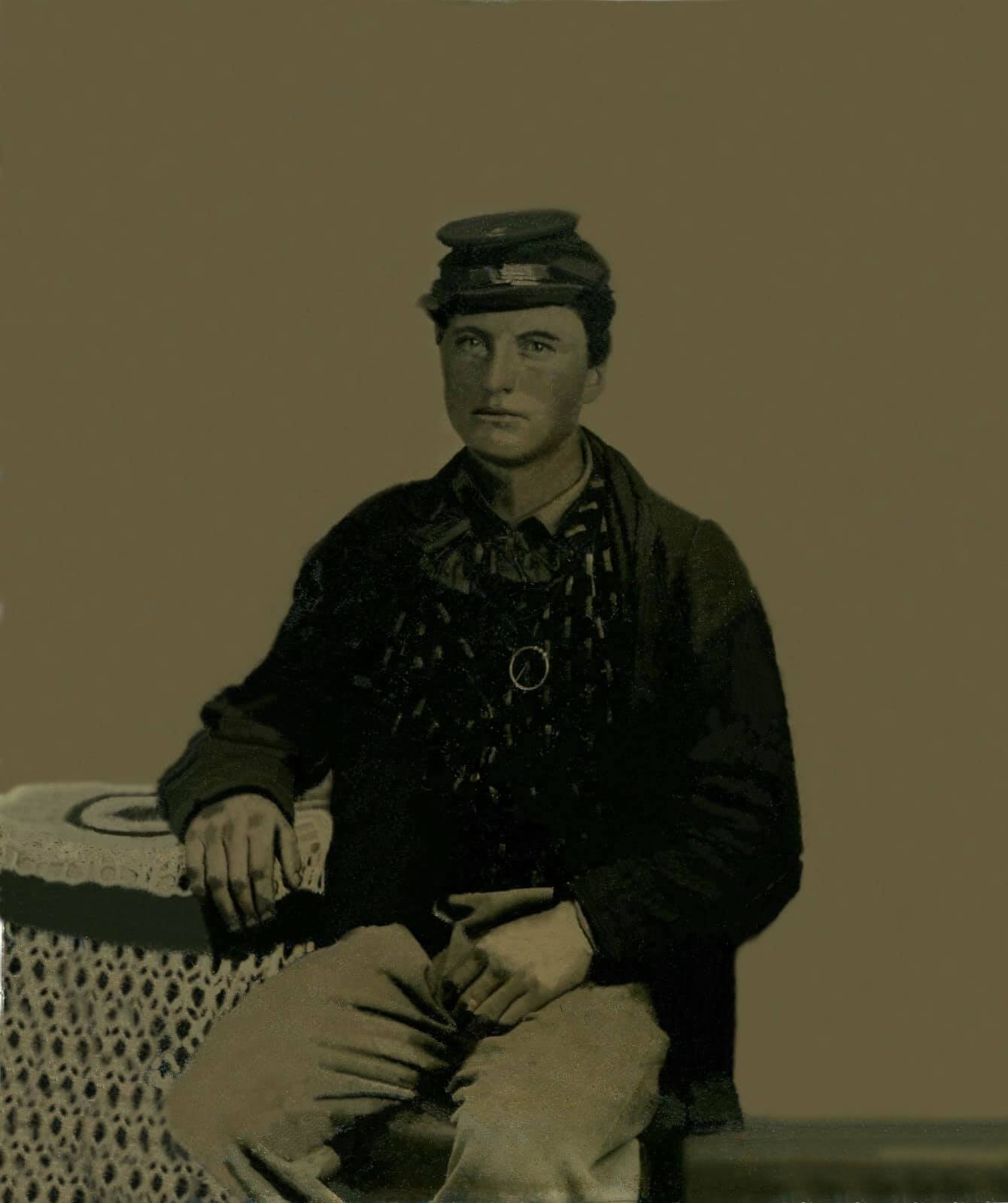
Private Hiram Fellows: One of the First To Heed The Call

Over the weekend my travels took me to Ohio. Here I found a few cemeteries and many stories. One of those stories is of Private Hiram Fellows, of the 8th Ohio Infantry.

Tintype of Private Hiram Fellows by:  Hudson Louie 

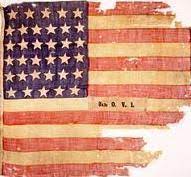
He was born in Ohio around 1842 to Henry and Susan Fellows. Before the war Hiram worked on his family farm with his brother and two sisters[1].  After the attack on  Fort Sumter in Charleston, South Carolina. President Lincoln called for 75,000 volunteers to put down the uprising. Hundreds of men from northeastern Ohio were fast to respond, volunteering for three months of military service.

The 8th Ohio Infantry Regiment was organized in Cleveland between April 18 and May 4, 1861[2]. In June, the regiment was transported via train to Camp Dennison adjacent to Cincinnati for training and garrison duty. It mustered out June 22, having not left The Buckeye State. Many of the three-months men reenlisted for three years on June 22–24.[3]Hiram was one of these men.

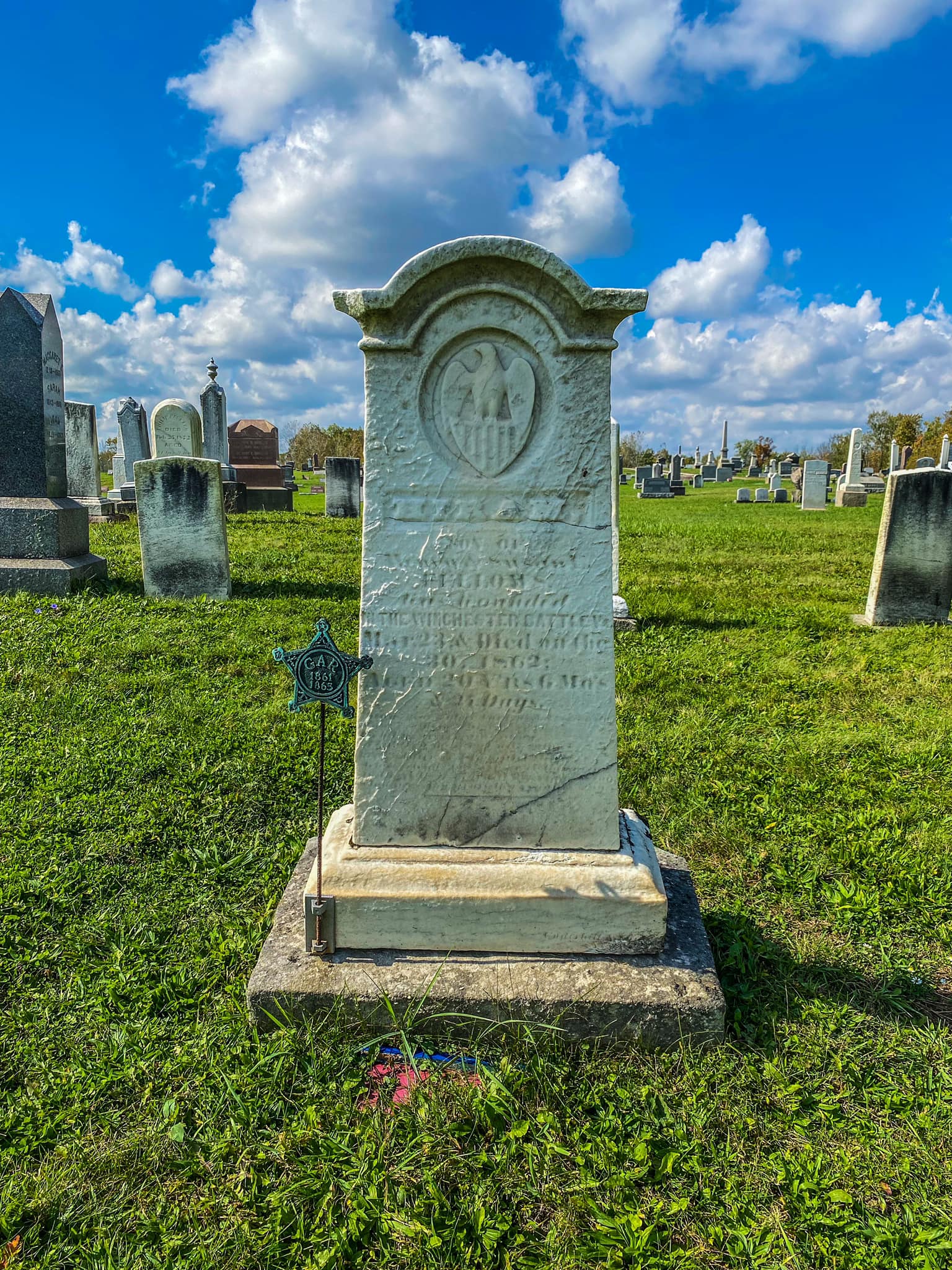
He would be mustered into “K” Co. 8th Ohio Infantry as a Private on June 5th, 1861[4]. Private Fellows and the 8th Ohio would see action at, Worthington, W. Va., Hanging Rock, Romney, The Expedition to Blue’s Gap, The Evacuation of Romney, Bloomery Gap, The Battle of Kernstown, and Winchester[5], where Private Fellows was wounded[6]. Private Fellows would die of his wounds at a hospital in Winchester Virginia on April 1st, 1862[7].

Forbes, Edwin, Artist. The first battle of Winchester–The charge on the stonewall
. Winchester United States Virginia, 1862. Photograph. https://www.loc.gov/item/2004661872/.

Private Hiram Fellow’s body would be returned to Ohio. He would be interred at Chatham Township Cemetery, and his mother would receive a small “widows’ pension”[8].  Let us never forget the sacrifice of Private Hiram Fellows upon the alter of freedom.

Grave of Private Hiram Fellows at Chatham Township Cemetery. Photo By @firefightinirish

[1] “1860 United States Federal Census for Hiram Fellows,” Ancestry®, accessed October 12, 2021, https://www.ancestry.com/imageviewer/collections/7667/images/4282831_00174?pId=42319987.

[2] “Battle Unit Details,” National Parks Service, accessed November 16, 2023, https://www.nps.gov/civilwar/search-battle-units-detail.htm?battleUnitCode=UOH0008RI01.

[3] Ibid

[4] “Hiram Fellows ,” American Civil War Research and Genealogy Database, accessed October 12, 2021, http://www.civilwardata.com/HDSLogin/HDSLogin.aspx?ReturnUrl=%2Factive%2Fhdsquery.dll%3FSoldierHistory%3FU%262221821&SoldierHistory%3FU&222182

[5] “Battle Unit Details,” National Parks Service (U.S. Department of the Interior), accessed October 12, 2021, https://www.nps.gov/civilwar/search-battle-units-detail.htm?battleUnitCode=UOH0008RI01.

[6] “Hiram Fellows ,” American Civil War Research and Genealogy Database, accessed October 12, 2021, http://www.civilwardata.com/HDSLogin/HDSLogin.aspx?ReturnUrl=%2Factive%2Fhdsquery.dll%3FSoldierHistory%3FU%262221821&SoldierHistory%3FU&222182

[7] “U.S., Registers of Deaths of Volunteers, 1861-1865 ,” Ancestry®, accessed October 12, 2021, https://www.ancestry.com/imageviewer/collections/2123/images/32729_1220705228_0256-00164?pId=461572.

[8] “U.S., Civil War Pension Index: General Index to Pension Files, 1861-1934 for Hiram Fellows,” Ancestry®, accessed October 12, 2021, https://www.ancestry.com/imageviewer/collections/4654/images/32959_032814-03863?pId=806230.

Captain Joseph Brown Connally: A True All American

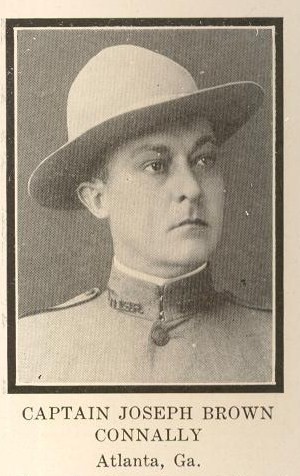
On my recent stop in Atlanta, I took a trip over to Oakland Cemetery. Initially established as Atlanta Cemetery in 1850 and renamed Oakland Cemetery in 1872, this landmark is a hidden treasure located near the heart of Downtown Atlanta. Historic Oakland Cemetery is rich in history, and stories. One such story is that of Captain Joseph Brown Connally.

Photo from The Atlanta Constitution

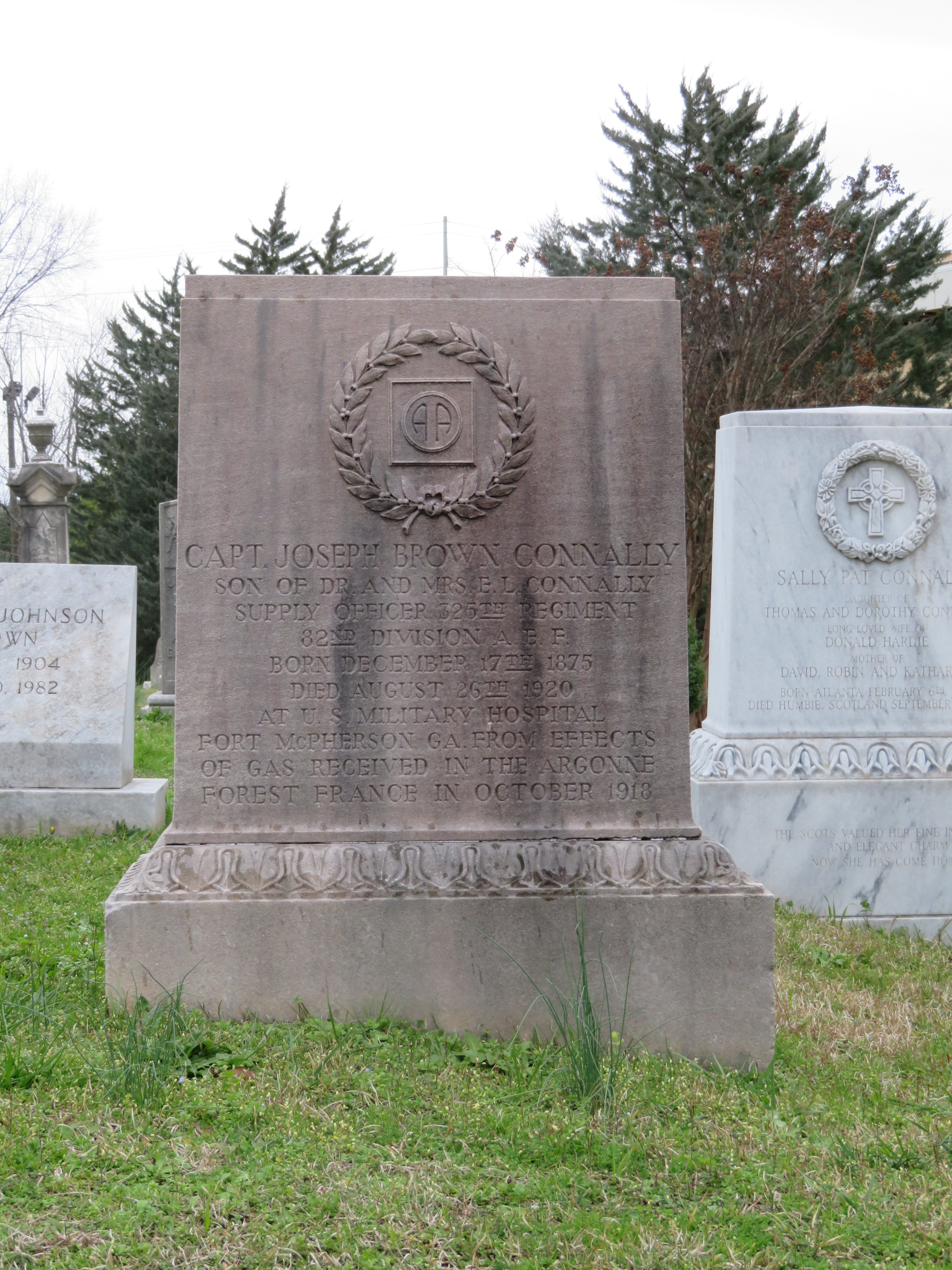
He was born in Atlanta Georgia on December 17th, 1875. His Parents were Dr. Elisha Connally, and Mary Virginia Brown. Captain Connally’s maternal grandfather was former Georgia Governor Joseph Emerson Brown. Young J.B Connally would attend the finest schools before being accepted to The University of Georgia. He would graduate from there and become an Insurance Clerk, eventually Connally would help form the first car insurance agency in Atlanta.[1] Connally would enlist in the army during America’s first call for volunteers.[2] He would receive his officers training at Fort McPherson and be commissioned into the 82nd Division. Capt. Connally was assigned to the 325th Infantry on September 2nd 1917[3], then sent to Camp Gordon to train his men. Capt. Connally was put in charge of 325th’s supply company. He and his men left for Europe aboard the S.S. Karmala on April 18th, 1918.[4] 

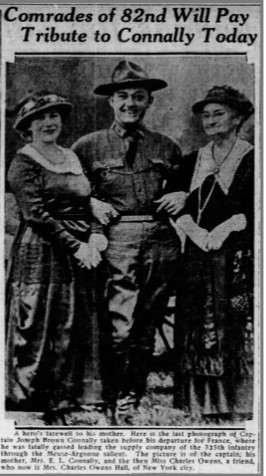
Last photo of Capt. Connally. His mother is on the right and his friend Miss, Charles Owens is on his left. Photo from: The Atlanta Constitution, September 27, 1930.

They were sent to the Toul sector, then became engaged during the Battle of Saint-Mihiel, and The Meuse–Argonne offensive. On October 10th, 1918, during the Meuse–Argonne offensive, Capt. Connally was hit with gas. An article in the Atlantic Constitution describes the scene of his gassing, “Far above the noise of battle are heard the groans of the wounded and the wails of the dying. Over the outstretched forms of many of their comrades the 325th pushes on. When the smoke clears away Joe Brown Connally is one of those on the ground his lungs filled with deadly Poisonous gas.”[5] One of his men stated that “Captain Connally should have two medals of honor.” [6] He then reported that Capt. Connally could barely stand and kept directing and calming his men while refusing medical treatment. It was reported that Connally said when urged to go to the hospital “My boys need me: if I go there will be no one to take care of them and if I leave here before we are relieved it will be to my own funeral.” [7] Capt. Connally would be sent to a field hospital to convalesce before heading stateside aboard the S.S. Sierra on May 9th, 1919.[8]

Sadly Connally would not ever recover fully from the gas attack. He would die on August 26th, 1920, at Lawson General Hospital. His cause of death was listed as “valvular heart disease with mitral insufficiency “[9]secondary to the lasting effects of the gas.

Funeral of Capt. Connally at Second Baptist Church. Photo From: The Atlanta Constitution, September 27th 1930.

In 1922 the Connally family established the “Joe Brown Connally Scholarship in Georgia History, this scholarship is still awarded to this day.  Plaques honor Capt. Connally at Georgia Baptist Hospital, The University of George, and The Capital City Club.

At the Capital City Club plaque dedication, a friend said of Capt. Connally “As for his life at this club, it was he who showed us that the Volstead act could not kill the joy of the club, He showed Us that the roses on women’s cheeks bloom just as red after the act as before it, and taught us that Coca-Cola has a spice and can supplant champagne and that there is not really so great a gulf from Budweiser to Bevo.

Grave of Captain Joseph Brown Connally at Oakland Cemetery. Photo Credit: @firefightinirish.

Those who knew him could never forget him and the great spirit he possessed. He was a prince of good fellows, and for cheer, unselfishness, and courage he had no superior.”[10]  Let us never forget Capt. Connally’s sacrifice, he truly was an All American…


[1] Galloway, Tammy Harden. The Inman Family: an Atlanta Family from Reconstruction to World War I. Macon, Ga: Mercer Univ. Press, 2002. Pg. 66-67

[2] “Tablet Unveiled To Honor Memory Of Capt. Connally.” The Atlanta Constitution, November 12, 1921.

[3] “Georgia, World War I Service Cards, 1917-1919 for Joseph Brown Connally.” Ancestry.com. Accessed February 29, 2020. https://tinyurl.com/qqjaun8.

[4] “Page 149 US Army WWI Transport Service, Passenger Lists.” Fold3. Accessed February 29, 2020. https://www.fold3.com/image/604138259.

[5] “Smile of Fallen Warrior Not Forgotten by Soldier Companions Who Fought Beside Him .” The Atlanta Constitution, September 27, 1930.

[6] “Captain Connally Given High Praise By Fellow Officer.” The Atlanta Constitution, December 8th, 1930.

[7] Ibid.

[8] “Page 434 US Army WWI Transport Service, Passenger Lists.” Fold3. Accessed February 29, 2020. https://www.fold3.com/image/604339436.

[9] “Georgia, Deaths Index, 1914-1940 for Joseph B. Connally.” Ancestry. Accessed February 29, 2020. https://tinyurl.com/rh7a6xb.

[10] “Tablet Unveiled To Honor Memory Of Capt. Connally.” The Atlanta Constitution, November 12, 1921.

A soldier’s story at Forest hill Cemetery Morganton North Carolina.

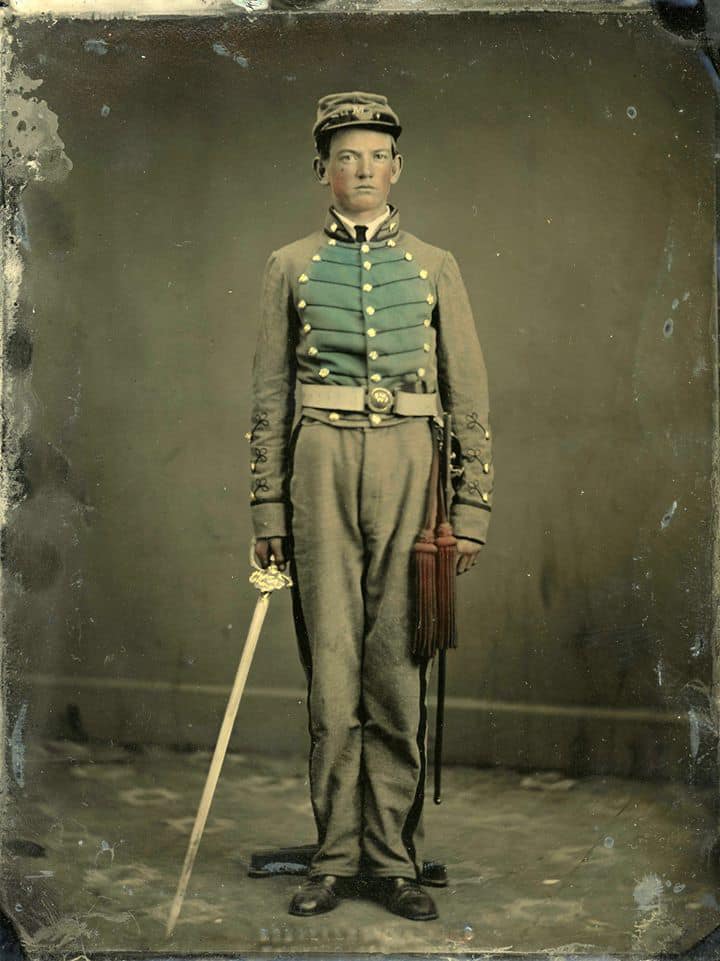
On my way back from Asheville I made a quick stop in Morganton. Here I paid respects to Lieut. John Caldwell. He was born in 1845 at Morganton, North Carolina to Tod & Minerva Caldwell. John grew up and worked on his family farm. In 1861 John who was known as “Jack”, was a Cadet at the Hillsboro Military Academy.[1] His father was a Unionist, but John went against his father’s wishes and chose to join his friends and defend his state. In July of 1861 John Was a member of the 6th North Carolina Volunteers stationed in Staunton Virginia.[2] By December of 1861, Caldwell was serving as a Drill Instructor for the state of North Carolina in a training camp at Asheville.[3]  He continued in this capacity through 1862, until most of the volunteer regiments had organized and marched off. On May 5th, 1863, John Caldwell was mustered into “E” Co. 33rd North Carolina Infantry as a Private.[4]

1/4 plate tintype of Lieut. John Caldwell Courtesy of the Brem Family Collection.

He would be immediately promoted to Lieut. in order to replace the 33rd’s loses from the Battle of Chancellorsville.[5]  Upon hearing of Young Johns promotion his father sent him a letter containing some wise fatherly advice… “Don’t be tyrannical or overbearing toward your men. Be kind and obliging to everyone no matter how low or humble his position may be, and if you get into battle be like a man and a true soldier. Be kind and merciful to your enemies if any should be placed in your power. It is a badge of true courage and of a gentlemanly Christian spirit to show mercy and kindness to your enemies and it may in the fortunes of war happen that you may need the friendship of those you are fighting against. Observe vigorously the golden rule, “to do unto others as you would have them do unto you.” Oh what would I not give if this cruel and unnatural war was ended and you and your army and in honor return home to your friends.”[6]            

Lieut. Caldwell led his men during the march into Pennsylvania, he and his men were shelled along the way, and performed picket duty. They would reach Gettysburg on July 1st at around 15:30 they “on the right of the Division in the final and successful movement against the Union forces on Seminary Ridge held back Union Cavalry which threatened the flank and had a sharp conflict at the stone wall on Seminary Ridge just south of Fairfield Road.”[7]  On the second day the 33rd was involved in some heavy skirmishing. “our line of battle was not engaged but there was a very strong picket fighting in front of us and as it was the turn of his company to go out on skirmish he (John Caldwell) was skirmishing all day and was not relived until about sundown. He took his skirmishers out in gallant style and during the day lost two of his company killed and several wounded.”[8]  On the third day Lieut. Caldwell and the 33rd took part in the Pickett–Pettigrew–Trimble Charge, as part of Longstreet’s assault. During the assault Lieut. Caldwell and Lieut. Wilson Lucas were ordered by General Pender to command 75 men and take a farm lane. Lieut. Wilson Lucas writes of this action saying…. 

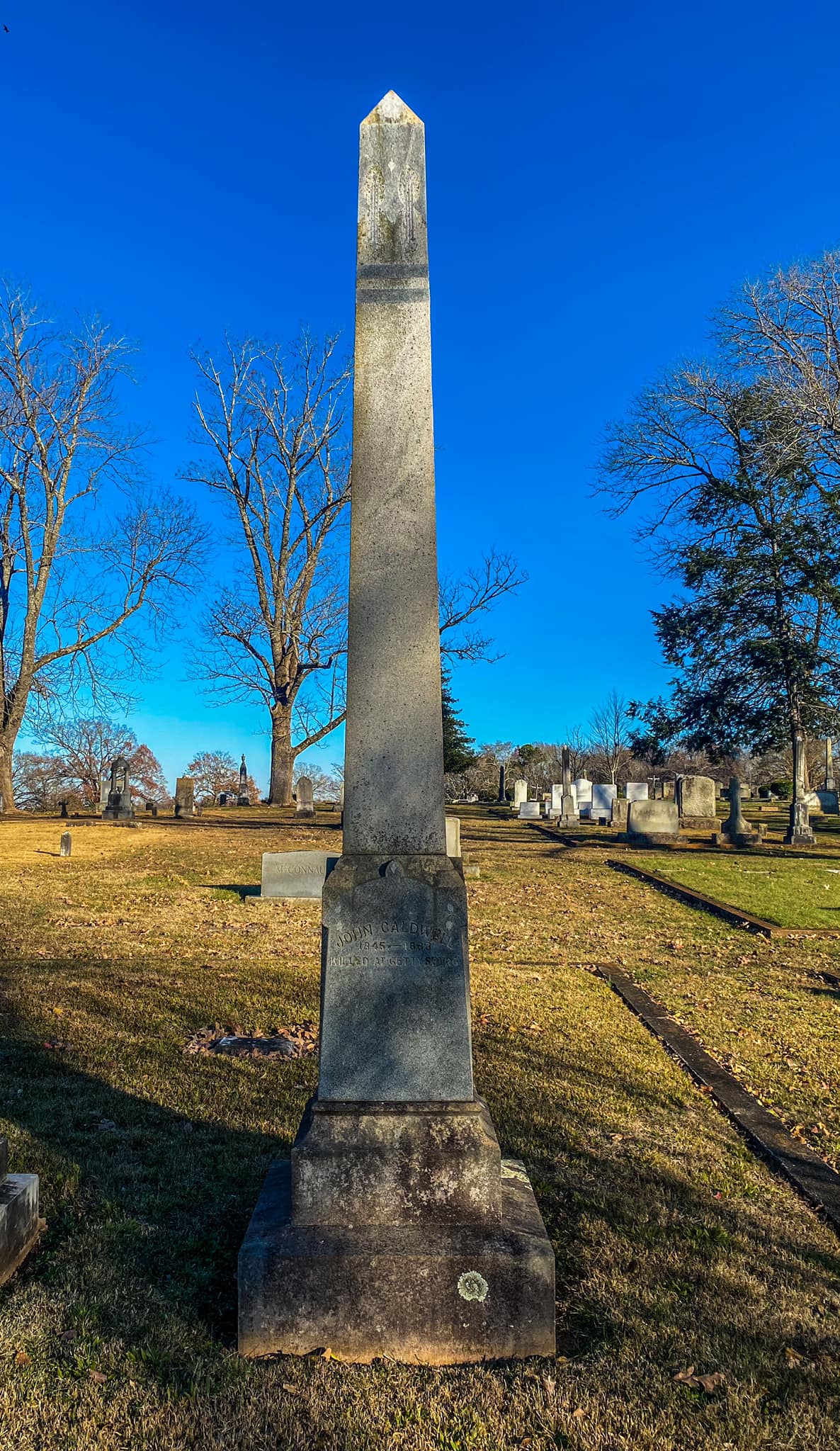
Gravestone of Lieut. John Caldwell 33rd North Carolina Infantry at Forest hill Cemetery Morganton North Carolina Photo By @firefightinirish

“We formed the men in line, I commanded the right and Lieut. Caldwell the left. We had to charge through an open field, with no protection whatever. … When we got within two hundred yards of the Federals, we charged with a yell, and they stood their ground until we were within ten steps of the road, then a part of them ran, but 26 surrendered. And the very last time they fired upon us, which was not more than twelve or fourteen feet from them, they shot Lieut. Caldwell in the left breast. I did not see him fall. As soon as we were in the road one of the men told me Lieut. Caldwell was killed. I went at once to the left and found him, lying partly on his back and side … I called two men, and we placed him on his back and spread his oil cloth over him. He was warm and bleeding very freely when I got to him. I could not send him out to the regiment, for it was such an exposed placed the Federal skirmishers would have killed a man before he could get a hundred yards, as we were lying close to each other.”[9] 

Currier & Ives. The battle of Gettysburg, Pa. July 3d. United States, 1863. [New York: Published by Currier & Ives, ?] Photograph. https://www.loc.gov/item/90709061/.

Lieut. Caldwell’s commanding officer Col. Avery in letter to John’s father wrote “You may have the satisfaction to know that he fell where we would all wish to fall (if it be God will) with his face to the enemy.’[10] Lieut. John Caldwell’s body was buried on Seminary Ridge that night “near “two honey-pod trees … not far from an old two-story house.”[11] Even with the reports of Lieut. Caldwell falling before the enemy, his father refused to believe his son was killed.

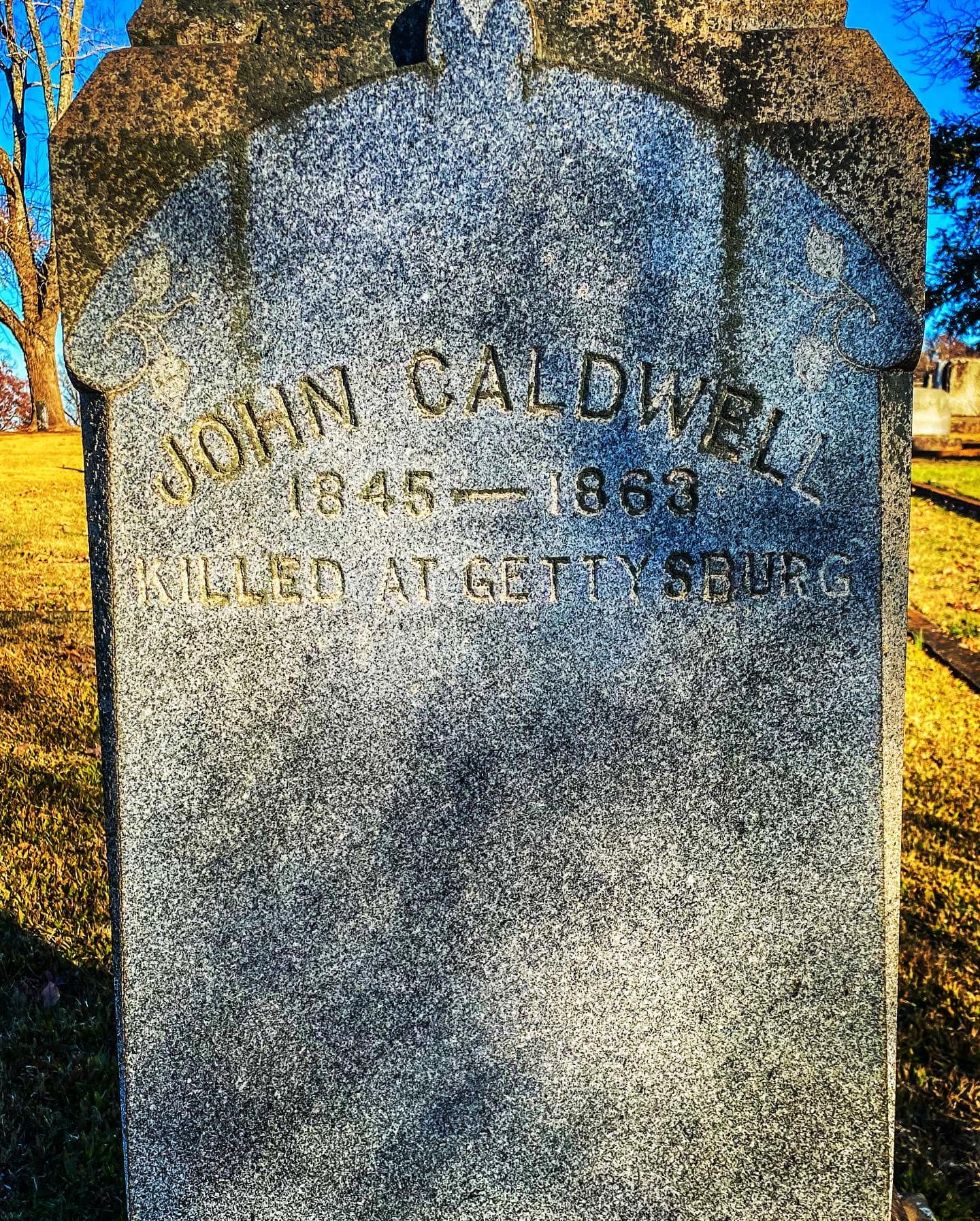
Inscription on Lieut. John Caldwell’s grave at Forest hill Cemetery Morganton North Carolina. Photo By @firefightinirish

It was not until Tod R, Caldwell was governor of North Carolina, that he found out his son’s fate. It was told to him by Lieut. Wilson Lucas who was then a state legislature. It was said that the Governor “locked himself in his room and was all day in tears”.[12] Gov. Caldwell kept this secret from his wife for 14 years, she found out when Lieut. Caldwell’s bloodied commission to Lieut. Was sent home by a New Yorker who had found it on the Battlefield. Lieut. Caldwell’s body would be returned to North Carolina and reinterned at Forest Hill Cemetery in Morganton.  Let us never forget this young man’s sacrifice for his state and his country.   


[1] “Tod Robinson Caldwell Papers, 1801-1890.,” UNC University Libraries, accessed November 28, 2021, https://finding-aids.lib.unc.edu/00128/#folder_5#1.  Scan 12

[2] Ibid, Scan 14

[3] Ibid, Scan 25

[4] “Page 2 Civil War Service Records (CMSR) – Confederate – North Carolina,” Fold3, accessed November 29, 2021, https://www.fold3.com/image/45066577.

[5] Ibid

[6] Christopher M. Watford, The Civil War in North Carolina: Soldiers’ and Civilians’ Letters and Diaries, 1861-1865 (Jefferson, North California: McFarland & Company, Inc., Publishers, 2009). Pg. 278

[7] “History of the 33rd North Carolina Infantry Regiment in the Civil War,” The Civil War in the East, May 17, 2021, https://civilwarintheeast.com/confederate-regiments/north-carolina/33rd-north-carolina-infantry-regiment/.

[8] Don Ernsberger, Also for Glory: The Pettigrew-Trimble Charge at Gettysburg July 3, 1863 (United States: Xlibris Corp, 2008). Pg. 57

[9] Michael C. Hardy, General Lee’s Immortals: The Battles and Campaigns of the Branch-Lane Brigade in the Army of Northern Virginia, 1861-1865 (El Dorado Hills, CA: Savas Beatie LLC, 2018). Pg. 330

[10] Biff Hollingsworth, “18 July 1863: ‘You May Have the Satisfaction to Know That He Fell Where We Would All Wish to Fall (If It Be God Will) with His Face to the Enemy.”: Civil War Day by Day,” 18 July 1863: “You may have the satisfaction to know that he fell where we would all wish to fall (if it be God will) with his face to the enemy.” | Civil War Day by Day, accessed November 29, 2021, https://web.lib.unc.edu/civilwar/index.php/2013/07/18/18-july-1863-you-may-have-the-satisfaction-to-know-that-he-fell-where-we-would-all-wish-to-fall-if-it-be-god-will-with-his-face-to-the-enemy/.

[11] Michael C. Hardy, General Lee’s Immortals: The Battles and Campaigns of the Branch-Lane Brigade in the Army of Northern Virginia, 1861-1865 (El Dorado Hills, CA: Savas Beatie LLC, 2018). Pg. 350

[12] John Hartwell, “Lt. John Caldwell, 33rd North Carolina, Pender’s Brigade,” Civil War Talk, n.d., https://civilwartalk.com/threads/lt-john-caldwell-33rd-north-carolina-penders-brigade.135030/?amp=1.

An American Flyer in Greensboro North Carolina: The Story of First Lieutenant Collier Carlton Olive.

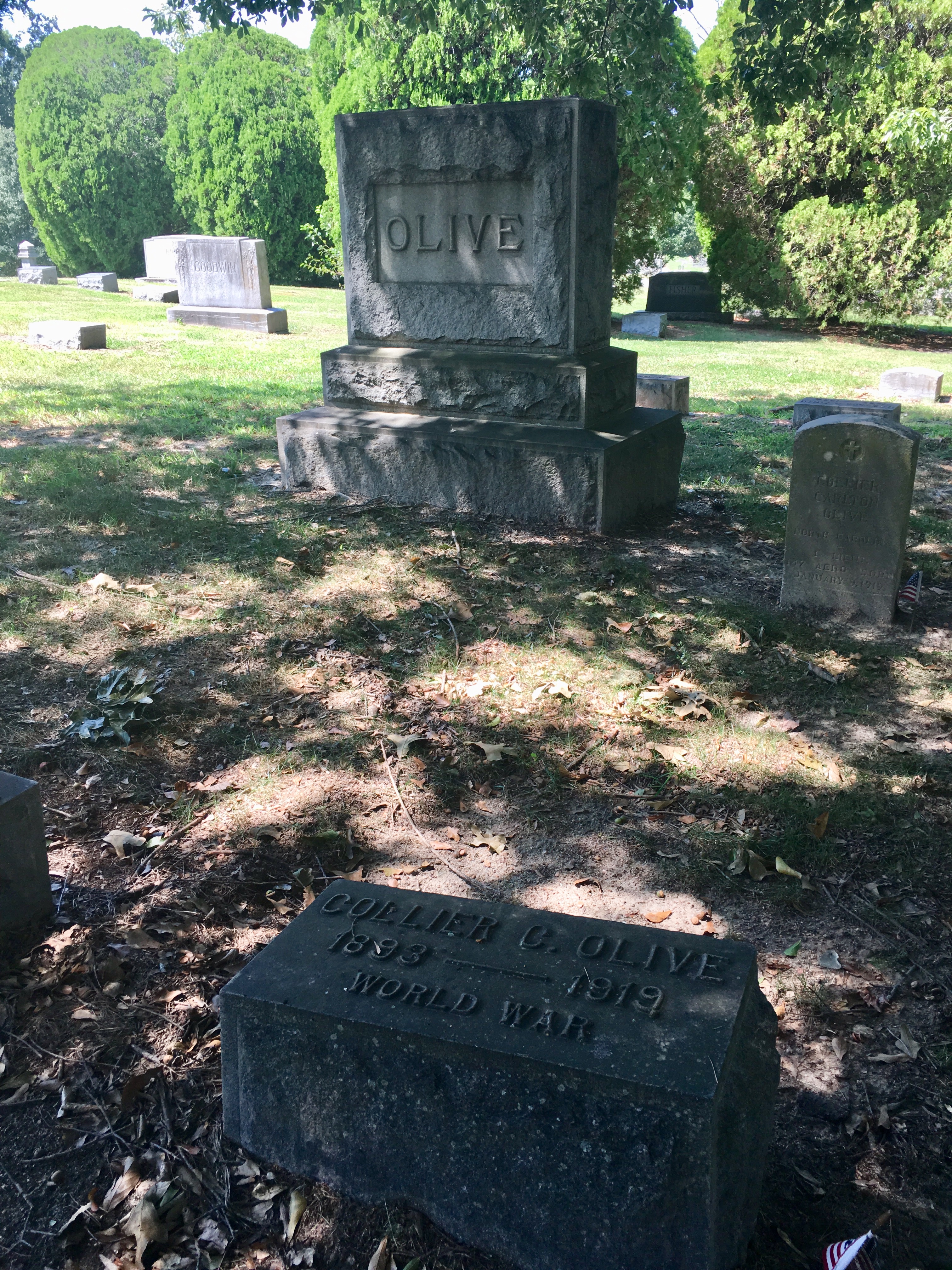
I recently took a trip to Green Hill cemetery in Greensboro North Carolina. Here I discovered the final resting place of First Lieutenant Collier Carlton Olive. He was born in Mount Airy North Carolina to Johnson and Margrett Olive on June 6th, 1893. He was of medium height and build, with blue eyes and brown hair[1].  Collier graduated from Greensboro High School before attending Mars Hill Academy. He later entered Wake Forest University as Junior. While attending Wake Forest Collier wrote humorous articles for the Greensboro Daily News.

Grave of First Lieutenant Collier Carlton Olive. At Green Hill cemetery Greensboro North Carolina. Photo By @firefightinirish

After graduating with honors, he would work as a journalist, and later be employed with Vick Chemical Company in their advertising department. With the First World War on the horizon Collier enlisted as a cadet at the officers’ training school Fort Oglethorpe Georgia, in May 1917.  During the time in OCS he applied for and was accepted into the aviation service. Collier was sent to ground school at the Georgia School of Technology and completed his course in the fall of 1917.[2]  He would set sail for Europe as an aviation cadet aboard the S.S. Kroonland on November 2nd, 1917.[3] Collier would earn his wings and commission in the 147th Aero Squadron on May 23rd 1918.[4] The 147th was assigned as a Day Pursuit (Fighter) Squadron as part of the 1st Pursuit Group, First United States Army. Its objective was to engage and clear enemy aircraft from the skies. As well as provide escort to reconnaissance and bombardment squadrons over enemy territory.

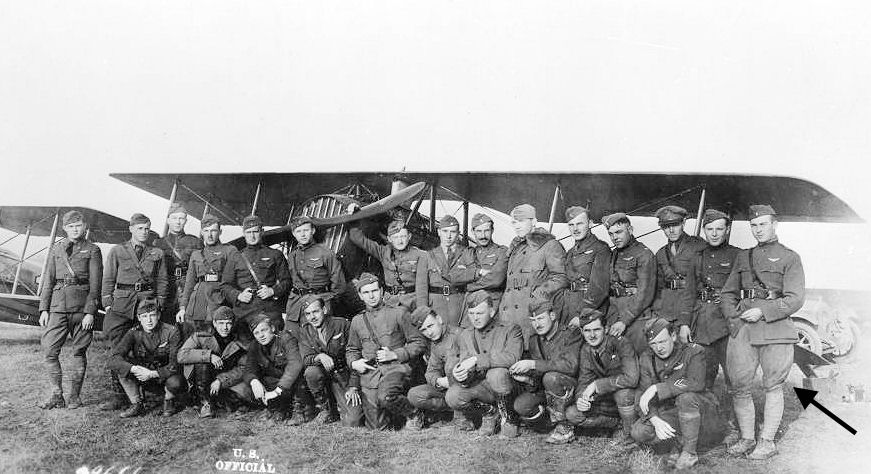
Photo of the 147th Aero Squadron group photo with a SPAD XIII. Likely taken at Rembercourt Aerodrome, France, November 1917. First Lieutenant Collier Carlton Olive is on the extreme right highlighted with an arrow. Photo provided by the Air Service, United States Army – Air Service, United States Army photograph.

The 147th also targeted enemy observation balloons, performed close air support, and tactical bombing attacks of enemy forces along the front lines.[5]  First Lieutenant Collier Carlton Olive participated in operations in the Toul Sector, Marne Sector, as well as Saint Mihiel. In a letter home dated December 22nd, 1918, he spoke of being wounded before the armistice and that he was suffering from influenza but was discharged from the hospital and feeling better. Sadly, Collier must have taken a turn for the worse as he would die of Pneumonia in Issoudun France on January 9th, 1919.[6] His body was sent home aboard the U.S.S Pocahontas on October 18th, 1920.[7] Colliers remains would arrive in Greensboro at 0645 on November 13th, he was interred at Green Hill cemetery at 1400 hrs. The services were conducted by Rev. J. Clyde Turner and were only attended by immediate family.[8]  Let us never forget this young man and his sacrifice to make the world safe for democracy.


[1] “U.S., World War I Draft Registration Cards, 1917-1918 for Rufus Eldrige Garrett.” Ancestry. Accessed September 12, 2019. https://www.ancestry.com/.

[2] “Lieut. Collier Olive Succumbs To Pneumonia.” Greensboro Daily News. January 30, 1919.

[3] “U.S., Army Transport Service, Passenger Lists, 1910-1939 for Collier C Olive” Ancestry. Accessed September 12, 2019. https://www.ancestry.com/.

[4] “Collier Olive Comissioned.” Greensboro Daily News. July 12, 1918.

[5]  Maurer, Maurer (1978), The US Air Service in World War I, The Office of Air Force History, Headquarters USAF Washington

[6] “Lieut. Collier Olive Succumbs To Pneumonia.” Greensboro Daily News. January 30, 1919.

[7] “U.S., Army Transport Service, Passenger Lists, 1910-1939 for Collier C Olive” Ancestry. Accessed September 12, 2019. https://www.ancestry.com/.

[8] “Body Of Lieut. Olive Buried In Green Hill.” Greensboro Daily News. November 14, 1920.

Sergeant Thomas Wilson: A Tragic Tail of Irish Immigration.

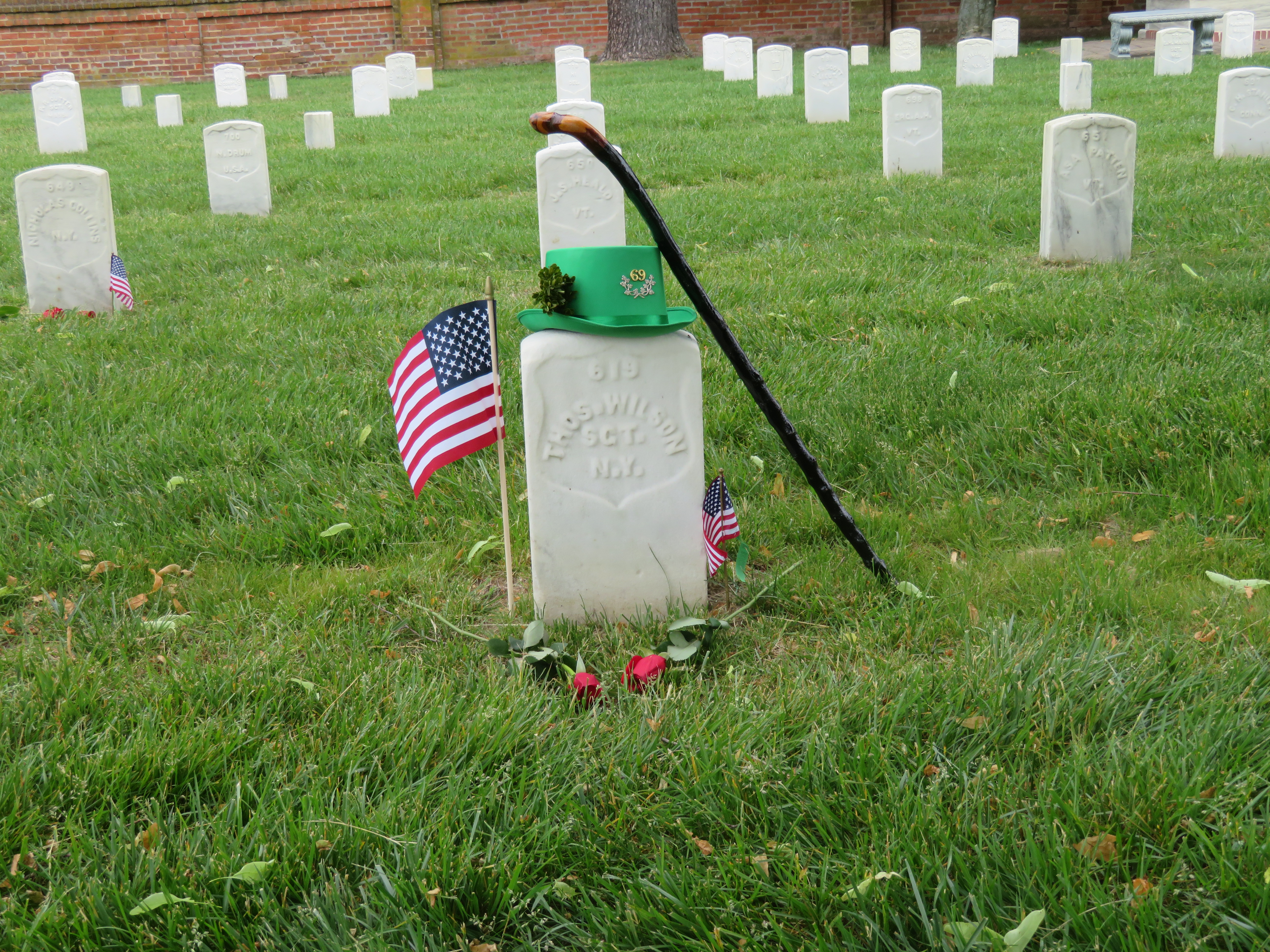
I recently took a trip to Cold Harbor National Cemetery. Here I discovered the final resting place of Sergeant Thomas Wilson. I also unearthed a a tragic tail of Irish immigration. Wilson was born in Ireland around 1834[1], and immigrated to New York to find a better life. Thomas would find a job as an Oyster Shucker at the St. Nicholas Hotel. Here he met Ms. Frances Connor who also worked there as a laundress. They would marry in 1861[2] and shortly after Thomas would enlist.  

Grave of Sgt. Thomas Wilson at Cold Harbor National Cemetery Photo By @firefightinirish

He was mustered into “I” Co. 69th New York as a Corporal on September 17, 1861[3]. Corporal Wilson was in the following engagements: The Siege of Yorktown, Battle of Fair Oaks, The Seven Days Battles, Antietam, and Fredericksburg. It is possible he then deserted, as his name is not on the rolls again until June of 1863[4] with a reduced rank. He was present at The Battle of Gettysburg and promoted to Corporal. Wilson was then assigned to guard a “farmhouse”[5], which was presumably a headquarters, in October of 1863[6]. Wilson reenlisted as a veteran volunteer on December 21, 1863[7] and was assigned to “B” Co. 69th New York Infantry. In 1864 he was promoted to Sergeant. In March of that year, his wife Frances Wilson would have a child named Mary Ellen[8]. Sergeant Wilson would later fight in the battles of The Wilderness, Spotsylvania Court House, Totopotomoy, and Cold Harbor. Sergeant Wilson was killed in action at Cold Harbor and never laid eyes on his daughter.

Wilson’s wife would eventually receive a widow’s pension of two dollars a month, which is about thirty-two dollars in today’s money. Mrs. Wilson was extremely poor. Her pension was not enough to survive on without taking up work, so she returned to her job at the hotel. Before long it was too hard for Mrs. Wilson to care for Mary Ellen, so she would give the child to Mary Score. Mrs. Score lived in a tenement house on “Mulberry Bend”[9], which is an area known for its overwhelming crime and filthy living conditions. Mrs. Wilson would regularly visit her daughter and would “hold and kiss her”[10]. Mrs. Score would also find it a struggle to care for an extra child and would place Mary Ellen with the Department of Public Charities and Corrections. Mrs. Score told Mrs. Wilson that Mary Ellen was dead, driving Mrs. Wilson to alcoholism. Frances Wilson died of a lung hemorrhage in a hospital on Wards Island in 1872[11] and was buried in a Potters field.

The very much alive Mary Ellen was placed in the Alms House at Blackwell Island on July 10, 1865.[12] Orphanages, at the time had an 85% death rate.[13] Mary Ellen would beat the odds and was adopted by Thomas and Mary McCormick on January 2, 1866[14]. The adoption was granted on the grounds that Thomas McCormick claimed to have an affair with a “no good woman”[15], and that she had left the child (Mary Ellen) at the Alms House.  Although there was no actual evidence of this affair the adoption was never contested. More than likely this is because children at this time had no rights and were often adopted for use in household labor. Thomas McCormick died of cholera in August of 1866.[16] Mary McCormick would remarry to Frances Connolly in August 1867.[17]

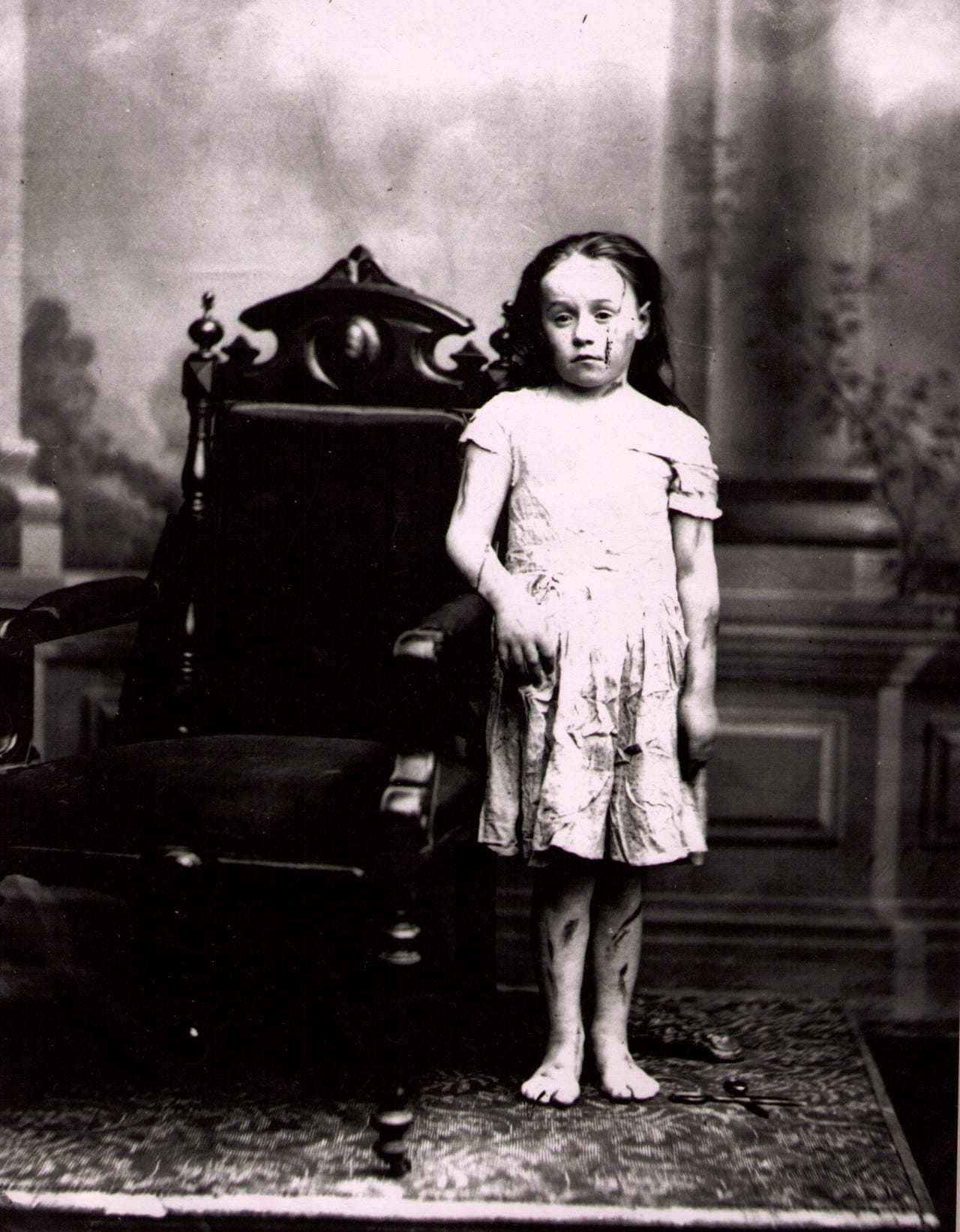
While under the care of Mary (McCormick) Connolly and her new husband, Mary Ellen would suffer severe abuse. She was made to sleep on a small cloth in the corner, had only one set of cloths, made to do strenuous labor, and beaten. In 1874[18] the neighbors suspected abuse and called Etta Angell Wheeler, a Methodist missionary who worked in the area. Ms. Wheeler checked in on the child and what she found was shocking. Ms. Wheeler contacted the police but due to the lack of child abuse laws on the books they were not able to do anything. So, Ms. Wheeler decided to contact Henry Bergh, who was an advocate for the animal humane movement and the founder of the American Society for the Prevention of Cruelty to Animals. Mr. Bergh was instrumental in getting Mary Ellen removed from the home and charges brought against Mrs. Connolly. During the trial shocking eyewitness testimony was given about the abuse,

Mary Ellen Wilson-McCormac in 1874. From: Markel, Howard. “Case Shined First Light on Abuse of Children.” The New York Times, December 14, 2009. https://www.nytimes.com/2009/12/15/health/15abus.html?ref=science.

“During the first week after the Connolly’s came there witness saw the cowhide lying on the table; it is like what a man uses when on horseback; it is about two and a half feet long; it has lashes (she doesn’t know how many) about the size of a finger, something like a cat-o-nine-tails; she used to hear Mrs. Connolly licking the child every morning “up and down, up and down” the room, the child crying “Oh, Mama! Mama!” all the time;”[19]

Mary Connolly was convicted of child abuse and sentenced to one-year imprisonment with hard labor.

Mary Ellen Wilson would live till the age of 91. Her case was the was the first documented case of child abuse in the United States. It also led to the founding of the New York Society for the Prevention of Cruelty to Children. It is amazing to think that out of so much tragedy good could come out of it. The events in this case were and continue to be instrumental in saving many more children.  


[1] “Wilson, Thomas (26) Page 1 New York Civil War Muster Roll Abstracts,” Fold3, accessed July 10, 2020, https://www.fold3.com/image/315769745.

[2] Eric A. Shelman and Stephen Lazoritz, The Mary Ellen Wilson Child Abuse Case and the Beginning of Children’s Rights in 19th Century America (Jefferson, NC: McFarland & Co., 2005). Pg. 20

[3] “Wilson, Thomas (26) Page 1 New York Civil War Muster Roll Abstracts,” Fold3, accessed July 10, 2020, https://www.fold3.com/image/315769745

[4] “Wilson, Thomas (27) Page 1 New York Civil War Muster Roll Abstracts,” Fold3, accessed July 10, 2020, https://www.fold3.com/image/315769764.

[5] Ibid

[6] Ibid

[7] Ibid

[8] Eric A. Shelman and Stephen Lazoritz, The Mary Ellen Wilson Child Abuse Case and the Beginning of Children’s Rights in 19th Century America (Jefferson, NC: McFarland & Co., 2005). Pg. 21

[9] Ibid, Pg. 22

[10] Ibid

[11] Ibid. Pg. 107

[12] Ibid. Pg. 23

[13] Ibid.

[14] Ibid. Pg.24

[15] Ibid. Pg. 23

[16]. Shelman, Eric A.; Lazoritz , Dr. Stephen. Case #1: The Mary Ellen Wilson Files (Kindle Location 575). Dolphin Moon Publishing. Kindle Edition.

[17] Ibid

[18] Shelman, Eric A.; Lazoritz , Dr. Stephen. Case #1: The Mary Ellen Wilson Files (Kindle Location 1896). Dolphin Moon Publishing. Kindle Edition.

[19] “Mary Ellen Wilson Further Testimony As To The Child’s Ill Treatment By Her Guardians,” New York Times, April 12, 1874, p. 12.

Matthew B. Ridgway: Fighting General and Statesman

  Matthew B. Ridgway was born to a military family on March 3, 1895. Like most army families, the Ridgways moved around quite a bit; it was not till Ridgway’s appointment to West Point in 1913 that he finally felt at home. (1) It was at West Point where Ridgway first was established as a leader, becoming cadet lieutenant, and was said to be “the busiest man in the place, handling well the jobs of several men” (2). This would serve him well in the future. After his West Point graduation in 1917, Ridgway looked forward to seeing combat in The Great War. However, this was not to be the case since he was recalled to West Point as an instructor after a brief stint in the infantry stationed in Texas. Ridgway was outwardly upset with his new assignment, saying, “To me, this was the death knell of my military career. The last Great War the world would ever see was ending, and there would never be another. Once the Hun was beaten, the world would live in peace throughout my lifetime.” (3) Nevertheless, Ridgway was wrong on all counts as the Japanese bombed Pearl Harbor on December 7th, 1941, thrusting America and then Lieutenant Colonel Ridgway into war. 

Ridgway was promoted to full Colonel and assigned to the War Plans department, where he stayed until 1942 when he was promoted to Brigadier General and assigned to help General Omar Bradley put together and train the 82nd Airborne Division. Upon Bradley’s reassignment, promoted again to Major General and given command of the 82nd.  During the Second World War, Ridgway led the 82nd into battle through every significant engagement, even jumping with them into Normandy.

Uniform worn by General Ridgeway when he jumped into Normandy, on display at The National Museum of the U.S. Air Force, located at Wright-Patterson Air Force Base near DaytonOhio. Photo by MGC

Ridgway even received a Purple Heart for actions that took place during Operation Varsity; General Ridgway describes the action in his memories: “I fired all five shots from my Springfield, shooting from the hip because the range was so close. Then I hit the ground to reload…There was quite an explosion then, very close to em’, and I felt the heat of a stinging fragment in my shoulder.” (4) He later states the grenade missed his head by three feet. General Ridgway was indeed a fighting general; he led the 82nd through the most formidable fighting and was loved by the men he commanded; he was dubbed “Old Iron Tits” because he always had a grenade and metal first aid kit strapped to him. However, the true sign of respect came from the saying, “There is a right way, a wrong way, and a Ridgeway,” the Ridgway being the best (5)

After World War II, Ridgway was assigned to multiple posts, including a United Nations liaison and a command in the Caribbean islands, before being selected by General Omar Bradley to be deputy chief of staff of the army in Washington, D.C.

Lieutenant General Matthew B. Ridgway, three-quarter length portrait, standing, facing front, in uniform. , 1952. Photograph. https://www.loc.gov/item/2002697883/.

In this position, in 1950, Ridgway was first exposed to the situation in Korea. He was deeply engrossed in high-level planning and feared that this conflict would lead to World War III. On December 22nd, 1950, after a long work day, Ridgway was out to dinner with his wife when he was informed he would head up the Eight Army in Korea due to the sudden death of its commander, General Walton Walker, in a car accident. (6) When Ridgway arrived in Korea, he found an American army in shambles and retreat. Ridgway’s aid, Walter Winton, described the situation in later years as “Weather terrible, Chinese ferocious, moral stinko” (7). Ridgway now had the daunting task of turning the war effort around. His first task was to instill a sense of order in the troops by teaching them discipline, feeling that this would put his men in an aggressive disposition. Another psychological maneuver that Ridgway employed was when he fired Colonel John R. Jeter when Jeter offered cautious plans. When Ridgway asked if Jeter had any more aggressive plans, Jeter responded that he did not and was sacked on the spot; this story was widely publicized and had the effect of officers under Ridgway focusing on attack from henceforth.

This constant state of aggression Ridgway believed was the only way to defeat the Chinese, and he used the American’s superior military capability to turn the Korean conflict into total war; Ridgway reorganized the Eight Army to make all the units self-supporting. Nonetheless, this new strategy did not work immediately as Ridgway was forced to evacuate Seoul in early January 1951, but the Chinese offensive was stopped. By the middle of the month, the UN forces were making great strides, and by March, Seoul was recaptured. A Regimental commander spoke of Ridgway’s part in the Eighth Army’s turnaround like this, “He not only made us attack, but he made us win. He made us into a professional army. The boys aren’t up there fighting for democracy. Now they are fighting because the platoon leader is leading them, and the platoon leader is fighting because of command, and so on right up.” (8)

General Ridgway’s success did not go unnoticed in Washington, and when Truman dismissed General Douglass McArthur later that year, Ridgway was given the title of theater commander. In this capacity, General Ridgeway initiated peace talks with a radio broadcast on June 30th, 1951; along with this, Ridgway supported the limited war strategy that Truman had recommended, and MacArthur refused. Ridgway poured all his effort into making the peace talks work and preventing what he thought may be a third world war. Foreign Service officer William N. Stokes noted, “Ridgway’s investment of personal time and effort demonstrates his extraordinary care to collect and face the facts before arriving at conclusions regardless of perceptions…. Ridgway then recommended to Washington against bombing….by this restraint the United States confined the war to Korea” (9). However, as General Dwight Eisenhower planned to run for President, Ridgway could not see the fruits of his labors. Ridgway was made supreme allied commander of Europe in 1952 before the peace talks in Korea were over.

In his job as supreme allied commander, Ridgway again applied his whole self to his work and tried to strengthen NATO, but this job also did not last long as he was appointed United States Army Chief of Staff in 1953 under Eisenhower; this was Ridgway’s most challenging assignment as he stated “The Vexations and frustrations I encountered in Europe, though they were many and great, were in no way comparable to the vexations, the frustrations, the sheer travail of spirit which were my final lot in my two-year tour as Chief of Staff”  (10) Ridgway’s main issue was Eisenhower’s armed forces reduction act wanting to reduce the military by 20 percent, Ridgway disagreed with this policy known as the New Look, and for this he was not reappointed to his post in 1955.

Ridgway retired after not retaining his Chief of Staff job but stayed in the spotlight. He was put on an advisory board about the Vietnam War, arguing against the “domino” theory and said the war was unwinnable.  Ridgway stayed in the public eye through the Regan administration till his death in 1993.

Placing a flag at General Ridgway’s grave in Arlington National Cemetery. Photo by @firefightinirish

General Matthew B. Ridgway was one of the most outstanding Americans of an already unique generation. Not only did he put his life on the line for freedom, but he stood firm in his convictions and used his experience and tireless effort to keep the Korean War from getting out of control and possibly prevent World War III.


1)  Soffer, Jonathan M. General Matthew B. Ridgway From Progressivism to Reaganism 1895-1993. (Westport: Praeger Publishers, 1998.) 12

2)  Ibid

3)  Mitchell, George C. Matthew B. Ridgway Soldier, Statesman, Scholar, Citizen. (Mechanicsburg: Stackpole Books, 2002.) 10

4)  Ridgway, General Matthew B. Soldier The Memoirs of Matthew B. Ridgway. (New York: Harper & Brothers, 1956.) 126

5)  Mitchell, Pg. 35

6)  Soffer, Pg. 116

7)  Ibid, Pg. 117

8)  Mitchell, Pg. 55

9)  Ibid, Pg. 97

10) Soffer, Pg. 175